700 Illegal Immigrants Dead in Transit

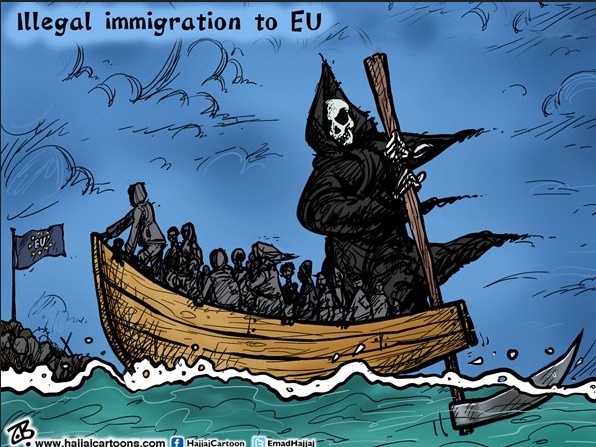
Foreign Policy reports:  Some 700 people are feared dead after a boat carrying up to 950 migrants bound for Europe capsized off the coast of Libya. The incident is the deadliest accident involving migrants from Africa to Europe yet. Only 28 people have been rescued and only 24 bodies have been recovered. Witnesses say the capsizing may have occurred after hundreds on board all rushed to the same side on the ship to get a better view of a passing Portuguese vessel.

Italian Prime Minister Matteo Renzi has asked has that European leaders discuss irregular migration at a meeting in Brussels. EU foreign policy chief Federica Mogherii saidi that Europe has a “moral duty” to solve the crisis. Pope Francis appealed to the international community “react decisively and quickly to see to it that such tragedies are not repeated.

Libya: A new video from Islamic State-affiliated militants in Libya claims to show the murder of 30 Ethiopian Christian migrants, 15 of whom were shot and 15 of whom were beheaded. The Ethiopian government has not confirmed not that its citizens were the victims. The video featured speeches and interviews with Islamic State members in Syria and Iraq suggesting, close cooperation between the jihadi group their and the Libyan affiliate.

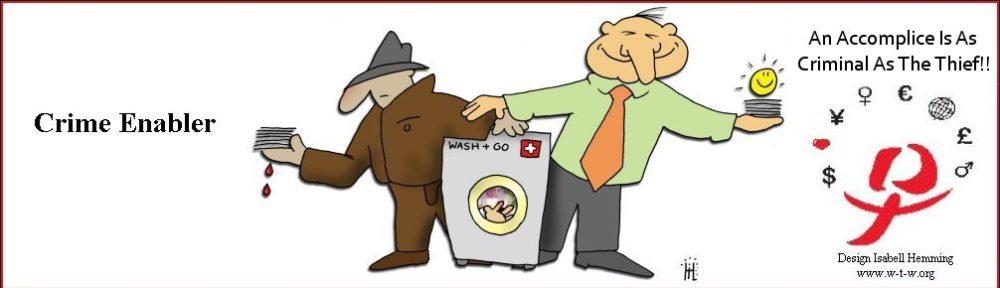
We are trying to trace the money trail on illegal immigration, which often goes from drug dealers to underground contacts in the destination country.

Illegal Immigration

Elizabeth Warren Asks the Right Questions

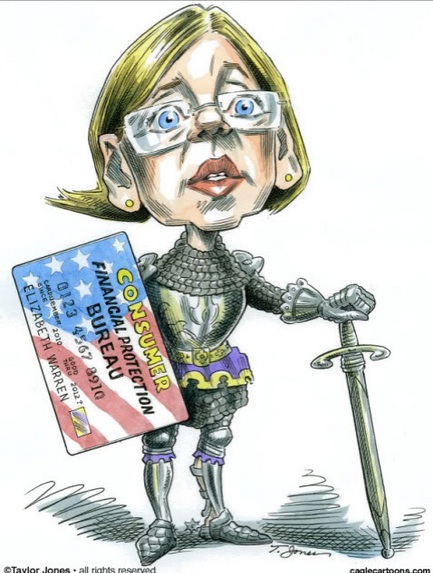
Elizabeth Warren: Real accountability also requires big changes within our regulatory agencies. In 2013, the Fed and the OCC entered into a $9.3 billion settlement with more than a dozen mortgage servicers who had improperly foreclosed on thousands of homes across the country.[13] Congressman Cummings and I started asking some questions about this, and we stumbled onto a pretty amazing fact. The Fed’s Board of Governors – the ones who were nominated by the president and confirmed by the Senate – didn’t even vote on whether to accept the settlement. A recordbreaking $9.3 billion on the table, and the settlement decision was left to the Fed’s staff. Elizabeth Warren on Financial Reform

Elizabeth Warren

Mules and Smuggling

Metan Gurcan writes:  Mules are known for their tenacity and stamina. Now they have also become “accessories to crime” targeted by the Turkish army. For hundreds of years for the people living in the Turkey-Iraq border’s hard climate and rough terrain, mules have been the primary mode of moving cargo on the ancient trade routes. With the demarcation of the Turkey-Iraq border in 1926, this traditional cross-border trade was re-branded as cross-border smuggling and the mules were made accessories to the crime of smugglling.

Decadeslong socio-economic dynamics clashed with political dynamics recently in disturbing events on the Turkey-Iraq border. Kurdish-origin villagers living there said that near the village of Ortasu, not far from Uludere (also known as Roboski) Turkish soliders killed eight mules.  At Uludere and nearby villages, people demonstrated for three days, but soldiers, armed with a court order, continued to shoot the mules.

Since the end of February there has been significant growth in smuggling on the Turkey-Iraq border.. It has become massive and organized, using mule trains of 200 to 300. To keep psychological pressure on security forces serving the area, the PKK makes good use of smuggling operations and constantly provokes villagers against soldiers. There are also allegations that guns are sometimes smuggled to terrorists strapped under bellies of mules.

The Turkish security sources point to visibly improved living conditions of the villagers along the border as evidence of their allegations. They said that in front of every village tenement there are two or three cars, at least one a luxury model. According to the sources, mules have been shot when clashes broke out after smugglers reacted to the soldiers’ order to halt by opening fire.

HDP Deputy Chairman Aydan Bilgen said the issue is not only about mules. “Borders have become an obstruction to peoples’ interests.”

The solution is simple. The state can legalize this trade, now classified as cross-border smuggling. Local people always point to the existence of a legal crossing point at Habur, which is about 300 kilometers (186 miles) away i Customs officials and security officials posted there can then regulate the cross-border trade and collect taxes. He said, “If the state wants it, this can be done in one day.”

According to a retired military officer who has served in border units and become an expert on smuggling, the people running mules are laborers who make little money. The real profit-makers are the middlemen.

Border operations require a bit of diplomatic soldiering,” adding that no matter what the soldiers do, they won’t be able to stop smuggling. To the contrary, the tougher the soldiers are, the worse their relations with the people of the area will be. The state must target the smuggling barons at the top. He warned, “The state should not tamper with the bread of the people living here. In these parts, people die for two causes: The first is honor and the second is his bread.”

Mules and Smuggling


Warren: Rules and Market Go Together

Elizabeth Warren writes:  For too long, the opponents of financial reform have cast the debate as an argument between the pro-regulation camp and the pro-market camp. They generally put Democrats in the first camp and Republicans in the second.

But that so-called “choice” gets it all wrong.

Rules are not the enemy of markets. Without some basic rules and accountability, financial markets don’t work. People get ripped off, risk-taking skyrockets, and markets fall apart. Rolling back the rules or firing the cops can be profoundly anti-market.

Republicans claim – loudly and repeatedly – that they support competitive markets, but their approach to financial regulation is pure crony capitalism. It helps the rich and the powerful protect and expand their wealth and their power – and leaves everyone else behind.

This week, I gave a big policy speech which boils down to two principles:

First, financial institutions shouldn’t be allowed to cheat people. Markets work only if people can see and understand the products they are buying, only if people can reasonably compare one product to another, only if people can’t get fooled into taking on far more risk than they realize just so that some fly-by-night company can turn a quick profit and move on. That’s true for families buying mortgages and for pension plans buying complex financial instruments.

Second, financial institutions shouldn’t be allowed to get the taxpayers to pick up their risks. That’s true for using insured deposits for high-risk trading, and it’s true for letting Too-Big-to-Fail banks get a wink-and-a-nod guarantee of a government bailout.
We know what changes we need to make financial markets work better. Strengthen the rules to prevent cheating. Make the cops do their jobs. Cut the banks down to size.  Change the tax code to promote more long-term investment. Tackle shadow-banking done by non-bank firms and subsidiaries.

Changes like these can make a real difference. They can help protect hard-working families from cheats and liars. They can help rein in the lawless practices that are still too common on Wall Street. They can end Too Big to Fail.

The secret to better markets isn’t turning loose the biggest banks to do whatever they want. The secret is smarter, more structural regulation that forces everyone to play by the same rules and doesn’t let anyone put the entire economy at risk.

Warren the Warrior.

Is the Revolving Door from Government to Finance Dangerous?

Ben Bernanke, the former chairman of the US Federal Reserve, has joined Citadel as an adviser on monetary policy, arriving as the Chicago hedge fund recovers from a $1bn loss trading government bonds.

The ex-central banker, who stepped down from the Fed in January 2014, said he would be adding his “perspective on a range of issues affecting our global economy” in his new role.

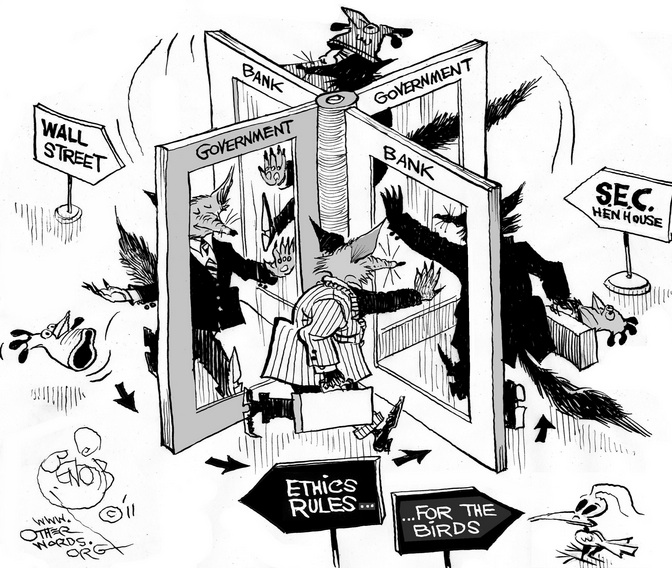
The move may fan criticism of the revolving door between the Fed and other wings of government and powerful financial firms.

Alan Greenspan, Mr Bernanke’s predecessor as Fed chairman, took up positions including acting as a consultant for Deusche Bank and hedge fund Paulson & Company after leaving the central bank.

Last month, Jeremy Stein, a former Fed governor, said he would start advising BlueMountain Capital Management, another fund.

Mr Bernanke said he was sensitive to anxieties about the “revolving door” and had chosen Citadel, rather than a position at a bank, in part because it is not regulated by the Fed. He said he would not be doing “lobbying of any sort”.

Ken Griffin, the founder and chief executive of Citadel, which has $26bn in assets under management, said Mr Bernanke has “extraordinary knowledge of the global economy and his insights on monetary policy and the capital markets will be extremely valuable to our team and to our investors.”

The appointment was announced on Thursday, hours before it emerged that Citadel’s head of fixed income, Derek Kaufman, had resigned after suffering $1bn of losses in his portfolio of developed market sovereign bonds.

People familiar with the situation said a series of macro bets went awry in 2014, dragging down the overall performance of Mr Kaufman’s 20-person team.

After a weak start to trading in 2015, he resigned two weeks ago.  A former JPMorgan proprietary trader, Mr Kaufman was recruited by Citadel in 2008.

Mr Kaufman’s team was responsible for a $4bn global fixed income fund, which managed only a 0.75 per cent gain last year, and for portions of Citadel’s flagship Kensington and Wellington funds. The fixed income team will now report directly to Mr Griffin.

“Citadel is a dynamic firm with tremendously talented people and a rigorous approach to research and investing. I look forward to adding my perspective on a range of issues affecting our global economy,” said Mr Bernanke in a statement released by Citadel.

Since leaving the Fed, Mr. Bernanke’s views have been solicited by hedge fund managers and other market participants at exclusive dinners and speaking engagements. He will be a speaker at next month’s SALT conference for hedge fund managers in Las Vegas.

Mr Bernanke served as chairman of the Fed from February 2006 to January 2014, putting him at the helm of the central bank in the midst of the financial crash. Before his appointment as chairman, he chaired the president’s council of economic advisers from June 2005 to January 2006.

Revolving Door

Criminals on Trial and at Large

Matt Levine deliciously balances his take on financial matters.  One story he tells is of an information security director at the Multi-State Lottery Association who won a $14.3 million jackpot after he allegedly accessed the secure room housing the computer and infected the random number generator with software that allowed him to control the number generated. He goes on trial next week.

For your edification, Mr. Tipton changed the settings of the cameras so that they only filmed one second of every minute, so he had 59 seconds to break in, insert his thumb drive and watch the progress bar crawl across the screen as the klaxons rang in the distance.

image015Mr. Levine also notes that Jesse Drucker went to Switzerland to visit with 21 financial advisors who remain under US indictment and are at large.  He reports they have adapted well to fugitive life.

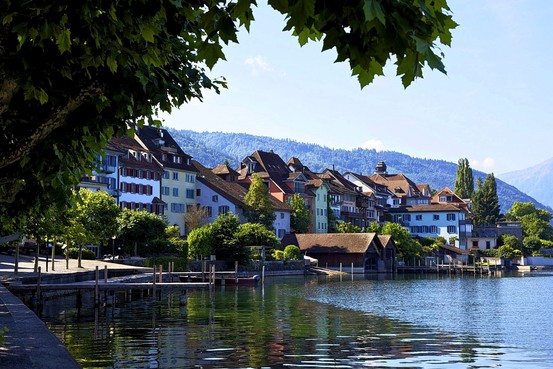
P1-BC212_ZUG2_G_20110828171044


Tentacles of Petrobras Scandal Grab Treasurer

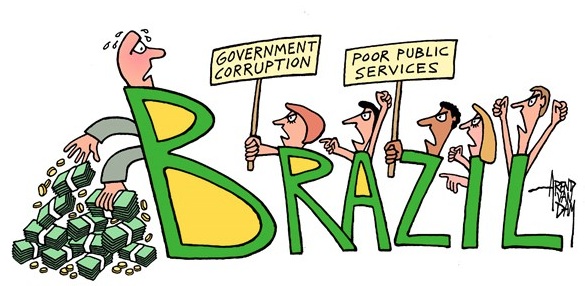
The treasurer of Brazil’s ruling Workers’ Party, Joao Vaccari, has stepped down, after being arrested over corruption at oil giant Petrobras.

Mr Vaccari is  charged with an alleged scheme in which the party received dirty money from inflated deals between oil executives and construction firms.

Party president Rui Falcao said he still had confidence in Mr Vaccari.

He is the closest ally of President Dilma Rousseff to have been arrested in the broadening scandal.

The arrest places further pressure on the president, who has faced street protests, impeachment calls and plummeting opinion ratings since her re-election four months ago.

Ms Rousseff served as the head of Petrobras for much of the period when the corruption took place, but she has not been implicated in the scandal.

More than 40 politicians, including the heads of both houses of congress, are being investigated over the affair.

Prosecutors say Mr Vaccari served as the Workers’ Party’s liaison in a scheme where oil officials colluded with construction firms to artificially inflate billions of dollars worth of contracts.

According to oil officials who are testifying for the prosecution, some of the cash skimmed from the deals was diverted to the party and its allies.  The party remains sure of Mr Vaccari’s innocence, “not only because of his conduct, but because in a democratic state everyone has the fundamental right to be considered innocent until proven guilty”.

When he was first questioned in February Mr Vaccari said in a statement that the Workers’ Party only receives legal contributions and that he would co-operate with investigators.  He said he answered their questions “with transparency”.

Mr Vaccari was charged last month, becoming one of the most powerful political figures to have been named in the scandal.His arrest was reportedly ordered because of concerns that he may influence the investigation or flee the country.Corruption in Brazil

Chile Cleans Up Its Act

Alicia Chevy writes: As one of the most competitive economies and financial market in the region and worldwide, Chile projected itself as a strategic destination for foreign investments over the past two decades. Emerging from the disastrous Pinochet dictatorship in 1990, the Andean country established strict political and legislative safeguards to lower corruption levels and protect judicial processes, democratic values, and investments.

The new government’s efforts successfully created strong confidence in the new political system, improving transparency and corruption indexes, and solid financial and legal institutions. From these reforms, high inflows of FDI followed and Chile became the world’s 11th largest recipient of FDI in 2012.

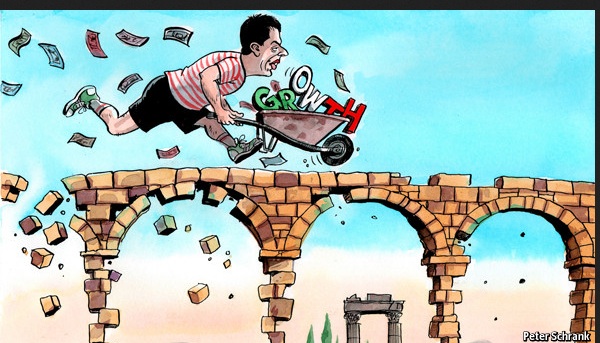
Thus, over the past 10 years, it became clear that Chile had the potential to become a powerful player in the region, as its GDP grew at an average annual rate of 4.6% from 2005 to 2012.

Influential institutions like the World Economic Forum recognized Chile as one of the top countries with the best macroeconomic environment.  Investors have benefited from Chile’s strongly legislated guarantees, such as protection on copyrights, and from its strategic trade agreements with 59 countries, including Free Trade Agreements.

With no restrictions on capital flows, promotion of private investment incited by tax exemptions, and a flat tariff of 6% on imports from other countries, Chile became the Golden Boy of Latin America for investments.

While the country proved its resilience in facing international crisis, its flexibility to address domestic problems has been challenged over the past year. Corruption and finance-related scandals in the public sector erupted, shaking Chile’s image as a regional role model.

Incoming accusations involving influential politicians in illegal campaign financing were the cherry on top. The Chilean Miracle became a mirage.

Along with the political scandals and a harsh month of natural disasters, President Bachelet was sidetracked from implementing her reform agenda and addressing the economic slowdown.

As its main export is copper, Chile’s energy sector’s and economy’s health depends heavily upon commodities’ global development and the growth of its major consumer, China. Along with changing global energy policies, China’s demand for copper and commodities has slowed down, deeply affecting Chile.

Moreover, sharp declines in the price of copper weakened investments in the mining sector and GDP growth over the past two years. Economists have also accounted falling employment rates and limited monetary tools for driving the economy and currency value down.

Consequently, major manufacturing and mining companies have expressed their concerns regarding Chile’s current economic environment.

To tackle the recent political and economic crises, Bachelet’s administration proposed several reforms. For instance, tougher regulations on government and public sector officials aim to reduce pervasive corruption in the public sector and help the president regain her popularity.

Overall, Bachelet and her administration have sought to reassure investors in health, energy and other major sectors in recent months. Energy Minister Maximo Pacheco devised a plan to boost energy investment and stopping the nefarious impact that drastic change in copper prices have on the economy.

Through early signs of economic recovery in January, Chile showed its aptitude in facing challenging domestic and international conditions.

Chile’s reputation as an ideal business destination and its institutional strengths remain largely spotless.

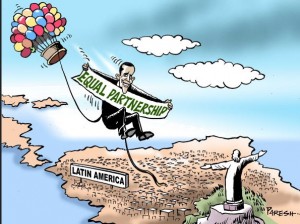
Despite the recent corruption scandals and financial problems, Chile remains an attractive investment destination.
The Appeal of Chile

Reform in Italy?

Walter Russell Mead writes:  Italy has made some progress on spending cuts, but reform seems to be slowing down at just the point when real gains could be locked in. The FT reports on Prime Minister Matteo Renzi’s announcement that the country will see spending cuts of €10 billion next year. That number, however, still leaves the country €6 billion behind the target savings the government was originally aiming at. Future savings gained by making the Italian government more efficient are promised, but the FT reports that some are skeptical these savings will materialize.

There’s a reason why many advanced governments today have trouble meeting budget cut targets. At the end of the day, the cuts that would be least painful for Italian society would be unbearably painful for special interests that are well-entrenched in the political system. Making government procurement more effective, with less room for waste and corruption, for example, wouldn’t harm any of those who depend on government services — but it would reduce the profits of the well-connected crony capitalists and the local politicians who are hand in glove with them.

Similarly, reducing bloated staffing, rationalizing government administration, and otherwise making government more transparent and effective would enable taxpayers to enjoy the same level of services with less debt and taxes. A clear gain, you would think, but politics (and not just in Italy) has a hard time delivering this kind of result.

In the U.S. as well as in Italy, many of our debt and spending problems don’t come from the ‘greed’ of those who receive government services. They come from government ineptitude and from those who profit from bloated and irrational delivery systems. From our defense procurement system to infrastructure to the health care system to higher ed, our country—like many of the other advanced industrial democracies—suffers from the high costs of a badly-run state.

The left characteristically attacks all forms of spending discipline as a cold-hearted assault on the poor even while it continues to serve the special interests in the governance machine. For its part, the right howls rhetorically about the evils of spending, but is also unwilling to go after deep-pocketed special interests who profit from government inefficiency (think, for example, of state politicians everywhere who suck up to crony capitalist highway construction firms, or presidential candidates bowing to the Iowa ethanol lobby).

The left—in Italy as in the U.S.—needs to learn that budget discipline properly done helps the poor rather than hurts them. The right needs to learn the importance of governing well so as to govern less intrusively and less expensively. There is an agenda here that could electrify voters and put us on the road to better societies with less debt. Let’s hope that a new generation of real reformers will come along to give us the government we need at a price we can pay.

Italian Reform?

Anti-Corruption Protests in Brazil

Crowds were generally smaller than in March when more than 1.5 million people turned out.  They allege involvement of the governing Worker’s Party in bribery at the state oil firm Petrobas.

President Dilma Rousseff denies involvement and has been exonerated in an investigation by the attorney general.  The political opposition say much of the alleged bribery of politicians took place when Ms Rousseff was head of the oil company.

Despite her exoneration, many protestors still believe that the president must have known about the scandal. Some have been calling for her impeachment.

The number of protestors varied widely. Police have said that 696,000 people took to the streets on Sunday but organisers have put the number at 1.5 million, according to Globo news.  Many of the protestors wore the yellow shirts of the national football team and waved Brazilian flags. Others held placards reading “Dilma out” and “Corrupt government”.

In Rio de Janeiro, several thousand people marched along Copacabana beach, a turnout reported to be considerably lower than the 25,000 protestors seen on 15 March.

Earlier this month, the Supreme Court approved the investigation of 54 people for their alleged involvement in a corrupt scheme. It is alleged that private companies paid corrupt officials in order to get lucrative Petrobras contracts.

High-profile politicians also took a share of the money siphoned off from the oil company, according to the investigation. Officials to be investigated include Senate President Renan Calheiros, President of the Chamber of Deputies Eduardo Cunha, former Energy Minister Edison Lobao and former President Fernando Collor de Mello.

All deny corruption allegations.

Protests in Brazil