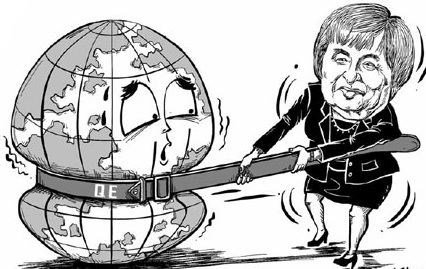
Can China’s Dragon Continue Puffing?

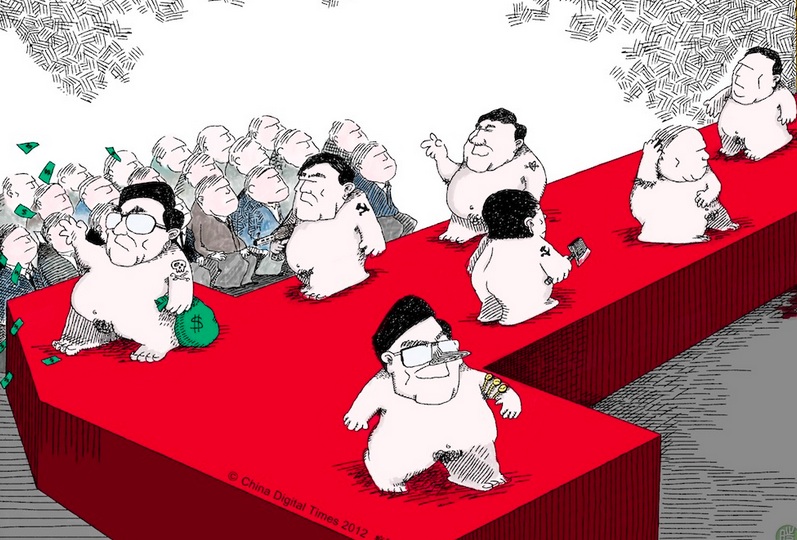
Peter Hartcher writes:   While Australia’s government argues over whether to join a China-sponsored infrastructure fund, a larger debate has started on a much grander question – can China’s ruling regime survive?

China under the Communist Party has been described as history’s most successful dictatorship. China is not just a rising power: it has risen.  China today is the second biggest economy and military spender on the planet. The Communist Party regime is now in its 66th year.  Some indications are telling.

1.  China’s economic elites have one foot out the door, and they are ready to flee en masse if the system really begins to crumble.  A  survey of 393 millionaires and billionaires by Shanghai’s Hurun Research Institute; 64 per cent said that they were emigrating, or planning to do so.

2.  Xi’s harsh political repression: Would a secure and confident government institute such a severe crackdown?

3.  The hollowness of official belief in Xi’s doctrines. Officials are only going through the motions,.

4.  Corruption runs deep and will outlive Xi’s anti-corruption purge, which will succeed only in enraging powerful interests.

5.  he economy  is stuck in a series of systemic traps from which there is no easy exit,” he says. Xi’s attempt to break the traps, his economic reform plan, is encountering stiff internal resistance.

No party can rule forever, anywhere. The big questions are exactly when and exactly how the regime will collapse.

The Soviet collapse was, at core, a crisis of confidence. The Communist party was not challenged by another party, by a coup or by an uprising. The party yielded much of its power because its leadership had lost the self-belief and the will to go on.

China’s Xi Jinping may have many deficits, but a deficit of confidence is not one of them.

There is a major economic crunch beginning, certainly. But the Communist regime has prevailed through much worse. There is no sign that the instruments of coercion are wilting.

Chinese Dragon Losing His Puff?

Ending the $20 Billion Traffic in Wildlife Business?

William deBuys writes:  Last month China announced that it would ban ivory imports for a year, while it “evaluates” the effectiveness of the ban in reducing internal demand for ivory carvings on the current slaughter of approximately 100 African elephants per day. The promise, however, rings hollow following a report in November (hotly denied by China) that Chinese diplomats used President Xi Jinping’s presidential plane to smuggle thousands of pounds of poached elephant tusks out of Tanzania.

Meanwhile, the Obama administration has launched its own well-meaning but distinctly inadequate initiative to curb the trade. Even if you missed the roll-out of that policy, you probably know that current trends are leading us toward a planetary animal dystopia, a most un-Disneyesque world in which the great forests and savannahs of the planet will bid farewell to the species earlier generations referred to as their “royalty.” No more King of the Jungle, while Dorothy’s “Lions and tigers and bears, oh my!” will truly be over the rainbow. And that’s just for starters.

The even grimmer news that rarely makes the headlines is that the lesser subjects of that old royalty are vanishing, too. Though largely unacknowledged, the current war is far redder in tooth and claw than anything nature has to offer. It threatens not just charismatic species like elephants, gibbons, and rhinos, but countless others with permanent oblivion.   Illegal Traffic in Wildlife

Illegal Wildlife Traffic

Anti-Corruption Protests in Brazil

Paolo Prada writes: Close to a million demonstrators marched in cities and towns across Brazil on Sunday to protest a sluggish economy, rising prices and corruption – and to call for the impeachment of left-wing President Dilma Rousseff.

The protests in the continent-sized country come as Brazil struggles to overcome economic and political malaise and pick up the pieces of a boom that crumbled about the time Rousseff took office in 2011.

Rousseff, now early into her second four-year term, is unlikely to face the impeachment proceedings called for by many opponents. A fifth year of economic stagnation and a multibillion-dollar corruption scandal at state-run energy company Petroleo Brasileiro SA, or Petrobras, has fueled their anger.

But for a president narrowly re-elected just five months ago, the protests are a sign of a polarized country increasingly unhappy with its leadership, especially as the hard-won gains of the recent boom begin to succumb to an economic slowdown.

The unexpectedly large demonstrations also promise to embolden opposition parties and restive allies, including the leaders of both houses of Congress, who are nominally part of Rousseff’s ruling coalition, but nonetheless are hindering efforts to pass reforms intended to jump-start the economy.

In a press conference Sunday night, two members of Rousseff’s cabinet recognized the rights of protesters, but downplayed the importance of the demonstrations, saying they were expressions of discontent by those defeated at the polls.

They also sought to discredit those who suggest impeachment. Miguel Rossetto, one of Rousseff’s top aides, criticized what he called the “intolerance” of those opponents and likened their demands to coup efforts.

In a statement posted online Sunday, Aecio Neves, a centrist who was defeated by Rousseff in October, said the demonstrations marked a day when Brazilians “went to the streets to reunite with their virtues, their values and also with their dreams.”

Sunday’s gatherings were mostly calm, with little of the violence that tarnished a wave of massive demonstrations in 2013, when Brazilians protested billions of dollars of spending, even as the economy faltered, to host the 2014 World Cup.

But if less vehement, the rallies Sunday possibly matched those of two years ago in scale. Estimates for the size of the crowds differed, but most calculations suggested roughly a million protesters nationwide.

In Sao Paulo alone, state police in late afternoon said that a million had turned out to march along skyscraper-lined Avenida Paulista, the heart of Brazil’s financial capital and biggest city. A private pollster later said it was only 210,000.

Earlier, more than 10,000 residents of Rio de Janeiro poured onto the Copacabana waterfront. Most dressed in the blue, green and yellow of Brazil’s flag. Crowds sang the national anthem and shouted “Dilma, out!”

“People feel betrayed, said Diogo Ortiz, a 32-year-old advertising worker, who called the Petrobras scandal “a national and international disgrace.”

Many protesters hail from the country’s wealthier classes, who traditionally have opposed the ruling Workers’ Party.

Underscoring class divisions, marchers said Rousseff and the ruling party have instigated the polarization by pitting their traditional supporters, the recipients of popular social welfare programs, against the rest of Brazil.

The party “is inciting the people against the people,” said Helena Alameda Prado Bastos, a 61-year-old editor in Sao Paulo.

The Workers’ Party, opponents complain, for too long ignored critiques that its heavy spending, subsidized lending, protectionist policies and corruption have sapped the vitality that led to average growth exceeding 4 percent during the decade before she took office.

Although the party also presided over those good years, during two terms of Rousseff’s predecessor, economists say she failed to adjust policies when a global commodities boom ended and sapped once-soaring export revenue.

Rousseff herself has not been accused of wrongdoing in the corruption probe, but many blame her for lax oversight of Petrobras, especially during years she served as the company’s chairwoman, prior to becoming president.

The ongoing scandal stems from a scheme through which prosecutors say Petrobras contractors paid kickbacks to corrupt executives and some Workers’ Party members.

So grim are Brazil’s economic prospects that many economists expect it to slip into recession. Investors, meanwhile, fear the country could lose its investment-grade status.

Inflation is running at a 10-year high, while Brazil’s currency, the real, has lost over 22 percent of its value against the dollar this year.
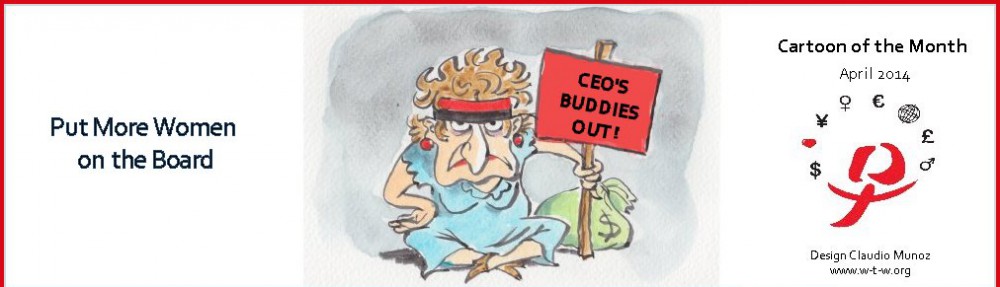
Campaign to End Corruption in China

Benamin Kam Lin writes: The chairman of one of China’s top state-owned automakers, FAW Group Corp, and a senior provincial official are being investigated for “violating party discipline”, the Communist Party said on Sunday, employing its usual euphemism for corruption.

After taking over as party and military chief in late 2012, President Xi Jinping declared war on corruption at all levels in China, vowing to go after powerful “tigers” and lowly “flies”. Scores of senior officials have been brought down by the campaign, including former security tzar Zhou Yongkang.

Xu Jianyi, 61, chairman of state-owned China FAW Group Corp, and Qiu He, 58, deputy head of the party in southwestern Yunnan province, are being investigated for “serious violation of (party) discipline and laws”, the party’s Central Commission for Discipline Inspection said on its website. It gave no further details.

FAW Group Corp, which counts Faw Car Co Ltd as one of its units, is one of China’s biggest automakers which has joint ventures with Volkswagen, Toyota and General Motors in China.

Faw Car shares fell as much as 5.6 percent to more than a two-week low. The news also hit its other units with Tianjin FAW Xiali Automobile Co Ltd down as much as 3.6 pct and Changchun Faway Automobile Components Co Ltd declining as much as 2.2 pct.

Both Xu and Qiu hold a rank equivalent to a cabinet vice minister.

Qiu is well-known in China for ambitious projects and his autocratic and eccentric management style, demanding discipline from his staff. Once seen as a political rising star, his style won both praise and criticism.

Foreign automakers seeking to manufacture cars in China must form joint ventures with domestic partners and are restricted to 50 percent ownership limits, an arrangement generally seen as the cost of doing business in the world’s largest car market.

Such requirements expose companies to unknown risks at their JV partners and extend beyond the auto sector. Founder Securities, a joint venture partner of Credit Suisse AG, had assets frozen after accusations of embezzlement and its chairman later disappeared.

Caixin, a weekly magazine, said Qiu is being investigated for urban construction projects in Kunming, provincial capital of Yunnan, when he was the city’s party boss from 2007 to 2011.

China’s top prosecutor told the annual full session of parliament that prosecutors investigated 4,040 civil servants at the county level or above in 2014, or an average of 11 a day. The 11-day meeting ended on Sunday.

Weeding Out Corruption in China


People of the US V Credit Suisse

UPDATE March 16, 2015:   Individual ezperts who testitfed before the Labor Department’s hearing on a waiver for Credit Suisse have been asked to provide more documentation of proof that Credit Suisse has a culture of corruption.  Very specific documentation was sent last week.  No deicsion has yet been made on this matter.  The CEO of Credit Suisse stepped down last wee, perhaps in part because Credit Suise wants to keep their $2 billioin in US pension funds management.

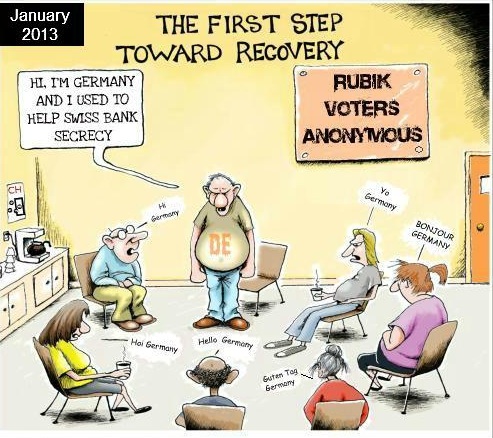
Last year Credit Suisse pled guilty to criminal charges to aiding and abetting tax evasion in the United States.  Now a ‘criminal’ Credit Suisse was banned from continuing to operate 2 billion dollars in pension funds in this coutnry.  They applied to the Labor Department for an extension, which they expected to be pro forma, In fact, a temporary exemption was granted.

Then Maxine Waters, a US representative from California cried out, Wait.  Let’s take a deerper look at this.  Let’s hold a public hearing.

On January 15, 2015, the hearing was held.  From Credit Suisse, the same old, same old was heard.  Top executives knew nothing of these programs to aid and abet tax evaders.  All the bad guys had been removed.  But reporters in Switzerland, intimately familiar with Credit Suisse’s business practices, asked the obvious question: Is the culture of Credit Suisse so corrupt that under no circumstances should this exemption be granted?

Hard evidence from the European justice system suggests the answer to this question is: Yes.

Mr. Neil Radey, Managing Director, General Counsell-America, co-General Counsel-Investment Banking, Credit Suisse Securities (USA) LLC said:  “Some commenters have alleged that senior management at Credit Suisse knew of the active assistance to U.S. customers evading taxes described in the plea agreement. These are claims that are unsubstantiated. Indeed, it was an independent investigation. It was conducted by external counsel, but it concluded that senior management was not aware of that misconduct.”

On November 21, 2011 a German district court ruling – file number10 KLs 14/11 – attested Credit Suisse to have instigated a large scale system to entice German citizens to evade taxes. The verdict further stated that Credit Suisse top management knew about this deliberate assault against the German revenue service. The court found that training materials were used to systematically train Credit Suisse staff to seek out German tax evaders. The verdict clearly confirmed that Credit Suisse’s top management had knowledge of the tax evasion crimes.

Neither the Credit Suisse internal tax investigation nor Credit Suisse top management reported any of the bank’s tax fraud found by the German Court to the US authorities.

Considering the German court’s unambiguous verdict against Credit Suisse, the fact that the bank’s senior management is still denying its knowledge about the tax evasion scheme and the fact that Credit Suisse is a repeat offender, Credit Suisse or its affiliates should not be given any exemptions. Credit Suisse’s statements do not have credibility.

Since Credit Suisse has not come clean with its criminal past, it is hard to understand how the Department of Labor can grant an exemption.   The risk that Credit Suisse could continue to engage in criminal activities through its QPAM’s – as it has often done in the past —  is far too great.

Credit Suisse


Mary Jo White, SEC head, Defends Use of Waivers

Bartlett Naylor writes:  On March 12, Securities and Exchange Commission Chair Mary Jo White publicly returned fire for the first time on the charge from outsiders and two of her fellow commissioners that her agency is soft on Wall Street.

Cut through her rhetoric, however, and what she’s saying: “The SEC trusts Wall Street.”

Here’s the background. The Department of Justice has fined major Wall Street firms for serious violations. The firms have settled by paying billions of shareholder funds in penalties. These infractions trigger other sanctions including the loss of certain privileges at the SEC. But the SEC has generally waived these sanctions. Commissioners Kara Stein and Luis Aguilar have voted against these waivers in several cases, arguing, among other reasons, that waivers dilute the deterrence effect of the automatic sanctions.

On March 12 Chair White drew a line in the sand. These sanctions should not be viewed as deterrence. She explained: “It must be emphasized, however, that it would not be an appropriate exercise of our authority to deny a waiver to further punish an entity for its misconduct or history of misconduct, or in an effort to deter it or others from possible future misconduct, by letting stand an automatic disqualification where the circumstances do not warrant it.”

White undoubtedly penned this speech well before the eve of the speech and advantaged the prodigious legal talent on the SEC staff to buttress her legal case. The written speech includes footnotes and the assertion just quoted contains a footnote to a rule the SEC approved in July 2013. White approved this rule. In fact, however, the rule does not buttress her case. On the contrary, the rule speaks directly about deterrence. The rule makes reference to deterrence five separate times.

Leaders in Congress side with Stein and Aguilar. Rep. Maxine Waters, (D-Calif.) and ranking Democrat on the House Financial Services Committee has promised to introduce legislation to limit the use of waivers and bolster the deterrence effect.  Sen. Sherrod Brown also challenged White’s use of waivers.

From high altitude, Wall Street has escaped true justice. Even as the DOJ claims that major firms committed massive fraud contributing to the financial crisis of 2008 that evicted millions from their homes and jobs and erased $12 trillion from the economy, no Wall Street executive went to prison.

There’s an additional troubling element to White’s position. White says that the only factor that the SEC should consider is whether the firm can honestly provide the services that the sanctions would otherwise interrupt.  That’s a precarious place for the SEC. She’s essentially asking her fellow commissioners to enter the attestation business. That’s a process used in enforcement at companies where CEOs are required to attest that their firms comply with accounting or other rules. The default position should be what the law and rules dictate—loss of privileges. If a firm can build an independently verifiable case that it can honestly serve the market in a division separate from where the violations took place, then the SEC might grant a waiver. Short of that, the SEC should not be saying: “We trust Wall Street.”

Mary Jo White

Stress Tests Flummoxing US Banks

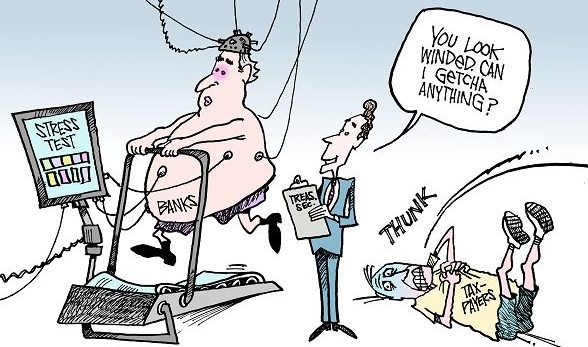
And this is good!  While no big U.S. bank failed the test, some of Wall Street’s marquee names were shocked by the disparity between their expectations and the Fed’s, such as projections for how banks’ assets and net income would fare in a severe economic downturn, said people close to the banks.

“We all ended up having a wake-up call on what [the Fed] thought our losses could be,” said a person close to the process.

Matt Levine estimates that discussions about how unpredictable these tests should be suggests: enough to keep the banks on their toes and make them think seriously about their crisis modeling, but not so much as to be a random outcome that makes modeling pointless.

How much the three revise-and-resubmitters took out of their revised capital plans: Morgan Stanley cut out a $4.9 billion preferred-stock buyback, JPMorgan cut out about $6 billion of capital return, and Goldman probably cut out about $3 billion.

Stress Test

Rate Cut Battles Across the Globe

Willaim Pesek writes:  The Bank of Korea has no shortage of diplomatic ways to explain yesterday’s surprise rate cut, including weak domestic demand, sluggish business investment and anemic exports. But it’s worth being clear what this move was really about: Japan.

For weeks, South Korean Finance Minister Choi Kyung Hwan and other politicians have been demanding that the BOK weaken the won so Korean exporters could better compete with their counterparts in Japan. Which was fair enough: Since mid-November 2012, when Tokyo began devaluing its currency, the won has surged 44 percent against the yen. Yesterday, BOK Governor Lee Ju Yeol finally bowed to the pressure, slashing the central bank’s repurchase rate a quarter of a percentage point to a record low 1.75 percent.

In some sense, however, South Korea still isn’t taking Japan seriously enough. South Korea should be less concerned about its short-term export woes and more concerned about the prospect of mimicking Japan’s lost economic decades since the 1990s. Unless policymakers act far more aggressively in the near future, they still riska long term state of “Japanization,” a semi-permanent deflationary funk that strangles living standards. Here are three ways Seoul can avoid that fate.

First, it should end its monetary stinginess. South Korea’s high household debt levels — currently at a record $962 billion, or 70 percent of gross domestic product — are said to have dissuaded Lee from cutting rates sooner.

Second, South Korea should prod companies to raise wages. Beginning this year, South Korea’s family-owned conglomerates, or chaebol, will be subject to a 10 percent tax on excessive hoarding of cash that could be better spent on wages or investments.

South Korean President Park Geun Hye could help change this situation by using her bully pulpit to shame companies that underpay workers. She could also push for tax laws that would give those companies financial incentives to hire their part-time staff to full-time contracts.

Third, South Korea needs to stop obsessing ovre exchange rates. The country needs to become more competitive, but it would be a mistake to pursue that goal solely through depreciation.

Park seems to recognize that South Korea must learn to thrive even when exchange rates move against it. She has pledged, for example, to build a creative economy that produces new industries, generates good-paying jobs and reduces the dominance of the chaebol. But for too long, South Korea has relied on depreciation to shield the country from creative destruction.

The BOK’s recent rate cut was the right move for now; in the short term, it should help exporters keep pace with their competitors. But if South Korea wants to avoid ending up in Japan’s economic rut, its ambitions will have to go beyond interest rates.

Interest Rates in Asia

Should the US Fed be Transparent?

Barry Eichengreen writes: The Federal Reserve is under attack. Bills subjecting the United States’ central bank to “auditing” by the Government Accountability Office are likely to be passed by both houses of Congress. Legislation that would tie how the Fed sets interest rates to a predetermined formula is also being considered.

Anyone unaware of the incoming fire only had to listen to the grilling Fed Chair Janet Yellen received recently on Capitol Hill. Members of Congress criticized Yellen for meeting privately with the president and treasury secretary, and denounced her for weighing in on issues tangential to monetary policy.

Still others, like Richard Fisher, the outgoing president of the Dallas Fed, have inveighed against the special role of the Federal Reserve Bank of New York. Reflecting the New York Fed’s heavy regulatory responsibilities, owing to its proximity to the seat of finance, its president has a permanent seat on the Federal Open Market Committee, the body that sets the Fed’s benchmark interest rate. This, its detractors warn, privileges Wall Street in the operation of the Federal Reserve System.

Finally, some object that bankers dominate the boards of directors of the regional Reserve Banks, making it seem that the foxes are guarding the henhouse.

This criticism reflects the fact that the United States has just been through a major financial crisis, in the course of which the Fed took a series of extraordinary steps. It helped bail out Bear Stearns, the government-backed mortgage lenders Freddie Mac and Fannie Mae, and the insurance giant AIG. It extended dollar swap lines not just to the Bank of England and the European Central Bank but also to the central banks of Mexico, Brazil, Korea, and Singapore. And it embarked on an unprecedented expansion of its balance sheet under the guise of quantitative easing.

These decisions were controversial, and their advisability has been questioned – as it should be in a democracy. In turn, Fed officials have sought to justify their actions, which is also the way a democracy should function.

There is ample precedent for a Congressional response. When the US last experienced a crisis of this magnitude, in the 1930s, the Federal Reserve System similarly came under Congressional scrutiny. The result was the Glass-Steagall Act of 1932 and 1933, which gave the Fed more leeway in lending, and the Gold Reserve Act of 1934, which allowed it to disregard earlier gold-standard rules.

The Banking Act of 1935, as amended in 1942, then shifted power from the Reserve Banks to the Board in Washington, DC, and confirmed the special role of the Federal Reserve Bank of New York.

These reforms reflected an overwhelming consensus that the Fed had been derelict in fulfilling its duties. It had failed to prevent the money supply from contracting in the early stages of the Great Depression. Heedless of its responsibilities as an emergency lender, it had allowed the banking system to collapse. When financial stability hung in the balance in 1933, the Reserve Banks’ failure to cooperate prevented effective action.

Given such incompetence, it is not surprising that subsequent reforms were far-reaching. But these reforms went in precisely the opposite direction from today’s proposed changes: fewer limits on policy makers’ discretion, more power to the Board, and a larger role for the New York Fed, all to enable the Federal Reserve System to react more quickly and robustly in a crisis. It is far from clear, in other words, that the right response to the latest crisis is an abrupt about-face.

Ultimately, whether significant changes are warranted should depend on whether the central bank’s interventions in fact aggravated the recent crisis, as they aggravated the crisis of the 1930s. But the Fed’s critics have been curiously nonspecific about what they regard as the Fed’s mistakes. And where they have been specific, as with the accusation that the Fed was fomenting inflation, they have been entirely wrong.

Fed officials, for their part, must better justify their actions. While they would prefer not to re-litigate endlessly the events of 2008, continued criticism suggests that their decisions are still not well understood and that officials must do more to explain them.

In addition, Fed officials should avoid weighing in on issues that are only obliquely related to monetary policy. Their mandate is to maintain price and financial stability, as well as maximum employment. The more intently Fed governors focus on their core responsibilities, the more inclined politicians will be to respect their independence.

Finally, Fed officials should acknowledge that at least some of the critics’ suggestions have merit. For example, eliminating commercial banks’ right to select a majority of each Reserve Bank’s board would be a useful step in the direction of greater openness and diversity.

US Fed Transparency


Bankers and Lawyers Have Different Roles in Money Laundering?

William Hubbard, head of the American Bar Association, writes: A recent decision of the Supreme Court of Canada protects the integrity of the attorney-client privilege and the confidential lawyer-client relationship in connection with Canada’s federal anti-money laundering, anti-terror law.

The court’s Feb. 13 landmark decision in Attorney General of Canada v. Federation of Law Societies of Canada acknowledges the critical importance of the attorney-client privilege—known in Canada as the solicitor-client privilege— and strikes down portions of Canada’s Proceeds of Crime (money laundering) and Terrorist Financing Act and regulations that would intrude on the privilege.

The opinion reinforces the principles that lawyers are not agents of the state and that the government may not search lawyers’ records without a warrant. The decision also affords constitutional protection to the privilege and to a lawyer’s broader “commitment to the client’s cause,” meaning that the government cannot impose obligations on lawyers that undermine either principle.

Although the opinion is from the Canadian Supreme Court, it also has resonance for the United States. The attorney-client privilege is a bedrock legal principle of our free society. It enables both individual and organizational clients to communicate with their lawyers in confidence, which is essential to preserving all clients’ fundamental rights to effective counsel. The Canadian decision should serve as an important reminder to U.S. legislators and regulators that federal regulation of the legal profession has limits, including limits on measures that intrude on the privilege or on the broader confidential lawyer-client relationship.

Those who know of the U.S. government’s attempts to impose anti-money laundering and counter-terrorist financing mandates on U.S. lawyers will identify with the history behind the Canadian ruling.  Fifteen years ago, the Canadian Parliament enacted a sweeping anti-money laundering law requiring financial intermediaries—including lawyers—to collect, record and retain material. The law created a new agency to oversee compliance, and it allowed that agency to search for and seize material. Non-compliance subjected the offender to fines and imprisonment. Regulations adopted in 2002 subjected lawyers to the law’s recordkeeping and client-verification requirements and allowed the government to search and seize records, subject to a limited exception for the privilege.

The Federation of Law Societies of Canada challenged the constitutionality of these measures as they applied to lawyers and prevailed at every step of the litigation that spanned more than a decade. The court’s recent decision struck down those portions of the law allowing warrantless searches and seizures of lawyers’ offices and those requiring lawyers to monitor and report their clients’ financial activities to the government. The court reasoned that each of these actions would undermine both the privilege and the lawyer’s duty to the client.

ABA adopted voluntary good practices guidance in 2010 designed to help lawyers to detect and prevent money laundering in their practices. Last year, the ABA also collaborated with the International Bar Association and the Council of Bars and Law Societies of Europe to produce a lawyer’s guide with practical tips for detecting and preventing money laundering, highlighting the ABA’s commitment—both domestically and internationally—to educating the profession in this area.

The decision by Canada’s highest court eloquently recognizes the critical role that the attorney-client privilege and the confidential lawyer-client relationship play in our justice system. Although we are heartened by the opinion that will protect the Canadian legal profession from intrusive regulation, legislative and regulatory efforts that could imperil the same values remain in the United States.

Money Laundering and the Law