Smuggling in Thailand

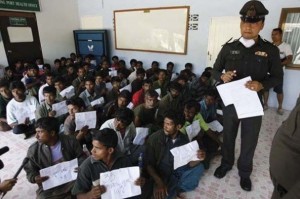
SmugglingThai authorities said on Monday they had found a group of 76 migrants from neighboring Burma, including six suspected Rohingya, in a sign that one of Asia’s busiest smuggling routes is still thriving despite Bangkok’s vow to stamp out trafficking.

It follows the discovery in January of a group of 98 suspected Rohingya trafficking victims, including dozens of children, who were found in pickup trucks in southern Thailand.

Tens of thousands of Rohingya have fled Burma since 2012, when violent clashes with ethnic Arakanese Buddhists killed hundreds. Many head to Malaysia but often end up in smuggling camps in southern Thailand where they are held captive until relatives pay the ransom to traffickers to release them.

The latest group was stopped at Tong Sung district in Thailand’s southern Nakhon Si Thammarat province. They were heading to Malaysia in search of work, Police Colonel Anuchon Chamat, deputy commander of Nakhon Si Thammarat Provincial Police, told Reuters.

“They were sitting with Thai passengers and upon inspection by authorities were found to have no travel documents,” said Anuchon, adding that police have yet to determine whether traffickers were among the group.

“It seems they wanted to go to Malaysia for work and had boarded the train at different locations along the route. It is difficult to say whether traffickers are among them.”

Thailand is ranked one of the world’s centers of human trafficking. It was downgraded to the lowest “Tier 3” status last June on the U.S. State Department’s annual Trafficking in Persons Report for not fully complying with minimum standards for its elimination.

Last week, Thailand’s parliament voted overwhelmingly to introduce harsher punishments for human traffickers, including life imprisonment and the death penalty in cases where their victims had died.

Thailand’s military government said in January it was “confident” it had met the minimum standards to improve its ranking in this year’s U.S. State Department ranking.

But a government report aimed at lifting Thailand from the list of the world’s worst offenders showed it had identified fewer victims of human trafficking last year than in 2013 and convicted fewer perpetrators.

Anuchon said the 76 migrants were being questioned by immigration police and would likely be charged with illegal entry.

Separate US Fed from Wall Street?

Seth Mason writes  Recently, two prominent Republicans, Banking Chairman Richard Shelby of Alabama and House Financial Services Jeb Hensarling of Texas, stated that they plan to explore proposals that would roll back a long-standing provision that gives the president of the New York Federal Reserve an automatic position as vice chairman of a powerful committee that oversees Wall Street banks.

Not surprisingly, long-time New York Fed President vehemently opposes this.

Many high-ranking Fed officials, including former Chairman Ben Bernanke, current Chairwoman Janet Yellen, and the aforementioned William Dudley, purportedly oppose an audit of the Fed because doing so would undermine the “independence” of our nation’s central bank.

The most powerful Wall Street bankers of the early 20th century pressured the federal government to facilitate the creation of the Federal Reserve under the pretense that a central bank was necessary to ensure bank solvency during panics. Nevertheless, the Fed allowed hundreds of small and medium-sized banks to fail during the Great Recession while protecting its Wall Street brethren. Not only did the Fed selectively bail out the so-called “Too Big to Fail” banks to the tune of $14 trillion, but it allowed them to gobble up assets and competition from the faltering smaller banks and then pumped them more than $4 trillion in liquidity with which to stream into the Wall Street casino! The Fed has made this depression a gilded age on Wall Street.

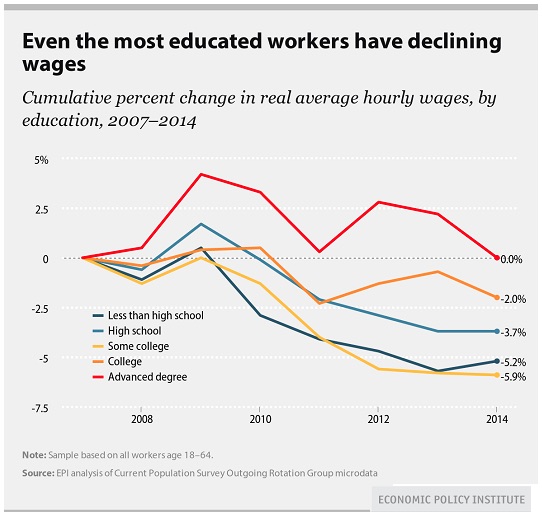
For Main Street, however, the past seven years have been a dark period in American economic history. During a period in which the Fed has facilitated the doubling of the stock market and tremendous bubbles in other assets held in great quantities by the Wall Street elite, ordinary Americans of all education levels have been earning less, millions of them having undergone long periods of unemployment and/or underemployment as a result of the bursting of the Fed’s last asset bubble:

The Fed-Wall Street Revolving Door Must Be Shut - income by education level

The Fed looks out for its Wall Street buddies at the expense of everyone else. The Fed-Wall Street revolving door must be shut.

The Mystery of Egypt’s Disappearing Cotton?

Walaa Hussein writes:  Despite the importance of this unique Egyptian crop, successive Egyptian governments have failed over the last 20 years to reform its production. Cities such as El-Mahalla el-Kubra and Kafr el-Dawwar depend entirely upon this sector, for which former President Gamal Abdel Nasser set up large textile factories that have now stopped operations, such as the Misr Beida Dyers and Misrayon & Polyester Fiber Co. This crisis threatens 1.2 million Egyptians and has led to losses of 1.8 billion Egyptian pounds ($235 million) in 2014.

Several unions, like the Textile and Weaving Union in Egypt, assert that there is a global conspiracy to ruin the Egyptian textile industry in order to benefit the imported clothes industry. Yet successive Egyptian governments’ policies have abandoned support for cotton farmers, while many countries, such as India and Turkey, provide up to 30% subsidies to this industry.

The Egyptian government currently aims to limit the cultivation of Egypt’s extra-long staple cotton, which Egypt used to boast globally as the best type of cotton. To justify its decision, the Egyptian Ministry of Industry claims that the demand for this type of cotton has dropped and accounts for only 3-5% of the global market’s needs.

Egypt is well aware of this reality and that the United States subsidizes each cotton acre with $700 and stands watching. Meanwhile, Egyptian farmers have a million quintals of cotton that they cannot sell because of dumping.

Is it possible that 51 million Egyptian farmers were threatened to be thrown out of the field of agriculture because of the Ministry of Agriculture’s failed policies, which spell disaster in the Egyptian food security sector in the coming period? Egyptian gins that separate cotton from its seeds are being sold. As a result, 60% of lands accommodating these gins have been transformed into spaces for real estate.”

Qalyoubi, former head of the Chamber of Textile Industries, said harvesting cotton crops mechanically requires the introduction of genetic engineering into cultivation and the use of developed irrigation methods. The crops should all be at an equal height from the ground so as not to waste any cotton when harvesting.

He explained that the fragmentation of agricultural land that began in President Nasser’s days led to a decrease in production because the use of modern agricultural systems and irrigation requires large spaces.  “The Egyptian cotton deterioration, be it in production itself or in the high cost of production, has largely impacted the textile and yarn industry in the absence of an imported alternative. In the event that cotton is imported, the price will be set by the Ministry of Agriculture and won’t represent its global price,” Qalyoubi said. Egypt has grown accustomed to exporting long staple, high-quality cotton and importing cotton of poorer quality for textile companies.

Qalyoubi said that Egypt’s textile industry faces stiff competition from India, Bangladesh and China.  “Officials should know that the cultivation of cotton and the textile industry are two issues with social and economic dimensions. The textile industry employs many workers. Therefore, failure to resolve its problems may lead to serious social consequences,” he added.

Pharaohs called Egyptian cotton “white gold.” Meanwhile, nobody knows how long their descendants will keep up the global conspiracy theory to avoid facing their failure to reform Egypt’s cultivation system and the agricultural policies in the country as a whole.

Egyptian Cotton Disappears?

Banks Still Too Big to Fail?

Mark Roe writes: Headlines about banks’ risks to the financial system continue to dominate the financial news. Bank of America performed poorly on the US Federal Reserve’s financial stress tests, and regulators criticized Goldman Sachs’ and JPMorgan Chase’s financing plans, leading both to lower their planned dividends and share buybacks. And Citibank’s hefty buildup of its financial trading business raises doubts about whether it is controlling risk properly.

These results suggest that some of the biggest banks remain at risk. And yet bankers are insisting that the post-crisis task of strengthening regulation and building a safer financial system has nearly been completed, with some citing recent studies of bank safety to support this argument. So which is it: Are banks still at risk? Or has post-crisis regulatory reform done its job?

The 2008 financial crisis highlighted two dangerous features of today’s financial system. First, governments will bail out the largest banks rather than let them collapse and damage the economy. Second, and worse, being too big to fail helps large banks grow even larger, as creditors and trading partners prefer to work with banks that have an implicit government guarantee.

Too-big-to-fail banks enjoy lower interest rates on debt than their mid-size counterparts, because lenders know that the bonds or trading contracts that such banks issue will be paid, even if the bank itself fails. Before, during, and just after the 2007-2008 financial crisis, this provided an advantage equivalent to more than one-third of the largest US banks’ equity value.

Bailouts of too-big-to-fail banks are unpopular among economists, policymakers, and taxpayers, who resent special deals for financial bigwigs. Public anger gave regulators in the United States and elsewhere widespread support after the financial crisis to set higher capital and other safety requirements. And more regulatory changes are in the works.

New studies, including important ones from the International Monetary Fund and the US Government Accountability Office, do indeed show that the long-term boost afforded to too-big-to-fail banks like Citigroup, JPMorgan Chase, and Bank of America is declining from its pre-crisis high. This is good news. The bad news is that US bank representatives cite these studies when claiming, in the financial media and presumably to their favorite members of Congress, that the too-big-to-fail phenomenon has been contained and that the time has come for regulators to back off.

This is a dangerous idea, for several reasons. For starters, the IMF’s research and similar studies show that the likelihood of a bailout over the life of the bonds already issued by banks is indeed now lower. But the studies do not specify why.

Lower bailout risk could reflect the perception that the regulation already in place is appropriate and complete. Or bond-market participants may expect that new regulations, like the stress tests, will finish the job. The studies could be telling us that investors believe that regulators are on the case and have enough political support to implement further safeguards. Or they could think that the economy is currently strong enough that the banks will not fail before the bonds are paid off in a few years.

The second reason why such studies should not deter regulators from continued intelligent action is that the research focuses on long-term debt. But that is not the right place to look nowadays, because regulators are positioning long-term debt to take the hit in a meltdown, while making banks’ extremely profitable – and far more volatile – short-term debt and trading operations more certain to be paid in full. As a result, traders choose too-big-to-fail banks, rather than mid-size institutions, as counter-parties for their short-term trades, causing the large banks’ trading books – and, hence, their profits – to surge.

Measuring the boost to short-term debt is not easy. But it is most likely quite large. The major banks’ recent effort, led by Citigroup, to convince the US Congress to repeal a key provision of the 2010 Dodd-Frank Wall Street Reform and Consumer Protection Act that would have pushed much of their short-term trading to distant affiliates (which are not too big to fail) reinforces this interpretation. The banks know that they will receive more business if they run their trading desks from the part of their corporate group that has the strongest government backing.

The third reason to be wary of bankers’ confidence that the regulatory job is complete is that once they believe it, they will behave accordingly – less frightened of failure and thus willing to take on more risk.

Regulators must not be deterred by bank lobbying or studies that measure neither the short-term boost afforded by a bank’s too-big-to-fail status nor how much of the perception of increased safety can be attributed to the regulations in place and the expectation of additional good regulation. In the absence of such studies, regulators must use their own judgment and intelligence. If “too big to fail” also means “too big to regulate,” the perception of increased safety will not last long.
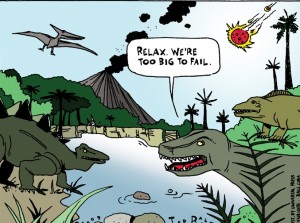

 Too Big to Fail?

Has the UK Become a Prostitute State?

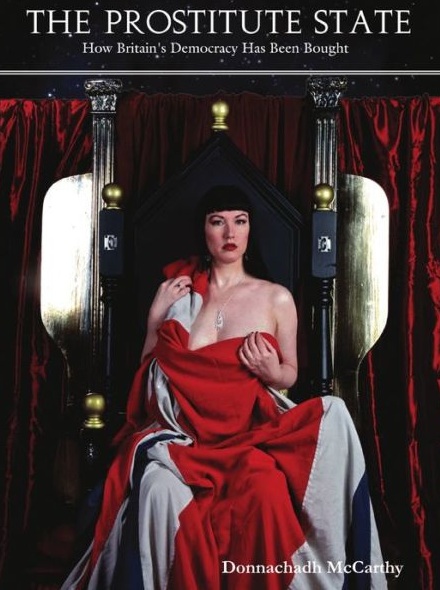
Donnachadh McCarthy has written a book about based on his early  experiences in British poltiics.  He was a Deputy Chair of the Liberal Democrats during the two years leading up to the Iraq War and an elected member of its Federal Executive for 7 years.  He was a founder and a leader of the “new radicalism” Lib Dem campaign group for six years. During this period he was one of the party’s most successful developers of conference policy proposals.

The summer of 2014 marked the 22nd anniversary of his involvement as an environmental campaigner, after spending time with the Yanomami people in the heart of the Amazon forest and seeing first-hand the destruction wreaked there by our consumer anti-society. Since then I have pursued many paths to try and tackle this.  Here is an outline of his book.

Pillar 1 – Our Corrupted Democracy
As a senior Lib-Dem I got a wide range of eco-friendly and progressive policies adopted by the party-conference. But invariably the corporate lobbyists, who surrounded the party’s leadership, smothered almost every single democratic decision. Reams of the top party echelons are or were corporate lobbyists. It is the same in the other major parties. Corporate lobbyists are calling the shots, not we the voters. Take for example the nuclear industry.

Almost every single former Labour Minister for Energy is a lucratively paid nuclear-lobbyist, as was Nick Clegg’s last general election Lib Dem Treasurer. Despite the public favouring renewable-power over nuclear by huge margins, all three main parties are now committed to pouring billions of our money into poisonous new nuclear white-elephants. Huge swathes of government are now under corporate influence including our civil-service, the armed forces and police, the House of Lords and even our regulatory systems.  The Prostitute State  Available at Barnes and Noble. 

The Prostitute State

Fraud in Magnetic Cards?

Fraud alert from the Atlanta Federal Reserve: U.S. migration to EMV (chip) cards. Fraudsters in our magnetic-stripe environment can create counterfeit payment cards.

Other posts have mentioned that ubiquitous tenant of the criminal world – the person always on the lookout for the weakest link or the easiest target. And that criminal does not close up shop and go away in the chip-card world. There is clear evidence from other countries that criminals, after an EMV migration, look for, and find, other targets of opportunity – just as when you squeeze a balloon, you’re constricting the middle, but both ends simultaneously expand.

One major area that criminals target post-EMV is online commerce, an activity referred to as card-not-present (CNP) fraud. However, criminals also target two other areas, according to speakers at the recent 2015 BAI Payments Connect conference: checks and account applications. Well before the EMV card liability shift occurs in the United States (October 1, 2015), a number of financial institutions have reported a marked increase in counterfeit checks and duplicate-item fraud, usually by way of the mobile deposit capture service. In many cases, the fraud takes place on accounts that have been open for more than six months, long enough to allow the criminal to have established an apparent pattern of “normalcy,” although there are reports of newly opened accounts being used as well.

Canadian financial institutions report that fraudulent applications for credit and checking accounts have increased as much as 300 percent since that country’s EMV liability shift. Criminals are opening checking accounts to perpetrate overall identity theft fraud as well as to create conduits for future counterfeit check or kiting fraud. And they’re submitting fraudulent credit applications to purchase automobiles or other merchandise that they can then sell easily.

The time to examine and improve your fraud detection capabilities across all the channels customers use is now. Financial institutions should already be evaluating their check acceptance processes and account activity parameters to spot problem accounts early. Likewise, financial institutions should make sure their KYC, or know-your-customer, processes and tools are adequate to handle the additional threat that the credit and account application channel may experience. Be proactive to prevent the fraud in the first place while ensuring you have the proper detection capabilities to react quickly to potential fraudulent attempts. If we want to constrict the balloon of fraud, we’re going to have to constrict the whole thing with consistent, equal pressure.

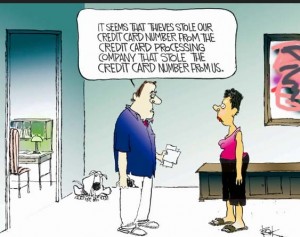
Credit Card Fraud

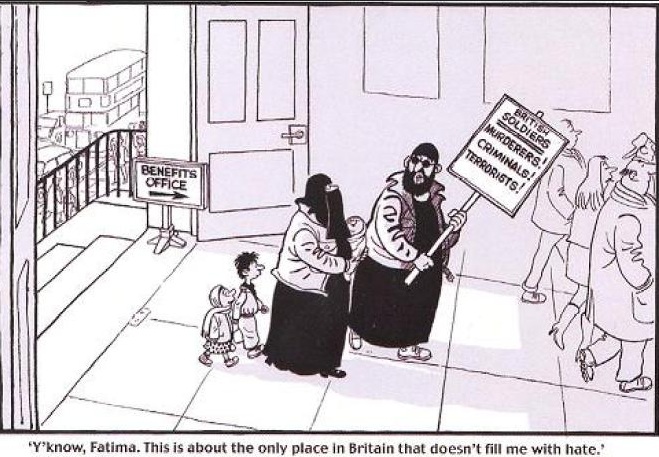
Integrating Muslim Neighbors?

Is Islam Bashing a Lucrative Industry?

The US-based Pew Forum on Religion and Public Life predicts that over the next two decades, Muslims will make up 26.4% of the world’s population of 8.3 billion people. This means that the worldwide Muslim population will have grown by 25% at the end of 2030.

However, while the population of Muslims in the West is growing, a fear of Islam as an ideology is increasing. This has sometimes resulted in aggressive and discriminatory measures against Muslims, which compels some scholars and thinkers to warn against the rise of “Islamophobia.” The belittling and mocking of Islamic beliefs, the Quran and the Prophet Muhammad — often in popular culture and the media — indicate that Muslims face a serious challenge: How to continue living in Western societies peacefully, while being on the receiving end of hate crimes, the denigration of their faith and the restriction of social freedoms.

Nathan Lean is an American scholar and writer, who has investigated Islamophobia extensively.  Lean believes that Islamophobia is a lucrative “industry” that wins skyrocketing salaries for those who promote and contribute to it.

Nathan Lean: An unfortunate consequence of the War on Terror was that it operated on the premise of a “foreign enemy, domestic threat.” While the Bush and Obama administrations went to great rhetorical lengths to avoid conflating the actions of extremists with the peaceful majority, the policies they put in place reinforced the notion that the religion of Islam, and by extension all Muslims, deserved special scrutiny.

Thus, we see a plethora of examples of religious discrimination in the name of national security: The NYPD collaborated with the CIA to spy on Muslim communities in New York, in some cases designating entire mosques as “terrorist organizations”; the FBI paid informants to infiltrate mosques and entrap Muslim worshippers — in one California case, the informant was instructed to sleep with Muslim women; the State Department, in concert with federal immigration offices, delayed or denied visa, passport and citizenship applications based on nothing more than the applicant’s name or country of origin; Congress held a series of McCarthy-esque hearings on “radicalization” of American Muslim communities that produced no evidence such a thing was occurring; and more recently, the White House announced its “Countering Violent Extremism” program, which unlike its broad name, has a narrow focus on the Muslim American community.

Lean: Charlie Hebdo and Jyllands-Posten had the “right” to publish their cartoons. But having that right does not mean that what they did was right. In Western societies, free speech is fast becoming a weapon. We don’t fight for it as much as we fight with it.

Free speech is about as sacred to most people as are their religious values: When it works for them, they embrace it. When it doesn’t, they reject it.  Interview on Muslim Bashing

Muslim Bashing?


Should Nigeria Follow in Dubai’s Steps?

As Barakat Akinsiku writes: As Nigerians prepare for a presidential election amid a Boko Haran a nsurgency, the question remains: What about the economy? With falling oil prices, a depreciating foreign reserve and a plunge in the value of the naira, Nigeria econoimic future is uncertain.   Whoever emerges victorious from the polls on March 28 will have his work cut out for him.

With 174 million people, Nigeria has one of the worst poverty levels in the world, At least 61% of the population survive on less than a dollar a day, and this was during a period of economic boom when crude oil averaged about $120 a barrel, far beyond the country’s budget benchmark.

While the gains of the oil boom were reportedly stashed in Nigeria’s foreign reserve and Excess Crude Account, most of the funds have since been frittered away. Electricity is almost non-existent, with a measly 4,500 megawatts generated for the population; refined crude is still being imported in a nation that is a major exporter of crude oil. Unemployment is at an all-time high, and virtually nothing works. Nigeria is about to feel the full brunt of a recession.

Other countries have experienced economic challenges like Nigeria’s.  As one of the seven emirates making up the UAE, Dubai has been through its own economic boom and bust. It is now a world destination for tourism, a center of commerce and a model for major oil exporters seeking to diversify their economy.

Like Nigeria, Dubai wasn’t always so savvy in economic principles. In the 1900s, the main stay of the Dubai economy was pearl trading and pearl diving. However, following the emergence of artificial pearls from Japan in the late 1920s and the Great Depression of 1929, Dubai’s economy took a downward spiral.

A parallel can be drawn here with the current situation in Nigeria. Not only has the country lost a major customer for its crude oil in the United States, but Nigeria also has to face stiff competition and price wars from the Arabian Peninsula in the battle for market share. While the robust economies of the Gulf Cooperation Council allow them to offer discounts to Asian buyers even in the face of dwindling oil prices, such tactics do not come easily for Nigeria. As it stands, Nigeria faces problems financing its 2015 budget, while the naira is losing value.

Just like pearl divers in Dubai learned to cast their nets for fish rather than jump in for pearls, Nigeria would be wise to seek other sources of revenue while the oil market gains some form of stability.

What makes the emirate worthy of emulation is that despite being in a region bedeviled with crises and an arid landscape, Dubai has gone from being a desert to a world-class state, dazzling and ambitious in development.

Nigeria’s biggest problem is corruption.  Nigerians have remained poor while oil wealth is concentrated in the hands of a few.

The absence of constant electricity has been a major impeding factor to an industrial revolution in Nigeria, and successive governments seem to have no idea how to change the trend. When oil was discovered in 1966, Dubai’s leaders chose to quickly use the receipts from oil rent to finance mass infrastructure, building large ports and 5-star hotels that would one day make the emirate a major trading hub and tourist destination.

So, as harsh economic realities beckon, it is time for Nigeria to overhaul its corrupt institutions, revamp its educational system, invest in critical infrastructure and perhaps revisit the cocoa plantations and groundnut pyramids the country was once known for.

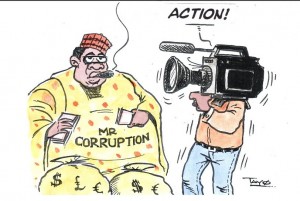
 Corruption in Nigeria


Booze and Other Drugs on the Road to Mandalay

Rangoon’s government bans alcohol sales after 10pm while students sit matriculation exams, and says it will re-enforce restrictions that prohibit those sales year-round after 11pm

Palaung rebels claim to have seized a heroin and methamphetamine haul worth over US$3.5 million while inspecting a mining truck in northern Shan State.

Domestic companies can now apply for wine import licenses, nearly one month after a major retail association stopped selling foreign alcohol demanding swift reforms.

Jakarta backs off from imminent execution of 10 drug smugglers, saying the sentences might not happen soon because some of them have legal appeals pending.

Road to Mandalay

Swiss Banking in the Shadows

Bloomberg offers scenes from the shadowy world of Swiss Banking

The Swiss banking industry is a $7 trillion secret.

It holds a third of the world’s offshore assets, including, say critics, the cash of dictators, despots, gangsters, and arms dealers—all protected by Switzerland’s strict banking secrecy laws.

UBS and Credit Suisse, which together account for half of the Swiss banking industry, have neighboring headquarters on Zurich’s Paradeplatz—one of the most expensive pieces of real estate in Switzerland. They’re said to own vast vaults beneath the square, containing gold, cash, and enough secrets to feed a myriad of spy novels and thrillers.

But the attitude toward what was once a source of national pride is shifting, fueled by politicians and even shareholders disenchanted with the apparent arrogance, incompetence, and venality exposed by huge losses, scandals, and galling bonus payments at the banks. UBS Chief Executive Officer Oswald Grübel resigned in 2011 after a rogue trader in London lost more than $2 billion, while in 2014, Credit Suisse pleaded guilty to helping Americans evade taxes and agreed to pay $2.6 billion. Meanwhile, smaller private banking outfits have banned their employees from traveling to the U.S. for fear of arrest.

Some Swiss call a clampdown on the banks an “economic war,” but there are widespread calls for greater supervision and tighter regulation. Even the hallowed banking secrecy law itself is under threat after the Swiss government agreed to hand over the names of 4,450 Americans with accounts at UBS after the bank was caught red-handed using secret codes and encrypted computers to help them dodge taxes.

The spotlight is an uncomfortable place for an industry built in the shadows. —