Did Maxine Waters, John McCain and Carl Levin Oust Credit Suisse CEO Dougan?

Dougan took over Credit Suisse in 2007, just in time to catch the worst global financial crisis in decades.

Last year Swiss lawmakers started pressuring him to resign after the bank plead guilty to helping clients evade taxes. The $2.6 billion fine the bank had to pay resulted in its first quarterly loss since 2008.

Pressure was mounting on Dougan from inside the bank too. After he testified on Capitol Hill about the tax evasion matter, a staff group representing Swiss bankers at Credit Suisse and other Swiss banks demanded that he apologize. They said Dougan’s testimony simply served to “vilify lots of employees that had nothing to do with offshore U.S. banking.”

Who knew what and when has been a continuig question in the investigation of banks, money laundering and aiding and abetting income tax evasion.  It is probable that the Department of Justice, the SEC, IRS and White House did not want to force an American banking CEO to plead guilty to criminal activities.

The Senate Committee on Investigations and a posse of legislators in the House and Senate kept insisting that top brass be brought to justice..  It is probable that a foreign bank was picked to take the rap.

Brady Dugan has claimed to have no knowledge of the schemes to aid and abet tax evasion.

When Maxine Waters insisted that the Department of Labor hold hearings on a Credit Suisse exemption from their criminal plea, evidence was submitted that Dougan did in fact know all about these schemes.  Pressure brought by the Labor Department hearing, the outcome of which has not yet been announced, may well have forced his resignation.

Credit Suisse wants the 2 billion US pension business it has been handling.  Proof that Credit Suisse had put aside its “culture of corruption” may have forced Dougan to step down.

It will be interesting to see if the exemption is now granted to Credit Suisse, and the reasons for which it is granted.  Clearly talk has been flying from the DOJ to the White House to the SEC.
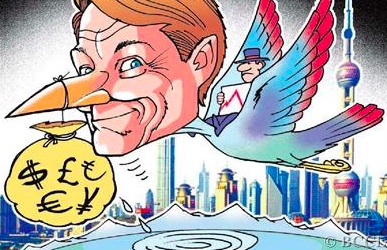
Brady Dougan


Afghanistan Producing Opium at Record Pace

Africa is becoming a major transit point for heroin from Afghanistan, especially for shipments to Europe.

Most of it still takes an established path known as the “Balkan route” through Iran and southeast Europe.  Recent seizures along the Kenyan and Tanzanian coastlines, however, point to a “southern route.”

Between 2002 and 2011, Africa was sporadically identified as an origin for heroin reaching Europe. In 2012, however, East Africa became a prominent spot, according to the UN.

Afghanistan is the source of 80% of the world’s illicit opium products, accordiing to hte United Natoins World Drug Report.

Afghan opium cultivation has increased by 7% from 2013 to 2014 and production increased as much as 17% over the same period, the UN reported in November. “Authorities “are worried that a record opium harvest in Afghanistan will flood global heroin markets this year,” Reuters also notes.

Map covering the drug trafficking through the Middle East. (photo: UNODC)

Map covering the drug trafficking through the Middle East. (photo: UNODC)

The US Drug and Enforcement Agency has spent years chasing after one organization, known as “Akasha,” responsible for the production and distribution of huge amounts of narcotics in Africa, according to Reuters.

Increased drug trafficking could destabilize the already volatile region, Western officials say, fearing a repeat of what happened in Guinea-Bissau, AFirca’s first naco state. 

Adding to the global nature of the problem, opiates and opioids, like heroin, top the list of drugs that cause the most disease and drug-related deaths, according to the UN.

Opium traffic


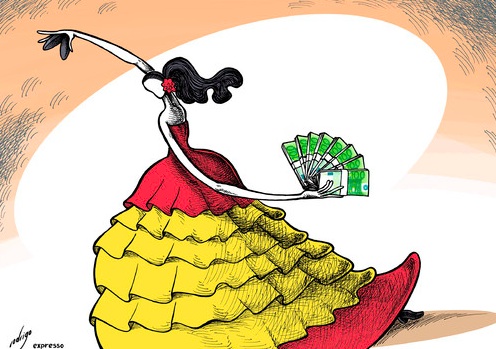
40 to Trial in Spain for Corruption

A six-year probe into Spain’s biggest graft scandal has resulted in a judge ordering trial for 40 people, including former Popular Party treasurers. It involved public works contracts in and around Madrid and Valencia.
Spanish High Court judge Pablo Ruz on Thursday imposed court bonds worth a total of 449 million euros ($500 million) on 36 of the 40 suspects, who also include former mayors and businessmen linked to the ruling Popular Party (PP).

No dates for the trials have yet been set for the 40 who face charges for the alleged bribes for contracts scene allegedly carried out between 1999 and 2005.

The Popular Party’s former Treasurer Luis Barcenas faces the highest court bond of 88 million euros, while the alleged scheme mastermind, businessman Francisco Correa, was told by the judge to lodge a 60-million-euro bond.

Prosecutors have demanded lengthy prison terms for both. Barcenas is alleged to have diverted donations from builders and other business leaders into the pockets of PP leaders.

The alleged kickbacks scheme has become an embarrassment for Prime Minister Mariano Rajoy whose conservative Popular Party faces a general election late this year.

Spain’s new anti-establishment party Podemos is poised to make big gains on a mandate to tackle corruption.

Former Health Mnister Ana Amato resigned last November saying at the time she had had no knowledge of the offending.

Her ex-husband, a former PP mayor in the upscale Madrid suburb of Pozuello de Alarcon, faces charges of receiving money and gifts for public works contracts.

The day after Amato resigned, Rajoy introduced two anti-corruption laws to parliament.

Beyond 2005, investigators are still looking into other crimes that allegedly took place between 2006 and 2009 as part of the case.

Meanwhile, Spain’s national statistics institute reported on Thursday that on average 95 families lost their homes per day because of excessive debt.

Spain’s real estate bubble burst in 2008, resulting in forced expulsions.

Nearly 35,000 homes were forcibly acquired by creditors last year, a rise of 7.4 percent on 2013, according to the statistics office. Forced seizures of holiday homes, bureaus and farms pushed that total up to 119,442, it added.

Rajoy’s government argued that Spain has overcome the crisis. Opposition parties point to persistently high unemployment.

Corruption in Spain

US Banks Ready for Stress?

The nation’s 31 largest banks stand to shed close to half a trillion dollars if the economy slumped into a deep depression, the Federal Reserve said Thursday.

But the banks — which include Citigroup, JPMorgan Chase, Wells Fargo and Goldman Sachs — appear better positioned than ever to handle such loss, Fed data show.

Indeed, for the first time since the Fed began conducting its “stress tests” on banks with more than $50 billion in assets, not one fell below the Fed’s capital requirements, according to the first phase of the Fed’s stress test results released Thursday.

That places the nation’s biggest banks in a better position to pass the next phase of the Fed’s stress testing, which will determine which lenders may proceed with plans to return capital to investors. Final grades will be doled out Wednesday.

The Fed said the nation’s 31 largest banks would lose $490 billion in the 27 months ending October 2016 if the economy was rocked by what it called “severely adverse” conditions.

Those would include a 10% unemployment rate, a 25% drop in housing prices, a stock market plunge of nearly 60% and “a notable rise in market volatility.”

But banks have been steadily building their capital reserves to protect against losses due to stiffer requirements from the Fed, which is seeking to avoid further taxpayer funded bailouts like those made during the mortgage meltdown.

Under the Fed’s worst case scenario, the 31 firms tested would see their common capital ratios, which compare high-quality capital to risky assets, fall from 11.9% in the third quarter of 2014 to 8.2%.

That compares to aggregate capital ratios of 5.5% in the beginning of 2009, and 7.6% last year.

“It means our banking sector is pretty healthy right now from the perspective how how much money they are holding,” said Anna Krayn, head of stress testing for Moody’s Analytics. “Some would argue that there’s excess capital in the system,” she said.

Thursday’s results are just the first phase in the Fed’s stress testing process. On Wednesday, the Fed will announce whether any of the 31 banks still need to rein in capital spending plans.

Last year, Citigroup, Royal Bank of Scotland Group, HSBC Holdings and Banco Santander passed the Fed’s initial capital hurdle, but still fell short of complete success after the Fed determined that the quality of their processes, including their ability to assess risk, wasn’t good enough.

Another fail for Citigroup, the largest of the big banks to fail the test twice, will put pressure on CEO Michael Corbat whose success may be measured by Citi’s performance.

The real question is: are these stress tests and adequate measure of capacity to take a hit.

Cautionary Tale for Entrepreneurs

Sarah Fenwick in Cyprus writes of her efforts to get an EU businss grant.

I’m a Cypriot citizen and EU citizen and decided to look for other types of opportunities to improve my career. Never one to give up easily, I heard about some EU grants offering five million euros in financial resources to women entrepreneurs, and since my goal was always to own a business doing what I love, I scraped together 1000 euros to pay a consultant to do the paperwork and submit my business plan to the ministry of commerce.

I had originally budgeted for the full 100,000 euros allowed, which the government would fund by 50% with a grant, but somehow, due to a complicated procedure I didn’t understand fully, the budget submitted ended up being under 20,000 in total. My consultant told me it was because I would be working from a home office, and despite my explanations that online marketing and journalism are done from wherever there is an Internet connection, this flexible services approach was not a business model that would be understood by the ministry and I would just have to accept their decision.

Then, I waited. And waited. And waited, getting on with my productive work with CyprusNewsReport.com and working as a marketing consultant and jazz singer. Since the grant hadn’t come through yet, I could not see the reason to commit financial resources like getting a bank loan – which the consultant had suggested to do on the basis of the prospect of receiving the grant.

After many months, I contacted the ministry directly to ask what the status of my application was, and after many more months, received an official response that was quite unclear to me. The letter was in Greek and said that I’d received enough points to be accepted in the grant scheme but since there was not enough money for all the successful applicants, other candidates were put ahead of me based on this internal points system.  EU Business Grants in Greece

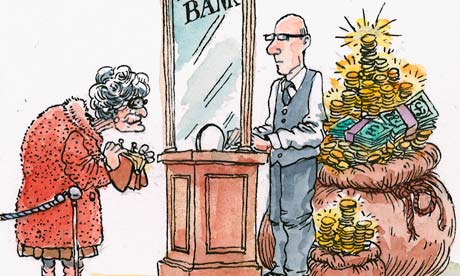
Cyrpus and EU Loans

Shrinking Banks?

Mark Gilbert writes:  Some of the world’s biggest banks are starting to acknowledge that size isn’t everything. It’s a welcome development in the effort to solve the “too big to fail problem.”  Instead of  focusing on the final pair of words as a potential solution (seeking to avert failure by concentrating on capital buffers), rather focus on the first two words (eliminating systemic risk by making the banks smaller). It’s also proof that regulators are succeeding in nudging the world of finance toward a better place

Leading the way is Royal Bank of Scotland, which hasn’t made a profit since 2007 and remains a ward of the state after a $70 billion bailout more than six years ago left it 80 percent owned by the U.K. government. The size of the RBS rescue reflects the sprawling institution it was then; now, the bank is “no longer chasing global market share,” according to Chief Executive Officer Ross McEwan.

JPMorgan Chase, the world’s biggest investment bank, is also going on a diet. Daniel Pinto, who runs its corporate and investment business, said this week that new capital rules may prompt it to cut back on interest-rate trading and the prime brokerage businesses that services hedge-fund managers; it’s also closing branches in its consumer unit as it tries to shave off $2 billion in costs by 2017. And HSBC, Europe’s biggest bank by market capitalization, said this week it will consider “extreme solutions” for divisions that can’t generate sufficient returns on capital as part of a “journey to simplify the firm.”

Both JPMorgan and HSBC are displaying enlightened self-interest. Analysts have deemed both to be candidates for a break-up, either by investors who want to unlock perceived value in splitting retail entirely from investment banking, or by regulators who see the two functions as incompatible. Slimming down is a way of addressing the allegation that they’re too big to manage without executives having to oversee the total dismantling of their own train sets.


Shrinking Banks


Smaller banks are a welcome consequence of regulators tweaking the rules on capital to make some risky activities too expensive to be profitable. While we won’t know for sure whether the too big to fail issue has been resolved until a large institution goes bust, the financial industry is at least moving in the right direction.

Banking-reform-cartoon-by-008

Arming Youth a Consequence of Ukraine Debt Burden?

Mark Whitehouse writes:  Even as its conflict with Russian-backed secessionists festers, the Ukrainian government is facing a growing threat on the economic front: A sovereign debt burden that is rapidly becoming unbearable.

The insurgency in the east has undermined the Ukrainian government’s finances in two ways beyond the direct costs of war. First, by crippling industrial regions that accounted for as much as 20 percent of the country’s output, it has pushed the economy into a deep recession. Second, by triggering capital flight and an attendant plunge in the value of the Ukrainian hryvnia, it has made the government’s largely dollar-denominated debts much larger in local-currency terms.

Here’s a chart showing Ukraine’s government bonds and loans outstanding as a percentage of gross domestic product, with the latest data point adjusted for the hryvnia’s exchange rate as of Feb. 26:

UkrA20150226

As the chart shows, the Ukrainian government’s debt stands at more than 100 percent of gross domestic product. That’s up from about 40 percent in early 2014, when Russia initiated the annexation of Crimea, and well above the 70 percent level at which the International Monetary Fund typically considers an emerging-market country to be at elevated risk of insolvency. Even if the government eventually managed to stabilize its economy and its borrowing costs, it would likely have to run a budget surplus (excluding interest payments) of about 4 percent of GDP indefinitely — an unprecedented feat for just about any country — just to keep such a debt burden from growing.

To make matters worse, an outsized chunk of Ukraine’s debt comes due over the next few years. Total interest and principal payments through 2017 add up to $27 billion, dwarfing the country’s $5 billion in foreign reserves and even the $17.5 billion that the IMF is considering lending to the government. Here’s a breakdown of the principal owed by year:

UkrB20150226

Ukraine is planning to ask for relief from creditors. Russia, to which Ukraine owes $3 billion due in December, could refuse, leaving the losses to fall primarily on private bondholders, among the largest of which is U.S. asset manager Franklin Templeton. The country’s finance minister said that the government would be looking to get as much as $15 billion in concessions — an amount that analysts at Goldman Sachs estimate could cut the value of Ukrainian bonds by as much as 50 percent. Judging from the speed with which the government’s finances are deteriorating, that may be just the beginning.

Children Learning to Fight in the Ukraine

US Exit Bonuses Under Scrutiny

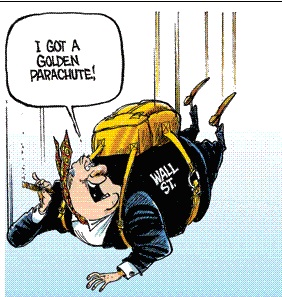
Antonio Weiss was recently in line to receive a $20 million bonus from his investment-bank employer for agreeing to take a Treasury Department undersecretary position. Weiss, who eventually took an advisory job that did not require Senate confirmation, is only the latest in a series of would-be and actual public officials who have stood to benefit from these “golden parachute” deals.

But why? If you go into government, you’re supposed to work for the public, not for Wall Street. Why is it in the interests of a bank or its shareholders to reward top executives – those who make millions of dollars a year because of all they presumably do for their employers — to leave? If the bank is motivated by something other than a desire to wield inappropriate influence on newly minted government officials, what is that motivation? This seems like a very fair question for shareholders to ask.

The AFL-CIO recently filed proposals to let big-bank shareholders demand greater transparency around these practices.  The banks’ reaction?  Panic.  They’re working as we speak to persuade the Securities and Exchange Commission to step in, allowing them to keep their policies a secret and their shareholders in the dark.

When bankers get large bonuses for taking government jobs, it sends a dangerous message about who is really calling the shots. If the big banks think these practices are defensible, they should defend them in the light of day.  They should let their shareholders know the facts and judge for themselves.  But if these policies are so indefensible that Wall Street needs to keep them a secret, that should tell shareholders and the public all they need to know.

Golden Parachute

A Bad Day for Banks

Matt Levine brikskly sums it up:

Rough day for Royal Bank of Scotland.  RBS last posted net income back  when just about anyone could post net income; since then, counting today’s 3.5 billion pound ($5.4 billion) net loss for 2014, the total losses come to just under 50 billion pounds. That’s more than 9,000 pounds for every man, woman and child in Scotland. It’s more than Bank of America has paid in mortgage settlements.  At some point, if you were RBS’s managers or its owners (mostly the U.K. government), wouldn’t you start thinking it might not be worth it to keep going?

A very bank-y thing about RBS is that, after seven years of multi-billion-pound losses, management’s focus is on share repurchases: “By the time we get to 2016, we hope to have satisfied the preconditions we think are needed in order to start a discussion” with regulators about dividends or share repurchases, says the chief financial officer. I feel like the regular-company model is, if you make a lot of money, you give it back to shareholders; if not, not so much. The RBS model is more like: We are losing so much of your money, you shouldn’t trust us with it, here, you take it back. Capital requirements make this difficult, but if RBS can shrink its assets faster than it loses money, it stands a chance.

And for Standard Chartered. StanChart’s board rather surprisingly parted ways with its chief executive officer, Peter Sands, and replaced him with former JPMorgan banker

The chairman is also leaving. “With the share price having about halved since its March 2013 peak, the stock market was looking for a fresh start.

And for HSBC.  HSBC executives did not enjoy testifying before Parliament about all the tax-dodging that HSBC facilitated, tCEO Stuart Gulliver’s use of a Swiss bank account held by Panamanian shell company to receive his bonuses, which Gulliver has patiently and repeatedly explained was just to keep his co-workers from seeing how much he made, and not to dodge taxes.

And for Morgan Stanley.

Morgan Stanley agreed to pay $2.6 billion to settle Justice Department mortgage-fraud claims,and also “increased legal reserves for this settlement and other legacy residential mortgage-backed securities matters by approximately $2.8 billion” for 2014.

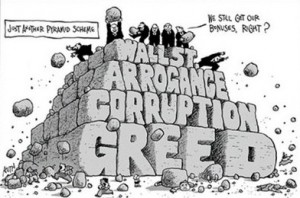
Pyramids?


Can De Facto Immunity from Criminal Charges Against Bankers End?

he American Banker contributor J. W. Rizzi writes:  Big banks are once again in the spotlight for a host of alleged misdeeds including tax evasion, money laundering, price rigging and manipulating foreign exchange rates. But despite the seriousness of these accusations, federal prosecutors have yet to file criminal charges against a senior bank executive.

By contrast, hundreds of officials were jailed during the savings and loan crisis and past corporate fraud cases including Enron and World Com. The big difference between then and now comes down to the size of the defendants. The Department of Justice has deemed senior officials of the country’s biggest banks too important to charge.

In the past, prosecutors relied on deferred prosecution agreements on to settle criminal cases against big. These agreements gave banks conditional amnesty upon paying a fine and promising to implement reforms in the future. Public concern regarding this lenient treatment has since forced the DOJ to insist that big banks pleading guilty to criminal violations. But this tougher stance is mostly for show. The entities that plead guilty are lower-level, nonbanking subsidiaries. Thus the parent company’s banking licenses are not at risk. And of course, executives get off scot-free.

Crimes are committed by humans — not organizations. If prosecutors decline to jail or even fine individuals, criminal law hardly works as a deterrent.

Banking is a team sport. Someone is always either calling the plays or condoning the play selection. If bank management truly didn’t know about their employees’ misdeeds, they should have known about it. And if institutions are too big and complex for senior officials to know what their underlings are doing, they should scale back.

When we allow managers to plead ignorance as a defense for wrongdoing, we encourage further ignorance and illegal activity.

Prosecutors have struck a Faustian bargain with too big to fail banks. In exchange for declining to file charges against senior management, they get a quick plea, substantial fines and the appearance of being tough on crime. Everyone wins — except the public.

Federal Reserve Governor Daniel Tarullo  and otehr regulators insist that big banks must improve oversight to reduce illegal employee behavior and bolster their culture. But the problem is criminal, not cultural, and regulators are poorly suited to handle criminal activities. The DOJ should be leading the charge.

There is a simple way to stop bankers from violating the law, and it doesn’t require new laws or breaking up the largest financial institutions. The DOJ simply needs to begin charging the bankers who commit crimes instead of focusing solely on the firms for which they work. When appropriate, prosecutors can also assess monetary fines and damages against the banks as restitution.

This is not about bashing big bankers or punishing them for bad business decisions and excessive risk-taking. It’s about eliminating the de facto immunity from criminal charges that bankers currently seem to enjoy.

By prosecuting individuals who are responsible for misdeeds, the DOJ can curtail illegal activity and restore public trust in big banks — and in the law itsel.

 Big Bankers Behind Bars?