No Talk of Obama Vetoing

A place of great natural beauty, popular among rock climbers and campers, a part of Tonto National Forest known as Oak Flat has been under federal protection from mining since 1955, by special order of President Eisenhower.

On the nearby San Carlos Apache reservation, many consider Oak Flat to be sacred, ancestral land – the home of one of their gods and the site of traditional Apache ceremonies.

But Oak Flat also sits on top of one of the world’s largest deposits of copper ore. Resolution Copper Mining, a subsidiary of British-Australian mining conglomerate Rio Tinto, has sought ownership of the land for a decade, lobbying Congress to enact special legislation on its behalf more than a dozen times since 2005.

Year after year the bills failed to pass. But in December, the legislation was was quietly passed into law as part of the 2015 National Defense Authorization Act, of the  Arizona Sen. John McCain, who has long championed the deal, said the land exchange would strengthen th US military since copper is the second-most-utilized mineral by the Department of Defense.

As part of the deal, Resolution Copper will swap roughly 7.8 square miles of land scattered across Arizona for roughly 3.8 square miles of Tonto National Forest, which includes Oak Flat. The new legislation will open up Oak Flat for copper mining.

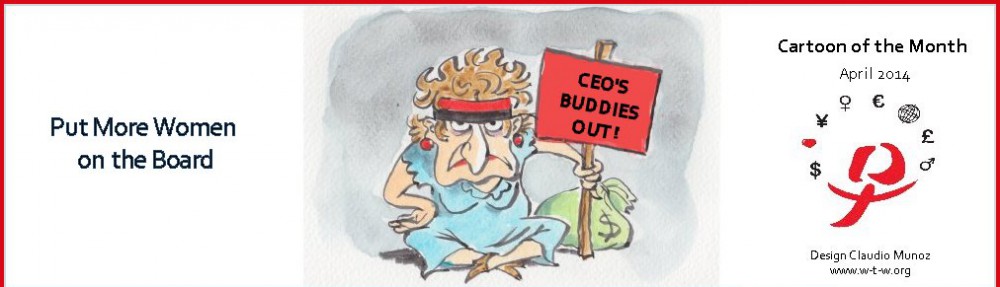
But critics say the move allows the company to privatize the land and make an end run around critical environmental and cultural protections. What’s more Resolution Copper can’t promise that any of the copper produced by the mine will remain in the United States – which raises the question: How does this help national defense?

Mining Agreement?

Do Women Have to Climb on Husband’s Backs to Power?

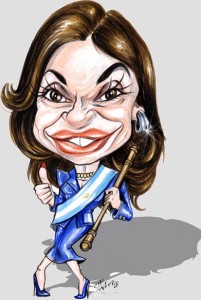
Uki Goni writes:  Under a torrential downpour, hundreds of thousands of people marched in silence in Buenos Aires on Wednesday evening. Soaked to the bone, old and young alike held their ground to pay tribute to Alberto Nisman, the crusading prosecutor whose deathi under mysterious circumstances one month ago has created political turmoil with as yet unforeseeable consequences in Argentina.

If such a massive and spontaneous display of respect for the man who dared accuse Cristina Fernández de Kirchner in court of attempting to cover up what he alleged was Iran’s role in the deadliest terrorist bombing in Argentina’s history grated on the mind of the president, she certainly did not show it.

The march came days after Nisman’s 289-page criminal complaint was made public. Nisman’s death may yet prematurely end her time in office, but Fernández’s life story to date reads like a fairytale.r.

Unlike Evita, who held no elected post, the energetic and highly intelligent Fernández launched herself into an independent political career that quickly outshone that of her husband.

With the economy in tatters but with no viable opposition to question his bold tactics, Kirchner stood up to big business and bondholders and led the economy on a dramatic turnaround that felt nothing short of miraculous. The couple’s popularity ratings soared to over 70% and stayed there for years. In 2007.

Buoyed by solid approval ratings and a booming economy, Argentina’s first elected female president introduced generous social spending programmes that boosted her popularity even further. The reforms included what may be her proudest achievement, a universal child benefit plan that has helped many families out of poverty and raised school attendance to peak levels.

Women's Political Power?


Finance Between the Bullets in Ukraine

Robert Parry writes:  Ukraine’s new Finance Minister Natalie Jaresko, who has become the face of reform for the U.S.-backed regime in Kiev and will be a key figure handling billions of dollars in Western financial aid, was at the center of insider deals and other questionable activities when she ran a $150 million U.S.-taxpayer-financed investment fund.

Prior to taking Ukrainian citizenship and becoming Finance Minister last December, Jaresko was a former U.S. diplomat who served as chief executive officer of the Western NIS Enterprise Fund (WNISEF), which was created by Congress in the 1990s and overseen by the U.S. Agency for International Development (U.S. AID) to help jumpstart an investment economy in Ukraine.

But Jaresko, who was limited to making $150,000 a year at WNISEF under the U.S. AID grant agreement, managed to earn more than that amount, reporting in 2004 that she was paid $383,259 along with $67,415 in expenses.

Jaresko formed HCA and EEGF with two other WNISEF officers, Mark Iwashko and Lenna Koszarny. They also started a third firm, Horizon Capital Advisors, which “serves as a sub-advisor to the Investment Manager, HCA.

From 2007 to 2011, WNISEF co-invested $4.25 million with EEGF in Kerameya LLC, a Ukrainian brick manufacturer, and WNISEF sold EEGF 15.63 percent of Moldova’s Fincombank for $5 million, the report said. It also listed extensive exchanges of personnel and equipment between WNISEF and Horizon Capital.

Prior to the coup and the resulting civil war, Jaresko’s WNISEF was generously spreading money around. The “long-term equity incentive plan” was “not compensation from Government Grant funds but a separately USAID-approved incentive plan funded from investment sales proceeds”.

The filing also said the bonuses were paid regardless of whether the overall fund was making money, noting that this “compensation was not contingent on revenues or net earnings, but rather on a profitable exit of a portfolio company that exceeds the baseline value set by the board of directors and approved by USAID” – with Jaresko also serving as a director on the board responsible for setting those baseline values.

Despite ethical questions, Jaresko is cited by the New York Times has sharing American vaues.  Ar Davos she castigated Russian President Vladimir Putin:

Jaresko’s ex husband Figlus provided a narrative of events as he saw them as a limited partner in EEGF, saying he initially “believed everything she [Jaresko] was doing, you know, was proper.” Later, however, Figlus “learned that Jaresko began borrowing money from HCA REDACTED.

Last December, Jaresko had resigned from her WNISEF-related positions, taken Ukrainian citizenship and started her new job as Ukraine’s Finance Minister.

Showing how much Jaresko’s network is penetrating the new Ukrainian government, another associate, Estonian Jaanika Merilo, has been brought on to handle Ukraine’s foreign investments. Merilo’s Ukrainian Venture Capital and Private Equity Association (UVCA), which is committed to “representing interests of private equity investors to policymakers and improving the investment and business climate in Ukraine,” included Jaresko’s Horizon Capital as a founder.

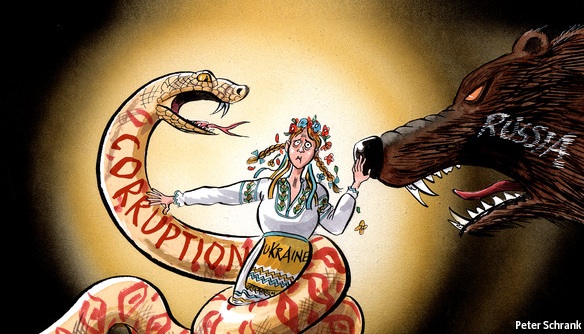
The question remains whether Jaresko’s is the right kind of experience to handle IMF money and whether the money will go to help the impoverished people of Ukraine or simply wind up lining the pockets of the well-heeled and the well-connected.  Finance Between the Bullets
Corruption in the Ukraine?

Syzria and the Greek Oligarchs

Walter Russell Mead writes: The most interesting, as opposed to the most explosive, component of Syriza’s agenda is its commitment to attack the “oligarchs”—the small number of extremely wealthy, powerful, and well-connected Greek families and individuals who sit at the top of Greece’s deeply corrupt, clientelist system. The struggle against the the oligarchs is heating up.  The “oligarchs” include private TV channels, “crony” bank loans for the well-connected, majority shareholdings of private banks.  Can aggressive tax audits be used on offshore bank accounts?

For Syriza, the fight against oligarchs at home and technocrats in Europe and at the IMF is connected. For Americans the connection may be harder to figure out: economic and political realities in societies in both southern Europe and Latin America are often so different from the conditions that Americans take for granted that it’s hard for us to understand what some of the fuss is about. Our richest and best-connected citizens in the United States have never quite—in spite of their dearest wishes—managed to establish total oligarchic control of our society. The economy is too big, the country too diverse (geographically and culturally), and American society too dynamic and egalitarian for the rich and the powerful to lock everything down.

But in many countries, the rich haven’t just tried to create oligarchies. They’ve succeeded, and the political, economic, religious, and cultural establishments have become entrenched, powerful, self-dealing, and corrupt. Often the interface between the global economy and the national economy is controlled by an oligarchic group of families and interests allied with foreign capital, who use the slogans of free markets and capitalism to cloak what is really a kind of pre-modern, semi-feudal system of government.

In these countries, popular revolts against privilege and oligarchy often take the form of left-wing socialist and populist movements. When labor unions fight the owners of enterprises, they are fighting the feudal oligarchs for a bigger share of the economic pie in a struggle that has important political as well as economic implications. When populist protest parties rail against privatizations required by foreign institutions like the IMF and the EU, they are fighting, at least in part, what they know to be a corrupt arrangement through which the “right” oligarchs are snapping up valuable assets at fire-sale prices.

Many “reforms” in developing countries have enhanced the positions of powerful and shady figures.    Syzria and the Greek Oligarchs

Oligarchy  Not New News in Greece


Snowden Redux and Redux…

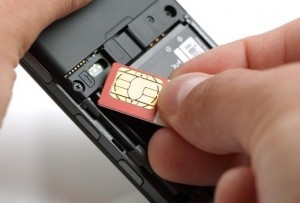
Jeremy Scahill and John Begley write:  SIM cards were not invented to protect individual communications — they were designed to do something much simpler: ensure proper billing and prevent fraud, which was pervasive in the early days of cellphones. Soghoian compares the use of encryption keys on SIM cards to the way Social Security numbers are used today. “Social security numbers were designed in the 1930s to track your contributions to your government pension,” he says. “Today they are used as a quasi national identity number, which was never their intended purpose.”

The only effective way for individuals to protect themselves from Ki theft-enabled surveillance is to use secure communications software, rather than relying on SIM card-based security. Secure software includes email and other apps that use Transport Layer Security (TLS), the mechanism underlying the secure HTTPS web protocol. The email clients included with Android phones and iPhones support TLS, as do large email providers like Yahoo and Google.    Hacking SIM cards

Hacking Sim Cards

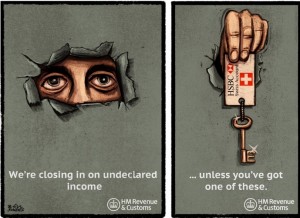
Daily Telegraph Commentator Quits Over Paper’s Suppression of HSBC Scandal Facts

Peter Oborne, the paper’s chief political commentator and an award-winning author, announced his resignation in a blog on the openDemocracy website, in which he accused the Telegraph of committing a “fraud” on readers by burying reports on the HSBC tax scandal.

The journalist quoted a conversation with Murdoch MacLennan, chief executive of Telegraph Media Group, whom he said freely admitted that advertising was allowed to affect editorial at the paper.

Referring to the phone-hacking scandal which hit Rupert Murdoch’s newspapers, Oborne argued that democracy was being undermined by “shadowy” media executives “who determine what truths can and what truths can’t be conveyed” by news organisations.

Mr Oborne detailed a series of investigations about HSBC, and other financial scandals, which he said executives at the newspaper had closed down.

He declared that “democracy itself is in peril” if “major newspapers allow corporations to influence their content for fear of losing advertising revenue”.

He referred to the Telegraph’s decision to delete one story – “HSBC faces £70bn capital hole, warn Hong Kong analysts” – from the paper’s website which reported that the banking giant had “overstated the value of the assets on its balance sheet by more than £50bn”.

HSBC

How Are Banks Hacked?

Kaspersky Labs report on the billion dollarbank  heist by hackers:  The story of Carbanak began when a bank from Ukraine asked us to help with a forensic investigation. Money was being mysteriously stolen from ATMs. Our initial thoughts tended towards the Tyupkin malware. However, upon investigating the hard disk of the ATM system we couldn’t find anything except a rather odd VPN configuration (the netmask was set to 172.0.0.0).

At this time we regarded it as just another malware attack. Little did we know then that a few months later one of our colleagues would receive a call  in the middle of the night. On the phone was an account manager, asking us to call a certain number as matter of urgency. The person at the end of the line was the CSO of a Russian bank. One of their systems was alerting that data was being sent from their Domain Controller to the People’s Republic of China.

Up to 100 financial instritutions have been hit.

When we arrived on site we were quickly able to find the malware on the system. We wrote a batch script that removed the malware from an infected PC, and ran this script on all the computers at the bank. This was done multiple times until we were sure that all the machines were clean. Of course, samples were saved and through them we encountered the Carbanak malware for the first time.Further forensic analysis took us to the point of initial infection: a spear phishing e-mail with a CPL attachment; although in other cases Word documents exploiting known vulnerabilities were used. After executing the shellcode, a backdoor based on Carberp, is installed on the system. This backdoor is what we know today as Carbanak. It is designed for espionage, data exfiltration and remote control.

Once the attackers are inside the victim´s network, they perform a manual reconnaissance, trying to compromise relevant computers (such as those of administrators’) and use lateral movement tools. In short, having gained access, they will jump through the network until they find their point of interest. What this point of interest is, varies according to the attack. What they all have in common, however, is that from this point it is possible to extract money from the infected entity.

The gang behind Carbanak does not necessarily have prior knowledge of the inner workings of each bank targeted, since these vary per organisation. So in order to understand how a particular bank operates, infected computers were used to record videos that were then sent to the Command and Control servers. Even though the quality of the videos was relatively poor, they were still good enough for the attackers, armed also with the keylogged data for that particular machine to understand what the victim was doing. This provided them with the knowledge they needed to cash out the money.

During our investigation we found several ways of cashing out:

ATMs were instructed remotely to dispense cash without any interaction with the ATM itself, with the cash then collected by mules; the SWIFT network was used to transfer money out of the organisation and into criminals’ accounts; and databases with account information were altered so that fake accounts could be created with a relatively high balance, with mule services being used to collect the money.

Carbanak_1_enSince we started investigating this campaign we have worked very closely with the law enforcement agencies (LEAs) tracking the Carbanak group. As a result of this cooperation we know that up to 100 financial institutions have been hit. In at least half of the cases the criminals were able to extract money from the infected institution. Losses per bank range from $2.5 million to approximately $10 million. However, according to information provided by LEAs and the victims themselves, total financial losses could be as a high as $1 billion, making this by far the most successful criminal cyber campaign we have ever seen.

Our investigation began in Ukraine and then moved to Moscow, with most of the victims located in Eastern Europe. However thanks to KSN data and data obtained from the Command and Control servers, we know that Carbanak also targets entities in the USA, Germany and China. Now the group is expanding its operations to new areas. These include Malaysia, Nepal, Kuwait and several regions in Africa, among others.

The group is still active, and we urge all financial organizations to carefully scan their networks for the presence of Carbanak. If detected, report the intrusion to law enforcement immediately


Was Obama Taken by Wall Street?

Geithner and David Axelrod, Obama’s Senior advisor, tell the following story:

“Axelrod was ‘livid’ when he found out that Geithner and [Larry] Summers ‘had quietly lobbied’ against an amendment to the stimulus that would have restricted the payment of bonuses at firms that received bailout funds. Those bonuses had become a huge political sore point for the administration, but the finance guys argued that retroactive steps to claw back the money would have violated existing contracts.

‘This would be the end of capitalism as we know it’ Geithner told Axelrod, to which Axelrod says he responded: ‘I hate to break the news, Mr. Secretary, but capitalism isn’t trading very high right now.'”


William K. Black writes:  Anyone that wants to save “capitalism” must destroy the current corrupt system “we know” that is posing as “capitalism.” To sum it up, there was no greater service that the Obama administration could have done for (real) capitalism than to produce “the end of capitalism as we know it.” Geithner was absolutely right in his diagnosis and absolutely wrong in his response. Wall Street hates “capitalism” – Geithner and Summers acted to save, rather than exorcize, its corrupt doppelgänger.

Geithner and Summers were so wedded to serving the interests of Wall Street – and crony capitalism – that they secretly sabotaged the efforts of progressives (supported in this unusual case by President Obama) to enact a legislative reform of compensation that was (1) legal, (2) economically efficient, (3) essential to restore “capitalism,” (4) essential to justice, and (5) politically popular. Obama discovered that he, and more importantly the American people, had been betrayed by Summers and Geithner – and did nothing. His administration died that day when he failed the most elemental test of leadership and integrity.   We are still struggling with the results.

Banking?

One Billion $s Hacked from Banks

An international hacking ring that’s been active since at least the end of 2013 has stolen up to $1 billion from banks around the world, according to a cybersecurity firm report. The group has breached more than 100 banks in 30 countries through methods including programming ATMs to release money at certain times and transferring money to fake accounts, according to Russian security company Kaspersky Lab. The hackers become familiar with banks’ systems through phishing, taking screen shots as well as filming employees using work computers, the report said. The theft targets banks instead of customers, which means the hackers are focused on stealing money rather than information, according to Kaspersky principal security researcher Vicente Diaz. Financial institutions in the U.S., Russia, Germany, China and Ukraine have been targeted, but the hackers may be casting a bigger net to include banks in Africa and Europe.

Big Money in Children’s Illegal Immigration

The Italian coastguard launched a massive operation to rescue more than 2,000 migrants in difficulty between the Italian island of Lampedusa and the Libyan coast.

Italy said it was evacuating staff from its embassy in Libya and suspended operations there, highlighting the worsening security situation in the violence-plagued country.

Some 2,164 migrants coming from Libya had to be saved from a dozen boats, Italian media reported, citing the country’s emergency services.

More than 900 other migrants were picked up by coastguard and customs police boats, while the rest were rescued by various ships in the area, the TV station said.

The Italian transport ministry said some of its coastguards had been threatened by four armed men earlier in the day who approached them by speedboat from the Libyan coast.

Last year, more than 3,200 people died while attempting to reach Italy by boat from North Africa.  The United Nations has described the sea crossing as the most dangerous route in the world.

To get more support, governments tie these immigrants to terrorism.  While this may well be the case, what is clear to us is that women and their children are involved.  While this particular instance in Italy may not involved human trafficking, it calls our attention to the perils of a treacherous journey taken for often nefarious reasons.

A fictional account of what is going on was written by popular Italian writer Andrea Camilleri in  Rounding the Mark, in which two seemingly unrelated deaths form the central mystery.  They take Detective Montalbano deep into a secret world of illicit trafficking in human lives.  Women’s children are wrested from families by profiteers who make vast sums of money selling them.

Human Trafficking