Effort to Audit US Fed

February 15  Barry EIchengren and Beatrice Weder di Mauro write:  In the United States, the “Audit the Fed” movement is back. Motivated by growth in the Federal Reserve’s assets and liabilities, Republicans are introducing bills in both chambers of Congress to require the Fed to reveal more information about its monetary and financial operations.

But should central banks really worry so much about balance-sheet profits and losses? The answer, to put it bluntly, is no.  To be sure, central bankers, like other bankers, do not like losses. But central banks are not like other banks. They are not profit-oriented businesses. Rather, they are agencies for pursuing the public good. Their first responsibility is hitting their inflation target. Their second responsibility is to help close the output gap. Their third responsibility is to ensure financial stability. Balance-sheet considerations rank, at best, a distant fourth on the list of worthy monetary-policy goals.

(Our question: Do most Americans know that the Central Bank bought billions of dollars of sub-prime assets.  Sub=prime assets, based on inappropriate lending, brought the US economy down.  Auto loans are now being bundled the same way.  Will the Fed “have” to buy these?)

Robert Litan writes on February 14:  The Fed’s financial statements have long been audited by professionals.  Sen. Paul’ and those supporting his “audit” bill want the Government Accountability Office to give Congress annual reports on monetary policy functions of the Fed, or its core responsibilities.

If the same logic were applied to the private sector, then accountants would do far more than determine whether companies’ financial numbers are accurate: They would assess the performance of the business–something stock analysts do for public companies, and not always that well. What’s the issue here? Accountants are not trained to have experience in those businesses. Similarly, the economists employed by the GAO are no match for the economists at the Fed. It is not within their domain of expertise.

In creating the Fed, Congress established an expert, independent agency to manage the country’s monetary affairs. It’s fine for Congress to regularly asked the Fed, as it does other independent agencies, to report what it is doing. But why create, in effect, a “shadow Fed” elsewhere within the government, especially at time when lawmakers are trying to trim excess fat from federal spending?

If backers of the “audit the Fed” movement want to get rid of the agency, they should say so, and let that debate begin. If it does, central banks will win. No modern country operates without one, and it is inconceivable that the United States would prefer to have no central bank–and thus no way to fight financial panics other than to rely on Wall Street financiers, as was the case before the Fed was created (and policy makers had to trust J.P. Morgan to save the country). In the wake of the 2008-09 financial crisis, why would anyone want to embrace that approach?

If ending the Fed is not the objective, and “auditing” is the goal, this proposal is unnecessary and potentially dangerous. A ruly independent central bank keeps inflation lower than in countries where finance ministries manage monetary affairs. Many of those who back “audit the Fed” legislation also want lower inflation. Clipping the Fed’s wings and politicizing monetary policy is hardly an outcome they should welcome.

Note:  In 2010, the largest asset on the Federal reserve’s balance sheet at over one trillion dollars in face value.  These were the securities that brought the economy down. Who knew the Fed bought them?

February 10, 2015  Pete Schroeder reports: “One of President Obama’s top economic advisers said Tuesday he opposed ‘dangerous’ legislation that would give lawmakers closer scrutiny over Federal Reserve deliberations. Jason Furman, chairman of Obama’s Council of Economic Advisers, called pending legislation subjecting monetary policy deliberations to outside review ‘somewhere between superfluous and highly counterproductive.’

“He added that he would encourage President Obama to oppose the bill if it reached his desk. That opposition could be noteworthy, as previous efforts have stalled in a Democrat-led Senate, which is now in GOP control. Furman argued that the bill, presented by its proponents as a needed check on the central bank, would effectively allow lawmakers critical of the Fed to second-guess its moves.

“‘What that bill is about is about Congress supplanting its judgment as to what monetary policy should be,’ he said in an interview with Bloomberg TV. ‘Congress shouldn’t be telling the Fed what to do with monetary policy.'”

February 2, 2015  The Wall Street Journal says: “The Fed sees GAO reviews of its monetary policy decisions as a congressional intrusion into its independent decision-making. Former Fed Chairman Ben Bernanke strongly and successfully resisted ‘Audit the Fed’ proposals and Chairwoman Janet Yellen is sure to do the same. In a December news conference, Ms. Yellen said she would be ‘very concerned’ about such a bill and would ‘forcefully make the case’ against it.

“The Fed demonstrated its savvy in dealing with Congress during Dodd-Frank debates in 2010. Efforts to impose congressional inspections of monetary policy and to reduce the Fed’s bank regulatory powers failed. It emerged from those debates in most respects with more power than it had before.

“Ms. Yellen will have President Obama on her side again if the bill gets new life. She will also have the central bank’s 12 regional bank presidents, an influential but little seen force in Congress with strong connections in the deep-pocketed business and banking communities around the country. It remains hard to see the Fed losing this battle.

January 29, 2015:  While some criticize Rand Paul effort to get the US Fed audited, we do not think an audit will effect its independence, the big objection.

In fact, the Fed’s stated purpose is: 1.  Conducting the nation’s monetary policy by influencing money and credit conditions in the economy in pursuit of full employment and stable prices.  2.  Supervising and regulating banks and other important financial institutions to ensure the safety and soundness of the nation’s banking and financial system and to protect the credit rights of consumers.  3. Maintaining the stability of the financial system and containing systemic risk that may arise in financial markets.
4.  Providing certain financial services to the U.S. government, U.S. financial institutions, and foreign official institutions, and playing a major role in operating and overseeing the nation’s payments systems.

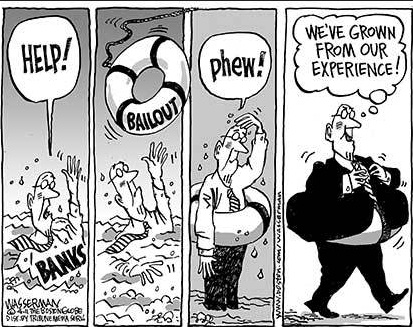
In fact, the US Fed has become the big banker to banking institutions.  One of the reasons that the general US population did not benefit from policiies instituted as the Great recession began was that this was not the Fed’s purpose.  The purpose was to save certain select financial institutions, to keep insolvent institutions in business.

What happened in 2007 was not a traditional panic, where flooding the economy with cash would help stabliize matters.  In fact, the panic began when financial institutions created runs on other financial institutions.  This is a complex issue and it has been poorly reported. Instead of increasing the monetary base, the Fed spent its time bailing out Bear Sterns, who had formed EMC, a company that issued mortgages to people with no income and no assets (NINA) so that Bear could bundle and securitzie the mortgages to sell through two hedge funds they had formed and also to other finanicial institutions.  Aurthorized by the Fed, Bear Sterns was directly bailed out by the New York Fed which created Maiden Lane.  And so on.

The US Fed is running wild.  It was become obvious that bankers are smarter than politicians.  Bankers wind Obama around their pinkies. But they also captivated Bill Clinton who is pretty smart about economics and bankers are heavily financing his wife’s Preisdential campagin.

Let’s see the audit.  American taxpayer’s money was loaned by the US Treasury to the Fed to swap currencies with foreign countries.  This is the people’s business.
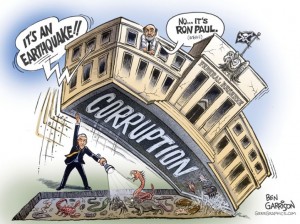
Audit the US Federal Reserve?

More Revelations From HSBC Whistleblower?

 Herve Falciani has revealed that far from this week being the end of the story, there is still plenty of information that is likely to come out about HSBC.  One million new bits of data, to be precise. He says work will start soon on analysing the information.

And that a major oil company could be next to feel the effects of a major data leak about how it operates.

Mr Falciani is the man behind the largest data leak in banking history – and after days of revelations about HSBC and tax evasion by its wealthy customers between 2005 and 2007, he now says he feels vindicated.

HSBC has said it has reformed how its private bank operates and that there are now far fewer clients and much stricter controls.

Anyone involved in the allegations of tax evasion have left the bank, sources tell me.

But Mr Falciani says that HSBC should still be prosecuted for past failings.  He called on European, Asian and American law enforcement agencies to work together to tackle bank corruption.

Whistleblowers should also be given more protection so they can reveal what they know.

Critics say he stole the HSBC data when he worked at the bank and originally hawked the information around for money.  “It is wrong,” he said. “They try to kill your reputation, like the mafia. It is already starting to be proved to be wrong.

“I never asked for payment and I will have time to prove that.”

Mr Falciani says that the last seven years have been endured at some considerable personal cost.

Whistleblowers have to be ready for a long fight. “It proves how difficult it is and how tricky you have to be,” he said. “It took many more years than I expected. It’s a huge journey.”

Whistleblowers

Weaken Water Pollution Standards?

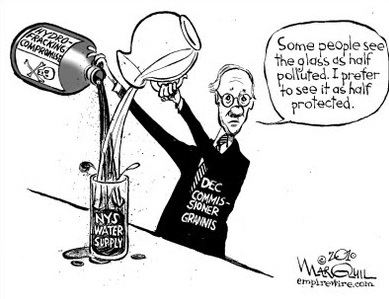
Follow up.  A year after a toxic leak contaminated drinking water for 300,000 residents, West Virginia lawmakers are considering a series of proposals that would weaken a new chemical tank safety law, remove stronger pollution protections for streams across the state, and protect the coal industry from enforcement actions over violations of water quality standards.

Acid Water Finds Acid Judge

Coal Problem Leaves US State Waterless

Members of a coalition of citizen groups called the West Virginia Safe Water Roundtable draws attention to their concerns and to urge lawmakers not to roll back the state’s clean water laws.

One broad bill backed by the West Virginia Coal Association is up for passage in the Senate, and efforts to attach industry-backed amendments to a Department of Environmental Protection rules bill are expected in a House committee.

A committee began considering an amendment from the GOP-controlled majority that would not only remove the drinking water protections the DEP wants for the Kanwaha from the Senate version of the bill, but also end the DEP’s longstanding policy of enforcing the Category A drinking water standards ton all rivers and streams across the state.

DEP Secretary Randy Huffman provides for a possible location for a secondary intake for West Virginia American Water’s Kanawha Valley plant on the Elk River, and spoken strongly against the West Virginia Manufacturers Association’s effort to end the statewide application of drinking water rules.

Meanwhile, the Senate is considering the “Coal Jobs and Safety Act” being promoted by the coal association as a way to make West Virginia’s mine operators more competitive as cheap natural gas, competition from other coal regions, the mining out of quality reserves and tougher federal environmental standards chip away at the local industry.

Among other things, the bill is aimed at stopping successful citizen suits brought over mining company violations of Clean Water Act standards where those standards were not specifically written into state DEP permits and prohibiting the DEP from incorporating those standards into future coal permits. It also includes a long-sought change the coal industry wants to West Virginia’s water quality limit for aluminum.

Half-Protected?

Indian Anti-Corruption Candidate Wins

Syed Nazakat writes: He’s known as India’s corruption buster. And now Arvind Kejriwal, a youthful-looking former tax inspector and winner pf Asia’s equivalent of the Nobel Prize, has pulled off a stunning near-sweep In New Delihi’s local elections.

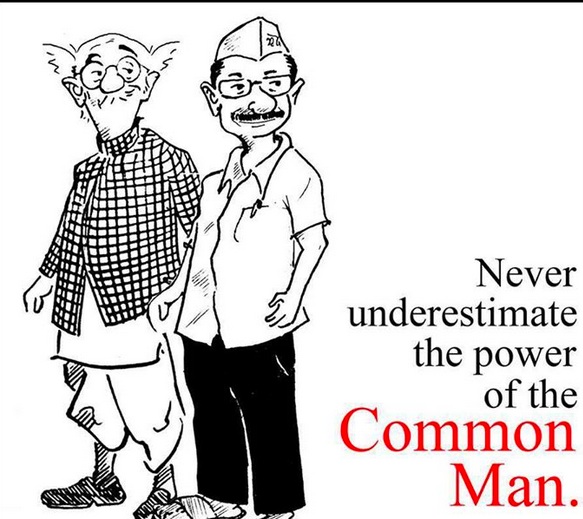
The Aam Aadmi, or “Common Man,” party won 67 of 70 seats in New Delhi, the largest single victory ever in India’s capital. The party’s victory also marks the first major loss for the Hindu nationalist BJP party since its own sweep of India last spring, which brought Prime Minister Narendra Modi to power.

The scale of victory for the young, idealistic party that champions local needs – including clean water, electricity, and security for women, as well as a “clean hands” anti-graft agenda – suggests the lure of Mr. Modi’s BJP is not necessarily a deep one. The loss is being called the end of Modi’s honeymoon less than two weeks after he hosted US President Obama.

The Common Man party’s popular majority of 54 percent shows that Kejriwal’s support appears to transcend class and religious categories, though whether he can transcend Delhi politics and exercise power outside the capital remains unclear.

This is the first time Congress, the venerable party associated with the liberation movement of Mohandas Gandhi, failed to win a single seat in Delhi.  AAP stunned India in 2013 by winning 28 seats in Delhi and defeating the ruling Congress party. Kejriwal then clashed with the federal government over an anti-corruption bill and walked out of office less than two months later. He has since apologized and vows not to leave again.

The success of the Common Man party stems from its sustained campaign against corruption combined with a dedicated army of volunteers.

Kejriwal existed for years under the political radar in India, surfacing from time to time to take up “transparency” issues like clarifying the Right to Information Act.

Kejriwal entered politics in 2012 and championed transparency and anti-corruption. He launched a party that brought together activists, youth, and poor people, and his anti-graft ideas caused a stir nationwide.

Those close to Kejriwal say the tipping point in his career came when he joined forces with Anna Hazare, an anti-corruption crusader. While Ms. Hazare did not join politics, Kejriwal launched the AAP as an alternative to mainstream national political parties.

 Common Man

Warren and Cummings Request Update on Investigation of Federal Reserve Leaks

Sen. Elizabeth Warren, D-Massachusetts, and Rep. Elijah Cummings, D-Maryland have asked the Federal Reserve Board for a briefing about its investigation into a leak of confidential Fed policy deliberations two years ago.
They sent their request to Scott G. Alvarez, the board’s general counsel, saying that neither Alvarez
“Nor any other Federal Reserve official has made public any information about the conduct of the investigation or its outcome.”

The two wrote:
“We are disturbed by this lack of transparency regarding such an important topic. This leak contained key market-moving information, violated Federal Reserve policy on disclosure, and may have represented a violation of federal law.”
Details from discussions of the Federal Open Market Committee found their way into a financial analyst’s private newsletter. The leak occurred in October 2012, the day before the scheduled public release of committee meeting minutes that promised to shed new light on a third round of bond buying to boost the economy.

The newsletter revealed what the minutes would say as well as fresh details about the Fed’s internal plans and deliberations – information that could have provided traders with an edge. Then-Fed Chairman Ben Bernanke asked Alvarez and the board’s secretary to look into the matter. The Fed never revealed the investigation and only publicly acknowledged the leak in a response to a freedom of information request by ProPublica.

The Fed confirmed receiving the letter but had no comment beyond saying it would respond.

Warren is the ranking minority member of the Senate Banking Subcommittee on Economic Policy and Cummings is the ranking minority member of the House Committee on Oversight and Government Reform.

The letter asks Alvarez to brief Warren and Cummings’ respective staffs by Feb. 15.

The letter lays out five questions the two would like answered, including whether the inspector general or the FBI was involved in looking into the matter; the status of the investigation; and what the Fed has done to prevent such leaks in the future.

Market Making Info from the Fed

Lessons for Business from China’s Corruption Crackdown?

Vivvienne Bath writes: The scope of China’s campaign against corruption has been broad, and has swept up officials and businessmen, as well as their assets, both inside and outside China. Foreign owned companies operating in China have also found themselves under official and public scrutiny.

A conviction for bribery or for other white-collar crimes such as embezzlement can result in a substantial penalty, including a lengthy period of imprisonment or even the death penalty.

In September 2014, for example, GSK China, a subsidiary of GlaxoSmithKline. was fined almost US$500 million by the Changsha Intermediate Court in Hunan Province after a one day trial for paying bribes to non-government personnel, while four of its employees were also convicted (although given suspended sentences).

The commitment of the current government to prosecuting corruption has proved to be unexpectedly far-reaching. It has also had a number of economic effects, particularly by reducing gift-giving and hitting the luxury goods market.

Changes to the judicial system are  designed to reduce local protectionism by establishing divisional tribunals of the Supreme People’s Court and cross-jurisdictional tribunals; to improve judicial efficiency by establishing a civil service career structure and to discourage judges from avoiding potentially difficult issues by refusing to accept cases.

Does this mean the crackdown on corruption and the plans for judicial reform represent the commitment of Xi Jinping’s government to the implementation of the rule of law through a strong and independent legal and judicial system?

In relation to the reduction of corruption and the creation of a cleaner business environment, the answer to this is “probably not.” Although in January of this year, Xi Jinping ordered Party committees to enable judges and law enforcement departments to exercise their duties independently, he also emphasised the leadership of Party committees in judicial affairs and the importance of judges and procurators being loyal to the Party, the State and the people.

Despite the many improvements in the content of China’s laws and the quality of Chinese lawyers, judges and judicial system, the campaign against corruption, including decisions to investigate and prosecute corruption of officials and, in the case of officials, the entire investigation, is driven and run not by the police, the procuratorate and the courts, but by the leadership of the Communist Party.

In the case of foreign companies, there is a lack of transparency in the decision-making process relating to investigations which makes it easy to attribute political drivers to decisions to pursue foreign multinationals. This does not, however, reduce their potential legal liability.

Waiting until the trial to defend corruption charges would be a very risky strategy. After the verdict relating to GSK China was handed down, GlaxoSmithKline recognised its responsibility by taking steps to rectify the issues with its operations in China, by decoupling sales targets from compensation, reducing and changing engagement with doctors and expanding its control over invoices. Other foreign companies in China would do well to take the same precautions.

Corruption in China

HSBC Files, Lynch, USDOJ Connect?

Matt Taibbi writes:  Three years ago, then-U.S. Attorney of the Eastern District of New York Loretta Lynch crafted a soft-touch deferred proscution deal for Europe’s largest bank, HSBC, which had only been caught in the largest drug-money-laundering case in history.

Today, as Lynch awaits approval for the Attorney General job, HSBC is in the news again. This time, the global mega-bank is being exposed in a massive scheme to help wealthy clients avoid taxes.

This story traces back to a leak of files apparently stolen by a former HSBC IT employee named Herve Falciani in Switzerland in 2007.

Taken out of Switzerland, the files were then shared with authorities in France, Spain, the United States and Britain. The monster cache of info about wealthy tax avoiders came to be referred to as the “Lagarde List,” after Christine Lagarde, who was the French Finance minister at the time the information first began to be circulated.

What HSBC’s Swiss unit was doing went far beyond passive bank secrecy. The bank was actively helping its wealthiest clients avoid paying taxes in their home countries, sometimes using highly creative methods – a sort of criminal advice service, if you will.

Countless similar examples are appearing the in the press. The numbers being thrown out are incredible. The Swiss arm of the bank at its height apparently hid as much as $120 billion.

This HSBC story is an incredibly explosive one when one takes into account the recent regulatory history of this company.

Both cases involved historically enormous schemes to profit from illegal banking activities.

In the money-laundering case, HSBC paid a $1.9 billion fine – about five weeks of profit – for its role in an amazing scandal in which the bank admitted laundering up to $850 million for a pair of Central and South America drug cartels, including the infamous Sinaloa gang.

In neither case did the penalties do much to dent the bank’s bottom line.

Everything being reported in the last few days (including a 60 Minutes report and a “Panorama” documentary) indicates the United States knew about an apparent systematic tax evasion scheme as far back as 2010.

This raises a huge question about the deal Lynch’s office gave to HSBC back in 2012.

What does a bank have to do to get shut down by regulators in this day and age? Be small?

HSBC Too Big to Jail

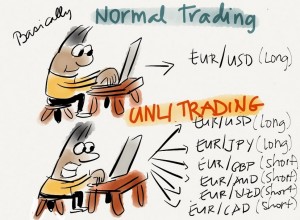
USDOJ Focuses on Currency Trading

Regulators are beefing up investigations pertaining to foreign exchange (forex) misconduct committed by several global banks. Recently, two global banking giants – UBS Group AG (UBS) and Barclays PLC (BCS – Analyst Report) have come under further scrutiny of the US Department of Justice (DOJ).

The DOJ is investigating whether the Swiss banking giant UBS and UK-based Barclays sold forex structured products concealing the profit the banks were deriving from currency trades which were used to generate the products’ returns.

In the banks’ products in question, while trading, an investor sells in a low-yielding currency and purchases in a higher yielding currency. Notably, UBS’ product – UBS V10 Enhanced FX Carry Strategy – allows investors to shift their positions in a volatile currency market. The DOJ is scrutinizing whether UBS derived profits from switching positions, and whether the company revealed profits to its clients.

‘Optimised currency carry strategy’ is a similar product offered by Barclays that has been targeted by the DOJ.

DOJ’s enquiry includes several other banks that are suspected to have misrepresented pricing for the currency transactions and this substantially expands its investigation into the forex market manipulation.

Global authorities are investigating in the $5.3 trillion-a-day forex market as traders at several banks are believed to have conspired jointly and misused information about client orders, which led to the price manipulation. Also, the metal business of a number of banks has come under the regulatory scrutiny in recent times.

Notably in Nov 2014, UBS along with four other major global banks – Citigroup Inc.,  HSBC Holdings plc, Bank of America Corp.and JPMorgan Chase & Co. were slammed with a $3.4 billion fine by U.S., British and Swiss regulators related to forex market manipulation.

As per the findings of The Swiss Financial Market Supervisory Authority FINMA, UBS had inadequate risk management, controls and compliance in its forex trading.

While FINMA concluded its ‘enforcement proceedings’ against UBS with respect to the  forex trading, the regulator is investigating against the bank’s 11 ex and current employees in the related matter.

Apart from FINMA, the Swiss Banking giant had also reached settlements with the US Commodity Futures Trading Commission (CFTC) and UK Financial Conduct Authority (FCA) over the regulators’ industry-wide probe into inconsistencies foreign exchange market.

UBS has been striving to expedite its internal forex and precious metals business investigations. The company is believed to be in separate discussions over a forex settlement with the DOJ’s criminal division, which may not be reached before Apr 2015.

Barclays was not part of the huge settlement of November. However, an investigation by the FCA is continuing over the company. Notably, in May 2014, Barclays was fined £26 million by the FCA for fixing gold prices.

Regulatory authorities are investigating scandals further related to the heightening foreign exchange rate fixing and are determined to put forward a landmark judgment to terminate such practices in the future, bring justice to the sufferers and punish the wrongdoers.

Currency Trading

Cost/Benefit Analysis for Regulators?

Samuel Huntington, Harvard economist, wrote about a little corruption being good for greasing wheels.  Can the same measure be applied to regulation?  Can we suggest that regulation that does not count for much financially be ignored or put aside?  What do you do with Credit Suisse’s application for a waiver to continue handling pension funds in the US after they have pled guilty to aiding and abetting tax evasion in the US?  To Credit Suisse, this means billions of dollars.  To the US government, it means Zip.  But to a US firm wanting this business, it’s billions of dollars.  So…here are the ediors of Bloomberg:

U.S. lawmakers say they want regulators — notably, financial regulators — to weigh the economic impact of their actions more carefully. That’s actually not a bad idea, as long as it doesn’t end up neutering rules that the economy badly needs.

With the stated goal of reducing red tape and a modicum of Democratic support, Republicans in Congress have introduced several bills that would force regulators to justify themselves. If enacted, the legislation could make detailed cost-benefit analysis mandatory for the Federal Reserve and other agencies that have been struggling to implement the 2010 Dodd-Frank financial reforms.

Critics suspect a veiled attempt to defang measures aimed at making the financial system more resilient, rather than a respect for analytical rigor. Under existing law, Dodd-Frank has already been challenged on cost-benefit grounds.

Yet cost-benefit analysis is an excellent discipline, one that financial regulators have made too little use of. The SEC lost its case partly because its analysis was weak — a shortcoming that the commission has tried to remedy by involving economists in its rule making. Other financial regulators, such as the Fed and the Federal Deposit Insurance Corporation, typically don’t even try to assess the economic effects of their rules.

Their counterparts outside finance have done a better job of testing their own actions. The Environmental Protection Agency has done rigorous economic-impact assessments for more than 30 years.   Done right, by the way, such assessments might toughen, rather than weaken, financial regulation. Eric Posner of the University of Chicago argues that properly weighing the cost of rules on bank capital against the benefit of a more resilient financial system would call for a tightening of the current requirements.

The White House has an Office of Information and Regulatory Affairs which has long overseen the cost-benefit analyses conducted by the EPA and other federal agencies. Its authority doesn’t extend to financial regulators. This could be changed by executive order — or, preferably, by an act of Congress that provided funding and sheltered approved rules from judicial review. This would widen the appropriate application of cost-benefit methods to finance, help spur further research and, over time, improve the quality of assessments.

In any event, financial regulators shouldn’t be afraid of cost-benefit analysis. If it’s done well, it serves the cause of good policy. They should be leading the way.

Regulation?


Money Matters: Weekly Newsletter No. 3 Corruption

Corruption is a focus of w-t-w.org Women and Finance.   Recently Patrick Radden Keefe, a fellow at the Century Foundation, wrote an extended piece on the subject in the New Yorker, (January 19, 2015).

Keefe, in discussing historic opinions on the subject, describes how the term ‘corruption’ may be used so often today that it has become meaningless.  We agree.

There are many different kinds of corruption.  Our site focuses on financial corruption in the banking industry.  Evasion of taxes thorughout the world disproportionately impacts women and children.  Diverted tax money means less public money for schools and good health, two areas most countries are commited to.

Singapore, a very small country whose leader in the early seventies was committed to ending corruption, actually succeeded in doing so.  It was clear that the Prime Minister was behind the effort.  One minister who was invstigated for taking kickbacks killed himself. In his suicide note, which was written to the Prime Minister, he stated, “It is only right that I shold pay the highest price for my mistake.”

It is hard to imagine Jamie Dimon writing such a note to his board at JP Morgan Chase.

Again this week, the International Consortium of Investigative Journalists has released tens of thousnads of documents from HSBC showing how this bank defies the law.

While Harvard economist  Samuel Huntington wrote that a little corruption helps grease the wheels of government and buisness, it is hard to know where to draw the line if you are “a little guilty.”  Women and FInance looks at this problem all the time.  It is a particularly important subject for women to understand.

HSBC papers

Credit Suisse, criminally charged, applies for waiver from US Labor Department

Corruption