A Present for MF Global Holdings, Jon Corzine’s Company

Federal Court in New York Orders MF Global Holdings Ltd. to Pay $1.212 Billion in Restitution for Unlawful Use of Customer Funds and Imposes a $100 Million Penalty

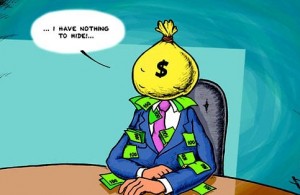
The U.S. Commodity Futures Trading Commission (CFTC) has obtained a federal court consent Order against Defendant MF Global Holdings Ltd. (MFGH) requiring it to pay $1.212 billion in restitution or such amount as necessary to ensure that claims of customers of its subsidiary, MF Global Inc. (MFGI), are paid in full. The CFTC previously filed and settled charges against MFGI for misuse of customer funds and related supervisory failures in violation of the Commodity Exchange Act and CFTC Regulations (see CFTC Press Release 6776-13). MFGI was required to pay $1.212 billion in restitution to its customers, as well as a $100 million penalty. MFGH’s restitution obligation is joint and several with MFGI’s restitution obligation, pursuant to which a substantial portion of the restitution obligation has already been paid (see CFTC Press Prelease 6904-14). The consent Order, entered on December 23, 2014, by Judge Victor Marrero of the U.S. District Court for the Southern District of New York, also imposes a $100 million civil monetary penalty on MFGH, to be paid after claims of customers and certain other creditors entitled to priority under bankruptcy law have been fully paid.

The consent Order arises out of the CFTC’s amended Complaint, filed on December 6, 2013, charging MFGH and the other Defendants with unlawful use of customer funds. In the consent Order, MFGH admits to the allegations pertaining to its liability based on the acts and omissions of its agents as set forth in the consent Order and the amended Complaint.

The CFTC’s amended Complaint charged that MFGH controlled MFGI’s operations and was responsible for MFGI’s unlawful use of customer segregated funds during the last week of October 2011. In addition to the misuse of customer funds, the amended Complaint alleged that MFGH is responsible for MFGI’s (i) failure to notify the CFTC immediately when it knew or should have known of the deficiencies in its customer accounts, (ii) filing of false statements in reports with the CFTC that failed to show the deficits in the customer accounts, and (iii) use of customer funds for impermissible investments in securities that were not considered readily marketable or highly liquid, in violation of CFTC regulations.

The CFTC’s litigation continues against the remaining Defendants, Jon S. Corzine and Edith O’Brien.

Fines Levied on MF Global Holdings

Russia Bailing Out Banks

Peter Spence writes: Russia is facing a “full-blown economic crisis”, a former finance minister has warned, as the country is forced to take emergency financial measures.
The economy has been battered by a wave of sanctions as a result of tensions over Ukraine, geopolitical uncertainty, and falling oil prices.

Analysts have warned that the Russian economy will not improve in the long-term unless either the oil price or relations over Ukraine improve.

The Central Bank of Russia (CBR) said that a plan to loan Trust bank an amount of up to 30bn roubles (£343m) had been approved, while analysts warned that Russia’s banking sector had become particularly vulnerable.  Anna Stupnytska, an economist at Fidelity Solutions, said that “the risk of a sovereign default is low, it’s the corporate sector where the main vulnerabilities lie, and banking in particular.  Due to sanctions, companies cannot refinance their debt as access to international markets has been essentially cut off.”
A government agency which provides deposit insurance will hold a complex assessment of the bank’s financial standing in order to determine further financial resolution measures.
Russian authorities also moved to reintroduce grain industry protections, stating that the government would develop proposals to control exports within 24 hours.
As the rouble has crumbled over the year, the price of imported goods has risen, putting pressure on Russian budgets.  The CBR now expects that the resultant inflation will reach double digits by the end of the year.  Controls on grain may in turn help to keep a lid on increases in bread prices, although economists warned that shortages may follow.

Meanwhile, US regulators denied clearance to an acquisition by Rosneft, a majority state-owned oil company, putting brakes on its hopes for global expansion.  The decision prevented the purchase of a Morgan Stanley owned oil trading business by the Russian corporation.

When I Need Money I Take ItWHEN I NEED MONEY I TAKE IT!

Corruption in Hong Kong

Alan Wong writes:  The former second-highest ranking official in the Hong Kong government and a property tycoon were sentenced on Tuesday to seven and a half years and five years in prison after their convictions in a high-profile corruption case.

The former official, Rafael Hui, served as chief secretary, the city’s top civil service job, from 2005 to 2007. He became involved in illicit dealings that led to a charge of misconduct in public office. Thomas Kwok, one of two brothers who were co-chairmen of Sun Hung Kai Properties, was also found guilty in a conspiracy to commit misconduct in public office.

Raymond Kwok, who is now the sole chairman of Sun Hung Kai Properties, was found not guilty. Two additional defendants, found guilty of helping to pass on the illegal payments, were sentenced to five years and six years in prison.

Lawrence Lok, Thomas Kwok’s lawyer, said  the sentence was “proper” and “quite lenient.” Edwin Choy, Mr. Hui’s lawyer, said as he left the court that he did not yet know whether his client would file an appeal.

Shares of Sun Hung Kai Properties, one of the biggest companies of its kind in the world, edged up in Hong Kong on Tuesday despite a weaker market over all.

The trial and sentencing of Mr. Hui and Mr. Kwok came at a turbulent political time for Hong Kong. Beginning in late September, tens of thousands of demonstrators occupied the streets of the city to voice concern over a lack of accountability in the government and to demand democratic elections for the city’s leadership. The protesters said election rules proposed by the Chinese government would give voters only a cosmetic role in choosing their leader.

Prosecutors said that Sun Hung Kai Properties had sought favors from Mr. Hui in return for showering him with millions of dollars in payments that helped to finance his extravagant tastes.

Prosecutors said that Mr. Hui started his dealings with the company in 2000, when he took a loan from one of its subsidiaries while he was out of government. He later took millions of dollars and lived rent-free in an apartment in one of the company’s high-end developments.

Mr. Hui took more than $3.2 million in payments, in cash and in kind, according to investigators from Hong Kong’s independent commission against corruption. He was found guilty of taking $1.1 million in bribes from Mr. Kwok before and during his time as chief secretary.

Corruption in Hong Kong

Spanish Royal to Trial for Tax Fraud

Cristina de Borbon, sister of Spain’s King Felipe VI, will stand trial on charges of tax fraud, the first Spanish royal to face prosecution in court.  Princess Cristina’s husband, former Olympic handball player Inaki Urdangarin, is accused of embezzling public funds.

Princess Cristina, 49, and Urdangarin are among 17 people ordered to stand trial in the case involving his Noos Foundation charity, the High Court of the Balearic Islands said on Monday.

Cristina and her husband have both denied any wrongdoing.

Urdangarin has been charged with breach of legal duty, embezzling public funds, fraud, influence-peddling and money-laundering. The princess is accused of two tax crimes.

The couple have been ordered to deposit funds with the court to cover possible liabilities – 2.6 million euros ($3.2 million) in the case of Cristina, and nearly 15 million for Urdanganrin.

They have 20 days to deposit the money, according to a written court ruling, or face having assets seized.

King Felipe is riding high in opinion polls and has tried to modernise the monarchy, including taking rights and duties away from his two sisters, who are no longer formally part of the royal family.

Tax Fraud


Illegal Trade in Tiger and Cat Skins up on China Border

The illegal trade in Tigers and other wild cat parts from Burma into China has grown in the border town of Mong La in the past decade, while the same trade into Thailand through the border town of Tachilek has diminished, a new survey has found.

The report, issued by wildlife trade monitoring group Traffic on Monday, analyzed data from 19 separate surveys of wild cat trade in Tachilek between 1991 and 2013, and seven surveys between 2001 and 2014 in Mong La.

In Tachilek on the Myanmar-Thailand border, shops selling wild cat parts including Tiger and Leopard skins and skulls, fell from 35 in 2000, to just six in 2013.  In Mong La, at the China border, such shops more than trebled from six in 2006, to 21 in 2014. Mong La caters almost entirely to customers from China.

Parts of the Clouded Leopard were found most frequently, representing some 482 individuals, while other cat species included Tiger, Leopard, Leopard Cat and the Asiatic Golden Cat, according to Traffic, which said that traders claimed most animals were sourced from Burma and India.

All wild cat species are protected under the Convention on International Trade in Endangered Species of Wild Fauna and Flora (CITES) and by national laws.

“[T]he decrease in Tachilek could be due to greater enforcement action in Thailand while the increase in Mong La may be linked to the rising buying power of China’s consumers, and the apparent ease in smuggling illegal wildlife parts into China from Mong La,” the Traffic report said.

“It’s time for the relevant enforcement authorities to live up to their international commitments to address wildlife crime,” said Vincent Nijman, a professor of anthropology at Oxford Brookes University and one of the report’s authors.

Tachilek is located in eastern Shan State and forms Burma’s main border crossing with northern Thailand. Mong La is located on the Burma-China border and administered by the National Democracy Alliance Army, a 2,000-men-strong armed group that is a remnant of the now-defunct Communist Party of Burma. It signed a ceasefire with the central government in 1989 and gained a range of concessions to run the area.

All manner of illegal trade, from prostitution and gambling to narcotics, arms and wildlife trafficking, have long flourished in the rebel-run town, which is part of a wider swathe of territory known as Special Region 4.

 Tiger and Leopard Skins for Sale

The End of Information Symmetry?

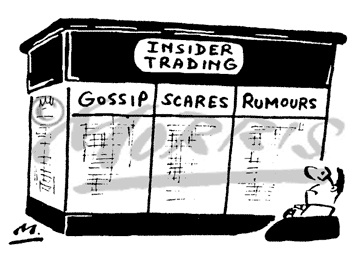
Who owns the lawmakers and the courts?  Symmetry of information, also known as a ‘level playing field,’ is the cornerstone and underlying principle of US Securities laws since 1933.

“Information symmetry is a condition in which all relevant information is known to all parties involved. For example, in the stock market, stock information has a full public disclosure, and all investors are in the same position to share information.” “In contract theory and economics, information asymmetry deals with the study of decisions in transactions where one party has more or better information than the other. This creates an imbalance of power in transactions which can sometimes cause the transactions to go awry, a kind of market failure in the worst case. Examples of this problem are adverse selection, moral hazard, and information monopoly.”

The letter of the law can be twisted hard enough to find a reason for excusing some particularly blatant insider trading.  As long as the exchanging of favors is sufficiently soft and undocumented, and not the explicit exchange of cash, videotaped and posted to Youtube, it’s all good.  The purpose of information symmetry is to prevent certain market actors from engaging in control frauds. This principle taken to a perfect and natural ideal was a cornerstore of one of the great economic canards that justified deregulating the markets.

“In finance, the efficient-market hypothesis asserts that financial markets are ‘informationally efficient’. In consequence of this, one cannot consistently achieve returns in excess of average market returns on a risk-adjusted basis, given the information available at the time the investment is made.”

Information symmetry means that some analyst or CEO cannot tell his friends that they are going to give downward guidance in a week, so that they can all sell their stock and even short it ahead of the public.

It means that the most powerful players in the market cannot traffic in private knowledge, presenting two sorts of datastreams, one for the public and one for themselves

This decision will probably be reversed, because otherwise there can be no confidence in US markets any longer.  No one who is not an insider can believe in their impartiality and honesty. They are worse than any casino, because the dealer can signal some of the players when he has an ace in the hole.

The most rational response from the rest of the world will be to shun US markets, and take steps to prevent the contagion of this abuse of privilege.

This is the kind of situation where the locker room talk at the Country Club gets leaked out in public, and the Very Important People who do it are suddenly exposed for exactly who and what they really are, and what they really believe.  It is a  brave new world if this decision stands.

Disrupting Information Symmetry

How Does Risk Effect Banks’ Capital Ratios?

Banks finance their loans and other assets with a mix of deposits, debt, and equity capital. Maintaining adequate capital is important for banks because it absorbs losses and protects them from failure. Capital also protects the financial system and overall economy from the costs that can arise from bank failures. For example, one of the reasons policymakers were concerned about financial stability during the financial crisis was low capital ratios – the ratio of equity capital to total assets – at some of the largest banks, which led to government programs to provide capital to these banks.

Banks finance their loans and other assets with a mix of deposits, debt, and equity capital. Maintaining adequate capital is important for banks because it absorbs losses and protects them from failure. Capital also protects the financial system and overall economy from the costs that can arise from bank failures. For example, one of the reasons policymakers were concerned about financial stability during the financial crisis was low capital ratios – the ratio of equity capital to total assets – at some of the largest banks, which led to government programs to provide capital to these banks.

While capital helps ensure the safety of banks and the economy, bank owners and managers have mixed incentives to hold capital. On one hand, banks have an incentive to hold low levels of capital because it costs more to fund assets with capital than with debt or deposits. On the other hand, banks that are relatively risky might have to hold higher levels of capital to satisfy uninsured creditors or address their regulators’ safety and soundness concerns.  Bank Capital Ratios


Bank Capital Ratios

Whistleblower Alert in Italy

Eleonora Casuela directs our attenion to:  The Inland Revenue is ready to make war against corruption.  Rossella Orlandi, director of the institutuion, aske employees to report any incident that may occur. The complaint will be forwarded to a specific email address that has been activated to collect all reports. Orlandi has also specified that employees will not have to be afraid to report because they will be protected by the instituion.

Raffaele Cantone, the president’s anti-corruption, explained that there is no question of denunciation but accountability. The complaint will be forwarded in complete privacy and there will only be a dedicated mail: the Inland Revenue is launching a real listening center “with people who collect complaints and listen.”

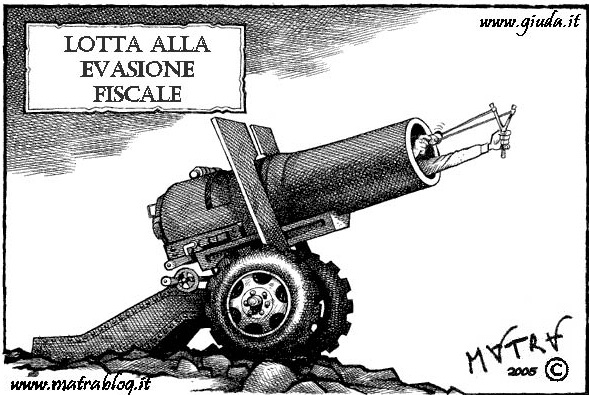
The Orlandi, who some time ago presented in Parliament the draft to completely eliminate the receipt of the email. becuase payments are traceabile.  Tax evasion can be combatted. Time limits for the discovey of tax evasions will be extended.  “You have to provide for an extension of time for cases of evasion more insidious, if not doubled for all types, at least one extension, so that it allows to have the time necessary to prevent investigations from being wiped out by complex times prescription,” said Orlandi.

Tax Evasion in Italy

Is Putin Holding Russian Billionaires Hostage?

Leonid Bershidsky writes: Russia’s financial crisis has seen the Russian equity market’s total capitalization plummet to $345.9 billion from $647.4 billion, as measured by the RTS index. That makes all the country’s public companies together worth about as much as Google, valued at $349.1 billion, and less than Apple, Microsoft, Exxon Mobil or Berkshire Hathaway. Russian billionaires have lost big chunks of their fortunes, and now, in some cases, the prestigious toys they have acquired abroad are said to be worth as much as the Russian industrial assets that made them rich.

This kind of analysis is largely meaningless, however: Markets are fickle, and wealth is too volatile to matter much to the ultra-rich themselves. It does, however, say something important about why the Russian billionaires are, for the most part, wedded to the country that nourished them: Actual cash flows to their assets in Russia are relatively high.

billionaires

Russian billionaires are a diverse bunch. Some, like nickel czar Vladimir Potanin, retail magnate Sergei Galitsky and natural gas mogul Leonid Mikhelson, own no foreign assets to speak of. Others, such as the omnivorous Viktor Vekselberg and steel titan Alexei Mordashov, are heavily invested overseas. Dmitry Rybolovlev, the former owner of potash producers Uralkali and Silvinit, is an outlier: He has no significant industrial assets anywhere, and his real estate, yacht, art and jewelry constitute 20 percent of his net worth.

Those with the biggest Russian assets have been the biggest losers this year. Mikhail Prokhorov’s holding in the Brooklyn Nets basketball team is proving his most secure investment.  Based on the numbers alone, the same could be said of Roman Abramovich’s Chelsea soccer club in the U.K.

That would be a misleading conclusion, however, because the sports teams’ valuations exist only on paper. So far, nobody is offering that kind of money to Prokhorov or Abramovich, and they would not necessarily be interested in such offers anyway.

The Nets lost $144 million last season, and even if their fortunes change radically this year, the free cash flow to Prokhorov’s stake can be generously estimated at zero. Chelsea earned $29 million for the year to June 2014, but that counts as profit only for European soccer’s Financial Fair Play policy, which was written to make clubs more equal regardless of their owners’ resources.

Is it fair then to compare the expensive British and American toys with the gritty Russian factories, operating in harsh climates and employing hard-drinking, gloomy, need-toughened men rather than glamorous athletes?

Across the board, Russian billionaires receive more free cash flow to their Russian assets than to their foreign ones, relative to these assets’ valuations:

cashvaluations

While the billionaires could theoretically cash out, as Rybolovlev did, and invest in hedge funds or other vehicles, they are more likely to sell their foreign assets than their Russian ones.  Even at the ruble’s current exchange rate, the latter continue to bring in more money than overseas holdings do. Also, Western assets are comparatively overvalued.

Even though Russian billionaires are part of the international jet set, with homes throughout the world and yachts and planes that can take them anywhere at any moment, they are invested in Russia’s fate. Vladimir Evtushenkov, was released from house arrest after the government made him give up his oil assets, claiming they had been illegally privatized.

Russian Billionaires


Privacy Debate Goes Viral

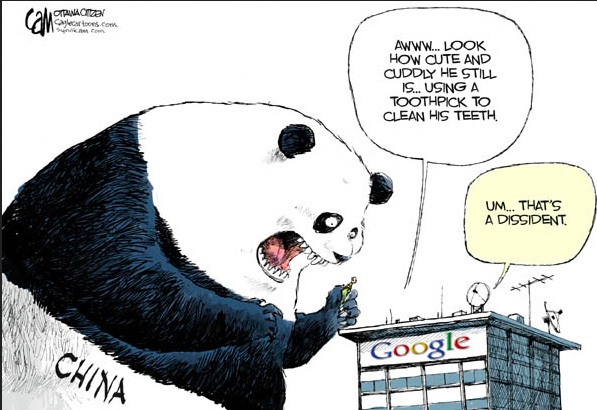
The privacy debate is getting louder in techlandia as it becomes clear that the National Security Agency’s digital snooping, along with other government surveillance programs, could upend the U.S. tech industry’s global dominancwe.

Two recent developments drive this home. The first is a high-profile court case involving the U.S. government and Microsoft. The second is China’s decision to rip foreign technology out of its most important institutions – state-owned companies, banks and government agencies — and shift to domestic suppliers.

It’s worth noting that both the Microsoft case and the China decision are part of a bigger narrative that started taking shape last summer after Edward Snowden leaked information about the U.S. government’s sweeping surveillance programs. Privacy Debate

Privacy Debate