Vatican Finds Hundreds of Millions Euros “Tucked Away”

The Vatican’s economy minister has said hundreds of millions of euros were found “tucked away” in accounts of various Holy See departments without having appeared in the city-state’s balance sheets.

In an article for Britain’s Catholic Herald Magazine, Australian Cardinal George Pell wrote that the discovery meant overall Vatican finances were in better shape than previously believed.  “In fact, we have discovered that the situation is much healthier than it seemed, because some hundreds of millions of euros were tucked away in particular sectional accounts and did not appear on the balance sheet,” he wrote.

 “It is important to point out that the Vatican is not broke … the Holy See is paying its way, while possessing substantial assets and investments,” Pell said, according to an advance text made available on Thursday.

Pell did not suggest any wrongdoing but said Vatican departments had long had “an almost free hand” with their finances and followed “long-established patterns” in managing their affairs.

“Very few were tempted to tell the outside world what was happening, except when they needed extra help,” he said, singling out the once-powerful Secretariat of State as one department that had especially jealously guarded its independence.

“It was impossible for anyone to know accurately what was going on overall,” said Pell, head of the new Secretariat for the Economy that is independent of the now downgraded Secretariat of State.

Pell is an outsider from the English-speaking world transferred by Pope Francis from Sydney to Rome to oversee the Vatican’s often muddled finances after decades of control by Italians.

Pell’s office sent a letter to all Vatican departments last month about changes in economic ethics and accountability.

As of Jan. 1, each department will have to enact “sound and efficient financial management policies” and prepare financial information and reports that meet international accounting standards.

Each department’s financial statements will be reviewed by a major international auditing firm, the letter said.

Since the pope’s election in March, 2013, the Vatican has enacted major reforms to adhere to international financial standards and prevent money laundering. It has closed many suspicious accounts at its scandal-rocked bank.

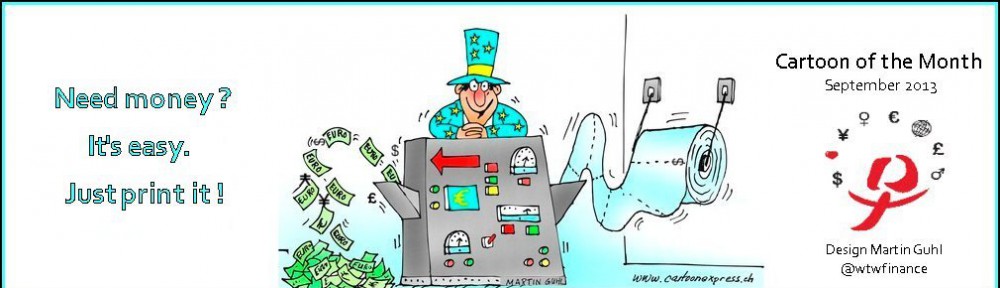
Whee are the Euros Tucked Away?


Citigroup Takes Space in the US Capital

Citigroup to Move Its Headquarters to the Capital Building   The banking giant Citigroup announced on Friday that it would move its headquarters from New York to the U.S. Capitol Building, in Washington, D.C., in early 2015.

Tracy Klugian, a spokesperson for Citi, said that the company had leased thirty thousand square feet of prime real estate on the floor of the House of Representatives and would be interviewing “world-class architects” to redesign the space to suit its needs.

According to sources, Citi successfully outbid other firms, including JPMorgan Chase and Goldman Sachs, for the right to move its headquarters to the House floor.

The Citi spokesperson acknowledged that the extensive makeover of the House is expected to cost “in the millions,” but added, “It’s always expensive to open a new branch.”

Explaining the rationale behind the move, Klugian told reporters, “Instead of constantly flying out from New York to give members of Congress their marching orders, Citigroup executives can be right on the floor with them, handing them legislation and telling them how to vote. This is going to result in tremendous cost savings going forward.”

Klugian said that Citi’s chairman, Michael E. O’Neill, will not occupy a corner office on the House floor, preferring instead an “open plan” that will allow him to mingle freely with members of Congress.

“He doesn’t want to come off like he’s their boss,” the spokesperson said. “Basically, he wants to send the message, ‘We’re all on the same team. Let’s roll up our sleeves and get stuff done.’ ”  (Borowitz Group)

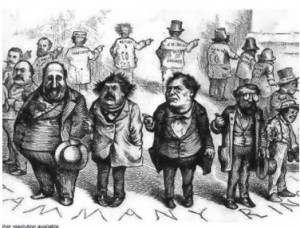
Who Stole the People's Money?

Should US Treasury Nominee Be Opposed?

Sen. Al Franken (D-Minn.) on Sunday called on supporters to reject one of President Obama’s nominees to the Treasury Department.  Franken criticized nominee Antonio Weiss in no uncertain terms, arguing Obama had nominated the wrong person for the job of Treasury undersecretary for domestic finance.

He argued Weiss would not put the middle class first, and that he was too close to Wall Street.  Franken wrote that Weiss has worked on manuevers called “inversions,” which are mergers that seek to lower a company’s tax burden in the United States.

“More than six years after the crash, the American economy is still recovering,” Franken writes. “We got into that mess because we were willing to let Wall Street police itself. Foxes make poor guards of henhouses. We know that through bitter experience, and I’m not willing to let it happen again.”

Franken is joining Sen. Elizabeth Warren (D-Mass.) and others in opposing Weiss, setting up an internal Democratic Party fight with Obama. Weiss is an executive at the investment banking firm Lazard.

When Gary Gensler direct from Goldlman Sachs was nominated to head the Commodities Futures Tradiing Commission, Carl Levin spoke to him early on. Cutting to the chase, levin asked, “Does speculation affect prices?”  “Yes,” said Gensler.  There was long silence.  The answer had come with astonishing ease,  Here was someone ‘tainted’ by Wall Street who was clearly capable of being honest.  Has anyone asked Weiss tough questions?  Asnwers could surprise?

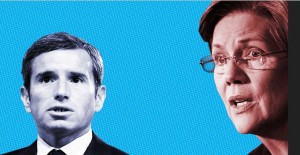
Antonio Weiss and Elizabeth Warren

Are Kleptocrats Abandoning Putin?

Chrystia Freeland writes:   In our sanitised, public relations-conscious age, Vladimir Putin’s chauvinistic bluster has been bizarrely compelling. For a while, that unaccustomed spectacle concealed the profound brittleness of his regime, at least from some. Now the cracks are showing. The immediate causes are western sanctions and the lower price of oil but Russia’s fragility runs much deeper.

Mr Putin came to power on the strength of a promise: that it was possible to rule like Joseph Stalin but live like Roman Abramovich. The arrangement suited almost everyone. Mr Putin and his KGB cronies were able to rebuild a softer version of the authoritarianism they had yearned for since the collapse of the Soviet Union.

Russia’s economic elites — Mr Putin’s coterie from the “power ministries” in Moscow and the oligarchs of the Boris Yeltsin era who were smart enough to play along — enjoyed vast wealth. Thanks to rising commodity prices, Russia’s urban middle class became richer, too.

Even the liberal intelligentsia, the only group that was openly disgruntled with its lot, could avail itself of a safety valve. In clever contrast with the Soviet Union, Mr Putin’s managed democracy kept its borders open, allowing potential dissidents to find homes in more congenial places..

Mr Putin is an authoritarian ruler,,  but he reigns without a governing ideology or an organised revolutionary party. His invocations of Russian nationalism have a certain rhetorical flair but they are merely the populist packaging for a system that is “capitalism for friends”.  They are rich now, wear Italian suits and Swiss watches, and no longer have an inferiority complex.

Mr Putin’s crony capitalists got rich, but they did so by looting Russia’s natural resources and borrowing against that booty with the help of accommodating western bankers. The double shock of western sanctions and a lower oil price has brought that arrangement to a halt. The greatest damage is internal. Russia’s kleptocrats and its upper middle class prospered during the Putin era, and most of these beneficiaries did not think too hard about the sources of their wealth.

Mr Putin’s nationalist bluster is no consolation at all for these Russians who, over the past two decades, had come to take a rising standard of living and integration into the west for granted. The rouble crashed precipitously in part because this group, which includes most of the country’s richest business leaders, is cashing out.
That is the problem with capitalism for friends — it earns you fair-weather allies. Their defection does not mean that Mr Putin is entirely declawed. Part of his appeal for the kleptocrats was his ability, in contrast with the politicians of the liberal intelligentsia, to craft a persona that appealed to poorer, older Russians and to those who live outside the big cities.

As the economic costs of Mr Putin’s Crimea gambit mount, he may try to pivot from kleptocracy to populist autarky. Such a shift would be economically ruinous in the long run, but in the short run it could make Russia even more aggressive and unpredictable.  Russia today is divided and in decline. The right parallel is not with the cold war. It is with the decaying Soviet Union of the 1980s.

Are Kleptocrats Abandoning Putin?

Jamie Dimon Got What He Wanted in the US Budget

The sudden dramatic collapse in the price of oil could cost trillions of dollars in oil derivative losses; and the FDIC could be liable, following repeal of key portions of the Dodd-Frank Act last weekend.  That means taxpapers will pay for mistakes the banks made — yet again.

Some have argued that the small section of Dodd-Frank that was repealed when the budget was passed came to not very much.  But why then did Jamie Dimon of JP Morgan Chase and President Obama lobby lawmakers to vote for the bill.

Ellen Brown writes:  Quibbling over a mere 5% of the derivatives business sounds like much ado about nothing, but Jamie Dimon and the president evidently didn’t think so. Why?

Under Dodd Frank, FDIC-insured banks were not allowed to put depositor funds at risk for their bets on derivatives, with certain broad exceptions.  At FDIC insured banks, interest rate, currency, gold/silver, credit derivatives referencing investment-grade securities, and hedges werepermissible activities within an insured depositary institution. Those not permitted included “equity, some credit and most commodity derivatives.”

A fraction, but a critical fraction, as it included the banks’ bets on commodities. Five percent of $280 trillion is $14 trillion in derivatives exposure – close to the size of the existing federal debt.  $3.9 trillion of this speculation is on the price of commodities.

Among the banks’ most important commodities bets are oil derivatives. An oil derivative typically involves an oil producer who wants to lock in the price at a future date, and a counterparty – typically a bank – willing to pay that price in exchange for the opportunity to earn additional profits if the price goes above the contract rate. The downside is that the bank has to make up the loss if the price drops.

The drop in the price of oil by over $50 a barrel was completely unanticipated and outside the predictions covered by the banks’ computer models. The drop could cost the big banks trillions of dollars in losses. And with the repeal of the Lincoln Amendment, taxpayers could be picking up the bill.

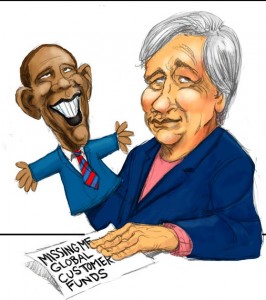
It may well be that the head of JPMorgan Chase, the President’s personal banker, wanted his losses covered and that’s what he got when the budget was passed.  Jamie Dimon got the public to pay again.

The Budget Passed


Do Fines Deter Banks?

Howard Davies writes:  In November, the United Kingdom’s Financial Conduct Authority (FCA) announced a settlement in which six banks would be fined a total of $4.3 billion for manipulating the foreign-exchange market. And yet share prices barely reacted. Why?

The nefarious practices and management failings uncovered during the yearlong investigation that led to the fines were shocking. Semi-literate email and chat-room exchanges among venal traders revealed brazen conspiracies to rig the afternoon exchange-rate “fix” for profit and personal gain. Using nicknames like “the three musketeers” and “the A-team,” they did whatever they liked, at an enormous cost to their institutions.

But, despite the huge FCA fine, no top executive was forced to leave and investors did little more than shrug.  Even $4.3 billion is small change when compared to the total fines and litigation costs incurred by the major banks over the last five years. Morgan Stanley analysts estimate that the top 22 banks in the United States and Europe have been forced to pay $230 billion since 2009 – more than 50 times the cost of the FCA settlement. This is over and above the heavy losses that banks incurred from bad lending and overambitious financial engineering.

American banks have incurred more than half of these massive penalties. The European bill amounts to just over $100 billion – roughly half of which was paid by the top seven British banks.

In the US, the penalties have been dominated by fines for sales of misleadingly marketed mortgage-backed securities, often to the two government supported entities Fannie Mae and Freddie Mac.

In the UK, by contrast, the biggest penalties have come in the form of compensation payments made to individual mortgage borrowers who were sold Payment Protection Insurance.

The Morgan Stanley analysis suggests that we can expect another $70 billion in fines and litigation costs over the next two years from already identified errors and omissions.

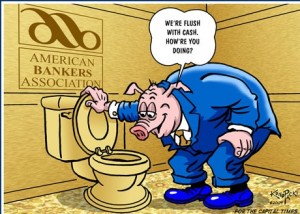
The irony here – not lost on the major banks’ finance directors – is that as fast as banks add capital from rights issues and retained earnings to meet the demands of prudential regulators, the funds are drained away by conduct regulators.

Some of the money, especially in the UK, has gone back to individual customers. Today, the payments have become so large that the government has seized them and channeled revenues exceeding the regulator’s enforcement costs to veterans’ charities.

In the US, the end recipients are less clear; indeed, they are undisclosed. Charles Calomiris of Columbia University has challenged what he calls “a real subversion of the fiscal process” as funds are raised and spent in non-transparent ways.

Do fines on this scale serve as useful deterrents?  Clearly, the post-crisis period has revealed unacceptable behavior in many institutions. It will be some time before we know whether large fines on corporations, paid principally by their shareholders, contribute to keeping the system honest.

Whether the current approach serves as an effective deterrent is a question that should be widely debated. Senior bank managers and regulators have a common interest in developing a more effective system – one that punishes the guilty and creates the right incentives for the future.

Bank Fines

Campaign 2016: Breakup Banks?

Simon Johnson writes:  Citigroup took advantage of the budget approval process in te US Congress to tuck into thousands of pages of law the repeal of some of the 2010 Dodd-Frank financial reforms. The passages were drafted by Citigroup lobbyists and inserted in legislation at the last moment.

At a stroke, Citi executives demonstrated both their continued political clout in Washington and their continued desire to take on excessive amounts of financial risk.  This is exactly what Citi did during the 1990s and 2000s under Presidents Bill Clinton and George W. Bush – with catastrophic consequences for the broader economy in 2007-09.

Breaking up Citigroup is under serious consideration as a potential campaign theme. For example, in a powerful speech – watched online more than a half-million times – Senator Elizabeth Warren responded uncompromisingly to the megabanks’ latest display of muscle: “Let’s pass something – anything – that would help break up these giant banks.”
Warren is attracting a great deal of support from the center and the right.

Senator David Vitter of Louisiana is the most prominent Republican member of Congress in favor of limiting the size and power of the biggest banks, but there are others who lean in a similar direction. The vice chair of the Federal Deposit Insurance Corporatio consistently warns about the dangers associated with megabanks. Former FDIC Chair Sheila Bair, a Republican from Kansas, argues strongly for additional measures to rein in the biggest banks.

From the perspective of anyone seeking the nomination of either of America’s political parties, here is an issue that cuts across partisan lines. “Break up Citigroup” is a concrete and powerful idea that would move the financial system in the right direction. It is not a panacea, but the coalition that can break up Citi can also put in place other measures to make the financial system safer.

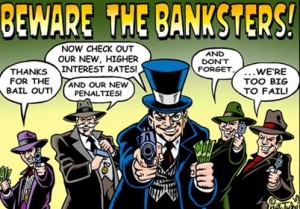
Megabanks are accused of abuse of power and the great rip-off of the middle class. Crony capitalism is implicit in the massive implicit government subsidies that these banks receive. Both left and right agree on the fundamental asymmetry that the recent “Citigroup Amendment” implies: Bankers get rich whether they win or lose, because the US taxpayer foots the bill when their risky bets fail.

Potential Republican presidential candidates have hesitated to take up this issue in public – perhaps feeling that it will inhibit their ability to raise money from Wall Street. Among the Democrats, however, the opportunity seems to be much more compelling; indeed, avoiding a confrontation with Wall Street might actually create problems for a candidate like Hillary Clinton who is close to Wall Street.

This idea would attract support from centrists. “Break up Citigroup, end dangerous government subsidies, and bring back the market.” The US presidential candidate who says this in 2016 – and says it most convincingly – has a good chance of winning it all.

Break up the Banks

The Social and Economic Cost of Incarceration

Robert Rubin, Secretary of the Treasury and Nicholas Turner, head of a criminal ustie institute write on the problem of high incarceration rates in the US.  They cite a comprehensive report  published this year.

This is not only a serious humanitarian and social issue, but one with profound economic and fiscal consequences. In an increasingly competitive global economy, equipping Americans for the modern workforce is an economic imperative. Excessive incarceration harms productivity. People in prison are people who aren’t working. And without effective rehabilitation, many are ill-equipped to work after release.

Interestingly one person exploring a possible Presidential candidacy in 2016, former Senator Jim Webb of Virginia, has been trying to address this problem for a very long time. He first became interested in inarceration rates when he visited prisons in Japan, a country half our size with incarceration rates about 1/20th of ours.

He then tried to develop ths issue as he was campagining.  When asked whether this was foolish for a US politician, whose popularity is usually determined by ‘tough on crime’ caveats, he said he felt a politican should lead on issues, not follow.

Clearly in the US our punishment of victimless crimes is out of control.  Clearly also, the majority of people incarcerated are of African American descent.

In addressing on a deeper level the cause of racial division in the US, we would do well to listen to Jim Webb.

Robert Rubin seldom bills as one his crednetials his position as a partner of Robert Freeman on the arbitrage desk of Goldman Sachs.  Freeman was led out of Goldman in handcuffs for insider trading, although he ended up only pleaing to a mail fraud charge. He did spend 4 months in jail, a rare event for people of Freeman and Rubin’s ilk.   Is Rubin’s recent interest a mea culpa or a way of lobbing an issue up in the air that is more apporpriately Jim Webb’s than Rubin’s good friend Mrs. Clinton’s.

Let’s hope that if this is poitics as usual that the issue sticks and begins to be addressed in the US.

Behind Bars


Do the Russians Like Putin?

Alex Berezow writes:   Comedian Norm Macdonald was fond of pointing out that Germans love David Hasselhoff.  Germany’s infatuation with “The Hoff” pales in comparison to Russia’s admiration of Vladmimir Putin that archaeology-loving, race-car-driving, tiger-tranquilizing, bare-chested survivalist known affectionately to some former world leaders as Pooty Poot.

Despite a deeply troubled economy, international notoriety, and a ruble that has collapsed in value, Russians are standing by their man with a stunning 81% approval rating.

Mr. Putin has maintained an approval rating of 61% or higher since he has assumed high public office. (The only exceptions were his first two months in office when many Russians still didn’t know who he was.)

What can we conclude from this?  Mr. Putin’s popularity went soaring within months of his taking office.  His approval rating has remained high for 15 years. The more tyranical he behaves, the more popular he becomes.

Putin’s popularity, therefore, is likely to due something else: Russians don’t think highly of Western-style democracy.  .Forty-five percent of Russians believed a Western-style democracy would be destructive to the country.

The unsettling conclusion is that an anti-democratic, tyrannical bully who is willing to invade his neighbors for the sake of Russian glory is exactly the sort of leader Russians want. Mr. Putin is not acting in defiance of the will of the people; rather, he is the embodiment of the Russian mindset. This is deeply troubling.

Russians want Putin as their leader, and thus, they deserve whatever economic catastrophe likely awaits them in the not-too-distant future.

Putin, A Successful Leader

Tobacco Bonds, Wall Street and the Raters

Cezary Polkul writes:  When the economy nosedived in 2008, it didn’t take long to find the crucial trigger. Wall Street banks had peddled billions of dollars in toxic securities after packing them with subprime mortgages that were sure to default.
Behind the bankers’ actions, however, stood a less-visible part of the finance industry that also came under fire. The big credit-rating firms – S&P, Moody’s and Fitch – routinely blessed the securities as safe investments. Two U.S. investigations found that raters compromised their independence under pressure from banks and the lure of profits.

Now there is evidence the raters also may have succumbed to pressure from the bankers in another area: The sale of billions of dollars in bonds by states and municipalities looking to quickly cash in on the massive 1998 legal settlement with Big Tobacco.

Credit-rating agencies are supposed to make independent judgments about the risks of a deal. But in their pitches for state business in tobacco bonds, bankers bragged they could manipulate the raters to get favorable treatment for their transactions.

A review by ProPublica of documents from 22 tobacco bond offerings sold by 15 state and local governments shows that bankers routinely bragged about having their way with the agencies that rated their products. The claims were brazen, the documents show, with bankers saying they routinely played one firm against its competitors to win changes to rating methods, jack up a rating or agree to rate longer-term, riskier bonds.

“Fitch reached out to UBS for input so that they would fall in line with the other ratings agencies,” UBS said after it and other financial services firms dropped Fitch from deals because of its “constraining” stress tests. Following the conversation, “Fitch amended their stress criteria,” UBS told officials in Michigan as it readied a 2006 deal.

In 2007, JPMorgan promised to negotiate Fitch to their knees if Ohio hired the bank for a $5.5 billion deal that was the largest sale, or “securitization” of tobacco settlement payments.

The 140 documents, unearthed through public records requests, show that bankers from six Wall Street firms – UBS, Bear Stearns, Citigroup, Merrill Lynch, JPMorgan and Goldman Sachs – claimed they could persuade the rating agencies to make favorable changes to their criteria.

Garnering better grades for the tobacco bonds meant the bankers could sell more of them, get a leg up on their competition and win millions of dollars in fees from the governments issuing the debt. The state and local governments were trading their annual tobacco payments for up-front cash by making the bond deals. As ProPublica has reported in a series of stories, the bonds have proved much riskier than advertised, leading to fiscal headaches for the issuers and losses for investors.

While there are no indications that the bankers did anything illegal, their claims further undermine the argument by the raters that their opinions are only the result of independent analysis.

Since the economy tumbled in 2008, the estimated $36 billion of bonds issued in the tobacco sector – like so many other corners of Wall Street – have proven to be founded on shaky assumptions.

The future may be even bleaker for a $3 billion sliver of the debt. Those securities, known as capital appreciation bonds, promised balloon payoffs so large – $64 billion, all told – that they are almost certain to default. The documents show bankers pressed rating agencies to ease criteria for evaluating those bonds as well.

ProPublica shared the tobacco bond documents with S&P, Moody’s and Fitch. All denied changing their methodologies, also known as rating criteria, in response to demands from bankers.

In an interview, Nicolas Weill, who oversees Moody’s rating methodologies for tobacco bonds and similar securities, said, “We don’t negotiate criteria.” Those criteria – such as stress tests that gauge how much cash is available to repay the bonds under various scenarios – are “never, ever’’ open to deal-by-deal changes. He said the firm may evaluate different deal structures but only if they meet those criteria.

Fitch said: “With respect to every one of the examples provided to us by ProPublica, we can affirm that no banker or other outside party unduly influenced any of these ratings decisions … We determine our ratings – they are not open to negotiation with issuers and bankers.”

S&P said “On the whole, the assertion that S&P’s cash-flow stress assumptions for tobacco settlement bonds were relaxed is false … credit ratings change because factors that affect credit risk change.”

ProPublica shared the documents with each of the banks. All declined to comment except UBS, which said the bankers involved no longer work for the firm, which exited the municipal bond business amid the 2008 market turmoil.

ProPublica also shared the materials with the Securities and Exchange Commission, which regulates rating agencies and has been working to reform the rating process since the abuses in mortgage-backed securities.

The SEC also has been investigating whether S&P bent its criteria to win ratings of commercial mortgage bonds. The regulator is now seeking to suspend S&P from that part of the business in what would be its toughest action yet against one of the big three raters.

The SEC declined to comment on the documents provided by ProPublica.

The documents give the bankers’ version of what happened, and some degree of exaggeration can be expected in any sales pitch. Nevertheless, former rating analysts, lawyers and regulatory experts who reviewed the documents said the consistency of the bankers’ claims across multiple years, deals and states, compared with known criteria changes and ratings, suggests the banks’ influence was real.

“Banks have a right to advocate for their clients – that’s normal,” said Mayra Rodriguez-Valladares, a financial regulatory consultant who reviewed the documents at ProPublica’s request. “What’s going on here is very different … this is the banks trying to convince rating analysts to make changes to their methodology, and that’s really crossing the line.”  Same Old Ratings