European Banks Fail Stress Test?

David Shilpley writes:  The European Central Bank has just published the results of new “stress tests” on European Union banks, hoping to convince financial markets that the banking system is now strong enough to weather another crisis. This latest exercise is a big improvement over previous efforts, which were widely derided as too soft — but it’s still not good enough.

The test was in two parts.  One found that most of the over 130 banks had overvalued their assets.  The second part assessed whether the correct value of the assets kept the banks in a safety zone.  25 failed the test.  8 needed to raise 6.4 billion dollars.

Deutsche Bank raised 8.5 billion in equity this year to help them pass the stress test. Weak institutions, such as Portugal’s Banco Espirito Santo and Austria’s Volksbanken network, are restructuring or shutting down. By strengthening the system and increasing confidence in it, the ECB’s tests might reverse a two-year slump in private-sector lending.

The tests are pretty soft. Economists at Switzerland’s Center for Risk Management at Lausanne put the capital shortfall at 500 billion euros, not the 6.8 billiioin put forward by the ECB.  Of course, the ECB takes over as the euro areas’s supernational bank supervisor on November 4.  If it had been too tough it might have blown the euro back into crisis.

Economists like Anat Admati would rather have the percentage of equity determine a bank’s ability to withstand stress.

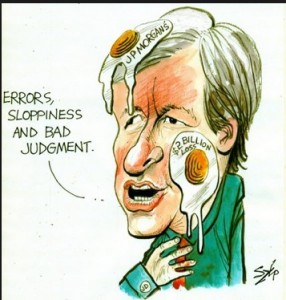
How DId the Bank Pass the Stress Test with So LIttle Cash?

How DId the Bank Pass the Stress Test with So LIttle Cash?


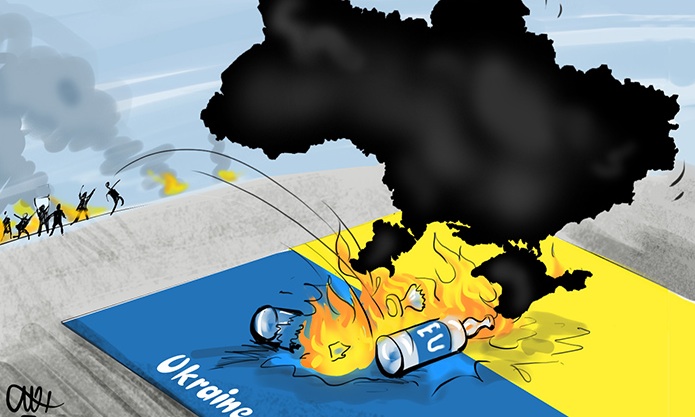
Ukraine Election Legitimate?

Paul Roderick Gregory writes:   Ukrainians elected a new parliament – the Verkhovna Rada — its 450-seat single-house legislative body. As a consequence of the Euromaidan revolution and Russia’s war on southeastern Ukraine, the parliamentary election was moved up from 2017 to October 2014.

Most signs point to a legitimate election, which will surely be confirmed by an official report of OSCE observers.

The early parliamentary election was necessary to give Ukraine’s representative democracy a chance to reflect Ukraine’s new pro-Western orientation, as emphasized by George Soros, and to respond to the challenges of occupied territory, Russian troops in the country, gas delivery disputes, and continued or expanded aggression from the Russian side. Despite defections from Viktor Yanukovich’s Party of the Regions after his flight from Ukraine, Ukraine President Petro Poroshenko had faced a strong bloc of deputies opposed to reform and against a strong response to Russia’s aggression.

Poroshenko got what he needed. His own bloc and that of Prime Minister Yatsenyuk received 44 percent of the votes. A surprisingly strong showing of the “Self Help” party headed by the pro-Western mayor of Lviv gives him a coalition of 57 percent of the votes – a governing majority in which all members share common policies towards the West and Russia.

Importantly, Poroshenko does not need the two “radical” parties on the ballot in his ruling coalition, which together garnered 12 percent of the vote. Both, however, will enter parliament, and will hold the ruling majority’s feet to the fire if they show weakness towards Russia. The Opposition Party, comprised of deputies from the southeastern provinces, gained only 8 percent of the vote, and former political heavyweight Yulia Tymoshenko’s party got only 6 percent, despite having a war heroine as its figurehead. Voters are telling Tymoshenko that she had her chance and failed.

For the first time in its history, the communist party failed to reach the 5 percent threshold.

Russian propaganda had been gearing up for a stronger showing of the two “radical” parties, which would have admitted one or both to the ruling coalition. Putin’s trolls were ready to scream that neo-Nazis and racial extremists control the Kiev government, but such charges will fall on deaf ears for those who know the true election outcome.

In fact, earlier public opinion polls showed the “Radical Party” headed by Oleh Liashko coming in second place. It is easy to understand his popularity. Liashko organized volunteer battalions and himself participated in the Anti-Terrorist operation in eastern Ukraine. For many Ukrainians, Liashko is the equivalent of the Minutemen of the American Revolution, but when it came time to vote, Ukrainians voted for mainstream parties. Perhaps they understood the propaganda coup for Russia of a Liashko in the ruling coalition.

Already, Western pundits are complaining that the election of a pro-Western parliament will endanger crisis resolution. A Time Magazine correspondent complains that as a result of leaving pro-Russian voters out of the election (their self-appointed leaders chose to boycott), the election will not heal the divide.

We are still awaiting Putin’s reaction. He must make the tough decision whether to recognize the election results – and admit the legitimacy of Ukraine as a sovereign state – or continue his ploy that the government of Ukraine is illegitimate.


Ukraine Elections


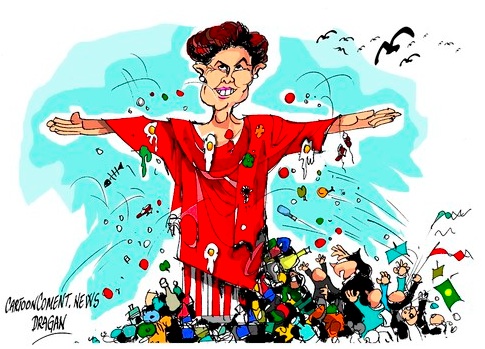
Rouseff Edges Out a Victory in Brazil

Rouseff is victor in the Brazilian election, but in an almost evenly split vote.  In the past three decades, one three incumbents in Latin American countries have lost.  Rouseff provided generous support to the poor of her country.  In turn, poor areas in the north and northeast of the country voted overwhelmingly for her.  On her watch, unemplyment has been low, wages on the rise and the inequality gap closed somewhat.

Rouseff has been mired in an investigation into bribes by Petrobras, the state-controlled oil giant.  A Congress of 28 parties up from 22 will be unwieldy to manage.  The Petrobras scandal will not go away.  And high inflation and lack of competitiveness will hound Rouseff.  Protests of 2013 against political corruption may rise again.

Rouseff

Ukraine Tries for Transparency

Even in the best of times, governments have a difficult time cleaning up.  In Ukraine, where the economy is contracting, they are trying to get rid of negative sterotypes.

It is reported that one out of three people in the country have been asked to pay bribees.  Elections this month will probably reflect the pubic’s desire to end corruption.  Ukraine wants to set itself apart from Russia.  It needs to attract foreign investment and counter an economic decline.  It won’t receive $27 bilion in finanical aid or meet requirements for the European Union membership unless it starts to curb graft.

Ukraine

Japan Has Problems with Student Loans

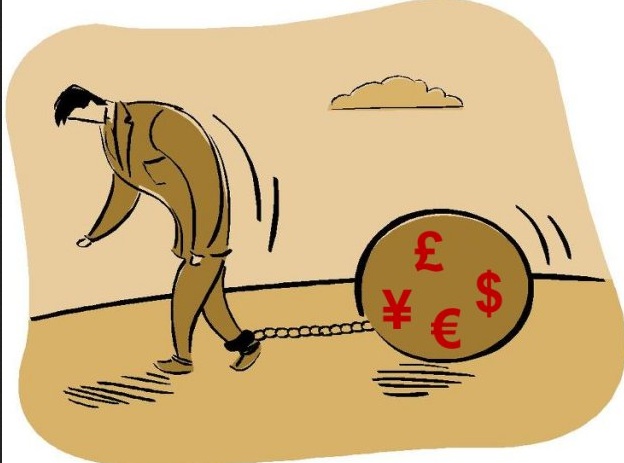
The US is not the only country whose students are burdened by debt.  More and more students are being forced out of colleges and universities in Japan because they cannot afford tuition.  More and more students are asking for tuition exemptions and spit payments.  Long term debt can be an intolerable burden.  The educational system will create an unfair gap between the rich and the poor unless other methods of financing educaion are found.

Student Debt

Demand for Good Governance in Hong Kong?

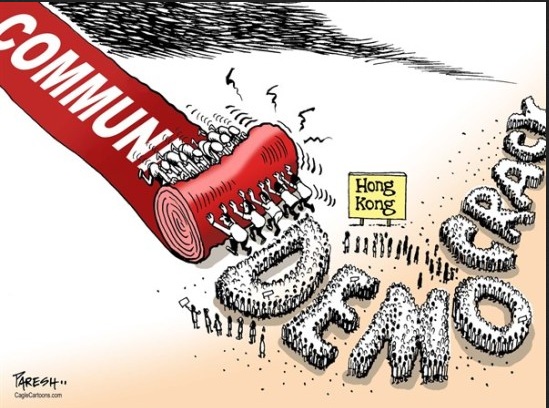
Sin Ming Shaw writes:  After the failure of three consecutive Chinese-selected leaders to address Hong Kong’s concerns, it is no wonder that Hong Kong’s citizens are increasingly seeking to loosen China’s grip on their government. But, for the Chinese authorities, this movement reflects an unacceptable challenge to China’s sovereignty.
In this sense, Hong Kong is locked in a vicious circle – and it is up to China’s government to break it. The fact is that Hong Kong’s citizens understand that they need China, and they have no interest in subverting the central government – nor do they have the power to do so. Their demands for democracy are simply calls for good governance. They believe that free and fair elections represent their best chance of having a competent leader – someone like Patten, China’s former nemesis, who is remembered fondly in Hong Kong.
China’s government is doing itself a disservice by demanding that Hong Kong’s citizens bow before their sovereign, while blaming “outside hostile forces” for spurring some kind of unconstitutional rebellion. Instead, it should focus on the problems created by the chief executives that it chose for the wrong reasons, and it should resolve the underlying governance problems that the demonstrations reflect.

Hong Kong

Bankers and Financiers Commit Crimes, Pay Peanuts for Them and Keep on Trucking

Rengan Rajaratnam settles insider trading charges.  The Securities and Exchange Commission announced that former hedge fund manager Rajaratnam has agreed to pay more than $840,000 and accept securities industry bars in order to settle the agency’s insider trading case against him.

The SEC had filed charges against Rajaratnam for his role in the widespread insider trading scheme conducted by his brother Raj Rajaratnam and hedge fund advisory firm Galleon Management. The insider trading occurred in securities of more than 15 companies for illicit gains totaling nearly $100 million. The SEC has now obtained court judgments or settlements in Galleon-related enforcement actions against 35 defendants, resulting in approximately $165 million in monetary sanctions.

Rengan Rajaratnam, who became a portfolio manager at Galleon after co-founding hedge fund advisory firm Sedna Capital Management, neither admitted nor denied the SEC’s allegations in agreeing to the settlement that is subject to court approval. The proposed final judgment would permanently enjoin Rengan Rajaratnam from violating Section 10(b) of the Securities Exchange Act of 1934 and Rule 10b-5, and require him to pay $372,264.42 in disgorgement, $96,714.27 in prejudgment interest, and a $372,264.42 penalty. Under the settlement, he also would be barred from association with any investment adviser, broker, dealer, municipal securities dealer, or transfer agent with the right to apply for reentry after five years.  No jail sentences handed down. His brother is one of the few bankers to get time — eleven years.

Too Big to Jail, Too Small to Jail.

Big Data Not Discriminatory?

Daniel Castro writes:  Many individuals have made the claim that big data might lead to more discrimination,  An online retailer might offer one price to Asian customers and another price to Latino customers This idea appeared in the White House big data review led by John Podesta, where the final report stated that “An important conclusion of this study is that big data technologies can cause societal harms beyond damages to privacy, such as discrimination against individuals and groups.” This idea was also the subject of a recent Federal Trade Commission (FTC) workshop exploring what FTC Chairwoman Edith Ramirez termed “discrimination by algorithm.” While this type of discrimination is plausible, there are many compelling reasons why it may never come to pass. Moreover, the focus on how big data might be used to harm individuals has overshadowed the bigger opportunity to use data as a new tool in the fight for equality.
One reason concerns about discrimination are likely overblown is because many laws, including the Americans with Disabilities Act (ADA), the Genetic Information Nondiscrimination Act (GINA), the Fair Credit Reporting Act (FCRA) and the Employee Retirement Income Security Act (ERISA), protect consumers from employers, creditors, landlords and others who may take adverse actions against them based on protected classes of information. Big data does not exempt businesses from following these laws. Earlier this year, for example, the FTC brought charges and entered into a settlement with Instant Checkmate for violating the FCRA.

Of course, just because a business might be able to create a racist or sexist algorithm, does not mean that it will do so. After all, most businesses are not actively seeking to discriminate against minorities, and in fact, many companies are actively championing a more inclusive worldview. Moreover, even where there are “bad apples,” companies face significant market pressure to not engage in such behavior, a lesson that most executives have probably learned following the swift departure of sponsors after the disclosure of former Los Angeles Clippers owner Donald Sterling’s racist remarks. Big data has not changed these factors.

But the bigger point is that the focus on preventing discrimination has diverted attention away from the bigger opportunity to use big data to create a more inclusive society. There are at least three ways this can happen. First, automated processes can remove human biases from decision-making. For example, while loan officers or apartment managers may discriminate, perhaps even unintentionally, on the basis of age or race, computers can be programmed to ignore these variables. Second, data creates feedback loops that encourage people to treat others as individuals. While some taxi drivers have notoriously refused to pick up passengers because of the color of their skin, apps like Uber allow drivers to decide whether to give someone a ride based on the passengers’ ratings, which are mostly tied to whether the riders are punctual and tidy. Third, data is a useful way to identify latent racism, such as discriminatory hiring practices or racial profiling by police. For example, data collected about the disparate impact of New York City Policy Department’s controversial stop-and-frisk policy has helped change opinions on the approach.

In short, not only are fears that big data will lead to discrimination in the future likely overblown, but they have clouded the debate. Those working to fight discrimination should look to data as a way to further eliminate unjust biases in society and create a more fair and transparent society.

Algorithms

Investigate NY Fed Supervision of Wall Street?

Whistleblower tapes revealed the weakness of the New York Federal Reserves oversight of Wall Street and big US banks.  Senators Elizabeth Warren and Sherrod Brown call for investigation.

Warren and Brown, both members of the Senate Banking Committee, called for an investigation of the New York Fed after Carmen Segarra, a former examiner at the bank, released secretly recorded tapes that she claims show her superiors telling her to go easy on private banks. Segarra says that she was fired from her job in 2012 for refusing to overlook Goldman’s lack of a conflict of interest policy and other questionable practices that should have brought tougher regulatory scrutiny.

“Congress must hold oversight hearings on the disturbing issues raised by today’s whistleblower report when it returns in November, because it’s our job to make sure our financial regulators are doing their jobs,” Warren said in a statement on Friday. “When regulators care more about protecting big banks from accountability than they do about protecting the American people from risky and illegal behavior on Wall Street, it threatens our whole economy. We learned this the hard way in 2008.”

In an interview with This American Life and ProPublica, Segarra described numerous instances in which she said she alerted her bosses to questionable practices at Goldman. In one instance, she said she alerted a colleague that a senior compliance officer at Goldman had said that the bank’s view was that “once clients became wealthy enough, certain consumer laws didn’t apply to them.” Segarra claims that her New York Fed colleagues asked her to ignore the remark and change meeting minutes she had taken, which contained evidence of what the Goldman executive said.

New York Fed presdient WIlliam Dudley gently demanded a change of culture, but this won’t do the job.  We need muscle behind bank reform.

Bank Reform?


Mexico Moves Forward

Since 2012, three major politial parties in Mexico have joined forces to pass 11 major reforms.  Most striking are:

1.  Civiiliry in politics.  In August a controversial and difficult bill was paased curbing the power of Pemex, the petroleum monopoly and a pride of the country.  A new generation of leaders sees an advantage in curbing old-style infighting.

2.  Better services.  Meixo is one of the world’s most ope economies. It has 44 trade agreements with other countries.  Reforms will help get loans to small businesses and build more roads, railroads and airports.  This may be a good time for entrepreneurs.  And murders are down 29 per cent.

3. Openess and transparency.  Transparency institutes and corruption commissions will watch over awards for oil and gas development and all other matters.

by Fernando Llera

by Fernando Llera