Head of NY Fed Calls on Banks to Improve Culture

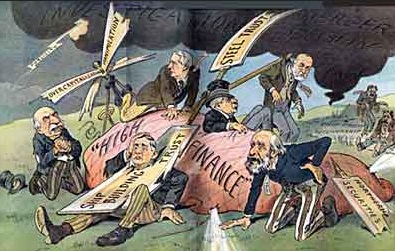
The head of the New York Federal Reserve Bank says that banks must improve their culture. Banks must change the way employees are compensated and take other steps to fix a corporate culture that encourages misdeeds or face being broken up, said William C. Dudley.

If bad behavior persists, “the inevitable conclusion will be reached that your firms are too big and complex to manage effectively,” Dudley said.

Dudley’s comments, which follow bank scandals involving Libor and foreign exchange trading, were made at a closed-doors workshop attended by senior bankers at the New York Fed on reforming Wall Street culture and behavior.

Lawmakers have enacted a major overhaul of the rules designed to prevent banks becoming “too big to fail.” Dudley said it was fair to question if the “sheer size, complexity and global scope of large financial firms today have left them ‘too big to manage.’”

Dudley, who has had to defend the New York Fed recently against allegations it was too soft on big Wall Street firms, suggested a number of ways to better align bank employee incentives with the interests of the general public.  These include deferred compensation plans that switch emphasis to debt, rather than equity, and a centralized, industry-wide registry for tracking individual offenses.

Fines levied against banks could be paid out of deferred debt compensation of senior managers, which would play the role of a performance bond, Dudley said.

“This would increase the financial incentive of those individuals who are best placed to identify bad activities at an early stage, or prevent them from occurring in the first place,” he said, noting that since 2008, fines on big U.S. banks have exceeded $100 billion..

Dudley’s remarks followed a speech by Fed Governor Daniel Tarullo delivered at the same conference in which he said banks may face stiffer rules unless they improve their bad behavior.

“If banks do not take more effective steps to control the behavior of those who work for them, there will be both increased pressure and propensity on the part of regulators and law enforcers to impose more requirements, constraints and punishments,” Tarullo said.
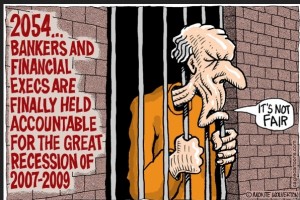
Bankers' Accountability

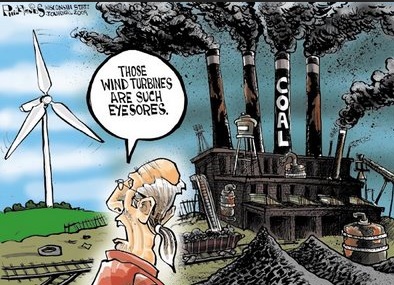
Coal Corrupts, Extractive Industries Corrupt Absolutely

Mariana Lu writes about coal and corruption:  Juan Pablo Perez Alfonso, one of the founders of OPEC, once compared the world’s fossil-fuel use to “drowning in the devil’s excrement.” There is certainly plenty of evidence supporting his prediction that the fossil-fuel industry, with its powerful corrupting influence, will “bring us ruin.” Indeed, coal-related corruption stories are breaking worldwide, shining a light on the murky space between “illegal” and “improper” where the extractive industries work.

Last year, in the Australian state of New South Wales, the Independent Commission Against Corruption investigated former Labor ministers Eddie Obeid and Ian Macdonald for conspiring to defraud the state over the issuance of multi-million-dollar licenses for coal exploration and mining. Today, the ICAC is conducting an even more far-reaching and complex investigation into a number of figures from the Australian Labor Party and the Liberal/Nationals Coalition, including for favoring the interests of Australian Water Holdings, a major infrastructure company.

Last month, India’s Supreme Court found that all 218 coal-mining licenses allocated by the government in 1993-2009 had been granted in an “illegal and arbitrary” manner.  Indonesia is set to revoke the contracts of 17 coal producers that failed to pay government royalties. And, since the beginning of this year, the country’s corruption commission has been focusing on the extractive industry, including the state officials who facilitate mining companies’ illegal activities.

Likewise, China’s ongoing anti-corruption drive – the largest in its modern history – has begun to focus on the coal industry. Last month, two Communist Party officials from the coal-rich Shanxi province were charged with corruption and abuse of power, signaling that Shanxi may well move to the forefront of President Xi Jinping’s quest to eliminate entrenched corruption in the Party’s ranks.

Where the coal industry operates, bribery and venality are likely to be rampant. But this does not have to be the case. In order to reduce – if not eliminate – such corruption, several fundamental weaknesses in the regulation of how mining contracts are allocated must be addressed.

For starters, instead of conducting fair and transparent open-tender processes, governments often empower their ministers to decide which companies are allocated lucrative fossil-fuel exploration and extraction contracts, and conflicts of interest are not disclosed. Indeed, there is an unguarded revolving door between politics and the extractive industry, and political donations are allowed. Finally, though states are responsible for regulation, they also receive royalties and levies for the sale of their resources, which tends to weaken regulators’ effectiveness.

The key to addressing all of these problems is, of course, greater transparency. Resource-rich countries, such as Equatorial Guinea and Sudan, tend to perform worse economically and experience more violent conflict than their resource-poor counterparts – a phenomenon famously dubbed the “resource curse.”

Corruption plays a major role in this curse. Natural-resource wealth insulates leaders from accountability, while offering them the prospect of significant personal financial gain at the expense of the rest of the country.

Economies that depend on natural-resource exports are vulnerable to sharp price fluctuations, making government revenues and foreign-exchange supplies unreliable. For private investors, this makes involvement in these countries prohibitively risky.

If a country like Australia, with its robust civil society and strong democracy, is struggling with widespread graft among high-level government officials, no country is safe from the corrupting influence of the extractive industries. Worse, as is so often the case, those who suffer the most from the extractive industry’s opaque and unfair activities – not to mention the selfish actions of corrupt officials – are those who can least afford it.

Coal Corruption

Fees Don’t Create Real Wealth

Rentier skims do not contribute to real wealth,  Charles Hughes Smith suggests.

The classic example is a fee collected to pass from one fiefdom’s border to the next: no value is provided to the person paying the border fee; it is a rentier skim that transfers wealth from serfs to the fiefdom’s landowning nobility.

In the modern economy, rentier skims take a variety of forms. The government is adept at levying rentier skims. Harsh penalty fees piled on top of minor traffic violations are one example; another is extra fees to “expedite” services government is supposed to provide in a timely manner.

A California architect recently recounted the new fee structure in a Northern California municipality: the fee to have the city planning department review your building permit application leaped to $6,000. Since the department warned applicants it will take at least six months for the agency to process the application, they kindly offer an alternative: for a mere $4,000 more (an “expedited fee”), the applicant can get his application reviewed in a mere four months rather than six months.

Planned obsolescence provides many other examples of rentier skims. Microsoft’s operating systems and hardware makers both operate a form of rentier skim, in that each new OS and device offers marginal benefits (if any) in terms of productivity. The rare printer that doesn’t break down in a few years is obsoleted as software drivers are no longer available on the new OS.

Cartels and quasi-monopolies offer a wealth (ahem) of rentier skims. Monopolies can raise prices and degrade services at will. Cartels maintain price controls while denying they do any such thing.

Finance offers the richest opportunities for rentier skim. Load up college students with tens of thousands of dollars in high-interest student loans for marginal educations that could be provided at a fraction of the cost.

The net result of an economy of endless rentier skims is stagnation and rising wealth inequality. Money that could be saved and invested in productive enterprises and infrastructure is skimmed off.

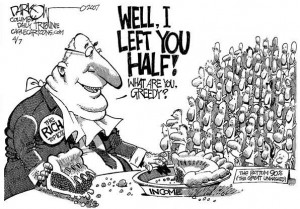
Simply put, the rich get richer and the poor get poorer. This is the teleology of every rentier economy: the built-in consequence of rentier skims is increasing wealth inequality and economic stagnation.

Rentier Schemes

ECOLEC report on Money Laundering and Crime

After the Third EC Directive to combat money laundering and terrorist financing came into force, the European Commission awarded Utrecht University the assignment to research the economic and legal effectiveness of the anti-money laundering and combating terrorist financing policy in the European Union (hereinafter ‘ECOLEF’). This research is performed within the European Commission, DG Home Affairs, on the “Prevention of and Fight against Crime” (ISEC) Programme. The ECOLEF team researches the policy of the 27 Member States of the European Union in relation to the mentioned topic, The ECOLEF project is headed by Prof. Dr. Brigitte Unger. Other members of the team are Prof. Dr. Henk Addink, Prof. Dr. Francois Kristen, Joras Ferwerda MSc., Ioana Deleanu MSc., Melissa van den Broek LLM, and Daan van der Linde MSc from Utrecht University, Ass. Prof. John Walker from the University of Wollongong, Australia, and Prof. Dr. Reinhard Pirker from Wirtschaftsuniversität Wien.         Final ECOLEF report (digital version)_25.06.2013

Money Laundering and CrimeCorruption Reports

US Creeps Closer to Women on the Presidential TIcket

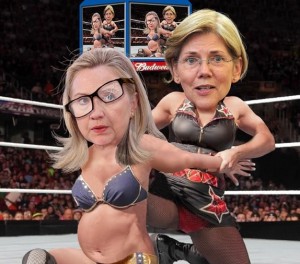
Hillary Clinton has all but announced in the US, but signs from her campaigning for candidates in Southern states during the US 2014 election cycle are not promising.  While her husband was first and foremost an economics specialist, she has not put forward any ideas for the economic future of the US.  Tmidity may well characterize her Presidential run and even her Presidency if she makes it that far.

Elizabeth Warren is heading for Iowa, the state in which the first Preisidential primaries are held.  A darling of progressives, she is really a centrist:  work hard and play by the rules and you should succeed.  An expert in banking, and fearless with her facts, she has put the banking industry that now controls US politics on notice.  She probably can’t run.  The US citizens experience with Obama’s inexperience will be used against her, but she would make a great VIce President.

Clinton and Warren

Inequality Needs to be Addressed

Mohamed A, El-Erian writes: There were quite a few disconnects at th International Monetary Fund and World Bank. Among the most striking was the disparity between participants’ interest in discussions of inequality and the ongoing lack of a formal action plan for governments to address it. This represents a profound failure of policy imagination – one that must urgently be addressed.

There is good reason for the spike in interest. While inequality has decreased across countries, it has increased within them, in the advanced and developing worlds alike. The process has been driven by a combination of secular and structural issues – including the changing nature of technological advancement, the rise of “winner-take-all” investment characteristics, and political systems favoring hte wealthy.

In the developed world, the problem is rooted in unprecedented political polarization, which has impeded comprehensive responses and placed an excessive policy burden on central banks. Though monetary authorities enjoy more political autonomy than other policymaking bodies, they lack the needed tools to address effectively the challenges that their countries face.  Mohamed El-Erian writes:   Among the most striking disconnect at the recent annual meetings of the IMF and the World Bank was the disparity between participants’ interest in discussions of inequality and the ongoing lack of a formal action plan for governments to address it.

While inequality has decreased across countries, it has increased within them, in the advanced and developing worlds alike. The process has been driven by a combination of secular and structural issues – including the changing nature of technological advancement, the rise of “winner-take-all” investment characteristics, and political systems that favor the wealthy.

In the developed world, the problem is rooted in unprecedented political polarization, which has impeded comprehensive responses and placed an excessive policy burden on central banks. Though monetary authorities enjoy more political autonomy than other policymaking bodies, they lack the needed tools to address effectively the challenges that their countries face.

In normal times, fiscal policy would support monetary policy, including by playing a redistributive role. But these are not normal times. With political gridlock blocking an appropriate fiscal response – after 2008, the United States Congress did not pass an annual budget, a basic component of responsible economic governance, for five years – central banks have been forced to bolster economies artificially. To do so, they have relied on near-zero interest rates and unconventional measures like quantitative easing to stimulate growth and job creation.

Beyond being incomplete, this approach implicitly favors the wealthy, who hold a disproportionately large share of financial assets.

As a result, most countries face a trio of inequalities – of income, wealth, and opportunity – which, left unchecked, reinforce one another, with far-reaching consequences. Indeed, beyond this trio’s moral, social, and political implications lies a serious economic concern: instead of creating incentives for hard work and innovation, inequality begins to undermine economic dynamism, investment, employment, and prosperity.

Given that affluent households spend a smaller share of their incomes and wealth, greater inequality translates into lower overall consumption..

It is time for heightened global attention to inequality to translate into concerted action. Some initiatives would tackle inequality directly; others would defuse some of the forces that drive it. Together, they would go a long way toward mitigating a serious impediment to the economic and social wellbeing of current and future generations.  The Inequality Trifecta

Inequality


The Illusion of Global Regulation

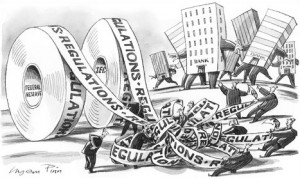
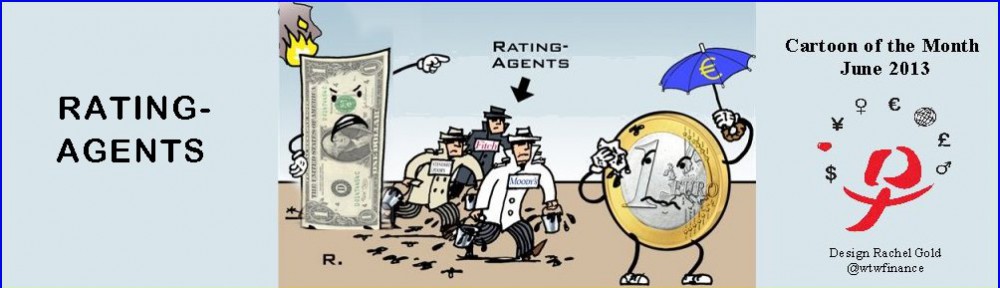
Howard Davies writes: The global system of financial regulation is extraordinarily complex. Partly for that reason, it is little understood.

Many people show some spark of recognition at the mention of the Basel Committee on Banking Supervision, which sets capital standards for banks. They may also have heard of the Bank for International Settlements, the central banks’ central bank, in which the Basel Committee sits. And the International Organization of Securities Commissions (IOSCO), which sets standards for exchanges and securities regulators, has name recognition in some quarters. But when you get to the International Association of Insurance Supervisors, brows furrow.  Financial Regulation

Global Financial Regulation

Tirole, Who Argues for Regulation of Big Businesses, Wins Nobel

A French researcher whose life’s work has been devoted to regulating large companies has won the Nobel Prize for Economics. Jean Tirole, scientific director of industrial economics at Toulouse University, was named the 2014 winner of the Economics Nobel prize on Monday “for his analysis of market power and regulation.’

A mathematician by training, Tirole’s work focuses heavily on game theory and information theory, which focuses on how people use strategic information. His research is focused on the problems that regulators often face when taming oligopolies. Tirole, 61, has advocated for tailored approaches in favor of blunt regulations such as price caps. In 2013, he contributed to a report that called to “complete the euro” with deeper European integration. His research on “Intrinsic and Extrinsic Motivation” challenges the notion that individuals always respond to incentives. Triole has shown that the best regulation should carefully be adapted to each specific industry.

“His analysis of firms with market power provides a unified theory with a strong bearing on central policy questions: how should the government deal with mergers or cartels, and how should it regulate monopolies?” the academy said. “Tirole showed theoretically that such rules may work well in certain conditions, but do more harm than good in others. Price caps can provide dominant firms with strong motives to reduce costs — a good thing for society — but may also permit excessive profits — a bad thing for society. Cooperation on price setting within a market is usually harmful, but cooperation regarding patent pools can benefit everyone. The merger of a firm and its supplier may encourage innovation, but may also distort competition.”    Intrinsic and Extrinsic Motivation

Regulation


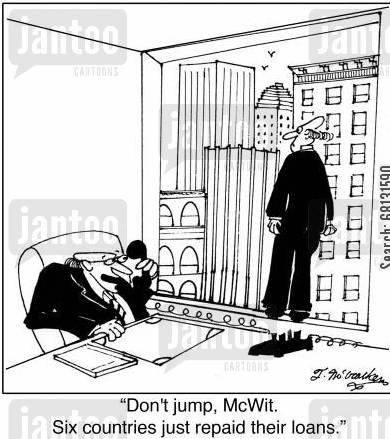
Bankruptcy in Large USFinancial Institutions

The Jeffrey M. Lacker of the Federal Reserve of Richmond reports;  Here are the highlights of my speach at the National Conference of Bankruptcy Judges Annual Meeting at Chicago, Ill.

  • The bankruptcy process is an effective tool for reconciling the incentives of creditors and debtors. Yet the government has a long history of handling large complex financial institutions outside the Bankruptcy Code.
  • This has created two mutually reinforcing conditions: Investors feel protected by an implicit commitment of government support, and policymakers feel compelled to provide that support to avoid a disruptive adjustment of expectations.   Jeffrey Lacker’s Speech

Bankruptcy

Putin Faces the Russian Economy?

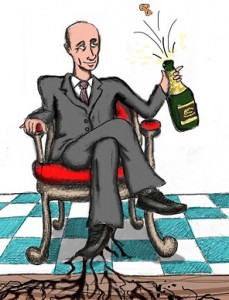
Putin spent his birthday alone in the SIberian forests.

Though the crisis with Ukraine has been reduced to a simmer, Russia has seen a strategic reversal in its critical borderland. In addition, the crisis moved the West to enact sanctions on Russia and loosen many financial and economic ties to the country. Now the Kremlin is in the midst of an economic crisis that is every bit as serious as the Ukraine situation. In the past two days, Russia’s central bank used $1.6 billion of its currency reserves to shore up the Russian ruble. Since the start of 2014, the central bank has injected $51 billion in currency reserves to keep the currency stable. The Russian economy is projecting flat growth for 2014, while foreign investment into Russia has fallen by 50 percent. The Kremlin may have $630 billion in its reserves, but these funds are being used quickly in an attempt to fill the cracks.

Concerns over Russia’s financial stability have erupted into public battles between the various Kremlin factions. On Tuesday, Russian Finance Minister Anton Siluanov, a key figure in the liberal economic clans, publicly called on Putin to cut Russia’s ambitious defense spending program.

While Siluanov’s argument against defense spending is financial, Putin also has to consider the security and political ramifications of such a decision. Russia’s continued struggles in its borderlands will require a robust military. Moreover, Putin is using the defense budget to appease Russia’s various security and defense circles.

Though Putin has ruled Russia for 15 years in a centralized and autocratic fashion, like any other leader he must balance various factions within the country. His ability to manipulate the various political clans is what brought him to power. The lack of that ability is what caused the downfall of Boris Yeltsin in the 1990s, and many leaders before him. Yeltsin was unable to manage the competition between his own loyalists, the more liberal circles of economists and the security and defense circles. Yeltsin wildly shifted policies in order to retain a grip on power, such as his economic shock policies and the restructuring of the Federal Security Services. Such erratic moves contributed to the Russian economic crash, the breakdown of the security services and the erosion of Russia’s military as it fought a savage war in the North Caucasus.

Putin’s grasp on power is not easy to gauge from outside the Kremlin. The decision for new leadership is made within the Kremlin walls, not among the people. Previous Russian leaders, from Nikita Khrushchev to Leonid Brezhnev to Yeltsin, were removed or pushed aside by the ones closest to them. Thus, it seems fitting that the current Russian leader chose to celebrate his birthday far from the Kremlin and its clans.

Putin's Birthday