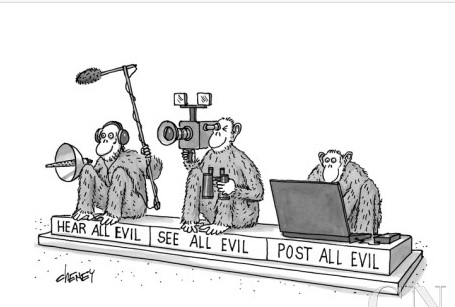
Beware Social Media: You Could Get Canned


Schmupeter writes:  Thanks to the digital revolution, chief executives now live in glass houses. An ill-judged remark can be broadcast to the world in an instant. An unwise “reply all” can provide sensitive information to a competitor. An exasperated complaint in the midst of a crisis can seal your doom. Tony Hayward, who was boss of BP during the oil spill in the Gulf of Mexico, never recovered from his plea that “I want my life back”.The digital revolution has dramatically shifted the balance of power from companies to their critics. Although big firms deploy armies of PR flacks, anyone with a smartphone and a socialmedia account now has the same power to reach a global audience. Whistleblowers once had to photocopy documents and smuggle them out in their underpants. Now they can be shared with the world in a trice, by e-mail or instant messaging.

By contrast, companies have failed to adapt. The biggest of businesses with the slickest of publicity operations, from McDonald’s to JPMorgan Chase, British Gas to Qantas, have found that when they tried engaging with tweeters on their home turf, they were drowned in a sea of sarcasm. British Gas’s attempt at an online discussion about its price rises was met with a barrage of tweets mentioning “death” and “greed”. Presumably they will get better eventually. But in “Glass Jaw: A Manifesto for Defending Fragile Reputations in an Age of Instant Scandal”, Eric Dezenhall, an American crisis-management consultant, points to two big reasons why companies are condemned to play catch-up.

The first is the nature of the internet. It is a beast that feeds on scandal and particularly delights in the flesh of the powerful and privileged.

The second is the nature of companies. They are designed to stay in business rather than to be good at defending their bosses from scandal. No matter what PR resources they throw at killing a story, NGOs and prosecutors will always have more stamina. In America no sensible firm will risk gambling on a jury trial when a negative verdict could bar them from doing business with the government.

The best defence in this age of instant global scandal may be  to be brilliant at your job. A couple of years after the crisis that almost destroyed his career, Tiger Woods was chosen for a Nike advertising campaign with the slogan, “Winning takes care of everything”. Unfortunately, for CEOs it may not: if you are an ace golfer mired in personal scandal you can redeem yourself on the greens. But a boss brought down by a baying social-media mob does not always get a second chance.

Social Media

Little Guys Strike Back in Subprime Mortgage Case

As Michael Hiltzik wrote in the Los Angeles Times, “Given the government’s failure to bring criminal cases against bankers and other Wall Street figures for collapsing the US economy in 2008, it’s been left to the little guy to strike back.” And the “little guy” did just that, in a case in Sacramento, where a federal jury acquitted four mortgage holders charged with fraud after hearing testimony that bank executives had pulled out all the stops to seduce them into taking out those toxic loans.

William K. Black, a key witness, says: This is the first time that a jury has ever got to hear what actually caused the crisis. And the jury was horrified. Because it was the lenders who deliberately made massive amounts of fraudulent loans and then sold these massive amounts of fraudulent loans through additional frauds to the secondary market and eventually brought down the global financial system.

And the testimony that came out in the case is that the agents, the FBI agents and the IRS agents simply assumed that the banks were the victims and the bankers were the victims and simply assumed that the little people, the mice, were the problem in all of this. So they never even investigated the banks and the bankers.

EMC, the mortgage arm of Bear Sterns issued mortgages to people who had no income and no assets.  Only West Virginia stopped them when they wanted to issue credit cards to these people.  Is the playing field level when a highly trained employee of EMC offers a mortgage to someone who wants a house and never has been able (and still is not able) to buy one?

The question everyone asks is why has no one paid the price for this fraud?

Too Big to Jail?

Argentina’s Bonds

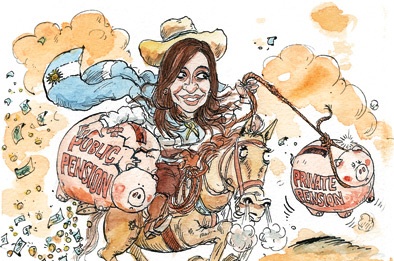
Joseph E. Stiglitz and Martin Guzman write:   In the midst of the ongoing dispute between Argentina and the “vulture funds” that hold its bonds, a broad consensus has emerged concerning the need for sovereign-debt restructuring mechanisms (SDRMs). Otherwise, US Federal Judge Thomas P. Griesa’s ruling that Argentina must pay the vultures in full (after 93% of other bondholders agreed to a restructuring) will give free rein to opportunistic behaviors that sabotage future restructurings.   Argentina’s Bonds

Argentina's Bonds

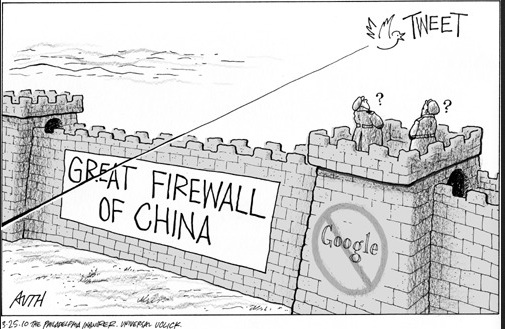
China’s Great Firewall Overcome

 Zach Toombs writes:  For China, online censorship is no longer just about cutting off a flood of information from international news outlets. Now, it’s about plugging a billion little leaks in the Great Firewall. And that’s proving an increasingly difficult task.

In managing the thousands of pro-democracy protesters in Hong Kong’s financial district, some of the censors’ tried and true tactics still work.  Several sudden drops in mobile connectivity in Hong Kong over the past few days, suggesting a police shutdown of mobile networks.

But the growing popularity of VPNs, WeChat, and other workarounds has long put a strain on the Great Firewall. And now a massive effort to push information about what’s happening in Hong Kong onto China’s mainland is making that more apparent, and more relevant, than ever.

Protesters have fallen back on apps like FireChat, which allows chatting with others nearby even without an Internet connection – perfect for the densely packed HK protests.

Monday’s shuttering of Instagram resolved an especially touchy issue for the Communist Party: the sharing of mass protest photos that could very well remind mainlanders of 1989. But the decision to kill the app, which was very popular in China, also might have backfired on Beijing. Interest in VPNs, providing safe passage over the Great Firewall, has spiked in the last week.

Those one or two million people who do know the story coming out of Hong Kong might not know the true story. While a total media blackout is a losing fight for Beijing in the smartphone age, the Communist Party has another tool at its disposal: spin.

Hong Kong and the mainland share little modern history. And loyal state-run outlets have tried especially hard this week to frame the protesting Hong Kongers as lacking patriotism as well. It’s a message that resonated with much of the mainland on the week of China’s National Day this past Wednesday.  Tthe Umbrella Revolution’s cause is not about economics directly. It’s about democracy. And while images and information from the protesters carry loud and clear to the West, for now they’re just poking holes in the Great Firewall and hoping their message is heard, unfiltered, on the other side.

Twitter Beats the Firewall

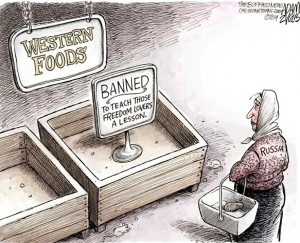
Food Prices Rise in Russia after Counter-Sanctions

Sanctions are taking their toll on Russia.  When Russia announced counter-sanctions against the European Union, USA, Canada and Australia banning imports of food items from those countries, it was clear there would be imminent consequences. But just how those are playing out isn’t as some had expected.

Gennadi Kaakevitch writes: Russia imports 39% of food.  The immediate result of restrictions on imports should be a considerable increase in prices. It is incorrect to suggest, like various commentators in Russia do, that price increases should only affect luxury imported foods, such as exclusive sorts of French cheese and Spanish ham. They have argued locally produced basic items, such as meat and milk, would not be affected and, therefore, ordinary people consuming ordinary food should not feel the impact.

On the contrary, shoppers facing increases in prices for imported products inevitably switch to domestically supplied alternatives. This results in the price of domestic alternatives being pushed up.  Ordinary people in Russia think that banning imports will help local farmers and the food industry to develop domestic production and keep prices down. But to what extent is the substitution of imports with increasing local produce possible?

Is it possible for Russia to replace imports from the countries subjected to counter-sanctions with products from other countries? Meat can be sourced from Brazil and Argentina, but South American exporters have already increased their prices for Russia, blaming sanctions.

Prices for food items jumped by 30-40% in August alone.

Food in Russia


Hong Kong Asks the Question: Has China Modernized?

William McGurn writes:  Even with news the Hong Kong government will hold talks with those occupying the city’s streets, protesters will likely not succeed in their two stated goals: the resignation of Hong Kong chief executive C.Y. Leung, and rules guaranteeing honest elections for future chief executives, starting in 2017.

What the students have achieved, however, is something far more alarming for any regime lacking the security of political legitimacy: They’ve made that regime’s leaders look ridiculous.

There are many symbols of a modernizing China — gleaming skyscrapers, state-of-the-art infrastructure, a record IPO on the New York Stock Exchange — whenever Beijing finds itself challenged by ordinary Chinese, it opts for a response right out of Communist central casting like this week’s tear-gassing of the most gentle, law-abiding citizens you’ll find. In so doing, authorities elevated the humble umbrella into a democratic icon, used by protestors to shield themselves from sun and rain and, now, their own police force firing tear gas.

This Wednesday, the entire holiday celebrating Mao’s regime was up-ended by a local pro-democracy councilman, Paul Zimmerman. During the official ceremony, a smiling Zimmerman unfurled a bright yellow umbrella.  The photograph of that yellow umbrella — standing out sharply against the sea of grim black suits and red flags — went around the world, just another of the many highly public embarrassments not only for Leung but for his masters in Beijing.

Leung must be getting used to it. Today, no one in Hong Kong refers to Leung by either his name or his office. In a city of more than 7 million people, he’s referred to as “689,” a reminder of the number of votes in the Beijing-appointed committee that selected him as Hong Kong’s leader.

To put it another way: The emperor has no votes!

It must be maddening for Xi Jinping, China’s relatively new premier. Xi hails from the We’ll Show Them Who’s Boss school of governance, and in the short time he’s been in office he’s sent a message of zero tolerance for dissent.

Those targeted include Xu Zhiyong, a mainland lawyer who led a movement for transparency and fairness and was jailed this year after being convicted in a sham trial — for the high crime of “gathering a crowd to disrupt public order.”

So Xi fancies himself a tough guy. And as a man who has made his way up the Communist Party of China, he likely shares the mainland stereotype of Hong Kongers as rich, spoiled and soft.

But here’s the reality: A 17-year-old Hong Kong kid with thick black glasses and a bowl haircut is making a monkey out of Xi before the entire world.

The kid’s name is Joshua Wong, an evangelical Christian and first-year university student. Wong is very young, too young. He’s made a few mistakes, and he’ll make more. But guess what? This teenager has set the leadership in both Beijing and Hong Kong back on their heels.

How do you think that sits with Xi — or the hard men in the Politburo when they calculate whether Xi and Leung are up to their jobs?

Yes, authorities could send in the People’s Liberation Army troops to clear the streets, and no one ought to rule it out. That, however, would instantly invite comparisons with Tiananmen Square in 1989.

Is this the face of China Xi really wishes to present to the world just before President Obama and other heads of state come to Beijing for the Asia Pacific Economic Forum in November?

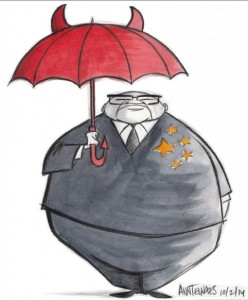
Hong Kong Umbrella

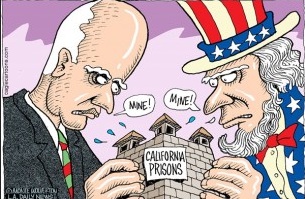
Private Banking May Make Jail Services More Expensive

In 12 years, JPay Inc. has taken over much of the market for sending money to prisoners — it’s now the only option for 450,000 inmates.   JPay shares its profits with prison systems, boosting the costs paid by families and forcing them to choose between sending money and paying their bills.

Some people arrive in jails with negative account balances thanks to fees assessed by the prison system. This forces families to pay large sums before their locked-up relative receives any money to spend.

To get funds to incarcerated relatives, families once relied on mailing money orders, a low-cost option. Since JPay took over financial services in many prisons, money orders are slower and families feel pressured to use a higher-fee option offered by JPay.  Prison Finance

Prison Finance


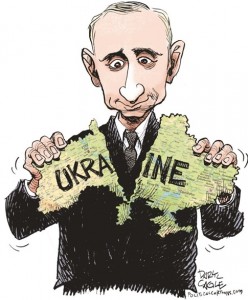
Putin Plays the Economy in Ukraine

Paul Roderick Gregory writes about Putin’s new type of war in the Ukraine and points to an economic aspect.  Take advantage of the local economic misery — unemployment, delayed wages, falling living standards — which you have helped create by cancelling Russian contracts and by other forms of economic subversion. Unemployed, unpaid and frustrated workers and their families can be lured into occupying buildings and taking part in protests, sometimes for a small payment. They become part of the human shield, not because they hate Ukraine or love Russia, but out of economic desperation.

Putin’s own timetable gives him only a short time to decide. His rubber-stamp Federation Council has “peacekeeping forces” on its Tuesday agenda. Putin’s operatives and surrogates in southeastern Ukraine have set the date of the “independence referendum” for May 11, and the Ukrainian presidential election is scheduled for May 25. An astute Ukrainian observer identifies the May 9 World War II victory anniversary as the ideal patriotic setting for returning (by force) New Russia back into Mother Russia’s embrace. Both May 9 and May 11 are approximately two weeks off.Putin’s own timetable gives him only a short time to decide. His rubber-stamp Federation Council has “peacekeeping forces” on its Tuesday agenda. Putin’s operatives and surrogates in southeastern Ukraine have set the date of the “independence referendum” for May 11, and the Ukrainian presidential election is scheduled for May 25. An astute Ukrainian observer identifies the May 9 World War II victory anniversary as the ideal patriotic setting for returning (by force) New Russia back into Mother Russia’s embrace. Both May 9 and May 11 are approximately two weeks off.

Putin and Ukraine

Apple (and Google) in Ireland. A US Problem?

Leonid Bershidsky writes:  US has to deal with Ireland on taxes.  The Senate Subcommittee on Investigations has tried.

in 1991 and 2007, Apple and Ireland agreed that much of the money flowing into the company’s Irish accounts had nothing to do with its operations in the country, and hence shouldn’t be taxed as profit in Ireland. Instead, the two sides negotiated a deal in which Apple paid tax on a certain percentage of its Ireland-related costs. The deal stood for 15 years, much longer than most European countries would allow such tax rulings to remain in force. Even after some amendments, Apple Sales International paid taxes on less than $80 million in 2011, a year in which the Ireland-incorporated entity recorded $22 billion in pretax income, according to the U.S. Senate’s Permanent Subcommittee on Investigations.

In most countries, such revelations would have led to a corruption scandal. Why would a government pass up a chance to levy taxes on billions of dollars in income? In Ireland’s case, the situation is more complicated: It defines a company’s domicile as the location of its central management and control operations, which in the case of Apple’s subsidiaries would be the U.S. By contrast, the U.S. defines domicile as the place of incorporation. So Apple’s Irish subsidiaries don’t really have a home for tax purposes.

Should Ireland care? The Cupertino, California-based company has 4,000 employees at its Cork facility, where it still assembles some computers but mostly handles sales and user support. That’s less than 5 percent of Apple’s total workforce, but a big deal for the depressed city. The taxes calculated on the basis of the small operation’s costs are not a major consideration for the Irish authorities — they are just nice to have.

The EC’s letter says that the deal appears to constitute illegal state aid: Because the tax base is negotiated, rather than calculated according to some predetermined formula, it provides unfair, selective advantages to Apple. Theoretically, the EC could recover billions of dollars in taxes that Ireland has failed to charge since 2003. To do that, the eurocrats would have to prove that Apple had been singled out for tax advantages. The Irish government isconfident it hasn’t violated state-aid rules. If the government in Dublin can show it treats other companies similarly — as Google and other beneficiaries might confirm — it will be difficult for the bureaucrats in Brussels to act.

Ireland is happy to have Apple and the other tech giants invest in its economy. There is no reason why it should pressure a U.S. company to pay more taxes. If the U.S. wants to make its companies pay their fair share, it has the power to do so — either by coercing them or by enticing them with improved corporate tax legislation.

Russia Needs Closer Ties to Europe

Since Vladimir Putin has held the reins of the Russian leadership, Russia has actively integrated into the global economy, making the era of his rule even more liberal in an economic respect than it was under former President Boris Yeltsin. Russia ranked seventh in the world for stock market capitalization at the time of the 2008 crisis, foreign assets in its banking system reached 26 percent, and foreign trade increased by almost five times from 2000 to 2008.

The number of Russians traveling abroad rose from 9.8 million in 2000 to 32.7 million in 2008, and Russia’s rate of development in modern communications and various segments of the Internet economy was one of the fastest in the world.

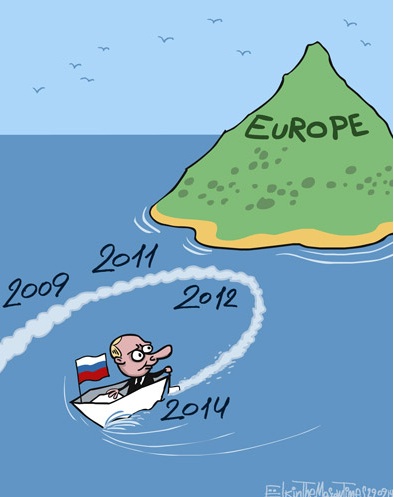
But the situation began to change in 2011 when two important circumstances became clear. On one hand, the relative success of the Russian economy gave rise to a call for political change, and many anticipated a “new perestroika” under the more progressive and tech-savvy President Dmitry Medvedev.

On the other hand, it became evident that Russia lacked the mobilization and technological capacity to achieve large-scale modernization and end the country’s reliance on natural resource exports in the near future.

That began Russia’s “reversal of 2012” — the point at which the political elite understood that a gas and oil economy worked best under a nondemocratic “power vertical” and that restructuring the country’s political foundations in hopes of achieving an uncertain result — and at a time when mass public protests were on the rise — was simply too risky.

Russia began turning away from Europe, and the West as a whole, not during the Ukrainian revolution in February, but when Putin began his third term as president in 2012. The fact that many Western leaders in recent years had what Polish President Bronislaw Komorowski called “hopes for Russia’s democratic modernization” only proves that they misunderstood the nature and outlook of the Russian elite and people.

By 2014, Russia had once again become a country whose leadership showed no intention of complying with the rules of foreign or domestic policy. In fact, those leaders would probably act even more decisively if economic considerations did not hold them back. But the truth is that Russia depends heavily on the world economy, even if its political elite believe otherwise.

Hardships will hit Russia’s private businesses hardest, even while the government continues pumping budgetary funds into bailouts for state-owned corporations headed by Putin’s close associates. Over the next few years, Russia will also fail to benefit in almost any way from its “turn toward the East.” The failure of that project will grow increasingly evident just as anti-Western sentiment in Russia declines, giving way once again to envy of Western prosperity and a desire for renewed friendship.

Russia cannot survive without the outside world. The external debts of its banks and corporations exceed the size of its foreign exchange reserves. Russia finances more than half of its budget with the export of raw materials and imports 100 percent of its computers, mobile communications devices, telecommunications technology and many types of equipment. Under such conditions, the economy itself will have an impact on the country’s political course.

Many people raise the objection that the process of globalization in the early 20th century did not prevent the outbreak of World War I. That is true, but 100 years ago European powers were constantly fighting either each other or in their colonies, human life meant less, and war seemed like a perfectly appropriate means for solving many problems.

Today nobody is prepared to give their life for the sake of Gazprom or Rosneft, and most citizens and politicians understand that it is no longer possible to solve serious problems through direct confrontation. Russia’s “foreign offensive” will fail not because of a defeat at the front, but for lack of support at the rear. And the more actively Russia isolates itself from the international system, the sooner that mutiny will occur.

No further sanctions are even necessary: Those already in effect are enough to prod Moscow leaders into taking retaliatory measures that will derail Russia’s economy.

And when that happens, Russia will turn once again to the West — as it has turned many times in the past — in search of investment, technology and innovation. At that point, both sides will need to build economic and political ties that are strong enough to resist the machinations and adventurism of a handful of oligarchs with close ties to the Kremlin.
Russia and Europe