Bank of England Clamps Down on Forex Trader

The Bank of England (BoE) has suspended a worker after a review of its processes triggered by a probe into the suspected rigging of foreign exchange trading, it said Wednesday.  However, the British central bank stressed that to date it had found no evidence that staff colluded in the alleged manipulation of the forex market.

“It is a matter of public record that the Bank of England has been conducting an internal review into allegations that BoE officials condoned or were informed of manipulation in the foreign exchange market or the sharing of confidential client information,” it said in a statement.

“This extensive review of documents, emails and other records has to date found no evidence that BoE staff colluded in any way in manipulating the foreign exchange market or in sharing confidential client information.

“However, the Bank requires its staff to follow rigorous internal control processes and has today suspended a member of staff, pending investigation by the bank into compliance with those processes,” the BoE added.

The central bank did not name the suspended individual, adding that it “does not condone any form of market manipulation in any context whatsoever”.

The BoE has meanwhile appointed law firm Travers Smith LLP to prepare a report on the matter.  Global regulators are investigating a number of firms linked to the suspected rigging of foreign exchange trading.  British banking giants Barclays, HSBC and Royal Bank of Scotland have all confirmed that they are part of the forex market investigations.

Deutsche Bank, Swiss lender UBS and US pair Citi and JPMorgan Chase have also revealed that they are co-operating with regulators over the affair.  Some lenders have meanwhile suspended and fired traders while investigations continue. The foreign exchange probe follows the Libor interbank interest rate-rigging scandal of 2012 that triggered heavy fines for some banks and a boardroom shake-up at Barclays.
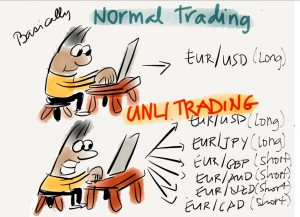
Forex Trading

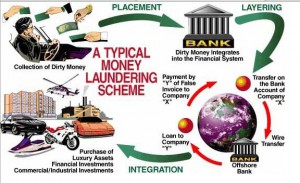
Money Laundering in Hong Kong and Macao

PREVALENT MONEY LAUNDERING IN HONG KONG AND MACAU

Andreas Frank’s Conclusions:

The Survey forms part of the biennial 2014 PwC Global Economic Crime Survey on economic crime which involved more than 5,000 respondents from 95 countries worldwide.

Money laundering is more prevalent in Hong Kong and Macau than in most parts of the world, with rates far above the global average, according to an economic crime survey by PwC. In Asia, Hong Kong has the highest reported rate of money laundering and the ninth highest globally.

A poll by the accounting firm found 37 per cent of companies in Hong Kong and Macau, mainly banks and casinos, had experienced money laundering in the past two years. That compared with a global average of 11 per cent, the Asia-Pacific average of 11 per cent, Singapore’s 5 per cent and mainland China’s 4 per cent.

Hong Kong had the highest reported rate of money laundering in Asia and the ninth highest globally, behind Britain, South Africa, the Czech Republic, Russia, Zambia, Australia, Kenya and Ukraine.

PwC polled 5,128 company executives from 95 countries and territories, including 116 respondents in Hong Kong and Macau, of whom 49 per cent worked for listed companies.

It was the first time the survey, which began in 2001, took a substantive look at money laundering in Hong Kong and Macau.

“The concentration of financial services in Hong Kong and gaming in Macau drives the significance of money laundering in the local marketplace,” said John Donker, the lead PwC partner in forensic services for China and Hong Kong.

“The No1 concern found among financial services companies globally is money laundering. In Hong Kong, it is one of the top concerns.”

PwC’s poll found 27 per cent of financial services companies globally had experienced money laundering.

On Monday, a Hong Kong court found Carson Yeung Ka-sing, owner of English soccer club Birmingham City, guilty of laundering HK$721 million through Hong Kong bank accounts.

This case was a more substantive target prosecuted under the recent money laundering legislation. “It is important that targets are carefully selected to make sure the big fish, not the minnows, are selected”, Steve Vickers, chief executive of Steve Vickers Associates, a Hong Kong risk consultancy said.

The two previous major cases of money laundering in Hong Kong involved an elderly woman and a young man, and both of them received prison terms, Vickers noted.

A new law against money laundering and terrorist financing took effect in Hong Kong in 2012. Courts convicted 140 people of money laundering last year, 166 in 2012 and 246 in 2011. The government recovered HK$639.74 million of laundered money last year, HK$23.6 million in 2012 and HK$1.6 billion in 2011.

Money Laundering Out Of Control Worldwide

Our correspondent Andreas Frank points out:

In its 2014 International Narcotics Control Strategy Report, the US State Department is updating the list of major money laundering countries and jurisdictions around the world.

Major Money Laundering Countries in 2013 are:

Afghanistan, Antigua and Barbuda, Argentina, Australia, Austria, Bahamas, Belize, Bolivia, Brazil, British Virgin Islands, Burma, Cambodia, Canada, Cayman Islands, China, Colombia, Costa Rica, Curacao, Cyprus, Dominican Republic, France, Germany, Greece, Guatemala, Guernsey, Guinea-Bissau, Haiti, Hong Kong, India, Indonesia, Iran, Iraq, Isle of Man, Israel, Italy, Japan, Jersey, Kenya, Latvia, Lebanon, Liechtenstein, Luxembourg, Macau, Mexico, Netherlands, Nigeria, Pakistan, Panama, Paraguay, Philippines, Russia, Singapore, Somalia, Spain, St. Maarten, Switzerland, Taiwan, Thailand, Turkey, Ukraine, United Arab Emirates, United Kingdom, United States, Uruguay, Venezuela, and Zimbabwe.

A major money laundering country is defined by statute as one “whose financial institutions engage in currency transactions involving significant amounts of proceeds from international narcotics trafficking”.

However, the complex nature of money laundering transactions today makes it difficult in many cases to distinguish the proceeds of narcotics trafficking from the proceeds of other serious crime.


This year’s list of major money laundering countries recognizes this relationship by including all countries and other jurisdictions whose financial institutions and/or non-financial businesses and professions or other value transfer systems engage in transactions involving significant amounts of proceeds from all serious crime.

The report which describes the steps taken during the previous year by the governments of nearly 90 countries, to reduce illicit narcotics production, trafficking, and use, as well as money laundering and financial crimes, said that the “complex nature of money laundering transactions today makes it difficult in many cases to distinguish the proceeds of narcotics trafficking from the proceeds of other serious crime.

The United States has named several Caribbean Community (CARICOM) countries as major money laundering states whose financial institutions engage in currency transactions involving significant amounts of proceeds from international narcotics trafficking.

Germany:

The US State Department urged Germany again to become a party to the UN Convention against Corruption.  Germany is finally ready to sign UNCAC.

On February 21, 2014 the German Bundestag 582 against 7 for German regulations to stop bribery of parliamentarian. The issue is the last major obstacle to Germany’s ratification of the United Nations Convention against Corruption (UNCAC). Germany is expected to ratify UNCAC before the summer.  It has taken 11 years and three different governments to finally reach this breakthrough.

International Narcotics Control Strategy Reports:
Drug and Chemical Control
Money Laundering and Financial Crimes

Note: Banks are not the only financial institutions money laundering.

Note: Banks are not the only financial institutions money laundering.

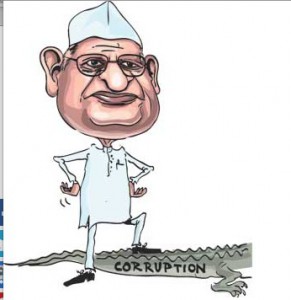
Fighting Corruption in Indian Banks

The crisis-ridden United Bank of India is under the Central Vigilance Commission’s scanner for under reporting its NPAs or bad loans.The anti-corruption watchdog has sought a report from the Finance Ministry about the bank underreporting its gross NPAs that rose by 188.3 per cent to `8,546 crore at the end of December 2013. It had `2,963.8 crore of bad loans as on March 31, last year.

The CVC has asked for the report on the basis of a complaint filed about the alleged irregularities in the bank.  “A factual report has been sought from Department of Financial Services (DFS) under Finance Ministry on a complaint against the United Bank of India (UBI),” a senior CVC official said.

According to laid out rules, DFS has a maximum of 90 days to send the factual report to the anti- corruption watchdog. The Commission has already received a report on the matter from the bank’s Chief Vigilance Officer (CVO), who acts as a distant arm of the CVC.

Sources said there were allegations against the bank about ‘underreporting’ of NPAs and officials said that a DFS probe will lead to detailed understanding of the enormity of the situation.

Corruption

Meanwhile, with an administrative probe in the matter already underway, the Finance Ministry recently accepted the bank chairman, Archana Bhargava’s application in which she has sought voluntary retirement citing health grounds.

Bhargava, took over as CMD on April 23, 2013, her term was due to end on February 28, next year. The government is looking for a replacement for Bhargava. Sources said that it is probably after Bhargava’s voluntary retirement that the Department of Personnel and Training had come out with a directive that no such request can be accepted if a probe is pending.

According to the new rules notified by the DoPT on February 27, it shall be open to the appropriate authority to withhold permission to a government servant if the he or she is under suspension or if a charge sheet has been issued and the disciplinary proceedings against him or her are pending.

The DoPT said that the rules were revisited as per a 2010 judgment by the Central Administrative Tribunal. (With agency inputs)

China’s Economic Crimes Below World Average

BEIJING, March 1 (Xinhua) — A Pricewaterhouse Coopers (PwC) survey showed that 27 percent of respondents from the Chinese mainland reported suffering economic crime during the last 24 months.

The 2014 PwC Global Economic Crime Survey, released earlier this week by the auditor’s Beijing office, said the proportions in Asia Pacific and the whole world were 32 percent and 37 percent, respectively.

The survey showed that 48 percent of the Chinese mainland respondents who suffered economic crime reported that procurement fraud was one of the most commonly encountered crimes.

The survey also noted that bribery and corruption remains a persistent risk in the Chinese mainland, with 39 percent of the respondents having experienced it.

“This is consistent with mainland and global authorities’ concerted and ongoing anti-corruption drive, and we have already seen China government’s increasing efforts to address this,” said the survey.

PwC interviewed more than 5,000 executives from 95 countries and regions worldwide, and 55 percent of the respondents from the Chinese mainland represented listed companies.

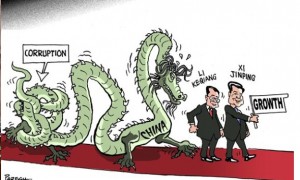
Corruption China

Chinese Crackdown on Corruption

China’s leader Xi Jinping has made a crackdown on corruption a centerpiece of his administration. He’s vowed to root out corruption from the bottom to the top, or to use his expression, to “go after the tigers as well as the flies.”

When it comes to corrupt, high-ranking officials, there’s a reliable source for tips: scorned mistresses. Some have even taken to shaming their lovers on social media, and the scandals have made international headlines.  The Mistress Culture in China

Mistresses Against Corruption

Citi Bank Under SEC Scrutiny for Fraud at Mexican Subsidiary

Citi announced on Friday that it had discovered a fraud at Banamex, the wholly-owned Mexican subsidiary that has been one of the bank’s best-performing divisions. Earnings for 2013 were reduced by $235m, Citi said.

The bank said the fraud was tied to loans made to Oceanografia, a troubled Mexican oil services company. Banamex was lending to Oceanografia based on invoices for work it said were approved by Petróleos Mexicanos, the state-owned company, which Citi said turned out to be falsified.

In a forceful statement accompanying the earnings revision, chief executive Mike Corbat said the company would be “relentless” in seeking to recover funds lost in “this despicable crime”.

Citi believes the fraud had help from at least one person inside the bank. In his statement on Friday, Mr Corbat pledged punishment for “any employee who enabled it, either through lax supervision, circumvention of our controls, or violating our code of conduct”.

“At this point, we believe this is an isolated incident,” Mr Corbat said. He added: “All will be held equally responsible and we will make sure that the punishment sends a crystal clear message about the consequences of such actions.”

Mr Corbat said the bank was co-operating with Mexican law enforcement. But even if the bank was the victim of the crime, the bank could be questioned by US authorities over its controls and disclosures.

Citi was rebuked by bank regulators in March last year for “deficiencies” in anti-money laundering controls, including at a unit of Banamex.

Banamax Fraud

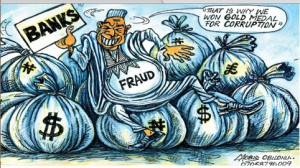
Central Bank Problems in Nigeria

The country’s president, Goodluck Jonathan, hemmed in by allegations of corruption at the state oil company, has yielded to a reckless gamble. The result has been a mini-crash in Nigeria’s financial markets and a grave setback to the country’s progress towards securing macroeconomic stability.

On February 20th Mr Jonathan suspended Lamido Sanusi, the boss of Nigeria’s central bank, on the grounds that he was guilty of financial misconduct and of distracting his institution from the business of setting interest rates and regulating banks.  Mr Sanusi, who planned to step down in June after a five-year term, was admired for achieving single-digit inflation and for cleaning up the banking system in 2009 after an orgy of ill-advised lending. News of his removal led to a slide in the naira, a sharp drop in the stockmarket and a temporary halt to bond trading. The announcement that Godwin Emefiele, an experienced banker, would succeed him in June has done little to restore confidence.

The sacking of the central-bank governor would cause investors to flee from most places, but it is especially damaging in Nigeria. A fortnight before his removal, Mr Sanusi presented evidence to parliament that $20 billion had gone missing from the state oil company. Such allegations are hardly new, but Mr Sanusi had given them the authority of his office. The timing of his suspension and its vague justification suggests that he is being punished for acting as a responsible public servant.

The consequences will be felt beyond Nigeria. In Africa it is the most populous country and, once revised estimates of GDP are published at the end of March, likely to be confirmed as the largest economy. So its fortunes are central to opinion about Africa, which had greatly improved. The continent’s GDP has grown by a healthy 5.6% a year in the past decade. Foreign-direct investment to Africa has been growing more quickly than to developing countries overall. Private-equity firms have snapped up assets from land to logistics companies. Kenya will soon join the dozen or so African countries that have sold blocks of dollar-denominated bonds to rich-world investors to finance roads, railways and power stations.

Not long ago African countries had to be relieved of the burden of past borrowing. The change in their fortunes owes much to budgetary discipline and to efforts by central banks to cap inflation. But Mr Jonathan’s bid to rid himself of a turbulent central banker is a setback. Investors may doubt that Mr Sanusi’s successor will keep interest rates high in the run-up to next year’s election, lest he incur the president’s displeasure and lose his job. And in a country where the oil industry accounts for almost 80% of government revenue, the sort of leakages alleged by Mr Sanusi undermine the maintenance of foreign-exchange reserves and fiscal buffers.

The damage to Nigeria’s reputation for economic management cannot rapidly be undone. But Mr Jonathan should hurry to mitigate it. He must first ensure that Ngozi Okonjo-Iweala, Nigeria’s respected finance minister, stays in office and is supported in her efforts to curb a pre-election splurge in public spending. Ms Okonjo-Iweala offers perhaps the best reassurance that the central bank’s main task of controlling inflation will not be compromised. Mr Jonathan should now go out of his way to bolster the central bank’s autonomy through his words and his actions.

He must also ensure that Mr Sanusi’s allegations are investigated thoroughly and that a promised audit of oil finances is credible. Tellingly, although Mr Jonathan chose to suspend Mr Sanusi on obscure grounds, he has supported Diezani Alison-Madueke, the oil minister and a close ally, in the face of more serious and concrete allegations against her ministry. Replacing her would send a strong signal that he was serious about fixing Nigeria’s oil industry. It might also go some way to repairing the dents Mr Jonathan has inflicted on Nigeria’s economy by his ill-judged manoeuvre against the central bank.

Nigerian Banks

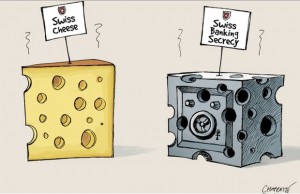
US and Switzerland Battle over Bank Account Secrecy


SWISS POINT OF VIEW

Banking is 20% of the GNP of Switzerland

Can the Swiss make up for a shortfall in banking GNP with candy, watches and cheese?  Not without lowering their standard of living.

What can the Swiss do to keep foreigners banking in their country?

Pretend to support international standards, but in reality support the old system: provide a shelter for money.  Provide absolute bank secrecy.

Some international banks have seen the future and are trying hard to comply with US and other foreign countries’ demands that the Swiss deal above board with their nationals’ money, so that a country can collect taxes owed.

Between 2006 and 2008 when it was clear that the US Department of Justice would go after Swiss banks, many former asset mangers at banks become independent asset managers and took their clients with them.

The Swiss banks consented to this exodus because, fearful of penalties, they wanted to get rid of accounts targeted by the US Department of Justice.

To protect their US clients from investigation by the DOJ the independent money managers converted the accounts of US citizens into other nationalities by transferring ownership to an offshore shell company and/or using so called trust and company service providers.  Now the account is no longer a US citizen’s account.  It returns to the original Swiss bank under the changed ownership.

The beneficial owner is still the US citizen. The Swiss are happy to report they no longer have US citizens’ accounts.  They are even happier that they still have US citizens’ money under another name.  In an as yet unsigned treaty, no information on US accounts before 2008 can be retrieved by the Department of Justice.

US POINT OF VIEW

For decades, acting under Swiss privacy laws, the money of US citizens has been exempt from taxation because it has been hidden in Switzerland.

Beginning in 2008, the US decided to stop this tax evasion.  They have called the harboring of offshore assets to the world’s attention.  As a result, billions of dollars have been added to the US tax coffers.

The US has entered into a treaty with the Swiss government, which requires that privacy considerations be overridden by discovery demands.  The Swiss have fought hard to resist the treaty, which they accuse the US of failing to sign.  The US has not signed this treaty because it leaves too many loopholes for Swiss bankers to slip through as the promise their clients privacy/secrecy.

Furthermore, the department of Justice, litigating against people who do not comply unless they are facing a jail sentence, have had difficult amassing evidence which will hold up in US courts.  Things have recently taken a turn for the better in a California case, and in the Armein indictment in US Southern District in New York.

As matters stand now, only when an insider turns coat and traces the money trail for litigators is there any hope for success.  But the DOJ seems to be targeting more useful individuals and has begun to win cases.

What is perfectly clear from the US point of view is that the Swiss are going to do whatever they can under the umbrella of the law to keep a business that is 20 percent of their gross national product.

Will the Swiss br Left with Cheese?

Kaloti Case Lifts Curtain On Dubai Gold Trade

Why Dubai’s first conflict gold audit never saw the light of dayGlobal witness

Our correspondent Andreas Frank points out. Dubai has long had a reputation as a destination for African gold tainted by conflict and a hub for smuggling through the Middle East and Asia. A report by Global Witness provides a rare glimpse into how the city’s bustling gold trade works – and how local regulators and auditors allegedly tried to cover up at least one instance where supply-chain due diligence was lacking.

At the center of the report, based on documents handed to Global Witness by an Ernst & Young whistleblower, lies a gold refiner called Kaloti Jewellery Group. The company is run by the Jordanian Kaloti family, who have a refinery near Dubai and are building another capable of processing up to 2,000 tons of gold and silver a year, making it the largest such facility in the world.

Gold trading and refining seem to pose a high money laundering risk. On November 4, 2013 a Swiss gold refiner was accused of money laundering
Kaloti case lifts curtain on Dubai Gold Trade
City of Gold  Why Dubai’s first conflict gold audit never saw the light of day
Dokuments

Worlds largest shoes store at Dubai Mall now selling 600 pairs a dayKaloti suffers reputation damage