How to End Patent Trolling


In 2011, Congress tried and failed to fix America’s broken patent system with the America Invents Act. Now, reform advocates like Rep. Bob Goodlatte (R-Va.) are trying again with a bigger coalition of supporters, and some novel methods to educate the public about the problem.

This includes a clever YouTube video posted by the House Judiciary Committee, which Goodlatte chairs, that explains how patent trolls engage in “legalized extortion” and make everyday products more expensive for everyone:

The video astutely notes that patent trolls (like the one using a Holocaust foundation’s 1998 patent to sue the New York Times have been a problem almost as long as the patent system, and how one ambitious troll almost stopped Henry Ford from making the Model-T. It concludes by asking for support for the bipartisan Innovation Act.

It’s a creative effort but, unfortunately, it may be too late. Microsoft and IBM have already gutted the most important provision from the proposed law,  one that would have made it easier to challenge garbage patents in the first place.

People close to the process, however, say that real reform still stands a chance in the Senate where influential figures like Sen. Chuck Schumer, Sen. Patrick Leahy and Sen. John Corryn have all taken stands against abuse of the patent system.

Definition of Corruption in the US

Zephyr Teachout, who teaches law at Fordham University, has identified anti-corruption as part of the US Constitution.     THE ANTI-CORRUPTION PRINCIPLE   She is expanding her arguments in a book to be published by the Harvard University Press.  An article by Lawrence Lessig traces Senator John McCain’s positions on this matter.  Definition of Corruption in the US

The Supreme Court case can be found on the SCOTUS blog.  http://www.scotusblog.com/case-files/cases/mccutcheon-v-federal-election-commission/

Anti Corruption in the US

The Consequences of ‘Too Big to Jail’

Robert Shiller – one of the top housing experts in the United States – says that the mortgage fraud is a lot like the fraud which occurred during the Great Depression.   Shiller said the danger of foreclosuregate – the scandal in which it has come to light that the biggest banks have routinely mishandled homeownership documents, putting the legality of foreclosures and related sales in doubt – is a replay of the 1930s, when Americans lost faith that institutions such as business and government were dealing fairly.

Indeed, it is beyond dispute that bank fraud was one of the main causes of the Great Depression    Bankers Too Big to Jail

Too Big to Jail

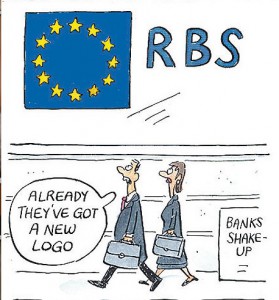
Royal Bank of Scotland Fined 100 Million Dollars

Our correspondent Andreas Frank (frank-cs.org) writes:  

The Royal Bank of Scotland is paying $100 million in fines to New York and federal banking regulators to settle civil investigations into accusations that some of its former employees helped conceal transactions involving customers from Iran, Sudan and other nations subject to international sanctions for about a decade.

Bank regulators in New York contend the former RBS employees used a variety of techniques to conceal about 3,500 transactions involving the transfer of $523 million through New York banks.

“We have a vital responsibility to combat misconduct at banks and continue strengthening the long-term integrity of the financial system,” said Governor Cuomo. “In New York, we will continue our aggressive work rooting out global money laundering that puts our national security at risk.”

Benjamin M. Lawsky, Superintendent of Financial Services, said, “Our continued objective is to create higher standards for ethics and accountability at large banks. That will not happen overnight, but through a sustained effort – including strong enforcement of our anti-money laundering laws – we will work toward that critical goal. RBS took an important step by terminating a number of individual employees who engaged in misconduct. If we truly want to deter future wrongdoing, we should move increasingly toward exposing individual misconduct and holding individuals accountable.”

The joint action announced by the New York State Department of Financial Services, the Federal Reserve and the Treasury Department’s Office of Foreign Assets Control is part of a continuing crackdown on banks that violate American laws against money laundering, specifically banks that enable transactions with countries that are subject to international sanctions.

A person briefed on the matter said bank regulators were working on settlements with about a half-dozen banks over similar violations and those cases could be resolved in the coming months.

The bank regulators gave RBS credit in the settlement for beginning its own internal investigation into the matter in 2010 and dismissing the employees involved in the unlawful money transfers. Most of those employees were dismissed in 2012, said a person briefed on the matter.

“RBS took an important step by terminating a number of individual employees who engaged in misconduct,” Benjamin M. Lawsky, the New York superintendent of financial services, said in a statement. “If we want to deter future wrongdoing, we should move increasingly toward exposing individual misconduct and holding individuals accountable.”

In the settlement, R.B.S. will pay a $50 million penalty to New York bank regulators and a $50 million penalty to the Federal Reserve, of which $33 million will go to the Treasury Department. The British bank has fired four employees and clawed back bonuses from eight more employees. It also agreed to enact measures to stiffen its compliance with anti-money-laundering laws.

RBS said in a statement that the bank “deeply regrets” its failings.

The bank also said related criminal investigations by the Justice Department and the Manhattan district attorney’s office were concluded without those agencies taking any further action against RBS.

The four employees dismissed by R.B.S. included the bank’s former head of global banking services for Asia, the Middle East and Africa and the head of the money laundering prevention unit for corporate markets.

The bank regulators said the former employees helped customers and companies with ties to countries under sanctions strip out identifying data from payment messages. New York bank regulators found that some within RBS operated from written instructions “containing a step-by-step guide” on how to keep United States dollar payments from being detected.

The settlement with RBS is considerably smaller than the $1.92 billion HSBC paid to settle money-laundering accusations last year over transactions the bank processed for Latin American drug cartels and for violating sanctions policies against Iran and Sudan. The London-based HSBC settled with American prosecutors as part of a deferred-prosecution agreement.

Another British bank, Standard Chartered, paid a total of $667 million in fines to settle investigations into accusations that it too violated international sanctions against Iran. Standard Chartered also entered into a deferred prosecution deal with federal prosecutors in December 2012. The deal with federal prosecutors came several months after Mr. Lawsky broke with other regulators to bring his own action against Standard Chartered, which resulted in a settlement in September 2012.   NYState Versus Royal Bank of Scotland
RBS

Europe and the Bitcoin

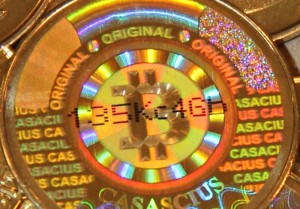
The European Banking Authority will on Friday issue a statement warning of the risk of “violent fluctuations in electronic currencies” value, the danger of “digital wallets” being hacked, and of the lack of legal protections for users.

The move comes as authorities worldwide try to get to grips with the rapid expansion and soaring value of unregulated cyber currencies.  The People’s Bank of China this month ruled that Chinese banks should not process or insure Bitcoin transactions , in a step towards regulatory oversight of a currency that has exploded in popularity – and in value – in recent months.

Other central banks have been more positive, with Ben Bernanke, the US Federal Reserve chairman, last month arguing they can be useful if money laundering can be prevented.   Bitcoin Warnings in Europe

Bitcoins

Uzbek Bank Loses License Over Alleged Money Laundering

The Central Bank of Uzbekistan announced that the license for Credit Standard Bank to conduct banking operations was withdrawn due to violation of the banking legislation.

CSB informed its customers and partners that the bank was closed by the Central Bank of Uzbekistan by adding that “We bring our apologies for any inconvenience caused and hope for your understanding.”

By closing down Credit Standard Bank the Central Bank is sending out a “significant signal” insiders say. Credit Standard Bank (CSB) was allegedly engaged in money laundering for Gulnara Karimova, president’s Islam Karimov oldest daughter.

The dismantling of Gulnara Karimova’s business empire started in early October. The once omnipotent business mogul Karimova has lost many of her assets – TV and radio stations, clothing shops, movie theaters and her charity organization Fund Forum among others.

The president Islam Karimov and his regime have been silent on the situation surrounding the president’s daughter.

Karimova accuses her mother Tatiana Karimova in taking revenge on her for trying to intervene in her mother’s own corrupt business empire.

In 2012 investigators in Switzerland and Sweden were probing alleged links between a leading European telecommunications company and a high-level multi-million dollar fraud and corruption scandal in Uzbekistan.

The allegations stretch all the way to businesswoman, pop diva and one-time UN ambassador Gulnara Karimova, the eldest daughter of Uzbek President Islam Karimov.

Swedish-based TeliaSonera, which is partly state-owned, has been at the centre of a huge political storm since Swedish TV broadcast a report accusing it of making a $300m payment to an intermediary company for the rights to operate a 3G mobile phone service in the Central Asian republic.
Uzbekistan’s Lola Karimova-Tillyaeva reveals rift in first family

CBU_CSB_PressRelease_27.11.13-1
CSB_PressRelease_27.11.13

Uzbekistans Lola Karimova-Tillyaeva reveals rift in first family

How Important Are Investment Managers?

Regulators are beginning to look at the impact, not of assets gone sour, but of the sheer volume of trades one institution makes.

Regulators want not merely to prevent a repeat of the last blow-up but also to identify the sources of future systemic perils, BlackRock investment managers raises a subtle issue concerning not the ownership of assets but the way buying and selling decisions are made. The $US15 trillion of assets managed on its Aladdin platform amount to around 7% of all the shares, bonds and loans in the world. As a result, those who oversee many of the world’s biggest pools of money are looking at the financial world, at least in part, through a lens crafted by BlackRock. Some 17,000 traders in banks, insurance companies, sovereign-wealth funds and others rely in part on BlackRock’s analytical models to guide their investing. A dangerous skew?

The Economist reports:  Black Rock Rocks the Financial World

Investment Advisors

Bank of America Weighs in on Bitcoins

Analysts at Bank of America Merrill Lynch issued the bank’s first research report today on Bitcoin, the virtual currency that approximates cash on the internet, concluding that the currency has the potential to become a “major means of payment for ecommerce” as well as a “serious competitor to traditional money transfer providers.”

Assuming Bitcoin becomes mainstream, Bank of America currency strategists estimate it is worth $1,300 apiece. But with the value at $1,000 today and increasing rapidly, it is in danger of “running ahead of its fundamentals,” they write.

The report also notes that the rapid jump in Bitcoin’s value — which was just $100 in August — correlates with interest in the currency coming from China.

Bitcoin’s disadvantages according to the report are the same as those regularly discussed in the Bitcoin community: its price volatility disincentivizes its use for trade, transactions take 50 minutes to process, and its legal status is still undetermined. Governments will have an incentive to “crack down” on Bitcoin if it gets too big, the report says.

BANK OF AMERICA ESTIMATES BITCOIN COULD BE WORTH $1,300 APIECE

The researchers also note that security at the exchanges where people buy and sell Bitcoin has been historically unreliable, as evidenced by thefts and hacks in the past.

Bank of America is the first major Wall Street bank to issue an opinion on the virtual currency, which has grown in prominence since it debuted in January of 2009.

The report is a positive sign for those who hope that Bitcoin will become a universal currency, but it’s ironic considering the technology was designed to empower individuals over banks. The last time Bitcoin made a splash in the financial district was probably 2011, when the Occupy Wall Street protest became one of the first major efforts to accept donations in the currency. But now that the total Bitcoin economy is worth $13 billion, it seems everyone wants a slice.    Bank Of America on Bitcoins

Bitcoins Value?

Kaloti Suffers Reputation Damage

Kaloti Group ‘compliant with Dubai Kaloti
gold audit? Tradearabia

Mr. Munir R. Kaloti, President of Kaloti Jewellery International DMCC stated: “The DFSA confirmed that neither I nor the Kaloti Group of Companies are or were part of the DFSA’s investigation of Deutsche Bank. The manner in which my name was cited in the claim was extremely damaging to my reputation and my lawyers are investigating why this was the case. I was given no prior warning that I would be named and had at no time been contacted by either party regarding my account.”

“Nonetheless, I want to make it clear that I have authorised my office to submit all documents in my possession should they be requested by the DFSA,” he said.

On November 17, 2013 DFSA had announced that it had commenced proceedings in the DIFC Courts to enforce compliance by Deutsche Bank DIFC Branch (DBDIFC), with a notice requiring information.On November 21, 2013 DFSA confirmed that neither Munir Kaloti nor the Kaloti Group of Companies are or were the subject of the DFSA’s investigation of Deutsche Bank DIFC branch.

Kaloti Group of Companies published on November 27, 20013 a self-evaluation titled “DMCC Responsible Sourcing of Precious Metals Guidance Compliance Report” and a report Ernst & Young Dubai commissioned from Kaloti Group of Companies titled “Independent Reasonable Assurance Report”.

Katloit’s “Compliance Report” outlines the steps taken by Kaloti Jewellery International DMCC (KJI) and Kaloti Jewellers Faclory Ltd. (KJF) to achieve full compliance with the DMCC’s Responsible Supply Chain Guidance as well as following all international regulations covering Anti Money Laundering and Terrorist Financing.

Katoti Jewellery International DMCC (K]I), which is based in Dubai, is responsible for the management of all aspects of the physical precious metals business in the United Arab Emirates. It is the licensed entity that faces clients and counterparty service providers such as international bullion banks, security and logistics companies, insurance and airline firms. Kaloti Jewellers Factory Ltd. (KIF), an independent entity based in Sharjah, is the refinery service provider of the Kaloti’s United Arab Emirates operations and is the entity that enjoys Dubai Good Oelivery accreditation. References to systems, procedures and controls in this refinery report collectively cover both KJI and KJF.

Not surprisingly, the self-evaluation comes to the conclusion:

  • We have fully implemented all aspects of the Practical Supply Chain Guidance issued by the Dubai Multi Commodity Centre (DMCC) which is based on the OECD Due Diligence Guidance for Responsible Supply Chains of Minerals from Conflict-Affected and High-Risk Areas. We are fully committed to adopting any future guidelines, rules or regulations with res pect to the responsible supply of gold and precious metals and all other international rules relating to anti-money laundering and the fighting of terrorist financing.
  • We will continue to strive to upgrade and improve our risk classification and risk mitigation processes and educate our staff and our suppliers on an on-going basis to ensure that the highest possible standards of responsible supply chains a re maintained.

Ernst & Young Report “Independent Reasonable Assurance Report on Kaloti Jewellers Factory Ltd’s Refiner’s Compliance report”

As can be expected, the commissioned Ernst & Young report resulted in EY’s opinion, that the Refiner’s Consolidated Compliance Report dated 27 November 2013 in all material respects. describes fairly the activities undertaken during the period from 1 June 2012 to 31 December 2012 and in cases where high and medium risks deviations were noted, the subsequent corrective action plan implemented to demonstrate compliance and management’s overall conclusion contained therein is in accordance with the requirements of the DMCC’s Practical Guidance for Market Participants in the Gold and Precious Metals Industry, version 1 April 2012 and with the DMCC Review Protocol on Responsible Sourcing of Precious Metals in issuance as at the date of this report.

However the EY report made the following caveat:

Without modifying our conclusion, we draw attention to

  • the respective instances of deviations noted for the period from 1 June 2012 to 31 December 2012 set out in the Refiner’s Consolidated Compliance Report at the end of Steps 1 and 2 that have been subject to a subsequent corrective action plan; and
  • the description at the end of Step 2 of the Consolidated Compliance Report of the corrective actions on assisting suppliers in moving away from cash settlement that was remediated in November 2013 subsequent to the implementation of the corrective action plan

The German financial watch-dog BaFin had hired Ernst & Young in August 2013 to investigate Deutsche Bank’s alleged AML/CFT deficiencies. This is another disturbing example that the auditors, the so-called gate keepers, have a conflict of interest by indiscriminately serving all parties.
Kaloti_Compliance_Statement_27.11.13
EY_Kaloti_Evaluation_27.11.13
Kaloti Suffers Reputation Damage


Illegal Mining and Forestry in the Venezuelan Amazon

Illegal mining is destroying the forest and polluting the water in the Venezuelan Amazon.  The armed forces, whose duties include environmental protection, are accused by the Amerindians of complicity with the illegal miners and with the guerrillas of Colombia’s FARC, who have shifted their camps to Venezuela to evade military pressure at home.

“The guerrillas ordered the villagers not to go out at night,” says Uriel Blanco of OPIJKA, an organisation that defends the rights of the Jivi tribe. In the early hours, community leaders claim, boats laden with fuel and food head upriver to guerrilla camps. Neither these boats nor the miners seem to have problems with checkpoints run by Mr Maduro’s National Guard. But the guard seizes game from Amerindian hunters, as well as any fuel or processed food for which they lack receipts. The state’s Catholic bishop, José Angel Divasson, says that for the FARC, Amazonas is more than just a refuge: “It’s clear that they are trafficking drugs. Why else would they need 500-metre airstrips? The light planes go over [to Colombia] with guns and they come back with drugs.”

The cocaine business, along with illegal mining of gold and coltan, a mineral used in the manufacture of electronic devices, creates an almost insatiable demand for petrol and diesel, which are heavily subsidised by the Venezuelan government.   Illegal Forestry and Mining in the Venezuelan Amazon

Illegal Timber in the Venezuelan Amazon