EU Slapping Tax Evasion Specialists Like Luxembourg

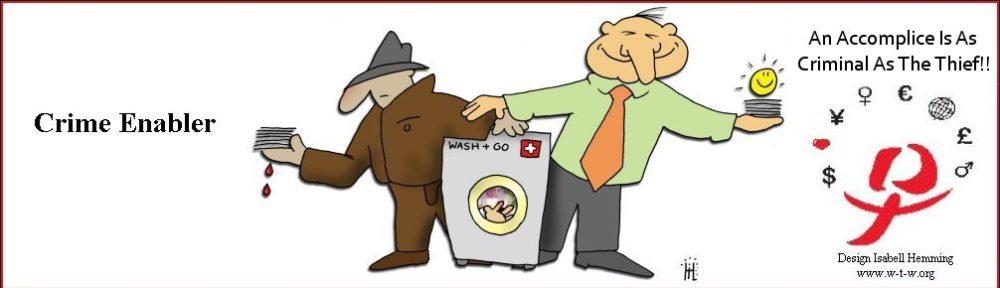
The Rocky Road to Globalization:  Tax codes vary widely from country to country.  International businesses are faced with a conundrum: In order to compete they must level their tax burden across the globe.  This has led to the location of all American companies like Caterpillar and Starbucks in Switzerland.  Luxembourg has been an attractive host to international companies. McDonalds and Fiat are now getting the heat.
Luxembourg is appealing a European Union decision that it made illegal fiscal deals with a Fiat Chrysler Automobiles NV unit, vowing to show that the bloc’s antitrust regulator failed to establish any illegal state aid.

It’s the first challenge to reach the EU courts since the European Commission’s precedent-setting decisions in October that the Italian carmaker and Starbucks Corp. benefited from favorable tax deals by Luxembourg and the Netherlands. Each company was ordered to pay as much as 30 million euros ($32.8 million) in back taxes.

The European Commission “used unprecedented criteria” for its decision that a tax ruling for Fiat in Luxembourg violated state aid rules and put “into jeopardy the principle of legal certainty,” the nation’s finance ministry said in an e-mailed statement Friday. “The commission has not established in any way that Fiat received selective advantages.”

The Grand-Duchy’s decision to appeal comes a day after the Brussels-based watchdog opened a probe into whether McDonald’s Corp. unfairly exploited a fiscal deal with Luxembourg to avoid tax on hundreds of millions of euros in profits for more than half a decade. The McDonald’s case is the third to focus on Luxembourg, adding to the Fiat case and an ongoing probe into tax rulings obtained by Amazon.com Inc.

Luxembourg and the fiscal deals that international companies have received over the years there came out into the open last year, when hundreds of documents were leaked showing that more than 340 companies such as PepsiCo Inc., Ikea Group and FedEx Corp. transferred profits to the country through tax arrangements.

“The vast majority of EU member states use tax rulings to provide legal certainty for the taxpayer,” the finance ministry said, adding it “is strongly committed to tax transparency and the fight against harmful tax avoidance.”

Luxembourg

Draghi Hints and Backs Off More QE

The Rocky Road to Globalization:   Draghi, the head of the European Central Bank didn’t do exactly what the world thought he would.  The euro rose against the dollar, and currencies around the world also adjusted.  When George Soros made his money betting on currency fluctuations, he was one of the few people who followed these ins and outs.  Now everyone knows and reacts.

The European Central Bank unveiled a package of measures to tackle too-low inflation, from a cut in the floor for interest rates to an expansion of its bond-buying program by at least 360 billion euros ($390 billion). Investors were unimpressed.

The Frankfurt-based ECB will extend quantitative easing by six months until at least March 2017 at the current rate of 60 billion euros a month, and broaden the assets purchased to include local and regional debt, ECB President Mario Draghi said on Thursday. The Governing Council earlier reduced its deposit rate by 10 basis points to minus 0.3 percent.

The fresh stimulus coincides with a shift in global monetary policy, with the ECB adding stimulus as the U.S. Federal Reserve prepares to start its process of normalization. Even so, financial markets reacted with skepticism, sending the euro up as much as 2.6 percent and equities and government bonds down in a sign that Draghi’s measures fell short of expectations.

“The expectations were too high, and this was the minimum he could do,” said Marco Valli, chief euro-area economist at UniCredit SpA in Milan. “I think this was a mix of Draghi being held back by the conservatives, but also him wanting to keep some powder dry in case more is needed.”

Draghi

Udanchoo or Yahoo has No Value?

Key points of note re intrinsic value estimates  Udanchoo is a Hindu phrase for flyaway or disappear

Venkat Subramaniam writes: I have calculated the intrinsic value of the operating assets using a DCF method, with source information from company financials (please see at appendix for the intrinsic value calculation for Alibaba, Yahoo Japan, and Yahoo’s Core Business).

The debt, cash, and non-operating assets have been taken from the most recent earnings reports available.

I have applied a 2% discount to Alibaba and Yahoo Japan’s intrinsic value to account for the fact Yahoo Inc’s stake is trapped inside a corporate structure and cannot easily be crystallised. In the Yahoo Inc Consolidated column, I have added up the net value of equity based on Yahoo Inc’s share of equity (15.4% for Alibaba, 35.5% for Yahoo Japan, and 100% for the Core Business).

The value of employee stock options has been calculated using information available from the company financials, and using Black Scholes method.

In conclusion – my value of intrinsic value for the Alibaba and Yahoo Japan business is comparable with the Market Cap for those business; and, after adding Yahoo’s Core Business value, it appears that the market is pricing a 32% discount to intrinsic value. This discount needs to be compared with the estimated tax liability in order to identify any mispricing in the Market.  Yahoo’s Value

Yahoo! ????

Lessons from Iceland’s Economic Recovery?

The Rocky Road to Globalization

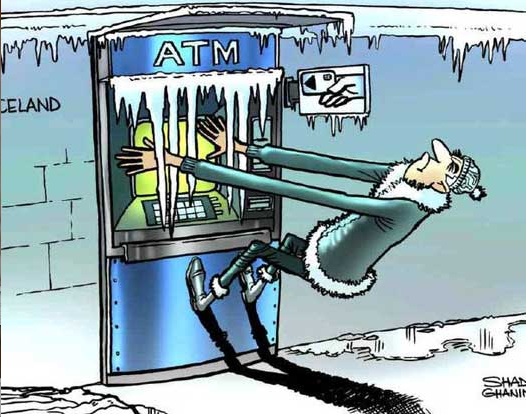
Iceland recovered from the 2008 financial crisis by taking certain measures.  Is there anything to be learned from their example?

Karen Hammer writes:  Iceland has rebounded after the 2008/9 crisis and will soon surpass pre-crisis output levels with strong performance in tourism and fisheries. Debt ratios are on a downward path and balance sheets have broadly been restored. The financial sector is back on track though with some important items remaining on the docket.

In an interview with IMF Survey, Peter Dohlman, IMF Mission Chief for Iceland, explained what sets Iceland apart from other countries having experienced the financial crisis.

IMF Survey: Iceland was in a state of collapse in 2008 but is now back on its feet and has become a success story. Can you give us a sense of Iceland’s economic picture today?  

Dohlman: Overall, macroeconomic conditions in Iceland are now at their best since the 2008/9 crisis. Iceland has been one of the top economic performers in Europe over the past several years in terms of economic growth and has one of the lowest unemployment rates. A particular bright spot for Iceland has been the booming tourism industry, which has also contributed to a strong current account surplus.

Other indicators of Iceland’s successful trajectory are its low inflation, stable exchange rate, and ready market access. Iceland’s strong balance of payments has allowed it to repay early all of its Nordic loans and much of its IMF loans while maintaining adequate foreign exchange reserves.

There are of course some important remaining vulnerabilities and risks. Public and external debt ratios are still high, though on a downward sustainable path. The prospect of funds exiting quickly and disrupting external stability in the absence of capital controls is still a potential and important vulnerability. Downside risks emanate from significant wage pressures and an uncertain external environment, including risks of slower demand and deflationary pressures from trading partners.  IMF Survey Iceland’s Recovery

Iceland's Recvoery


Carbon Emissions in Developing Countries

The Rocky Road to Globalization

Can we make the same carbon emissions demands on developing countries that we make on mature economies?

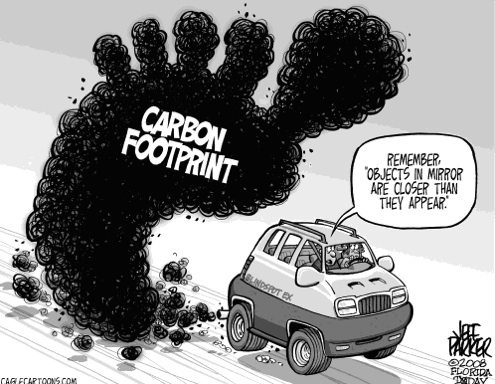
Karl Ritter and Seth Borenstein write:  Attempts to inscribe a long-term goal to phase out carbon emissions in an envisioned global climate pact are facing pushback at U.N. talks from big developing countries including India and Brazil.

Negotiators from both countries said Wednesday they favor sticking to the already established goal of limiting global warming to 2 degrees C (3.6 degrees F) above pre-industrial times — a level that scientists say could avoid the worst impacts of climate change.

The United States and other members of the Group of Seven wealthy countries earlier this year endorsed a “decarbonization of the global economy over the course of this century.”
Brazil’s lead negotiator Antonio Marcondes told The Associated Press that there was no need to come up with a new joint climate goal.

A joint Brazilian-German declaration in August that backed a “decarbonization of the global economy” while noting that some countries will need financial and technological help to make the transition to cleaner energy.

The long-term goal is one of the issues that split the larger group of developing countries in the climate talks. Oil-rich Saudi Arabia opposes wording calling for a phase-out of carbon emissions, while small island nations that face an existential risk from rising seas are among the strongest advocates. China has largely stayed silent..

Speaking at a NATO conference in Brussels, U.S. Secretary of State John Kerry said he thought the climate talks “got off to an encouraging start” with 150 world leaders — the biggest ever gathering of heads of state and government — attending the opening day. Kerry is expected to join the meeting next week.

However, the talks have made little progress after the leaders left.

Carbon Footprint

On the Oil Cliff?

Who is on the Oil Cliff?

The Saudi economy is short of cash, prompting both the public and the private sector to cut their expenditures; meanwhile, bank clients are withdrawing their deposits and taking new loans, meaning the economic outlook for the oil-reliant nation is rather gloomy.  Although the Saudi economy hasn’t been badly shaken yet by the decline in oil prices, it has by now lost its development momentum, meaning the nation’s capability to expand oil production is limited. As most Saudi energy projects are bound to falter amid the mounting disinvestment, crude prices will settle at a more stable foundation and the Kingdom will lose some of its historic pricing power.

For Russia, $30 is the number to watch.  Crude prices at that level will push the economy to depths that would threaten the nation’s financial system, according to 15 of 27 respondents in a Bloomberg survey. Lower prices for the fuel are next year’s biggest risk for Russia, which is unprepared to ride out another shock on the oil market, most economists said. Other dangers for 2016 include geopolitics, strains in the banking industry and the ruble, according to the poll of 27 analysts.

On the Cliff


India and China Enveloped in Smog as Leaders Tackle Climate Change in Paris

The Rocky Road to Globalization

The capitals of the world’s two most populous nations, China and India, were blanketed in hazardous, choking smog on Monday as climate change talks began in Paris, where leaders of both countries are among the participants.

China’s capital Beijing maintained an “orange” pollution alert, the second-highest level, on Monday, closing highways, halting or suspending construction and prompting a warning to residents to stay indoors.

The choking pollution was caused by the “unfavorable weather.”

In New Delhi, the U.S. embassy’s monitoring station recorded an air quality index of 372, which puts air pollution levels well into “hazardous” territory. A thick smog blanketed the city and visibility was down to about 200 yards (metres). Air quality in the city of 16 million is usually bad in winter, when coal fires are lit by the poor to ward off the cold. Traffic fumes, too, are trapped over the city by a temperature inversion and the lack of wind. However, the government has not raised any alarm over the current air quality and no advisories have been issued to the public. Thirty thousand runners took part in a half marathon at the weekend, when pollution levels were just as high.

In Beijing, a city of 22.5 million, the air quality index in some parts of the city soared to 500, its highest possible level. At levels higher than 300, residents are encouraged to remain indoors, according to government guidelines. The hazardous air underscores the challenge facing the government as it battles pollution caused by the coal­burning power industry and will raise questions about its ability to clean up its economy at the talks in Paris. Chinese President Xi Jinping and Indian Prime Minister Narendra Modi are both in Paris and both were scheduled to meet U.S. President Barack Obama on Monday to give momentum to the two­week negotiations. ”

Modi sought to highlight India’s green credentials writing: “The instinct of our culture is to take a sustainable path to development. When a child is born, we plant a tree.” But at Connaught Place, a city centre landmark in New Delhi, people chided the government for failing to minimize the risks to their health from air pollution. “The pollution level is so high it’s just unbelievable,” said Aisha, a 19­year­old student. For Beijing’s residents, the poor air makes breathing hard. This sort of weather, you can see that all of Beijing has been completely enveloped in smog.

Image by Susan Rennie

Image by Susan Rennie

Special Drawing Rights for Renminbi?

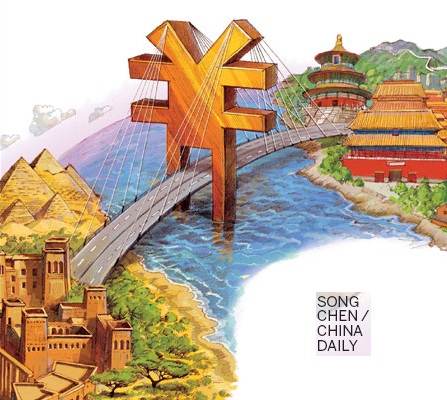
The IMF will add the renminbi to its Special Drawing Rights basket today.

Matt Levine writes about how China fulfilled the IMF’s two requirements:
The staff’s findings hinged on the renminbi meeting two criteria. The first is that China and the renminbi have a significant role in global trade, a bar which Beijing passed years ago. But the second — that the renminbi be both widely used and “freely usable” internationally — has proved more contentious.

In a number of the measures that ascertain how widely it is used — such as its use in central bank foreign exchange reserves and in international debt markets — the renminbi fell below the Australian and Canadian dollars, neither of which is a member of the SDR basket.

Operational and free-usability issues remain, but on the other hand I suppose nothing will encourage Chinese currency liberalization like SDR inclusion. That

The inclusion puts new pressure on Beijing to change everything from how it manages the yuan, also known as renminbi, to how it communicates with investors and the world. China’s pledges to loosen its tight grip on the currency’s value and open its financial system will come under new scrutiny.

A working group that includes former Treasury secretaries Henry Paulson and Timothy Geithner hopes to build a framework for the trading and clearing of the Chinese currency in the U.S., the Wall Street Journal reported Monday, citing a statement from Michael Bloomberg, who will chair the group.

Remninbi


Entrepreneur Alert: Technologies Impacting the Future

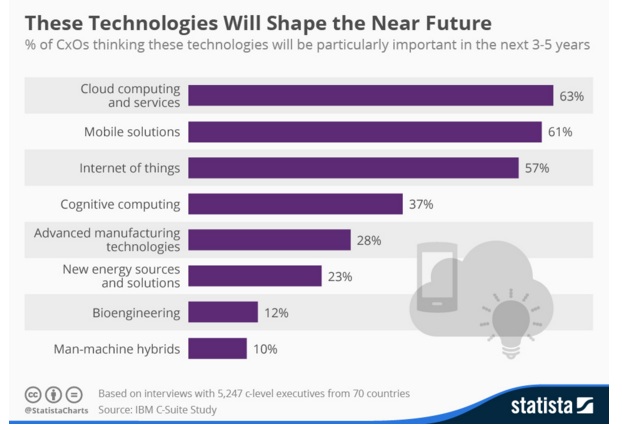
First there was the rise of smartphones, than tablets came along and finally cloud services hit the mainstream. But what’s next? Which technologies will shape the near future, especially from a professional point of view? IBM asked more than 5,000 C-level executives from 70 countries which technologies they think will be particularly important in the next three to five years. Most CxOs agree that cloud computing and mobile solutions will continue to play a key role, while the Internet of Things is expected to make a big impact as well.

Technologies Shaping the Future

Should We Try to Stabilize the World’s Monetary System?

During the Second World War,70 countries met in 1944 to work out an agreement about monetary policy which would ensure some stability about the War.  The agreement reached in Bretton Woods helped to achieve this goal, until the US stopped supporting the dollar with gold.

Roger Lowenstein writes:   The world’s monetary system moves from tumult to tumult. Europe’s economy is stagnant and menaced with deflation. Greece has flirted both with leaving the euro and with default. America’s economy has fallen into a discouraging pattern of hopeful growth spurts followed by dispiriting slowdowns. Such turmoil has played havoc with world currencies. Late last year, the value of the euro crashed. Earlier this year, the cautious Swiss stunned traders by freeing their currency, permitting it to soar against the euro and raising—sharply—the price of its chocolates and ski chalets for people from Lisbon to Rome. Such volatility has lately been increasing. If, as the Harvard political scientist Jeffry Frieden has asserted, “the exchange rate is the single most important price in any economy, for it affects all other prices,” then global economies have rarely looked so unstable.

Lately, the instability has spread to Asia. Since 2012, the Japanese yen has lost nearly a third of its value. This has enhanced the competitiveness of Japanese products, putting pressure on its Asian neighbors. China’s economy—in recent years the biggest contributor to the world’s growth—is rapidly decelerating. In August, China stunned markets by devaluing its currency. As for the US, the dollar has risen sharply against the euro and other currencies, but this rise has put America’s fragile recovery in jeopardy, by rendering its manufactured products less affordable overseas. And it has spelled bankruptcy for some of the foreign firms that borrowed in dollars (now too expensive for them to repay). A certain amount of gyration among currencies is normal, of course; that is what currencies do. But the instability has been alarming to traders, businesses, and statesmen.

Since the financial crisis, individual banks have been subject to a welter of new laws and regulations, but not so the international monetary system in which they operate. This system serves as a conducting rod for transmitting local disturbances around the globe. Even this metaphor presumes too much, for the international monetary “system” is, in fact, not a system at all. Its various pieces are simply too disjointed. America and most countries in the West permit capital to freely cross their borders. But China, the most important emerging power, tightly controls the movement of capital.

If, say, Coca-Cola wants to build a factory in China, it must apply to the government to exchange dollars for local renminbi. Many other emerging countries maintain weaker, or periodic, capital controls. Some allow their currencies to float; others “peg” them to the euro or the dollar. Switzerland maintained such a peg—until, in January, it didn’t. The dollar is the linchpin—the usual standard for other currencies and for international trade. However, no agreement or formal convention assures the dollar.  The New Financial Order

Stablizing Currency