Closing in on Greek Deal

The Rocky Road to Globalization:  Holding Greece in the Group

The European Commission said a technical agreement had been reached with Greece, which now requires political approval. The Greek government is hoping to push a new €86bn (£60bn) three-year agreement through parliament later this week.

A deal is needed to keep the country in the eurozone and avert bankruptcy.

The country needs a deal by 20 August, when it has a debt repayment of about €3bn to make to the European Central Bank.


A Greek official said earlier that Greece agreed the function of a new independent privatisation fund, and how non-performing bank loans will be administered.

Both issues had been key sticking points in negotiations.

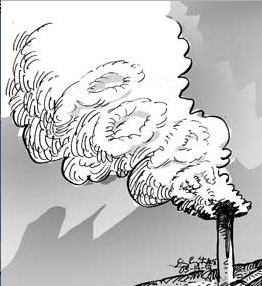
“Finally, we have white smoke,” the official said.

Deregulation of the natural gas market, another sticking point, was also agreed.

But Finnish Finance Minister Alexander Stubb sounded a cautious note, saying more work needed to be done with the details to finalise the agreement.

The Eurogroup of eurozone finance ministers is to meet on Friday to discuss approval of the deal, Spanish Prime Minister Mariano Rajoy said.

His centre-right People’s Party, which has a majority in the Spanish parliament, will be asking other parties to vote in favour of the agreement, he added.

Greek Deal

Taking Advantage of Oil Prices

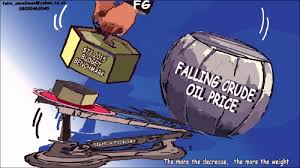
Jeffrey Frankel writes:   World oil prices, which have been highly volatile during the last decade, have fallen more than 50% over the past year. The economic effects have been negative overall for oil-exporting countries, and positive for oil-importing countries.

The answer is that countries should seek to do both: Lower the price paid to oil producers and raise the price paid by oil consumers, by cutting subsidies for oil and refined products or raising taxes on them.

Consider this: America’s roads and bridges are crumbling, and the national transportation infrastructure requires investment and maintenance. And yet the US Congress shamefully continues to evade its responsibility to fund the Federal Highway Trust Fund and put it on a sound long-term basis, owing to disagreement over how to pay for it. The obvious solution, which economists have long advocated, is an increase in America’s gasoline taxes. The federal gas tax has been stuck at 18.4 cents a gallon since 1993, the lowest among advanced countries. And yet, on July 30, Congress adopted only a three-month stopgap measure, kicking the gas can down the road for the 35th time since 2009.

Fossil-fuel pricing is a striking exception to the general rule that if the government has only one policy instrument, it can achieve only one policy objective. High oil consumption also leaves a country vulnerable to oil-market disruptions arising, for example, from instability in the Middle East. If gas taxes are high and consumption is low, as in Europe, fluctuations in the world price of oil have a smaller effect domestically.

The conventional wisdom is that it is politically impossible in the US to increase the gas tax. But other countries have political constraints, too. Indeed, some developing-country governments have faced civil unrest, even coups, over fuel taxes or subsidies. Yet Egypt, Ghana, India, Indonesia, Malaysia, Mexico, Morocco, and the United Arab Emirates have all reduced or abolished various fuel subsidies in the last year.

Besides raising taxes on fuel consumption, the US should also stop some of its subsidies for oil production.

For the US and other advanced countries, it is also a good time for reform from a macroeconomic standpoint. In the past, countries had to worry that a rising fuel tax could become built into uncomfortably high inflation rates. Currently, however, central bankers are not worried about inflation, except in the sense that they want it to be a little higher.

The US Congress will have to come back to highway funding in September. If other countries have found that what was politically impossible has suddenly turned out to be possible, why not the US?

Price of Crude

Can Greece be Weaned?

Dambisa Moya writes:   The ongoing Greek debt saga is tragic for many reasons, not least among them the fact that the country’s relationship with its creditors is reminiscent of that between the developing world and the aid industry. Indeed, the succession of bailouts for Greece embodies many of the same pathologies that for decades have pervaded the development agenda – including long-term political consequences that both the financial markets and the Greek people have thus far failed to grasp.

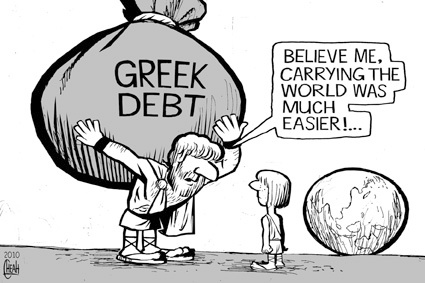
As in the case of other aid programs, the equivalent of hundreds of billions of dollars has been transferred from richer economies to a much poorer one, with negative, if unintended, consequences. The rescue program designed to keep Greece from crashing out of the eurozone has raised the country’s debt-to-GDP ratio from 130% at the start of the crisis in 2009 to more than 170% today, with the International Monetary Fund predicting that the debt burden could reach 200% of GDP in the next two years. This out-of-control debt spiral threatens to flatten the country’s growth trajectory and worsen employment prospects.

Like other aid recipients, Greece has become locked in a codependent relationship with its creditors, which are providing assistance in the form of de facto debt relief through subsidized loans and deferred interest payments. No reasonable person expects Greece ever to be able to pay off its debts, but the country has become trapped in a seemingly endless cycle of payments and bailouts – making it dependent on its donors for its very survival.

The country’s creditors, for their part, have an incentive to protect the euro and limit the geopolitical risk of a Greek exit from the eurozone. As a result, even when Greece fails to comply with its creditors’ demands – for, say, tax hikes or pension reforms – it continues to receive assistance with few penalties. Perversely, the worse the country performs economically, the more aid it receives.

The long-term consequences of this cycle of dependence could be serious. As long as Greece’s finances are propped up by international creditors, the country’s policymakers will be able to abdicate their responsibility to manage the provision of public goods like education, health care, national security, and infrastructure. They will also face few incentives to put in place a properly functioning system to collect taxes.

Dependence on aid undermines the implicit contract between citizens and their government, according to which politicians must keep taxpayers satisfied in order to stay in office. With foreign infusions of cash easing the need for tax revenues, politicians are likely to spend more time courting donors than caring for their constituents.

The weakened connection between public services and taxes not only makes it easier for officials to cling to power, but also increases the scope for corruption and inefficiency. Indeed, based on the experience of aid-recipient economies in the emerging world, the Greek people may find it increasingly difficult to hold their government accountable or penalize officials for misbehavior or corruption.

So far, the Greek crisis has been treated as a recurring emergency, rather than the structural problem that it is. And yet, as long as the country remains locked in a cycle of codependence with its creditors, the state of perpetual crisis is likely to persist.

Effective aid programs have almost always been temporary in nature, working – as was the case with the Marshall Plan – through short, sharp, finite interventions. Open-ended commitments, like aid flows to poor developing countries, have had only limited success, at best. As long as Greeks view assistance as guaranteed, they will have little incentive to put their country on a path toward self-sufficiency. Whatever the way forward for Greece, if there is to be any hope of progress, the assistance provided by the European Union and the IMF must come to be regarded as temporary.

Cutting the umbilical cord in a relationship of aid dependency is never easy, and there is no reason to expect that it will be any different with Greece. Phasing out transfers, even in a considered and systematic way, works only when the recipient is determined to put in place the measures necessary to survive without assistance. There are few signs that Greece is ready to walk on its own, and as long as the aid continues to flow, that is unlikely to change. In this sense, markets should view the Greek situation as an equilibrium, not a transition.

Greek Debt Relief

Good US/India Relations

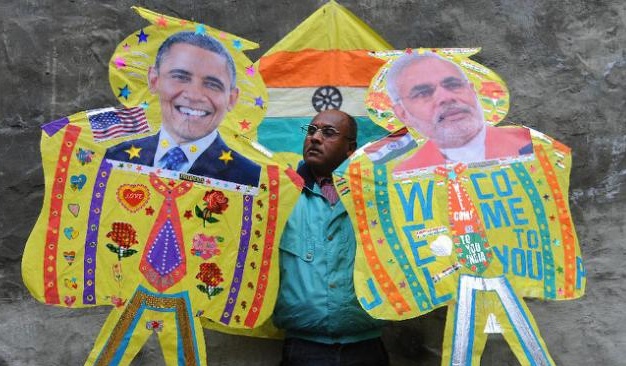
A sign of US-India relations?

Ahead of the 69th Independence Day celebrations, innumerable kites with photographs of Prime Minister Narendra Modi and US President Barack Obama will dot the city skyline.

US and India

Pakistan’s Debt Problems

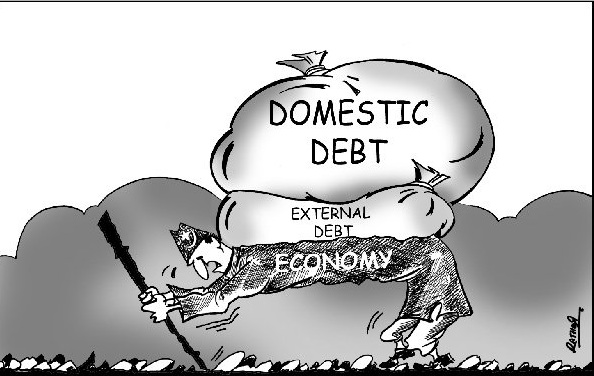
Pakistan’s current debt burden has placed their economy in a very delicate situation. The government of Pakistan has borrowed almost $950 million from banks in the past year. Pakistan is relying on it domestic debt which is adversely affecting the fiscal outlook of the country resulting in very little fiscal stability. The country’s government debt to GDP ratio is 64.30 as of December 2014. This figure is alarming because the government isn’t doing much in terms of raising tax revenues to improve the fiscal outlook.

Factors behind the debt crisis for Pakistan. Firstly, Pakistan has bee politically unstable over the past few years. The increasing debt ­to ­GDP ratio isn’t helping the stumbling nation’s cause either. This is a result of a massive decline in tax revenue over the years. Corruption has played a huge role in this aspect as only a fraction of people pay their taxes. In Pakistan, corruption occurs at the highest of levels which has a negative impact on economic growth and other business operations. Pakistan’s fiscal deficit is increasing day by day due to a major energy crisis and growing security concerns that lead to high defense spending. As a result, this causes the foreign debt to further pile up.

A developing nation such as Pakistan, where more than 60% of the people live below the poverty line cannot withstand the effects of these debts as it further worsens standard of living and well being of Pakistani citizens.

The ever rising burden of debt is one of the prime factors hampering the growth of Pakistan’s economy.

Pakistan's Economy

Immigration Update

Around 50,000 people arrived in Greece in July.  Greek Prime Minister Alexis Tsipras said the problem “surpasses” Greece’s abilities, and that his country’s economic problems meant it was facing a humanitarian “crisis within a crisis”.

Save the Children says refugee children are at risk of exploitation and disease in Greece because of the lack of facilities.  “The risk to a child forced to sleep on the street of being abused, or of a baby dying of heatstroke, is very real,” said Kitty Arie from the charity.  “This is Europe in 2015. We can’t leave these children in this desperate situation.”

European Director of a UN organization said facilities for the refugees on the Greek islands were “totally inadequate”, after more migrants arrived in Greece in July 2015 than in the whole of the previous year.

Greece’s EU partners must do more to ease the burden, he said, but Greece must “lead and co-ordinate. On most of the islands there is no reception capacity, people are not sleeping under any form of roof. So it’s total chaos on the islands. After a couple of days they are transferred to Athens, there is nothing waiting for them in Athens,” he complained.

Separately, Italian police arrested five suspected traffickers over the deaths of about 200 people after a migrant boat sank on Wednesday.

They included two Libyans, two Algerians and a Tunisian, held on suspicion of multiple murder and people trafficking.

Survivors have said that traffickers used knives to slash the heads of African migrants and belts to thrash Arabs to keep them in the hull.

  • Some 380 people rescued from a fishing boat were brought to Sicily, a day after being rescued
  • The UNHCR strongly criticised the British and French governments over the situation in Calais, where 3,000 migrants are living in makeshift camps, saying it should be treated as a “civil emergency”
  • A Sudanese national has been charged after allegedly walking nearly the full 50.5 km (31-mile) length of the Channel Tunnel towards the UK
  • Austrian authorities have stopped taking any more migrants at the country’s main reception camp in Traiskirchen, The UNHCR says nearly all new arrivals in Greece are refugees from the wars in Syria, Iraq and Afghanistan.

     Immigration Crisis

Entrepreneur Alert: Demos for the US President

It’s rare that anyone, including even an MIT computer scientist, is extended an invitation to the Oval Office. Even rarer, still: the opportunity to fall on your face in front of the “Leader of the Free World.”

Researchers from MIT’s Computer Science and Artificial Intelligence Lab (CSAIL) were part of a select group of entrepreneurs that gave President Obama an in-person demo about their innovation — a device that uses radio waves to detect, predict, and prevent falls among the elderly.

Professor Dina Katabi and CSAIL graduate students Fadel Adib and Zachary Kabelac presented “Emerald,” a system that can monitor breathing, heart rate, and changes in gait and body elevation with such precision that it may soon be able to predict declines in health and increased risk of falling.

Katabi says that every year 2.5 million elderly Americans are treated in emergency rooms because of falls, costing over $34 billion annually.

A more traditional way to try to solve this problem is with wearable technology, but most older people don’t want to have to always wear a special watch or pendant. Instead, Emerald uses one in-home sensor and data analytics to track a person’s movements from the radio waves that reflect off their body, without requiring the monitored person to wear any sensor on their body

If a fall is detected, the device immediately contacts the individual’s caregiver and, after a period of three minutes, calls an ambulance. Similar to a Wi-Fi router, Emerald works even if the person is in a different room than the device.

The technology is based on the CSAIL researchers’ work on “WiTrack,” which uses wireless signals to detect movement and vital signs.

Katabi says that she’s hopeful that the device can help “empower the elderly to live safely and independently,” and is also eager to see whether it may have other key applications in personal health, baby monitors, and even search-and-rescue.

More generally, she says the Demo Day itself made apparent how important it is to promote diversity in the world of innovation and entrepreneurship.

Innovation

Putin’s Food Shortages?


Leonid Bershidsky writes:  Russian President Vladimir Putin has mounted a new campaign in his propaganda war with the West: The highly publicized destruction of imported food, which the government banned last year in retaliation for Western economic sanctions. This time around, though, his constituents aren’t quite with him.

The ban, aimed at the U.S. and European countries that imposed sanctions on Russia over its aggression in Ukraine, covers a long of items, including fruit, vegetables, most kinds of meat, fish and dairy products. 

The local replacements often aren’t all that great. In a taste test of one of the bizarre cheeses that have filled Russian store shelves since the embargo, the Guardian’s Moscow correspondent Shaun Walker concluded that “the disintegrating texture is unnerving, and feels as if hundreds of tiny globules of parmesan have been left out on the pavement for a couple of weeks and then stuck back together with glue.”

To satisfy demand for the real thing, embargoed goods have been filtering into Russia. Some arrive by circuitous routes to establish acceptable provenance, or are repackaged in neighboring Belarus to pretend they originated there (I’ve seen Belorussian salmon in stores, though the landlocked country doesn’t produce it). Others are simply smuggled in: Russian customs inspectors are not known for their incorruptibility.

In a rare act of defiance, the Magnit chain of discount supermarkets, one of the country’s biggest retailers, sued the government agency charged with keeping embargoed items out of stores, claiming Putin’s decree on the food sanctions bans only their import, not their sale. 

Putin, however, won’t have it. He wants his food embargo to work as effectively as before, boosting local producers and punishing Western companies that have already seen their Russian business shrink. 

The Russian Orthodox Church doesn’t look kindly upon the destruction of food, either. More than 280,000 people — an unusually large number for Russia — have signed a Change.org petition asking the Kremlin to repeal the food destruction decree and hand over any confiscated food to the needy. “If something can simply be eaten, why destroy it?” the petition says.

Putin’s government, however, is like a tank without a reverse gear. 

Russians have seen a lot of strange things on state TV under Putin, but never before have they been treated to a public cheese execution. I expect the campaign will be as ineffectual as it is grotesque. Installing incinerators at customs and crushing wheels of Gouda is not going to make customs officials any less willing to turn a blind eye for the right reward. 

Food Embargos in Russia

Progress in Indonesian Economy?

William Pesek writes:  Indonesia has come a long way since Oct. 20, when Joko Widodo was sworn in as president. Unfortunately, the distance the country has traveled has been in the wrong direction.

Expectations were that Widodo, known as Jokowi, would accelerate the reforms of predecessor Susilo Bambang Yudhoyono — upgrading infrastructure, reducing red tape, curbing corruption. Who better to do so than Indonesia’s first leader independent of dynastic families and the military?

In 10 years at the helm, Yudhoyono dragged the economy from failed-state candidate to investment-grade growth star.  After 291 days, however, Jokowi seems no match for an Indonesian establishment bent on protecting the status quo.

Investors are already voting with their feet. The Jakarta Composite Index has fallen 13 percent from its April 7 record high, one of Asia’s biggest plunges in that time. And foreign direct investment underwhelmed last quarter, coming in at $7.4 billion, little changed from a year earlier in dollar terms.

Jokowi has plenty of time to turn things around; 1,535 days remain in his five-year term. But the “halo effect” MasterCard’s Matthew Driver says Jokowi carried into office is fast fading as Indonesia’s 250 million people flirt with buyer’s remorse.

First, Jokowi must step up efforts to battle weakening exports. I

Next, Jokowi must decide what kind of leader he wants to be: a craven populist or the modernizer Indonesia needs. That means taking on entrenched interests and thinking bigger. Take Jokowi’s industrialization push. Understandably, he wants to support the development of manufacturing to boost exports and cut a persistent current-account deficit. But Jokowi needs to complement that policy with investments in education and training. 

While it’s still early for Jokowi, Indonesia is already paying a price for his mismanagement. The rupiah is down 13 percent over the past 12 months — and the Federal Reserve’s first post-quantitative-easing rate hike is still looming on the horizon. 

This is a moment to question how far the entire Southeast Asia region has come in recent decades. Thailand is fast losing steam as the latest military junta to rule the nation neglects the economy. Malaysia’s currency is at 17 year lows as Prime Minister Najib Razak tries to explain $700 million that allegedly made its way into a bank account he controls. And now Indonesia is losing the investment it worked so hard to win back since Suharto’s ouster. Jokowi can still turn things around, but he’s got a lot of convincing to do — both inside Indonesia and out.

Indonesia

Gold Held by Central Banks

Gold reserves are viewed as being crucial to actually putting in a real value that aims to support a nation’s currency. The decline in the price of gold has gotten even worse since the end of June, but five central banks were buyers of gold in the first half of 2015.

New data released by the World Gold Council (WGC) shows central bank purchases and holdings for the month of August.   Five nations that added handily to their gold reserves in the first half of 2015. These were China and Russia for the lion’s share, followed by Kazakhstan, Mongolia and Jordan. Turkey had been classified as a net-adder of gold previously due to reserves for its bank sector, but it has been decreasing net gold holdings in 2015.

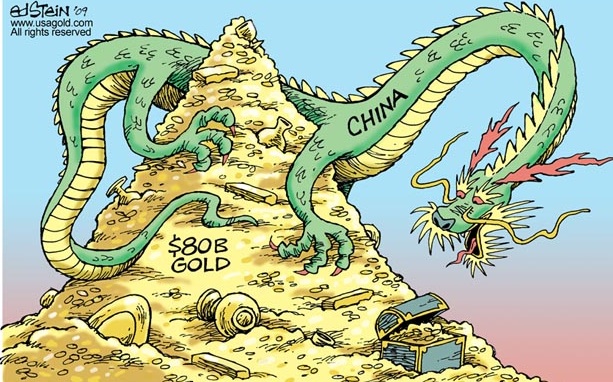
 China has been trying to curb a stock market meltdown, yet China has to maintain large reserves of real assets to keep its currency up. IChina added a whopping 604 tons of gold in the month of June.

The WGC shows that China is ranked sixth in central bank holdings in the world, but that would be fifth if you remove the International Monetary Fund.  China’s big move here appears to be the culmination of multiyear gold buying that had been reported but had not been tabulated.

If one nation needs to do what it can to bolster its currency, it is Russia. It has been under financial pressure since its Crimea invasion.  Russia’s central bank official gold holdings were listed as being 1,275 tons. That ranks it as number 7 in the world’s gold holdings, sixth if you do not count the International Monetary Fund. Russia is a gold producer and most central bank gold acquisitions there actually take place out of that domestic market rather than on the international metals markets.

Kazakhstan has added gold in the past, and it added close to 14 more tons of gold in the first six months of 2015. The nation ranks as the 23rd largest holder of gold by central bank, but Kazakhstan would be ranked the 21st largest central bank holding gold if you account for the European Central Bank and the International Monetary Fund.

Jordan did not add to its gold holdings in the central bank in the second quarter, but the first three months of 2015 saw 14 tons added so far in 2015. The WGC did not have any special notes about what this was for, but Jordan was also shown be a net acquirer of gold during both halves of 2014.

The WGC showed that Mongolia added a mere 0.7 tons via trading activity in the month of June. Its gold had fluctuated throughout 2014, also due to trading activity. What stood out was that June was the one month of gains, with 0.7 tons added — with twice as much “out” or down in the other months combined for 2015. Again, Mongolia may be an anomaly. Still the nation wants to grow its economic clout, after three years of high growth, and Mongolia even has an exchange traded fund tracking it now.

Gold Reserves