Merkel Key

Holger Nehring writes:  In the week before the Greek referendum, leading German tabloid BILD conducted its own referendum on what should happen to Greece. The question:“Should we support Greece with further taxpayers’ billions?”, pointed out that Germany had already poured €88 billion down the Greek sinkhole.

Almost 90% of BILD readers voted No. Another poll printed in the same paper on Saturday suggested that 78% felt compassionate towards the Greek population. And 56% believed German would be unaffected by the outcome of the referendum and any consequences this may have.

Like many Greeks, Germans still believe – optimistically – that their government has the sovereignty to make unilateral decisions and that they are shielded against the vagaries of the international economic and financial system. But they are also still keen to show that they are the star pupils in European solidarity: this explains the high levels of compassion for the Greek population. In tune with this the German vice-chancellor, – a social democrat – has just offered to consider humanitarian aid for Greece, should it be required.

What does this mean for German politics? The Greek No is a major defeat for the chancellor, Angela Merkel, both domestically and internationally. Most politicians from Merkel’s Christian Democrats are pessimistic about the possibility of a new deal and many have interpreted the result as a vote against the euro, if not a vote against a European Union. Only the small quasi-socialist Left Party, whose parliamentary party had even supported a previous austerity deal for Greece, and, to a lesser extent, the Greens, also much diminished since the last election, are arguing in favour of Syriza.

All this poses a massive problem for Merkel. She is so far only on record saying cryptically that she “respected” the outcome of the Greek vote, and it is very likely that she will push for further negotiations.

At the same time, Merkel wants to be seen as powerful negotiator, not the deal breaker. Her legacy as a pro-European, the East German who has brought the reunified Germany into a renewed European Union, is at stake. This is why her finance minister Wolfgang Schäuble was the designated bad cop in negotiations. But this will come at a cost: the vast majority of the German population and her own party are pulling her away from clinching a deal

The hard line that Schäuble took towards Greece is hugely popular in the German population. And, if anything, his support base in Merkel’s Christian Democratic Union (CDU) is probably greater than Merkel’s own.

Merkel could wait for a long time, build up the pressure and then use that pressure to clinch a deal at the very last minute, claiming that there was the need to act due to some higher authority, which places a disclaimer on her direct responsibility, just in case.

Merkel now faces the choice of pleasing her electorate and being remembered as the person who finished off a key element of European integration; or trying to rescue Greece, which will stoke euroscepticism in Germany and is likely to reduce the voter base for her party. There is no current alternative to the CDU on the right.. But it is only a matter of time until full-scale anti-EU populism seen in France and the UK will come to Germany.

Merkel’s legacy is tied to the fate of the eurozone. Focused on tactics rather than strategy, Merkel’s way of dealing with things has not worked out well in this context. She has run up against structures that proved immune to her tactics: the highly complex machinery of the EU, with its many committees, forums, lobby groups and difficult decision making, and the popular will of another EU member state.

The crisis in Greece is an economic and financial disaster that may turn into a humanitarian crisis. It is also, fundamentally, a crisis of national sovereignty in the context of the European Union: one popular will is pitted against another, without an effective means of mediating between the two.

Merkel can now show true leadership rather than just tactical manouevres: starting an open debate about the parameters of European integration and about the German model. There is, still, a tiny bit of time left for Merkel to find her moment.
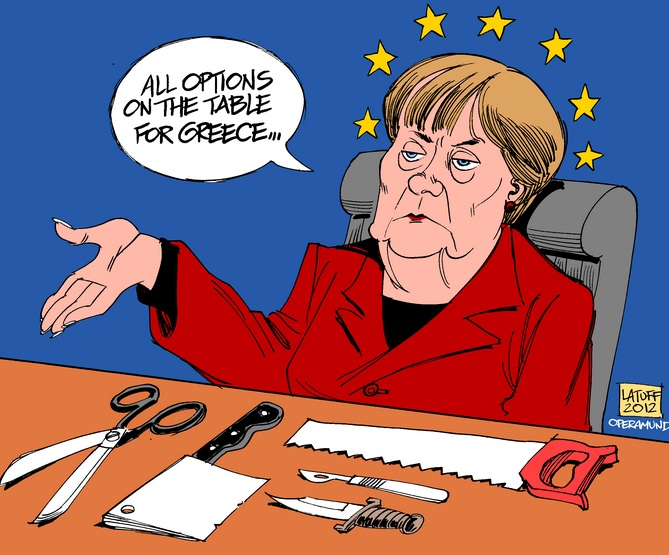
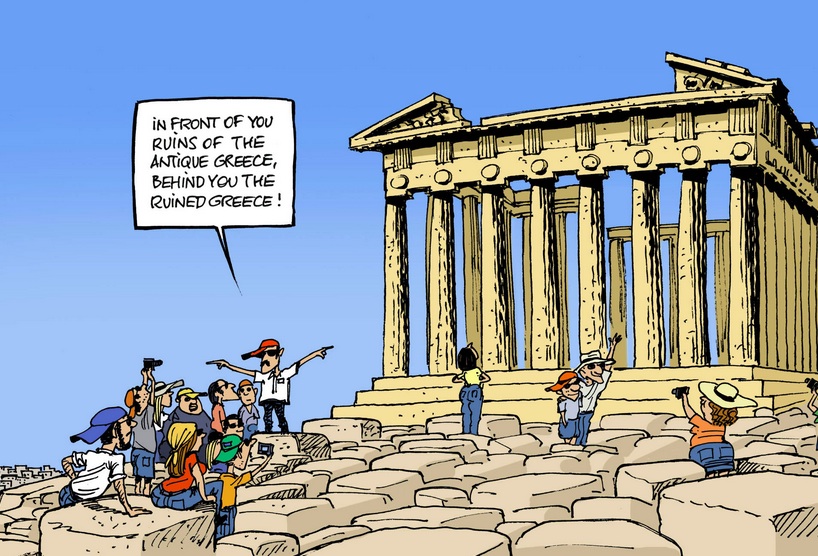
 Merkel's Options

Greece In or Out: EU’s Decision

Rebecca Christie writes:  Euro-area leaders and finance ministers meet Tuesday in Brussels to discuss how Greece can stay in the common currency. It’s the first round of serious talks since Greek voters resoundingly rejected the terms of a prior bailout offer that expired on June 30.

Prime Minister Alexis Tsipras said his government wants debt restructuring as part of its next aid package.

In the short term, Tsipras and his new finance minister Euclid Tsakalotos arrive in Brussels with their main goal will be to start talks on bridge financing, to help Greece get past its upcoming financing hurdles.

Tsipras also asked for a two-year loan from the European Stability Mechanism, the euro-area’s firewall fund.

July 20th Greece needs to pay about 3.5 billion euros ($3.9 billion) in bond redemptions for securities held by the European Central Bank. Greece needs short-term cash before then, or else an expanded lifeline from the ECB to its financial system.

That said, Greek banks have already been shut for more than a week because of their cash crunch. The ECB has mostly left intact its lifelines to Greek banks but it tightened conditions on emergency liquidity assistance.

The ECB’s Governing Council has declared it will work closely with the Bank of Greece to maintain financial stability. Also, the ECB’s aid isn’t likely to be withdrawn abruptly.

Talks on debt relief are likely to be political rather than practical. Greece’s biggest short-term bills are to the IMF, the ECB and its workers, which can’t be restructured easily.

In the longer term, the euro area could ease Greece’s overall debt burden considerably by lengthening the terms and lowering interest rates on some existing rescue loans. This has been on the table since 2012, but the Greeks haven’t persuaded the euro area to make good on the offer so far.

German Chancellor Angela Merkel has insisted that Greece can’t get any money for free and must meet euro-area rules to win assistance. French President Francois Hollande has led the side of conciliation, urging everyone to stay at the bargaining table.

Convincing the German leader will be a tough sell.

As long as politicians keep talking, the ECB won’t want to cut off Greek bank aid — which is the main thing holding the country’s finances up.

EU leaders say the Greeks are in a weaker position after the prior program — and its related offers of extension, short-term cash and debt relief — expired. Tsipras disagrees.  If the Greeks hold firm, they could be heading for the exit.

If negotiations are formally broken off, the ECB may feel obliged to veto further liquidity to the banking system, a move that would probably lead to a broad-based default.

If a political breakdown doesn’t cause the ECB to reach for the trigger, any non-payment of the money Greece owes to the ECB on July 20 almost certainly would.

The euro area could decide to help Greece to an orderly exit, through a phased withdrawal of liquidity or some other settlement mechanism. It could also put Greece’s euro membership on temporary suspension, a prospect raised over the weekend by German Finance Minister Wolfgang Schaeuble.

As part of its efforts to protect the currency bloc, the ECB has said it’s ready to protect other countries from contagion.

Greece

Risk and Economic Change

Laura Tyson writes:  Over the past year, the global economic environment changed markedly and in unexpected ways. Energy and commodity prices plunged. Growth in China (which accounts for about 40% of global growth) fell to its lowest rate since 1996, even as its stock market soared to unsustainable heights. The United States and the European Union ratcheted up economic sanctions on Russia in response to its military excursions in Ukraine, highlighting the geopolitical risks associated with cross-border investments. And there have been large swings in exchange rates, fueled by actual or, in the case of the Federal Reserve, anticipated changes in monetary policy.

These rapid changes have rattled global financial markets and spooked investors, reducing their appetite for risk – a cautious attitude that has been reflected in emerging markets. Investors have sat on the sidelines, and the MSCI index that tracks returns on emerging-market equities has stagnated.  Growth and Change

Growth


Work Transformed by Technology?

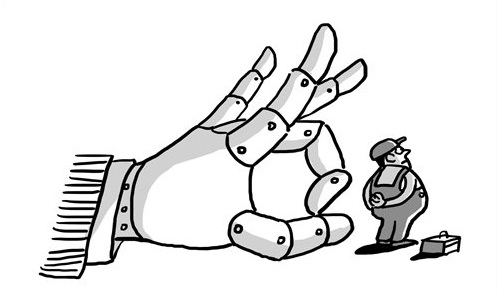
Jean Pisani-Ferry writes:  In 1983, the American economist and Nobel laureate Wassily Leontief made what was then a startling prediction. Machines, he said, are likely to replace human labor much in the same way that the tractor replaced the horse. Today, with some 200 million people worldwide out of work – 30 million more than in 2008 – Leontief’s words no longer seem as outlandish as they once did. Indeed, there can be little doubt that technology is in the process of completely transforming the global labor market.

To be sure, predictions like Leontief’s leave many economists skeptical, and for good reason. Historically, increases in productivity have rarely destroyed jobs. Each time that machines yielded gains in efficiency (including when tractors took over from horses), old jobs disappeared, but new jobs were created. Furthermore, economists are number crunchers, and recent data show a slowdown – rather than an acceleration – in productivity gains. When it comes to the actual number of jobs available, there are reasons to question the doomsayers’ dire predictions. Yet there are also reasons to think that the nature of work is changing.

Rather than try to stop the unstoppable, we should think about how to put this new reality at the service of our values and welfare. In addition to rethinking institutions and practices predicated on traditional employment contracts – such as social security contributions – we will need to begin to invent new institutions that harness this technology-driven transformation for our collective benefit. The backbone of tomorrow’s societies, after all, will be built not by robots or digital platforms, but by their citizens. Laborers’ Future

The Nature of Work

Making TPP Palatable

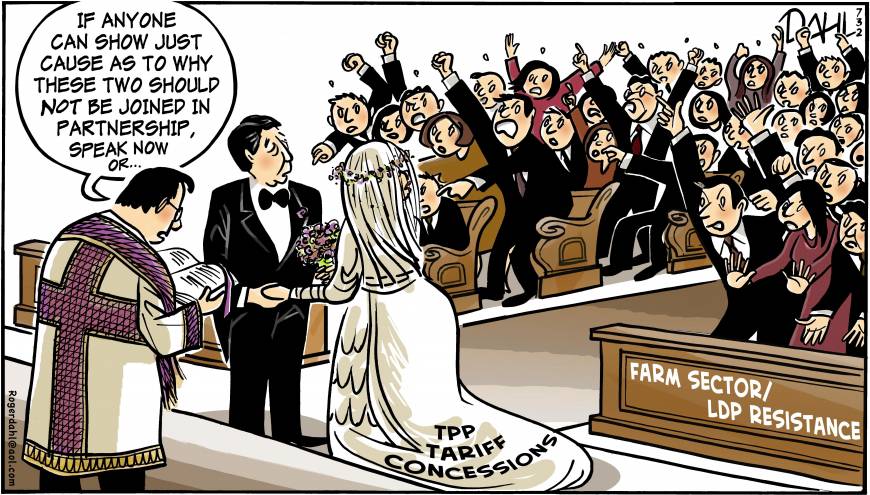
Simon Roe writes:The United States Congress has now given President Barack Obama so-called fast-track negotiating authority to conclude the Trans-Pacific Partnership (TPP), the proposed mega-regional free-trade agreement among the US and 11 other countries. But Obama’s victory was not an easy one.

But the Democrats have a point. They want the Obama administration to ensure that the TPP includes core international labor standards for all participants, a high level of environmental protection, and access to affordable medicines, among other measures.

Though Obama has promised that the TPP will be the most progressive trade agreement in history, which is achievable, the shroud of secrecy that surrounds almost all details of the negotiations has made it difficult to evaluate claims and counterclaims on this point.

In 2005, only 15 House Democrats voted for the Central American Free Trade Agreement, precisely because its terms on labor standards and the environment were so weak. In 2007, by contrast, 109 House Democrats voted in favor of the US-Peru Trade Promotion Agreement, precisely because its terms had been adjusted as requested and in line with the May agreement. And, in October 2011, the House approved the much-debated US-Korea Free Trade Agreement with 59 Democrats in favor. The extent of congressional Democratic support depends directly on what exactly is in any trade agreement.

The main principles in the May 2007 agreement are straightforward and difficult to oppose. Workers should be allowed to form trade unions. Child labor should be abolished. All forms of forced or compulsory labor – including human trafficking – should be prohibited.

Moreover, the agreement calls for the inclusion of existing international environmental standards in free-trade agreements, including rules concerning pollution and endangered animals. Likewise, such agreements should support fair access to pharmaceutical patents and to the data used to prove the safety of medical treatments. And the May 2007 agreement makes it clear that “foreign investors in the US will not be accorded greater substantive rights with respect to investment protections than US investors in the US.”

It would not be difficult for the administration to give Levin and his colleagues what they want.

The most difficult challenge for the Obama administration may be the issue of currency manipulation. Democrats are pushing for provisions to prohibit or limit currency-market intervention by central banks that is intended to give a country’s exporters a competitive edge. This is also a huge potential problem with the TPP, because competitive devaluations can swamp any other gains from trade by an order of magnitude, with substantial negative effects on US jobs. The administration urgently needs to take this point on board.

The TPP represents an important opportunity to write better rules for international trade and investment. But we are not there yet.

TPP?

Do Greece and the Eurozone Need Each Other?

Mark Roe writes:  A deal between Greece and its creditors might not happen. Several factors are in flux; Greek and northern European interests are not aligned; and personal animosities are in play. For Greece, an exit from the euro would not be easy, but if the alternative is endless austerity without debt forgiveness, its government may conclude that leaving the eurozone is the better choice.

Germany, for its part, would prefer to avoid a Greek exit – a position that Greek Finance Minister seems to have been banking on. But the German public largely wants to punish Greece, and German Chancellor Angela Merkel does not want to set a precedent for recurring bailouts of the European Union’s weaker members.

Failure to reach an agreement would be painful for Greece, which would face chaotic economic conditions. But an exit from the euro would also provide its government with new options – most notably, the ability devalue its currency to make its exports more competitive. For the rest of Europe, however, the risk is mostly on the downside, because beyond the obvious losses that would be incurred if Greece does not pay its debt to European governments and international institutions, there is the wider worry that the crisis could reverberate through the continent’s real economy.

There are three important risk channels through which Greece’s troubles could hit the European economy. The first is by destabilizing its financial institutions. The second is by disrupting the other EU member states in situations similar to Greece’s. And the third is by bringing about unexpected political outcomes.

It is important to recall that the 2008 financial crisis started in the United States, prosaically enough, with the bursting of a housing bubble.

The real trouble came when those losses hit the American financial system. At first, many authorities and observers thought that the crisis – beginning with the collapse of the US investment bank Lehman Brothers – could be contained.

Optimists will point out that the European institutions most exposed to the turmoil in Greece have had years to prepare themselves. And, indeed, a significant share of Greece’s government debt has migrated from banks to robust public institutions like the European Central Bank and the International Monetary Fund.

But the risks have not been eliminated. Risk and loss can spread from Greece to other heavily indebted countries, like Spain and Italy.

A Greek default and exit from the eurozone could unleash unpredictable political forces with a knock-on effect on the European economy.

Further hardship and economic turmoil could produce governments even further out on the political spectrum (the neo-fascist Golden Dawn party is another beneficiary of Greece’s economic troubles) or generate considerable instability, with governments becoming unable to provide basic security, let alone encourage an economic recovery. Add to that Greek Prime Minister Alexis Tsipras’s overtures to Russian President Vladimir Putin.

Greece has yet officially to default or leave the eurozone. There is still time for one side or the other to concede or for the various parties to find a face-saving compromise.

Many in Greece desperately want to retain the euro. As for the rest of Europe, its decision-makers may not want to risk finding out whether the repercussions of a Greek exit really can be contained.

Greece and the Eurozone

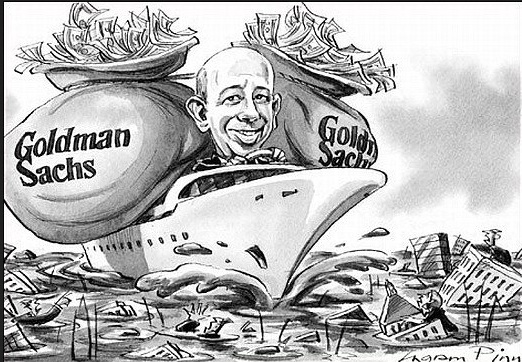
Goldman Wins Round Against Libya

Sarah Townsend writes:The Libyan Investment Authority has failed in an attempt to sue struggling British real estate mogul Glenn Maud for more than £20 million ($31 million), but it has been granted permission to appeal the court’s decision.

The UK bankruptcy court ruled last month that Maud – who amassed a $7 billion global property portfolio before he went bust as a result of the financial crash – does not have to repay a loan he received from the LIA to help finance his acquisition of 50 percent of Banco Santander’s global headquarters in Madrid in 2008.

The loan was granted to Maud before the imposition of United Nations sanctions against Libya in March 2011.

The sanctions regime effectively prevents the turbulent North African country from seeking to recover unpaid debt, and freezes all assets held outside the state.

Although the judge did not dispute that Maud owed the money, she ruled that its repayment to Libya would amount to a breach of sanctions.

According to court documents seen by Arabian Business, Maud’s now defunct real estate company Propinvest received the first tranche of what was originally intended to be a bigger loan from Libya at a time when it was common for the country to seek inward investment from other nations.

This payment amounted to £17.6 million. Maud claimed he did not receive the rest of the agreed loan because of the collapse of the Libyan regime. The total size of that loan is not revealed in the court documents.

The documents state that Propinvest defaulted on the loan repayment from March 2010 (it went into administration in 2011). The unpaid debt stood at around £20 million including interest.

The LIA served a statutory demand on Maud but he challenged it on the grounds that to pay would amount to a breach of sanctions.

The court ruled in Maud’s favour, deciding that anyone making payment to the LIA in breach of the sanctions would be subject to criminal penalties and it would be unjust to require a debtor to make repayments in such circumstances.

The LIA had argued Maud should have applied for a licence from the UK Treasury that might have allowed him to make the repayment regardless of the sanctions.

But the court held that Maud, as a debtor, was not responsible for doing this – especially since there was no certainty that a licence would be granted.

The lawyers involved in the case declined to comment. The judgment is a coup for Maud, who retains his 50 percent stake in Banco Santander’s headquarters at a time when he is still recovering from the financial crash that caused Propinvest to collapse in 2011.

The Financial Times reported in 2012 that Maud was subject to a Channel Islands court order that prevented him from living on more than £500 ($782) a week. He also had his worldwide assets frozen.

However, the flipside of the decision is that the LIA stands to lose out on valuable sources of funding that could help it to rebuild the country.

A spokesperson for the LIA revealed that the LIA has been given leave to appeal the decision. The spokesperson said: “This was a highly technical and complex public law case concerning the interpretation of economic sanctions. The sanctions are there to protect the interest of the Libyan people.

“Rather oddly in this ruling, the existence of sanctions has been turned on its head for the benefit of a debtor who is liable to those very same people. This cannot be right.  The [LIA’s] Board of Directors is intent on clarifying this point of law and pursuing a substantial and undisputed debt due to the people of Libya.

“The LIA is taking the case to the Court of Appeal and hopes this court will recognise that Maud is seeking to protect his own interests by using a sanctions regime designed to protect funds designated for investment in the building of a safe country with a vibrant, well-educated and healthy population.”

The outcome will have implications for Libya’s other creditors – among them the banks Goldman Sachs and Société Générale, both of whom are embroiled in similar, separate, court cases to quash the LIA’s demands to pay outstanding funds.

One well placed lawyer told Arabian Business that, should the LIA win or the sanctions be lifted, questions will arise over where to direct repayments given that it is unclear which of Libya’s two warring governments are in charge of the investment body.

Surprise- Goldman Prevails


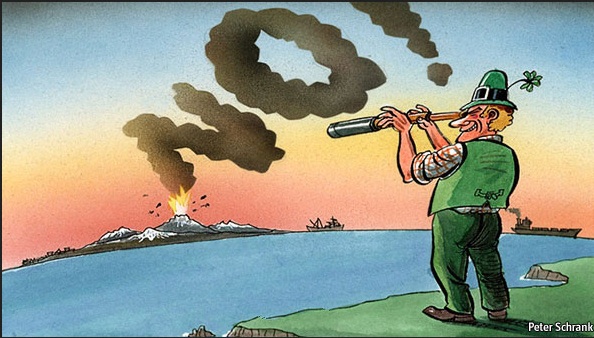
Iceland Says No to EU

Iceland has announced it is dropping its bid to join the European Union in line with pledges made two years ago by its then-new eurosceptic government.

Iceland first applied for EU membership under a leftist government in 2009, when the country was badly shaken by an economic crisis that saw the Icelandic krona lose almost half its value, making eurozone membership an attractive prospect.

But the thorny issue of fishing quotas was seen as a key obstacle to joining the bloc, although it was never brought up in the accession talks.

Fishing represents an important part of the Icelandic economy, and it was never made clear how differences between Brussels and Reykjavik could be patched over on the subject.

Thousands of protesters had thronged the streets of Reykjavik last year to demand a referendum after the government said it was dropping its EU membership bid without a popular vote.

But opinion polls more recently began to show growing resistance among Icelanders to EU membership.

The north Atlantic island is a member of Europe’s visa-free Schengen area and the European Economic Area.

That allows it to export seafood to the mainland tariff-free and helps boost tourism, which is crucial to the country’s foreign exchange earnings.
Advertisement

Iceland has clawed its way back from the demise of its bloated financial sector in 2008, with official figures showing this week that GDP reached record levels last year.

At constant prices, Iceland’s GDP grew by 1.9% in 2014 to beat a GDP record dating back to pre-crisis levels, according to Statistics Iceland.

However, “GDP per capita remains lower than in 2008, and while there is no shortage of jobs, we lack jobs that pay well, especially for young graduates,” University of Iceland economics professor Asgeir Jonsson told AFP.

For many Icelanders, joining the EU has not been a major priority, with concern instead over how to pay back loans taken on when the economy seemed to be booming before the crash.

The small Nordic country was hit hard as the crash of US investment bank Lehman Brothers caused the collapse of its three largest banks.

Without effective oversight, Iceland’s banks had taken out massive cheap loans abroad, scooping up assets worth several times the island’s annual output.

Iceland then became the first western European nation in 25 years to appeal to the International Monetary Fund to save its battered economy.Iceland Says No to EU

Entrepreneur Alert: A New Niche in Baking?

Michal Muskal writes:  he former owners of an Oregon bakery have been ordered to pay $135,000 to a lesbian couple who were refused a wedding cake, in the latest front in the battle between religious liberty and individual rights.

Oregon Labor Commissioner Brad Avakian ordered Aaron and Melissa Klein, who owned the Sweet Cakes by Melissa bakery in Gresham, Ore., to compensate the couple for emotional and mental suffering that resulted from the denial of service.

The Kleins had cited their Christian beliefs against same-sex marriage in refusing to make the wedding cake for Rachel and Laurel Bowman-Cryer.

Avakian’s final order, issued Thursday, had been expected in the dispute that dates from 2013, one of several around the nation involving bakers, florists and photographers who have refused to provide services to same-sex couples on religious grounds.

Oregon law bars businesses from discriminating or refusing service based on sexual orientation, just as they cannot turn away customers because of race, sex, disability, age or religion.

If we take unclesmrgol’s thinking to its logical conclusion, then we are all slaves, and we are all owners. We all have the right to walk into a for-profit establishment or government office and “force” the workers to provide goods and services that are available to all customers…

According to the state Bureau of Labor and Industries’ report, Rachel Bowman-Cryer and her mother attended a bridal show in Portland where the Kleins had a booth advertising their wedding cakes. Bowman-Cryer and her mother went to a cake-tasting at the bakery in 2013.

When Aaron Klein was told there would be two brides, Rachel and Laurel, he responded that he was sorry, but the bakery did not do wedding cakes for same-sex couples because of his and his wife’s religious convictions, according to the report.

The Bowman-Cryers held a commitment ceremony in June 2013 and were married in May 2014, shortly after a federal judge struck down Oregon’s ban on same-sex marriage.

In August 2013, the brides filed a complaint with the state Bureau of Labor and Industries, and the agency brought charges against the Kleins in January 2014.

Aaron Klein said his family had suffered because of the case and the glare of media attention.

The bakery’s car was vandalized and broken into twice, he said. Photographers and florists severed ties with the company, eventually forcing the Kleins to close their storefront shop in September 2013.

Growing the Marriage Market?