International optimism sparked by the election of Prime Minister Narendra Modi should be tempered by the fact that reforms he has promised face “challenges [that] have deep-rooted origins with no easy solutions“. With many of India’s institutional traditions deriving from its colonial past many are short-term focused and disconcerting for Indians to modify due to the increase of uncertainty that accompanies the process. The author, Sudarshan Murthy of Matthews Asia, provides a diagram summarizing his view of the reform terrain:
Category Archives: News Blog
Co-ethnic Networks Work!
RIcardo Hausmann writes: Many countries have substantial diasporas, but not many are proud of it. After all, people tend not to leave a country when it is doing well, so the diaspora is often a reminder of a country’s darker moments.
El Salvador, Nicaragua, and Cuba, to cite three examples, had more than 10% of their native population living abroad in 2010. And this figure does not take into account their descendants. The bulk of this migration happened at a time of civil war or revolution. In other places, massive outmigration occurred in the context of political change, as in Europe when communism collapsed.
The relationship between diasporas and their homelands often encompasses a broad palette of sentiments, including distrust, resentment, envy, and enmity.
One important connection is remittances, which add up to some $500 billion a year worldwide. The largest recipients are India, Mexico, and the Philippines. For countries such as Armenia, El Salvador, Haiti, Honduras, Jamaica, Kyrgyzstan, Lesotho, Moldova, Nepal, and Tajikistan, expatriates remit the equivalent of more than one-sixth of national income – an amount that often exceeds exports.
From the beginning of urban life, millennia ago, trade typically involved networks of co-ethnic merchants living among aliens. Greeks, Phoenicians, trans-Saharan traders, the Hanseatic League, Jews, Armenians, overseas Chinese, and the Dutch and British East India Companies organized much of world trade through such networks.
Co-ethnic networks’ durability and resilience throughout history reflects their ability to enforce contracts at long distances when the existing institutional framework could not do so reliably. They could establish trust between exporters and importers because they could punish opportunistic behaviors. For a tight-knit community, reputational costs and other forms of social punishment transcend geography: not paying for goods might mean not being able to marry your children well.
Legal institutions have since evolved to facilitate impersonal trade. Exporters and importers no longer need to know one another, because they can write a contract that a court will enforce.
This knowhow moves geographically in the brains of those who possess it and is transferred to others at work. That is why ethnic cuisines diffuse through diasporas, not cookbooks. And it may be why economies with more diverse sets of migrants perform better. Also, return migration is often an important source of new skills for a country.
Evidence of the importance of diasporas is everywhere, if you care to look. Franschhoek (French corner in Afrikaans) is a beautiful valley near Cape Town settled by Huguenots in the late seventeenth century. That is why, to this day, wines are made there.
Likewise, Joinville is a southern Brazilian city settled in the late nineteenth century by relatively uneducated Germans. Because of the cultural links they and their descendants have maintained with the mother country for more than 120 years, the city excels at advanced manufacturing of products that had not been invented when the migrants came. Morocco is full of French-language call centers that get their contracts through a cousin in Paris.
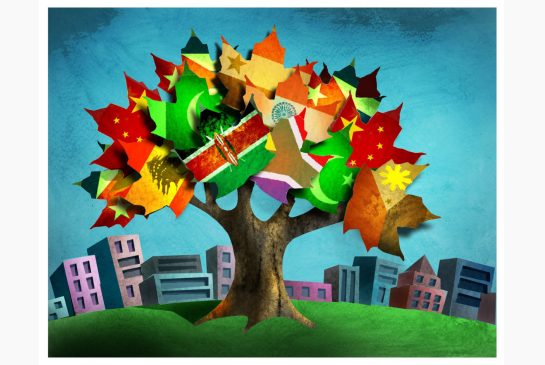
A country’s diaspora, and the diasporas it hosts, can be a huge asset for its development. Diasporas are not gusanos or worms, as Fidel Castro refers to Cubans abroad. They are a potential source of opportunities for trade, investment, innovation, and professional networks.
But a diaspora can work its economic magic only if the host country tolerates it and the home country appreciates it.
Lagarde Asks for Credible Reform and Second Term
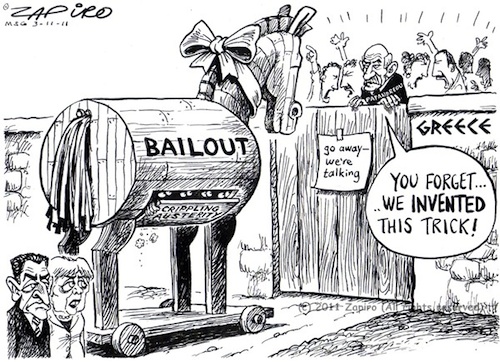
Greece must present credible reform plans and they cannot be built only on promises of more tax revenues, International Monetary Fund chief Christine Lagarde said in an interview published by French magazine Challenges on Wednesday.
Lagarde said a Greek economic recovery would require not only Greek reforms but also steps by European creditors to make Greece’s debt sustainable.
“You can’t build a programme just on the promise of improved tax collection, as we have heard for the past five years with very little result,” she told the magazine.
Lagarde said she did not want Greece to leave the euro zone and did not believe in any eurozone explosion.
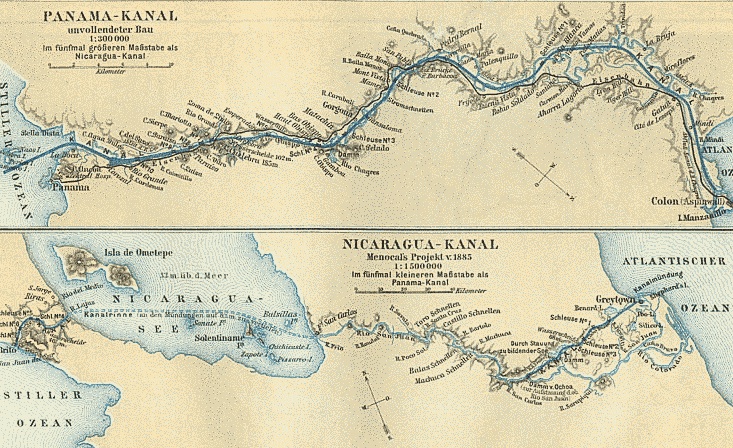
China Finances Nicaragua Canal?
Chinelse company to build green canal in Nicaragua.
The Nicaragua Canal project now under construction is expected to link the Atlantic and Pacific oceans and be a green project as well, an offical with China’s HKND Group that holds the concession for the canal told local media on Monday.
The 279-km-long mega project, which began at the end of 2014, will take five years to build with a total cost of 50 billion U.S. dollars.
It will provide a more convenient interoceanic passage for large vessels that can not go through the Panama Canal, such as 25,000-TEU container ships, said Bill Wild, HKND Group’s chief project adviser.
Moreover, over the past two years, HKND has also made great efforts on the environmental and social impact assessment, which has been submitted to the local government and is waiting for approval.
Wild said the company will launch a re-forestation program for watersheds along the canal. Also, the canal will serve as a protective barrier once the program is completed. There will be a 10-km-wide “no-go area” in the Mesoamerican Biological Corridor so that no human activities will affect wildlife in this area.
Material excavated during construction will be used to create some 30,000 to 40,000 hectares of land for agriculture, Wild said.
He said two islands with rock walls will be built in Cocibolca or Nicaragua Lake, the country’s largest lake and part of the canal route, where the extracted material can be deposited.
The material will be extracted through a system that uses giant suction tubes, with a mechanism similar to a vacuum cleaner, ensuring the sediment is not simply disrupted and floating around, he said.
“The lake is one of the people’s biggest concerns. We will make sure to protect it,” Wild said.
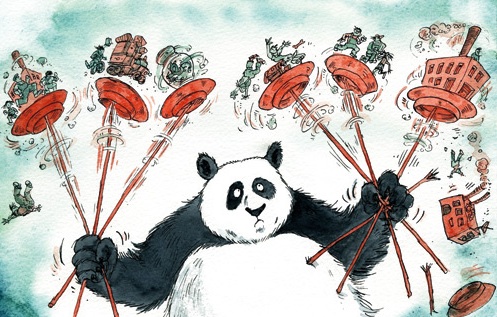
China Spanks the US
China’s Finance Minister Lou Jiwei said Tuesday that the United States should take on more responsibilities to boost global economic recovery in accordance with its capacity as the world’s largest economy.
“Currently China contributes about 30 percent of the global economic growth, while the United States contributes about 10 percent. As the world’s largest economy, the United States should take on more responsibilities,” Lou told a press briefing on the sidelines of the seventh China-U.S. Strategic and Economic Dialogue (S&ED), which opened on Tuesday.
During the global financial crisis, China had helped boost the global economic growth by 50 percent, which was an unsustainable model, Lou noted. He urged the U.S. side to accelerate structural reform by saving and investing more, and raise its labor participation rate.
He underlined that the quantitative easing and fiscal measures are short-term remedies, while implementing structural reform is the fundamental way to realize sustainable and balanced growth.
China is also undertaking structural reforms by loosening administrative approval rules and liberalizing the pricing of the factors determining the economic activities to spur potential output and productivity, he added.
The two-day S&ED is an annual bilateral platform for the world’ s two largest economies to exchange ideas on a set of thorny issues like trade and investment barriers, intellectual property rights protection and exchange rates.
During this year’s economic dialogue, officials are having in- depth discussions on macro-economic policy and restructuring, trade and investment promotion, and financial market stabilization and reform.
Entrepreneur Alert: Growth Poles!
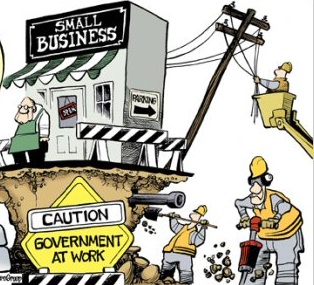
Promoting small business in South Africa. Small businesses are key to unlocking economic opportunities and achieving inclusive growth, Small Business Development Minister Lindiwe Zulu said last week at the Global Entrepreneurship Congress in Milan, Italy. South Africa’s high rate of unemployment, poverty and extreme inequality called for bold and far-sighted interventions, she said. “As government, we remain open and receptive to new policy ideas that will help accelerate the formation of new businesses and sustainability of existing ones.” Zulu said the government’s policy interventions aimed to ensure that small enterprises grew into thriving businesses: “They cannot remain small forever”. She said the government would focus on providing financial and non-financial support to small businesses as it wanted to reduce obstacles to doing business wherever possible. “There is general recognition that Africa is the next growth pole of the world. It is up to us Africans to seize the moment and ensure that Africa becomes an unprecedented economic success,” Zulu said. The Global Entrepreneurship Congress provides opportunities for entrepreneurs to explore business networking opportunities and to learn and interact with their peers across the globe. Around 4 000 delegates from 150 countries attend the gathering. “We see the GEC as a powerful platform to learn what other successful nations are doing to promote and sustain enterprise development,” said Zulu. South Africa will be the first African country to host the GEC in 2017. The bid was awarded to Johannesburg as part of the opening ceremony at GEC 2015 in Milan. Accepting the award on behalf of Johannesburg, Zulu said: “GEC 2017 will ensure that small business development remains firmly on the national agenda and the radar screen of all stakeholders.”
Tiger Funds Amazon of Dubai
Souq.com raised $150 million and may seek more funding as part of plans to raise $300 million, citing two people with knowledge of the matter.
It added that the e-commerce business is seeking to capitalize on soaring private valuations and record fundraisings by venture capital firms..

Gulf eCommerce: Is this the biggest technology acquisition the Middle East has seen yet?” was the question posed in a tweet posted by Dubai-based entrepreneur Paul Kenny.
The acquisition in question was the $170m deal by German e-commerce group Rocket Internet to acquire Kuwait-based Talabat.com, a food takeaway platform that operates across the GCC.
The deal surpassed the $165m Yahoo! paid in 2009 for Maktoob, and although the valuation would be considerably higher if the first Arabic/English email service provider was sold today, the Talabat deal is yet another endorsement for a sector was said to be worth $95bn in 2013 in the MENA region.
A recent Frost and Sullivan report entitled ‘New Mega Trends’ estimates that the value of the ‘internet economy’ in the MENA region will double to $200bn by 2020, which is expected to be 5 percent of the region’s GDP (currently 2 percent). eCommerce in Dubai
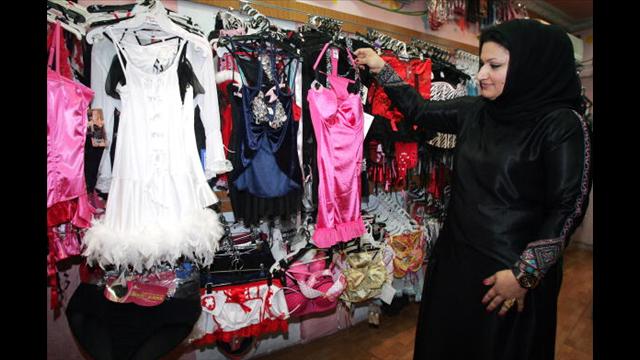
Entrepreneur Alert: Lingerie Etc. in Saudi Arabia
A growing number of women in Saudi Arabia are joining the workforce and chipping away at discriminations enshrined in its laws. But they face conservative opposition and — even now — a ban on driving.
Juliane von Mittelstaedt and Samiha Shafy write: Every time Hanin Alamri sells a pair of shoes, it amounts to a revolution. Stilettos, platform heels, gold peep-toes — all lined up on white shelves on the second floor of the Red Sea Mall, one of the biggest shopping centers in Jeddah. 27-year-old Alamri wears trainers with her floor-length black and white abaya. Her hair, hidden underneath a headscarf, is dyed red. She recently got divorced. “Every day I say thanks, thanks, thanks that I am free,” says Hanin Alamri. If it weren’t for her job, she’d still be married.
Her marriage was arranged, and she only met her husband-to-be after they got engaged. He promised her he would be tolerant and open-minded, but once they were married, he forced her to wear a niqab, which left only her eyes uncovered. He was unemployed and unhappy. “He didn’t want me to be happy either,” she says. She was stuck at home, with no money of her own and nothing to do. She had a daughter, but became depressed. Her husband controlled her every move and forbade her from working. Alamri begged him to change his mind. After two years, he gave in.
Her first job was selling cosmetics. Then she began working in a shoe store. Four years ago, female shop assistants were few and far between. Most people working in stores were men from overseas — from the Philippines, Bangladesh and Malaysia. Foreigners account for one third of the population in Saudi Arabia, working primarily as drivers, waiters, housekeepers or salespeople for clothes and cosmetics — and even lingerie. In a country that insists on segregation of the sexes, women had to buy lingerie from men.
“Once I had to give a shop assistant my bra size,” says Alamri. “He told me I had it wrong. I was deeply embarrassed.” Trying anything on was out of the question. There are no changing rooms in stores in Saudi Arabia. So Alamri did what all women there have to do – she picked up a random bra, paid and left. And got used to badly-fitting underwear. Women at Work in Saudi Arabia
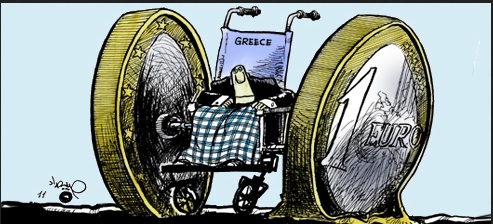
Greek Debt: Who Will Catch the Hot Potato?
Greece’s European creditors are playing a game of pass-the-parcel about who should stump up the money to avert a default at the end of June if Athens clinches a last-gasp deal this week on a package of reforms to unlock frozen bailout funds.
Greece must repay the International Monetary Fund (IMF) 1.6 billion euros ($1.8 billion) by June 30 or be declared in default, potentially triggering capital controls to prevent a bank run and pushing it closer to an exit from the euro zone.
However, euro zone governments say it is already too late to release the 7.2 billion euros left in Greece’s bailout before the end of the month, since national parliaments would only approve the disbursement once the Greeks pass laws to enact their reform promises – a process known as “prior actions”.
Another possible source of quick funds would be for the European Central Bank to let the Greek government sell more short-term Treasury bills to Greek banks and others. Greek Prime Minister Alexis Tsipras has repeatedly appealed to ECB President Mario Draghi to loosen the noose on Greece in this way.
But Draghi, facing strong opposition from hawks in Germany’s Bundesbank and its allies on the ECB governing council, has said the bank would only allow more T-bill issuance once it was sure the member states would disburse the frozen aid.
That, too, would come too late for the June 30 deadline.
That leaves two other pots of money that could be used to give Greece a lifeline to repay the IMF: 1.9 billion euros in profits from ECB holdings of Greek government bonds bought in 2010-11, which were returned to euro zone member states; or 10.9 billion euros in loans earmarked for recapitalising Greek banks, which are being held by the euro zone rescue fund.
Either of those sums could be released by a unanimous agreement of the Eurogroup of euro zone finance ministers without prior parliamentary authorisation, EU sources said.
In theory, the transfer of the 2014 SMP profits is conditional on the conclusion of the bailout review, certified by all three lending institutions – IMF, ECB and European Commission – and the approval of the Eurogroup.
As for the HFSF money, it was made subject to a request by the ECB and its banking supervisory arm.
EU officials say some of that amount could be released after Greece completes the “prior actions”, proving its willingness to turn reform promises into legislation.
That would give Athens money to redeem some 6.9 billion euros in bonds held by the ECB that mature in July and August.
China: Mothers Helping Daughters Fly
For the chief cleaner of the new city courthouse, service is all she’s ever known. Serve the parents. Serve the pigs. Serve the future. Serve the family. Right now Xiao Zhang is serving the people with a feather duster, carefully working round the gold stars on the crimson emblem of state above the judge’s high-backed chair.
Across the empty courtroom, her husband is perched on a window ledge, polishing the glass that looks out on to iron bars, security gates and a city street that 10 years ago was an expanse of shimmering green rice paddy.
Xiao Zhang does not miss that greener past. For her, there was nothing romantic about life on the land. She’d started helping with the farm work almost as soon as she could walk and when she was 11, she dropped out of school. “Every family was poor but we were poorer,” she says.
When I started coming here 10 years ago to chart the transformation of White Horse Village into a city, Xiao Zhang was already complaining that change was too slow. Amid all the anguish of elderly farmers forced to give up their fields and move into tower blocks, she was impatient, longing for the day the government would demolish her home and concrete over her fields.
Women like Xiao Zhang’s position are making sure their duaghters have every educational opportunity the sons do. They want their daughters to be able to be teachers and doctors and business people. And CHinese girls are taking advantage.