Job Tenure in the US

The Atlanta Fed writes: Despite a strong impression that entire careers spent with one employer are a thing of the past, some have declared the image of job-hopping millennials a myth. These reports are all based on a September 2014 news release from the U.S. Bureau of Labor Statistics (BLS) stating that among every employee age group (even the youngest), median job tenure has not declined from when it was reported 10 years earlier. (Median job tenure is basically the “middle” amount of job tenure. If all workers are lined up from lowest tenure to highest tenure, the median tenure would be the amount of time the person in the middle of that line has been with his/her employer.)

Chart 1 illustrates the biennial data on job tenure reported by the BLS and interpreted by the reports mentioned above as indication that job tenure is not falling. Each line represents an age range, from 20- to 30-year-olds at the bottom (the lowest median tenure among all age groups) to 61- to 70-year-olds on the top (the age group with the highest median tenure). It sure doesn’t look as though workers at each age group are staying with their jobs for shorter periods.

150608a

However, the problem with simply comparing median tenure across time by age group is that different ages at different time periods face different labor market institutions, incentives, and expectations. There are generational, or cohort, differences in what the labor market looks like and has to offer a 25-year-old born in 1923 and a 25-year-old born in 1993. In other words, each generation is represented across the age groups at different points in time.

The different colored points across age groups in chart 1 indicate the range of years the people in that particular year, in that age group, were born (and to what named generation they belong). The labor market facing a 31-to 40-year-old baby boomer in 1996 looks quite different from the labor market facing a 31-to-40-year-old Gen Xer in 2012, and the social, economic, and behavioral differences are even more dramatic the farther apart the generations become.

For example, one of the most dramatic changes facing workers has been the transformation from defined-benefit to defined-contribution retirement plans. The number of years a worker spends with an employer is no longer an investment in the employee’s retirement.

To get a more accurate picture of the lifetime pattern of median job tenure and how it has changed across generations, we use the same BLS data used to produce the chart above to group workers into cohorts, or people who have similar experiences by virtue of when they were born.

150608b

What we see in this chart – using the 20- to 30-year-olds, for example – is that the median job tenure was four years among those born in 1953 when they were between 20 and 30 years old. For 20- to 30-year-olds born in 1993 (millennials), however, median job tenure is only one year. Similar – and some even more dramatic – declines occur across cohorts within each age group.

 

Can the US Open Up to the World?

The Economist wonders:  A few years ago a wise pollster—pondering how labels like left-wing and right-wing have been scrambled by globalisation—came up with a different way to sort voters in Western democracies. Electorates, he suggested, broadly divide into two groups, one of which sees change and the outside world as a threat, and a second which takes a more optimistic view, looking for opportunities to harness global forces and turn them to good ends. The pollster, Stefan Shakespeare of YouGov, calls these two camps “Drawbridge Up” and “Drawbridge Down” people.

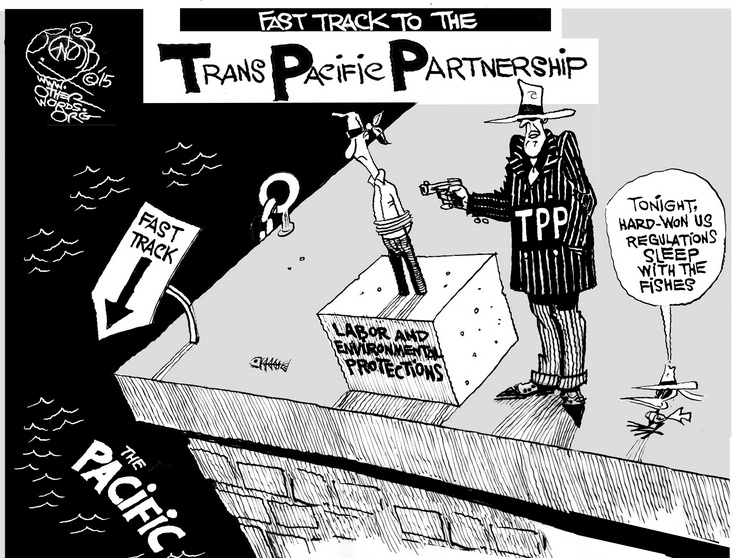
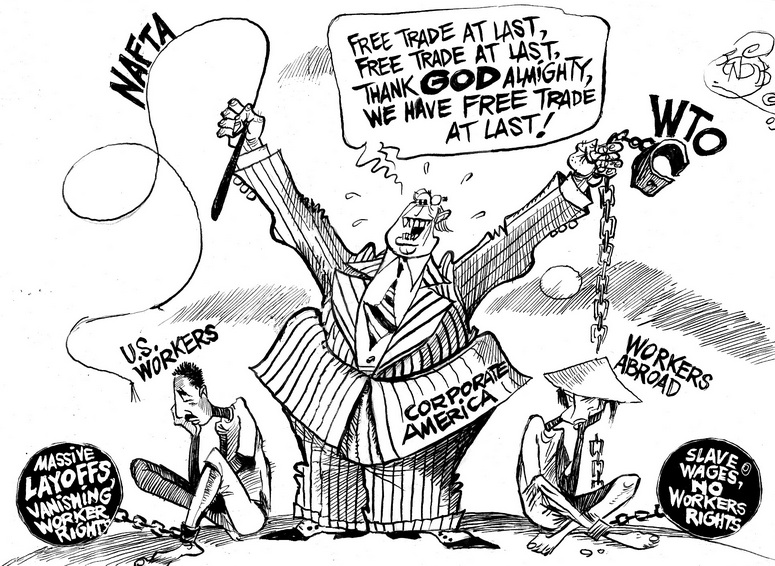
President Barack Obama was mugged by the Drawbridge Up bit of America, or at least by its elected representatives. A large majority of Democrats in the House of Representatives, joined by hard-right Republicans, voted to stall (and potentially kill) his hopes of reaching a big new free-trade pact between America and 11 other Pacific Rim nations, the Trans-Pacific Partnership (TPP). The Senate has already passed a bill that would allow Mr Obama to press ahead with TPP, and the House may return to the question as early as Tuesday.

Reflecting how trade scrambles partisan positions, Mr Obama is strongly supported by Republican leaders in Congress and their business allies. But Republicans are sufficiently divided that without substantial backing from moderate Democrats, TPP cannot happen.

Opposition to the president’s trade agenda involves an odd alliance between Democrats who distrust global trade and Republican hardliners who distrust Mr Obama and resent being asked to give him more authority to do anything. Some hard-right members of Congress go further, accusing the president of plotting to use TPP to rewrite immigration laws and regulate the economy in the name of fighting climate change (despite promises from Republican leaders that Congress can block such power-grabs).  TPP’s Future

US and Trade


Entrepreneur Alert: Addressing the Obesity Epidemic

Kenneth Rogoff writes:  To what extent should governments regulate or tax addictive behavior? This question has long framed public debate about alcohol, tobacco, gambling, and other goods and services in many countries worldwide. And now, in the United States – arguably the mother of global consumer culture – the debate has turned toward the fight against the epidemic of childhood obesity.

It is ironic that in a world where childhood malnutrition plagues many developing countries, childhood obesity has become one of the leading health scourges in advanced economies. The World Bank estimates that over a third of all children in Indonesia, for example, suffer from stunted growth, confronting them with the risk of lifetime effects on fitness and cognitive development. Yet, the plight of malnourished children in the developing world does not make obesity in the advanced countries any less of a problem.

Indeed, though perhaps not on a par with global warming and looming water shortages, obesity – and especially childhood obesity – nonetheless is on the short list of major public-health challenges facing advanced countries in the twenty-first century, and it is rapidly affecting many emerging-market economies as well. Yet solving it poses much more difficult challenges than the kind of successful public-health interventions of the last century, including near-universal vaccination, fluoridation of drinking water, and motor-vehicle safety rules.

The question is whether it is realistic to hope for success unless the government resorts to far more blunt instruments than it currently seems prepared to wield. Given the huge impact of obesity on health-care costs, life expectancy, and quality of life, it is a topic that merits urgent attention.

The US leads the world in obesity, and is at the cutting edge of the debate. Almost everyone agrees that the first line of defense ought to be better consumer education. First Lady Michelle Obama’s “Let’s Move” educational campaign aspires to eliminate childhood obesity in a generation, though its impact so far remains unclear. Other efforts include appeals by celebrities like the chef Jamie Oliver and attempts to use peer-based learning, such as the Sesame Street-inspired platform Kickin’ Nutrition (full disclosure: the creator is my wife).

The right place to start to address it is by creating a better balance between education and commercial disinformation. But food is so addictive, and the environment so skewed toward unhealthy outcomes, that it is time to think about broader government intervention. That should certainly include vastly enhanced expenditures on public education; but I suspect that a long-term solution will have to involve more direct regulation, and it is not too soon to start discussing the modalities.

 Obesity Epidemic

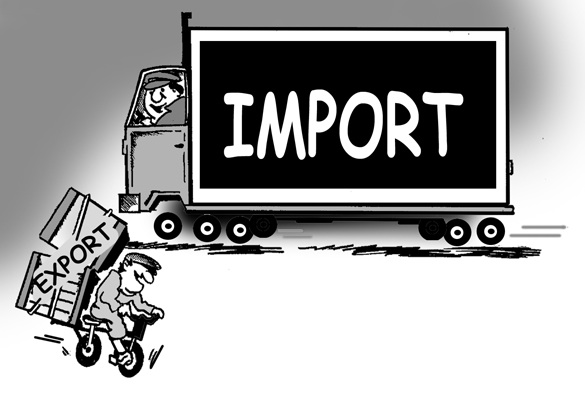
Export-Led Growth?

Adair Turner writes:  It is often assumed that emerging-economy living standards are bound to converge with those in developed countries. But, leaving aside some oil exporters and the city-states of Hong Kong and Singapore, only three countries – Japan, South Korea, and Taiwan – have come from far behind to achieve per capita GDP of at least 70% of the developed-country average over the last 60 years. China hopes to do the same, but it faces a distinctive challenge: its sheer size.

Japan, South Korea, and Taiwan depended on export-led growth to catch up with the developed economies. But China – home to almost 20% of the world population and responsible for 15% of global output – is simply too large to depend solely on external markets. To reach the next stage of development, it will need to forge a different growth path – and that will require more difficult reforms than those on which attention is often focused.  Export-Led Growth

Exports?

TPP Derailed?

Dani Rodrik writes:  With global trade negotiations deadlocked for years, regional agreements – long a dormant route to trade liberalization – are back with a vengeance. The United States is at the center of two mega-deals that could shape the future path of world trade.  It has just taken a step back.

Trade agreements have long stopped being the province of experts and technocrats. So it is not surprising that both initiatives have generated significant and heated public discussion. The perspectives of proponents and opponents are so polarized that it is hard not to be utterly confused about the likely consequences.

On the economic front, the trade agreements’ defenders tend to talk with both sides of their mouth. Reducing trade barriers is said to promote economic efficiency and specialization; but it is also supposed to increase exports and create jobs by increasing access to trade partners’ markets. The first of these is the conventional comparative-advantage argument for trade liberalization; the second is a mercantilist argument.

From the standpoint of comparative advantage, gains from trade arise from imports; exports are what a country has to give up in order to afford them. These gains accrue to all countries, as long as trade expands in a balanced fashion. Trade agreements reallocate them across industries.

In the mercantilist worldview, by contrast, exports are good and imports are bad.

Either argument for trade agreements is thus inconsistent with their advocates’ key claim that such deals will simultaneously create jobs and be mutually beneficial. Strangely, supporters of the TPP and TTIP simultaneously rely on both arguments.

On the political front, proponents argue that TPP and TTIP will enshrine good, liberal rules for world trade. Lower barriers and greater transparency in regulation are generally good things. But here, too, the reality is much more complex.

For the US, a great attraction of the TPP is that it will enforce tighter intellectual-property rules on other countries.

In the TTIP, the reduction of so-called non-tariff barriers to trade between the US and Europe will almost certainly restrict the space for domestic regulatory action.Perhaps most worrisome are the provisions establish a separate judicial track, outside a country’s own legal system, that allows firms to sue governments for apparent violations under trade treaties. Proponents defend ISDS by saying that it will not have much consequence for countries, such as the US, where there is good rule of law, and that it will promote investment in countries, such as Vietnam, where there is not.

One of the most important, and equally ambiguous, objectives of these agreements relates to a subject that will not make any appearance in the texts: China. Both the US and Europe would like China to play the trade game by their rules. Negotiating these rules without China’s participation can be viewed as part of a strategy aimed at eventually coaxing China into a liberal global system.

The secrecy of the negotations are a real problem. It does make sense to subject the final text to an up-or-down legislative vote without allowing amendments. But this can be done while making draft texts public. The time for secrecy is past, if it ever existed.

TPP Not on Fast Track

Investing in Coal?

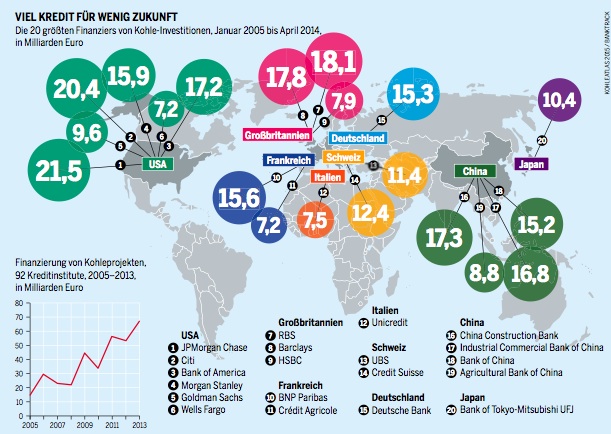
Roman Kilisek writes: The global coal industry continues to expand with new coal-fired power plants planned or being built throughout the developing world, especially in Asia where coal remains the preferred low-cost fuel option for power generation. Building up coal mining operations, constructing new coal-fired power plants and developing infrastructure requires billions of dollars in initial investments. Where countries do not have the financial wherewithal to provide energy access to their populations, global private banks and/or international financial institutions come to the rescue. Nowadays, this occurs despite persistent calls by the international community, for example, by the OECD on its member states to implement and adhere to socially responsible “green” investment standards, which would effectively strip companies of export credits for coal-related infrastructure and technology investments overseas.

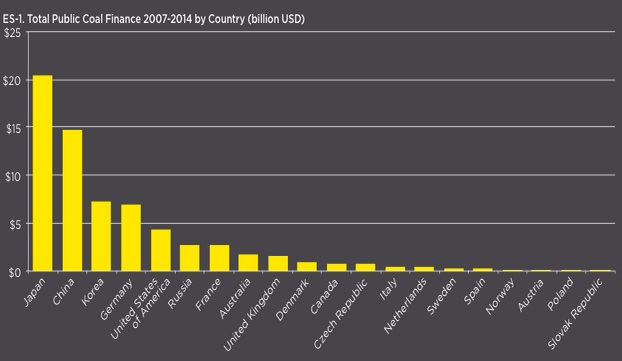
While the current US administration is a staunch supporter of such measures in the name of climate protection, Japan and its companies continue to enjoy billions of dollars in annual revenues from superior coal technology exported to developing countries. Climate advocates point to coal’s significant contribution
to the accumulation of harmful carbon dioxide emissions in the atmosphere and other adverse impacts.

However, a persuasive argument can be made that exports of the developed world’s coal technology actually help lower global CO2 emissions because such technology tends to be much more efficient and in environmental terms ‘less harmful’ than indigenous plants constructed using older, less efficient designs. Air pollution in India is deemed worse than in China. “Of the world’s top 20 polluted cities, 13 are in India compared to just three in China,” the Hindustan Times reports.    Investing in Coal

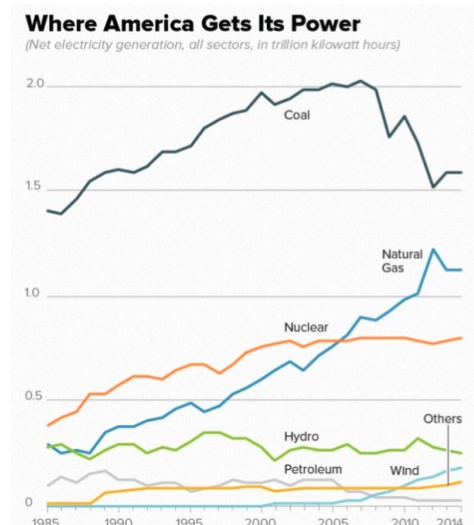
Coal 1Public Coal FinanceWhere America Gets its Power

Entrepreneur Alert: Drones?

Entrepreneur Alert: Dromes

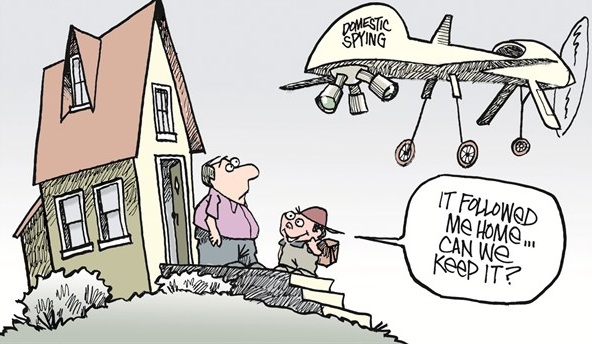
Get ready for a drone-saturated world. Over twenty nations have or are developing armed drones and many more possess unarmed drones, including non-state actors. The Center for a New American Security (CNAS) project, A World of Proliferated Drones, will examine the implications of drone proliferation and policy options the United States and its allies and partners could adopt in the near term in order to prepare for such challenges. This project will examine the technology available to state and non-state actors, potential uses of that technology, political and strategic implications of those uses, and possible U.S. policy options. The project will result in recommendations for how to address the challenges associated with a drone-saturated world.

The proliferation of weapons-capable drones around the world, to not only states but also non-state actors and even individuals, raises difficult challenges for crisis stability, escalation dynamics and norms regarding sovereignty violation. Small, fully autonomous GPS-programmable drones can be purchased online by anyone for a few hundred dollars. Outfitted with small explosives, chemical or biological weapons, they could be converted into short-range precision weapons. In 2013, China sent a drone into contested airspace in the East China Sea. In response, Japan scrambled manned fighter aircraft. If one nation shoots down another nation’s drone, is that an act of war? Are states more willing to shoot down a drone, since there is no one on board? And are states more willing to engage in acts of brinkmanship with drones in the first place, since there is no human at risk?

The answers to these questions hinge not principally on the technology itself, but how states and non-state actors will use the technology, and how they will perceive its use by themselves and others. Anticipating the likely contours of a drone-saturated world will help the U.S. government take steps today to influence, as best it can, the shape of a future most conducive to American interests. Proactive policy measures that can be taken now include: reform of export control policies, declaratory policies on hostile actions by other nations with drones, and communication and actions regarding expectations of appropriate drone use.

A World of Proliferated Drones is a joint project between CNAS’ Technology and National Security Program and 20YY Warfare Initiative.

Drones


Alert: Samsung Shareholders?

Ever active Matt Levine writes about shareholder activism:  Some people believe that American shareholder democracy has gone too far and that activists are a pernicious force in capital markets, but from my very outside perspective it does look like South Korean shareholder democracy maybe doesn’t go far enough and could use some activists? I am not alone in this; here is one investor’s reaction to Elliott Associates’ fight at Samsung C&T Corp.:

“Elliott is standing up for what other investors are feeling and thinking,” said Sachin Shah, a special situations and merger-arbitrage strategist at New York-based Albert Fried & Co. “It’s a rallying cry for shareholders who were waiting for this.”

Elliott is fighting Samsung C&T’s proposed merger with Cheil Industries, the “de-facto holding company of the Samsung Group conglomerate.” Elliott argues that the merger is underpriced, and the market seems to agree; the shares are now 17 percent above Cheil’s offer because of Elliott’s involvement. Meanwhile Samsung C&T is fighting back by “selling a 5.8% stake in itself to KCC Corp., a Korean construction company with a vested interest in making the deal go through,” thus “effectively adding new votes in favor of the deal,” and it “is straightforward in saying the purpose of the deal is ‘promotion of merger resolution.'” Elliott plans to sue to stop this, and I have to say that if it was suing in Delaware I’d like its chances.

by Claudio Munoz

by Claudio Munoz

Preparing Workers for Globalization

On the Rocky Road to Globalization


Kemal Dervis writes: Nowadays, with the global economy undergoing fundamental transformation, workers worldwide are coming under significant pressure. Particularly in developed economies, social policies must adjust to provide the support that lower-income groups need, while encouraging growth and advancing wellbeing.

The pressure has been unrelenting and inescapable. In the United States, real (inflation-adjusted) compensation for men with only a high school diploma fell by 21% from 1979 to 2013. In much of Europe, which provides stronger wage protection, unemployment has soared, especially since the euro crisis began in 2008. Germany and some Northern European countries remain an exception, although the German labor market contains a large low-wage, mini-jobs segment.

Driving these trends is the changing nature of work. For starters, services have been gaining ground worldwide, especially in developed economies. From 1970 to 2012, the GDP share of services in the OECD countries increased from 53% to 71%.

New technology and “intelligent” machines are not only displacing many types of workers in both the manufacturing and services sectors; they are also facilitating the rise of new business models, in which individuals perform (mostly low-paid service) jobs within loose networks, instead of as dedicated employees of structured organizations.
For example, the ride-sharing service Uber now has 162,000 active drivers in the US alone and is displacing traditional taxi services. The startup Handy hopes that its app achieves similar success in connecting customers to independent contractors providing various household services.

Some people – especially those who acquired valued and flexible skills early in life, as well as those who are already in strong positions because of inherited wealth – can flourish in this new economy. Millions of others, however, are ill-prepared for the new age. And it is their growing anxiety that is fueling the rise of identity politics, with populist leaders and movements appealing to ethnic or religious solidarity in the face of the impersonal forces of change.  Managing Globalization so Workers Count

Workers


BRICs Cooperate?

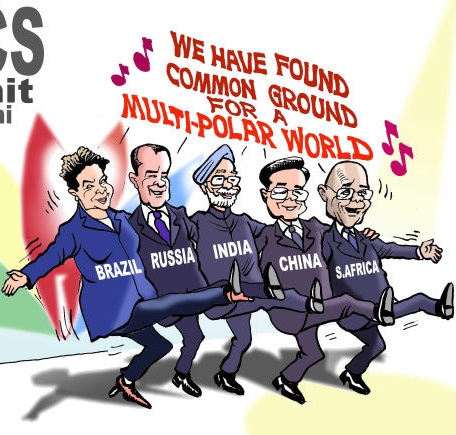
China’s top legislator Zhang Dejiang on Monday urged the world’s five leading emerging economies to boost cooperation and play a constructive role in addressing global issues and promoting world peace and development.

The chairman of the Standing Committee of the National People’s Congress (NPC) of China made the appeal here at a parliamentary forum of BRICS, a thriving cooperation mechanism that groups Brazil, Russia, India, China and South Africa.

Although the association is still young, BRICS cooperation has enjoyed good momentum.

Under current circumstances, he said, the BRICS nations need to strengthen exchange and cooperation in the spirit of openness, inclusiveness and all-win cooperation and play a constructive role in tackling global political and economic challenges and promoting the peace and development of mankind.

To that end, the BRICS countries should jointly safeguard world peace and stability as well as international equity and justice and help build a fairer and more reasonable international order, Zhang proposed.

They also should make concerted efforts to advance common development and achieve their respective national prosperity and rejuvenation, he suggested, while urging them to boost practical cooperation in various fields and build an all-win community of common interests.

Meanwhile, the BRICS members need to help improve global economic governance and realize common and balanced development of developing and developed countries, Zhang stressed.

With the BRICS partnership growing closer and reciprocal cooperation getting ever deeper, Zhang said, the legislative bodies of the five countries should make long-term parliamentary cooperation plans from a strategic perspective.

The legislatures, he added, should function as a promoter of the BRICS partnership, a builder of favorable development conditions, a practitioner of practical cooperation and a supporter of institutional construction.

The NPC stands ready to beef up parliamentary cooperation within the BRICS framework, especially in strengthening the rule of law, so as to continuously infuse fresh vigor into BRICS cooperation, Zhang added.

In the final document of the conference, the five countries pledged to put parliamentary cooperation into full play so as to make positive contribution to the deepening of BRICS cooperation.

As this year marks the 70th anniversary of the founding of the United Nations and the victory of the World Anti-Fascist War, all sides agreed to work closely with each other and enable the bloc to play a bigger role in safeguarding the outcome of World War II, improving global governance and boosting multilateralism in and democratization of international relations, said Chong.

BRICs