Is QE the Answer?

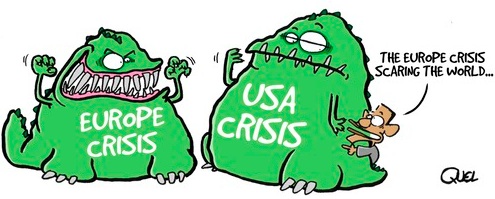
Stephen S. Roasch writes:  Predictably, the European Central Bank has joined the world’s other major monetary authorities in the greatest experiment in the history of central banking. By now, the pattern is all too familiar.  Central banks take the conventional policy rate down to the dreaded “zero bound.”  They then embrace the unconventional approach of quantitative easing (QE).

Unable to cut the price of credit further, central banks shift their focus to expanding its quantity.  For the ECB and the Bank of Japan (BOJ), both of which are facing formidable downside risks to their economies and aggregate price levels, this is not an idle question. For the United States, where the ultimate consequences of QE remain to be seen, the answer is just as consequential.

QE’s impact hinges (1)  transmission (the channels by which monetary policy affects the real economy); (2) traction (the responsiveness of economies to policy actions); and (3) time consistency (the unwavering credibility of the authorities’ promise to reach specified targets like full employment and price stability).

In terms of transmission, the Fed has focused on the so-called wealth effect. First, the balance-sheet expansion of some $3.6 trillion since late 2008 – which far exceeded the $2.5 trillion in nominal GDP growth over the QE period – boosted asset markets. The ECB, however, will have a harder time making the case for wealth effects, largely because equity ownership by individuals (either direct or through their pension accounts) is far lower in Europe than in the US or Japan. For Europe, monetary policy seems more likely to be transmitted through banks, as well as through the currency channel, as a weaker euro – it has fallen some 15% against the dollar over the last year – boosts exports.

The real sticking point for QE relates to traction. The US, where consumption accounts for the bulk of the shortfall in the post-crisis recovery.

Japan’s massive QQE campaign has faced similar traction problems. After expanding its balance sheet to nearly 60% of GDP – double the size of the Fed’s – the BOJ is finding that its campaign to end deflation is increasingly ineffective. Japan has lapsed back into recession, and the BOJ has just cut the inflation target for this year from 1.7% to 1%.

Finally, QE also disappoints in terms of time consistency. The Fed has long qualified its post-QE normalization strategy with a host of data-dependent conditions pertaining to the state of the economy and/or inflation risks. Moreover, it is now relying on ambiguous adjectives to provide guidance to financial markets, having recently shifted from stating that it would maintain low rates for a “considerable” time to ‘paatience’ in determining whether to raise rates.

In the QE era, monetary policy has lost any semblance of discipline and coherence. As Draghi attempts to deliver on his nearly two-and-a-half-year-old commitment, the limits of his promise – like comparable assurances by the Fed and the BOJ – could become glaringly apparent. Like lemmings at the cliff’s edge, central banks seem steeped in denial of the risks they face.

To QE or Not?

Great Recession Haunts Us

J. Bradford DeLong looks at two books on the Great Recession and concludes that we acted incorrectly to solve the problems:

The first book is The Shifts and the Shocks, by the conservative British journalist Martin Wolf, who begins by cataloguing the major shifts that set the stage for the economic disaster that continues to shape the world today. His starting point is the huge rise in wealth among the world’s richest 0.1% and 0.01% and the consequent pressure for people, governments, and companies to take on increasingly unsustainable levels of debt.

The second book: Hall of Mirrors, traces our tepid response to the crisis to the triumph of monetarist economists, the disciples of Milton Friedman, over their Keynesian and Minskyite peers – at least when it comes to interpretations of the causes and consequences of the Great Depression. When the 2008 financial crisis erupted, policymakers tried to apply Friedman’s proposed solutions to the Great Depression. Unfortunately, this turned out to be the wrong thing to do, as the monetarist interpretation of the Great Depression was, to put it bluntly, wrong in significant respects and radically incomplete.    What Caused the Great Recession

China’s Growth: At Home, Abroad?

Justin Yifu Lin:  China looks like the US, Europe and Japan after the Second Wolld War, when the growth rate exploded.  In the 35 years China has been evolving into a market economy the growth rate exploed.  Now it is slowing and evening out at about %7.75.

China has the potential to maintain robust growth by relying on domestic demand – and not only household consumption. The country suffers no lack of investment opportunities, with significant scope for industrial upgrading and plenty of potential for improvement in urban infrastructure, public housing, and environmental management.

Moreover, China’s investment resources are abundant. Combined central- and local-government debt amounts to less than 50% of GDP – low by international standards. Meanwhile, private savings in China amount to nearly 50% of GDP, and the country’s foreign-exchange reserves have reached $4 trillion. Even under comparatively unfavorable external conditions, China can rely on investment to create jobs in the short term; as the number of jobs grows, so will consumption.

The external scenario, however, is gloomier. Though developed countries’ authorities intervened strongly in the aftermath of the global financial crisis in 2008, launching significant fiscal- and monetary-stimulus measures, many of their structural shortcomings remain unresolved. “Abenomics” in Japan has yet to yield results, and the European Central Bank is following in the footsteps of America and Japan, pursuing quantitative easing in an effort to shore up demand.

Employment in the US is growing, but the rate of workforce participation remains subdued and the economy has yet to attain the 6-7% growth rates usually recorded in a post-recession rebound. The US, Europe, and Japan are likely to experience continued sluggish performance, inhibiting China’s export growth.

Cihina's Growth


Can Individual EU Nations Act Alone to Do What QE Cannot?

Martin Feldstein writes:  Although the European Central Bank has launched a larger-than-expected program of quantitative easing (QE), even its advocates fear that it may not be enough to boost real incomes, reduce unemployment, and lower governments’ debt-to-GDP ratios. They are right to be afraid.

The success of QE in the United States reflected initial conditions that were very different from what we now see in Europe. Indeed, eurozone countries should not relax their reform efforts on the assumption that ECB bond purchases will solve their problems. But even if these countries cannot overcome the political barriers to implementing structural changes to labor and product markets that could improve productivity and competitiveness, they can enact policies that can increase aggregate demand.The sharp fall in long-term rates induced investors to buy equities, driving up share prices. Low mortgage interest rates also spurred a recovery in house prices. In 2013, the broad Standard and Poor’s index of equity prices rose by 30%. The combination of higher equity and house prices raised households’ net worth in 2013 by $10 trillion, equivalent to about 60% of that year’s GDP.

That, in turn, led to a rise in consumer spending, prompting businesses to increase production and hiring, which meant more incomes and therefore even more consumer spending.  QE’s success in the US reflected the Fed’s ability to drive down long-term interest rates. In contrast, long-term interest rates in the eurozone are already extremely low, with ten-year bond rates at about 50 basis points in Germany and France and only 150 basis points in Italy and Spain.

So the key mechanism that worked in the US will not work in the eurozone.

But, fortunately, QE is not the only tool at policymakers’ disposal. Any eurozone country can modify its tax rules to stimulate business investment, home building, and consumer spending without increasing its fiscal deficit, and without requiring permission from the European Commission. Consider the goal of stimulating business investment. Tax credits or accelerated depreciation lower firms’ cost of investing and therefore raise the after-tax return on investment.

Demand for new homes could be increased by allowing homeowners to deduct mortgage interest payments (as they do in the US), or by giving a tax credit for mortgage interest payments. A temporary tax credit for home purchases would accelerate home building, encouraging more in the near term and less in the future. Here, the revenue loss could be offset by an increase in the personal tax rate.

A commitment to raise the rate of value-added tax by two percentage points annually for the next five years would encourage earlier buying to get ahead of future price increases. The reduction in real incomes caused by the VAT increase could be offset by a combination of reduced personal income taxes, reduced payroll taxes, and increased transfers.

Though eurozone members cannot adjust their interest rates or their exchange rates, they can alter their tax rules to stimulate spending and demand, with the appropriate policy possibly differing from country to country. It is now up to national political leaders to recognize that QE is not enough – and to start thinking about what else should be done to stimulate spending and demand.

EU Economies

Africa Ripe for Investment?

Africa is desperately short of investment. Infrastructure alone needs $90 billion a year.  Many of the normal routes by which capital gets into economies are blocked in Africa.

Only private equity has a direct route.  Private equity raised $4 billion for Africa last year, building toothpaste factories and providing modbile phone service.  Handing cash to pioneers in Africa is often seen as less risky than putting money in underdeveloped pubic markets.

Private equity has been warmly welcomed in Africa.  But Africa needs more than these funds can provide. Often they want to sell the firms they buy in five years. Long term investment is needed.  Uganda’s privatized electric grid gets a state-guaranteed return of 20% a yaer on all dollars invested in the grid.  African economies have grown 5% or more over the past decade.  The continent’s mddle class is projected to triple (one billion people)  by 2060.

Capital restrictions are in place in the rich world which prohibit long-term illiquid investments, such as ports, railways and roads.  African governments are also to blame.  Investors have not forgotten the natioanalizations across the continent in the 1960s and 1970s.

Rich counties need to change their regulations to get capital flowing freely.  African governments need to set up large regional stock exchanges to provide liquidity, security and ease of access.  The conitnent is ripe for investment if the right climate prevails.

Investing in Africa


Women Entrepreneurs Doing Good

Tara Tiger Brown writes: Women who inspire and shape entrepreneurial thinking for profit and nonprofit work.

From Inspiration to Innovation by Tina Seelig  I have listened to every single one of Stanford Ecorner’s podcasts. The driving force behind the series is Tina Seelig. She is an entrepreneur, author and professor. Every word out of her mouth makes so much sense. She has a new entrepreneurial framework that she has been working on called the Inventure Cycle. ”It includes definitions and relationships for the process of bringing ideas to life… and provides a scaffolding of skills, beginning with imagination, leading to a collective increase in entrepreneurial activity.” I highly recommend listening to the podcast if you are an entrepreneur.

In Conversation With by Kelly Hoey  One of the loudest cheerleaders for entrepreneurial women on Twitter has to be Kelly. If she believes in what you are doing the world is going to hear about it and then some. She interviews women professionals, has been on countless entrepreneur panels and is working hard to close the gender gap. She’s also a fellow Canadian so she gets extra points for that.

STEMinist by Ann Hoang  For the past few years I have learned about a variety of women in Science Technology Engineering and Math from the STEMinist interviews. These are the women doing their thing and not the three or four that constantly get talked about in the news. This is the place to go to learn about super cool people like Erica Moulton, a female marine technologist working on an experiment called “Fish In Space.” The mission of the site is to increase the visibility of women in STEM, promote and elevate the perspective of women in these traditionally underrepresented fields, and encourage younger women and girls to pursue careers in STEM.

Why the Maker Movement is Key to America’s Future with Stephanie Santoso  I can’t express how happy it makes me that a female was appointed to the position of Chief Maker at the White House. Equally as awesome is that the CTO position is now filled by Megan Smith, but I haven’t had the pleasure of meeting her yet. It is incredibly important for young people and girls to know they are capable of being creators and not just consumers. Stephanie is one of the forward thinkers at the Office of Science and Technology Policy that coordinated the first White House Maker Faire. She gives me so much hope that we can change things at the highest level. Follow Stephanie on Twitter so you don’t miss out on what’s happening in the maker world at the federal level.

Using Lean Startup to Do Plenty with Very Little by Kimberly Bryant  Anyone in nonprofit that teaches kids about technology knows who Kimberly Bryant is. Her organization, Black Girls Code, is “the Girl Scouts of technology.” Both Kimberly and I started our nonprofits around the same time and neither one of us knew what we were doing when we started them. I really like how she is using a framework for startups with her nonprofit organization. She is a tireless leader and an inspiration to anyone that wants to make a difference.

Hack Education by Audrey Watters  The industry I work in is education technology and so obviously I have to read everything Audrey writes. She is a pragmatist, a contrarian, snarky and makes us all think really hard until it hurts about the future of education.

Women Entrpreneurs

Why Women Make the WEF Better

David Rothkopf writes:   Voices representing the disenfranchised may be hard to find but they are essential to addressing many of the issues being discussed at the World Economic Forum.   But most egregious in my view is the continuing failure to fairly involve the majority population of the planet in these discussions. Davos is a man’s world.

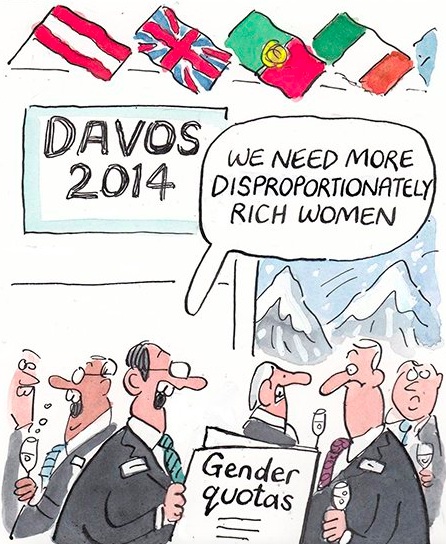
This year the WEF attendees are 17 percent women. While this is the same percentage of women as you will find in the world’s legislatures and slightly more than the percentage you will find on corporate boards, it is not just appallingly low — it is inexcusable.

It is impossible to argue that the problem is that the event is for CEOs and top government officials and because only a small percentage of big-company CEOs and political leaders are women.  According to the organizers, only 30 percent of the attendees are CEOs, and only 2 percent are top government officials. Further, look at the agenda: economics, politics, health, education, development, climate, combating extremism, stabilizing societies — you can’t have a serious discussion or effectively influence outcomes without including the perspectives of women.

But you have to start somewhere, and it seems reasonable to me to start with addressing the grossest of history’s social wrongs, the systematic repression of women by virtually all cultures.

How high-profile global gatherings like the World Economic Forum choose to act matters a lot. Bringing greater gender balance here would not only improve the discussion and the outcomes it produces, but it would send a powerful message. But it is clear that change will not happen without a concomitant effort to produce it from the event’s sponsors, its paying customers, and its keynote speakers. Companies that recognize a need for fair hiring practices and equal opportunity should send their female leaders here. Sponsors promoting great values should walk the talk. Explain that the failure to fix this issue, the failure to show real progress over the past few years, and the failure to make real balance the goal is inconsistent with who they are and sends a terrible message, and that they simply can’t be associated with this event unless change takes place. Speakers should say they won’t be on panels unless there is balance. Otherwise all are complicit — and with the attention the issue has gotten, they have to be viewed as not only being complicit, but intentionally so.

Like other elements of this strange, wonderful, perverse, and heartening event, the payoff is not in what happens here, but in how it translates into action worldwide.  It is called the World Economic Forum, and it’s time its participants looked more like the world they are supposed to be improving.

Davos Quotas

Davos Woman?

Amanda Foreman writes:  Since its staid beginnings in 1971 as an annual management symposium at a Swiss ski resort, the World Economic Forum in Davos has grown into the premier talking shop for the global financial elite. Unsurprisingly, given the opportunities it offers for smug pronouncements and ostentatious parties, Davos (as it is known) has attracted—and earned—some trenchant criticism. The late Harvard political scientist Samuel P. Huntington coined the term “Davos Man” to pin and puncture a kind of obnoxious alpha male who flits from one international meeting to the next in self-serving pursuit of wealth and power.

But Huntington’s Davos Man highlights another issue about the forum: It was (and is) overwhelmingly male. This year, some 19% of the 2,500 delegates were women, according to the forum—a number that has barely changed since a (widely ignored) quota system meant to involve more women was imposed by the event’s corporate sponsors in 2011. (Saadia Zahidi, who heads the forum’s gender-parity initiative, said that the gender ratio in Davos reflects “global leadership as a whole” and that the forum is working to increase women’s participation.)

Behind some of the most famous public gatherings in history lie arguments and controversies about whether to include women. One particularly egregious example was the first World Anti-Slavery Convention, which met in London in 1840. Women on both sides of the Atlantic had been campaigning to abolish slavery since the 18th century. Nevertheless, the 350 male delegates were divided over whether to allow seven American women to participate. One faction, led by William Lloyd Garrison ’s supporters, favored their inclusion; friends and colleagues of the New York abolitionist Lewis Tappan vehemently opposed it. The latter won, and the women were forced to watch from the gallery.

Half a century later, women faced similar discrimination when the first modern Olympic Games were held in Athens in April 1896. Pierre de Coubertin, the founder of the International Olympic Committee, refused to include women. It would be “impractical, uninteresting, unaesthetic and incorrect,” he claimed. Four years later, when the summer games were held in Paris, the Olympic committee ignored his objections, and 22 women were allowed to compete alongside the 997 male athletes (although only in five sports: sailing, equestrian, tennis, croquet and golf). At the 2012 London games, some 44% of the athletes were women.

One notable irony relates to the U.S. civil rights movement. The only woman listed as an official speaker on the program for the famous 1963 March on Washington was Myrlie Evers, widow of the murdered Medgar Evers ; she got stuck in traffic. Leading female activists—including Rosa Parks —were not allowed to accompany the Rev. Martin Luther King Jr. down Constitution Avenue but were sidelined to walk alongside the wives of male activists. After the women protested, organizers added a short tribute to their work. No women were among the delegation that met with President John F. Kennedy.

But in the long run, these slights only deepened women’s determination. Furious over their exclusion from the 1840 conference against slavery, the activists Elizabeth Cady Stanton and Lucretia Mott went on to hold the Women’s Rights Convention at Seneca Falls, N.Y., in 1848, marking the start of a 72-year fight for women’s suffrage in the U.S. Similarly, frustration among women’s rights activists in the early 1960s led to the rise of second-wave feminism, from the founding of the National Organization of Women in 1966 to the passage of Title IX and Title X in the 1970s to guarantee educational and employment equality.

Davos Man still rules today, but history is against him. One day, he will be joined by Davos Woman—and she will, we hope, be as unlike him as possible.

Davos Woman?

Can Xi Continue to Whiz?

Kerry Brown writes:  In the late 1990s, former President Jiang Zemin liked to talk of China entering a two-decade era of “strategic opportunity” — a period when China could become a middle income country while continuing the Deng-ist strategy of building up its capacity and strengthening its economy during the era of American hegemony. During this period, China would be low profile, largely free of global leadership responsibilities, and able to plead its status as a poor, developing power focused on solving its own problems as a reason to sidestep heavy diplomatic duties beyond its borders.

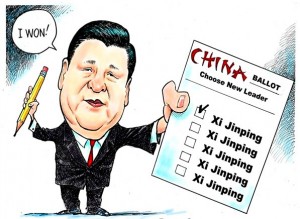
Three-quarters of the way into this era of “strategic opportunity,” and we might argue that this period has already come to an end. Economically and geopolitically, the China of Xi Jinping increasingly talks and acts like an emerging super power. Xi, with his grand narratives of a “new model of great power relations” for the U.S. and China, and a “New Silk Road” for most of the rest of the planet, seems to have the look, and tone, of someone willing to stand more on the global stage and get attention.

It seems like the “era of strategic opportunity,” where the onus was on internal issues and keeping a low profile, has been replaced by a China where inward and outward context are intimately linked. For China, the pressure is now on finding “holistic” solutions where it often proactively takes the lead on the global stage and wants to be listened to.

Even so, it still makes sense to think along the lines of smaller strategic opportunities. For all his talk of “pivots” and rebalancing, President Obama has been a good president for China. He has been read as weak and overstretched and was treated with staggering disdain during his first visit to Beijing in 2009. Under Obama’s watch, we witnessed the rise of an assertive, pushy China that has been increasingly able to call the shots, at least in its neighborhood. What will happen in the US elections of 2016 is not knonw.

The same year will all bring a presidential elections in Taiwan. Like Obama, but for very different reasons, incumbent Ma Ying-jeou of the Kuomintang (KMT) has been a good ally for Beijing. He promoted economic closeness and political carefulness, significantly reducing the cross-strait tensions that existed in the eight years under Chen Shui-bian before Ma’s election in 2008.

In the space of a few months in 2016, therefore, Beijing will see the leadership of two of its key partners change, with the real possibility that this will bring about a more confrontational environment.

Xi's Plans

Is Asean Ready for Union?

WIlliam Boot writes: The Asean goal of creating a single business market among the regional grouping’s 10 member countries is unlikely to happen for some years and certainly not by the target start date of the end of this year.

Burma is one of several countries in the bloc that lacks sufficient infrastructure to benefit from the planned beginning of the Asean Economic Community (AEC), they say.

And the dream of a single, joined-up market with unrestricted movement of labor—similar to the European Union—will be dogged by national self-interest for years to come, it is predicted.

Burma, Cambodia, Laos and Vietnam will be slower to achieve their targets for trade liberalization than the other more affluent members, said the Wharton business school at the University of Pennsylvania in an assessment on the AEC this month.

The other six Asean members are Brunei, Indonesia, Malaysia, the Philippines, Singapore and Thailand.

Meanwhile, the AEC countries are already facing their first and unexpected economic hurdle, Wharton said: sharply falling crude oil prices.

Most Asean countries will be unable to comply with AEC objectives for more relaxed rules on foreign ownership and freer movement of workers by the end of this year due to domestic political constraints, international law firm Allen & Overy said in its latest quarterly report on business.

One of Burma’s leading businessmen, Serge Pun, spoke on the AEC at the annual World Economic Forum in Davos.  Protectionist impulses were strong in government and business, but there now seemed to be a determined effort to make the AEC work, he said.

The disparity in development between the 10 member states could be an advantage to an emerging economy such as Burma, which “would welcome the unskilled jobs that more developed Asean members are shedding,” Serge Pun said.

Thailand’s deputy prime minister, Pridiyathorn Devakula, defied the general opinion at Davos: “Some in the audience may not believe it, but believe me, we will have a single market by the end of the year,” he said.

Murray Hiebert, the deputy director of the Sumitro chair for Southeast Asia studies at the Center for Strategic and International Studies (CSIS) in Washington, told the Wharton study that the liberalization of financial services and freer movement of capital and labor would be slow to develop.

“Some Asean countries are anxious about opening up financial services and capital markets out of fear of financial contagion and exchange rate volatility, even though integration would provide opportunities for risk-sharing,” Hiebert said.

A more unified market will eventually lead to a more organized industrial division of labor, some analysts believe. Not all member countries could afford to develop or sustain a car-building industry, for example.

At present Thailand is “Asean’s Detroit.” But Indonesia is fast catching up in production volume, which leaves little room for emerging players such as Burma to attract major investment in vehicle construction.

Commercial nationalism looks likely to impede full open markets for some time.

Burma poses two potential problems for the AEC.  Uncertainty following parliamentary elections later this year, and the prospect of more violence between majority Buddhists and the country’s minority Muslim Rohingya population.

In the longer term, the AEC is likely to bring greater cohesion between the member states, but this is likely to be a long and arduous process.

What Asean needs more than anything is a powerful supranational body, something akin to the Commission in the European Union, which could compel its disparate and self-interested members to comply with their promises.

An Asean EU?