Beware Greeks Bearing Gifts?

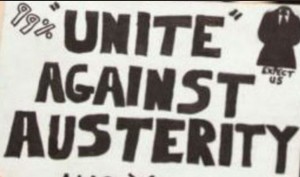
Charalampos Economou writes:  The structural adjustment program in Grrece has failed to deliver the expected results. Indicative of this is the fact that government deficit in 2013 reached 12.2% of gross domestic product (GDP); debt went up to 174.9% of GDP; unemployment reached 27.5%; more than a third of the population (35.7%) is at risk of poverty or social exclusion; and the inequlaity of income distribution increased. Public health expenditure decreased by €4.2 billion between 2009-12, and more than 2.5 million people lost their health insurance.

In this context, Syzria’s election win came as no surprise. Based on an alternative policy proposal of a national reconstruction plan, the party put forward an optimistic vision that was desperately needed.

The plan focuses on four major pillars to reverse the social and economic disintegration, to reconstruct the economy and exit from the crisis. The four pillars are: confront the humanitarian crisis; restart the economy and promote tax justice; regain employment; and transform the political system to deepen democracy.

The plan includes free electricity to households under the poverty line and meal subsidies to families without income.  Syriza has also promised to provide free medical and pharmaceutical care for unemployed people without health insurance — a big problem in Greece that impacts on access to care.

Housing guarantees, rent subsidies, transport discounts for long-term unemployed and those under the poverty line aim to tackle issues related to poverty along with the restitution of the €12,000 annual income tax threshold and restoring the minimum wage to €751.

The health sector will be one of Syriza’s priorities, with an emphasis on securing access for the uninsured to health services, staffing the national health service with the recruitment of the necessary number of medical and nursing personnel and increasing the budget for health.

Deliverying health care will be done through an increase in public spending to be covered  by decisively combating tax evasion and smuggling, and by establishing a public development bank as well as of special-purpose banks financed from the so-called “comfort pillow” of the Hellenic Financial Stability Fund and other specialized European instruments.

The most difficult task the party has will be to convince the EU and troika that a new European deal for Greece is needed in order to secure a socially viable solution to Greece’s debt problem.

Anti-Austerity

Is Growth Necessary in US?

James Pierson writes: The Bureau  of Labor Statistic’s Consumer Expenditure Survey, a detailed study of the spending patterns of 35,000 randomly selected households, paints a grim portrait of middle class families trying to maintain their standard of living in the face of stagnant or falling incomes and rising costs for necessities like rent, transportation, and health insurance. Middle class families – defined as those falling in the middle quintile of the income distribution with incomes between roughly $35,000 and $60,000 in 2013 – reported incomes that were essentially flat between 2009 and 2013 and expenditures that increased by slightly less than 3 percent. Households in the income quintiles just below and above the middle reported similar patterns of flat incomes and slightly increased expenditures. During these years of “economic recovery” – 2009 to 2013 – consumer inflation increased by nearly 9 percent, leaving real incomes for the middle class that were much lower at the end of the period than at the beginning.

Americans have never favored radical schemes to redistribute income because of their faith in social mobility and the belief that they can get ahead on their own. A stagnant America, lacking growth and broad opportunities for advancement and achievement, would represent something new and dangerous for a nation whose ideals and institutions have been built upon a foundation of abundance.

The United States, in short, needs a new focus on economic growth and especially a new “growth agenda” out of Washington to replace the emphasis upon redistribution, regulation, and gender and race controversies that have defined the Obama years. The party or candidate that can deliver such an agenda will win the support of grateful middle class voters – and along the way they may just succeed in saving their country from tearing itself apart in fruitless battles over dwindling shares of a stagnating economy.  Is Growth Necessary

 The Growth Cornucopia


In India, Rajan Slashes Bank Rates

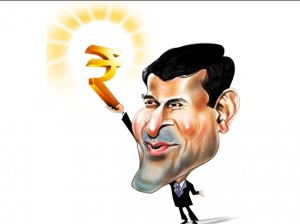
William Pesek writes:  Raghuram Rajan’s recent surprise rate cut in India was what central bankers call an “insurance move.” In a highly uncertain and deflationary world, the Reserve Bank of India governor decided he’d rather risk higher inflation in hopes of boosting growth. More quietly, Rajan is hoarding dollars.

On Friday, the day before Barack Obama flew to New Delhi,  the RBI announced that India’s foreign-exchange reserves had risen to a record $322 billion. While the news couldn’t compete with the Modi-Obama hug at the airport, a nuclear deal and talk of cooperation on climate change, that swelling stash greatly increases the odds that Modi’s reform program will succeed.

By slashing the benchmark rate to 7.75 percent from 8 percent, the RBI governor made clear the central bank was ready to guard India’s economy against a fast-mounting number of risks around globe. Equally important was the “vote of confidence” the decision signaled about Modi’s government.

Now Rajan’s stockpiling of currencies should help catalyze change in New Delhi. As recently as September 2013, when Rajan started at the RBI, India was spiraling toward crisis. An economy once celebrated as one of the superpowers of the future — Brazil, Russia, India and China, or the BRICs — was being grouped among the world’s most “fragile” nations. Hedge funds bet India would be the first of the BRICs to be downgraded to junk.

Rajan moved fast to halt a run on the rupee, shore up the banking system and cap inflation. Rajan has stockpiled about $59 billion of reserves since taking charge at the RBI, or an average of $4 billion per month. While India’s reserves are still a fraction of China’s $3.8 trillion, they’re substantial enough now to “create a stronger firewall against external account shocks and build greater international confidence,” says Rajiv Biswas of IHS Global Insight.

India represents something of an outlier in the region. While Asian peers devalue to boost exports, Rajan has clearly decided that a stable, strong rupee is the key to cementing trust in India’s economy, which still suffers from a sizable current-account deficit and relies on short-term capital flows. A firm currency should attract overseas capital to support equities, upgrade infrastructure and pay down government debt.

In July, the prime minister’s first budget avoided “big bang” reforms like allowing foreigners to hold majority stakes in key sectors like insurance and defense. His government sidetracked a World Trade Organization deal to cut tariffs. And while he harnessed the plunge in oil prices to trim subsidies, Modi has been slow to dismantle budget-busting support programs.

Modi enters the budget process with a rare economic tailwind. By stabilizing the financial system and shoring ups its defenses, Rajan has given Modi considerably more latitude not only to restructure the economy, but to take risks like selling state assets and welcoming more foreign involvement in the economy. Once India reforms and moves beyond the boom-bust cycles of the past, it should be able to turn around and use its reserves to invest in education and healthcare as well as roads, bridges, ports and the power grid.

All Rajan has done, though, is prepare the ground. The onus still lies on Modi to push forward the politically difficult reforms he’s avoided thus far. He’s now got 322 billion good reasons to do so.

Rajan

America Back in the Swing of Oil Production?

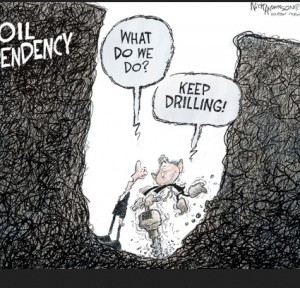
Daniel Yergin writes:  American shale oil has become the decisive new factor in the world oil market in a way that could not have been imagined five years ago. It has proved to be a truly disruptive technology. But will that impact continue in a world of low prices?

Oil is now below $50 a barrel, a price too low for a good deal of the new shale oil development to make economic sense. Yet output is likely to continue to rise by another 500,000 barrels per day in the first half of 2015 because of sheer momentum and commitments already made.

Come the middle of the year, however, growth will flatten out. Producers will work hard to improve efficiency and lower costs, but in 2016, at these prices, American output could decline. Production elsewhere in the world will also be flattening.

But by then, the world economy might be doing better, stimulating oil demand. Prices could start rising again. If the gulf producers have their way, prices will not go back to $100 a barrel. Even at prices well below $100, American shale oil producers will find ways to drive down costs and output will start rising again. And the world’s new swing producer will find itself back in the swing of things.

Oil production

Can We Get from QE to QED?

Dick Ehnts writes:  With quantitative easing, a central bank creates additional deposits for banks as it buys some of their assets, like bonds. What can banks do with these reserves? They can lend them out to other banks, but that is not very likely since all banks will receive additional reserves and none will lose some.

Banks can use reserves to buy financial assets, but this would increase their exposure to risk since they would have to take any losses resulting from this business. Plus the reserves are moved to the balance sheets of another bank, so we’re still unsure of where they go. In the end, the banks will move the reserves into the deposit facility at the European Central Bank, forinstanace, which offers a fantastic interest rate of -0.2%. And this creates inflation how?

Bank loans are created by banks when they mark up the deposits of their client and simultaneously create an item called loan on the asset side of their balance sheet. Banks do not need reserves to make loans, which should by now by common knowledge among macroeconomists.

The monetary circuit in the euro zone is damaged, because the private sector repays net debt. This destroys deposits, which are not available for spending. We need additional deposits to grow faster. Some confuses deposits in the central bank (reserves) with deposits in banks. Only the latter can lead to more spending and hence more inflation. Banks owning more central bank deposits will not be able to spend them on goods and services produced. QE was a failure in Japan, in the US, and the UK. It will be a failure in the euro zone as well. The only thing it does is to lower the long-term yields, but given that firms have problems with demand this will not be the cure of the aggregate demand weakness that is hurting the euro zone so much.

Creating Inflation

Italians Now Credible?

Rob Cox writes:  The Italian presence was hard to miss at Davos, and not just on the official program, where the 40-year-old Renzi was the subject of a special session entitled “Transformational Leadership.”

Chiefs of the country’s top banks, state-oil giant Eni, insurer Generali – even the head of the once-secretive Mediobanca – and their entourages jostled through security lines. Opera tenor Andrea Bocelli kicked off the proceedings. Global brewer SABMiller hosted a “Taste of Italy” reception.

The country’s corporate and political leaders have had good reason to avoid Davos. Italy’s output has shrunk by about a tenth over the last decade. The unemployment rate, especially among young people, exceeds 13 percent. GDP growth is forecast by the International Monetary Fund at a recently slashed 0.4 percent.

Renzi nevertheless took the stage in Davos with some significant reform victories, which Italian executives say could help the economy expand beyond those expectations.

1. Renzi has pushed through labor rules that will allow companies to hire and fire more easily.

2.  Italy’s Senate this week approved an amendment to a new electoral law designed to foster more stability and efficiency in long-dysfunctional Italian politics.

3.  Renzi approved a plan to effectively force the country’s mutually-owned banks, which account for about a fifth of the industry, to privatize. By abolishing a structure that gave every stockholder the same vote notwithstanding the number of shares held,  much-needed consolidation will take shape.

The risk for Renzi is that he is moving so quickly that he splinters the party. To get reforms approved, for instance, the coalition has had to rely on the opposition led by Silvio Berlusconi, whose control of his party, Forza Italia, is also tenuous. With presidential elections on the horizon, the possibility of an all-too-familiar political setback is possible.

“The most important structural reform for Italy is credibility,” he told the WEF delegates. The question is whether they take that message home with them from Davos.

Renzi

Ralph Nader Exposes Credit Suisse

Nader writes:  In May of 2014, financial firm Credit Suisse AG pled guilty to serious criminal charges. The giant bank aided and assisted approximately 22,000 wealthy U.S. taxpayers (whose names Credit Suisse AG escaped having to send to the Justice Department for law enforcement) for over a decade in filing false income tax returns and other documents with the Internal Revenue Service (IRS).

The full extent of these crimes, according to a Department of Justice news release, are as follows: “assisting clients in using sham entities to hide undeclared accounts;” “soliciting IRS forms that falsely stated, under penalties of perjury, that the sham entities were the beneficial owners of the assets in the accounts;” “failing to maintain in the United States records related to the accounts;” “destroying account records sent to the United States for client review;” “using Credit Suisse managers and employees as unregistered investment advisors on undeclared accounts;” “facilitating withdrawals of funds from the undeclared accounts by either providing hand-delivered cash in the United States or using Credit Suisse’s correspondent bank accounts in the United States;” “structuring transfers of funds to evade currency transaction reporting requirements;” and “providing offshore credit and debit cards to repatriate funds in the undeclared accounts.”

These elaborate illegal acts over many years are quite revealing. They show a deliberate willingness by Credit Suisse AG officials to knowingly engage in profitable activities that defrauded the United States Treasury and burdened honest taxpayers.

The Employee Retirement Income Security Act of 1974, or ERISA, was enacted to protect the retirement savings of retirement plan participants. The law, in theory, automatically disqualifies institutions like Credit Suisse AG who have committed serious crimes or pled guilty to serious crimes from serving as a “qualified professional asset manager” (QPAM) of ERISA assets or pension plans.

Unfortunately, the Department of Labor has not adequately enforced this law or its regulations in this area.

The Department of Labor (DOL) already has granted Credit Suisse a temporary waiver to continue conducting their pension management business. On January 15th, the DOL held a public hearing—where I testified— to discuss whether Credit Suisse and its affiliates can continue this troubling trend of avoiding the consequences of their actions indefinitely. Credit Suisse AG is hoping to completely sidestep the mechanisms of justice for their admittedly serious crimes and carry on business as usual—a result that in itself is, unfortunately, business as usual.

This routine ability to evade proper punishment is the root of the issue of so much corporate and Wall Street crime—a slap on the wrist leads to a perpetual cycle of wrongdoing with no end in sight. Their corporate lawyers turn laws into “no-law” laws. Corporate crime pays.

The Department of Labor, which exists to defend workers, now has a unique opportunity to stand proudly at its post and to send a clear message—a firm signal—to other Qualified Professional Asset Managers that if they commit unthinkable criminal violations, they lose the ability to handle pension funds. On the other hand, allowing these institutions to continue to receive permanent waivers would be a clear signal that the DOL will tolerate cutting corners and criminal wrongdoing by powerful financial institutions at the expense of workers, complying taxpayers, democracy, and the rule of law.

Credit Suisse

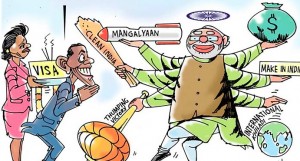
What Obama Wants from India

This is the first time a US president will be visiting India twice. Why is Obama placing such importance on India, and what does he expect from a country that was formerly in the Soviet camp and has disappointed so many, despite decades of “liberalization”?

Major bilateral issues are part of the trip’s agenda. Defense, energy and counterterrorism are the main course for the talks, but President Obama’s top concern is deepening economic ties with India. The visit comes at a particularly fortuitous time. Both the US and India are on promising growth curves. It is entirely possible that Obama’s visit could mark the beginning of the most vigorous US-India economic cooperation since the beginning of the liberalization process nearly a quarter century ago.

Obama’s visit can potentially help right US-India economic relations and send a clear signal to American businesses that India can be a serious, stable place to grow.

1) Tax

There is wide agreement that the Indian government’s decision to contemptuously disregard a Supreme Court decision and overturn 50 years of settled Indian law to implement retrospective taxation on certain types of major business transactions has derailed Indian economic growth and given the country a notorious reputation in investment circles. Although it was the Congress-led government that decided to overturn a court’s decision and tax past offshore M&A (mergers and acquisitions) transactions, the Modi government has done little substantively to reverse that decision, despite carefully worded promises that it would not undertake any new cases based on retroactive tax laws.

While there are signs that India and the United States will sign a significant agreement to resolve certain other types of tax cases, the Indians must understand there are no half measures for repealing a tax that marked the Indian tax regime as untrustworthy and out-of-step with modern practice.

Obama’s second priority will be to persuade India to change its inflexible and archaic labor laws.

Obama’s third priority will be to seek a reduction to India’s infamous red tape. While some “single-window” clearance systems have been implemented with fanfare, anyone who has to deal with Indian bureaucracy still has to run from pillar to post. Many promising areas of growth have ground to a halt on mistaken bureaucratic action or complete inaction.

More importantly, even a “yes” in India infamously means “maybe” rather than an unequivocal “yes,” and this ruffles American feathers.

Modi has made very public efforts to make the bureaucracy work better or, simply, to show up for work.

One testy issue that doesn’t matter a whole lot is intellectual property (IP). This is a hot-button issue in both countries, but it is almost exclusively focused on pharmaceutical patents.

India has valid concerns about providing up-to-date medicines to its impoverished population at affordable prices, but it also needs to encourage domestic innovators who are being lured abroad by countries such as Singapore. The United States has valid concerns about enforcement of IP rights, but its bargaining position must not be held hostage by the large pharmaceutical companies. The US must recognize that compared to China, India is a virgin when it comes to IP violations. The courts will enforce foreign IP holders’ rights on a timely basis, and there is little “home cooking” when it comes to such decisions. IP holders in China would love to face the comparably minor challenges one meets in India.

There is a rational way forward here, one that allows India to impose rational and just price controls on drugs while allowing a vigorous IP regime that encourages innovation in the country. India requires fresh ideas and economic thinking on this issue rather than framing this as either a leftist defense of the poor or a craven collapse to outside business interests. For its part, the United States should help India find a balance and not let the pharmaceutical lobby dominate the discussion. The best selling point for “Make in India” is that the country will not rip off American intellectual property in the manner of China.

Prime Minister Modi deserves great credit for looking at India’s greater interests and reaching out to a country that only recently had him on a blacklist and barred from entry. President Obama has a great chance to reciprocate the gesture. Both leaders have a rare opportunity to help each other unlock India’s economic potential.

Obama and Modi Meet

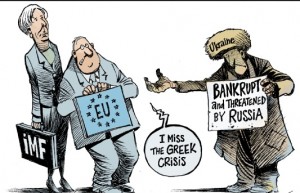
Ukraine Stiffing China?

Eric Zuesse writes:  China is demanding refund of $1.5 billion in cash and of an additional $1.5 billion in Chinese goods that were paid in advance by China (in 2013), for a 2012 Chinese order of grain from Ukraine, which goods still have not been supplied to China.

Alex Luponosov, a Ukrainian authority on Ukraine’s banking system, says, “Ukraine won’t be able to supply the grain to China, because we don’t have it.” The reason he gives is that “there is a big shortage of technicians: combiners, adjusters, mechanics, farm-machinery operators — all of them were taken by the army.” Those men are being required to fight in Ukraine’s ‘ATO’ or ‘Anti Terrorist Operation,’ that’s occurring in Ukraine’s former Donbass region (the far-eastern tip of Ukraine), the place where the residents don’t accept the new Ukrainian Government’s legitimacy.

The RIAN report says that, “China is angry,” and it closes: “By the way, in addition to China’s $3B loan that’s to be repaid with grain [which cannot be supplied], Ukraine also received from China a $3.6 billion loan to pay for the gasification of coal, by Ukraine’s gas company, Naftogaz, which the Ukrainian Government has guaranteed up to 2.3 billion dollars. Information on the implementation of the coal-gasification project has not been made available, but there seems to be a high probability that this matter too will be decided in a court. If China decides to call in that loan, then the result will be the bankruptcy of either Naftogaz, or the Ukrainian Government.

The IMF, and other lenders, require Ukraine to win this war, because, if the Ukrainian Government doesn’t win, the natural gas and other assets that are in the ground in that region will not become available to be sold off by the Ukrainian Government in order to pay-off those investors; instead, the residents there (the people whom the Ukrainian Government is now trying to eliminate will control those assets, as being assets of a separate state — one which has not borrowed from these investors. The IMF wants the assets that are in the ground.

Ukraine's Financial Problems

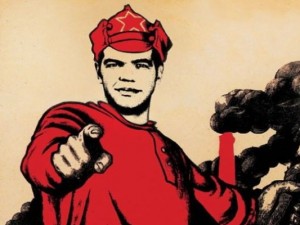
The Greek Leader Tsipras Is?

Sunday’s elections in Greece have brought Tsipras and his Syriza party closerto power.  In 2012, when Alexis Tsipras last ran to be prime minister of Greece, his compatriots were quite literally killing themselves in public squares because of the tough austerity measures that had strangled the country’s economy.

His alternative-left Syriza party, he said, may be the ticket out of the hell that Greece has become.  Tsipras did well on the reent ballot, perhaps because Greece has gotten worse. More than 200,000 Greeks have left the country in the last five years, and austerity has forced many businesses to shutter up or go off the radar. Greece’s black market economy is now estimated to account for nearly half of the country’s GDP.

There are also signs that Europeans in other countries who once fought to keep the eurozone intact at any cost now feel they could get along pretty well without Greece. After all, it has a population of only 11 million in a European Union of 500 million and it represents only about 1.4 percent of the union’s GDP.

Tsipras has promised the Greeks that Europe needs them and has no choice but to renegotiate Greece’s bailout debt conditions. And Greeks like what they hear.

Tsipras argues that in order to stay in the eurozone, Greece’s ruling party has negotiated a foolhardy payment schedule for its $378 million bailout debt that makes it impossible for the country to grow. The current repayment plan is 175 percent of the gross domestic product, and Tsipras wants a better deal, starting with his demand that Europe should simply erase most of the Greek debt.

The lessons the young leader has learned since the last elections are apparent. He has traded what amounted to fear-mongering in his last electoral campaign for consensus building, starting with a promise to some of his former naysayer European leaders. Many of Europe’s struggling countries have launched their own versions of alternative leftist Syriza parties and Tsipras had made the rounds to Italy, Spain and Portugal in recent months.

In 2012, Tsipras gave wide ranging interviews to most people who cared enough to ask. This time around, he is writing op-eds in Europe’s largest newspapers to garner support not only for voting Greeks who have moved abroad, but to get Europe’s other austerity-suffering countries to back the debt reshuffling proposal with the idea that such a precedent could help them, too.

Tsipras has come a long way in just a few years, but not all of Europe is optimistic about a Tsipras-led Greece. In an interview ahead of the World Economic Forum in Davos, Switzerland, Christine Lagarde, head of the International Monetary Fund, which owns a lot of the Greek debt, quashed Tsipras’s debt renegotiation promise and said there is very little wiggle room when it comes to renegotiating debt.

Dutch finance minister Jeroen Dijsselbloem, who heads the influential Eurogroup of European ministers agreed. “There’s no political support to write off Greek debt,” he said.

And in Germany, there was that Der Spiegel report that the German government would rather have a Greek-free euro than open the way for a trend that would be costly to the richer nations.

A Greek Leader