World Agrees: End Fuel Subsidies

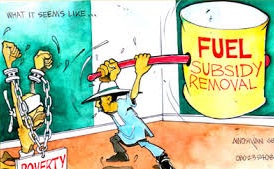
Countries from Tunisia to Indonesia have cut subsidies to fossil fuels.

In Malaysia the Prime Minister said, “If we are willing to sacrifice with sincerity without expecting any return, we willl be amply rewarded.”

In Egypt the President asked Egyptians to sacrifice in the same spirit they had in the 1973 war with Israel: to retrieve national dignity.

In Indonesia the President hiked gs and diesel prices by a third. He said thatsubsidies were a waste of money because they rarely benefited the poor.

The IMF estimates that 3 rtillion is spent to sbsidize hyrocarbons, even in the US. Such subsidies help the well-off six times more than they do the poor.

A global consenus is forming to cut back these subsidies.

Hyrocarbon Subsidies

Karoshi, or Overwork, Banned in Japan

A law preventing overowork or Karoshi, was recently passed in Japan.  In 2013 alone, 133 people died from suicide or health related issues attributed to overwork.  The law requires the government to implement programs which enlighten the public about the risks of overwork.  Counseling systess are to be established and suppor proivded for NGOs dealing with the problems connected to overwork.

The business community has called for the end of regulation of overtime hours, and is opposed to a cap on hours worked weekly.  The key to eiminating death from overwork will be efforts to curb the long working hours of many corporate employees.

Karoshi

Banagladesh: Mobile Revolution

Bangladesh topss the use of mobile devices in Southeast Asia, followed by Pakstan and India.  100 million users ar elisted in Bangladesh, a huge stride forward for the country.  Mobile devices are being used for exchange of information relating to marketing, agriculture, health and educaiton.  An editorial suggests that young people should be encouraged to develop apps fr these devices so the employment opportunities afforded by the devices can be maximized.

Mobile?

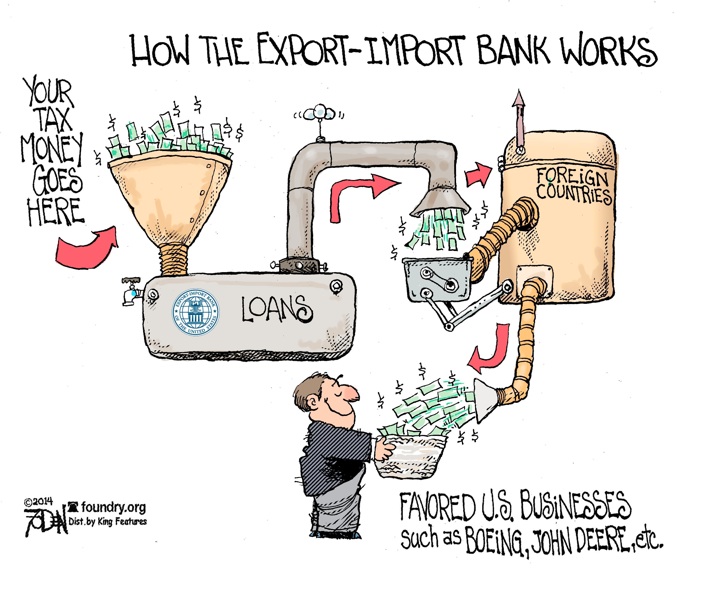
Ax Ex Im Bank?

Reasons for and against the Export/Import banks survival.  Over the last several years, the U.S. Export-Import Bank has become controversial for the first time in its 80-year history.  The controversy doesn’t make much sense since Ex-Im is a small, self-sustaining agency that does nothing more than what export-credit agencies in dozens of other nations do.  In fact, its operations are dwarfed by the export-promotion activities of countries like China.  Nonetheless, a handful of ideologues in the House Republican Conference have sought to block reauthorization of the bank despite large majorities in both chambers favoring its continuation.

Critics complain that it puts the government at risk, distorts markets and detroys jobs, all of which are paently untrue.  Whiile the US ExIm is not allowed to finance military exports, it is clear that miilitary and industrial exports are often interchangeable.  Oshkosh and Navistar were enlised to produce mine-resistant trucks when improvised explosive devices became a problem in wars in Iraq and afghanistan.  Foreign commerical sales help military contractors weather defense downturns.

The National Review fights back in generalities.  “his is the clear case of a government program that should be abolished. It is not free marke, it introduces many distortions in the capital market, it is unfair, it engages in careless ledning and fraud,  it benefits a few politically connected winners.

Actually,  by helping U.S. technology companies to sell abroad, Ex-Im enhances the ability of the joint force to exploit dual-use technologies from secure sources.  Most experts do not believe it is feasible to sustain a domestic industrial base for such items while only serving defense users.

One Version of the Ex Im Bank

The Export-Import Bank is one of the few federal agencies equipped to step in and level the playing field for industries that might otherwise be driven out of business by state-financed or influenced foreign competitors.  Many of the industries in question lie outside the traditional boundaries of the defense industrial base.  But when big threats arise, the entire economy must be mobilized to serve the demands of national security.  The only way sufficient indigenous industrial capacity can be sustained is to stay competitive in global markets, and Ex-Im plays a pivotal role in that process.


US Regulators Go After Commodities Business

The big guys like JPMorgan Chase are being examined for fraud in the commodities markets.  The U.S. Commodity Futures Trading Commission (CFTC) announced that Paul Greenwood of North Salem, New York, who operated a $1.3 billion investment scam where he and a co-Defendant misappropriated at least $554 million from commodity pool participants, was sentenced to 10 years in federal prison for charges related to his participation in the scam.  Commodities are commanding the attention of US regulators.
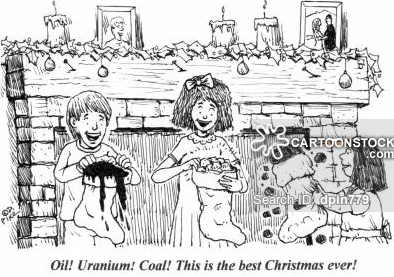
Oil, Uranium, Coal


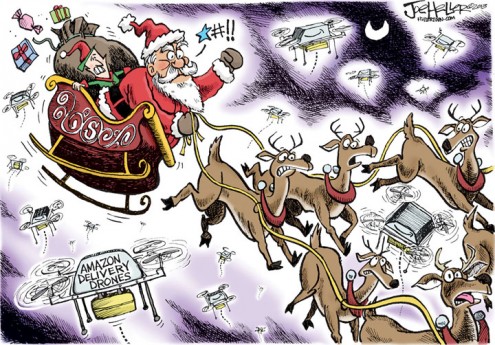
All I Want for Christmas is a Little Drone….

One of this year’s top-selling Christmas presents is a drone. For $50 you can buy a tiny quadcopter with a video camera, perfect for snapping a bird’s-eye view of your garden; for $700, one equipped with a gyroscopically stabilised camera which, when paired with a wireless tracking device on your wrist, will film you while you ski, cycle or kite-surf.

Initially developed for military use, drones are taking off in civilian life largely thanks to the falling costs of commodity electronics.

One immediate commercial use is surveying land cheaply and effectively. A drone can photograph a road to a resolution of 2cm, compared with the 30cm that a satellite offers—and it can do so at a third of the cost. Already farmers are using them to monitor crop growth, which in turn enables modern farm machinery to deliver exactly the right amount and type of fertiliser. In France, where the technology is widely used, farmers say drones boost revenues by €50 ($62) or so per hectare. Drones also improve safety: they can be used to do jobs, such as inspecting power lines, that currently require dangling a man from a helicopter. And they can deliver goods faster: DHL, a logistics firm, already uses a “parcelcopter” to deliver medicine to Juist, a small island off the coast of Germany.

But their potential depends on regulation. Since they can be dangerous—there are increasing numbers of reports from nervous airline pilots of drones flying near them—governments need to set rules for their use. And treatment of the commercial drones varies between countries.

America’s Federal Aviation Authority (FAA) bans almost all commercial drone use. That will soon change, as Congress has ordered it to come up with rules for commercial drone flights by September 30th 2015.

The FAA’s attitude is damaging America’s drone business. Firms are shifting fledgling drone operations outside the country. Amazon has tested a drone-delivery service in Canada while Google has experimented with robotic aircraft in Australia. Overly protective regulation also leads to less safe skies.

The right way to balance safety and innovation may be to create a set of rules for commercial drones that depend on their size, use and so on.  Canada, for instance, exempts small drones from regulatory oversight. The rules should also vary according to location, since surveying the outside of a building in a city is more hazardous than flying over a field. Japan recognizes this. And requiring drone pilots to have experience flying manned aircraft is daft. Far better to say, as Britain and Australia do, that drone pilots need to be certified as competent to fly a drone.

Like any disruptive technology, commercial drones will hurt existing businesses. Some pilots will lose their jobs as more farmers and logistics firms use drones instead of hiring a helicopter or aircraft. The incumbents’ opposition to the drone industry is understandable. The FAA’s is not. It should take a more objective view, and free commercial drones.

Christmas Drones

Why Putin Can Cut West

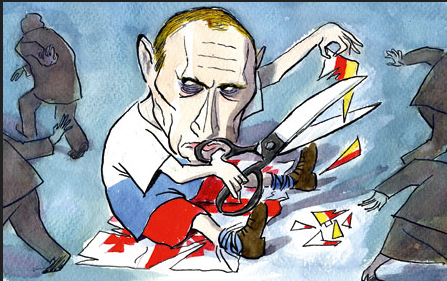
Harold James writes:  At the 2007 Munich Security Conference, Putinpresented a new face, emphasizing the potential of the major emerging economies – Brazil, India, China, and Russia – to provide an alternative to what he viewed as an arbitrary unipolar world order. Many observers were shocked by his statements, and took the speech as evidence of his insecurity or irrationality.

The next year, the financial crisis struck, convincing Putin that his assessment had been prophetic. The crisis, in his view, was proof that the days of American global dominance were over.

In fact, before 2007 financial crisis, Russia had acquiesced to the logic of global capitalism, recognizing the need to cooperate with multinational corporations to modernize and diversify an economy based on raw materials and energy production. After the crisis, however, there was no longer as much to be gained from global markets – at least not in terms of power. Instead, Russia’s best option was to cooperate with other countries that had adopted a similar model of state-centered capitalism, especially China.

Putin’s interpretation of the crisis was underpinned by political developments in America and Europe. The US elected a president who appeared intent on scaling back America’s global commitments. When the Arab Spring revolutions erupted, the US response was weak and muddled, oscillating between pro-democracy rhetoric and support for anti-Islamist autocrats. This enabled Putin to project himself, particularly in Syria, as a credible proponent of geopolitical pragmatism.

In fact, the economic crisis and its aftermath have permitted Putin to argue in favor of a return to other economic models and engagement with developing natinos whose politics often look more like his.

Putin Cuts off West

Europe’s debt crisis – and its leaders’ apparent inability to take coordinated action – gave the Kremlin additional ammunition. Given that Europe’s overall debts and deficits are much lower than those of the US or Japan, the logic went, it should have been able to avoid polarization and paralysis.

More broadly, Putin’s belief that the economic crisis was causing the West to disintegrate aligns with traditional Soviet geopolitical thinking. As Stephen Kotkin shows in a new biography of Stalin,  Soviet policy was strictly rational. The Great Depression convinced Stalin that the different factions of capitalism would go to war; in 1938-1939, Nazi aggression seemed to vindicate his analysis. But Stalin’s predictions fell apart after Hitler’s defeat, when conflicting interests did not lead to a clash between the US and the United Kingdom.

While Western politicians and economic policymakers were trying to avert Great Depression II, Putin was already working on the assumption that it had arrived. For the West, managing the resulting geopolitical imbroglio will be even more challenging than repairing its damaged economies.


Taxation in an International Economy

Giles Merritt writes:  The new European Commission President Jean-Claude Juncker had barely moved into his new office when journalists around the world started seeking answers regarding  the Luxembourg’s government under Juncke’s tax-avoidance deals with multinational corporations at the expense of ordinary taxpayers.

Indeed, though Juncker admitted to being “politically responsible” for the controversial tax rulings, owing to his position as finance minister and prime minister when they were signed, he stressed that Luxembourg had always been in compliance with national legislation and international rules.

Juncker then took his case to the European Parliament, many of whose members had been openly critical of the tax deals.

But the Lux leaks are not just fueling criticism in European political circles. European citizens have suffered through five years of tough austerity, spurred by a global financial crisis that is widely considered to be the fault of greedy bankers and financiers. In this context, public opinion risks becoming very hostile, not only toward the Luxembourg government, which Juncker led for almost 20 years, but also toward the European Commission that he now heads.

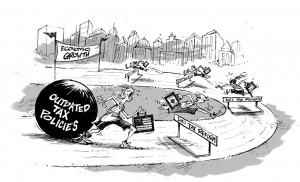
What happened in Luxembourg was legal.  What it really shows is that in an international economy tax policies should also be international.  It is difficult for US companies to compete internationallly when their tax burden is so much greater than corporate tax assessments in other countries around the world.

International Tax Policies

Can Abe’s Policies Succeed?

Kenneth Rogoff writes:  Japanese Prime Minister Shinzo Abe’s recent policy decisions – to increase monetary stimulus dramatically, to postpone a consumption-tax increase, and to call a snap election in mid-December – have returned his country to the forefront of an intense policy debate. The problem is simple: How can aging advanced economies revive growth after a financial crisis?

It is now clear that the first round of Abe’s reforms – known as “Abenomics” – has failed to generate sustained inflation.Rogoff aargues  that the “three arrows” of Abenomics 1.0 basically had it right: “whatever it takes” monetary policy to restore inflation, supportive fiscal policy, and structural reforms to boost long-run growth.

The central bank, under Governor Haruhiko Kuroda, has been delivering on its side of the bargain, the other two “arrows” of Abenomics have fallen far short.

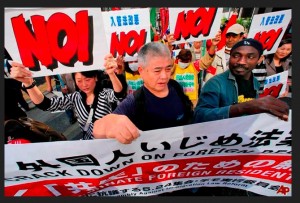
There has been no significant progress on supply-side reforms, especially on the core issue of how to expand the labor force. With an aging and shrinking population, Japan’s government must find ways to encourage more women to work, entice older Japanese to remain in the labor force, and develop more family-friendly labor policies. Above all, Japan needs to create a more welcoming environment for immigrant workers.  Germany is doing this.  Japan begaan with emphasis on the SUmmer Olympics in Tokyo in 2020.

Overall progress has been slow. Japan desperately needs more nurses and hospice workers to care for its aging population, but bureaucratic and political resistance to immigration is deeply entrenched.. Without structural reforms, especially of the labor market, Abenomics cannot succeed in the long run.

The timing of the April 2014 consumption-tax hike (from 5% to 8%) was also unfortunate. It would not have been easy for Abe to postpone the move, given that it had been locked in place by broad-based political agreement before he took office. But the government could have engaged in more aggressive fiscal stimulus to counteract the hike’s short-term effects. Instead, two successive quarters of negative growth have had a dispiriting psychological impact.

True, the slump is partly an illusion: the earlier boom was fueled by Japanese households’ effort to beat the tax by front-loading purchases of consumer durables – a nuance that seems to have been lost in the public debate. But the big picture remains: Abenomics so far has failed to turn around a deflationary mindset.

Mind you, Japan’s outsize government debt and undersize pension assets are a huge problem, and only the most reckless and crude Keynesian would advise the authorities to ignore it.

Fiscal sustainability requires an eventual rise in the consumption tax, and of course Japan should not wait until international investors start doubting its willpower. The problem is in the timing and tactics. Postponing the second consumption-tax increase seems like a good compromise between pushing Abenomics to escape velocity and maintaining long-run credibility.

Demand policies alone will not alone prevent two more lost decades, much less guarantee two golden ones.

Japan’s experience holds important lessons for Europe, the main one being that stimulus policies, though necessary in the short run to support demand, cannot address long-term structural deficiencies. If Abenomics 2.0 fails to embrace deep structural reform, it will fare no better than the original.

Immigration to Japan


Xi’s Dream?

Xi’s dream may not extend across China, writes Joseph Bosco, a former China desk officer in the US Dept. of Defense. Taiwan’s local elections this week and Hong Kong’s public demonstrations send an implicit but clear message to Beijing: These two populations do not want to live under the rule of China’s Communist Party.

The rejection embodied in these events has been building for years in both places. Xi Jinping now must decide whether he should hold firm or find ways to broaden his China Dream to accommodate the democratic aspirations of Hong Kong and Taiwan.

Xi has greater legal latitude and practical opportunity to use force in Hong Kong.  But if Hong Kong’s authorities prove unable to handle larger demonstrations, would Xi risk a Tiananmen-like massacre rather than honor Deng’s home-rule promise?

Taiwan presents a different kind of legal, diplomatic, or military challenge. First of all, a couple dozen governments still recognize the Republic of China. Washington has long provided arms to help Taiwan prepare its own defense, and the Taiwan Relations Act pronounced any threat to Taiwan’s future a matter “of grave concern to the United States,” falling just short of the explicit security commitment contained in the earlier Mutual Defense Treaty.

As a legal counterweight to the Taiwan Relations Act, the National People’s Congress in 2005 adopted the Anti-Secession Law, which threatens war if Taiwan declares independence.

The elections in Taiwan may have convinced Beijing that the possibility of closer political ties is vanishing. If Beijing has indeed determined that possibilities for peaceful unification are “completely exhausted,” as the Anti-Secession Law warns, Beijing may conclude it is now justified in taking military action against Taiwan. Or cooler heads may prevail, pushing China instead to await a more tangible pretext for hostilities. The assessment of America’s role will weigh heavily in Beijing’s deliberations.

Xi is thus left pondering critical dilemmas, not only regarding war and peace, but concerning the very legitimacy of China’s Communist regime. He might want to consider the sound advice Taiwanese President Ma Ying-jeou has been offering Beijing for years: Start following Taiwan’s lead and move along the peaceful path to democracy. With one country, two systems now a dead letter for Taiwan, two countries, one system would be the better answer.
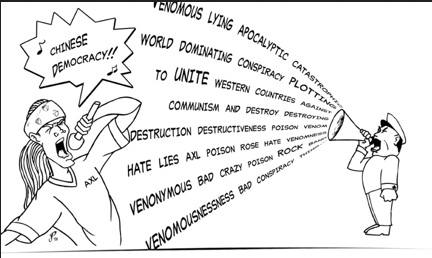

Democracy in China?