Can Woman Live on Plants Alone?

As the government issues new dietary guidelines in the US, should entrepreneurs in the food business look for new opportunities?

The Dietary Guidelines Advisory Committee is also looking into a “sustainability” diet for the first time. The idea of a sustainable diet involves eating less meat and dairy products and shifting toward a plant-based diet in order to cut down on greenhouse gas emissions and protect the environment.

The process of raising animals, transporting them, killing them, processing the meat, etc. requires high energy usage, thus increasing the emission of carbon dioxide and other greenhouse gases. A study published in the journal Nature found that diets higher in refined sugars, refined fats, oils and meats increase such gases in the atmosphere, and also increase the incidence of diseases such as type II diabetes, heart disease and other chronic illnesses.  There would be no net increase in food production emissions if plant-based diets became the norm.   Former Preisdent Clinton and Vie Preisdent Al Gore are both on plant-based diets.

The House Appropriations Committee instructed Agriculture Secretary Tom Vilsack and HHS Secretary Sylvia Mathews Burwell to make sure the committee does not “pursue an environmental agenda.”

“Some critics argue thatt, while obesity is a significant concern with regard to people’s private health, such coercive, ideological modification of private behavior unrelated to public health is outside the Constitutional power of the federal government.

You Are What You Eat?


To Regulate or Not, Those Are the Questions

What regulating the financial industry should and should not do in the US.  J Christopher GIancarlo, Commissioner of the Commodities Futures Trading Commission laid out six principles before the US Chamber of Commerce.  His full spech:  CFTC Commissioner Giancarlo’s Speech

Six Principles for Financial Market Regulation

Regulation must:

1. Not Restrain the U.S. Economy;

2. Not Threaten American Jobs;

3. Be Impartial and Balanced;

4. Be Competent;

5. Be Accountable; and

6. Not Create the Next Crisis

The question W-T-W Women and Finance keeps asking is how we divide the services of financial institutions.  Banks perhaps should be segregated out and function as despositories of other people’s money which is then invested in the community to yeild a reasonable profit (i.e., no one expects JP Morgan Chase’s 24%).  Institutions like Chase should not be called a bank.  They are investment institutions for high rolllers.  Their deposits are not insured.  Only ‘banks’ deposits will be insured.

Looking at banking and finance at the most fundamental level is critical for the development of regulations.  Perhaps the cowboys of finance should simply be allowed to invest as they wish as long as people who give them money realize the risk.

Investment Bank Calls a Gambling Hotline


Free Trade for the Asia-Pacific Region?

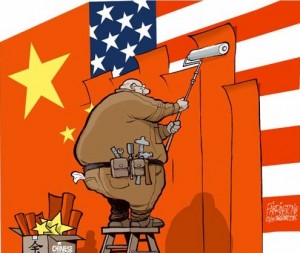
Gao Yuan and Li Xiang write:  A well-functioning global value chain evaluation mechanism will create the foundation for a “high-level” economic free trade zone and benefit all economies, Chinese officials and researchers said.

Minister of Commerce Gao Hucheng called for the Asia-Pacific region to deepen economic integration and to push forward the process of creating the proposed Free Trade Area of the Asia-Pacific at the upcoming APEC meetings.

Gao said the Asia-Pacific region, as the engine of global economic growth, has achieved remarkable progress. There is still room for improvement of communication and connectivity in the areas of industry, human resources, infrastructure and information exchange among the APEC members.

Global economies started to sign regional free trade deals as the WTO’s Doah Round hit a dead end in 2008.

Shen Danyang, spokesman for the Ministry of Commerce, said China is actively participating the establishment of new world economic order to help all APEC members boost trade.

China is considering a series of new trade policies to fit the nation’s position in the global value chain, Shen said.

China, the world’s second-largest economy and manufacturing hub, is still on the lower end of the international value chain, according to Yang Cuihong, professor of economics at the Chinese Academy of Sciences.

“As China climbs up the chain, its trade partners will benefit from higher added values created from bilateral trade,” Yang said.

China is actively promoting the Free Trade Area of the Asia-Pacific, which can include most economies in the global value chain, including the world’s leading powers that export products with high added value and the emerging economies that contribute raw materials and cheap labor.

“A modern multilateral free trade proposal should give every economy a fair chance to trade equally, not just be a playground for developed economies,” said Lin Guijun, an economist and vice-president of the Beijing-based University of International Business and Economics.

Researchers suggested that emerging markets and exporters of natural resources should work together to reach a free trade deal that can protect the interest of economies at the lower end of the value chain.

Free Trade in the Asia-Pacific Region


As Saudi Arabia Swings, So Goes the Price of Oil

Russia and Venezuela are discussing joint action against low oil prices, Russian Energy Minister Alexander Novak said in Moscow. Venezuelan Foreign Minister Rafael Ramirez was in Moscow for talks as part of a tour of several oil-producing nations, including Algeria, Qatar and Iran, aimed at developing a joint strategy.

Asked if he discussed joint moves to counteract the 30-percent fall in oil prices this year, Novak told reporters: “Yes, there is such an initiative.”

Russia and Venezuela, like the other countries on Ramirez’ travel itinerary, are heavily dependent on revenues from oil exports for their national budgets.

Any drive to push oil prices back up can succeed only if oil-producing nations as a group agree to cut back aggregate production in the face of weaker demand caused by slower economic growth in China, Europe and other key markets and by the US surge in shale oil production, which is reducing US demand for oil imports.

If major oil producing countries with large market positions refuse to go along with a global oil supply management strategy, oil prices may stay low for an extended period. And it appears that Saudi Arabia may be playing the spoiler in this game.

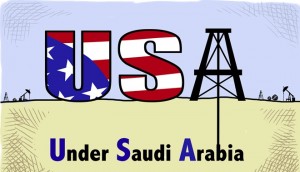
The Saudis are the world’s most important “swing producer” – a country with huge oil reserves that can ramp its oil production up or down to balance changes in supply and demand. In normal times, one would expect the Saudis to go along with other oil producing nations in cutting back production to reflect weaker demand, in order to support the oil price. But this time, they aren’t doing that.

Some Russian and Venezuelan analysts – among others – believe the US and Saudi Arabia are colluding to drive oil prices down for geopolitical reasons.

After a trip to Saudi Arabia in September, Secretary of State John Kerry was asked if past discussions with Riyadh had touched on Russia’s need for a global oil price above $100 per barrel to balance its budget.  “They (the Saudis) are very, very well aware of their ability to have an impact on global oil prices,” Kerry replied.

Some analysts have speculated that one business reason for the Saudis to refuse to cut back their oil production – and therefore to drive oil prices back up – could be a desire on their part to make shale oil production in the US and elsewhere unprofitable.

Nasser al-Dossary, Saudi Arabia’s national representative OPEC, and Naimi’s deputy, Prince Abdulazis bin Salman, as well as the kingdom’s OPEC governor, Mohammed al Madhi, attended at least one of the briefing meetings, and gave the message that Saudi Arabia was prepared to withstand oil prices as low as $70 to $80 per barrel for as long as a year.

The benchmark Brent crude oil price is down to $79.

Saudi Arabian Oil Production

Swiss Franc Pushes at Cap as ECB Tries QE and a Gold Referendum Looms

The Swiss National Bank faces the biggest test of its cap on the franc in two years but may find it easier to defend now than when euro zone breakup fears were rampant and the strategy unproven.

The franc rose to its strongest level since September 2012,  brushing up against the 1.20 euro limit the Swiss National Bank introduced in 2011 when the currency’s strength was squeezing exporters and threatening deflation.

Renewed weakness in the euro zone and the European Central Bank’s readiness to use radical measures to kick-start the economy have fired up demand for the franc.

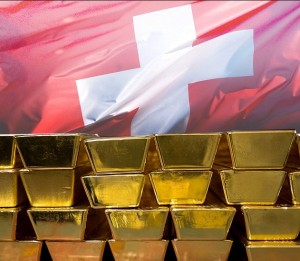
A referendum this month on Swiss gold reserves is also playing a role. While approval seems unlikely, a Yes vote would force the SNB to buy gold alongside any currency interventions.

Still, capital flows into Switzerland have declined sharply from the height of the euro crisis, as have fears that the interventions would spark inflation.

More importantly, the SNB’s success in defending the cap back in 2011 and 2012 means it may not have to intervene on the same scale to fend off any new market challenges..

The SNB shocked markets when it imposed the limit in September 2011 after the currency shot to record highs against the euro. The following year, as fears of a Greek exit from the euro zone grew, traders unsuccessfully challenged the cap. It has since become the backbone of SNB policy.

The latest bout of franc strength is unlikely to prompt such intense purchases, economists say.

The cap was breached only once in April 2012, adding credibility to the central bank’s pledge to defend the policy with the utmost determination and purchase foreign currency in unlimited amounts to do so.

Stagnating prices and faltering economic growth in Switzerland have silenced critics who warned of inflationary risks from the interventions and has underscored the need for the cap to ward off deflation.

The policy has garnered support from exporters and tacit approval from other central banks.  The risks from the vast purchases are limited because losses on forex reserves are pure accounting losses, economists say, though the bank will need to unwind the reserves at some point.

This could change quickly if the nation votes on Nov. 30 to oblige the central bank to hold at least 20 percent of its reserves in gold, up from 7 percent currently. However, polls show limited support.

The alternative to interventions would be negative interest rates. But that could add fuel to Switzerland’s real estate boom and prove expensive for its large financial sector.

 Caps, QE and Gold


Turkey Worried About Exclusion from TTIP

Impact of US-EU Trade Deal and No Customs on Turkey:

  • Turkey’s exports will increase 7% if it is given the opportunity to sell tariff-free goods to the United States.
  • Turkey’s gross domestic product (GDP) will decrease by $4 billion if it is excluded from the US-EU free trade agreement.
  • If Turkey is allowed to join the pact, its GDP will increase by $31 billion. If including the $4 billion loss that would be avoided, the total benefit would reach $35 billion.
  • The US-EU agreement is expected to boost prosperity by 2.6%-9.7% in EU countries and by 13.4% in the United States. In Switzerland, Canada, Mexico and Turkey, if excluded from the agreement, prosperity will decrease by 3.75%, 9.48%, 7.24% and 2.5%, respectively.
The Trans-Atlantic Trade and Investment partnership is expected to be signed in 2017 at the latest.  It will re-draw the global economic map.  Turkey is terrified of the consequences if it does not become part of the deal.  The customs deal will apply to turkey because of deals signed in 1996.  But good from Turkey will not be customs free in the US.
Turkey’s eventual EU membership is only a distant prospect, Ankara is left with two options: negotiating an independent free trade agreement with the United States or persuading the EU to have Turkey included in the TTIP.

Turkey's Problems

Peeling Iranian Sanctions Away?

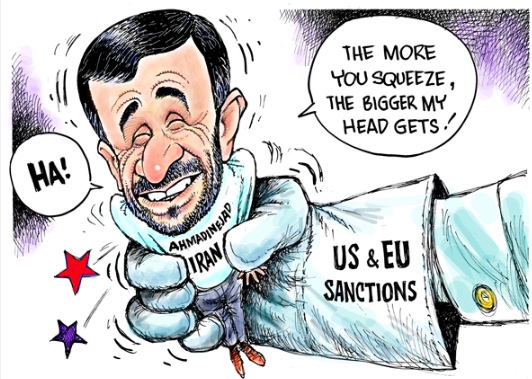
Will sanctions against Iran be lifted?  The UN security Council plus Germany are talking.  The Iranian supreme national security council secretary, Ali Shamkhano has said that sanctions have to be removed.

Some say that Iran does not understand the complexity of the sanctions.  When Iran signed an interim agreement in Geenva in the fall of 2013, some sanctions were lifted in exchange for a reduction in nuclear activity.  Some blocked monies were released.

Iran has not been clear on the fact that when US Congress passed sanctions on Iran in 2011, they put down every problem they had with the country including hostages.

From Iran’s point of view, all sanctions against the central bank have to be removed otherwise no one will do business with Iran.  Iranians complain that the press never discusses the complexity and range of sanctions.

Lifting Sanctions Against Iran


Confidence in Juncker Faces Vote?

The motion, backed by 76 MEPs, including the UK Independence Party and the National Front in France, is unlikely to succeed.  It alleges Mr Juncker is unfit to hold office because of what it calls aggressive tax avoidance schemes in Luxembourg while he was PM there.

If the motion, which also has the support of the Five Star movement in Italy, did succeed, the Commission would have to resign.

It argues that EU member states have lost billions of euros of potential tax revenues because of tax avoidance schemes implemented in Luxembourg during the 18 years Mr Juncker was prime minister there.  Actually the US has lost a lot more money because of deals of which Juncker at the very least was knowledgeable.s.

UKIP MEP Steven Woolfe said: “This motion of censure means there must now be a debate on the behaviour of President Juncker and a vote to remove the entire European Commission.

Liberal Democrat MEP Catherine Bearder criticised UKIP leader Nigel Farage for joining the National Front, led by Marine Le Pen, in backing the motion.

Instead of this opportunist grandstanding, the EU needs a proper independent investigation into the allegations against Juncker and his possible involvement in tax evasion.”

Mr Juncker, who took over as head of the EU’s executive body at the start of November, has come under pressure over claims that some 340 global companies were granted deals to help them avoid tax during his 18 years in office, which ended last year.

Mr Juncker was Luxembourg’s finance minister before becoming its head of government in 1995. He has insisted all tax settlements reached under his leadership complied with national laws and international rules.

Speaking in Brussels last Wednesday, Mr Juncker said there was “nothing in my past indicating that my ambition was to organise tax evasion in Europe”

Luxembourg, Tax Haven?

Monsanto Pivots to Big Data?

Monsanto was founded in 1902 producing an articial sweetener in St. Louis.  It has gorwn iinto the worlds largest producer of genetically modified seeds.  Now it proposes to enter the field of big data.  Pivot, pivot, pivot, a remarkably agile company.  From industrial chemical to the notorious Agent Orange, Monsanto has faced huge business challenges and survived.

Is it possible that its next turn will be toward Bid Data?  In its 2013 Annual Report, Mansanto blamed lost profits on failure to predict the climate properly and failure to recognize changing habits of famers.  To address both issues they are becoming information experts.   As a side effect, they will be able to contribute to knowledge about climate change and quality food production, two areas that the press has been merciless on exposing as they examine genetically modified seed produciton.  Monsanto’s Pivots

Big Data

German Companies Gobble up Food Market in UK

German discount food companies are gobbling up the market in the UK.  Aldi and  Lidl are waging war and driving down prices.  This is good for British consumers, but bad for the local food chain Tesca, which used to be Britain’s grocery market chain.

Asda, which is owned by Wal-Mart Stores, has been holding its own.

Tesca is also under investigation by the UK Serious Fraud office for fudging its books.

Internet shopping and delivery to home services have made grocery stores on the outskirts of any town almost suerfluous.

Goldman Sachs, analyszing the situation in Britain, says that stores are going to have to close venues and cut capcacity.

Low Cost Supermarkets in UK