White is the New Color of Money in Art

Leonid Bershidsky writes:  In a record month for New York art auctions, one standout was an all-white work that sold for $15 million. Even if one lacks Tom Wolfe’s courage to doubt the value of contemporary art, the multi-million-dollar price tag for some white paint on canvas cannot but raise existential questions.

White paintings are something of a philosophical tradition. Kazimir Malevich started it in 1918 with “Suprematist Composition: White on White”:

white on whiteHere’s what he had to say about it in the catalog for the Moscow exhibition where the cool white square on a warmer white background was first shown:

I have overcome the lining of the colored sky, torn it down and into the bag thus formed, put colour, tying it up with a knot. Swim in the white free abyss, infinity is before you.

American artist Robert Rauschenberg created five “White Paintings” in 1951. He went further than Malevich in his rejection of substance, simply rolling white house paint onto smooth surfaces.

rauschenberg
Composer John Cage, author of the famous piece of silence known as 4’33”, described the paintings as landing strips for invisible motes and shadows. Rauschenberg called them clocks:


If one were sensitive enough that you could read it, that you would know how many people were in the room, what time it was, and what the weather was like outside.

Weisberg’s work was too strange for the Soviet Union’s tame official art scene, and his first big exhibition took place three years after he died, in 1988. One white-on-white painting, with just a hint of shyly glimmering shapes, sold for $139,280 at Sotheby’s in London in 2006. A stitched-together white canvas by Australian-born Lawrence Carroll was valued at between $23,200 and $32,200 at a Sotheby’s auction in Milan. It failed to sell.

So what is so special about the 1961 work by American conceptualist Robert Ryman that fetched $15 million in New York? Or the nearly identical one below, also by Ryman, which sold for $5.2 million?

ryman
 

White has a tendency to make things visible. With white, you can see more of a nuance; you can see more. I’ve said before that, if you spill coffee on a white shirt, you can see the coffee very clearly. If you spill it on a dark shirt, you don’t see it as well.

The most probable reason for the price lies outside the realm of art, even defined broadly as a symbiosis of painting and explanation. Alexander Rotter, co-head of the contemporary art department at auction house Sotheby’s, simply decided that Ryman needed a push. “I thought there was really something to be done with the market, that’s why it’s been priced so high.”

If one wanted to be poetic about this piece of marketing wisdom, one could say Rotter is talking of the same sky whose lining Malevich claimed to have overcome.  In the end, the value of art is in the emotions it conveys, its power of holding one’s eye and occupying one’s thoughts. A white canvas may have had the requisite powers in 1918 or even in 1951, because it made a radical statement. In 2014, it’s meaningless. The business decision behind the insane price is the only true piece of art in the case of Ryman’s works.

Even in the highly unlikely event that certain art lovers are moved by the spectacle of unadulterated whiteness, there’s no need to pay millions of dollars for the pleasure. They can simply follow Rauschenberg’s advice: “Want one? Paint one.”
FIFA Keeps Fiefdom for Now

As expected, the tournament will still take place in Russia in 2018 and Qatar in 2022, after the 18-month investigation found insufficient evidence of corruption.

Garcia, a former U.,S. attorney, immediately fired back, accusing Eckert of whitewashing his original 430-page report and reporting him to FIFA’s appeals committee. “Today’s decision by the Chairman of the Adjudicatory Chamber contains numerous materially incomplete and erroneous representations of the facts and conclusions detailed in the Investigatory Chamber’s report,” Garcia said.

There’s lots to take issue with here, from the lack of cooperation from several Qatari officials, to Russia’s claim that destroying all records of the bidding process was standard operating procedure and not a cover-up. But the biggest problem remains the complete lack of independent oversight of one of the largest governing bodies in sports, tasked with investigating itself while having little motivation for transparency or the truth.

FIFA is also too big for its own good. Dozens of corruption scandals in the past decade have done little to ebb the endless profits that come from running the most popular sport in the world. FIFA made $2 billion in profit from this year’s World Cup in Brazil. And this in spite of endless protests by the local poor who would see not one cent of that money, and the “slave-like” conditions faced by the migrant workers who built the stadiums.

It will only get worse come 2022. In March, the International Trade Union Confederation estimated that 1,200 migrant workers had already died in Qatar. That number is expected to rise to 4,000 by the time the World Cup comes to Doha. Qatar has pledged numerous times to fix its problem with worker exploitation, most recently in an unenlightening interview with the Associated Press earlier this week. But report by Amnesty International released Wednesday demonstrated heavy foot-dragging by the Qatari government, stating that while some reforms have been proposed, most of them have yet to be implemented and offer solutions that are ancillary at best. “Time is running out fast,” the report states. “The legacy of the FIFA 2022 World Cup would be the hundreds of thousands of workers who were exploited to make it happen.”

While boycotts seem unlikely, foreign governments are remaining watchful of FIFA’s affairs. Unsatisfied with the ethics committee’s decision, the FBI will continue its own three-year investigation of FIFA. Meanwhile, a British MP has asked the UK’s Serious Fraud Office to look into the matter as well.

Supporters of Russia and Qatar will no doubt cry foul, accusing these governments of bias and sour grapes for losing their own bids.

FIFA Corrupt?

Wann Ist Beratung Nach Beratung?

In der Schweiz hat ein Bundesgerichtsentscheid die Diskussion über Vertriebskommissionen für Finanzprodukte geprägt. In Grossbritannien nahm der Gesetzgeber dagegen jüngst mit der Retail Distribution Review die Frage nach den sogenannten Retrozessionen selbst in die Hand. Seit Beginn des Jahres 2013 sind Provisionen der Anbieter von Finanzprodukten für Vermögensverwalter zunächst bei Neukunden untersagt. Die Gebühren für die Beratung müssen transparent angegeben werden, und zudem wurden die Anforderungen an die Ausbildung der Finanzberater nach oben geschraubt. Die Hoffnungen waren hochgesteckt: Finanzberatung sollte durch die Regulierung transparenter, fairer, besser und billiger werden. Es wäre aber zu schön gewesen, um wirklich wahr zu sein.

Die britische Regelung bedeutet, dass die Kunden für die Beratung explizit bezahlen müssen. Was zuvor häufig versteckt durch Provisionszahlungen erfolgte, wird jetzt mit einem Fixtarif, einem Stundenhonorar oder einem Anteil am veranlagten Vermögen abgegolten. Dadurch sollen Berater zu einem tatsächlich unabhängigen Helfer bei Finanzfragen werden. In der Folge der Umkrempelung des Marktes wird aber inzwischen von einer «Beratungslücke» gesprochen. Vor allem viele Privatkunden mit kleinen Vermögen könnten weniger Zuspruch durch Finanzprofis erhalten.

Zunächst sank die Anzahl der Berater im Vereinigten Königreich von 40 600 im Jahr 2011 auf gut 31 220 Anfang 2014, ein Jahr nach der Einführung der neuen Regeln. So kommen schon rein rechnerisch weniger Berater auf die gesamte Bevölkerung. Ob dies allein auf die neue Gesetzgebung zurückzuführen ist, bleibt fraglich. Mit der höheren Anforderung an die Ausbildung musste sicherlich manch früherer Berater aufgeben.

Die «Subventionierung» der Beratertätigkeit durch die Anbieter der Finanzprodukte verzerrte auch die Nachfrage nach Finanztipps. Mit der Abschaffung der Retrozessionen könnte sich auch das «Beratungserlebnis» verschlechtert haben: Kunden mit wenig Geld werden vermehrt als Kostenfaktoren und nicht als Klienten angesehen. Manche grössere Anbieter könnten auch die Palette an Finanzprodukten ausdünnen und verstärkt auf eigene Angebote zurückgreifen.

Der regulatorische Eingriff erfolgte zudem in einer Zeit des Wandels im Banken- und Finanzgeschäft: Die Digitalisierung und die Verbreitung sozialer Netzwerke machen auch vor der Finanzberatung nicht halt. Immer mehr Kunden tätigen vor allem einfache Geschäfte über das Internet. Finanzinstitute versuchen mit dem Ausbau des digitalen Geschäfts zudem auch Kosten zu sparen. Zuletzt kündigte die Grossbank Lloyds einen Stellenabbau und gleichzeitig die Stärkung der digitalen Dienstleistungen an.

Ed Dymott vom Fondsanbieter Fidelity nennt noch zwei andere Faktoren, die den britischen Markt umkrempeln: Erstens habe das Vertrauen in Finanzdienstleistungen abgenommen, was dazu führe, dass mehr Leute in Eigenregie anlegten. Zweitens entstünden neue Geschäftsmodelle und Anbieter, die vor allem internetbasiert arbeiteten.

Laut Fidelity könnte der Marktanteil für reine Ausführungsgeschäfte ohne Beratung in zehn Jahren von derzeit 10% auf 50% steigen. Auf der anderen Seite des Marktes steht die vollumfängliche Beratung gegen Honorar. Dazwischen klafft noch ein Loch: Die britische Aufsichtsbehörde FCA sähe es gerne, wenn es ein Beratungsangebot zu niedrigen Kosten auch für Kunden mit kleinen verfügbaren Mitteln und wenig komplexen Anlagewünschen gäbe. Die Unternehmen drängen auch darauf, Beratung in günstigerer Form per Internet oder Telefon anzubieten, das regulatorische Umfeld ist jedoch noch unklar. FCA und die Branche sind derzeit daran, die Rahmenbedingungen besser abzustecken.

Dabei geht es um Abgrenzungsprobleme: Wann gibt ein Berater eine persönliche Empfehlung ab, die der Regulierung unterliegt, wann ist es nur eine Information? Und wie grenzen sich die vereinfachte sowie die eingeschränkte Beratung voneinander und von einer vollumfänglichen Beratung ab? Solange die Fragen nicht geklärt sind, zeigen sich Finanzunternehmen noch zögerlich, neue Dienste zu niedrigen Kosten anzubieten. Die Branche bringt als Einwände rechtliche Probleme vor: Was passiert, wenn bei einem automatisierten Beratungsprozess, der das systemische Risiko erhöht, eine nicht gewollte Empfehlung passiert? Wer übernimmt die Haftung, wenn ein Privatkunde eine Empfehlung erhält und den Auftrag anderswo ausführen lässt?

Bei der radikalen Reform der Altersvorsorge kümmert sich der Staat aber direkt um die Beratung, damit auch finanzschwache Personen Beistand haben. Ab dem Jahr 2015 können sich Briten, die das 55. Lebensjahr erreicht haben, ihre gesamte Altersvorsorge auszahlen lassen und selbst veranlagen. Dies wird auch eine grosse Veränderung für die Finanzdienstleister nach sich ziehen. Die Nachfrage nach Finanzplänen fürs Alter wird steigen.

London hat nun gemeinnützige Organisationen ernannt, die mit kostenlosem und unparteiischem Rat im persönlichen Gespräch oder per Telefon die Möglichkeiten der Reform erklären sollen. Auch ein Online-Dienst soll eingerichtet werden. Diese Dienstleister werden aber keine Produkte oder Unternehmen empfehlen. Für die privaten Dienstleister wird damit voraussichtlich genügend Arbeit übrig bleiben.

Push to Legalize Sports Gambling in the US

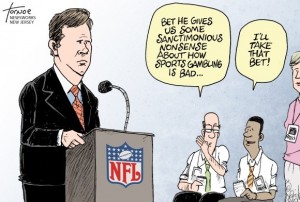
The Commissioner of the National Basketball Association is asking Congress to legalize sports betting.  Commissioner Adam Silver’s call to legalize sports betting faces a difficult path forward in Congress, where previous attempts to expand gambling allowances have stalled in recent years.
Legalizing sports betting would only feed the “obsessive compulsive” behavior of some fans, Rep. Glenn Thompson (R-Penn.) said Friday.  “I don’t think ever expanding gambling is a good thing,” said Thompson, who was a high school wrestler.  “You see ruined lives and ruined families.”

Rep. Phil Roe (R-Tenn.) expressed similar concerns about any effort to legalize sports gambling. While Roe doesn’t have a problem with a “little friendly bet,” he said organized gambling “is just encouraging bad behavior.”

But Silver and gambling proponents say regulating sports betting would shed some light on an estimated $400 billion in illegal sports bets placed each year.  “There is an obvious appetite among sports fans for a safe and legal way to wager on professional sporting events,” Silver wrote.

But some hiighly placed people in the professional sports world point out that the result may be fans cheering for a spread and not their team.

Along with the NBA, the NFL, and other professional sports leagues have traditionally opposed sports gambling.  Silver argues that regulating gambling could ensure bets are monitored to prevent games from being fixed and require bookies to be licensed so they don’t scam gamblers.

The current illegal sports gambling business in the US  is estimated at $400 billion a year.  Despite legal restrictions, sports betting is widespread,  It is a thriving underground business that operates free from regulation or oversight.

The American Gaming Association, which represents the casino industry, quickly jumped into the mix, pledging to work with the NBA on regulations the group says could help thwart illegal gambling.

Still, Republicans have proven to be a tough sell in recent years, attacking efforts to expand online gambling.  Sen. Lindsey Graham (R-S.C.) and Rep. Jason Chaffetz (R-Utah) introduced legislation in March to ban most forms of online gambling.

Their bill would rollback a decision by the Department of Justice in 2011 to allow online gambling, except sports betting, which is still banned. Graham, along with Sens. Kelly Ayotte (R-N.H.) and Dianne Feinstein (D-Calif.), wrote a letter to the Justice Department in July asking the agency to reinstate the online gambling ban.

“We must act before we find virtual casinos making gambling pervasive in our society, invading living rooms, bedrooms, and dorm rooms across the country; a result we know the DOJ does not want to see,” they wrote.

Efforts to expand legalized gambling have gained more traction in the states, where both Democratic and Republican governors have shown support for initiatives that represent a potential boon in tax revenue.

Sports Gambling in the US

Is A Euro Treasury the Answer?

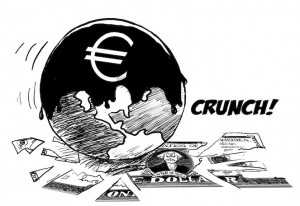
Joerg Bibow writes:The crisis of growth in the eurozone economy is now in its seventh year.  A new consensus is gradually emerging that could help lift euro countries out of this ongoing crisis. It emphasises the need for Europe’s currency union to reinvigorate public investment by some joint endeavour.

Some version of this is recognised by all the EU’s key leaders. Back in July, now-president of the European Commission, Jean-Claude Juncker, called for a €300 billion public-private investment program. European Central Bank (ECB) president Mario Draghi lent his support to the idea in his Jackson Hole speech, acknowledging that the eurozone is suffering from deficient aggregate demand.

And former EU Commission president, Mario Monti, has said that public investment has been crushed by the Stability and Growth Pact and relentless austerity drive undertaken across the continent in its name. The IMF also highlighted that public investment is currently as close to a free lunch as it ever gets in its latest World Economic Outlook. So countries renege on their grandchildren’s possibilities by not going for it.

For far too long, the debate in Europe was exclusively focused on the liability side of the public ledger: debt. But it is the asset side – whether or not investment is made in public infrastructure such as transport and energy, health, education and research – that is far more relevant in shaping the  future.  Creating a joint treasury for eurozone members would be a simple and straightforward way of doing this.

This euro treasury would act as a vehicle to pool future eurozone public investment spending and have it funded by proper eurozone treasury securities. The euro treasury would allocate investment grants to member states based on their GDP shares. And it would collect taxes to service the interest on the common debt, also exactly in line with member states’ GDP shares.

The arrangement amounts to a rudimentary fiscal union, not a transfer union though, as benefits and contributions are shared proportionately. Nor would the joint public debt issued for investment purposes cancel out any existing national debts. Instead, the euro treasury securities would provide the means to fund the joint infrastructure spending which is the basis for the union’s joint future.

Currently, eurozone public investment spending is at a very depressed level of around 2% of members’ GDP. Public investment should be boosted to 3 or 4% of GDP for a few years and thereafter grow at an annual rate of, say, 5%. Once the key parameters are set, there would be no discretion in fiscal decision making at the centre.

Public investment should be debt financed. Member states would still be required to abide by all the rules of the current euro regime, but this would apply to current public expenditures only – as national public capital expenditures would form a separate capital budget funded through common securities.

Lacking a euro treasury partner and euro treasury debt, the ECB is subject to legal challenges to its quasi-fiscal policies, as applied to national debts. There is little the ECB can safely buy without opening the can of worms that has the “transfer union” label on it – the unpopular idea that the wealthier sections of the eurozone must prop up the poorer parts. The euro treasury would establish the vital axis of power between treasury and central bank.

And, while the flawed euro regime has caused a massive investment slump, the treasury scheme would steady public investment spending. This would safeguard the eurozone’s infrastructure and common future – and it would also help stabilise economic activity and investment spending generally.

With public investment organised at the centre and funded through common debt, national public debt ratios can decline to low and safe levels. The term structure of euro treasury debt would become the common benchmark for financial instruments issued by debtors of euro member-states, irrespective of nationality – the promise of the common market and common currency would finally be fulfilled.

The original euro experiment has failed and it is high time to relaunch it on sounder footing. The euro treasury would not only heal the euro’s potentially fatal birth defects but would also contribute to overcoming the ongoing crisis.

 Euro Tresury

Xi Whiz and Obama on Climate Change

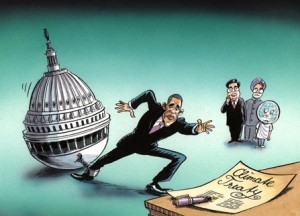
What does the deal mean more energy in the US?  The end of coal which is so dirty. Gas will be used more frequently.  Fracking will have to be used and regulated. And the US will build more nuclear power plants.  They are clean.

Between January and June 2014, China installed 3.3GW of solar capacity. It also provided $23.5 billion in financing for solar ventures in 2013, more than all of Europe put together. Beijing has declared the use of coal will be banned in the city by 2020. These are hardly the actions of a country that sees the use of clean energy as a low priority. Many observers even say that protests emanating from air, soil and water pollution are one of the most direct threats to the supremacy of the CPC. Therefore, turning to renewable energy and cutting emissions might be a good way for the junta to stay in power.

How seriously China takes its commitment to clean power remains to be seen.  Their first priority is growth.

China and US Climate Change Deal


Can Tel Aviv Lure Israeli Companies Home for IPOs

Yossi Beinart, CEO of the Tel Aviv Stock Exchange, wants to have more Isrraeli tech IPOs come to the eexchange.  At a recent meeting of Israeli biotech, IT and medical device developers he wore a suit to distinguish himself. He told the crowrd if they ever wanted an IPO to remember the guy in the suit.

Trading volumbe on the Tel Aviv Stock Exchange has declined 40 per cent in the past four years and IPOs went from 17 in 2010 to 4 this year.

While Israel has more startups per capita than any other country except the US, Entrepreneurs can make more money on a US IPO, but there are many small Israei companies that are too small and get gobbled up by Google  and Intel instead of going public.  Beinart wants to change this.  In the next few months he expects the Knesset to pass legislation that will make it easier for companies to list on the Israeli Exchange.  Israel StartUps Do IPOs at Home?

Is the US Going to Waive Hello to Credit Suisse?

The Labor Department announced it would hold a public hearing in January to review whether Credit Suisse should be granted a waiver to continue overseeing many pension funds and individual retirement accounts. The agency gave the bank a temporary exemption to continue doing such work while the review continued to “avert possible disruptions in retirement plan investments.”

The Labor Department also announced that it had proposed a waiver for Credit Suisse, but that no decisions would be finalized until after the public has had its say at the Jan. 15 hearing.

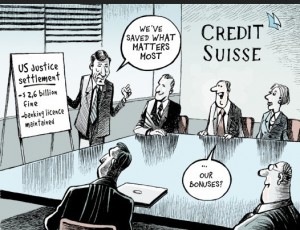
After intense scrutiny from some lawmakers, Credit Suisse pleased guilty in May to helping U.S. citizens evade taxes, making it the largest bank in the last two decades to do so.

Credit Suisse on Waivers

Eike Batista Plans to Get Out of Jail Lustful

Eike Batista, the Brazilian oil tycoon due to go on trial next week over insider … attempting to stage a comeback by investing in a South Korean pharmaceutical … Mr Batista’s EBX group signed a joint venture with the Seoul-based company … If impotence medication and dog cloning prove to be successful …

Mr Batista’s EBX group signed a joint venture with the Seoul-based company C. L. Pharm this year in a ‘development agreement’ worth $12m, according to the South Korean group’s website.

Investors around the world are still reeling from the collapse of Mr Batista’s oil and mining empire last year and the bankruptcy of its prized oil company OGX in October, which triggered Latin America’s largest-ever corporate default.

If found guilty, Mr Batista could be the first person in the Latin American country to go to jail for capital markets crimes. Mr Batista has denied any wrongdoing.

Mr Batista began negotiating with C. L. Pharm when he travelled to South Korea in April this year and has paid $1m just for the rights to set up a factory in his home country, according to a book due to be released on Friday about the tycoon titled ‘All or Nothing’ by Brazilian journalist Malu Gaspar.

Mr Batista is also said to have held business meetings with Hwang Woo-suk, a South Korean scientist who is looking to make his own comeback by setting up a dog cloning laboratory in Brazil, according to the book. After making the world’s first cloned dog Snuppy in 2005, Mr Woo-suk was accused of faking research on human stem cell cloning. Mr Woo-suk could not be reached for comment.

This week, EBX said Mr Batista also signed an agreement with Swiss property investor Acron to resume the joint development of Rio’s landmark Gloria Hotel.

Mr Batista had initially hoped to set up an infrastructure fund after the collapse of his commodities empire last year, according to Ms Gaspar’s publication. However, after reportedly receiving little interest from investors, especially in New York, he turned his focus to healthcare and technology opportunities in Asia.

If impotence medication and dog cloning prove to be successful businesses for Mr Batista, it would be the third time the entrepreneur has managed to reinvent himself.

Get Out of Jail Lustful

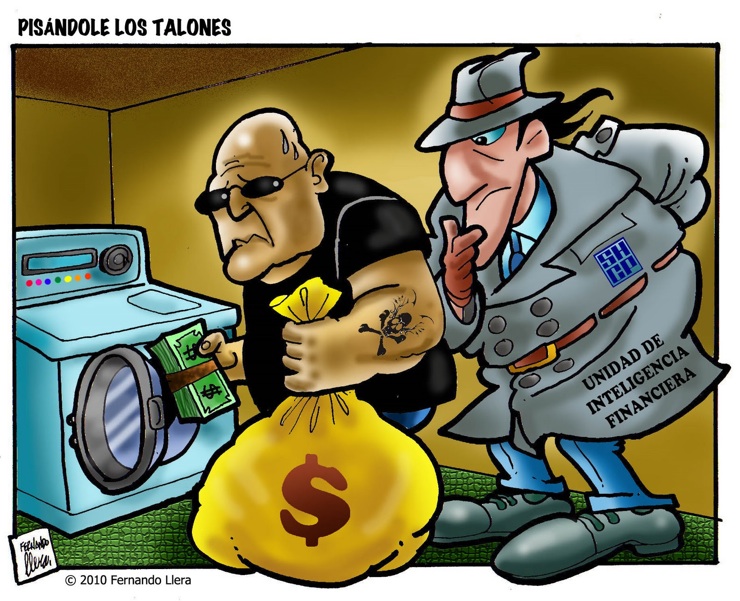
Petrobras Implicated in Money Laundering

Brazil’s state-run oil firm, Petrobras delayed releasing its earnings results amid a police investigation into corruption that has already ensnared a former senior executive.

Police arrested 18 people suspected of involvement in a money laundering and bribery scheme centered on Petrobras. They raided Brazilian construction and engineering companies and seized potentially incriminating documents.

Investors are concerned the postponed publication of audited results for the third quarter puts the world’s most indebted oil company at risk of a technical default on tens of billions of dollars in bonds.

Analysts warned that the investigation and postponed earnings statement could result in the company being stripped of its investment grade by ratings agencies and prompt it to write down fixed assets.

Petrobras shares opened over an hour and a half after the rest of the Bovespa index with the chief executive of the bourse, Edemir Pinto, saying at an event in Sao Paulo the delay was to ensure time for the market to digest the news.

A note from Credit Suisse Securities said Petrobras may be barred from accessing bond markets in the United States. The note estimated Petrobras might need to borrow as much as $20 billion from bond investors to finance projects next year.

The price on Petrobras’ global bond due in 2024 tumbled to 100.75 cents on the dollar early on Friday, compared with 104.5 cents the prior session, amid concerns of a default.

Authorities deployed 300 police officers and 60 tax fraud agents in five states and the capital district. The probe, known as “Operation Car Wash,” was first launched in March as police investigated the alleged money laundering scheme.

The continuing fallout of the scandal has put pressure on leftist President Dilma Rousseff, who won a narrow re-election last month.

A former Petrobras executive previously jailed in the case has said in a plea bargain deal that kickbacks from contracts were funneled to Rousseff’s Worker’s Party and its allies in Congress.

At a news conference, the police said seven companies that had contracts worth billions of dollars with Petroleo Brasileiro SA, as the company is formally known, were being searched.

Odebrecht, a large private Brazilian construction firm, said in a statement its offices in Rio de Janeiro had been searched.

Money Laundering