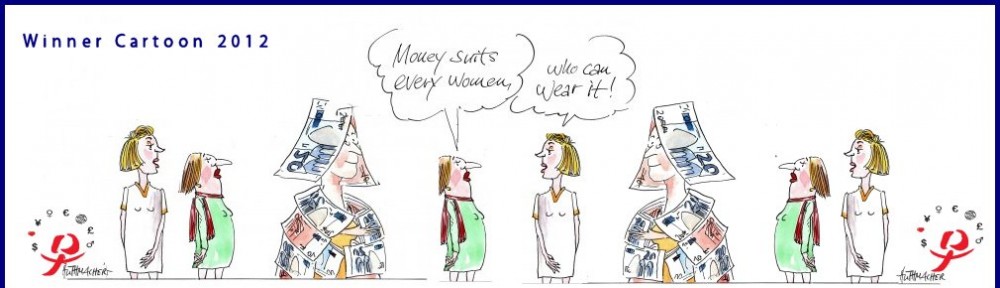
How to Make Money in the Commodities Market?

Go figure.  Matt Levine does a dizzy dance explaining that somewhere between 50 and 90 percent of the world’s copper is now in the London Metals Exchange warehouse.  No one knows who it belongs to.  Levine asks: Is the market being cornered.

He goes on to explain the heart of the commodities market.  There are people who really take possession of pork bellies, oil and copper.  And there are people who play with possession.  These are two different markets.

Hedge funds now take possession of oil and hold it on boats until the price goes up.  Pure manipulation.  Obviously when they sell, the market for the commodity is effected.

Whoever is holding the copper in London is holding a percentage of the supply.  In fact, forinstance, what is being held in the LME warefhouse is a tiny portion of the world’s copper.  What makes a difference is the time period when the copper actually needs to be use. Immediate delivery copper will have a higher price.  Long term delivery lower. And so on.

Algoirthms invented by those MIT grads who work in finance are surely being developed not to see who wants how much copper in the future, but how much money can be made right now.  A conundrum.

Pennies from Heaven?

Pennies from Heaven?

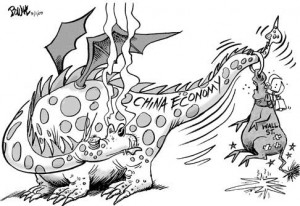
China: Bust or Boom

William Pesek writes:   Is China headed for a boom or bust? Depending on whom you read, the world’s most populous nation is on the cusp of either a debt meltdown, or a middle-class expans

I’ve written before about the possibility of China suffering its own Minksky moment– the point when a debt-driven speculative bubble comes to a sudden and nasty end. Yet there’s also evidence the country may be approaching something of a Henry Ford moment, when a manufacturing-based economy matures to point where workers can afford to buy the products they’re making. The reality, as unsatisfying as it may be to those looking for a dramatic headline, is probably somewhere in between.

Authors David Hoffman and Andrew Polk predict Chinese gross domestic product growth will drop below 4 percent in the next decade. At the same time, more optimistic takes from the Asia Society Policy Institute and the Rhium Group argue that financial upgrades are underway in China that could produce a more sustainable growth path. Those who fear a slowing economy might spark riots and instability also have to be heartened by new data that suggest incomes across China — which is what matters most to ordinary Chinese — are rising more than is commonly acknowledged.

For now, the best strategy for outsiders may be to look the other way, as best they can. Instead of obsessing over every tick up or down in China’s GDP growth rate, the investment world needs to give Chinese leaders time and space to implement the reforms they’ve pledged thus far.

There are many ways to take China’s pulse. Economists’ favorite reality-check indicators include HSBC’s purchasing manager’s index, rail-freight traffic, export and import data (which can be confirmed by cross-checking the numbers with trading partners), electricity-use trends and the trajectory of prices of commodities China dominates like iron ore and coal. Even if this is a non-starter, let’s at least encourage Beijing to forgo a growth target next year.

Xi’s challenge was clear last week when the global media convulsed over news China had grown the slowest in five years in the third quarter. Editors and bankers tripped over themselves to urge Beijing to do more to spur growth. This is what’s truly hypocritical: Even though everyone acknowledges that China must stop artificially pumping up its economy, markets panic at the slightest hint GDP is losing altitude — as if China were some giant company that must constantly impress us.

The last thing China should do is embark on a fresh stimulus kick to placate the nail biters: That would result merely in more debt and unproductive investment and even bigger asset bubbles. The world needs a stable China more than it needs a fast-growing one. And on that front, the economy is doing surprisingly well.

China's Economy


US IndianTribe Bans Fracking

Invoking tribal health and cultural survival, the Eastern Band of Cherokee Indians has declared a ban on fracking on its sovereign land in what is today North Carolina.

“The Eastern Band of Cherokees will not permit or authorize any person, corporation or other legal entity to engage in hydraulic fracturing on Tribal trust lands,” reads part of the text of a resolution passed unanimously by the Tribal Council last month and signed into law by Principal Chief Mitchell Hicks on September 10. “The State of North Carolina is without legal authority to permit hydraulic fracturing on Tribal trust lands.”

Tribal officials cited the importance to preservation of the woodland habitats that are the underpinning of tribal health and culture.

“Our tribe has taken a strong stand with the resolution against hydraulic fracturing commonly known as fracking,” said Chief Hicks in a statement from the band. “I signed the resolution because I believe our environmental protection is paramount to the survival of our people.”

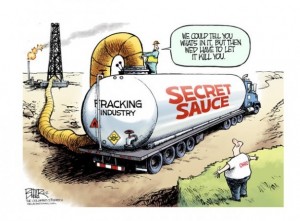
The health effects of fracking that could stem from environmental damage are among the main concerns, according to tribal leaders. Fracking, a nickname for hydraulic fracturing, involves the injection of chemicals mixed with water deep underground to loosen hard-to-extract crude oil and natural gas from between layers of shale. Opponents fear it can damage drinking water, and some evidence has surfaced to indicate that the practice can cause earthquakes.

The tribe is one of many local governments that have adopted resolutions to ban fracking within their boundaries, but given its sovereign status, its measure is the only one with teeth. Until June, there was a statewide moratorium on the controversial practice,

The state legislature lifted that and added a clause that forbid local governments from outlawing the extraction method. The Eastern Band of Cherokee also supports a statewide ban on fracking, the resolution stated.

In the US, both sides on the fracking issue are going to have to measure risk against advantages.  Risk can be minimized through analysis of the water supply and also earthquake faultlines.  The possibility of exiting the MIddle East because the US no longer needs their oil is particularly enticing at this moment.

Fracking

Mercenaries Hired by US Problem in Middle East?

To avoid putting American citizens’ boots on the ground against ISIS in the Middle East, private contractors are being hired by the US.  A trial of private contractors who were charged with kiling Iraqi citizens in Baghdad in 2007 has just come to an end.  One man was charged with murder and three others with manslaughter.  Private contractors are often reckless and unaccountable.

Ths cost to the US is estimated at $8.3 million a day.  That comes to $580 million between August 8 and October 16.

Is it time for the US to back out of the MIddle East?  The US does not need Middle Eastern oil any more.

Middle Eastern Oil

JP Morgan Fined by European Commission for Cartel-Like Behavior

The European Commission on fined four major financial institutions 93.9 million euros, or about $120 million, over two types of activity that it deemed as cartel behavior.

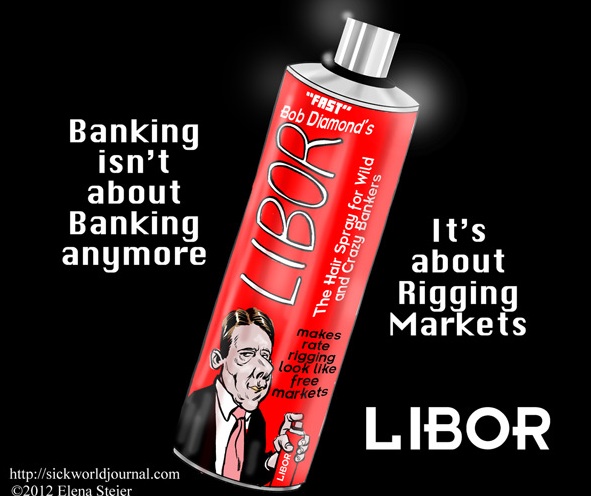
In one case, the European Commission fined JPMorganChase 61.7 million eurosion  for manipulating the Swiss franc Libor benchmark interest rate in an “illegal bilateral cartel” with the Royal Bank of Scotland. R.B.S., however, was granted immunity and avoided a fine of €110 million after it revealed the existence of the cartel to the commission.

“Anti-cartel enforcement is a top priority for the commission and no sector is exempt, including the financial sector,” the European Union said in a statement.

Cartel-Like Behavior

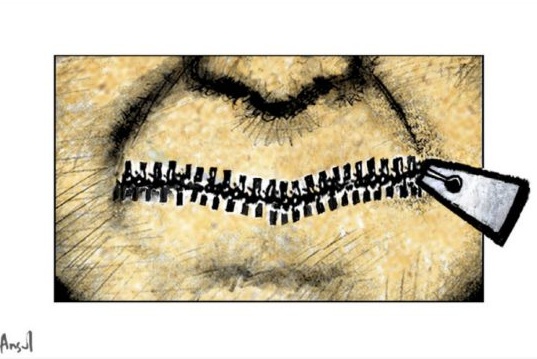
Is Wall Street Silencing Whistleblowers?

Several House Democrats say they fear Wall Street is using confidentiality agreements to keep people from blowing the whistle on misconduct.  Eight House Democrats sent a letter Monday urging the Securities and Exchange Commission (SEC) to send a “strong message” that such agreements won’t be tolerated and consider “bringing enforcement actions if necessary.” “While there are legitimate reasons for companies to use confidentiality agreements to protect sensitive information, such agreements should be structured as narrowly as possible,” wrote the lawmakers. “Employees should also be clearly informed that these agreements in no way restrict their right to voluntarily report securities law violations to the Commission.”

The 2010 Wall Street Reform Law, commonly referred to as Dodd-Frank, created the Office of the Whistleblower Protection within the SEC to try to encourage people to step forward with information about wrongdoing in the financial sector.  The lawmakers said the office has seen success, and are concerned that those gains could be jeopardized by the confidentiality agreements.

“We are also concerned by a growing body of anecdotal evidence describing retaliation through litigation and on-the-job harassment, which if left unaddressed, will also deter future reporting of securities violations,” they wrote.

Silencing Whistleblowers?

Golf Carts Instead of Infrastructure for a New York County?

Cezary Podkul of ProPublica writes:  A central tenet of government finance is that money borrowed over the long term should be spent on projects that will outlast the debt – things like buildings, bridges or other essential infrastructure.

That’s not what upstate New York’s Niagara County did with much of its money from tobacco bonds.  How Tobacco Settlement Money was Spent in Niagara County

Public Expenditures

Should Germany Spend More?

Germany’s austerity prescriptions for crisis countries are problematic.  These countries are lacking the external lifeline – booming exports – that rescued Germany a decade ago. Instead, they are sinking ever deeper into what is known as debt deflation, when their attempts to reduce indebtedness actually raises the real burden of the debt. To restore their competitiveness, they have to engineer a lower rate of inflation than Germany’s, so that their goods are cheaper. That’s tough given German inflation is only 0.8%.

And restoring competitiveness by deflation is especially painful. To actually reduce their indebtedness, the countries need to run current account surpluses and grow their GDP. That requires trade partners who are willing to spend – something that is hard to come by these days.

Certainly Germany is not returning the favor of increased spending that it received during the last decade. Indeed, the German government is adamant about not spending more. The euro crisis has proved too convenient for Germany, providing super-low interest rates and a euro exchange rate that has allowed the country to shift its notorious surpluses elsewhere. But Germany will be the biggest loser if the euro comes apart. Hopefully its leaders will wake up from their austerity-propels-growth dreams before it is too late.

German Austerity


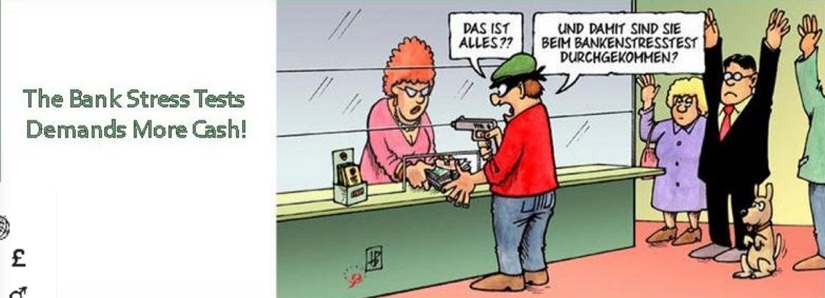
European Banks Fail Stress Test?

David Shilpley writes:  The European Central Bank has just published the results of new “stress tests” on European Union banks, hoping to convince financial markets that the banking system is now strong enough to weather another crisis. This latest exercise is a big improvement over previous efforts, which were widely derided as too soft — but it’s still not good enough.

The test was in two parts.  One found that most of the over 130 banks had overvalued their assets.  The second part assessed whether the correct value of the assets kept the banks in a safety zone.  25 failed the test.  8 needed to raise 6.4 billion dollars.

Deutsche Bank raised 8.5 billion in equity this year to help them pass the stress test. Weak institutions, such as Portugal’s Banco Espirito Santo and Austria’s Volksbanken network, are restructuring or shutting down. By strengthening the system and increasing confidence in it, the ECB’s tests might reverse a two-year slump in private-sector lending.

The tests are pretty soft. Economists at Switzerland’s Center for Risk Management at Lausanne put the capital shortfall at 500 billion euros, not the 6.8 billiioin put forward by the ECB.  Of course, the ECB takes over as the euro areas’s supernational bank supervisor on November 4.  If it had been too tough it might have blown the euro back into crisis.

Economists like Anat Admati would rather have the percentage of equity determine a bank’s ability to withstand stress.

How DId the Bank Pass the Stress Test with So LIttle Cash?

How DId the Bank Pass the Stress Test with So LIttle Cash?


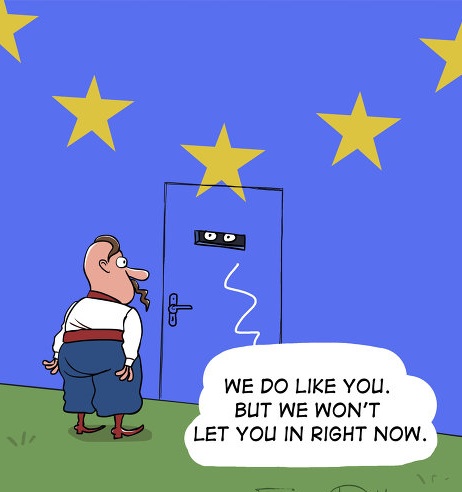
Ukraine Election Legitimate?

Paul Roderick Gregory writes:   Ukrainians elected a new parliament – the Verkhovna Rada — its 450-seat single-house legislative body. As a consequence of the Euromaidan revolution and Russia’s war on southeastern Ukraine, the parliamentary election was moved up from 2017 to October 2014.

Most signs point to a legitimate election, which will surely be confirmed by an official report of OSCE observers.

The early parliamentary election was necessary to give Ukraine’s representative democracy a chance to reflect Ukraine’s new pro-Western orientation, as emphasized by George Soros, and to respond to the challenges of occupied territory, Russian troops in the country, gas delivery disputes, and continued or expanded aggression from the Russian side. Despite defections from Viktor Yanukovich’s Party of the Regions after his flight from Ukraine, Ukraine President Petro Poroshenko had faced a strong bloc of deputies opposed to reform and against a strong response to Russia’s aggression.

Poroshenko got what he needed. His own bloc and that of Prime Minister Yatsenyuk received 44 percent of the votes. A surprisingly strong showing of the “Self Help” party headed by the pro-Western mayor of Lviv gives him a coalition of 57 percent of the votes – a governing majority in which all members share common policies towards the West and Russia.

Importantly, Poroshenko does not need the two “radical” parties on the ballot in his ruling coalition, which together garnered 12 percent of the vote. Both, however, will enter parliament, and will hold the ruling majority’s feet to the fire if they show weakness towards Russia. The Opposition Party, comprised of deputies from the southeastern provinces, gained only 8 percent of the vote, and former political heavyweight Yulia Tymoshenko’s party got only 6 percent, despite having a war heroine as its figurehead. Voters are telling Tymoshenko that she had her chance and failed.

For the first time in its history, the communist party failed to reach the 5 percent threshold.

Russian propaganda had been gearing up for a stronger showing of the two “radical” parties, which would have admitted one or both to the ruling coalition. Putin’s trolls were ready to scream that neo-Nazis and racial extremists control the Kiev government, but such charges will fall on deaf ears for those who know the true election outcome.

In fact, earlier public opinion polls showed the “Radical Party” headed by Oleh Liashko coming in second place. It is easy to understand his popularity. Liashko organized volunteer battalions and himself participated in the Anti-Terrorist operation in eastern Ukraine. For many Ukrainians, Liashko is the equivalent of the Minutemen of the American Revolution, but when it came time to vote, Ukrainians voted for mainstream parties. Perhaps they understood the propaganda coup for Russia of a Liashko in the ruling coalition.

Already, Western pundits are complaining that the election of a pro-Western parliament will endanger crisis resolution. A Time Magazine correspondent complains that as a result of leaving pro-Russian voters out of the election (their self-appointed leaders chose to boycott), the election will not heal the divide.

We are still awaiting Putin’s reaction. He must make the tough decision whether to recognize the election results – and admit the legitimacy of Ukraine as a sovereign state – or continue his ploy that the government of Ukraine is illegitimate.
Ukraine Elections