Should Human Reproduction Be Commercialized?

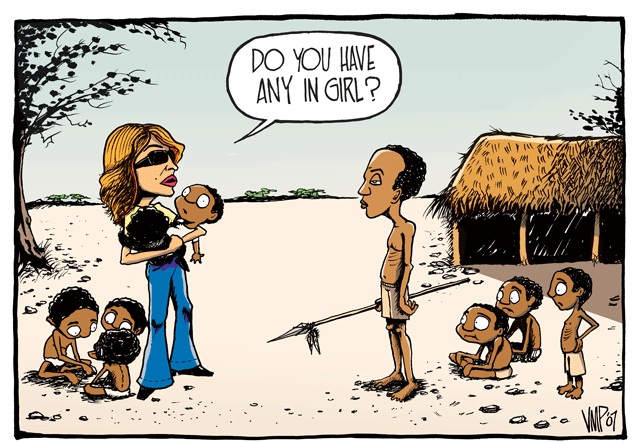
After the frist surrogate deivery in India in 1994, India has become an international destination for surrogate birth.  Has India exploited women as baby producers?

Loosely draftd agreements with commissioning parents leave surropate mothers vulnerable.  What is parents decide against taking the child?  And from the parents point of view, are they guaranteed delivery of ths child by the surrogate?   These quesitons are seldom answered definitively in legal agreements.

The larger moral question about whether human reproduction should be commerdaized remains.

SUrrogate Parenthood

Alex Blumberg’s StartUp

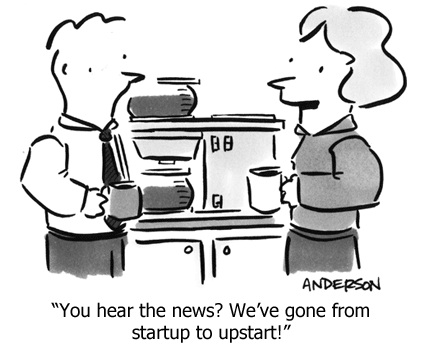
In a new podcast, Blumberg describes how to start s business.  While there is nothing new under this sun, it may be comforting to know, if you’re embarking on your own busiiness that everyone has the same problems and that these probllems can be overcome.

Each episode as a business is built from scratch feels intimate and honest. He records his humiliating failed pitches to millionaire cpaptialists and explains how he improves his pitch for the next time.  Available on iTunes.

Startups

Japan Has Problems with Student Loans

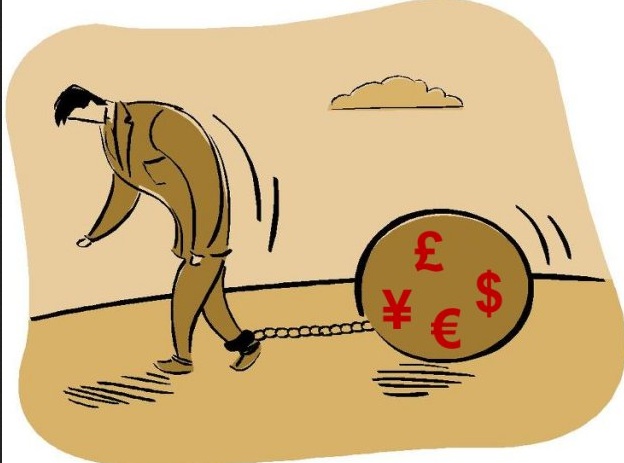
The US is not the only country whose students are burdened by debt.  More and more students are being forced out of colleges and universities in Japan because they cannot afford tuition.  More and more students are asking for tuition exemptions and spit payments.  Long term debt can be an intolerable burden.  The educational system will create an unfair gap between the rich and the poor unless other methods of financing educaion are found.

Student Debt

Banning Burkas in the Australian Parliament

Senator Cory Bernardi has pushed to ban burkas in the Australian Parliament.  President Tony Abbott waffled on the issue.  Most Austrailians feel that the issue is one of personal liberty.  The wearing of a nurka has nothing to do with terrorism or national secuirty. It is not a poke at western society.  Successful and strong nations are built on differences.  A piece of clothing is meaningless.

Burkas

Does Poland’s PM Want to be Merkel?

Ewa Kopacz has portrayed her government as nurturing and thoughtful, one that would not make rash deicsions.  Families will come first, much like Mrs. Merkel who is known as “Mummy.”

In trying to pacify disgruntled coal workers, Ms. Kopacz invited their wives to tea in Warsaw.  Kopacz is the second woman to serve as Poland’s Prime Minister.  Twenty percent of Parliament are women.

She has been ridiculled in the press for emphasizing gender over policy.  Some think she can’t be mother of all Poles because she is confrontational and can be stubborn.  But she has a strong mandate, and her vision of security for Polish families is popular.

Merkel and Kopacz, Mummies?

Marissa Mayer’s Leadership Qualities?

What kind of leader is Marissa Mayer of Yahoo?   Katie Benner writes:  At the end of the day, all executives have to be honest with themselves about whether or not they’re good leader

What are their weaknesses? What don’t they understand?  Mayer had never run a business before her arrival at Yahoo (and the company declined to comment on her tenure). She was an early member of Google’s leadership team (Employee Number 20) and exercised a lot of influence over the look and feel of the company’s monster search engine as well as other products. But she was eventually demoted at Google when the political winds went against her.

Mayer was a star student throughout her life and her faith in academic prowess is a common trait in Silicon Valley, where companies like Google stock the employee pool with elite grads. Yahoo — a sprawling Web giant that has its hands in many key parts of the Internet — needs a strong, competent manager at the top of the company. It hasn’t had anyone good at the helm in years. And as we’ve seen amid the tenures of Scott Thompson, Carol Bartz and Jerry Yang, there’s no way that Yahoo’s fortunes will improve without strong leadership.

The rookie qualities that have become part of the Mayer story are a reflection of some brew of inexperience, arrogance, insecurity and poor judgment. No company can grow big or move fast if the CEO has to control every widget that leaves the factory. Eventually, top talent will leave for companies where they’re empowered. The place they’re fleeing will, almost always, weaken.

Each achievement was a pointed refutation of one of many criticisms that’s dogged Mayer’s tenure at Yahoo. The turnaround is a nonstarter. She doesn’t have a strategy. Tumblr was a flop. She’s a poor financial steward.

Leadership, and it’s more stolid cousin management, can be fuzzy, malleable terms, but Corporate America adores them nonetheless.  Blackstone’s founder, Steve Schwarzman, was known to be a terrible manager who alternately belittled and terrified employees in his early years. So he eventually brought in a very empowered number two, Tony James, to run day-to-day operations and manage employees. Schwarzman’s private equity firm has thrived as a result. Sandy Weil, on the other hand, famously felt threatened by other strong executives at Citigroup, a flaw he never fully addressed.  The weaker leaders who took over after he left ran the megabank into the ground.

No matter how many board members and how many management coaches work with Mayer, only she can answer the questions about what she does and doesn’t know. Only she can bring in top executives, deputies and team leaders who can challenge her and offset her weaknesses.

Tumblr Tumbled

Leapfrogging to Clean Energy

Norway will give Liberia up to 150 million dollars in aid in exchange for which Liberia will try to stop the rapid destruction of trees. Years ago  Norway made a similar deal with Brazil to halt deforestation.  In 1960 economist Ronold Coase talked about bargaining between parties that could produce a mutual benefit.  James Surwieki in the New Yorker points out that trying to get Liberia to stsop cutting down trees without an incentive is high-handed.  The deal Norway has made makes sense for both parties.

Noone wants more Chinas.  Developing countries suffer most under cimate change regulations. So why not pay them to leap to the future?

Pay to Save Forests?

Demand for Good Governance in Hong Kong?

Sin Ming Shaw writes:  After the failure of three consecutive Chinese-selected leaders to address Hong Kong’s concerns, it is no wonder that Hong Kong’s citizens are increasingly seeking to loosen China’s grip on their government. But, for the Chinese authorities, this movement reflects an unacceptable challenge to China’s sovereignty.
In this sense, Hong Kong is locked in a vicious circle – and it is up to China’s government to break it. The fact is that Hong Kong’s citizens understand that they need China, and they have no interest in subverting the central government – nor do they have the power to do so. Their demands for democracy are simply calls for good governance. They believe that free and fair elections represent their best chance of having a competent leader – someone like Patten, China’s former nemesis, who is remembered fondly in Hong Kong.
China’s government is doing itself a disservice by demanding that Hong Kong’s citizens bow before their sovereign, while blaming “outside hostile forces” for spurring some kind of unconstitutional rebellion. Instead, it should focus on the problems created by the chief executives that it chose for the wrong reasons, and it should resolve the underlying governance problems that the demonstrations reflect.

Hong Kong

Getting Girls to Code

Reshma Saujani writes:  The idea for Girls Who Code came about when I was running for office in 2010 in New York City. I’ve always been a policy junky, but when you’re actually on the campaign trail you get to see issues in a much more immediate way. I was visiting schools and talking to teachers and parents across the district and I saw that our kids weren’t learning computer science, and that the gender and socioeconomic divide in tech access was just enormous. With 1.4 million jobs in the computing fields by 2020, I knew we had to do something to close that gap.

At Girls Who Code, we’ve gone from one program teaching 20 girls to reaching 3,000 by the end of 2014 through Summer Immersion Programs and Girls Who Code Clubs. This summer alone we are in NYC, Boston, Miami, Seattle, and all over the Bay Area with programs at Adobe, Amazon, AppNexus, AT&T, eBay, Facebook, GE, Goldman Sachs, Google, IAC, Intel, Intuit, Microsoft, Square, Twitter, and Verizon.

The most interesting (and inspiring!) part of championing young women in tech is that they really become our ambassadors in the movement. When they graduate from our summer immersion program, they know they’ve learned something special and they go on and teach other girls and start clubs at their schools and libraries.

As far as challenges, I think people just don’t realize how bad the problem is. Jaws drop when I tell people that in 1984, 37% of CS majors were women, and now that number is 12%.

Girls Who Code

Decline in Venture Capital Confidence in US

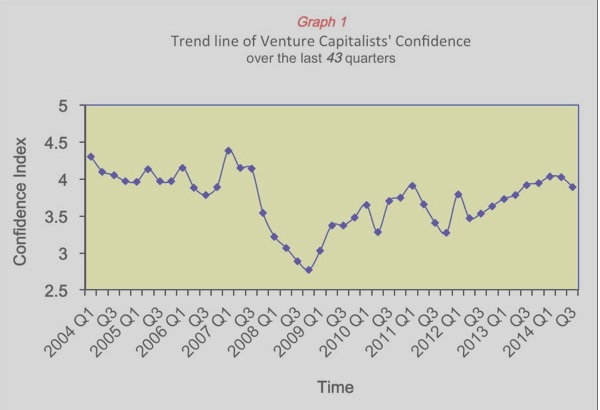
Mark v. Cannice writes:   The Silicon Valley Venture Capitalist Confidence Index® (Bloomberg ticker symbol: SVVCCI) is basedon a recurring quarterly survey of San Francisco Bay Area/Silicon Valley venture capitalists. The Indexmeasures and reports the opinions of professional venture capitalists on their estimations of the highgrowthventure entrepreneurial environment in the San Francisco Bay Area over the next 6 – 18 months.1The Silicon Valley Venture Capitalist Confidence Index® for the third quarter of 2014, based on aSeptember 2014 survey of 33 San Francisco Bay Area venture capitalists, registered 3.89 on a 5 pointscale (with 5 indicating high confidence and 1 indicating low confidence). This quarter’s indexmeasurement fell from the previous quarter’s index reading of 4.02.

In summary, confidence declined in the third quarter of 2014, ending an upward trend in sentiment over the previous two years. Worries over inflated valuations and their eventual impact on the venture business model, along with concern on the macro environment, drove the decline in confidence. However, a still strong if moderating exit market for venture-backed businesses, healthy levels of investment and fundraising, rampant disruptive innovation, and the ever present belief in the determination of Silicon Valley entrepreneurs kept sentiment at a relatively high level. Recent public market volatility, though, may slow the exit environment in the near term, with a resulting drag on other aspects of the venture business model. Whether the deceleration in public and private markets acts as a moderating force against over exuberance or is a signal of a longer-term slowdown in the entrepreneurial and broader economic environment remains to be seen.   Venture Capital Confidence

Venture Capital Confidence