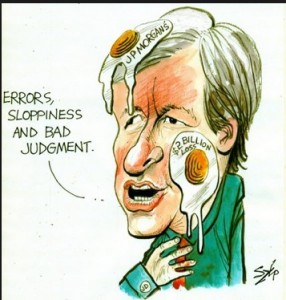
Bankers and Financiers Commit Crimes, Pay Peanuts for Them and Keep on Trucking

Rengan Rajaratnam settles insider trading charges.  The Securities and Exchange Commission announced that former hedge fund manager Rajaratnam has agreed to pay more than $840,000 and accept securities industry bars in order to settle the agency’s insider trading case against him.

The SEC had filed charges against Rajaratnam for his role in the widespread insider trading scheme conducted by his brother Raj Rajaratnam and hedge fund advisory firm Galleon Management. The insider trading occurred in securities of more than 15 companies for illicit gains totaling nearly $100 million. The SEC has now obtained court judgments or settlements in Galleon-related enforcement actions against 35 defendants, resulting in approximately $165 million in monetary sanctions.

Rengan Rajaratnam, who became a portfolio manager at Galleon after co-founding hedge fund advisory firm Sedna Capital Management, neither admitted nor denied the SEC’s allegations in agreeing to the settlement that is subject to court approval. The proposed final judgment would permanently enjoin Rengan Rajaratnam from violating Section 10(b) of the Securities Exchange Act of 1934 and Rule 10b-5, and require him to pay $372,264.42 in disgorgement, $96,714.27 in prejudgment interest, and a $372,264.42 penalty. Under the settlement, he also would be barred from association with any investment adviser, broker, dealer, municipal securities dealer, or transfer agent with the right to apply for reentry after five years.  No jail sentences handed down. His brother is one of the few bankers to get time — eleven years.

Too Big to Jail, Too Small to Jail.

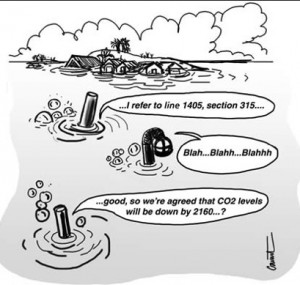
Climate Change and Jobs in the EU

Cimate and jobs. Unions warn that a weak EU cllimate deal risks jobs.  PHilips and SHell call for ambitious energy package.  Nearly a million potential jobs will be lost if EU leaders fail to agree strong climate and energy targets at a summit starting on Thursday, according to the head of Europe’s trade union movement.

Europe’s heads of state are set to sign a deal which proposes a binding 40% greenhouse gas cut by 2030 and two goals which will not be binding on member states, one for a share of 27% of energy coming from renewable sources and another for a 27% improvement in energy efficiency.

Disagreements with eastern European states on ‘burden sharing’ to meet the targets and energy security issues in the final package are said to be narrowing.

But Bernadette Ségol, the leader of the ETUC which represents around 60 million workers, warned that the proposed targets were too low to reap the benefits of a new clean energy economy.

“Energy efficiency and renewable energy targets create jobs,” she told the Guardian. “The lower the target, the fewer the jobs that are created. Governments opposing ambitious and binding targets are wasting an opportunity to reduce Europe’s shameful levels of unemployment. Politicians risk throwing away up to 823,000 new jobs that could be created by more ambitious targets.”

The 823,000 jobs number is the result of ETUC analysis   Ségol called for a “just transition” to a low-carbon economy that treated workers and communities affected by energy intensive job losses fairly, while noting that climate change posed an “existential challenge to humans.”

Germany and Denmark favour most robust renewables and energy efficiency goals as do the European commission’s incoming president, Jean Claude-Juncker, as well as the outgoing climate and energy commissioners.

ETUC would prefer a more robust binding target of 40% for energy efficiency improvements, as opposed to 27% and non-binding, and a binding target to improve renewables by 30%.

But such aspirations have been opposed by the UK. With one eye on the rise of Ukip, David Cameron has let it be known that he prefers a single greenhouse gas target that would prevent Brussels from interfering with plans for the expansion of nuclear energy and shale gas.

“We think that a [single] 40% target for greenhouse gas emissions is very ambitious,” Beyrer said in Brussels. “But the EU cannot afford to do it unilaterally. We see this as a negotiating position for the COP21 [UN climate] summit in Paris.

A spokesman for Knauf described Beyrer’s statement as “rubbish”.

Climate Change

Big Data Not Discriminatory?

Daniel Castro writes:  Many individuals have made the claim that big data might lead to more discrimination,  An online retailer might offer one price to Asian customers and another price to Latino customers This idea appeared in the White House big data review led by John Podesta, where the final report stated that “An important conclusion of this study is that big data technologies can cause societal harms beyond damages to privacy, such as discrimination against individuals and groups.” This idea was also the subject of a recent Federal Trade Commission (FTC) workshop exploring what FTC Chairwoman Edith Ramirez termed “discrimination by algorithm.” While this type of discrimination is plausible, there are many compelling reasons why it may never come to pass. Moreover, the focus on how big data might be used to harm individuals has overshadowed the bigger opportunity to use data as a new tool in the fight for equality.
One reason concerns about discrimination are likely overblown is because many laws, including the Americans with Disabilities Act (ADA), the Genetic Information Nondiscrimination Act (GINA), the Fair Credit Reporting Act (FCRA) and the Employee Retirement Income Security Act (ERISA), protect consumers from employers, creditors, landlords and others who may take adverse actions against them based on protected classes of information. Big data does not exempt businesses from following these laws. Earlier this year, for example, the FTC brought charges and entered into a settlement with Instant Checkmate for violating the FCRA.

Of course, just because a business might be able to create a racist or sexist algorithm, does not mean that it will do so. After all, most businesses are not actively seeking to discriminate against minorities, and in fact, many companies are actively championing a more inclusive worldview. Moreover, even where there are “bad apples,” companies face significant market pressure to not engage in such behavior, a lesson that most executives have probably learned following the swift departure of sponsors after the disclosure of former Los Angeles Clippers owner Donald Sterling’s racist remarks. Big data has not changed these factors.

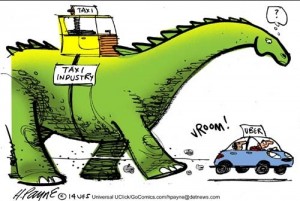
But the bigger point is that the focus on preventing discrimination has diverted attention away from the bigger opportunity to use big data to create a more inclusive society. There are at least three ways this can happen. First, automated processes can remove human biases from decision-making. For example, while loan officers or apartment managers may discriminate, perhaps even unintentionally, on the basis of age or race, computers can be programmed to ignore these variables. Second, data creates feedback loops that encourage people to treat others as individuals. While some taxi drivers have notoriously refused to pick up passengers because of the color of their skin, apps like Uber allow drivers to decide whether to give someone a ride based on the passengers’ ratings, which are mostly tied to whether the riders are punctual and tidy. Third, data is a useful way to identify latent racism, such as discriminatory hiring practices or racial profiling by police. For example, data collected about the disparate impact of New York City Policy Department’s controversial stop-and-frisk policy has helped change opinions on the approach.

In short, not only are fears that big data will lead to discrimination in the future likely overblown, but they have clouded the debate. Those working to fight discrimination should look to data as a way to further eliminate unjust biases in society and create a more fair and transparent society.

Algorithms

Uber A New Business Model

Mohamed El_Erian writes:  The more I use Uber, the more I am convinced of the transformational power of recent technology innovations, especially when it is intelligently combined with behavioral science and economic principles. Indeed, it is only a matter of time until this potent mix disrupts an increasing number of industries, including certain segments of finance.

By finding a powerful way to improve the well-being of both passengers and drivers, Uber is transforming a mode of urban transportation that, for a long time, has seen little positive evolution in the provision of service. Passengers get more than a pleasant phone interface to order their rides and monitor their progress. We feel incredibly empowered and enabled. We like that the fare is billed directly to a credit card that the company has on record; and that our feedback is solicited immediately and in a user-friendly manner.

These are just some ways in which Uber has combined technological innovation, mobility and behavioral science to widen and deepen how it acquires and retains clients. And such insights are also being applied to the drivers, who are also empowered and enabled.

Once drivers pass their evaluation, Uber provides them with the needed setup, including the technology for location services, billing and so on.

The number of drivers signing up with Uber is growing markedly, enabling the company to offer its riders an expanding option of vehicles and service levels. Moreover, through the use of the “surge reminder,” which better calibrates fares with demand-supply imbalances, Uber can entice more drivers to come out at busy times. And this is only one way that the company is using basic economic principles to be more responsive in providing services.

In analytical terms, Uber is a growing P2P (peer-to-peer) platform that is dismantling barriers to entry in a comprehensive way — so much so that even the old-style limousine services and taxis are starting to sign up with Uber as a means of supplementing their traditional business.

Elements of this model are slowly being replicated in certain parts of finance, and will probably expand in the years to come — especially in providing more appropriate consumer credit to underserved segments of the population.

By reducing old-style overheads and other outmoded costs, as well as using access to broader sources of loanable funds, P2P models can pass savings on to borrowers through lower interest rates while also providing an attractive return to creditors.

And by using a broader set of data, this new group of financial intermediaries can improve on traditional credit models and better customize the provision of products to borrowers — a process that can be further enhanced with incentives to improve the paydown of debt balances and overcome debt traps.

Uber Business Model

European Central Bank May Buy Corporate Debt

Why would the European Central Bank buy corporate bonds? It may be that the market for asset backed securities and covered bonds in simply not large enough for the massive bond buying the ECB may do. They may have to acquire corporate debt as well. 

This does raise the question of how buying debt of large corporations will do much to boost lending to smaller firms, a stated objective. And the corporations are not issuing a lot of bonds anyway.

Equity, Bonds, Loans

When Women Don’t Bump the Glass Ceiling

The Minneapolis Fed  Despite making large inroads, females still constitute a small proportion of the top percentiles: the glass ceiling, albeit a thinner one, remains. We measure the contribution of changes in labor force participation, changes in the persistence of top earnings, and changes in industry and age composition to the change in the gender composition of top earners. A large proportion of the increased share of females among top earners is accounted for by the mending of, what we refer to as, the paper floor – the phenomenon whereby female top earners were much more likely than male top earners to drop out of the top percentiles.  Glass Ceilings and Paper Floors

The Ceiling?

Yellen Addresses Inequality in the US

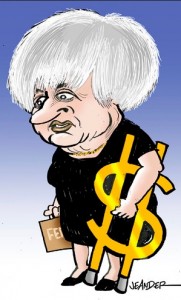
Janet Yellen, head of the Fed, spoke in Boston about income inequality as a major problem in the US.  Ruminating on the ever-widening gap between America’s rich and poor, Federal Reserve Board Chairwoman Janet Yellen, in a widely reported speech on Friday, said: “I think it is appropriate to ask whether this trend is compatible with values rooted in our nation’s history, among them the high value Americans have traditionally placed on equality of opportunity.”

Could have been said about the Gilded Age and the 1920s, when similar questions were raised and, incidentally, gave rise to a formulation called the “Great Gatsby curve,” the relationship between income inequality and low social mobility that recent economists came up with.

Only this time, it’s more so. “The past several decades have seen the most sustained rise in inequality since the 19th century after more than 40 years of narrowing inequality following the Great Depression,” Yellen said, citing the Federal Reserve’s triennial Survey of Consumer Finances, published last month, and other data.

“By some estimates, income and wealth inequality are near their highest levels in the past hundred years, much higher than the average during that time span and probably higher than for much of American history before then.”

Yellen is not the first to point this out, but the fact that it’s being made by the world’s most powerful central banker, and in such stark language, may hopefully give it some added purchase. “Stagnant or falling living standards for many families” went side-by-side with the wealthiest 5 percent’s share of total wealth reaching 63 percent in 2013, up from 54 percent in 1989.

“To put that in perspective, the average net worth of the lower half of the distribution, representing 62 million households, was $11,000 in 2013. About one-fourth of these families reported zero wealth or negative net worth, This $11,000 average is 50 percent lower than the average wealth of the lower half of families in 1989, adjusted for inflation.”

“Meanwhile, the average real wealth of families in the top 5 percent has nearly doubled, on net — from $3.6 million in 1989 to $6.8 million in 2013.”

And, a brief example of the Great Gatsby curve: “Other research tells us that inequality tends to persist from one generation to the next. … Research also indicates that economic mobility in the United States has not changed much in the last several decades; that mobility is lower in the United States than in most other advanced countries.”

So much for rags-to-riches. What can be done? While some inequality will always be with us, says Yellen, she offers offers “four building blocks of opportunity” to help level the playing field

The first two “cornerstones” focus on improving education and other resources for “children in their most formative years,” and easing the unequal debt burden a college education imposes on the less well-off. Generally speaking this will require more government spending, a stronger social safety net, and reforming how public education is paid for. Hint: Maybe it’s not through property taxes.

Building block No. 3: Start a business. “A significant source of wealth,” notes Yellen, but much harder to get, especially for those in the lower income categories, where business ownership “has fallen to a 25-year low, and equity in those businesses, adjusted for inflation, is at its lowest point since the mid-1990s.”

The editors of W-T-W.org  Women and Finance are recommending a 20 year infrastructure repair and building program in the US which would take care of badly needed improvements and also employ people while we figure out how to match job readiness with available jobs.

Yellen boston fed speech


Investigate NY Fed Supervision of Wall Street?

Whistleblower tapes revealed the weakness of the New York Federal Reserves oversight of Wall Street and big US banks.  Senators Elizabeth Warren and Sherrod Brown call for investigation.

Warren and Brown, both members of the Senate Banking Committee, called for an investigation of the New York Fed after Carmen Segarra, a former examiner at the bank, released secretly recorded tapes that she claims show her superiors telling her to go easy on private banks. Segarra says that she was fired from her job in 2012 for refusing to overlook Goldman’s lack of a conflict of interest policy and other questionable practices that should have brought tougher regulatory scrutiny.

“Congress must hold oversight hearings on the disturbing issues raised by today’s whistleblower report when it returns in November, because it’s our job to make sure our financial regulators are doing their jobs,” Warren said in a statement on Friday. “When regulators care more about protecting big banks from accountability than they do about protecting the American people from risky and illegal behavior on Wall Street, it threatens our whole economy. We learned this the hard way in 2008.”

In an interview with This American Life and ProPublica, Segarra described numerous instances in which she said she alerted her bosses to questionable practices at Goldman. In one instance, she said she alerted a colleague that a senior compliance officer at Goldman had said that the bank’s view was that “once clients became wealthy enough, certain consumer laws didn’t apply to them.” Segarra claims that her New York Fed colleagues asked her to ignore the remark and change meeting minutes she had taken, which contained evidence of what the Goldman executive said.

New York Fed presdient WIlliam Dudley gently demanded a change of culture, but this won’t do the job.  We need muscle behind bank reform.

Bank Reform?


Argentina’s Education System Stalled by Digital Gap

Technology has not entered the school system in Argentina.  Teachers are still more uncomfortable with technology than their students are.  The debate between educators who want to move the country forward to become competitive in areas of science and technology and those that feel that all children must be brought up to digital literacy before a new upgrade is undertaken has not been resolved.  The education system is stallled.

Education?

Mexico Moves Forward

Since 2012, three major politial parties in Mexico have joined forces to pass 11 major reforms.  Most striking are:

1.  Civiiliry in politics.  In August a controversial and difficult bill was paased curbing the power of Pemex, the petroleum monopoly and a pride of the country.  A new generation of leaders sees an advantage in curbing old-style infighting.

2.  Better services.  Meixo is one of the world’s most ope economies. It has 44 trade agreements with other countries.  Reforms will help get loans to small businesses and build more roads, railroads and airports.  This may be a good time for entrepreneurs.  And murders are down 29 per cent.

3. Openess and transparency.  Transparency institutes and corruption commissions will watch over awards for oil and gas development and all other matters.

by Fernando Llera

by Fernando Llera