India Empowers the Poor

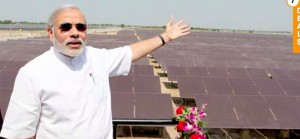
Modi has instituted more toilets and bank accounts for the poor.  But his program that directly engages the poor in their progress is the installation of solar panels. Modi wants every home to have one light bulb by 2019.

300 million Indians have no electricity at all.  Millions more have only sporadic power.  For them, solar is a way to leap frog over conventional fossil-fuel energy into clean energy.  If people can put solar panels over their homes or in empty spaces they can participate in their own uplift.

The potential for solar power is huge. Of the world’s twenty top economies it has the most sunlight.  Timing is ripe.  Solar power is nearing the cost of coal.  China, Africa and other parts of the world are rushing to solar, but India has the potential to be champion of solar.

Solar Power

Head of NY Fed Calls on Banks to Improve Culture

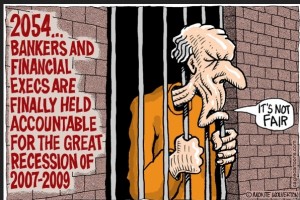
The head of the New York Federal Reserve Bank says that banks must improve their culture. Banks must change the way employees are compensated and take other steps to fix a corporate culture that encourages misdeeds or face being broken up, said William C. Dudley.

If bad behavior persists, “the inevitable conclusion will be reached that your firms are too big and complex to manage effectively,” Dudley said.

Dudley’s comments, which follow bank scandals involving Libor and foreign exchange trading, were made at a closed-doors workshop attended by senior bankers at the New York Fed on reforming Wall Street culture and behavior.

Lawmakers have enacted a major overhaul of the rules designed to prevent banks becoming “too big to fail.” Dudley said it was fair to question if the “sheer size, complexity and global scope of large financial firms today have left them ‘too big to manage.’”

Dudley, who has had to defend the New York Fed recently against allegations it was too soft on big Wall Street firms, suggested a number of ways to better align bank employee incentives with the interests of the general public.  These include deferred compensation plans that switch emphasis to debt, rather than equity, and a centralized, industry-wide registry for tracking individual offenses.

Fines levied against banks could be paid out of deferred debt compensation of senior managers, which would play the role of a performance bond, Dudley said.

“This would increase the financial incentive of those individuals who are best placed to identify bad activities at an early stage, or prevent them from occurring in the first place,” he said, noting that since 2008, fines on big U.S. banks have exceeded $100 billion..

Dudley’s remarks followed a speech by Fed Governor Daniel Tarullo delivered at the same conference in which he said banks may face stiffer rules unless they improve their bad behavior.

“If banks do not take more effective steps to control the behavior of those who work for them, there will be both increased pressure and propensity on the part of regulators and law enforcers to impose more requirements, constraints and punishments,” Tarullo said.

Bankers' Accountability

Turkey Struggles with Inflation

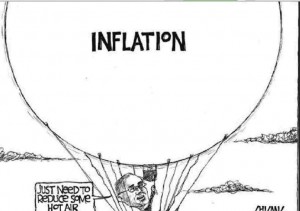
Mehmet Cetingulec writes:  Turkey’s Central Bank, whose resistance to government pressure to lower interest rates proved to be the right decision, has not had the same success in ensuring financial stability by controlling inflation.

The Central Bank’s record against inflation has been dismal not only this year, but for several years.Since Erdem Besci was appointed its governor in 2011, none of the bank’s inflation aims have been achieved.

In 2011, annual inflation was predicted to be 5.5% but ended up at 10.4%. In 2012, the bank’s inflation target was 5%, but it ended up 6.16%. The 2013 target was 5% but the result was 7.4%. The 2014 target was set at 5.3%, then adjusted upward to 6.6%. But it’s now clear that even that target won’t be hit.

Turkey’s Central Bank has two basic duties: keeping inflation under control and ensuring stability in financial markets. In 1997, the bank and the Treasury signed an agreement to cooperate to lower inflation rates.  The idea was to lower inflation by adopting monetary and financial measures in cooperation with relevant public agencies. Though this protocol is valid, inflation still cannot be lowered.

The Central Bank had forecast improvement in inflation after June 2014. Basci, under heavy pressure, had promised lower inflation and interest rates in a June 2 presentation to the council of ministers. On June 3, Prime Minister Recep Tayyip Erdogan, who was unhappy with Basci, said “The Central Bank said it will lower interest rates… I don’t find their approach to interest rates worthwhile.”

What the prime minister had meant to say was explained by pro-government Sabah, which reported that the governor was given a three-month grace period.

But months have passed and the anticipated reduction in inflation and therefore in interest rates did not materialize. When the trend continued unabated, the 5.3% inflation rate was pushed up to 9.5%. By naming this new target in its medium-term program, the government has acknowledged in advance that the inflation rate will double by the end of the year.

Meanwhile, the IMF revised its prediction for Turkey’s inflation upward to 9% from 7.8%. Inflation did not go down and the interest rate was not reduced, but the alternative plan that was to be applied after the three-month grace period was not introduced.

Prime Minister Erdogan, who was targeting Basci, has since been elected president. Prime Minister Ahmet Davutoglu, who formed the new government, does not have the luxury of making controversial decisions by changing the economic management when the regional developments signal increased risks.

Babacan and his economic management team stipulated the lowering of inflation as the primary target of its 2015-17 program, whereas earlier, the primary target was to lower the current deficit. That target has been achieved to some extent. The current deficit, which was above $60 billion at the end of last year, is now below $50 billion. The goal will be now to achieve the same success in lowering inflation. But it is not possible. Neither Babacan nor Basci have enough time to leave behind a legacy of success.

Inflation in Turkey

Piketty on the Campaign Trail in the US

Mark Bloomfield writes:  Election 2014 is upon us; all eyes are on targeted races around the country and the balance of power in Washington. One young French economist may shape outcomes on Nov. 4 and beyond more than any other candidate: Thomas Piketty. Since earlier this year, Piketty has made tremendous waves as a critic of free markets and an advocate of a global wealth tax in his bestselling academic treatise, Capital in the 21st Century. He has been published in over 20 countries, while his influence has been seen in governments from the Netherlands to Columbia. I even found the bestseller on bookshelves in South Africa during my recent trip there.

Here in the U.S., he is providing the intellectual ammunition for President Obama and allies who call income inequality “the defining challenge of our time.”

Of course, Piketty is not truly a candidate for office, but the buzz surrounding his repetitious messaging of “income inequality” is weighing on the psyche of voters. Consider a CNNMoney survey conducted earlier this summer. Nearly six in 10 respondents concluded that the American Dream is out of reach.
So does this mean that voters will only support candidates that pledge to close the divide by hiking wages at the bottom or punishing super salaries at the top with pay caps, the Buffett Rule or even Piketty’s favorite global wealth tax?

Not so fast. Another recent survey by the Global Strategy Group found by almost the same percentages that Americans prefer a candidate who focuses on economic growth to one who emphasizes economic fairness.

The 2014 election will be the first test of Piketty and the inequality issue. The second will be in the 114th Congress, where the stage is already being set for a major discussion on tax reform. Paul Ryan (R-Wis.), the heir apparent to take the reins from retiring House Committee on Ways and Means Chairman Dave Camp (R-Mich.), forecasts that tax reform could happen within one to three years.

On the campaign stump, several Republican candidates are departing from traditional red meat about “tax cuts” and talking more about real tax reform, such as California Rep. John Campbell, the No. 4 Republican on the House Budget Committee: “We have to stop being one-trick ponies. We can’t say tax cuts will cure this, cure that and cure the other thing, because it’s just not credible. The purpose of tax reform is not to cut revenue to the government or to cut taxes — it’s to grow the economy.”

Piketty


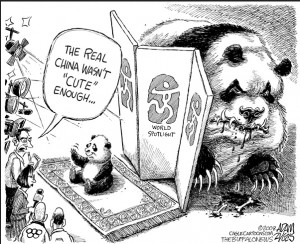
China Takes Aim at Rural Poverty

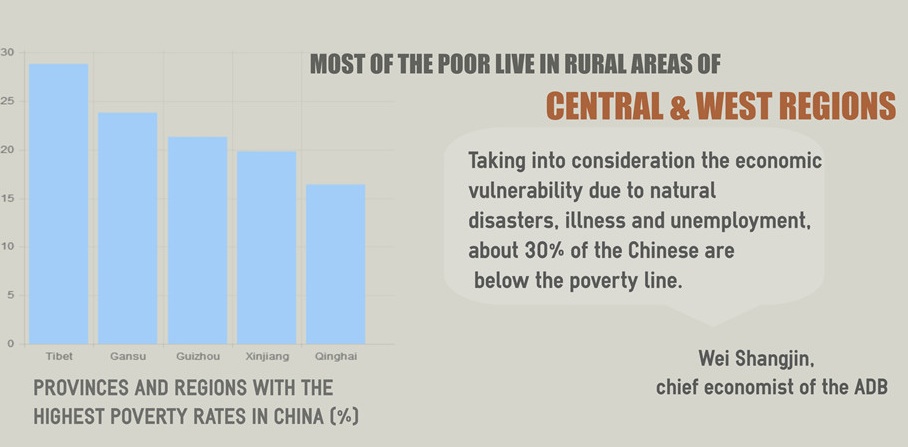
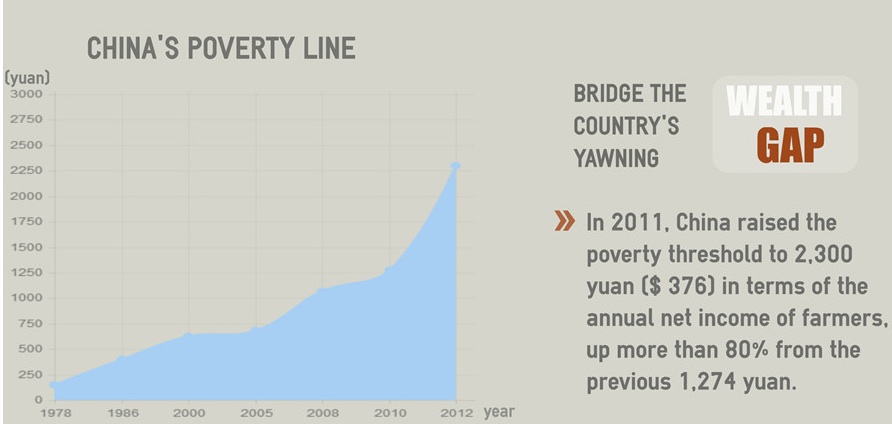
On poverty alleviation day, as many as 310 central government organs were arranged with targeted poverty relief work for 592 key counties that receive relief and preferential policies,” Zheng Wenkai, deputy director of the Poverty Alleviation and Development office, said.  Wenkal has said that China helped nearly 40 million poor rural residents overcome poverty last year.

The government will use the upcoming “Poverty-Relief Day” to provide funds, labor and other help to industries such as energy and e-commerce, both big factors in helping develop poor areas, in poverty-stricken counties.

China vows to reduce the number of rural people in poverty by 10 million this year, on the eve of China Poverty Alleviation Day.

rural poor 1Rural Poor 2

China and the Rule of Law

Top Party officials began a landmark meeting on Monday focusing on the rule of law. They will deliberate on a draft decision covering “major issues concerning comprehensively advancing the rule of law”, sources close to the meeting said.

The Fourth Plenary Session of the 18th Communist Party of China Central Committee is meeting in Beijing from Monday to Thursday.

The decisions reached are expected to set the tone for promotion of the rule of law by the Party, and it is the first time a plenary session of the CPC Central Committee has taken the rule of law as its central theme.

The sources said the rule of law – which China wrote into its Constitution in the 1990s – will play a more prominent role in the overall work of the Party and the government.

It is expected to give provincial courts supervisory powers over their county-level peers on funding and appointments, removing the lower courts from the influence of local authorities.

Xu Xin, a legal scholar in Beijing said the plenary session may also introduce measures to curb corruption by requiring newly appointed officials to publicly disclose their personal assets and by setting up an anti-corruption agency.

Lian He Zao Bao, a newspaper based in Singapore, said in a report that setting up an anti-graft system and addressing judicial reform are likely to be key topics at the meeting.

David Fouquet, director of the European Institute for Asian Studies, said China has introduced and adopted legislation in recent years covering competition, labor and employment laws to bring them more in line with international standards.

“We are hopeful and optimistic that the Chinese leadership will achieve all the ambitious objectives raised at recent meetings and in documents,” he said.

“That should go a long way toward making China – its economy, society and political system – fairer for its population.”

The Law in China


Catholic Recommendations for Capitalism

Erasmus of the Economist writes: Advocates of capitalism will certainly retort that the system has no need of redemption. The core meaning of the word redemption is something like “to secure the freedom, or the very existence, of someone or something at a price….” And as a supremely efficient instrument for resource allocation and price discovery, so the argument would go, capitalism should have no need of any external agency to purchase its right to exist. It just needs to be allowed to do its job. At the other extreme, critics on the left will retort that capitalism is so wicked that it cannot be redeemed by anything, least of all the doctrines of Catholicism.

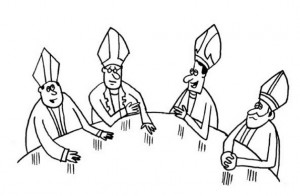
Yet the paper by Clifford Longley is well worth reading, if only because it presents in readable language ideas which normally lie buried deep inside closely argued papal encyclicals and other cerebral writings. Mr Longley explains some of the key concepts in an elaborate body of thought which began to emerge in 1891 with a document called Rerum Novarum which accepted with qualifications the ideas of a free market in capital and labour. They include not just “solidarity”—the idea that all members of society must look out for one another’s welfare—but “subsidiarity” or the widely devolved distribution of power. Catholic Social Teaching (CST) seeks to chart a middle way between unrestrained capitalism and dirigiste socialism by stressing the vital role of civil society: all the institutions, from the family to voluntary associations and churches, that stand between the individual and the state.   Just Money

Catholic Comments on Capitalism


Is Russia Sending Shivers to the EU?

Marc Champion writes:  If the countries of the EU can get together and plan, there is no reasons for the Russian stoppage of natural gas to effect them.

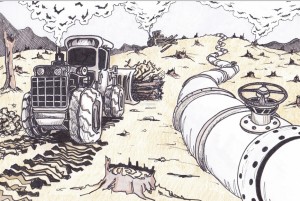
The Nord Stream pipeline project completed in 2012 leaves eight countries vulnerable instead of 18.  In addition, the 2009 shock prompted the EU to make a few changes of its own. A new 67-mile pipeline connecting the Slovakian and Hungarian gas grids should be fully operational by Jan. 1.

The Balkans, Hungary and Poland would come under real stress, however. (Finland and the Baltic states might also be severely affected, but only if Russia stopped supplies through pipelines outside Ukraine in a direct attack on those countries.) So long as EU members respond by spreading the pain and helping each other out, lost supplies would average 10 percent to 60 percent, from Greece to Poland, according to the EU stress tests.

On the other hand, if countries stop supplying others with gas as soon as they run out of surplus themselves, some will be hit much harder. Bosnia and Macedonia would lose 100 percent of their gas supplies, while Bulgaria and Serbia would lose 60 percent to 80 percent. So the severity of the impact would depend on just how willing countries were to work with and sacrifice for each other, making this a big test of EU “solidarity.” Nothing would please Putin more than to see the EU fail that test and so disillusion new members and applicants from the ex-communist bloc in Central Europe — including his hosts last week in Serbia.

 Pipelines

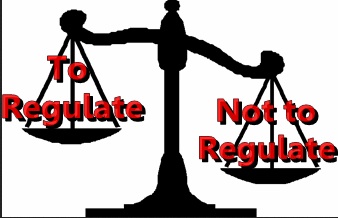
Bad Ideas Linger on in Economic Policy

Barry Ritholtz writes about the consequences of holding on to bad ideas.  There are none for the people who came up with them in the first place.  Particularly think tanks just go blissfully forward.

Here are some ideas that have failed without sufficient notice:  Profit maximizing economic actors, austerity as a virtuous policy during recessions, the efficient-market hypothesis, tax cuts pay for themselves, self-regulating markets.

During the financial crisis, including many attempts to negate the role radical deregulation of financial markets had as an underlying cause of the crisis. American Enterprise Institute’s Peter Wallison and Edward Pinto were the leading proponents of the anything-but-deregulation causation. First, they blamed the Community Reinvestment Act — the anti-redlining legislation that had nothing to do with subprime lending. Next, it was the Department of Housing and Urban Development and the Federal Housing Administration. When that didn’t hold up they blamed Fannie Mae and Freddie Mac. When most of the subprime loans that went bust were shown to be from private lenders that didn’t follow Fannie or Freddie guidelines, they quietly changed the subject.
Regulation

We Need Jocks and Nerds to Thrive

When change occurs, we often tilt violently in one direction.  Gloria Steinem who spoke for women for so long, did not marry until late in life and never raised children.  WHat did she have to say to mohters and wives?   Her advice was often not helpfull.

With the advent of the age of high tech, nerds who had often been teased and bullied in high school became the go to peoplle.  Noah Smith writes about why the jocks they supposedly replaced as still nevessary to the conduct on business and in fact life in general.  Why We Need Jocks

New Appreciation of Jocks