Coal Corrupts, Extractive Industries Corrupt Absolutely

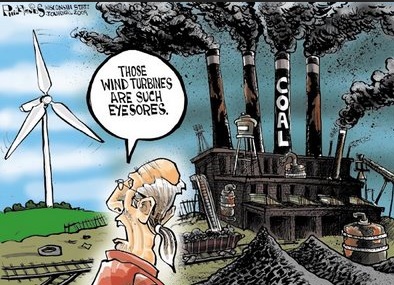
Mariana Lu writes about coal and corruption:  Juan Pablo Perez Alfonso, one of the founders of OPEC, once compared the world’s fossil-fuel use to “drowning in the devil’s excrement.” There is certainly plenty of evidence supporting his prediction that the fossil-fuel industry, with its powerful corrupting influence, will “bring us ruin.” Indeed, coal-related corruption stories are breaking worldwide, shining a light on the murky space between “illegal” and “improper” where the extractive industries work.

Last year, in the Australian state of New South Wales, the Independent Commission Against Corruption investigated former Labor ministers Eddie Obeid and Ian Macdonald for conspiring to defraud the state over the issuance of multi-million-dollar licenses for coal exploration and mining. Today, the ICAC is conducting an even more far-reaching and complex investigation into a number of figures from the Australian Labor Party and the Liberal/Nationals Coalition, including for favoring the interests of Australian Water Holdings, a major infrastructure company.

Last month, India’s Supreme Court found that all 218 coal-mining licenses allocated by the government in 1993-2009 had been granted in an “illegal and arbitrary” manner.  Indonesia is set to revoke the contracts of 17 coal producers that failed to pay government royalties. And, since the beginning of this year, the country’s corruption commission has been focusing on the extractive industry, including the state officials who facilitate mining companies’ illegal activities.

Likewise, China’s ongoing anti-corruption drive – the largest in its modern history – has begun to focus on the coal industry. Last month, two Communist Party officials from the coal-rich Shanxi province were charged with corruption and abuse of power, signaling that Shanxi may well move to the forefront of President Xi Jinping’s quest to eliminate entrenched corruption in the Party’s ranks.

Where the coal industry operates, bribery and venality are likely to be rampant. But this does not have to be the case. In order to reduce – if not eliminate – such corruption, several fundamental weaknesses in the regulation of how mining contracts are allocated must be addressed.

For starters, instead of conducting fair and transparent open-tender processes, governments often empower their ministers to decide which companies are allocated lucrative fossil-fuel exploration and extraction contracts, and conflicts of interest are not disclosed. Indeed, there is an unguarded revolving door between politics and the extractive industry, and political donations are allowed. Finally, though states are responsible for regulation, they also receive royalties and levies for the sale of their resources, which tends to weaken regulators’ effectiveness.

The key to addressing all of these problems is, of course, greater transparency. Resource-rich countries, such as Equatorial Guinea and Sudan, tend to perform worse economically and experience more violent conflict than their resource-poor counterparts – a phenomenon famously dubbed the “resource curse.”

Corruption plays a major role in this curse. Natural-resource wealth insulates leaders from accountability, while offering them the prospect of significant personal financial gain at the expense of the rest of the country.

Economies that depend on natural-resource exports are vulnerable to sharp price fluctuations, making government revenues and foreign-exchange supplies unreliable. For private investors, this makes involvement in these countries prohibitively risky.

If a country like Australia, with its robust civil society and strong democracy, is struggling with widespread graft among high-level government officials, no country is safe from the corrupting influence of the extractive industries. Worse, as is so often the case, those who suffer the most from the extractive industry’s opaque and unfair activities – not to mention the selfish actions of corrupt officials – are those who can least afford it.

Coal Corruption

Fees Don’t Create Real Wealth

Rentier skims do not contribute to real wealth,  Charles Hughes Smith suggests.

The classic example is a fee collected to pass from one fiefdom’s border to the next: no value is provided to the person paying the border fee; it is a rentier skim that transfers wealth from serfs to the fiefdom’s landowning nobility.

In the modern economy, rentier skims take a variety of forms. The government is adept at levying rentier skims. Harsh penalty fees piled on top of minor traffic violations are one example; another is extra fees to “expedite” services government is supposed to provide in a timely manner.

A California architect recently recounted the new fee structure in a Northern California municipality: the fee to have the city planning department review your building permit application leaped to $6,000. Since the department warned applicants it will take at least six months for the agency to process the application, they kindly offer an alternative: for a mere $4,000 more (an “expedited fee”), the applicant can get his application reviewed in a mere four months rather than six months.

Planned obsolescence provides many other examples of rentier skims. Microsoft’s operating systems and hardware makers both operate a form of rentier skim, in that each new OS and device offers marginal benefits (if any) in terms of productivity. The rare printer that doesn’t break down in a few years is obsoleted as software drivers are no longer available on the new OS.

Cartels and quasi-monopolies offer a wealth (ahem) of rentier skims. Monopolies can raise prices and degrade services at will. Cartels maintain price controls while denying they do any such thing.

Finance offers the richest opportunities for rentier skim. Load up college students with tens of thousands of dollars in high-interest student loans for marginal educations that could be provided at a fraction of the cost.

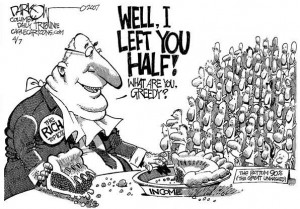
The net result of an economy of endless rentier skims is stagnation and rising wealth inequality. Money that could be saved and invested in productive enterprises and infrastructure is skimmed off.

Simply put, the rich get richer and the poor get poorer. This is the teleology of every rentier economy: the built-in consequence of rentier skims is increasing wealth inequality and economic stagnation.

Rentier Schemes

ECOLEC report on Money Laundering and Crime

After the Third EC Directive to combat money laundering and terrorist financing came into force, the European Commission awarded Utrecht University the assignment to research the economic and legal effectiveness of the anti-money laundering and combating terrorist financing policy in the European Union (hereinafter ‘ECOLEF’). This research is performed within the European Commission, DG Home Affairs, on the “Prevention of and Fight against Crime” (ISEC) Programme. The ECOLEF team researches the policy of the 27 Member States of the European Union in relation to the mentioned topic, The ECOLEF project is headed by Prof. Dr. Brigitte Unger. Other members of the team are Prof. Dr. Henk Addink, Prof. Dr. Francois Kristen, Joras Ferwerda MSc., Ioana Deleanu MSc., Melissa van den Broek LLM, and Daan van der Linde MSc from Utrecht University, Ass. Prof. John Walker from the University of Wollongong, Australia, and Prof. Dr. Reinhard Pirker from Wirtschaftsuniversität Wien.         Final ECOLEF report (digital version)_25.06.2013

Money Laundering and CrimeCorruption Reports

Does the Nobel in Economics Need to Get Real?

David Spenser writes:   Academic economics won in this year’s Nobel Prize Award.  Academic economics is still stuck in an intellectual and ideological rut. Despite the global financial crisis – the worst in a lifetime – academic economists are more likely to win awards and the respect of their peers by producing abstruse models than by tackling and resolving real-world problems.

The economics Nobel awards advances in economic analysis – meaning the development of formal models and the application of particular mathematical and statistical techniques. In essence, solving puzzles within economics matters more than dealing with grand societal challenges.

It should be a cause of concern, not least for members of the public tuning in to learn who has won the economics Nobel, that acute economic and social issues are not high on the agenda of academic economics.  Thomas Piketty was ignored.  Academic economics is still all of a type – it stands for some version of neo-classical economics.  Cosmetic differences aside, research in academic economics applies concepts and methods found in this narrow school of thought.

It has dominated economic thinking since the late 19th century and has marginalised all challengers. The award of the economics Nobel is, in fact, an award for conformity to neo-classical economics. Other schools of economic thought do not get a look in.

And this is in spite of the fact that neo-classical economic thinking failed to foresee the global financial crisis and advocates the kind of austerity policies that prevent recovery. It is alternative thinking – whether from Keynesian, Marxian or ecological economics – that can help us to understand how to build a fairer and more equal economy.

A prize for thinking differently and building a better economics would be a great thing, but sadly it is not one that is awarded by the committee of the economics Nobel. Indeed, given the acute problems that exist in academic economics, it may even be time to call an end to the economics Nobel. The world certainly would not be a worse place without it.

Real World Economics


Diversity at Microsoft

Satya Nadella’s memo to Microsoft employees:

In today’s monthly Q&A session, I want to give some perspective about the past few weeks — my trip to Asia , Gartner Symposium, the Adobe MAX conference, the Grace Hopper conference and Windows 10, as well as focus on Diversity and Inclusion (D&I) (and, of course, anything else on your minds). In November we’ll have a tightly focused conversation with Terry about Windows 10 more broadly.

Before our discussion, I want to provide additional thoughts from the Grace Hopper conference last week. Thank you to the many people who sent me comments and feedback over the past few days. It was a humbling and learning experience.

One of the answers I gave at the conference was generic advice that was just plain wrong. I apologize. For context, I had received this advice from my mentors and followed it in my own career. I do believe that at Microsoft in general good work is rewarded, and I have seen it many times here. But my advice underestimated exclusion and bias — conscious and unconscious — that can hold people back. Any advice that advocates passivity in the face of bias is wrong. Leaders need to act and shape the culture to root out biases and create an environment where everyone can effectively advocate for themselves.

Make no mistake: I am 100 percent committed to Diversity and Inclusion at the core of our culture and company. Microsoft has to be a great place to work for everybody. I deeply desire a vibrant culture of inclusion. I envision a company composed of more diverse talent. I envision more diverse executive staff and a more diverse Senior Leadership Team. Most of all, I envision a company that builds products that an expansive set of diverse and global customers love. As we make Diversity and Inclusion central to Microsoft’s business, we have the opportunity to spark change across the industry as well. This is the accountability the Senior Leadership Team and I own.

There are three areas in which we can and will make progress — starting immediately.

First, we need to continue to focus on equal pay for equal work and equal opportunity for equal work. Many employees have asked if they are paid on par with others at the company. Here’s what HR confirmed for me: Although it fluctuates by a bit each year, the overall differences in base pay among genders and races (when we consider level and job title) is consistently within 0.5% at Microsoft. For example, last year women in the US at the same title and level earned 99.7% of what men earned at the same title and level. In any given year, any particular group may be slightly above or slightly below 100 percent. But this obscures an important point: We must ensure not only that everyone receives equal pay for equal work, but that they have the opportunity to do equal work.

Second, we need to recruit more diverse talent to Microsoft at all levels of the company. As you saw in the numbers we recently released, we have work to do at Microsoft and across the industry. These numbers are not good enough, especially in a world in which our customers are diverse and global. To achieve this goal — and especially in engineering — we will have to expand the diversity of our workforce at the senior ranks and re-double our efforts in college and other hiring. Each member of the SLT will be goaled to increase Diversity and Inclusion.

Third, we need to expand training for all employees on how to foster an inclusive culture. Although we already offer training and development in these areas, we need to ensure the right level of accountability for modeling inclusive behaviors in all our work and actions. We all need to think about how Connects are written, performance feedback is delivered, new hires are selected, how promotion and pay decisions are made, etc. We need to focus on both the conscious and unconscious thinking that affects all these things, and mandatory training on D&I is a great place to start.

I am personally fully committed to these efforts and so is the rest of the Senior Leadership Team. We are going to work side by side with Gwen Houston, GM, Diversity and Inclusion, each month to drive progress on the three actions above, and Gwen and her team will continue to gather input, refine our existing plans and develop new approaches. I’ll report back to you in future all employee Q&A sessions starting in November.

When I took on my role as CEO I got advice to be bold and be right. Going to the Grace Hopper conference to further the discussion on women in technology was bold, yet my answer to a key question was not right. I learned, and we will together use this learning to galvanize the company for positive change. And I’ll certainly go back to Grace Hopper next year to continue the dialogue. We will make Microsoft an even better place to work and do great things.

Satya

Empowering Men and Women

Throughout the developing world, “and increasingly in Africa and Asia,” the single largest occupation for women is agriculture. Yet although they perform much of the labor, women and girls (who make up the majority of the planet’s poor) are often restricted from actually owning the land they work.

Formerly the Rural Development Institute, Landesa is a not-for-profit organization dedicated to supporting the world’s impoverished individuals, families, and communities, as well as to help them secure land rights. Tim Hanstad, Landesa’s president and CEO, describes it as an ” ugly truth” how, in many cases, societal groups of men work to systematically hold women back. In the developing world, men tend to control national, civic, and household leadership. Thus, customs are policies are shaped to support the agenda of male hegemony. Empowering women is difficult in places that feature entrenched systems of male dominance.

That said, a major tenet of Hanstad’s message is a focus on clarifying a common (yet crippling) misunderstanding about the path to women’s empowerment:

“We have to address the misconception that empowering women means you’re disempowering men. That’s a myth. It’s a misconception. Empowering one empowers all. Empowering women empowers men, children, families and ultimately the entire society.

Women’s economic empowerment is, it’s not a women’s issue, it’s a societal issue.”

Hanstad explains that you have to emphasize this point to get men to buy into things such as the female vote or land ownership. They have to understand that the currency of social impact is not finite. Empowering women does not tip a scale in men’s disfavor. You don’t take from one side to support the other. Instead, to allow women additional rights and grant them greater social influence creates social currency. To think of rights, privileges, and influence as finite resources misses the point entirely that women are, as Hanstad calls them, “underutilized social and economic change agents.”

Interestingly, Hanstad also notes that a man’s opinion on whether to empower the women in his life hinges on his children more than on his wife:

Empowering Women


Impact of Decline of Oil Prices in US

Oil prices plummet in US.  What does this mean.

The tumbling oil price has a real impact on Americans’ lives. The good: prices at the pump are at a historic low, dipping below $3 in some states. The bad: Stock market volatility hurts investors, raises questions about the robustness of the economic recovery and places severe pressure on domestic oil producers.

Prices rebounded on Friday, holding above $80 a barrel. But that did not dull the questions about America’s ability to maintain the pace of the oil boom that has blossomed in recent years.
Critics say that production in the very formations that are most responsible for the U.S. oil boom is endangered by two major factors: a lack of infrastructure at home, which makes the storage and refining of crude more complicated than it should be, and the potential for the oil price to plummet further if the Organization of the Petroleum Exporting Countries (OPEC) doesn’t cut its output.

“The market has gotten oversupplied, and with the potential for domestic prices to fall by another $6-$8, certain unconventional plays are no longer economic to develop,” said James Fallon, director of research and consulting with IHS energy team.

“So producers aren’t going to keep putting money into developing new wells and completing new wells, and so they will just stop drilling and that will slow down production,” Fallon said.

If that were to happen, the critics say, it would be a dismal waste of new technologies that have moved the United States within touching distance of its long-cherished goal of energy independence.

This week, international Brent crude oil fell to its lowest benchmark in four years, hitting $82. The U.S. domestic West Texas Intermediate (WTI) crude oil benchmark also dipped below $80 a barrel for the first time in more than two years.

Analysts attributed the drop to an economic slowdown and reports that OPEC is unlikely to cut production anytime soon. The first point was given added force when the International Energy Agency slashed its forecast for growth in demand for oil.

s next year, or when prices get better. But those decisions aren’t being made today and will probably come in the next couple of weeks.”

Meanwhile, further cause for guarded optimism came when Bank of America Corp. predicted that OPEC would “likely curtail” its production to “lend support to oil prices.” Such a move would, in turn, help U.S. domestic prices recover.

But there is no guarantee it will happen, and OPEC has yet to move in that direction.

“When the flat price of crude begins to fall globally, there is pretty big exposure that domestic price will fall even further than that. And when that domestic price falls far enough, you really will start to see production impacts,” Fallon said.

Such a scenario could in turn create a “pretty big disruption to cash flow” for the small independent producers that make up most of the operations in the Bakken and Permian.

If those independent producers have “financial balance sheet problems” because of the drop in oil prices, Fallon said, “that could be very disruptive to the momentum of the growth of unconventional oil production.”

Impact of Oil Price Decline in US

US Creeps Closer to Women on the Presidential TIcket

Hillary Clinton has all but announced in the US, but signs from her campaigning for candidates in Southern states during the US 2014 election cycle are not promising.  While her husband was first and foremost an economics specialist, she has not put forward any ideas for the economic future of the US.  Tmidity may well characterize her Presidential run and even her Presidency if she makes it that far.

Elizabeth Warren is heading for Iowa, the state in which the first Preisidential primaries are held.  A darling of progressives, she is really a centrist:  work hard and play by the rules and you should succeed.  An expert in banking, and fearless with her facts, she has put the banking industry that now controls US politics on notice.  She probably can’t run.  The US citizens experience with Obama’s inexperience will be used against her, but she would make a great VIce President.

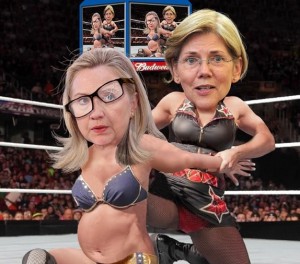
Clinton and Warren

What Does China’s Growth Cycle Really Mean?

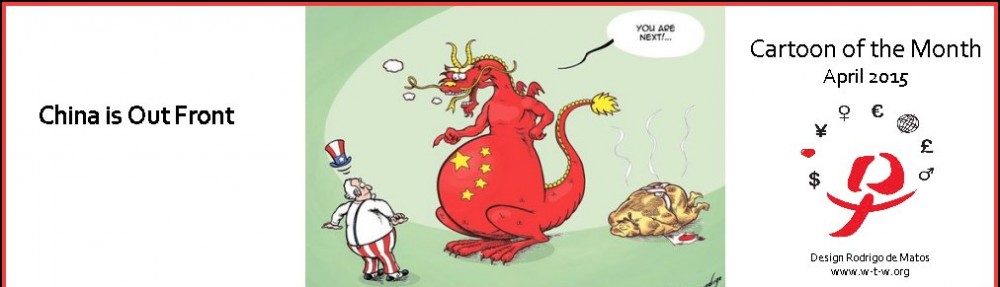
Keyu Jin writes:   Most economists have a reason to be worried about China’s economy – whether it be low consumption and large external surpluses, industrial overcapacity, environmental degradation, or government interventions like capital controls or financial repression. What many fail to recognize is that these are merely the symptoms of a single underlying problem: China’s skewed growth model.

That model is, to some extent, a policy-induced construct, the result of a deep-rooted bias toward construction and manufacturing as the leading drivers of economic development. Today, China’s proclivity for industrial production is manifested in large-scale manufacturing and infrastructure projects, encouraged by direct and indirect government subsidies. By boosting investment and generating tax revenue for local governments, this approach has a more immediate positive impact on GDP than efforts to develop the service sector.

The disparity between China’s GDP growth which has averaged nearly 10% annually over the last few decades, and its employment growth, which has amounted to just 1-2% annually. Clearly, industrialization and export expansion alone cannot absorb China’s massive labor force.

The problem is that rapid labor-productivity growth in the industrial sector – more than 10% per year over the last two decades – is reducing the need to hire more workers. The service sector, by contrast, experienced much slower labor-productivity growth (about 5% annually over the same period), meaning that it could be far more effective in generating employment growth. In the United States, about 80% of the total labor force was in the serevice sector in  2012.

Chinese households are missing out on the benefits of economic growth.  In order to cap the rise in labor costs, wages were suppressed, growing by only 5% annually over the last 20 years, even as productivity grew at an annual rate of 8.5%. Meanwhile, financial repression lowered the cost of capital. In the last decade, the average real (inflation-adjusted) return on deposits has been near zero. With about 80% of Chinese household savings deposited in banks, this implicit tax on savings has had a major economic impact, reinforcing Chinese households’ tendency to save and thus undermining consumption growth and exacerbating global imbalances.

In this way, China’s distortionary policies have helped to perpetuate a dysfunctional growth model. Wage suppression, financial repression, and an undervalued exchange rate subsidize exports and production, at the expense of households, which are thus compelled to save, weakening domestic demand.

Breaking the cycle will not be easy, but there is no other way to address many of the most pressing problems confronting China’s economy. Indeed, the current growth model is also taking a heavy toll on the environment, with pollution threatening the population’s health, especially in urban areas.

Restructuring the economy is perhaps the most urgent – and most difficult – challenge facing China’s leaders today. Given that the current distortions are interlinked, they may need to be addressed simultaneously. China’s gradualist approach may no longer work.

China's Growth

Inequality Needs to be Addressed

Mohamed A, El-Erian writes: There were quite a few disconnects at th International Monetary Fund and World Bank. Among the most striking was the disparity between participants’ interest in discussions of inequality and the ongoing lack of a formal action plan for governments to address it. This represents a profound failure of policy imagination – one that must urgently be addressed.

There is good reason for the spike in interest. While inequality has decreased across countries, it has increased within them, in the advanced and developing worlds alike. The process has been driven by a combination of secular and structural issues – including the changing nature of technological advancement, the rise of “winner-take-all” investment characteristics, and political systems favoring hte wealthy.

In the developed world, the problem is rooted in unprecedented political polarization, which has impeded comprehensive responses and placed an excessive policy burden on central banks. Though monetary authorities enjoy more political autonomy than other policymaking bodies, they lack the needed tools to address effectively the challenges that their countries face.  Mohamed El-Erian writes:   Among the most striking disconnect at the recent annual meetings of the IMF and the World Bank was the disparity between participants’ interest in discussions of inequality and the ongoing lack of a formal action plan for governments to address it.

While inequality has decreased across countries, it has increased within them, in the advanced and developing worlds alike. The process has been driven by a combination of secular and structural issues – including the changing nature of technological advancement, the rise of “winner-take-all” investment characteristics, and political systems that favor the wealthy.

In the developed world, the problem is rooted in unprecedented political polarization, which has impeded comprehensive responses and placed an excessive policy burden on central banks. Though monetary authorities enjoy more political autonomy than other policymaking bodies, they lack the needed tools to address effectively the challenges that their countries face.

In normal times, fiscal policy would support monetary policy, including by playing a redistributive role. But these are not normal times. With political gridlock blocking an appropriate fiscal response – after 2008, the United States Congress did not pass an annual budget, a basic component of responsible economic governance, for five years – central banks have been forced to bolster economies artificially. To do so, they have relied on near-zero interest rates and unconventional measures like quantitative easing to stimulate growth and job creation.

Beyond being incomplete, this approach implicitly favors the wealthy, who hold a disproportionately large share of financial assets.

As a result, most countries face a trio of inequalities – of income, wealth, and opportunity – which, left unchecked, reinforce one another, with far-reaching consequences. Indeed, beyond this trio’s moral, social, and political implications lies a serious economic concern: instead of creating incentives for hard work and innovation, inequality begins to undermine economic dynamism, investment, employment, and prosperity.

Given that affluent households spend a smaller share of their incomes and wealth, greater inequality translates into lower overall consumption..

It is time for heightened global attention to inequality to translate into concerted action. Some initiatives would tackle inequality directly; others would defuse some of the forces that drive it. Together, they would go a long way toward mitigating a serious impediment to the economic and social wellbeing of current and future generations.  The Inequality Trifecta

Inequality