Věra Jourová, Czech EU Commissioner

The three parties in the Czech government have agreed that the country’s next European commissioner should be Věra Jourová, the current minister for regional development.

Věra Jourova is a politician, lawyer, vice-chairwoman of the ANO political movement. Since November 2013, Věra Jourová has served as a member of the Chamber of Deputies and in January 2014 she was appointed Minister of Regional Development.
Before entering the Ministry of Regional Development, she worked as a law clerk and consultant in the field of European funds, strategic planning and regional development. Earlier, while serving as Deputy Minister for Regional Development, Věra Jourova led the negotiation team for EU funds with the European Commission and the European Investment Bank. As a consultant, she provided advice not only in the Czech Republic but also in Russia, the Balkans and the Baltic countries. Věra Jourová was also active at the municipal level in the position of Head of the Department of Regional Development, where she was in charge of development and investment projects within the Vysočina region. Last but not least she held the post of secretary and spokeswoman of the municipal authority in the town of Třebíč.

She is clearly a banking and finance expert.

Věra Jourová

Is China Bullying India?

Braha Chellaney writes: In recent years, the People’s Liberation Army has been taking advantage of its rising political clout to provoke localized skirmishes and standoffs with India by breaching the two countries’ long and disputed Himalayan frontier. The PLA’s recent intensification of such border violations holds important implications for President Xi Jinping’s upcoming visit to India – and for the future of the bilateral relationship.
In fact, such provocations have often preceded visits to India by Chinese leaders. Indeed, it was just before President Hu Jintao’s 2006 visit that China resurrected its claim to India’s large northeastern state of Arunachal Pradesh.

By contrast, Indian prime ministers since Jawaharlal Nehru have traveled to China to express goodwill and deliver strategic gifts. Unsurprisingly, India has often ended up losing out in bilateral deals.

China’s annexation of Tibet, without securing (or even seeking) recognition of the then-existing Indo-Tibetan border. In fact, under the treaty, India forfeited all of the extraterritorial rights and privileges in Tibet that it had inherited from imperial Britain.
As agreed in the pact, India withdrew its “military escorts” from Tibet, and conceded to the Chinese government, at a “reasonable” price, the postal, telegraph, and public telephone services operated by the Indian government in the “Tibet region of China.” For its part, China repeatedly violated the eight-year pact, ultimately mounting the trans-Himalayan invasion of 1962.

In short, China used the Panchsheel Treaty to outwit and humiliate India. Yet, just this summer, Prime Minister Narendra Modi’s new government sent Vice President Hamid Ansari to Beijing to participate in the treaty’s 60th anniversary celebrations.
Ansari was accompanied by Commerce Minister Nirmala Sitharaman, who, during her stay, signed an agreement allowing China – without any quid pro quo – to establish industrial parks in India. This will exacerbate existing imbalances in the bilateral trade relationship – China currently exports to India three times more than it imports from the country, with most of these imports being raw materials –thereby exposing India to increased strategic pressure and serving China’s interest in preventing India’s rise as a peer competitor.

A reminder of that came at July’s BRICS summit of Brazil, Russia, India, China, and South Africa, when, yet again, China emerged ahead of India. The BRICS’ New Development Bank, it was announced, will be headquartered in Shanghai, not New Delhi; India’s consolation prize was that an Indian will serve as the Bank’s first president.

India must consider carefully the pretense of partnership with China that it is forming through trade and BRICS agreements – at least until a more balanced bilateral relationship emerges. After all, neither booming trade nor membership in the BRICS club offers protection from bullying.

China India relations

Is the New Normal the Way to Live?

Robert Schiller writes:  The hope that economic growth promotes peace and tolerance is based on people’s tendency to compare themselves not just to others in the present, but also to the what they remember of people – including themselves – in the past. According to Friedman, “Obviously nothing can enable the majority of the population to be better off than everyone else. But not only is it possible for most people to be better off than they used to be, that is precisely what economic growth means.”

The downside of the sanctions imposed against Russia for its behavior in eastern Ukraine is that they may produce a recession throughout Europe and beyond. That will leave the world with unhappy Russians, unhappy Ukrainians, and unhappy Europeans whose sense of confidence and support for peaceful democratic institutions will weaken.

While some kinds of sanctions against international aggression appear to be necessary, we must remain mindful of the risks associated with extreme or punishing measures. It would be highly desirable to come to an agreement to end the sanctions; to integrate Russia (and Ukraine) more fully into the world economy; and to couple these steps with expansionary economic policies. A satisfactory resolution of the current conflict requires nothing less.

Underconsumptionist

The Future of Biofuels

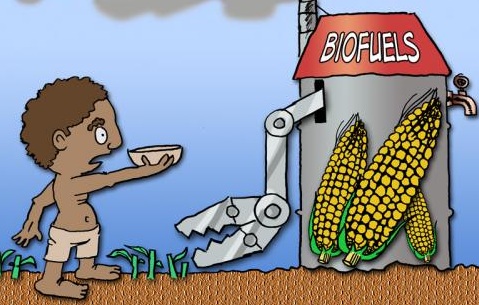
Robert Rapier writes: Despite optimistic federal mandates that required the addition of advanced biofuels to the fuel supply, commercialization has been slow to develop. Ethanol produced from cellulose was initially envisioned as a likely candidate for making a major contribution to the mandates, but project delays, overruns, and bankruptcy in the case of the first company to produce a qualifying batch of cellulosic ethanol have all tempered the initial enthusiasm. A different pathway called fast pyrolysis that results in drop-in fuels as the final product after upgrading has emerged as a contender, but this pathway has also struggled to gain a foothold.  The Future of Biofuels

Biofuels

Contribution of Women on Boards

As we introduce the new and re-newed women on the EU Commission, we decided to visit the continuing contributions of Morten Huse to our understanding of the subject of women on boards. The EU Commission has much in common with a corporate board.

Morten Huse collarborating with Sabina Nielsen concludes that Women’s ability to make a contribution to the board may be attributable to their different leadership styles. The presence of women on corporate boards seems to increase board effectiveness through reducing the level of conflict and ensuring high quality of board development activities.
The Contribution of Women on Boards

Women on Boards

Kristalina Georgieva, European Commissioner

Georgieva has a new position as Vice-president for budget and human resources.  She describes herself:  I have been the European Commissioner for International Cooperation, Humanitarian Aid and Crisis Response.
Before joining the European Commission in February 2010, I have held various positions at the World Bank. I started working there in 1993, initially as Environmental Economist, then Senior Environmental Economist. I continued as Sector Manager on Environment for the East Asia and Pacific Region, and later became the Director in charge of World Bank environmental strategy, policies and lending.
In 2004 my work took me to Moscow, where I was World Bank Director for the Russian Federation, responsible for a large portfolio of World Bank projects in tax administration, customs, education, health, environment and regional development.
In 2007-2008 I held the position of Director for Sustainable Development and, finally I was appointed Vice President and Corporate Secretary of the World Bank Group. At this post, I acted as the interlocutor between the World Bank’s senior management, its Board of Directors and the 186 countries that make up the World Bank Group shareholders.
I have obtained my M. A. in Political Economy and Sociology at the University of National and World Economy in Sofia, Bulgaria. My PhD in Economic Science was granted by the same university, for my dissertation on Environmental Policy. Between 1977 and 1993, I worked as Associate Professor at the University of National and World Economy.
During this period I was also a Research Fellow at the London School of Economics, and spent one year as Visiting Professor at Fiji’s University of the South Pacific and the Australian National University. In 1991 I went to the Massachusetts Institute of Technology where I did post-graduate research in environmental policy, co-led a course on economies in transition, and consulted on environmental policy in Eastern Europe.
I have served as a board member of several educational and environmental organizations. I am currently a member of the Board of Trustees of the University of National and World Economy, Sofia, Bulgaria. I have more than 100 publications on environmental and economic policy topics, including a textbook on microeconomics.
I was born in Sofia in 1953. I am married, and have one child. In addition to my native Bulgarian, I am fluent in English and Russian, and I am learning French.

Kristaline Georgieva

Low Internet Penetration in India

Dhiraj Nayyar writes:  China’s Alibaba is the world’s largest e-commerce platform. In 2013, its online sales totaled $248 billion, more than eBay and Amazon combined. Unsurprisingly, it’s also set to become the world’s most valuable e-commerce company. The firm began a roadshow in the U.S. this week ahead of its highly anticipated initial public offering that would make the company larger than 95 percent of the Standard & Poor’s 500 Index.

By contrast, 20 million Indians spent a meager $2 billion shopping online in 2013.  While Flipkart, the country’s closest parallel to Alibaba, isn’t listed on any exchange, a $1 billion injection funds last month suggests the company is worth around $5 billion. That would make it India’s most valuable e-commerce firm, worth about 3 percent of the value of Alibaba.

The reasons for India’s weak e-commerce market are well-known. The biggest challenge is the country’s low Internet penetration level. Around 150 million Indians are online, out of a population of 1.2 billion. That compares to more than 250 million Internet users in the U.S. and over 550 million in China. The penetration of personal computers in India is estimated at just 47 per 1,000 people, lower than other emerging economies like Mexico, Argentina and the Philippines.

India’s Internet security is poor, scaring off online customers; the country has only 6 percent of the number of secure servers that Brazil and South Africa have. Broadband connectivity also continues to lag. Rural Indians, who form a majority of the population, have an Internet penetration rate that’s one-twelfth the level of urban Indians.

Despite those drawbacks, competition in the nascent field of e-commerce is fierce. Flipkart was founded in 2007 by twentysomething entrepreneurs Sachin Bansal and Binny Bansal, who once worked for Amazon. The Seattle-based online retailer itself launched in India in June 2013, though it remains hobbled by regulatory restrictions that require it to source goods from Indian manufacturers. Local Snapdeal and Jabong are expanding as well.

None of these companies has yet returned a profit in India. That could change rapidly, however. If one adds in people with Internet-capable phones, the number of Indians with access to the Internet tops 530 million.

Affordable Chinese-made devices are already transforming the Indian market. Last month, when Xiaomi launched a smartphone that cost only $250, it sold 40,000 units in 4.2 seconds on Flipkart. A year from now, the number of Indians with easy access to e-commerce sites will almost certainly have risen exponentially.

The attraction of buying online for Indians is obvious. Local consumers are highly price-sensitive for most goods — from toothpastes to cars — and the discounts available online are hugely attractive. Flipkart and the others have already adjusted to security fears and the widespread lack of credit cards by offering a cash-on-demand option for deliveries. Same-day service, offered by Amazon, is a novelty in India’s generally slow-moving retail world.

Internet Penetration in India


Banking USA Style

Barry Ritholtz writes:  The biggest reason so many financial felons escaped justice was that they dumped the cost of their criminal activities on the shareholder (never mind the taxpayer).

Corporate executives theoretically work for the owners of the company, namely, the shareholders. But there is an agency problem in that owners can’t closely manage and object to the actions of these executives. Collective owners, such as mutual funds, seem to have no interest in doing so. What we end up with is a management class that works for itself instead of on behalf of the owners of the publicly traded banks. Many of these executives committed crimes; got big bonuses for doing so; and paid huge fines using shareholder assets (the company cash) to help them avoid prosecution.

Foreclosure fraud: Of all the crimes committed during the financial crisis and in its aftermath, this is one that should have been the easiest to identify and prosecute.  Any bank that owns a mortgage with the debtor in default must follow a simple set of legal steps in order to foreclose. The procedure is time consuming, specific to each state’s laws and involves lawyers, so foreclosures are expensive.  A simple reality of the rule of law. There are no shortcuts.

Except the banks took many short cuts and did so on purpose and with the goal of improperly expediting the process. They failed to review the documents of the mortgages they were foreclosing on, then told courts they had. They didn’t verify information, but claimed to have done so in sworn affidavits. They hired $8 an hour burger-flippers to “robosign” these documents, pretending the underlying legal work had been done. They knowingly used falsified records, some of which they bought en masse. They were aided by a company called DocX, which had a price list of fabricated documents for use in court. (DocX, by the way, was eventually indicted on charges of mortgage fraud).

After creating phony dossiers on borrowers, the banks signed and notarized affidavits stating they had taken all of the legal steps. In many cases, even the notarizations were fakes. Submitting a falsified notarized affidavit to a court is perjury and fraud.

Of course, the burger-flippers who did the paperwork didn’t think up the whole scheme — someone much higher did.  Just one midlevel executive has been convicted at Bank of America, while scores of others have gone untouched.

Mortgage underwriting: Then there are the crimes committed in mortgage underwriting, where defects were knowingly ignored.  Maybe the scale of the financial penalties bank agreed to pay had something to do with this inaction. Bank of America, for instance, using shareholder money, paid$16.65 billion to settle charges of fradulent mortgage originations.

Money Laundering: Banks have been laundering staggering sums of money for drug dealers and terrorists. These are deeply offensive, very illegal activities, and deserve not just penalties, but jail time. How much of this dirty money made its way through the banks? Perhaps as much as $1.6 trillion dollars.

• Market manipulation: We haven’t even gotten to the manipulation of markets in violation of U.S and international law.

• Fraud, skimming and bid-rigging: Then there is just good old-fashioned fraud and bid-rigging: State Street Bank was accused to skimming money off pension transactions.  BNY Mellon was accused to skimming money for fictitious foreign currency costs.

• Accounting fraud: Executives at banks have been found to cook their books.
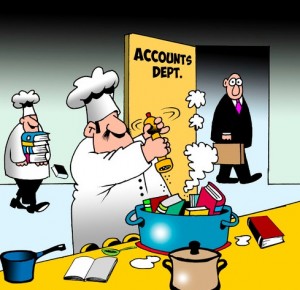
Cooking Books


Starbucks: Entrepreneurship 101

Mohamed A. El-Erian writes:   A recent visit to a hectic Starbucks store near Times Square in New York reminded me of one of the great achievements of real entrepreneurship and inspired innovation: taking an existing technology and turning it into something much more transformational in meeting — and often forming — the demands and needs of customers.

Many pathbreakers in business, such as Amazon, Apple, Google and Microsoft, succeed by creating something completely new. Their impressive deployment of one disruptive technology after another has comprehensively redefined existing industries and created new segments. They have empowered people and enhanced living standards around the world.

Less obvious — and sometimes counterintuitive — are the companies that take an existing activity and turn it into something much more consequential. Think of how Cirque du Soleil has revolutionized the circus experience. And how Starbucks, with more than 21,000 stores in 65 countries, has redefined coffee drinking, not only in the U.S. but also around the world, including Europe where skepticism was most intense. On recent trips to Europe, I couldn’t help but notice the brisk business the company’s increasing number of outlets conduct there (although, admittedly, I tended to stick to the more traditional cafes for my own daily consumption).

Now the challenge for Starbucks is to keep innovating as a dominant player in the industry. From the perspective of an outsider like me, it is succeeding through approaches that intelligently target different client segments. Three stand out.

First, Starbucks is doing more than just expanding and adapting its product line to enhance the experience of the coffee drinkers who constitute its core client base. It is also looking to improve their purchase experience in other ways, for instance reducing client wait times.

Second, it is experimenting with more products to tempt those who use its stores as an ad hoc office during the day.

Third, it is employing user-driven customization to expand its reach among groups such as teenagers and tweens.

Not everyone admires Starbucks. Those who dislike the company and its influence can become quite entrenched in their opposition. One of our local coffee houses actually developed an identity almost synonymous with being anti-Starbucks.

Yet regardless of how you feel about the company, it is hard to ignore how it is constantly innovating on the foundation of an old “technology.” Its approach is instructive for many other industries. Just imagine how many are waiting to be beneficially disrupted by this type of entrepreneurship.

 Innovation