Scottish Independence Referendum: Women Switching to Yes.

In a “poll of polls” conducted in autumn 2013, the average support for Yes was at 32%, with no at 49%. When accounting for undecided voters, this translated into to 39% for Yes, and 61% for No.

But in the most recent poll of polls, the difference has narrowed to four percentage points, with 48% polling Yes and 52% polling No. Early polls indicated a gender gap, with women more likely to be in favour of the union, but this gap appears to have closed in recent weeks.

For most of the campaign, polls suggested a strong lead for the No campaign – but that now appears to have narrowed significantly.

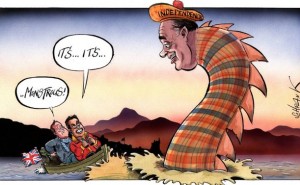
A poll published on September 7 by YouGov indicated that the Yes campaign had in fact pulled slightly ahead in the polls. A survey by pollster TNS BMRB, published late the next day, showed that both sides were polling at 41% for those definitely going to vote, with the rest of the electorate undecided.    Scottish Independence- A Beginner’s Guide

Scotch Independence

Three D Printing. A Future for Entrepreneurs

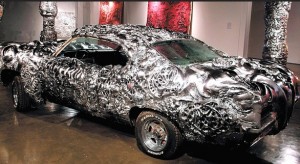
Layer by layer, inch my inch, the world’s first 3-D printed vehicle seemingly emerged from thin air this week on the floor of the International Manufacturing Technology Show in Chicago.

The Strati, named after the Italian word for layer, was printed in one piece over 44 hours using a process called direct digital manufacturing—the seamless fabrication of components from computer design to physical object. This is the first time this method has been used to make a car, one that also happens to be fully electric.

Mechanical components of the vehicle, including the battery, motor and suspension, were obtained from various sources, such as Renault’s urban electric car Twizy. A team of engineers will rapidly assemble the final parts of the vehicle today and, if all goes well, will take it on a historic first test.   Manufacturing by 3D Printing

3D Printed Cars?

Corruption in Health Care in Italy

Corruption in health care in Italy? A boulder. Lawlessness and corruption represent approximately, 5-6% of health care spending (5-6 billion euro). And ‘the picture that emerges from the conclusions of the draft of the final document of the hearings on the NHS, conducted in recent months by the united Commissions Budget and Social Affairs of the Chamber. Numbers were counted, especially in light of the feared cuts to health care.

A report said, numbers manipulation is “a worrying phenomenon that affects not only the efficiency and equity of services, but that undermines the relationship of trust between institutions and citizens, in an essential area for the life of the country where the health. ”

The lack of transparency, according to deputies, “promotes degenerative phenomena of inefficiency and injustice, undermining the roots of the same core values ​​of the NHS.”

Health Care Costs Manipulated

Renewable Fuel Standards Hotly Debated in US Political Races This Fall

“I do support RFS [Renewable Fuels Standard], I support biodiesel,” the state senator told a gathering of Iowa Farm Bureau members who’ve endorsed her. “I guarantee I am going to be there fighting for you and Iowa agriculture, I just want to make that very clear.”
Speaking in front of a vintage pickup truck and flanked by oversized plastic corncobs at the Heartland Acres Agribition Center — a museum for farming innovation — the Republican lawmaker jabbed opponent Rep. Bruce Braley (D-Iowa) for being “in the pocked of the EPA” and big-spending environmentalists backing his campaign.

The Senate Majority PAC, wealthy environmentalist Tom Steyer’s NextGen Climate Action, the League of Conservation Voters and the Democratic Senatorial Campaign Committee have all been on the air with significant ad buys this summer, outspending Republican-aligned groups by roughly $2 million since the primary.

Those groups have been pounding Ernst ever since it became clear she was a legitimate threat to defeat Braley for a seat held for three decades by retiring Sen. Tom Harkin (D-Iowa).

The ads include attacks on Ernst for saying earlier in the race that she opposed the renewable fuels standard. Critics in both parties have accused her of flip-flopping on the standards, which are highly valued by farmers who grow biofuel crops in the state.

Ernst, a farmer, took aim at Braley for a recent vote against “ditch the rule,” a plan that would restrict Environmental Protection Agency’s regulatory authority under the Clean Water Act and Ernst says protect Iowa farmers against government overreach.

“He broke with the Iowa delegation and voted against ditch the rule. So he voted against you as Iowa farmers,” she said.

She also mocked Braley’s criticism from earlier this year that Sen. Chuck Grassley (R-Iowa) was “a farmer from Iowa,” saying that Grassley, “who is just a farmer, a very brilliant one, he’s told me there’s nothing I won’t do to get you elected.”

In farm states in the US renewable energy is a big issue.

Corn in Iowa

n.

EU Making Nice with Russia

Trade deal with Ukraine delayed until 2015.

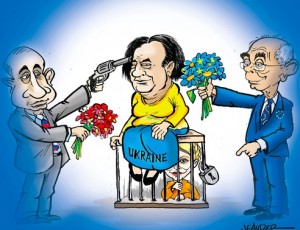
The European Union, Russia and Ukraine agreed on Friday to delay the implementation of an EU-Ukraine free trade pact until the end of next year, EU Trade Commissioner Karel De Gucht said.  Ukraine will continue to enjoy privileged access to the EU market until that date, he said, but it will not have to cut duties on imports from the EU in return.  The move appears to be at least partly a concession to Russia, which fears the EU-Ukraine agreement will harm its industry.

Russia has been urging the EU to refrain from implementing the free-trade pact with Ukraine until its concerns over the agreement are addressed.

The EU-Ukraine free trade pact is the centrepiece of a wide-ranging political and trade agreement which has been at the heart of Ukraine’s political crisis over the last year.  Moscow had threatened to introduce import tariffs on Ukrainian goods if Kiev went ahead with the planned trade agreement from Nov. 1.

Ukrainian President Petro Poroshenko had also asked the EU to consider allowing Kiev to delay reducing customs duty on EU exports coming into the Ukraine under the new pact, Interfax Ukraine news agency reported.  Allowing EU products more cheaply into the Ukraine market could initially create problems for the weak economy there.

“We will delay the provisional application of the (free trade agreement) until Dec. 31 of next year,” De Gucht told a news conference after talks with Russian Economy Minister Alexei Ulyukayev and Ukrainian Foreign Minister Pavlo Klimkin.

The EU will extend temporary tariff cuts it granted to Ukrainian products earlier this year until the end of next year, De Gucht said.  “The reason we are doing this .. is the very difficult economic situation in Ukraine.  This is part and parcel of a comprehensive peace process in Ukraine.”

The move also created a breathing space of 15 months in which Russia, Ukraine and the EU would continue talks to try to meet Russian concerns over the EU-Ukraine trade pact, he said.

Under the agreement, Russia and Ukraine will continue to apply preferential trade treatment to each other’s products under a free trade agreement among countries of the Moscow-dominated Commonwealth of Independent States.

Russian news agencies quoted Ulyukayev as saying earlier on Friday that Russia would introduce import tariffs on Ukrainian goods from Nov. 1 if Kiev went ahead with the trade pact with the EU.

Trade, Russia, EU, Ukraine

China, Russia and Mongolia Meet

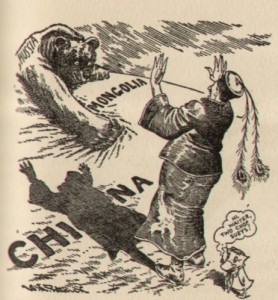
Wu Jiao writes:  The top leaders of China, Russia and Mongolia launched a three-party summit at which President Xi Jinping proposed a three-way economic corridor featuring cross-border infrastructure and trade development.  Calling their development highly complementary, Xi called for an economic corridor linking Beijing’s proposed Silk Road economic belt, Russia’s Trans-Eurasia railway and Mongolia’s passage to grassland initiative.

They should also beef up interconnectivity by railway and road, facilitate customs clearance and study the construction of cross-border power grids, Xi said at the meeting on the sidelines of the Shanghai Cooperation Organization summit in Dushanbe, Tajikistan.
Mongolian President Tsakhiagiin Elbegdorj said the country hopes to boost infrastructure and cross-border transportation through strengthening cooperation with the other two.
Observers said the summit highlighted the countries’ eagerness for close ties to fuel their economies and firm up their strength in the region.

Cooperation will mean more security along China’s northern border and a broader market, which will be a key for China’s Silk Road economic belt plan, said analysts.

It will be difficult for Mongolia to revive its sluggish economy and improve its international status if it continues sticking to its third neighbor policy, said Chen.  Landlocked Mongolia has long upheld a third neighbor policy to strengthen cooperation with Western countries and international bodies.  The mineral-rich country is experiencing its weakest growth in four years. Foreign investment plummeted 70 percent in the first half.  Hopefully new cooperation will turn these figures around.

Russia, Mongolia and China


Why Margin Debt is Meaningless in the New Normal

Tyler Durden writes: When it comes to funding, the most sophisticated market participants, hedge funds, have zero use for conventional cash exposure such as exchange margin, which is well below half a trillion, and instead obtain at least half of their funding needs in the shadow market via repo, to the tune of about $1 trillion (and likely more depending on one’s assumption about collateral reuse).  Why Margin Debt is Meaningless

Prime Brokerage for Hedge Funds

Wearable Robot in Development

The Wyss Insitute for Biologically Inspired Engineering at Harvard University is on its way to building a “wearable robot”: a biologically inspired smart suit that will fit comfortably under clothing and enhance the mobility of its wearer. On Thursday, this Soft Exosuit received a first-phase, $2.9 million funding contract from the Defense Advanced Research Protection Agency (DARPA), advancing development of the wearable robot that could eventually serve not just soldiers, but the elderly and those with disabilities.

The official release notes that DARPA’s Warrior Web program will seek to enhance the mobility of the healthy (like soldiers who may have to walk long distances) while restoring mobility of those with disabilities; for instance, those who suffer from strokes often have trouble walking.

What sets the Soft Exosuit apart from other existing wearable robots is the model’s lack of rigid components and cumbersome, sturdy outer shells and battery packs that make movement feel unnatural. The Exosuit uses soft textiles made to be worn under clothing and pulled on like a pair of pants. Once on, the biologically inspired suit is designed to mimic human movement while assisting joints in a carefully timed, unrestrictive manner.

Conor Walsh, assistant professor of mechanical and biomedical engineering at Harvard’s School of Engineering and Applied Sciences, shared in a statement, “While the idea of a wearable robot is not new, our design approach certainly is.”

Therefore, the success of the Soft Exosuit, and its ability to be used both among military personnel and the average civilian, is implied within its comfortable-wear design. To execute this, the Wyss Institute has partnered with Boston-based athletic footwear and apparel company New Balance as the Exosuit’s manufacturing advances. The release cites New Balance as a “key collaborator” that will bring “expertise in textile and apparel innovation” to the newest phase of the wearable robot. Wearable Robot

Ana Botin the Most Powerful European Banker

Ana Patricia Botin becomes the most powerful woman in European banking, succeeding her father as chairman of Banco Santander SA. (SAN)

Santander’s board named Botin, 53, to the top executive post at Europe’s second-biggest bank by market value. Botin replaces her father, Emilio, who died of a heart attack Sept. 9 at the age of 79.

Ana Botin, the eldest of six children with 26 years of service at Santander, takes over at the bank with 1.2 trillion euros ($1.6 trillion) of assets and lending operations in markets from the U.K. to Brazil, the U.S. and Poland as well as Spain.  The Botin family owns 2 percent of the bank and has helped run it since at least 1895.

“Family ownership has been a blessing,” said Peter Braendle, who manages 500 million euros in European equities, including Santander, at Swisscanto Asset Management AG in Zurich. “Ana has had a preparation that didn’t start five years ago. It began a long time ago and it was clearly very carefully planned.”

After joining Santander in 1988, she led acquisitions in Latin America in the 1990s and ran the Banesto Spanish retail unit before becoming CEO of Santander’s U.K. unit in 2010. The British business has been driving the bank’s return to earnings growth as Santander’s home market emerges from an economic slump.

Santander shares have climbed 42 percent since Marin was named CEO, compared with an 19 percent gain in the benchmark STOXX Europe 600 Banks Index over the same period.

The mother of three also said she wanted women to have the same opportunities as men. At Banesto, which she was running at the time, she tried to avoid having the bank hold meetings after 7 p.m. to prevent disruption to families.

She was educated at Santander’s Slaves of the Sacred Heart school and also in Switzerland and the U.K. and excelled at golf, becoming Spain’s junior champion in 1973 and 1974. She speaks five languages and graduated in economics from Bryn Mawr College in Pennsylvania.

In her new post, she’s assuming the most senior executive role by a woman at a large European bank. Lenders in Europe had almost no women in their top management teams at the onset of the financial crisis. While that is changing, their corporate-suite rise has been slower than in industries such as consumer goods and energy, McKinsey & Co. data show.

At the euro-area’s 10 largest banks by market value, women held about 5 percent of key executive jobs as of February, according to their filings. That was a third of the proportion at their 10 largest U.S. counterparts, which had 16 percent. Still, no woman has landed a chief executive job at any of the 10 largest U.S.-based banks that aren’t subsidiaries of foreign lenders.

Botin took over the U.K. unit after Antonio Horta-Osorio resigned to become CEO at Lloyds Banking Group Plc. Lower funding costs and efforts to win market share in higher-yielding small-business loans have propelled profits at the unit, which is now Santander’s biggest earner, contributing a fifth of profit compared with 19 percent for Brazil.
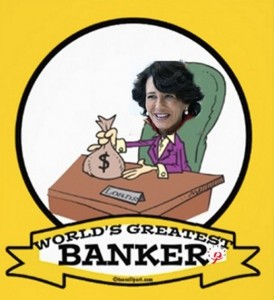
Ana Botin

Margrethe Vestage from Denmark, EU Competition Commissioner

Today, Margrethe Vestager (46), former Danish Minister of Economic Affairs and the Interior, and Deputy Prime Minister, has been appointed as EU Competition Commissioner. Vestager is a member of the Danish Social Liberal Party (SLP). She will succeed Spaniard Joaquín Almunia for a term of five years.

Vestager obtained a degree in economics from the University of Copenhagen in 1993. She has been active as head of section at the Ministry of Finance, special consultant at the Agency for Financial Management and Administrative Affairs and Head of Secretariat with the same agency.

At the age of 21, she joined the central board and executive committee of the SLP and of the European Affairs Committee. Upon graduating, Vestager immediately became National Chairwoman of the Party, until she became Minister of Education and Ecclesiastical Affairs in 1998.

In her role of Minister of Economic Affairs, she brokered an agreement requiring banks’ investors and bondholders to suffer losses in case of failure (bail-in), thereby providing important input for Almunia’s policy on government bank rescues. In addition, the successes in negotiations on overhauling bank capital requirements and the adoption of a law to safeguard derivative markets, are attributed to her diplomatic efforts, when she was leading the discussions with her fellow European Economy and Finance Ministers.

In a key paragraph in the Mission Letter of President Juncker, Ms. Vestager is requested to focus on:  “Mobilising competition policy tools and market expertise so that they contribute, as appropriate, to our jobs and growth agenda, including in areas such as the digital single market, energy policy, financial services, industrial policy and the fight against tax evasion. In this context, it will be important to keep developing an economic as well as a legal approach to the assessment of competition issues and to further develop market monitoring in support of the broader activities of the Commission.”

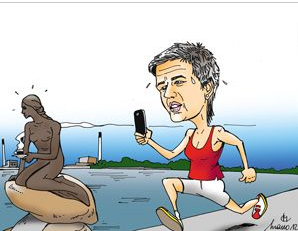
 Margrethe Vestager, Denmark