IMF Chief Lagarde High on Malaysia

International Monetary Fund (IMF) managing director Christine Lagarde says Malaysia and some Asian countries continue to enjoy reasonable economic growth and vibrancy, despite global economic risks.

Lagarde said the slowdown in China and its multiple transitions, lower commodity prices and anaemic demand globally as well as transition of monetary policy by the biggest central banks were some of the risks. But she said the situation also presented some opportunities. “Asia in general and certainly Malaysia are countries where there are reasonable growth and vibrancy, yield, and, if there is political stability and a business-friendly environment, economic activities, capital and investments will continue to move, too.”

“In Malaysia’s case, Bank Negara Governor Tan Sri Dr Zeti Akhtar Aziz has been a strong pillar and anchor of solidity, wisdom and training in Islamic finance and we owe it to her, if nobody else.” Lagarde, a former finance minister of France, has headed the fund since July 2011. Under her watch, the Washington-based IMF had shifted its policy on capital controls. Malaysia was criticised for implementing capital controls at the height of the Asian financial crisis in the late 1990s. “For many instances, once capital controls are in place, it is difficult and slow to remove them without creating significant disruption. “There are, and have been, situations like Iceland and Cyprus where we have recommended capital controls, or Greece, where the authorities decided capital controls as the ultimate response as everything had been tried without success.”

Malaysia's Economic Prospects

China’s Slowdown Impacts the World

On the Rocky Road to Globalization the impact of China’s slowing economy is felt around the world.

Paul Wiseman and Rod McGuirk write: China’s economic troubles have dropped on the doorstep of a sun-weathered house at 18 Edgar St. in Port Hedland on Australia’s northwest coast.

Four years ago, the 50-year-old home, fabricated from cheap asbestos cement, sold for the equivalent of $1.3 million. It’s now for sale again — recently priced at $310,000.

What happened to $1 million in home equity? It vanished down the China sinkhole.

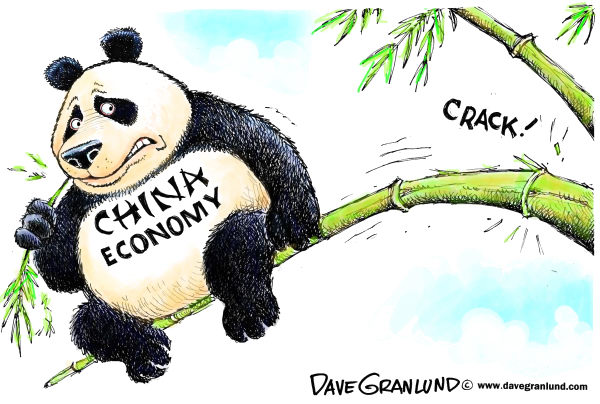
From Australia to Zambia, Chile to Indonesia, the pain of China’s sharp economic slowdown is being felt in the form of depressed commodity prices, elevated unemployment and shrunken home prices in towns like Port Hedland that once thrived from supplying materials to Chinese factories.

China’s deceleration isn’t surprising. The extent of the collateral damage is. And it’s raising fears of a global recession.

Noting that the harm from China’s woes has been worse than expected, the International Monetary Fund has downgraded its outlook for worldwide growth this year to 3.1 percent, which would be the slowest since the recession year of 2009.

Citigroup has warned of a possible new worldwide recession caused by China’s slump. So has the Organization for Economic Cooperation and Development.

China has an outsize effect on the world because it accounted for 30 percent of global growth last year, up from just 13 percent a decade earlier, according to the World Bank. The impact is seen in Standard & Poor’s GSCI commodities index: The index, reflecting prices of 24 items, including crude oil, copper and cattle, shrank 19 percent from July through September

What is sure is that an impact is being felt in countries that export raw materials___

AUSTRALIA

China’s investment boom richly benefited Australia. Between 2007 and 2013, the percentage of exports to China jumped from 14 percent to 36 percent — the biggest such share among wealthy countries, according to the Peterson Institute for International Economics. Australian iron ore, coal and copper fed China’s factories.

The China connection shielded Australia from the Great Recession: Unlike the United States and the countries that use the euro currency, Australia’s economy kept growing through the recession years of 2008 and 2009.

But Australia was uniquely vulnerable to China’s slowdown and its move away from heavy investment. Australia produces a third of the world’s iron ore, and China’s slump has sent the price of iron ore from a peak of $185 per metric ton in 2011 to below $60. The research firm AlphaBeta notes that every 1 percent drop in China’s investment shaves 0.2 percentage point off Australia’s economy.

CHILE

China’s troubles have delivered a painful blow to Chile, the world’s top copper producer. Its economy grew just 1.9 percent last year, the weakest since 2009. As China’s demand dropped, the price of copper went into freefall — to a six-year low $2.25 a pound. The state-owned miner Codelco has reduced or delayed projects, including the expansion of its main Andina mine and a plan to turn the world’s largest open-pit mine into an underground operation.

Chileans are suffering. Mining jobs offered low-income families their best shot at middle-class lifestyles. Now, the mines are retrenching. In September, Arizona-based Freeport-McMoran laid off more than 640 workers at its El Abra copper mine in northern Chile.

INDONESIA

Arbona Hutabarat of Bank Indonesia, the country’s central bank, says every 1 percentage drop in China’s economy cuts 0.6 percentage point off Indonesia’s. The IMF thinks Indonesia’s economy this year will post its weakest growth since 2002: 4.7 percent.

Indonesia’s exports have sunk 13 percent through September from a year earlier. Exports to China are down 21 percent. The coal industry has been slammed. In the province of East Kalimantan, 125 coal-mining companies have suspended operations, putting 5,000 miners out of work, according to the industry journal Coal Age.

ZAMBIA

The African nation of Zambia is 6,300 miles from the factories of southern China, but its economy is absorbing a direct hit from the slowdown in China’s growth and demand for copper.

Zambia‘s currency, the kwacha, has dropped 53 percent against the dollar this year. A weak currency stokes inflation. So Zambia’s central bank has raised its benchmark interest rate to 15.5 percent — which will likely squeeze the economy just as it is weakening.

Glencore, an Anglo-Swiss commodities company and one of Zambia’s biggest employers, is cutting 4,000 jobs at the Mopani Copper Mine. The Konkola Copper Mine has laid off 150 and is expected to cut more.

The Chinese-owned company CNMC Limited has suspended operations at the Baluba mine in Luanshya, laying off 1,600. Spokesman Sydney Chileya blamed plummeting copper prices.
China's Slowdown


South Africa Needs to Play Catchup

Acha Leke and Michael Katz write:  A paradox of Sub-Saharan Africa’s rapid economic expansion is the fact that the region’s most sophisticated economy seems not to be part of it. Since 2008, South Africa has recorded average annual GDP growth of just 1.8%, less than half the rate of the previous five years. Sub-Saharan Africa is porjected to grow at a rate of close to 5% next year, but South Africa is projected at about 1% growth. More worrying still, the country’s 25% unemployment rate  is one of the highest in the world.

Countries across the continent are constructing the roads, ports, power stations, schools, and hospitals.  They need to sustain their growth and meet the needs of their fast-growing and urbanizing populations.  They need most of all is expertise.

But while South Africa has highly capable architecture, construction, and engineering sectors, its current share of foreign-built projects in Sub-Saharan Africa stands at only 7%, compared to 32% for China.

The opportunities are not limited to the construction industry. South Africa has the know-how to meet Africa’s burgeoning need for a wide range of services, from banking and insurance to retail and transport. The country currently provides only 2% of Sub-Saharan Africa’s service imports – a market worth some $40 billion annually.

South Africa is home to several well-established, innovative banks that are well placed to offer low-cost, digital services to millions of currently unbanked African households and businesses. Indeed, South African banks already command a 12% share of Sub-Saharan Africa’s banking market.

South Africa has a highly developed insurance sector, with a long history of creating products for every demographic and income level. It is ideally placed to provide insurance to the rest of Sub-Saharan Africa, where just 1% of households have insurance of any kind.

South Africa also has been punching below its weight in merchandise trade.

The key to reigniting South Africa’s economic growth is an ambitious regional strategy driven by government and business leaders working in partnership. A massive scale-up of vocational education is particularly important, as this will provide young South Africans with the technical skills needed to support the expansion of export industries. Putting in place infrastructure to support growth – notably power generation, which currently lags demand – will also be crucial.

South Africa’s economic transformation since its transition to democracy two decades ago has been remarkable. But its renaissance is in danger of running out of steam. Only by boldly seizing the initiative can South Africa put itself at the core of Africa’s economic renewal, and only by embracing its role as regional leader can it revitalize its own prospects.

African growth?


Encouraging Ponzi Borrowing with Low Interest Rates?


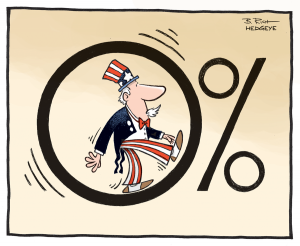
Daniel Gros writes:   Stubbornly low inflation has the European Central Bank worried. But its response – essentially just more quantitative easing – could backfire, exacerbating imbalances and generating serious financial instability.

As it stands, the headline consumer price index in the eurozone hovers around zero, and even core inflation remains below 1%.

Instead of rethinking its strategy, the ECB is considering doubling down: buying even more bonds and lowering its benchmark interest rate even further into negative territory.

Easier credit conditions and lower interest rates are supposed to boost growth by stimulating investment and consumption demand. But in the core of the eurozone – countries like Germany and the Netherlands – credit has been plentiful, and interest rates have been close to zero for some time, so there was never much chance that bond purchases would have a significant impact there.

Of course, in the highly indebted peripheral countries, there was room for interest rates to fall and for credit supply to grow – and they have, leading governments and households to increase their spending. While the asymmetrical impact of the ECB’s policy is appropriate in principle, recovery supported by the least solvent economies is not sustainable.

Back in 1986, Hyman Minsky warned about the longer-term dangers to financial stability if “Ponzi” borrowers – those who can service their debt only with new debt – become the main pillar of the economy. A zero-interest-rate environment is of course ideal for such borrowers, because there is nothing to provide an indication of solvency; borrowers can just roll over their debt.

The standard response to Minsky’s concern – that the spenders can’t afford it and the savers aren’t spending – is that monetary policy should focus on ensuring price stability, while macroprudential policy aims to safeguard financial stability by limiting borrowing by highly indebted agents.

After the 2001 recession in the US, although the Federal Reserve kept interest rates low for a protracted period, the corporate sector did not increase its investment. The recovery was ultimately fueled by so-called “subprime” mortgages: home-purchase loans extended to borrowers with lower credit ratings. The result, as we know, was a mega-bubble that triggered the 2008 financial crisis.

In the eurozone’s case, the risk is compounded by the ineffectiveness of its key macroprudential limiting countries’ spending, as lower interest rates give debtor countries leeway to spend more. Public debt as a share of GDP is on the rise in Italy and Spain, even though both countries, with their eurozone partners, have committed to reducing the debt ratio.

In short, monetary policy is perpetuating the disequilibrium between creditor and debtor economies in the eurozone, and macroprudential policy is doing nothing to stop it. When interest rates normalize, this could generate serious financial instability. But – and this is the conundrum – the ECB has few options for stimulating demand among the eurozone’s more solvent agents, and thus supporting a sustainable recovery..

A recovery has already begun in the eurozone. It should be left to run its course. An even more expansionary monetary-policy stance might strengthen the recovery marginally, but at the cost of increasing the eurozone’s already-dangerous imbalances.

Uncle-Sam-Running-on-Zero-Percent-Interest-Rates-cartoon

Entpreneur Alert: The Rich Get More Comfortable

Cessna is building roomier, more comfortable jets for bigwigs.  Long gone are the days when steel CEO’s flew coach.

Textron Inc.’s Cessna probably will introduce its largest-ever business jet next week to meet customers’ demand for roomier, more-comfortable cabins and longer range.

The new plane is expected to fly as far as 4,000 nautical miles (7,400 kilometers), giving it the ability to make international trips, and resurrects a concept that was abandoned during the 2009 recession.

Cessna also may unveil changes to the Longitude, which has been the biggest plane on the company’s books since its 2012 introduction but hasn’t yet been built. Vincent said the range would be cut 15 percent to 3,400 nautical miles and the engines switched to Honeywell International Inc. models from Safran SA. Textron, Honeywell and Safran spokesmen declined to comment.

A revised Longitude probably will remain a $26 million aircraft, while the new plane may be priced at $30 million to $35 million.

The new plane’s ceiling will be taller than the 6-foot (1.8-meter) cabin in Cessna’s Latitude Being able to stand upright is a crucial sales point for buyers shelling out millions for the convenience and luxury of private aircraft.

Large and midsize models have led a rebound in the business-jet market since the global financial crisis. Cessna already has revamped its smaller jet lineup to fight a sales decline caused by the economic slump and the entry of Brazil’s Embraer into corporate aviation a decade ago.

Cessna’s new jet would enable customers to “move up the food chain to a larger plane” and take advantage of financial troubles at Bombardier, which got a bailout from Quebec’s government because of delays to the C Series jetliner program, Foley said.

New models have been a hallmark of Scott Donnelly’s tenure since he came to Textron in 2009 from General Electric.

More comfortable jets


Entrepreneur Alert: Extra Virgin Olive Oil?

Two Spanish businessmen were sentenced to two years in prison in Cordoba for selling hundreds of thousands of litres of supposedly extra virgin olive oil that was, in fact, a mixture of 70-80% sunflower oil and 20-30% olive.

In 2008, Italian police arrested over 60 people and closed more than 90 farms and processing plants across the south after uncovering substandard, non-Italian olive oil being passed off as Italian extra virgin, and chlorophyll and beta-carotene being added to sunflower and soybean oil with the same aim.

Most alarmingly, a study last year by researchers at the University of California, Davis and the Australian Oils Research Laboratory concluded that as much as 69% of imported European olive oil (and a far smaller proportion of native Californian) sold as extra virgin in the delicatessens and grocery stores on the US west coast wasn’t what it claimed to be.

Extra virgin oil is mixed with a lower grade olive oil, often not from the same country. Meanwhile, the chemical tests that should by law be performed by exporters of extra virgin oil before it can be labelled and sold as such can often fail to detect adulterated oil, particularly when it has been mixed with products such as deodorized, lower-grade olive oil in a sophisticated modern refinery.

The olive, in more than 700 varieties or cultivars, has been grown for its oil in the Mediterranean since 3000 BC. Unlike most vegetable oils, which are extracted from seeds or nuts, good olive oil is made using a basic hydraulic press, or more modern centrifuge, so it is more a fruit juice than an industrial fat.

Like any fresh product, olive oil deteriorates over time. The public are just not aware of what’s going on. There’s plenty of oil out there that’s rubbish: last year’s oil or older. Or not even olive oil.

How to buy olive oil: Find a seller who stores it in clean, temperature-controlled stainless steel containers.   topped with an inert gas such as nitrogen to keep oxygen at bay, and bottles it as they sell it. Ask to taste it before buying.  Favor bottles or containers that protect against light, and buy a quantity that you’ll use up quickly. Don’t worry about color. Ensure that your oil is labelled “extra virgin.”  Try to buy oils only from this year’s harvest – look for bottles with a date of harvest. Failing that, look at the “best by” date which should be two years after an oil was bottled..


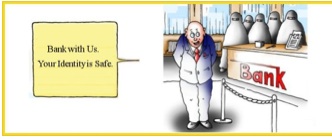
Bringing the Islamic World Into the Banking System

Kyrgyzstan will open a new bank, operating on Islamic principles of financing, the National Bank of the Kyrgyz Republic reported.

During an international financial conference “Islamic Finance: Response to the global aspirations” the meeting of the head of the National Bank Tolkunbek Abdygulov and the President of the Islamic Development Bank (IDB) Ahmad Mohamed Ali Al-Madani was held. They discussed prospects for the development of the economy of the Kyrgyz Republic, the establishment of a joint commercial bank which will work according to the principles of Islamic finance and the possible opening of IDB representative office in Kyrgyzstan.

“Tolkunbek Abdygulov and the Managing Director of the International Monetary Fund Christine Lagarde also discussed directions of further cooperation between Kyrgyzstan and the IMF. Christine Lagarde noted the concerted actions of the National Bank and the Government of the Kyrgyz Republic in the conduction of monetary and fiscal policy. A plan of possible joint actions amid the crisis was drawn up,” the National Bank of the Kyrgyz Republic says.

Islamic Banking

Drug Pricing: Market Conundrum?

Pricing in the pharmaceutical markets is dicey.

When the new owners of a life-saving AIDS drug raised its price by 5,000%, an online backlash forced the CEO to change his mind. While the public might have been outraged, this was hardly the first time the pharmaceutical industry the failed to make a cheap-to-produce but essential medicine easily available to those who need it.

Experts warned that a vital snakebite antidote had been withdrawn from the market by its manufacturers and that soon there would be no equivalent treatment available at all.

Too often the knowledge and the means to save lives are put at risk by problems with the pharmaceutical market. When these medicines are already developed and can be produced at modest cost, it is all the more frustrating and morally questionable.

We live in a world where the economic system can generally be relied upon to produce things that people want or need – even when those wants and needs could be viewed as trivial.

The arrangements in the markets for life-saving medicines – – especially those that target diseases prevalent in low-income countries – – are complex. They are characterised by powerful interests, on the sides of both producers and purchasers.

One obvious way we can see this is in how a drug’s developer is granted a legal monopoly over its sale through patents and licenses, preventing other companies from reproducing the same drug at a cheaper price. Producers then can (and do) sometimes target very high prices.

Some producers point to the very high costs and substantial risks associated with developing new drugs to justify these prices. They argue the patent system is a means of generating the necessary finance for these risky investments.

Through the patent system we are inherently relying on prices to generate incentives for investments. This makes life-saving drugs often unaffordable and skews investment in favour of those drugs that can command the highest prices rather than those that may save the most lives.

More is spent on R&D for minor ailments in high-income countries, such as for hair loss, than for major global killers afflicting mainly the poor, such as malaria.

Against this backdrop, big purchasers such as governments and aid agencies try to steer a course between negotiating lower prices and encouraging investment in new drugs – and keeping existing ones on the market. They too have limited budgets and cannot know for sure what prices they can afford in the long run.

This means the availability of drugs and the direction of R&D expenditures depend upon the actions of multiple agencies across different countries. If the negotiations go wrong or buyers don’t signal enough demand to manufacturers, vital drugs such as snakebite antidotes may cease to exist.

Drug Pricing

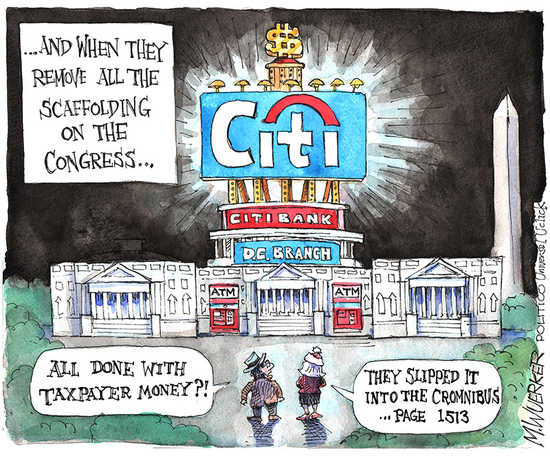
Resurrecting Dodd Frank?

After reportedly finding that partial repeal of Dodd-Frank Act language allows banks to keep trillions in risky trades on the books, U.S. Sen. Elizabeth Warren, D-Mass., called on the Securities and Exchange and Commodity Futures Trading Commissions Monday to implement rules that protect taxpayers and the financial system.

Warren, who joined Maryland Rep. Elijah Cummings in investigating the risks posed to taxpayers following the 2014 partial repeal of the law, also asked the Government Accountability Office to analyze the impact of the modified Dodd-Frank provision.

According to Warren and Cummings’ review, rollback of the section of the law designed to prevent taxpayer bailouts of federally insured banks with risky swaps holdings, now allows banks to keep nearly $10 trillion in swaps trades on their books. The Democrats also found that regulators have failed to analyze the financial and taxpayer risks posed by the repeal.

In a letter to the CFTC and SEC, Warren and Cummings urged the federal agencies to “act quickly to mitigate the risks posed by uncleared swap activities by imposing strong margin requirements for swaps between bank affiliates and other entities under (their) authority.”

Warren and Cummings urged the GAO Comptroller of the total value of swaps U.S. banks originally would’ve been required to “push out” under the provision; an estimate of the total value of swaps U.S. banks will now be required to “push out” under the revised language; and a quantified assessment of the risks implementation of the section would’ve created for U.S. banks.

“The failure to assess the impact on banks and the economy of the repeal of Section 716 raises critical questions about whether federal policymakers are sufficiently attentive to the risk posed by nearly $10 trillion in risky swaps now primary held – and allowed to be traded and held on an ongoing basis – by a handful of the country’s largest FDIC-insured banks,” they wrote. “Understanding this risk is critical as policymakers continue to make decisions about how banks are regulated.”

The 2015 Consolidated and Further Continuing Appropriations Act modified the Dodd-Frank Act section.

Warren and Cummings, who contended that the change was made without debate and after intense lobbying from the financial industry, launched their own investigation into its potential impacts.

Securing Dodd Frank

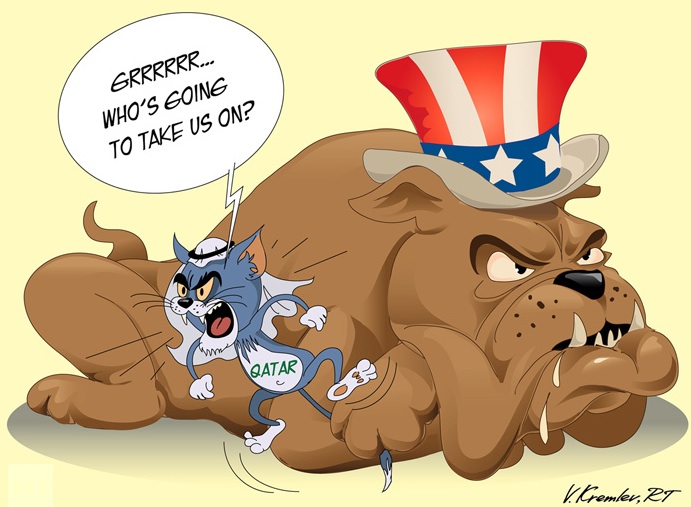
State-Controlled Institutions in Qatar Under Review

Declining oil prices in the Mid-East require close supervision of state budgets and state-controlled institutions.

The Minister of Finance Ali Sharif Al Emadi confirmed that the operational spending in the state-controlled institutions is subject to an ongoing review by the Ministry of Finance, in the context of the actions carried by the State of Qatar to face declining oil prices.

At a joined press conference with the Director of the International Monetary Fund (IMF) Christine Lagarde, following the joint meeting of the GCC Finance Ministers with the Governors’ committee and the IMF Director, held in Doha today, HE the Minister of Finance pointed out that this review began nearly two years ago. There would be a reduction in the operating budgets of most government agencies through the 2016 budget, he stressed.

HE Ali Al Emadi went on saying that the new budget will focus on the key projects which will continue at the same pace and at reasonable cost, pointing that Qatar is studying a number of options for tackling the projected deficit in the 2016 budget. Technical committees are examining these options,

With regard to the options of tackling the 2016 budget deficit, HE Al Emadi said that financing of this deficit will be through internal sources or borrowing from the domestic and foreign market, ruling out possibility of withdrawing from the State’s cash reserves or resorting to Qatar Investment Authority (QIA).

HE the Minister reviewed the topics discussed at the meeting, saying that discussions focused on the strong financial status enjoyed by the Gulf states, and large financial surpluses, they achieved in the past years.

IMF Director Christine Lagarde praised Qatar’s policies for facing the issue of declining oil and gas prices.

She added that Gulf states should review the fiscal and monetary policies in accordance with global developments, especially with the decline in oil prices, noting the importance of supporting the private sector and its participation in the development as well as the rationalization of public expenditures and the development of markets to allow more foreign investment.

Qatar