Can Merkel Deliver Hope for Greece?

Yanis Yaroufakis writes:  On September 6, 1946 US Secretary of State James F. Byrnes traveled to Stuttgart to deliver his historic “Speech of Hope.” Byrnes’ address marked America’s post-war change of heart vis-à-vis Germany and gave a fallen nation a chance to imagine recovery, growth, and a return to normalcy. Seven decades later, it is my country, Greece, that needs such a chance.

Until Byrnes’ “Speech of Hope,” the Allies were committed to converting “…Germany into a country primarily agricultural and pastoral in character.” That was the express intention of the Morgenthau Plan, devised by US Treasury Secretary Henry Morgenthau Jr. and co-signed by the United States and Britain two years earlier, in September 1944.

Prior to Byrnes’ speech, and for a while afterwards, America’s allies were not keen to restore hope to the defeated Germans. But once President Harry Truman’s administration decided to rehabilitate Germany, there was no turning back. Its rebirth was underway, facilitated by the Marshall Plan, the US-sponsored 1953 debt write-down, and by the infusion of migrant labor from Italy, Yugoslavia, and Greece.

Europe could not have united in peace and democracy without that sea change. Someone had to put aside moralistic objections and look dispassionately at a country locked in a set of circumstances that would only reproduce discord and fragmentation across the continent. The US, having emerged from the war as the only creditor country, did precisely that.

Today, it is my country that is locked in such circumstances and in need of hope. Moralistic objections to helping Greece abound, denying its people a shot at achieving their own renaissance. Greater austerity is being demanded from an economy that is on its knees, owing to the heftiest dose of austerity any country has ever had to endure in peacetime. No offer of debt relief. No plan for boosting investment. And certainly, as of yet, no “Speech of Hope” for this fallen people.

It is the mark of ancient societies, like those of Germany and of Greece, that contemporary tribulations revive old fears and foment new discord.

As I write these lines, the Greek government is presenting the European Union with a set of proposals for deep reforms, debt management, and an investment plan to kick-start the economy. Greece is indeed ready and willing to enter into a compact with Europe that will eliminate the deformities that caused it to be the first domino to fall in 2010.

But, if Greece is to implement these reforms successfully, its citizens need a missing ingredient: Hope. A “Speech of Hope” for Greece would make all the difference now – not only for us, but also for our creditors, as our renaissance would terminate the default risk.

A “Speech of Hope” for Greece does not have to be technical. It should simply mark a sea change, a break with the past five years of adding new loans on top of already unsustainable debt, conditional on further doses of punitive austerity.

Who should deliver it? In my mind, the speaker should be German Chancellor Angela Merkel, addressing an audience in Athens or Thessaloniki or any Greek city of her choice.

Hope was a force for good in post-war Europe, and it can be a force for positive transformation now. A speech by Germany’s leader in a Greek city could go a long way toward delivering it.

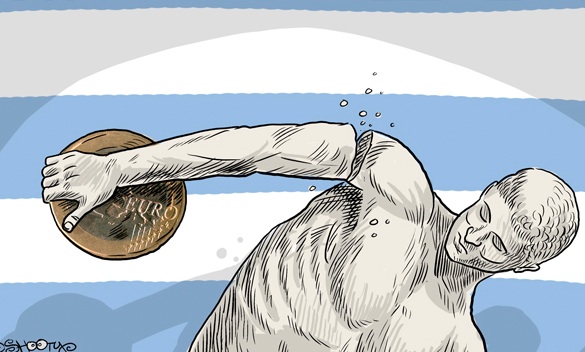
Hope for Greece?

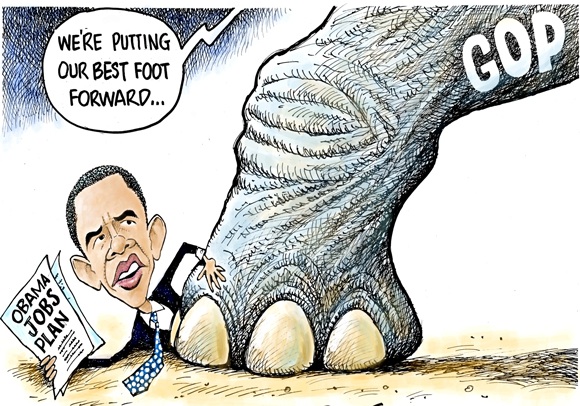
US Pres Race, Jobs, and Record of US Govs.

1. Ohio Gov. John Kasich

In Office: Jan. 2011 – present

Kasich will have quite a story to tell if he enters the race for the White House.

When the former congressman entered the governor’s mansion in 2011, his state’s unemployment rate was 9.2 percent. In the most recent confirmed figures, for March 2015, it is 5.1 percent. The improvement is not just dramatic in itself, it also outpaces the nation as a whole. Importantly, Kasich’s record comes in an industrial — and electorally crucial — state in the Midwest which detractors had argued was in a near-inexorable decline.

Kasich supporters point to a number of moves that they believed helped the economy along, including his replacement of a state board aimed at economic development with a private non-profit organization, JobsOhio. He has often noted that he erased a projected $8 billion budget shortfall without raising taxes.

Skeptics, however, assert that President Obama’s bailout of the auto-industry had as significant an effect in reviving Ohio’s fortunes as anything Kasich has done.

2. Former Texas Gov. Rick Perry

In Office: Dec. 2000 – Jan. 2015

Note: Texas is a state committed to support business, and its jobs’ record is associated with this commitment.

Perry put his economic record in the Lone Star State front-and-center when he officially launched his campaign last week, claiming to have created 1.5 million new jobs in the last seven years of his tenure and to have “led the most successful state in America.”

When Perry took office a decade and a half ago, unemployment levels in the state were more than half a percentage point higher than the nation’s. By the time he left, joblessness in Texas was 4.4 percent, versus a nationwide 5.7 percent.

Perry backers note that Texas still has no state income tax and is light on regulation. Perry generally made sure that whatever tax hikes he did agree to were politically sellable to conservatives: a new tax on strip clubs was a notable example.

One contentious issue is the economic impact of Texas’ rapid population growth.

Perry boosters argue that his record on jobs is even more impressive given that the state’s population grew by around 26 percent during his time in office, versus a national population growth of around 11 percent.

Others, including left-leaning economist Paul Krugman, have suggested the influx actually helped speed economic growth by keeping labor costs low.

3. Former Florida Gov. Jeb Bush

In Office: Jan. 1999 – January 2007

Unlike Kasich and Perry, Bush was out of office before the Great Recession scythed down jobs everywhere.

His state’s performance on jobs was better than that of the nation during his tenure.

In the month he left office, joblessness in Florida was at 3.5 percent compared to a national rate of 4.6 percent. When he took office, eight years before, the Florida unemployment rate had also been below that of the U.S., but by a more modest amount.

Bush, who has difficulties with his party’s conservative base on some non-economic issues such as immigration, is on more solid ground when it comes to the economy. A Wall Street Journal assessment last year noted noted that he had vetoed $2 billion in government spending during his time in office.

Still, not everything he touched turned to gold. Reuters earlier this year noted how he spearheaded one of the biggest development projects in the state’s history — an effort to create a biomedical hub in a Palm Beach County town — but the outcome fell short of expectations.

GOP and Jobs

Plodding to Solution on Greek Debt?

Ian Talley writes:-International Monetary Fund chief Christine Lagarde signaled that debt relief would still be a necessary component of any bailout package for Greece to ensure the program would rescue its beleaguered economy.

Led by fiscal hawk Germany, some European creditors have opposed debt relief as part of a bailout package for Greece, instead urging tougher economic overhauls from Athens. That position has been at odds with the new government in Athens that has an antiausterity stance and a requirement for European creditors to restructure their Greek debt holdings, which have stalled bailout talks for months.

A new proposal by Greece’s creditors–the IMF, the European Commission and the European Central Bank–offered Athens a slower pace of budget belt-tightening and, according to some reports, a softening of the IMF’s requirement for debt relief

But Ms. Lagarde said any slippages from the last bailout program would mean “financing has to be considered.” Greece has failed to meet many of its bailout targets.

“And financing is a factor of the level of the debt, which itself is a factor of the maturity and interest rates at which debt has been accumulated.  Everything has to add up at the end of the day,” she said.

Under the bailout program Athens is currently trying to renegotiate, the IMF said debt relief was required by Greece’s European creditors for the deal to be credible. In particular, the IMF assumed Europe would help Athens cut the ratio of its debt-to-gross domestic product to 124% by 2020, and in 2022 a debt-to-GDP ratio substantially lower than 110%. That, officials indicated, would likely mean some combination of debt maturity extensions, lowering of interest rates or even a cut in the underlying value of the bonds.

To be sure, that debt relief was contingent upon Athens living up to its bailout conditions, which it failed to do.

Such debt relief is a political anathema in Germany, and Berlin has fought against inclusion of any mention of debt relief in a new bailout package.

Given that Greece’s economic situation has deteriorated with the deadlock in bailout talks and officials are considering weakening the budget-tightening requirements, it would naturally entail more financing–including debt relief–to meet the debt levels the IMF said were necessary to be credible and sustainable.

 Greek Debt

Who Do Stock Buybacks Help?

Michael Kranish writes:  Senator Elizabeth Warren this week called on the Securities and Exchange Commission to launch an examination of rules that allow US companies to buy back billions of dollars of their own stock, a practice that she said is undermining the economy.

California-based Cisco laid off 182 workers in Boxborough at the same time it was spending billions of dollars to repurchase its own stock, said that while buybacks may temporarily boost stock price for companies, they often hurt workers.

“Stock buybacks create a sugar high for the corporations. It boosts prices in the short run, but the real way to boost the value of a corporation is to invest in the future, and they are not doing that,” Warren said.

Under a 1982 rule change, the SEC assured corporations they wouldn’t be charged with market manipulation if they repurchased large amounts of their stock. Warren wants that rule changed.

“These buybacks were treated as stock manipulation for decades because that is exactly what they are,” she said. “The SEC needs to recognize that.”

Warren also said that she is co-sponsoring legislation called the Stop Subsidizing Multimillion Dollar Corporate Bonuses Act, which would revise 1993 legislation that enabled corporations to tie an executive’s pay to a company’s share price and make such pay tax-deductible.

While the 1993 bill was touted by then-President Bill Clinton as a way to curtail annual salaries exceeding $1 million, it had the opposite effect, prompting many companies to repurchase shares in an effort to boost stock prices, which in turn boosted the value of executive stock options and awards.

“We need to close the loophole that gives corporations a tax break when they give CEOs the giant stock payments,” Warren, a Massachusetts Democrat, said.

Buybacks have become one of the primary drivers of the stock market. US companies announced a record amount of buyback authorizations in April, and the trend is expected to continue this year. Many corporations say they buy back shares because they have excess cash and believe their stock is undervalued.

While the S&P 500 companies spent a record amount last year on capital expenditures before declaring their profits, they had far less of their profits available for investment in their business than in prior decades. In the 1980s, such companies had 70 percent of their profits available for reinvestment, with the rest spent on dividends. Last year, these companies spent all but 2 percent of their profits on dividends and stock buybacks.

The SEC last month was asked by Senator Tammy Baldwin, the Wisconsin Democrat, to examine the impact of its stock buyback rule, but so far the agency hasn’t delivered a response, according to a Baldwin aide.

Stock Buyback


Should the US DOD Buy American?

United States Senators Elizabeth Warren (D-Mass.) and Edward J. Markey (D-Mass.) today introduced an amendment to the National Defense Authorization Act (NDAA) that asks the Department of Defense (DOD) to accelerate efforts to provide American-made athletic shoes to Armed Forces recruits. A statute known as the Berry Amendment requires DOD to spend appropriated funds only on products made in the U.S. that pass the military’s performance standards. U.S. companies, including Massachusetts-based New Balance, are able to manufacture Berry Amendment-compliant footwear, but DOD continues to delay its purchase of these products.Shou

“Long ago Congress required the Department of Defense to purchase American-made supplies whenever possible, giving our troops high-quality equipment while supporting U.S. businesses,” said Senator Warren. “American companies are ready and able to manufacture athletic shoes that meet the military’s needs, but DOD continues to delay their purchase. Now that American-made footwear has been tested and approved for military use, DOD should move quickly to provide this gear to servicemembers.”

“If U.S. companies like New Balance commit to manufacturing American-made sneakers, we should commit to putting them on our servicemembers’ feet,” said Senator Markey. “We can support our troops with high-quality gear and U.S. companies and workers with good jobs, but we need DOD to do what they committed to doing. It’s time for DOD to stop the delays and move quickly to purchase these products, and I will continue to work with Senator Warren and Rep. Tsongas to make sure this gets done.”

In 2013, Congress required DOD to determine whether there are domestic manufacturers of Berry Amendment-compliant athletic footwear that meet the military’s needs. More than a year ago, in April 2014, DOD issued a new policy stating that the Armed Services would seek to ensure recruits use Berry Amendment-compliant footwear.

A New Balance shoe was approved as the first Berry Amendment-compliant footwear earlier this year; however, DOD testing of other shoe models could delay the purchase of American-made footwear into winter of 2015 or early 2016, a full eighteen months after DOD issued its new policy.

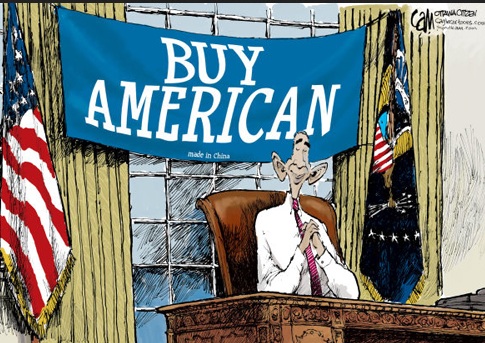
 Buy American

Two Americas? Lagarde Detects the Less Fortunate?

Median inflation-adjusted household income is down 5.3% in the past 8 years. One America has enjoyed migrating from $54,674 to $51,939.

A simple “Two Americas” income analysis is brutal and increasingly brutal: College, $45,400; High School, $25,900.

Emmanuel Saez, of Berkeley, suggests that in four years 2009 to 2012, across 39 states, the “top 1%” captured 95% of Total Income Growth.

“John Kerry and I believe that we shouldn’t have two different economies in America: one for people who are set for life, they know their kids and their grand-kids are going to be just fine; and then one for most Americans, people who live paycheck to paycheck…”

That was of course John Edwards speaking to the Democratic National Convention, July 28, 2004.

Just to get your attention, median inflation-adjusted household income is down 5.3% in the past 8 years. One America has enjoyed migrating from $54,674 to $51,939.

A simple “Two Americas” income analysis is brutal and increasingly brutal: College, $45,400; High School, $25,900.

Emmanuel Saez, of Berkeley, suggests that in four years 2009 to 2012, across 39 states, the “top 1%” captured 95% of Total Income Growth. (Whatever that is. I presume it includes investment capital-gains taken. The “top 1%” never takes a capital-loss.)

97.3% of college grads are employed. At 2.7% unemployment, that compares to a 5.8% unemployment for high school graduates. I would suggest 114% of readers disagree with the above unemployment numbers: they have to be higher.

This was a great jobs report. Even with that, we received mixed messages including one Bill Gross defending the caution of Christine Lagarde. Part of that deserved caution is about how one America has reached escape velocity and another is stuck on the ground.

Madame Lagarde has asked Chair Yellen to keep the punch bowl filled to the brim. Countless disagree with the IMF when looking at a nice part of the nation. Maybe, Lagarde and Gross are looking at a less nice all-in America, a Union first described by John Edwards.


Slovakia: High Disposable Income and Low Unemployment

Michael Grogan writes:  While Slovakia is a member of the Eurozone, its growth trajectory has been markedly different to that of many Eurozone countries. Private consumption has been a driver of growth in the country, with the same rebounding by 2.2 percent in 2014, which was the product of higher disposable income and decreasing unemployment rates. Moreover, Slovakia is on track to obtain a budget deficit below 2 percent, standing at a current rate of 2.8 percent of GDP; which is just slightly higher than the 2.3 percent figure for Germany.

Moreover, the country’s financial system appears to be in very good shape. For instance, in the 2014 Global Competitiveness Report, Slovakia received a “Soundness of banks” measure of 20th out of 144 countries. This lies in contrast to a measure of 55th place for Germany. Slovakia’s financial sector has benefited from high capital adequacy ratios and high net interest income. With quantitative easing by the ECB, use of such financial capital has been highly efficient with lower interest rates resulting in the second-fastest growth in credit for Slovakian households – which has disproportionately allowed Slovakia a higher rate of private consumption than other EU countries.

Moody’s Investors Service also affirmed positive sentiment for Slovakia’s banking system at the end of last month, upgrading their outlook for the industry to stable from negative. Moreover, in spite of increased credit lending, it is anticipated that the non-performing loans ratio for Slovakian banks will rise by less than 50 basis points. In this regard, return on equity is expected to remain at 10 percent while net interest margins will still remain at 3 percent; Slovakian banks have the advantage of being able to increase lending growth even in a low-interest rate environment thanks to adequate capitalisation.

In conclusion, while the effects of the ECB’s quantitative easing has not been universal across all euro member states, Slovakia’s financial system has benefited quite substantially. In this regard, I am optimistic on Slovakia’s prospects, and expect it to continue producing among the highest growth rates across eurozone countries.

Illicit Money Outflows and Poverty?

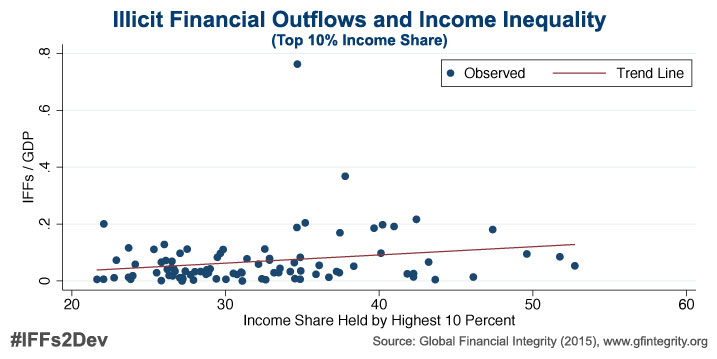
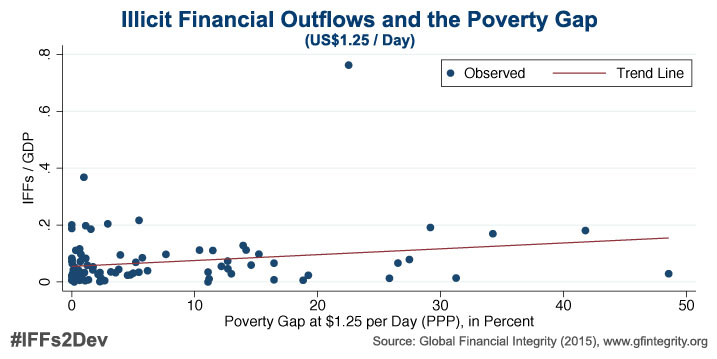
This June 2015 report, the latest in a series by Global Financial Integrity (GFI), highlights the outsized impact that illicit financial flows have on the world’s poorest economies.  The study looks at illicit financial flows from some of the world’s poorest nations and compares those values to some traditional indicators of development—including GDP, total trade, foreign direct investment, public expenditures on education and health services, and total tax revenue, among others—over the period 2008–2012.

The report also produces several scatter plots in which illicit flows values for all developing and emerging market nations are compared to key trade indicators and various development indices, such as human development, inequality, and poverty, to determine if correlations exist between the two.  Illicit-Financial-Flows-and-Development-Indices-2008-2012

Chart-IFFs-to-Inequality-10-Percent-Wide-Scatter-717x359

Chart-IFFs-to-Poverty-USD125-Wide-Scatter-717x359Bundled-Data-Tables-Charts-IFFs-and-Development-Indices-2008-2012

Entrepreneur Alert: The End of TVs

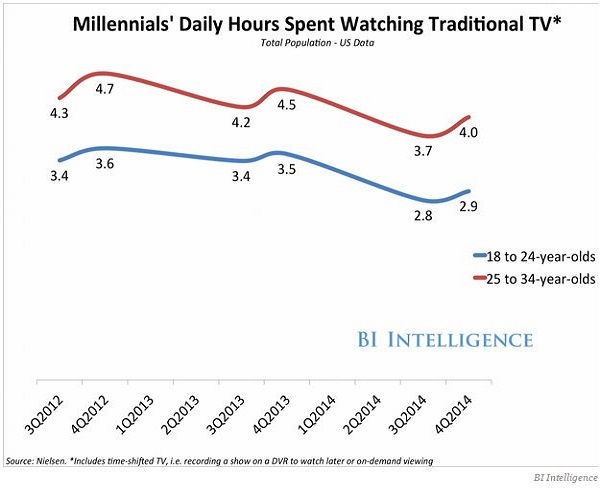
There have never been more ways to watch TV without actually paying a cable or satellite company each month for a bundle of channels, many of which you probably never watch.  Streaming services over the internet are offering customers the opportunity for paying only for what they want to watch.  The forces driving this change are at least partially demographic as younger viewers are more and more opting out of the traditional TV distribution model.

73230140millenials.tv

Draghi Commits to Continuing QE

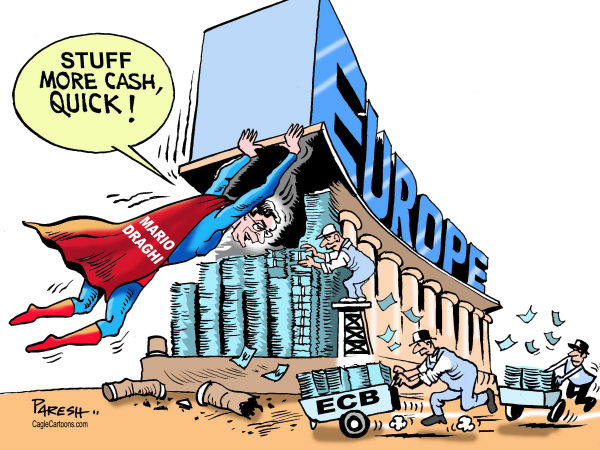
Brian Blackstone writes:  The European Central Bank’s president said the ECB will implement its EUR1 trillion-plus quantitative easing program to completion and is even willing to add to it if needed.

Yet investors reacted oppositely to what would have been expected. German bond yields soared, and the euro rose against the U.S. dollar. Easier monetary policies typically reduce yields and currency values.

In a sense, the recent rise in bond yields—though Germany’s 10-year yield, at around 0.93%, is still super low—reflects a normalization in the economy and inflation. Consumer prices are up in the eurozone and returned to positive territory last month faster than many analysts had thought they would. That implies a higher bond premium to safeguard against inflation. Firmer economic growth typically has the same effect on yields. Hopes for a deal between Greece and its creditors have dampened demand for ultra-safe assets like German bonds.

A deeper message from Wednesday’s market reaction to Mr. Draghi’s press conference is that seven years after the onset of the financial crisis, the global economy and financial markets are still highly dependent on monetary policy.

For investors, that means bouts of volatility that central bankers can’t, or won’t, intervene to resolve.

For Mr. Draghi and his peers this means their words still matter greatly whether they like it or not, and need to be chosen carefully.

Mario-Draghi-Cartoon