Ukraine Ousting Oligarchs

Link

Poroschenko writes:  The former system of governance in Ukraine in which public officials and prominent businesspeople operated under the table and above the law, shut us off from the rest of Europe. For Europe, with all its existing problems and challenges, has codified a system of checks and balances and a system of laws. Europe represents Ukraine’s future.

My recent decision to  dismiss the governor of the Dnipropetrovsk region is indicative of this drive to prevent the inappropriate influence of private interests on the state. The rule of law is of utmost importance in the new Ukraine, and there is no longer any tolerance for actions that undermine equality before the law. Public officials and large business owners are regular citizens like pensioners, students, workers, and small businessmen, in fact, just like everybody else. Those accused of abuse of power, corruption, or other offences are subject to the law regardless of their personal connections or wealth.

Viktor Shokin, our general prosecutor, has said as much, stating that there are no untouchables in Ukraine – not even the prime minister or president.

But we cannot simply push our way to justice. Justice is not the revenge of new authorities over previous administrations. Justice is blind to the untouchables, whether they are from the old or new authorities. The road forward is still long, but we’ve already started.

Despite new legislation that launched judicial reforms in February, earning the praise of the Venice commission much remains to be done to entrench the rule of law in the courts. The newly adopted reforms to Ukrainian law ensure the right to a fair trial, change the rules relating to the selection of judges, return authority to the supreme court and establish transparent rules on the bodies responsible for judicial appointments. The list of disciplinary penalties and the grounds for disciplinary liability has been extended. The procedure for assessing judges’ qualifications has been introduced for all judges without exception. A judge will have to undergo a qualification assessment – a professional exam – and abide by anti-corruption legislation. In addition, a constitutional commission has been formed to craft constitutional amendments to make Ukraine a decentralised state that enshrines the rule of law and offers its citizens the right to a fair trial within a reasonable time frame.

We are also making it easier to run businesses in Ukraine. We have significantly reduced (from 56 to 38) the number of business activities that are subject to licensing. Registration of a legal entity can now be done online and a new head of the anti-corruption bureau has been appointed this month. We are introducing a total change of the rules of the game – there will be no obstacles for entrepreneurs who play fair.
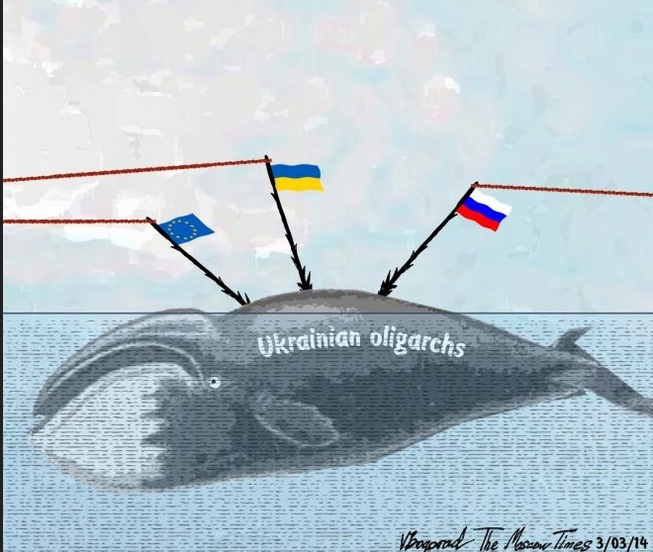
Ukraine Oligarchs

Watching Apple

Apple once again beat Wall Street’s forecasts for revenues, earnings and iPhone sales with its results for the second quarter, as it said it would return another $70 billion to shareholders.  The world’s most valuable company by market capitalisation posted revenue growth of 27% to $58 billion, ahead of analysts’ expectations of around $56 billion, thanks to stronger-than-anticipated iPhone sales, up 40% to 61.2 million units. Apple said that it would expand its dividends and buyback scheme to return a total of $200 billion to shareholders by the end of March 2017, up from the $130 billionn programme of a year ago. That includes a 11% dividend increase and a further $50 billion in share repurchases. 

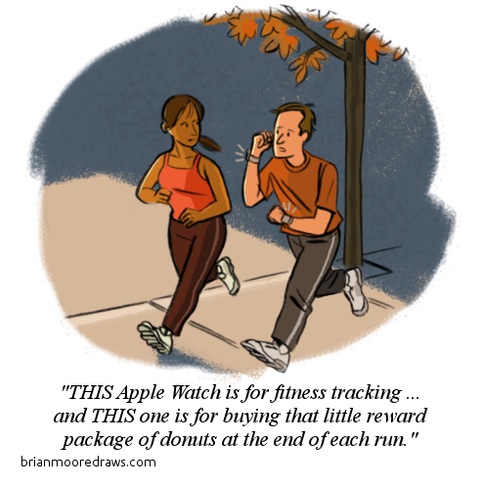
Apple is an interesting lesson for entrepreneurs.  Give the market what they don’t know they want but discover that they do.  Is the watch going to work?

Apple Watch


Varoufakis Sidelined

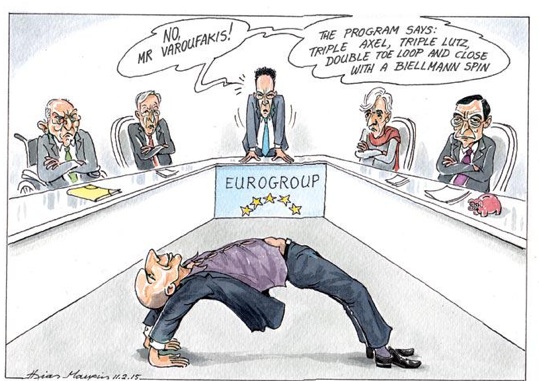
Greek Prime Minister Alexis Tsipras on Monday reshuffled his team handling talks with European and IMF lenders, a move widely seen as an effort to relegate embattled Finance Minister Yanis Varoufakis to a less active role in negotiations.

An anti-austerity economist who has angered peers with his brash style, Varoufakis is facing calls to quit after returning from a meeting of euro zone finance ministers in Riga isolated and empty-handed while Athens scrambles to avoid bankruptcy.

Deputy Foreign Minister Euclid Tsakalotos – a close Tsipras ally and soft-spoken economist liked by officials representing creditors – was appointed coordinator of the group, the official said. This would elevate him from his current position and give him a more active role in the negotiations, pushing Varoufakis to the sidelines.

The latest developments suggested Tsipras was ramping up efforts to ease tensions with lenders and strike a deal to unlock aid so Greece can avoid defaulting on payments, which could force it out of the 19-nation euro zone.

The news spurred a rally in Greek stocks and bonds. Greek two-year bond yields fell 250 basis points to a two-week low of 23.55 percent, reversing an earlier rise. Athens stocks rose 4 percent while Greek bank shares jumped 9 percent.

Later on Monday, the government said it was preparing a bill to legislate reforms already presented to the lenders, in an effort to inject new momentum into the slow negotiations.

Euro zone officials welcomed the reshuffle and the apparent effort to reduce Varoufakis’ role in negotiations with them.  “The way he behaved made him an additional obstacle in the negotiations,” said a euro zone official.

Another euro zone official questioned whether the move would bring about the substantive change lenders have been demanding.

Varoufakis was later taken to task by the media after he failed to appear at a state dinner after the meeting. He responded by tweeting a quotation by former U.S. president Franklin Roosevelt which read: “They are unanimous in their hate for me; and I welcome their hatred.”

In another move hinting at a less prominent role for Varoufakis, his general secretary, Nikos Theocharakis, who had been leading technical-level talks with the so-called Brussels Group of lenders, will now focus on drawing up a plan for growth to be the basis for a new deal with lenders in June.

George Chouliarakis, considered close to powerful deputy Prime Minister Yannis Dragasakis, will take over responsibility for talks with the Brussels group.

In an effort to show that Athens is serious about giving lenders access to data, a new team was also set up to support EU and IMF officials gathering information in the Greek capital.

Varoufakis


Correlation: Income and Credit Growth

Economists from the Atlanta Federal Reserve write:  Almost a decade has passed since the peak of the housing boom, and a handful of economics papers have emerged as fundamental influences on the way that economists think about the boom – and the ensuing bust. One example is a paper by Atif Mian and Amir Sufi that appeared in the Quarterly Journal of Economics in 2009 (MS2009 hereafter). A key part of this paper is an analysis of income of growth and mortgage-credit growth in individual U.S. ZIP codes. The authors find that from 2002 to 2005, ZIP codes with relatively low growth in incomes experienced high growth in mortgage credit; that is, income growth and credit growth were negatively correlated during this period.  Income Growth and Credit Growth Correlation

Turkey Stream?

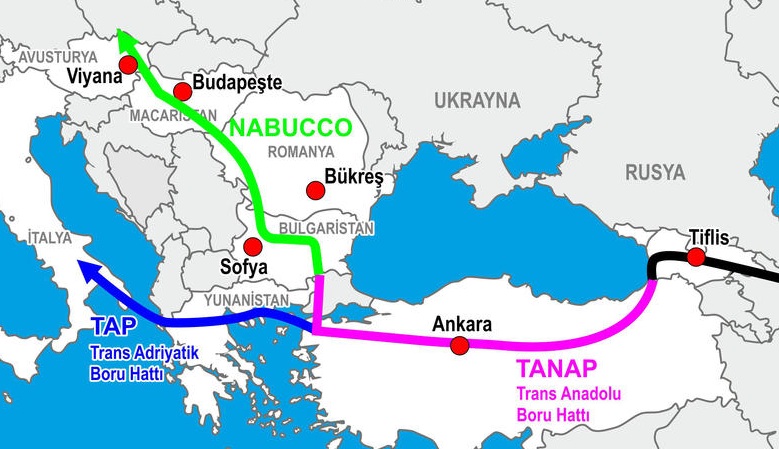
Mehmet Cetingulec  writes:  Russia cancelled the South Stream oil pipeline in December.  Without the commission’s approval, Bulgaria declared South Stream could not cross its territory. Russia, upset with the Europeans’ position, responded with the Turkey Stream project.

Putin’s move surprised the Europeans. Federica Mogherini, EU foreign affairs and security policy chief, declared on Euronews TV that the Russian decision illustrated the urgent need for Europe to diversify its gas procurement channels. The scrapped project was to have been 3,600 kilometers (2,237 miles) long and would have transported gas to Croatia, Hungary, Serbia and Slovenia.

Andras Deak, of the World Economy Institute, told Euronews: “The European Commission, by explaining why reconciliation would be more beneficial to both sides, could induce Russia to take a step back and thus boost its own prestige as well.” Neither Europe nor Putin, however, chose to step back. In fact, Putin moved forward, on his new project, meeting in February with Hungarian Prime Minister to discuss Turkey Stream.

After keeping Hungary onboard, Putin met with Prime Minister Alexis Tsipras in Moscow April 7, Putin proposed that Turkey Stream provide natural gas via Greece to the central Europe countries of Austria, Hungary, Macedonia and Serbia. Putin noted that the project could earn Greece hundreds of millions of euros every year. Tsipras’ only objection was to the name of the project — Turkey Stream.

As with South Stream, the European Commission is not in favor of Turkey Stream. With debate continuing over the project, Russia issued a warning to the European Union on April 14. the CEO of Gazprom, said EU obstruction of Turkey Stream would be a grave mistake that might prompt Gazprom to suspend the project and redirect its natural resources to Asian markets. He said that for Turkey Stream to be ready by 2019, construction should have already begun.

Gas will be brought to Trachea [on the European part of Turkey], and the project will be financed by finding buyers from the spot market. Greece, Serbia, Macedonia and Hungary want to participate in this project, but if Russia and Ukraine fully sort out their problems, this project could be forgotten. In its current form, it is not really economical. There is no buyer other than Turkey.

On the other hand, Yardim believes the Russians will not go back on their word and that the Turkey Stream project will be realized. He said four pipelines will be laid to carry 63 billion cubic meters of gas annually to Turkey.

Yardim said Russia, in delivering natural gas to Europe’s border via Turkey Stream, does not anticipate encountering financial problems. Will Russia give up on Turkey Stream? According to Yardim, “I know that Russia has decided on this issue. I worked with Russians for 25 years. They don’t easily change their minds. I don’t think they will revert to South Stream.”

Turkey Stream

EU and Gazprom

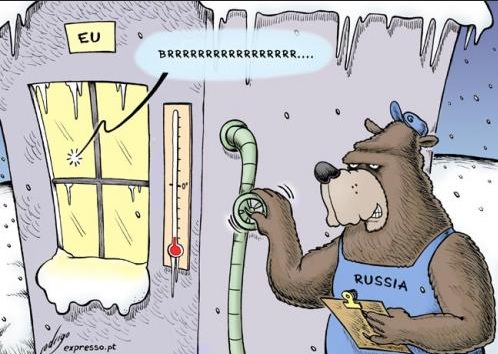
Tim Boersma writes:  Policies on trade and competition have become a new field of international conflict and the European Commission (EC) has shown its willingness to use them as a weapon. Yesterday, the EC sent a Statement of Objections to Russian state-owned gas company Gazprom for its alleged abuse of market power in Central and Eastern European gas markets. It is the next step in an antitrust case that was first opened in August 2012. In an initial response, Gazprom states that the claims of the EC are unsubstantiated. Of course, in the current political climate it is difficult to see this as a regular antitrust case, but that is exactly how it should be assessed.

The case:

  • Gazprom might be hindering cross-border gas sales, by imposing export ban clauses, destination clauses (stipulating that natural gas can only be consumed in a certain country, or sold to a limited number of customers within that country), or requiring wholesalers to obtain Gazprom’s approval for exports. According to the EC, Gazprom has included territorial restrictions in its supply agreements with eight EU member states: Bulgaria, the Czech Republic, Estonia, Hungary, Latvia, Lithuania, Poland, and Slovakia. Territorial restrictions on gas sales are anticompetitive, as for example ruled by the EC in 2009 when it fined France’s EDF and Germany’s E.ON for making agreements not to sell gas from the MEGAL pipeline in each other’s markets.
  • Gazprom allegedly has an unfair pricing policy. The EC is investigating whether the prices that wholesalers and industrial customers pay are unfair, and how Gazprom’s price formulae—which are based on oil price indexes—have contributed to the unfairness. The EC has preliminarily concluded that Gazprom has charged unfair prices in five EU member states, Bulgaria, Estonia, Latvia, Lithuania, and Poland.
  • Concerns on gas transport infrastructure. According to the EC, Gazprom leveraged its market dominance in Bulgaria and Poland by making gas supplies conditional upon obtaining certain infrastructure commitments from wholesalers. In Bulgaria, for instance, this iinvolved the South Stream pipeline, which Gazprom cancelled in December 2014.  EU and Gazprom

 EU and Gazprom

Varoufakis Wants Deal on Greece

Greece is willing to make compromises to reach a deal on its debt, Finance Minister Yanis Varoufakis said after tense talks with his euro zone peers on this issue.

“We want an agreement and we are willing to make compromises to achieve this,” Varoufakis told reporters. “The cost of not having a solution would be huge for all of us, Greece and the euro zone.”

Varoufakis said the process to achieve to a deal was difficult but that “we will have a solution in the end.”

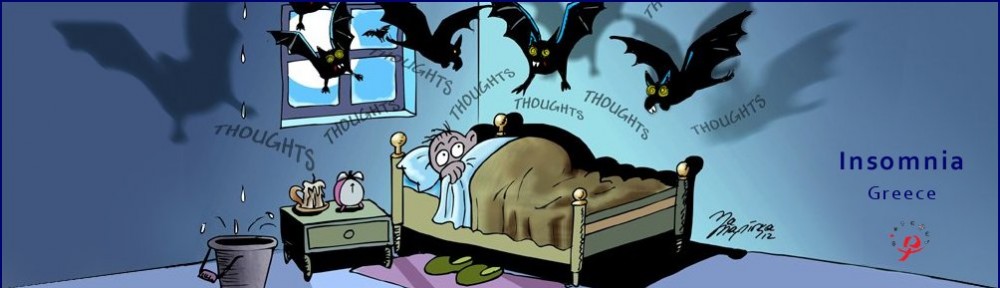
Grexit? or Deal?

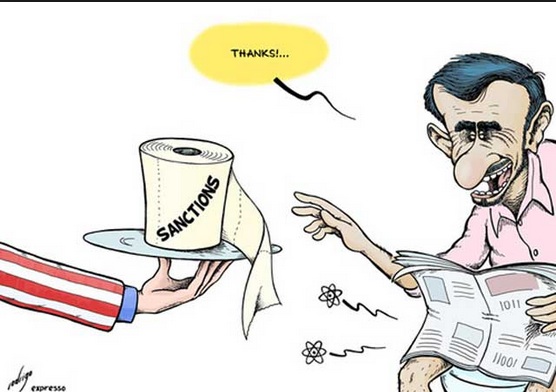
Hold Out for a Better Deal on Iran?

Aaron Arnold:  Speaking from the White House earlier this month, President Obama announced details of a framework agreement between Iran and the P5+1—the United States, Russia, China, France, the United Kingdom, and Germany—that limits Iran’s path to building a nuclear weapon over the next 10 to 15 years. Although negotiators will finalize technical details between now and the June 30 deadline, the parameters provide Iran with sanctions relief in exchange for limits on its uranium enrichment, converting its Arak heavy water reactor, limiting the number and type of centrifuges, and agreeing to intrusive inspections. Should Iran cheat or fail to uphold its end of the bargain, however, the United States and its allies reserve the right to “snap-back” into place tough economic and financial sanctions.

The view that holding out for a “better deal” by strengthening sanctions does not consider the reality of the current sanctions regime.

Myth No. 1: International partners will continue to support US-led sanctions. Sanctions on Iran’s energy, shipping, and insurance sectors, along with almost complete financial isolation, have taken a toll. It is easy to imagine that these tough sanctions brought Iran to the negotiating table and, therefore, that the United States should continue to apply sanctions in hopes of gaining a more comprehensive agreement.

Iranian oil exports currently hover at almost 1.1 million barrels a day, down from 2.5 million in 2011—costing Iran more than $40 billion in lost revenue in the last year alone. Globally, low oil prices and oversupply also mean that Iran will face stifff market competition.  If sanctions were lifted, it is uncertain whether Iranian oil exports would return to pre-2011 levels.

Myth No. 2: “Snap-back” sanctions will be ineffective against economic momentum in Iran.   Critics of the feasibility of snap-back sanctions fail to recognize a number of challenges that Iran will have to overcome once the United States, the European Union, and the United Nations begin to lift nuclear-related sanctions.

For one, President Hassan Rouhani’s austerity budget does not take into account a deal with the P5+1.

Tehran’s second challenge would be re-joining the international banking system, which it has been increasingly frozen out of since 2011 when the United States designated Iran as a jurisdiction of primary money laundering concern under Section 311 of the USA PATRIOT Act.

Iran will also have to contend with its continued designation by the Financial Action Task Force (FATF)—the global standard-setting body for money laundering and terrorist financing—as a high-risk jurisdiction.

Myth No. 3: The United States can continue to control the world financial system. Although not without controversy, the extraterritorial provisions of US-led sanctions provide the backbone to freezing Iran out of the global economy.

The effectiveness of these provisions, however, relies in part on the structure of the international financial system; imposing tougher sanctions for a better bargain rests on the premise that this structure will remain intact.

Reality versus myth. Calls for a “better deal”—relying in part on strengthening sanctions—do not take a realistic view of the current state of the global sanctions regime against Iran. The system is changing, and domestic politics has yet to catch up.

Sanctions and Iran


Women Leaders in UK Queue?

Ellie Cumbo on the rise of Britain’s female leaders:   In the UK there is a sudden shift in the visibility of senior women politicians – a movement prompted by various developments in the substance and the style of British politics. In a country where women’s political representation remains among the worst in Europe – 25 years after its first and only female Prime Minister, Margaret Thatcher, left office – that’s certainly a trend worth watching.

But on April 2 this year, in an event broadcast on the United Kingdom’s major commercial channel, ITV, seven leaders strode out to claim their share of the airtime – and three of them were women. Two weeks later, in the BBC’s “challengers’ debate” held among the five parties not presently in government, these three women outnumbered the men for one historic moment.

In the intervening five years, change has been effected as much by the extraordinary state of UK politics as by the qualities of the women concerned. The reality of coalition government itself has had an impact:

Longstanding dissatisfaction about the convergence of the main parties at the political center has fueled the rise of more radical alternatives on both ends of the spectrum: on the right, the UK Independence Party, led by Nigel Farage, and on the left, the Green Party, led by Natalie Bennett, who is the only female leader of a UK-wide political party.

But the most recent and explosive change of all was last year’s referendum on Scottish independence, which saw support for the Scottish National Party rocket upward, with mortifying results expected to ensue for UK-wide parties at the upcoming polls  Scotch Labor leader, Nicola Sturgeon, is generally acknowledged to have put in a formidable performance – a revelation only to those south of the border. Sturgeon has since been labeled both as a kingmaker who will decide whether or not to push a liberal-left coalition between Labour and the Liberal Democrats over the line.

Leanne Wood of Wales’ Plaid Cymru. The Welsh party has more seats in Parliament than UKIP and the Greens, yet Plaid Cymru had long been treated as a political irrelevance by the United Kingdom’s notoriously London-centered media.

Of course, a few over-egged headlines and some decent YouTube ratings do little to alter the fact that none of these women has the slightest chance of becoming prime minister in an electoral system which will favor the two major parties for the foreseeable future. But change may also be in store from that direction before too long.

Thatcher's Successors?

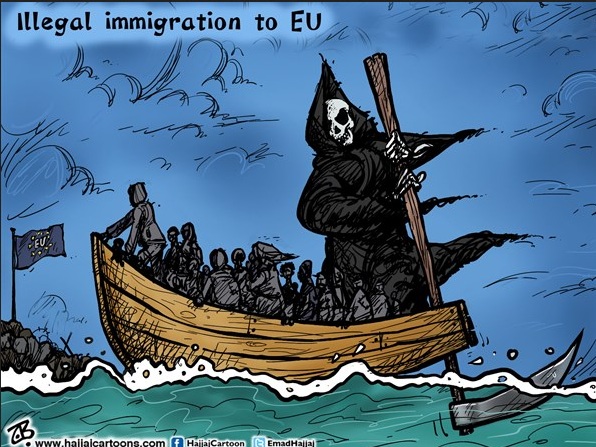
EU to Join UN in Libyan Immigration Solution?

Most refugees trying to flee to safety in Europe hail from wartorn Syria, or are Africans shuttling through the chaos in Libya for a way off the continent. Although many Syrians try to cross into Europe through Turkey, increasing numbers travel to the Libyan coast via Egypt in order to find smugglers who will put them in dodgy dinghies – or worse. And they pay a lot of money to do it.

After hundreds of refugees drowned this week when their boats sank, and video footage captured the tragedies, European politicians reacted. The European Commission proposed a 10-point plan that boils down to improving search-and-rescue operations and basically doing more of the same.

One theory has been thoroughly disproven: Cutting down on sea rescue operations, which is what happened when the EU nations pulled the plug on Italy’s Mare Nostrum operation, does not motivate refugees to stay on African shores.

Undoubtedly the European Union should beef up its operations to rescue people in distress and find ways to evenly distribute them across the EU member states. But Europe should also actively pursue the stabilization of Libya.

The current situation in Libya is reminiscent of Lebanon during its civil war. Several groups are at once trying to take control of the country. What remains of the national government is powerless. Government services such as the border police and customs have collapsed. It is in this chaotic vacuum that people smugglers find the freedom they need to strip desperate refugees of their money – and all too often, their lives.

Aside from this, the vacuum is also giving rise to Islamofascist groups like ISIS. The self-labeled Libyan chapter of ISIS likes to engage in the slaughter of innocents. What they carry out is the kind of butchery.

Just a few years ago, Europeans and Americans removed the murderous dictator Moammar Ghaddafi. The Europeans made the same error they had accused Americans of after toppling Iraq’s Saddam Hussein in 2003: neglecting to engage in proper nationbuilding, or even having a strategy for it. Now as Libya descends into civil war, it presents a gateway to Europe not only to refugees, but also to ISIS terrorists.

It is time to own up to Europe’s mistakes and stem the tide in Libya. The European Union should engage with the United Nations to set up a large peacekeeping force with a tough mandate, and go to Libya to restore stability, separate the warring factions and disarm them – by force if necessary. Then organize a conference with the factions and establish a democratic federal republic that restores border patrols and law and order.

Immigration to EU