Baffin Island in Canada’s far north is the site for a biennial summit meeting of the Artic Council
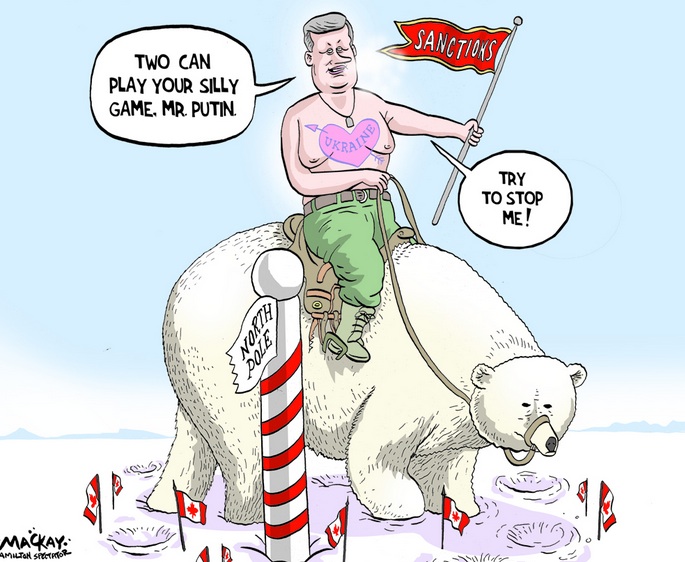
Russia’s involvement in Ukraine has resulted in sanctions and travel bans on dozens of officials and a prohibition of the sale of American technology and services to help Russia tap its potentially enormous energy resources in the Arctic.
President Vladimir V. Putin views those as hostile acts. “There is a pushing of the envelope here,” said Senator Lisa Murkowski, Republican of Alaska, who attended the meeting of the Artic Council as part of an American delegation led by Secretary of State John Kerry.
“The Arctic should be this zone of peace,” Ms. Murkowski said during a recent speech at the Center for Strategic and International Studies in Washington, alluding to the council’s founding purpose. “I absolutely believe that, adhere to it, but I also recognize that within a zone of peace, there is respect that you show for one another.”
The Arctic Council — made up of Canada, Denmark, Finland, Iceland, Norway, Russia, Sweden and the United States, as well as observer nations and organizations — was created in 1996 as a diplomatic forum to address issues that arose from the increased activity in the region.
The council was never intended to be a forum for debating military and security matters, and until recently, it appeared to be immune to broader political differences.
At the council’s meeting in Nuuk, Greenland, in 2011, the members adopted their first legally binding agreement to coordinate search-and-rescue operations over 13 million square miles of ocean.
At this year’s meeting, the nations agreed to discuss how to reduce the amount of methane and black carbon emitted by burning wood or fuels in the Arctic.
Russia’s military activity in the Arctic and its vast territorial claim to waters there highlight the strategic priority that Mr. Putin has given to the region. The intensifying competition over natural resources has increased the possibility of confrontation.
The spat over the Russian excursion to the North Pole centered on the delegation’s layover in the Svalbard archipelago, Norwegian territory about 500 miles north of the mainland that, under a 1920 treaty, grants commercial and residential rights to other countries, including Russia.
The United States has taken over the chairmanship of the council from Canada, allowing it to set the organization’s agenda for the next two years until the next summit meeting, to be held in Alaska.
In his remarks on Friday, US Secretary of State Kerry outlined what he called an ambitious set of goals, focused on ocean safety and security, economic development and, in particular, several steps to address climate change as part of President Obama’s push for stronger international action.


Hainan is again at the forefront of a Chinese property slowdown.
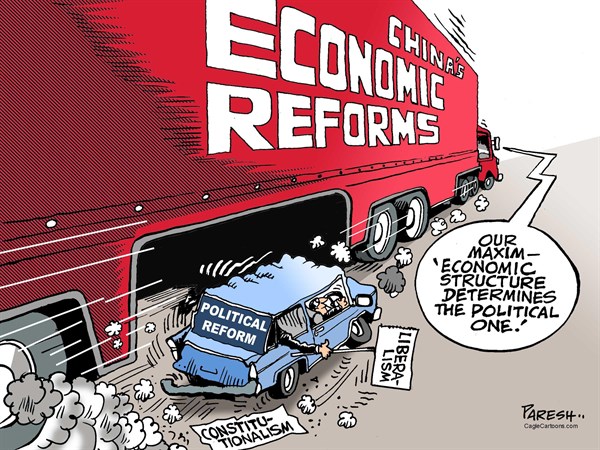
Hainan may be an extreme case, but China’s property market will not return to its glory days of unrestrained growth.
The March figures from China’s National Bureau of Statistics (NBS) suggests that China’s property market slowdown will continue through 2015.
Construction starts that saw the most dramatic drop. Starts have dropped to their lowest level since October 2009, just before the Chinese government’s enormous 2009 stimulus package. This points to where the property slowdown is being felt most acutely, in new investment. Developers are now far less willing to invest in new projects and believe the market environment has shifted dramatically.Yu Liang president of major Chinese property developer Vanke Group, states that while government policies will help support the market, he is not expecting a major rebound. Yu thinks we have seen the end of the ‘Golden Age’ of the Chinese property market.
As if in unison, as the property market began its outright decline in the second half of 2014, China’s equity market sparked into life.
While the Chinese government does not control China’s stock markets, they are highly driven by policy changes. The share of bank financing in China’s financial sector and the associated concentration of risk has been a major concern for Chinese policymakers. The need to diversify risk across the financial system has driven the Chinese government’s support of corporations pursuing direct financing through China’s financial markets.
What the Chinese government really has little influence over is Chinese investors’ hunger for capital growth. With limited avenues for investment, Chinese investors often pile into asset classes all at once.
New brokerage account registrations and margin financing have exploded.
These are figures that would strike fear into the hearts of most central banks. But the People’s Bank of China (PBOC) is already battling on a number of fronts. The slowing economy, steady capital outflows and the disinflationary trend has tightened domestic liquidity.
This has lead the PBOC to begin, in the words of ANZ’s Liu Ligang, ‘an aggressive easing cycle’ with the weekend announcement of a 100 basis point cut to banks’ reserve requirement ratio (RRR).
How the government manages the equity market boom without precipitating a dramatic crash will be one of the most important stories for China in 2015. In the current environment one can sympathise with investors like Pan Shiyi who are diversifying into overseas assets.