Dollar and Euro Dance

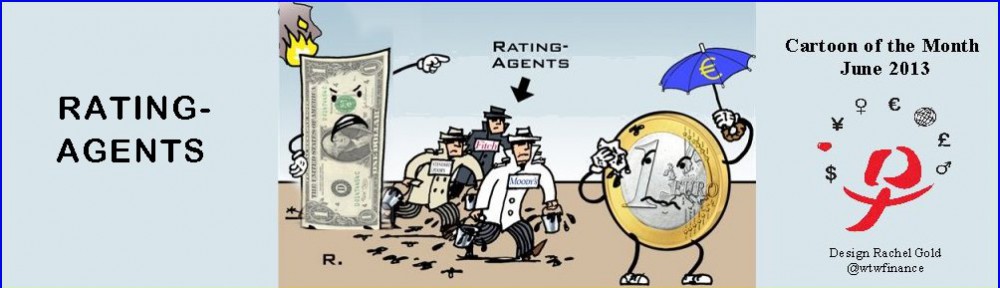
Anatole Koetsky writes: The US dollar is hitting new 12-year highs almost daily, while the euro seems to be plunging inexorably to below dollar parity. Currency movements are often described as the most unpredictable of all financial variables; but recent events in foreign-exchange markets seem, for once, to have a fairly obvious explanation – one that almost all economists and policymakers accept and endorse.

French President François Hollande, for one, has ecstatically welcomed the plunging euro: “It makes things nice and clear: one euro equals a dollar,” he told an audience of industrialists. But it is when things seem “nice and clear” that investors should question conventional wisdom. A strong dollar and a weak euro is certainly the most popular bet of 2015. So is there a chance that the exchange-rate trend may already be overshooting?

In one sense, the conventional explanation of the recent euro-dollar movement is surely right. The main driving force clearly has been monetary divergence, with the Federal Reserve tightening policy and the European Central Bank maintaining rock-bottom interest rates and launching quantitative easing. But how much of this divergence is already priced in? The answer depends on how many people either are unaware of the interest-rate spread or do not believe that it will widen very far.

Last year, many investors questioned the ECB’s ability to launch a bond-buying program in the face of German opposition, and many others doubted the Fed’s willingness to tighten monetary policy, because doing so could choke off the US economic recovery. That is why the euro was still worth almost $1.40 a year ago – and why I and others expected the euro to fall a long way against the dollar.

But the scope for dollar-bullish or euro-bearish surprises is much narrower today. Does anyone still believe that the US economy is on the brink of recession? Or that the Bundesbank has the power to overrule ECB President Mario Draghi’s policy decisions?

With so much of the monetary divergence now discounted, perhaps we should focus more attention on the other factors that could influence currency movements in the months ahead.

On the side of a stronger dollar and weaker euro, there seem to be three possibilities. One is that the Fed could raise interest rates substantially faster than expected. Another is that investors and corporate treasurers could become increasingly confident and aggressive in borrowing euros to convert into dollars and take advantage of higher US rates. Finally, Asian and Middle Eastern central banks or sovereign wealth funds could take advantage of the ECB’s bond-purchase program to sell increasing proportions of their German, French, or Italian debt and reinvest the proceeds in higher-yielding US Treasury securities.

Four factors could push the dollar-euro exchange rate the other way.

1.  If the dollar continues to rise, US economic activity and inflation will weaken. In that case, the Fed, instead of raising interest rates faster than expected, will probably become more dovish.

2. There must be serious doubts about whether Asian and Middle Eastern governments will in fact want to shift more reserves into dollars, especially if this means converting the euros they have acquired since 2003 at a loss and far below their purchasing power parity.

3.  The euro’s downward trend against the dollar may not last much longer because there is the trade imbalance between the US and Europe.

The implication is that hundreds of billions of dollars of capital will have to flow annually to the US from Europe just to maintain the present euro-dollar exchange rate.

4.   While higher US interest rates will attract some investors, others will move away from the dollar if the combination of a more competitive euro, the ECB’s enormous monetary stimulus, and an easing of fiscal pressures in France, Italy, and Spain generates a genuine economic recovery in Europe.

What, then, can strike a balance between the opposing forces operating on the euro-dollar exchange rate? No one can say for sure.
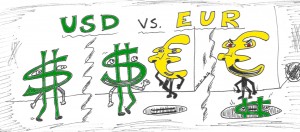
Dollar and Euro Dance

Google on Woman Alert

Isis Madris writes:  The SPARK movement is aiming to put women on the map. After the non-profit noticed that Google’s daily doodles featured women only 17% of the time, they reached out to the tech giants. Google agreed with them, and the two have worked together to feature more history-making women. In addition, SPARK was invited to actively research and honor notable women through a mapping project powered by Gogle’s Field Trip app.

Now, when app users log into Field Trip and switch on the history notifications, they are alerted when they are approaching the exact location where a woman made history at one point in time, and can then read a bit about her and her achievements.

One of the most unique things about SPARK is that they are a movement by and for giirls ages 13-22. All of the research and work behind the On the Map project was performed by the girls, who hope to educate themselves on inspirational women in addition to spreading the word.

Some of the women on the Google powered map include:

The Arpilleristas in Santiago, Chile, a group of women who wove colorful tapestries documenting the turmoil and violence of Pinochet’s regime.

Mary Ellen Pleasant in San Francisco, CA, an activist and abolitionist who, among other things, would dress like a jockey to help slaves escape their plantations.

Mary Anning in Lyme, England, a renowned fossilist who discovered fossils of a Plesiosaurus, rocking the scientific community to its core.

The team has researched and mapped around 100 notable women on the app so far, and invite those who are interested to nominate  their favorite historical women to be featured.

Yellen Cozies Up to Congress?

Megan Wilson and Peter Schroeder write: Federal Reserve Chair Janet Yellen is upping her outreach to Capitol Hill, and one lawmaker is attracting the largest amount of her attention: Sen. Elizabeth Warren (D-Mass.).

A review of Yellen’s meeting records, obtained by The Hill, shows the Fed chief has had more than twice as many meetings and phone calls with the big bank critic as any other lawmaker.

Starting back in 2013 — the year former Fed leader Ben Bernanke announced he would retire — then-Vice Chair Yellen’s contacts with Congress began to increase. She held dozens of private meetings with senators in the months before and after her Senate confirmation hearing.

However, Warren was among the first lawmakers to approach Yellen in February. Records show the call lasted 30 minutes.

In 2013 and 2014, Warren had two phone calls and five meetings with Yellen. Rep. Maxine Waters (Calif.), the top Democrat on the House Financial Services Committee, had one meeting and two phone calls. Senate Democratic leader Harry Reid (Nev.) also spoke with Yellen three times.

Warren’s outsize presence in Yellen’s daybook is yet another indication that, while low in Senate seniority, the prominent bank critic commands significant attention from influential people.

Yellen, for instance, on Dec. 2 went from an hourlong lunch with Warren at a Federal Reserve dining room to a meeting with Jamie Dimon, the head of JPMorgan Chase.

Warren’s office declined to comment on her frequent meetings with Yellen.

Sarah Binder, senior fellow at the Brookings Institution, said that speaking most often with the Massachusetts Democrat does not a friendship make.

She noted that policymakers at this level have notoriously stringent schedules, leaving little time for pleasant chats.

“They don’t have time for nice meetings,” added Binder, who follows the interaction between the Fed and Congress.

Dennis Kelleher, head of the pro-reform group Better Markets, noted that Warren’s status as a low-ranking lawmaker may actually have made it easier for her to spend more time with Yellen. A former Senate staffer, Kelleher noted that more senior lawmakers often are spread out across multiple committees with wide-ranging jurisdictions.

Warren sits on many committees and is intensely focused on regulatory reform.

“Warren both has the time and interest to spend,” he said. “The more senior you get, the less and less time you have.”

The two last interacted in public when Warren sparred with Yellen.

During a hearing last month, Warren accused one of Yellen’s top advisers, Fed general counsel Scott Alvarez, of being uninterested in implementing some portions of the Dodd-Frank financial reform law, forcing Yellen to defend the longtime Fed employee.

It may not all be adversarial, though. Warren has shown that she can be a pragmatist behind closed doors, according to emails from her first months at the newly formed Consumer Financial Protection Bureau. In the documents, she sometimes took a softer tone with the banks she vocally criticized in public.

Warren was also among a handful of Democratic lawmakers to publicly advocate for Yellen to take over for the Fed instead of Larry Summers, the president’s preferred pick. It is rare for lawmakers to publicly advocate for an individual before the president has made a selection.

She is also no stranger to other financial regulators. Records reviewed by The Hill show meetings with Securities and Exchange Commission Chair Mary Jo White and Richard Cordray, head of the Consumer Financial Protection Bureau that Warren helped create.

Warren has helped to lead Democrats in pushing the Fed to take a tougher stance on new rules brought on by the Dodd-Frank financial reform law, while Republicans have often criticized the central bank’s monetary policy.

Yellen’s frequent meetings with lawmakers are likely an indication of lingering concern or dissatisfaction with the Fed’s work in the wake of the financial crisis, experts say.

In her congressional contacts last year, Yellen met with eight Republicans, typically over breakfast or lunch at the Federal Reserve or at congressional dining rooms on Capitol Hill. Among those dining with Yellen were staunch critics of the Fed, including House Financial Services Committee Chairman Jeb Hensarling (R-Texas) and Sens. John Thune (R-S.D.) and Mark Kirk (R-Ill.). The latter two have co-sponsored legislation aiming to audit the central bank.

Yellen — who opposes the audit — said that while she may not always agree with lawmakers, she wants the Fed to be accountable to Congress.

“We have a wide range of responsibilities, and it’s entirely appropriate for me to testify and be quizzed on a range of topics by members of Congress,” she has said.

Overall, the meetings she held with lawmakers were only a fraction of her total schedule. Yellen held roughly 950 meetings during her first year at the helm of the Federal Reserve, according to a tally by The Wall Street Journal, and only reserved 23 for lawmakers.

“The real criticism might be: why aren’t more people talking to the Fed, rather than why is Elizabeth Warren talking to it so much?” asked Kelleher.

Turkey: Former First Lady Speaks out on Education

Riada Ašimović Akyol writes:   Hayrunnisa Gul, the former first lady of Turkey, speaks with unusual frankness about education.  Journalist Ahu Ozyurt wrote, “Mrs. Hayrunnisa Gul is a symbol of typical Turkish women: a powerhouse who stands by her man. A kind and gentle mother who keeps her silence until that last drop. But when she is done, she is done for good

The former first lady spoke of her continuing education at Turkey’s renowned Bogazici University and many other topics in an interview with Al-Monitor.

Gul:  Like many other countries, we still have a long and difficult way to go in terms of women’s empowerment. That’s a fact. Despite all the measures taken, women still lack adequate access to educational opportunities. And when women are deprived of education, it’s unrealistic to expect them to participate equally in working life or play an influential role in decision-making in politics and the bureaucracy.

But on this issue, too, I believe in women’s strength. For years, I’ve been telling families — especially mothers, the pillars of families — the following: “Educate your children, especially your daughters. A good education is the most precious inheritance you’ll leave them. Only with education can you prepare them for life and empower them against the hardships they’ll face. By depriving your daughters of education, you leave them vulnerable to all sorts of lifelong exploitation and abuse. Empower them with education.”   Interview with Gul


Are Long Term Bonds the Answer to Necessary Investments?

Barry Ritholtz writes:  Every once in a while, there is a way to resolve a host of problems that is so obvious it gets overlooked.

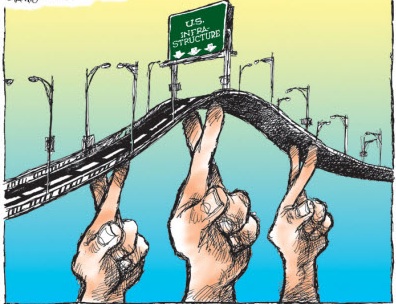
With that in mind, let’s have a look at four big problems: crumbling U.S. infrastructure; federal budget deficits;  normalizing U.S. monetary policy; and the shortage of investment-grade debt.

There is a single solution to all of them: Issue more long bonds, preferably 30- to 50- year securities.

Any rational, intelligent and prudent person would of course take advantage of prevailing ultralow rates to refinance this financial obligation. It’s fiscally conservative, it will save trillions of dollars, and it will allow the U.S. deficit to get paid down that much faster.

The main obstacle is the U.S. Congress, a collection of preening peacocks who really don’t care about the deficit.

How do we know this? Have a quick look at their past votes. Look at how they voted for unfunded tax cuts in 2001 and 2003. Tally their votes for an expensive war of choice in Iraq. Look at how they cast their votes for unfunded entitlements such as Medicare Part D. These votes reveal that most of the people currently complaining about the deficit have no interest in reducing it. They are merely using the deficit as a tool to pursue their partisan ideology.

You can do this with any issue — from Barack Obama’s stimulus plan in 2009 to George W. Bush’s Medicare Part D.

Placing political party over country is standard operating procedure; it is unacceptable.

There is a widespread belief that the Fed can achieve the same result by simply selling the $4.18 billion  fixed-income securities on its balance sheet. But that would be potentially disruptive, possibly causing an economy-crushing spike in rates. The more prudent approach is to simply let those holdings — with an average duration of about seven-years — run off as they mature. That would be the least disruptive method for the Fed to unwind the bond purchases stemming from its program of quantitative easing.Hence, we see that a variety of serious issues can be resolved by simply refinancing the country’s debt, issuing more paper and maintaining and rebuilding the U.S. infrastructure.

US Infrastructure


Booze and Other Drugs on the Road to Mandalay

Rangoon’s government bans alcohol sales after 10pm while students sit matriculation exams, and says it will re-enforce restrictions that prohibit those sales year-round after 11pm

Palaung rebels claim to have seized a heroin and methamphetamine haul worth over US$3.5 million while inspecting a mining truck in northern Shan State.

Domestic companies can now apply for wine import licenses, nearly one month after a major retail association stopped selling foreign alcohol demanding swift reforms.

Jakarta backs off from imminent execution of 10 drug smugglers, saying the sentences might not happen soon because some of them have legal appeals pending.

Road to Mandalay

De-capping the Swiss Franc

Matt Levine thinks and writes:  Up until January 15,  the Swiss franc was capped against the euro and was pretty quiet against the U.S. dollar, trading at about 1.02 francs to the dollar as of that morning. Then the Swiss National Bank removed the cap and the franc spiked to 74 centimes to the dollar, before pretty quickly bouncing back part of the way. It’s now back around parity. If you were short the franc against the dollar at 4:30 a.m. New York time that day, you had lost more than a third of your money less than half an hour later. But half an hour after that, your losses were back to a more manageable 15 percent. And two months later they had pretty much disappeared.

Unless, of course, you closed out your position on January 15, in which case your losses were permanent. And obviously someone was buying francs (selling dollars) all the way up (down). Someone bought francs at the worst possible time.

Probably a lot of people with no choice in the matter. People like “Tormar is the joint family office of former Goldman Sachs partners Ron Marks and John Tormondsen” (get it?), and it did a lot of foreign exchange trading with Citi as its prime broker. Much of that FX trading involved betting against the Swiss franc, using leverage from Citi. When the bad thing happened, Tormar’s equity vanished, and an awkward conversation became necessary:

Tormar was down $3.7 million on FX spot and forward transactions, but the bigger losses — responsible for $31.5 million of Citi’s claim — were for option trades. The biggest clusters of trades — assuming I’m reading the statement right! — were put options that Tormar sold on the dollar against the Swiss franc, betting that the dollar wouldn’t decline. 

Citi Prima Brokerage Agreeement

Prime Brokerage Termination Agreement

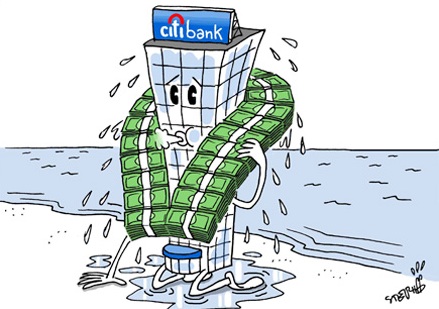
Citibank


Swiss Banking in the Shadows

Bloomberg offers scenes from the shadowy world of Swiss Banking. 

The Swiss banking industry is a $7 trillion secret.

It holds a third of the world’s offshore assets, including, say critics, the cash of dictators, despots, gangsters, and arms dealers—all protected by Switzerland’s strict banking secrecy laws.

UBS and Credit Suisse, which together account for half of the Swiss banking industry, have neighboring headquarters on Zurich’s Paradeplatz—one of the most expensive pieces of real estate in Switzerland. They’re said to own vast vaults beneath the square, containing gold, cash, and enough secrets to feed a myriad of spy novels and thrillers.

But the attitude toward what was once a source of national pride is shifting, fueled by politicians and even shareholders disenchanted with the apparent arrogance, incompetence, and venality exposed by huge losses, scandals, and galling bonus payments at the banks. UBS Chief Executive Officer Oswald Grübel resigned in 2011 after a rogue trader in London lost more than $2 billion, while in 2014, Credit Suisse pleaded guilty to helping Americans evade taxes and agreed to pay $2.6 billion. Meanwhile, smaller private banking outfits have banned their employees from traveling to the U.S. for fear of arrest.

Some Swiss call a clampdown on the banks an “economic war,” but there are widespread calls for greater supervision and tighter regulation. Even the hallowed banking secrecy law itself is under threat after the Swiss government agreed to hand over the names of 4,450 Americans with accounts at UBS after the bank was caught red-handed using secret codes and encrypted computers to help them dodge taxes.

The spotlight is an uncomfortable place for an industry built in the shadows. —

Anti-Austerity Demonstraters Outside the European Central Bank

Dozens of people have been hurt and some 350 people arrested as anti-austerity demonstrators clashed with police in the German city of Frankfurt.

Police cars were set alight and stones were thrown in a protest against the opening of a new base for the European Central Bank (ECB).

Violence broke out close to the city’s Alte Oper concert hall hours before the ECB building’s official opening.

“Blockupy” activists are expected to attend a rally later on Wednesday.

In earlier disturbances, police in riot gear used water cannon to clear hundreds of anti-capitalist protesters from the streets around the new ECB headquarters.

Merkel Seeks Peace with Tsipras

Alan Crawford writes:  German Chancellor Angela Merkel will seek accommodation in talks with Greek Prime Minister Alexis Tsipras to calm the increasingly combative rhetoric between the nations and regain control over efforts to keep Greece in the euro.

Merkel, as leader of the biggest contributor to Greece’s 240 billion-euro ($255 billion) bailout, is willing to go a long way to find a compromise.

After weeks of sparring between Greece and Germany, Merkel is pursuing the talks now to try and get the discussion back on track. Any suggestion that she will deliver an ultimatum to Tsipras is complete nonsense and propagated by those who want to inflame the standoff, the official said.Merkel sees the meetings with Tsipras as more of a chance to get to know him, and doesn’t plan to directly negotiate the details of Greece’s fate, which she sees as a matter between Athens and its creditors, the official said. Her room for leeway on Greece is in any case limited by resistance from within her own parliamentary group, according to the official.

Merkel is convinced that now is the “right time to hold extensive talks,” Steffen Seibert, her chief spokesman, said,  “The talks will be about the situation between Greece and the other members of the euro area and how a way forward can be achieved.”
Acrimonious Exchanges

Tsipras is pinning his hopes to reach a breakthrough on a meeting he’s requested with Merkel, European Central Bank President Mario Draghi, French President Francois Hollande and European Commission head Jean-Claude Juncker on the sidelines of a European Union summit that starts Thursday. Merkel has also invited Tsipras to Berlin March 23 for one-on-one talks.

Euro-region finance ministers are urging Greece to draw up a plan to fix the economy in exchange for emergency loans to keep the country afloat. As Tsipras challenges his creditors to blink first, his government’s money is running out, raising the prospect of a cash crunch as early as this month. The country faces more than 2 billion euros in debt payments Friday, and government salaries and pensions must be paid at the end of March.

The ECB raised the maximum amount of emergency liquidity available to Greek lenders by 400 million euros on Wednesday, less than the about 900 million euros the nation’s central bank had requested, people familiar with the decision said.

Greek banks were cut off from regular ECB funding operations in February, forcing them onto Emergency Liquidity Assistance from the Greek central bank. The Frankfurt-based ECB has the power to curb ELA and is reviewing it weekly amid concern that banks will use it to finance the Greek government and so violate European Union law.

“People have asked us to put an end to austerity and bailout agreements, to begin the process of reclaiming the dignity of the nation,” Tsipras said. “We respond today, tomorrow and on Friday in parliament by building a wall of sovereignty and dignity.”

Merkel and Tsipras