Women Bursting into Podcasting

Alex Madison writes:  For years, if you tuned into a podcast, the voice streaming through your headphones would most likely belong to a man.

Late last year a true crime podcast hsoted by  by Sarah Koenig, became the fastest-growing podcast ever, hitting five million downloads. Women now helm two of top three most popular shows. And it’s not just those heavy-hitters: throughout the world of radio, there’s a clear shift toward recognizing the importance of getting more women behind microphones and into producing positions.

Vice President for Programming  holds up the instant success of Invisibilia as a sign of a breakthrough for women. “A lot of things that people have embraced about Invisibilia would have been deal killers years ago: two young women, who kind of sound alike, talking about science. People would have asked, ‘Can two young women really talk about science?’ Now that would be a ridiculous question.”

Podcasting, with its low barriers to entry and opportunities for experimentation, has been a much-anticipated space for media democratization since the early 2000s. It has the ability to elevate the voices of people often left out of traditional print and broadcast journalism. So why are women finding more success in podcasting now than we were just a few years ago?

1. Women who have been behind the scenes at major organizations have gained the skills, confidence, and opportunities to start their own shows. 

Since the dawn of radio, women have worked behind the scenes as producers, editors, and researchers. But recently, women are finally becoming more visible (or, audible) in hosting roles.

 “We got the skills and then we just decided, fuck it, basically. We just decided, we can do this,” said Alix Spiegel, one of cohosts of Invisibilia on the recent “Broadscasting Edition” of Slate’s DoubleX Gabfest. Invisibilia is her first full-time hosting gig, but Spiegel has worked in radio for over a decade: she was a founding producer of This American Life and worked on NPR’s science desk for ten years. Her cohost Lulu Miller was a founding producer of Radiolab before joining NPR in 2013. The Third Coast Audio Festival brought them together.

The examples go on and on. Before setting off Serial mania, host Sarah Koenig and executive producer Julie Snyder worked for years producing This American Life.

2. Feminist allies have been taking explicit action to close the gender gap.   

This isn’t just about women in radio needing to “lean in.” Even with relatively low barriers to creating new podcasts, it typically takes money, marketing, and connections to reach a wide audience.

3. Women are getting into leadership and driving development themselves. 

Of course, when women gain power in the “the machine,” progress often follows even more quickly. Eisenberg said, “I remember talking with the head of WNYC, Laura Walker. She was like, ‘God, we need more female voices, because there’s just not a lot out there.’”

4. The audience for women-hosted podcasts is getting louder and more powerful.

 5. Hearing more women’s voices on podcasts leads to even more women starting podcasts. 

Broadening the sound of radio could also expand radio’s audience.

Can Entrepreneurs Revive the Saree?

An Indian saree, six yards of utter simplicity and audacity, is the perfect garment. Folded, it looks severe and perplexing, like an extra-long bed sheet. Draped, it transforms itself and its wearer. No apparel so embodies the spirit of the region it represents. The saree suggests at once the minimalism of the ascetic and the sensuality of the tropics: lushness, sweat, sparkling white cotton, bare caramel-to-cocoa skin, loose folds of clothing that easily pull on and off.

No other garment is as antique and yet contemporary. The saree was worn by women of the Indian subcontinent thousands of years ago — and still is. No other civilization has spawned a garment that has survived so long, and yet even managed to thumb its nose at being embalmed in a museum.

The saree is worn at home and work by millions of Indian women from all walks of life. It is the perfect garment to be totally pregnant in or walk down a fashion ramp in; to transplant rice or to construct roads in; to take a presidential salute in; to get married in; to wash dishes in; to offer sports commentary in; to breastfeed a baby with total ease and modesty in; to wear to a board meeting in; to pray in or sleep in; to be covered from head to toe in; or to seduce a lover in.

No other garment is as versatile. In which other country could a nun like Mother Teresa and a Miss Universe winner wear exactly the same garment?

But the saree is becoming endangered. Pants or salwar kameez — a tunic with loose pants and a scarf — are becoming the daily clothing of choice for many urban Indian women. They are easier to wear and wash. They are seen as modern and more modest. They are more suited to the daily fight of throwing elbows in crowds and avoiding the lewd attentions of men. The saree is still a long way from being written off as a ceremonial and impractical garment like the kimono, but for increasing numbers of Indian women, sarees stay folded in wardrobes and are brought out for weddings and special occasions.

Can Entrepreneurs Revive the Saree?

Saree


The Netherlands Tackles Social Policies

Kaj Leers writes:  The Netherlands since World War II has been at the vanguard of social welfare reform in Europe. Social Democrats and Christian Democrats in tandem laid the foundations for a true welfare state in the late 1950s and the 1960s.

A pensions savings system, improved collective health care, basic government-financed unemployment insurance, welfare benefits, and state-financed education plans were introduced within a generation. Employers, workers, and the government all picked up part of the tab, and the discovery of huge gas fields in the north of the country removed all restraints.

From the 1970s onward, welfare schemes expanded. New benefits were designed, health care costs ballooned, and education expenditures increased. In the early 1980s, government expenditures had increased to such heights – just as the global economy pushed inflation to unsustainable levels – that the government pushed the major labor unions and trade unions to reach a national labor agreement. Unions would no longer demand outrageous raises; employers would invest in jobs.

In the mid-1980s, government expenditures accounted for more than 60 percent of Dutch gross domestic product. In those days, the Social Democrats, Christian Democrats, and Liberals were the biggest parties in parliament. They formed alternating government coalitions, with the Christian Democrats always being the centrists who pivoted to the Liberals or the Social Democrats depending on the outcome of the vote.

Since the late 1980s, much has changed – especially for the Social Democrats and Christian Democrats. Both parties, formerly responsible for the creation of the welfare state, set about tempering it, cutting back on expenses. Government-owned companies were privatized, markets were liberalized, and expenditures on government programs were cut.

But while parties dealt with the outsized welfare state, many of their voters didn’t follow. The year 2002 saw voters revolt. Out of nowhere one man, Pim Fortuyn, galvanized the discontent that part of the electorate had silently carried for years. Much to the surprise of many a complacent politician, it turned out that a sizeable non-voting portion of the population felt deeply disenfranchised and ignored by what Fortuyn dubbed “the establishment” or “the elite.”

Many of the discontended voters had grievances that had also been largely ignored. Whereas most of the political debate in the country had for decades centered on socioeconomic issues such as health care, education, social security, unemployment, and economic growth, a great number of these people were also worried about sociocultural issues.

The Netherlands saw the emergence of a PEGIDA movement avant la lettre – one made of people who didn’t demonstrate in the streets, but rather voiced their protest in the voting booth. Fortuyn played the identity politics fiddle so well that it was picked up by many other political parties, including the Social Democrats and the Christian Democrats. Ever since the time of Fortuyn, who was assassinated just before the national elections of 2002, sociocultural issues such as crime, integration, and immigration have sat solidly at the forefront of Dutch politics.

Geert Wilders of the Freedom Party has pushed matters further than Fortuyn ever did.Wilders is currently in the crosshairs of the country’s Prosecution Office for alleged discrimination against Moroccans during an election rally. But the movement that supports him is unfazed; in polls, Wilders looks set to be the solid winner of the elections on March 18, handing him many new seats in the Senate.

Meanwhile, something else has changed. Among voters concerned with predominantly socioeconomic issues, even those on the right, are far less keen on cuts in health care, education, and even social security than they once were.

This has led the government coalition parties (left-wing Social Democrats and right-wing free-market Liberals) to turn the tables on the opposition.

In the Netherlands, political truisms have been turned on their heads. With even cost-cutting, small government-type voters rejecting austerity, it seems that ideas that were once vilified as leftist tax-and-spend politics have been internalized as schemes you can now take for granted.

Once again, Dutch voters in this respect may stand at the European vanguard.

Class DIvisions?

Discussing Race Backfires at Starbucks

Josephine Tovey writes: This week the coffee giant launched an initiative called “Race Together”, which aims to encourage discussions about race and racial equality over grande frappuccinos.

The move came about in response to what Starbucks refers to as the “racially charged tragedies” that have unfolded across America lately – namely the shooting deaths of unarmed young black men like Michael Brown in Ferguson, Missouri, and the choking death of Eric Garner in New York, both by white police officers, sparking furious protest and public debate.

“Staying silent is not who we are”: Starbucks CEO Howard Schultz. Photo: Bloomberg

In response, the organisation is encouraging its employees to write the words “Race Together” on their paper coffee cups and try to start a conversation with customers about race.

Adve

“We at Starbucks should be willing to talk about these issues in America. Not to point fingers or to place blame, and not because we have answers, but because staying silent is not who we are,” said Howard Schultz, CEO of Starbucks.

“What if our customers, as a result of that [discussion], had a renewed level of understanding and sensitivity about the issue? And they themselves would spread that to their own sphere of influence?”

Schultz’s professed concern about racial equality seems laudable on the surface and has received some support. But overwhelmingly the campaign has attracted a grande level of backlash and a feeding frenzy of mockery on Twitter about its execution, as well as scepticism about whose interests it actually serves.

As many customers have pointed out,  the set-up at Starbucks, which is essentially a fast-food cafe, is also hardly conducive for conversation at all, let alone one about race.

Transactions there are short and impersonal, despite their best attempts to write your name on your cup (“it’s Jo not Joan, but never mind”). You stand in line, give your order to one person who takes your money, move down the line and take your coffee off another person, and then either leave or go to a table.

Where in this process is a nuanced discussion about police brutality supposed to take place? The campaign apparently was born out of forums Starbucks held with its own employees where they discussed racism that they had faced, but the possibility of replicating this with customers seems remote.

Talking at Starbucks

Can China’s Dragon Continue Puffing?

Peter Hartcher writes:   While Australia’s government argues over whether to join a China-sponsored infrastructure fund, a larger debate has started on a much grander question – can China’s ruling regime survive?

China under the Communist Party has been described as history’s most successful dictatorship. China is not just a rising power: it has risen.  China today is the second biggest economy and military spender on the planet. The Communist Party regime is now in its 66th year.  Some indications are telling.

1.  China’s economic elites have one foot out the door, and they are ready to flee en masse if the system really begins to crumble.  A  survey of 393 millionaires and billionaires by Shanghai’s Hurun Research Institute; 64 per cent said that they were emigrating, or planning to do so.

2.  Xi’s harsh political repression: Would a secure and confident government institute such a severe crackdown?

3.  The hollowness of official belief in Xi’s doctrines. Officials are only going through the motions,.

4.  Corruption runs deep and will outlive Xi’s anti-corruption purge, which will succeed only in enraging powerful interests.

5.  he economy  is stuck in a series of systemic traps from which there is no easy exit,” he says. Xi’s attempt to break the traps, his economic reform plan, is encountering stiff internal resistance.

No party can rule forever, anywhere. The big questions are exactly when and exactly how the regime will collapse.

The Soviet collapse was, at core, a crisis of confidence. The Communist party was not challenged by another party, by a coup or by an uprising. The party yielded much of its power because its leadership had lost the self-belief and the will to go on.

China’s Xi Jinping may have many deficits, but a deficit of confidence is not one of them.

There is a major economic crunch beginning, certainly. But the Communist regime has prevailed through much worse. There is no sign that the instruments of coercion are wilting.

Chinese Dragon Losing His Puff?

Not Enough Women Engineers?

Alexandra Meldrun writes:  In the wake of another International Women’s Day, at Engineers Australia we are still lamenting our inability to attract and retain women.  Why is this happening?

I’d argue it’s happening because Australia has an attitude problem and  the Australian workplace culture does not support women in engineering (and many other professions) to achieve their potential.

You could be forgiven for thinking that women engineers disappear from the workforce altogether once they turn 35. As women make up only 11% of the total engineering workforce, this is a loss the profession feels deeply.

Not only are we losing women as they start families, we are also failing to get enough girls to study engineering in the first place. A recent OECD report states just 3% of Australian girls are contemplating a career in engineering or computing, compared to 17 % of boys.

It’s not for a want of role models. One of the world’s first computer scientists was a female – Ada Lovelace. Contemporary Aussie inspirations include: space engineer Andrea Boyd, the only Australian in the world working in the ISS Flight Control team, and Yassmin Abdel-Magied, President of Youth Without Borders and an inspirational FIFO engineer working on oil and gas rigs. Women engineers play a fascinating role in engineering innovation in spite of well-known educational barriers and prejudice.

Yet it is still a slow business to sign up the female inventors, innovators and entrepreneurs of tomorrow.

The working environment for engineers continues to be a barrier to women joining and staying in the engineering workforce. Women engineers are earning less than their male counterparts (irrespective of work hours) and hold far fewer of the top management roles.

There is considerable evidence that when women engineers are responsible for the care of children, their employment participation rate falls dramatically. This is more prevalent in engineering than in other professions with comparable education requirements.

Sadly, in these respects, engineering is not very different to many other professions, roles and workplaces. Key decision makers do not understand the unconscious bias and barriers that may be put in place, which can stop women from achieving their potential.

Over the years Engineers Australia has worked tirelessly to deliver campaigns, strategies, school initiatives and events to support the ongoing transition of engineering into an inclusive profession.

Our National Women in Engineering Committee has spent countless volunteer hours entering engineering organisations and engaging with senior management, to introduce and discuss their Flexible Workplace Strategy which is aimed at slowly but surely increasing women’s participation in workplaces across Australia.

This Committee is but one small group with their work cut out for them; more businesses need to recognise the importance of flexibility in the workplace and its correlation to diversity and success.

These days workplace flexibility is a key issue for employees, irrespective of gender or indeed age. Encompassing a flexible and supportive workplace culture will go a long way in improving productivity levels and retaining women, by weighing business needs with employee circumstances.

We must encourage more women to pursue a diverse and rewarding career in engineering.on  The recent Intergenerational Report shows we are significantly under-utilising a key part of our highly skilled workforce and therefore losing productivity through lower participation of women; this is detrimental to Australia’s economy and productivity growth.

Changing attitudes requires not only a whole of government, whole of industry approach, but a whole of nation approach.

In my case, engineering has –and continues to – offer a diverse and rewarding career. Engineering has given me the opportunity to work in areas which are the essentials of life – food, energy, innovation and education. I hope many girls in the future shall realise that they too have these options, and Australia supports them in this pursuit.

Engineers in Australia, But Not Enough

Venezuelan Oil Move toward Private

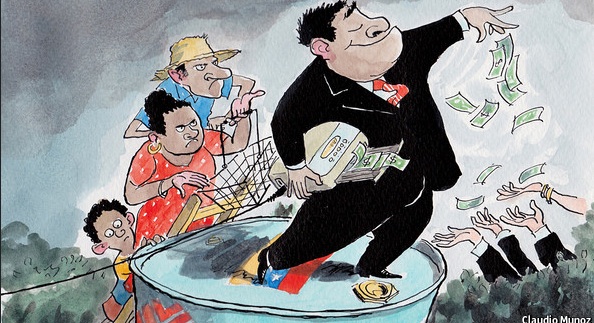
Charles Kennedy writes:  The relationship between the U.S. and Venezuela – which has been an icy one for years – took a hit after the Obama administration passed sanctions on individuals high up in the government. Venezuelan President Nicolas Maduro spun the move to his advantage.

Washington’s move was not the most adroit display of statecraft as it provided a boost to Maduro at a time when his popularity is crumbling under the weight of a decaying economy.

Still, while Maduro steps up his revolutionary rhetoric in public, behind the scenes the core institution of Venezuela’s economy appears to be tamping down its focus on revolution. The new management team at state-owned oil firm PDVSA is trying to professionalize its workforce and its operations. In the past, PDVSA employees were sent to pro-government rallies to support the late President Hugo Chavez. The workers wore red in support of Chavez’s revolution.

PDVSA, headed up by Eulogio del Pino since September 2014, is swapping out the red revolutionary dress in exchange for normal business attire. More importantly, PDVSA is reforming its business practices in an effort to revive flagging oil output.

PDVSA has decided to allow minority partners greater flexibility in using their own rigs and equipment – potentially saving millions of dollars. Company leadership is seeking more private investment by allowing greater outside ownership. Also, thousands of political operatives have been laid off, a sea change for a government that used PDVSA as a political arm for more than a decade.

It is too early to tell if the newfound professional mantra deployed by del Pino will allow PDVSA to resuscitate its oil sector, but the government thinks it is on the right track. Oil production from the Orinoco belt, which holds the vast majority of Venezuela’s 298 billion barrels in reserves, is expected to tick upwards from 1.25 million barrels per day in 2014 to 1.37 million barrels per day by the end of this year.

But it is not as if PDVSA will suddenly transform into a normal oil company. After all, there is still plenty of political meddling from above – the new CFO is a relative of President Maduro’s wife, for example. Eulogio del Pino is making strides at transforming the company, but ultimately he reports to the President. That means he will only be able to go as far as Maduro is willing to let him.

designed by Claudio Munoz

designed by Claudio Munoz

Can Tesla Survive in China?

Paul Ausick writes:  In 2014 Tesla Motors sent 4,800 Model S sedans to China. Of those, 2,499 were sold and 2,301 were not. Reports from China dated Monday indicate that the company has fired 30% of its Chinese staff.

Layoffs reportedly began before the Chinese New Year holidays, and they are affecting more than just the sales staff, which apparently has been reduced by half. A report at Chinese website CarNewsChina.com indicates layoffs have occurred in the tech support and procurement departments, as well as marketing, public relations, legal, administrative and marketing systems. Before the firings, Tesla reportedly had 600 employees in China.

In January of this year, Tesla China sold just 120 cars, according to a report at CarNewsChina.com. Reuters reported in February that Tesla CEO Elon Musk “threatened to fire or demote country managers” unless sales picked up. Musk had already noted weak sales in China in a letter to shareholders when the company reported fourth-quarter 2014 results.

The issue is not so much that there are no buyers, but that Tesla has managed to step on its own toes, as well as those of its potential customers. When the company introduced the P85D version of the Model S sedan last October, previous orders for the Model S were cancelled and new orders placed for the new version.

To combat the order cancellations, Tesla raised its order deposit fee of 15,000 yuan (about $2,400) to 50,000 yuan. A second deposit of 250,000 yuan was required when the car was ready to be shipped to China. The Model S costs 648,000 yuan in China (about $103,400).

Chinese buyers balked at the higher fees, as the company’s China office had predicted they would, and orders appear to have dried up. Other reasons for the lack of sales include overly optimistic sales forecasts and shipments of cars from the United States for stores that never opened.

Chinese management suggested selling the cars at 20% discount and using third-party sellers to unload the inventory. Tesla headquarters apparently rejected both suggestions out of hand.

Tesla's Competition in China?

European Youth: A Lost Generation

Anthony Spota writes:  Leaders in Europe and around the world are hoping the worst of the economic and financial crisis is over and that 2014 will be a year of recovery.

However, when it comes to youth unemployment in the European Union (EU), there appears to be no light at the end of the tunnel, save for a few exceptions. Youth unemployment has been on a continuous rise since the beginning of the crisis five years ago and, according to (the European Commission’s Directorate providing statistical information), it has now reached an average of 23.5%.

More specifically, there has been an increase of the “NEETs,” young people who are not in employment, education or training.  As many as 14 million young Europeans fall into this category.

The problem has been particularly acute in the European “Southern belt” — Greece, Portugal, Spain, Italy and Croatia — where roughly one in two young people are without a job.

Many young Europeans are underemployed, holding jobs they feel overqualified for or working under precarious contracts such as internships, which are often unpaid or grossly underpaid.

Apart from the alarming size of the phenomenon, it is clear that youth unemployment will have a long-term effect on a big segment of the EU population. This generation will also have a higher chance of suffering from unemployment and poverty later on, which could lead to higher rates of crime.

Furthermore, countries with the highest rates of youth unemployment suffer from a “brain drain,” in which educated youngsters leave the country to try and find work abroad. Not only are these countries losing a motivated workforce, but all the money invested in its education has also been wasted.

Within the context of its social policies and the promotion of the movement of workers and their full employment, the EU has supported youth employment since long before the outbreak of the crisis. The main instrument of this support is the European Social Fund (ESF) – a structural fund investing around 10% of the EU budget in creating more and better jobs within the European Union.

According to the European Commission, from 2007 to 2012, 20 million young people under 25 benefitted from the ESF through training or mentoring. Many member states use ESF to modernize education and strengthen vocational training.

Youth guarantee schemes create entitlements to certain measures for all parts of a population within a certain age group. The principal supportive measures of the initiative would consist of building up partnership-based approaches, early intervention and activation, and supportive measures for labor market integration

There is also an emphasis on creating focal points that will ensure coordination between all groups concerned and the public authority responsible for managing the initiative. Providing people outside the system with information is also essential, and increasing the use of Internet and social media will be promoted.

Many European countries have educational and societal systems in which students finish their tertiary studies after the age of 25. Part of the danger of trying to implement plans that worked in northern European countries in southern states such as Greece, Italy and Spain is that local considerations are not taken into account.

In Italy, for example, the average student finishes high school at age 19 and will usually graduate from higher education (first and second level) after the age of 25. For this reason, it would seem like a good idea to expand the application of the Youth Guarantee scheme to all people under the age of 30 automatically.


US Poor Women 5x More Likely to Have Unintended Births

Alexandria Icenhower writes: New research suggests that a single woman’s income can be a factor in whether or not she has an unintended birth. In fact, poor, single women ages 15 to 44 in the U.S. have over five times more unintended births than affluent women.

A comprehensive review of single women’s sexual activity, contraception use, and abortion rates show major trends by income level that directly affect unintended childbearing rates. Since an unintended birth can shape a family for generations, it is important to examine the implications of this income gap and then work to narrow it.

Preventing an unintended birth could allow single mothers “to get more education [and] earn more,” Isabel Sawhill and Joanna Venator concluded in a recent paper.  But too often, low-income women are not provided education about and access to the most effective birth control, which would help prevent these pregnancies.

Furthermore, there are serious financial barriers involved. Abortions for low-income women must be paid for out of pocket, since Medicaid and many private insurers are prohibited from covering them. IAn unintended birth not only has an impact on the single mother, but also on her children. “[T]here are significant and important improvements in the lives of children who would have otherwise been ‘born too soon,’” Sawhill and Venator’s research found. Improvements include “cognitive scores in childhood, high school graduation rates, rates of teen pregnancy, college graduation rates, and lifetime income.”

Sex, Contraception, or Abortion?


Sexual activity rates do not vary along class lines. Around two-thirds of women were having sex at each income level. “Policies for abstinence are fighting against the tide,” they argue. Chastity is not the reason more affluent women have fewer unintended pregnancies.

Women with incomes below the federal poverty line were “twice as likely to have had sex without protection” compared to women with incomes four times the poverty line, Reeves and Venator found. The fact that poor women are not using birth control as frequently (or effectively) results in more unplanned pregnancies and contributes to the class gap. They suspect that lack of education about and access to contraception contributes to less effective use.

Poor women are less like to have abortios.

Contraception could reduce unintended birth more than abortion.

Unfortunately, there are no easy answers to solve this problem. Education and access are key in every scenario to reducing unintended births. The Affordable Care Act (ACA) has made strides in increasing access to contraception, as it covers birth control across all insurance plans. However, women and the medical community need to be better educated about IUDs and implants.

Abortion is more problematic. Besides the moral, political, and personal issues surrounding abortion, there is a wider gap in access to abortion than there is contraception. This problem will not be solved unless women have access to abortion clinics and education about their options.