India’s Infrastructure

Shahi Tharoo writes: In the days of the British Raj, when the railway budget rivaled that of the rest of the Indian government, the Parliament listened rapt to railway detials. Railway revenues today, at $23 billion, no longer dwarf the country’s budget, which now stands at some $268 billion. But India’s railways still produce other mind-boggling figures: 23 million passengers are transported daily (over eight billion per year, more than the world’s entire population) on 12,617 trains connecting 7,172 stations across a 65,000-kilometer (40,000-mile) network. And, with 1.31 million employees, the railways are the country’s biggest enterprise.

India’s trains carry four times the number of passengers as China’s, despite covering only half as many kilometers, but still lose about $7 billion annually.  A succession of railway ministers, viewing the trains as poor people’s only affordable means of transport, have refused to raise passenger fares, squeezing freight instead. This has proved popular with voters but disastrous for the country.

Though freight transport still accounts for 67% of railway revenues, with 2.65 million tons carried every day, the higher fares needed to subsidize passengers have deterred shippers. As a result, the share of freight carried across India by rail has declined from 89% in 1950-1951 to 31% today.

Instead, an increasing volume of goods is shipped by road, choking India’s narrow highways and spewing toxic pollutants into the country’s increasingly unbreathable air.

Making matters worse, politicians have continued to add trains to please various constituencies – but without adding track. Indeed, owing to land constraints, India has laid only 12,000 kilometers of rail track since independence in 1947, adding to the 53,000 left behind by the British. As a result, several lines are operating beyond their capacity, creating long delays.

But perhaps the biggest problem is how dangerous the railways are. Aging rails, tired coaches, old-fashioned signals, and level crossings dating back to the nineteenth century combine with human error to take dozens of lives every year.

Yet the railway ministers continue to insist on their populist approach. With the government losing $4.5 billion every year by subsidizing passenger fares, it has little money to spend on upgrading infrastructure, improving safety standards, or speeding up the trains. As a result, the railways run out of money before running out of plans. In the last 30 years, only 317 of 676 projects sanctioned by Parliament have been completed, and it is difficult to imagine how the railways will acquire the estimated $30 billion needed to complete the remaining 359 projects.

A technocratic new railway minister, Suresh Prabhu, has once again left passenger fares untouched and raised freight rates. Though, unlike his predecessors, he has resisted the temptation to announce any new trains, his plans for India’s railways remain inadequate.

Prabhu’s most impressive promise – to raise $140 billion from market lenders – is also his most problematic, as he has failed to clarify how exactly the railways would repay the loans. Given how high interest rates would have to be to attract investors, this will be no easy feat.

It is far from clear how Prabhu’s grand vision of a safer, cleaner, and speedier Indian railway system will be achieved in practice. The railway minister has created a dream budget –though “pipe dream” might be a more accurate description.

India's Railways

Why Does the US Have Fewer Banks?

The Richmond Federal Reserve writes: The financial crisis of 2007 – 08 was a major shock to the U.S. banking sector. From 2007 through 2013, the number of independent commercial banks shrank by 14 percent – more than 800 institutions. Most of this decrease was due to the dwindling number of community banks. While some of this decline was caused by failure, most of it was driven by an unprecedented collapse in new bank entry.  Why Fewer Banks?

Bankers and Lawyers Have Different Roles in Money Laundering?

William Hubbard, head of the American Bar Association, writes: A recent decision of the Supreme Court of Canada protects the integrity of the attorney-client privilege and the confidential lawyer-client relationship in connection with Canada’s federal anti-money laundering, anti-terror law.

The court’s Feb. 13 landmark decision in Attorney General of Canada v. Federation of Law Societies of Canada acknowledges the critical importance of the attorney-client privilege—known in Canada as the solicitor-client privilege— and strikes down portions of Canada’s Proceeds of Crime (money laundering) and Terrorist Financing Act and regulations that would intrude on the privilege.

The opinion reinforces the principles that lawyers are not agents of the state and that the government may not search lawyers’ records without a warrant. The decision also affords constitutional protection to the privilege and to a lawyer’s broader “commitment to the client’s cause,” meaning that the government cannot impose obligations on lawyers that undermine either principle.

Although the opinion is from the Canadian Supreme Court, it also has resonance for the United States. The attorney-client privilege is a bedrock legal principle of our free society. It enables both individual and organizational clients to communicate with their lawyers in confidence, which is essential to preserving all clients’ fundamental rights to effective counsel. The Canadian decision should serve as an important reminder to U.S. legislators and regulators that federal regulation of the legal profession has limits, including limits on measures that intrude on the privilege or on the broader confidential lawyer-client relationship.

Those who know of the U.S. government’s attempts to impose anti-money laundering and counter-terrorist financing mandates on U.S. lawyers will identify with the history behind the Canadian ruling.  Fifteen years ago, the Canadian Parliament enacted a sweeping anti-money laundering law requiring financial intermediaries—including lawyers—to collect, record and retain material. The law created a new agency to oversee compliance, and it allowed that agency to search for and seize material. Non-compliance subjected the offender to fines and imprisonment. Regulations adopted in 2002 subjected lawyers to the law’s recordkeeping and client-verification requirements and allowed the government to search and seize records, subject to a limited exception for the privilege.

The Federation of Law Societies of Canada challenged the constitutionality of these measures as they applied to lawyers and prevailed at every step of the litigation that spanned more than a decade. The court’s recent decision struck down those portions of the law allowing warrantless searches and seizures of lawyers’ offices and those requiring lawyers to monitor and report their clients’ financial activities to the government. The court reasoned that each of these actions would undermine both the privilege and the lawyer’s duty to the client.

ABA adopted voluntary good practices guidance in 2010 designed to help lawyers to detect and prevent money laundering in their practices. Last year, the ABA also collaborated with the International Bar Association and the Council of Bars and Law Societies of Europe to produce a lawyer’s guide with practical tips for detecting and preventing money laundering, highlighting the ABA’s commitment—both domestically and internationally—to educating the profession in this area.

The decision by Canada’s highest court eloquently recognizes the critical role that the attorney-client privilege and the confidential lawyer-client relationship play in our justice system. Although we are heartened by the opinion that will protect the Canadian legal profession from intrusive regulation, legislative and regulatory efforts that could imperil the same values remain in the United States.

Money Laundering and the Law


Did Maxine Waters, John McCain and Carl Levin Oust Credit Suisse CEO Dougan?

Dougan took over Credit Suisse in 2007, just in time to catch the worst global financial crisis in decades.

Last year Swiss lawmakers started pressuring him to resign after the bank plead guilty to helping clients evade taxes. The $2.6 billion fine the bank had to pay resulted in its first quarterly loss since 2008.

Pressure was mounting on Dougan from inside the bank too. After he testified on Capitol Hill about the tax evasion matter, a staff group representing Swiss bankers at Credit Suisse and other Swiss banks demanded that he apologize. They said Dougan’s testimony simply served to “vilify lots of employees that had nothing to do with offshore U.S. banking.”

Who knew what and when has been a continuig question in the investigation of banks, money laundering and aiding and abetting income tax evasion.  It is probable that the Department of Justice, the SEC, IRS and White House did not want to force an American banking CEO to plead guilty to criminal activities.

The Senate Committee on Investigations and a posse of legislators in the House and Senate kept insisting that top brass be brought to justice..  It is probable that a foreign bank was picked to take the rap.

Brady Dugan has claimed to have no knowledge of the schemes to aid and abet tax evasion.

When Maxine Waters insisted that the Department of Labor hold hearings on a Credit Suisse exemption from their criminal plea, evidence was submitted that Dougan did in fact know all about these schemes.  Pressure brought by the Labor Department hearing, the outcome of which has not yet been announced, may well have forced his resignation.

Credit Suisse wants the 2 billion US pension business it has been handling.  Proof that Credit Suisse had put aside its “culture of corruption” may have forced Dougan to step down.

It will be interesting to see if the exemption is now granted to Credit Suisse, and the reasons for which it is granted.  Clearly talk has been flying from the DOJ to the White House to the SEC.

Brady Dougan


Equality for Women, or Equal Opportunity?

The head of the U.N. agency promoting equality for women is lamenting that a girl born today will be an 81-year-old grandmother before she has the same chance as a man to be CEO of a company — and she will have to wait until she’s 50-years-old to have an equal chance to lead a country.

Twenty years after 189 countries adopted a blueprint to achieve equality for women, Phumzile Mlambo-Ngcuka said that not a single country has reached gender parity and equality.

The executive director of UN Women spoke ahead of International Women’s Day on Friday and next week’s meeting of the Commission on the Status of Women. The commission will review the 150-page platform for action to achieve equality that was adopted at the groundbreaking U.N. women’s conference in Beijing in 1995.

Although there has been progress since Beijing, especially in women’s health and girls’ education, Mlambo-Ngcuka said, there are fewer than 20 female heads of state and government, and the number of women lawmakers has increased from 11 percent to just 22 percent in the last two decades.

“We just don’t have critical mass to say that post-Beijing women have reached a tipping point in their representation,” she said.

The Beijing platform called for governments to end discrimination against women and close the gender gap in 12 critical areas including health, education, employment, political participation and human rights. For the first time, it recognized that women have the right to control their own sexuality without coercion, and reaffirmed their right to decide whether and when to have children.

Mlambo-Ngcuka said UN Women is looking for 10 world leaders, 10 CEOs and 10 universities to “break the mode” and become champions of the agency’s “He for She” campaign, which calls on the world’s male leaders, fathers, sons, husbands and brothers to stand up and support equality for women in all areas of life.”

Hillary Clinton’s Message

In a press conference at the UN Hillary Clinton explained the use of a private server for US State Department emails.   The server was located at the Cintons’ home in Chappaqua.  She did not say who paid for the server.  This is important.  It may well have been the Clinton Foundation and a clear conflict of interest.  She said that no one should have access to the server.  Is she really in a position to decide which messages stored there are the pubic’s business?

While many women, the founders of this website included, would llike to see a woman President of the US, it has to be the right woman.  We are offended by by Mrs. Clinton’s statements that her election represents the future.  She has been running for Preisdent for fifty years.  Where is her message?

Issues of banking corruption, inequality, educatoin and jobs are most important for most people.  Mrs. Clinton does not talk about these issues.  She capped her news conference with the phrase, “We should be about the business of the 21st Century.”  That business apparenttly is to elect Mrs. Clinton President.

Until she answers questions about the ownership of the server and who pays for it, until she reveals the tax relationship between the Clinton Foundation and the Clinton’s personal taxes, until she speaks out on some to the really important issues of the 21st Century, she should not try for the top job.

Mrs. Clinton appears to be tone deaf.  In her 2008 campaaign, she surrounded herself with yes people who talked only about Mr. Clinton’s title when he returned to the White House.  Should is be First Laddie?  She lost the party’s nomination in a year when she could have won.

We also have to look carefully at her relationship with Goldman Sachs.  She is on their payroll.  The head of Goldman and perhaps even Goldman itself set her son-in-law up in a hedge fund businesss he was claerly not qualitied to run.  Chelsea’s wedding had to be postponed until her future father-in-law got out of jail  A congressman, he was convicted on 31 counts of fraud and served his term in federal jail. Questions still remain about antique furniture which Denise Rich may have given the Clintons in exchange for a pardon for Marc, a fugitive hiding out in Zug, Switzerland.

Questions, questions.  This is the business of the 21st century.  To insure that our political leaders are in a position to represent us and not themselves.

Questions.  So many unanswered questions.

An excellent summary of the history of Government Archives and detail on exactly what Clinton did in the email case.  ” In October 2009, 10 months into her tenure at state, new regulations from the National Archives and Records Administration required federal agencies to ensure that records sent or received on private e-mail systems “are preserved in the appropriate agency record-keeping system.”   Government Archives

Hillary v Hillary?

Global Finance

The European Central Bank and national central banks started buying soveeign debt under a plan to inect 1.1 trillion euros into the economy.

Deutsche Bundesbank President Jens Weidmann’s opposition to the ECB’s move: “The most vocal critic of the European Central Bank’s quantitative easing program criticized the program as it was being launched.

The yuan is losing strength against the dollar, and now there is nervous talk about what would happen if China launched quantitative credit-easing moves.  We have noted that this uneven application of QE and the differential interest rates across the globe impacts economies in odd ways that are only beginning to be noted.  Currency wars result in some cases.

Chinese regulators are turning to Japan for lessons on how to keep the world’s second biggest economy from taking the same path of recession and deflation that has blighted its neighbor for the past 20 years.

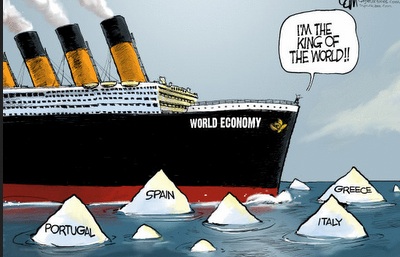
Global Economy?


Obstructing Detente with Iran

From economic, political and social points of view, ending the standoff with Iran seems like a worthy effort.  For the US Congress to interfere with the diplomatic efforts of the State Department is unprecedented and shows how destructive and uncivil relations between the branches of government have become.  It would be tragic if the Seretary of State, John Kerry, were not able to conclude a framework agreement.

Iran-US Talks

Tepid Growth in Latin American Cities

Latin America houses 22 of the 300 largest metropolitan economies in the world. Together, these cities and their surrounding areas—ranging from 21 million-person Mexico City to 2.5 million-person San Juan—account for 30 percent of Latin America’s population and 40 percent of its economic output. On average, they are the most productive parts of the region and the wealthiest as a result.

For all that, however, these places are growing slower than cities in other parts of the world. Figure 1 shows that employment grew by 1.2 percent in Latin American metro areas, slower than both developing metro areas (1.7 percent) and the world’s 300 largest metro economies overall (1.5 percent).

While employment creation was tepid, GDP per capita growth actually contracted by 0.3 percent, the only global region to experience a decline. This drop looks even starker compared to average GDP per capita growth in developing metro areas (4.0 percent).

Slower employment and GDP per capita growth in Brazilian cities, which account for half the Latin American metro areas in the report, dragged down the performance of the region as a whole.

Jobs grew at a rate of 0.8 percent and GDP per capita declined by 0.9 percent, despite the stimulus associated with the World Cup. Indeed, the construction sector created jobs at the fastest rate in 2014 in Brazil’s cities, and Rio de Janeiro, a major World Cup host and the site of the 2016 Olympics, was the best performing Brazilian metro area.

However, this building boom failed to counteract a floundering commodities sector, as well as poorly performing manufacturing and business and financial services sectors. As a result, four Brazilian metro areas landed among the 60 slowest growing metro economies in the world: Campinas, Porto Alegre, São Paulo, and Salvador.


Educating Arab Girls

This International Women’s Day, Arab leaders across the Middle East and North Africa (MENA), along with their partners in the international community, must reassert the right to education for every child—especially for girls.

Current efforts fall short for far too many girls and young women. More targeted initiatives, funding, research, and advocacy for education for girls and women in MENA should be among the top priorities.

Educating girls and women is one of the best investments Arab states can make in their social and economic well-being.

As more countries in the Arab world are embroiled in conflict, it is also important to consider the role that educating and empowering women can play in establishing peace and security.   Educating Arab Girls