How Sweet and Crude Mix to Price Oil

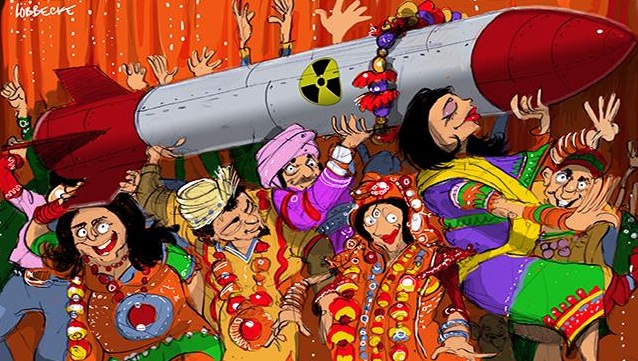
Anas Alhajji writes:  Saudi Arabia wants it all: to salvage OPEC, achieve income diversification and industrialization, and preserve its market share in crude oil, petroleum products, petrochemicals, and natural gas liquids (NGLs). Whether the Saudis succeed will be determined largely by the shale-energy industry in the United States.

The US shale revolution divided OPEC according to the quality of its members’ crude oil. Exporters of light sweet crude – such as Algeria, Angola, and Nigeria – lost nearly all of their market share in the US, while exporters of sour or heavier crude, including Saudi Arabia and Kuwait, have lost little.

Because almost all crude oil produced by the Gulf States is sour, and most of the global surplus is sweet, any production cut by Saudi Arabia and its neighbors would not drive prices back up and rebalance the oil market. The only way to do that – and prevent an OPEC breakup – would be to reduce the production of light sweet crude, including by US producers, which would thus lose market share. If this occurred, oil prices could be expected to rise again relatively quickly.

If, however, Saudi Arabia remains more committed to its strategic development objectives, low oil prices could persist. Since the 1970s, several OPEC members, led by Saudi Arabia, have worked to diversify their industrial base by promoting sectors with a comparative advantage, such as petrochemicals, and building mega-refineries to enable the export of value-added products. At the same time, to boost revenues, they expanded exports of NGLs, which are not counted in OPEC quotas.

But just when these countries were beginning to achieve success, the US shale revolution emerged, threatening all three of their main strategic objectives. The key to the competitiveness of Saudi Arabia’s petrochemical industry was its use of natural gas and ethane, which was far less expensive than the oil product naphtha on which its global competitors depended. Now that the US is producing massive amounts of low-price natural gas and ethane, Saudi Arabia’s competitive advantage – and market share – is beginning to deteriorate.

The same goes for refining. Since the US does not allow exports of crude oil, the shale revolution pushed down the US benchmark price, the West Texas Intermediate, relative to international crude prices, sometimes with differentials as wide as $20. US refiners took advantage of lower prices to increase their exports of petroleum products – so much so, that they are now threatening the market share of Saudi refineries in Asia and elsewhere.

Likewise, US companies have increased NGL production considerably, enabling the country to slash its liquefied petroleum gas (LPG) imports and expand its NGL exports significantly. As a result, Saudi Arabia has lost market share to US producers in Central and South America.

But the recent collapse in oil prices could change this dynamic. In refusing to cut its own production, Saudi Arabia seems to be hoping that low oil prices will drive down investment in US shale energy, undermining production growth there.

Low prices may already have contributed to delays in America’s decision to begin exporting crude oil, as well as to the political viability of US President Barack Obama’s veto of the Keystone XL pipeline, intended to transport oil from the Canadian tar sands to the Gulf of Mexico for export. Add to that the delay in the opening of the Mexican energy sector, and it seems that low oil prices could amount to a net gain for the Kingdom.

Though Saudi Arabia’s motivation in not cutting production was probably almost entirely economic, low oil prices could also offer distinct political advantages. Most notably, the decline in prices is creating serious challenges for Iran, the Kingdom’s main rival in the region, as well as for the unstable, oil-dependent economies of Russia and Venezuela. None of these countries has adequate savings to cushion the blow of reduced revenues.

Under these circumstances, it seems likely that Saudi Arabia will continue to refuse to cut oil production, leaving prices low until market forces trigger a rebound. And even then, the price increase could be limited. After all, game theory dictates that, once the surplus is eliminated, the dominant producer must prevent oil prices from rising high enough to cause it to lose market share again. That means that Saudi Arabia will try to compel non-OPEC countries, mainly in North America, to keep oil-production increases commensurate with growth in global demand.

In short, it is in Saudi Arabia’s interest for oil prices to rise high enough to sustain its own economy, but not so high that they can sustain significant increases in non-OPEC supply. In order to keep prices in this ideal range, Saudi Arabia may even increase production again.

Over the next few years, US producers are likely to retrench, focus on sweet spots, improve technology, reduce costs, and increase production once again. At that point, Saudi Arabia’s current strategy may no longer be adequate to sustain its market dominance.

Oil Wars

Why Price of Stocks and Bonds Diverge in US

Kenneth Rogoff writes:  How should one understand the disconnect between the new highs reached by global equity indices and the new depths plumbed by real interest rates worldwide? Several competing explanations attempt to reconcile these trends, and getting it right is essential for calibrating monetary and fiscal policy appropriately.

The most popular explanations downplay risk factors in a way that can be dangerously misleading. For example, the “secular stagnation” theory claims that low interest rates tell the true story. The global economy is suffering from a chronic demand shortfall, which can be remedied through sustained growth in government spending.

According to this view, soaring stock markets merely reflect low discounting of future profits. Moreover, labor’s share of profits seems to have fallen markedly in recent decades across the world’s eight largest economies, with the possible exception of the United Kingdom. Conversely, capital’s share of profits has been rising, which of course raises the value of equities (though, stock prices have continued to rise in countries like the US and the UK where labor shares have begun at least a cyclical recovery, and where interest-rate hikes may soon be on the horizon).

Although high-yielding government investments in education and infrastructure are especially justified today, the idea that demand permanently constrains supply in a significant way is dubious.

Another possible explanation of low interest rates is financial repression. The European Central Bank and the Bank of Japan, like the Federal Reserve before them, are gluttonously buying bonds. At the same time, a host of new regulations to promote financial stability are forcing banks, pension funds, and insurance companies to stock up on government securities. Thus, today’s low interest rates are more a reflection of distortions in financial markets than of low growth expectations.

Proponents of the financial repression explanation essentially view low interest rates as a hidden tax on bondholders, who receive a lower interest rate than they would otherwise.

The financial repression tax is not nearly as progressive as a more general wealth tax would be, because lower-income households typically have a smaller share of their assets in equities.

Other factors are contributing to today’s ultra-low interest-rate environment as well. Adverse demographics and declining labor-supply growth in most advanced economies are undeniably important. The puzzle, though, is that this trend has played out in a very gradual and predictable way, whereas the decline in interest rates has been more rapid and somewhat unexpected (certainly by central banks).

Though bonds are hardly a perfect hedge against geopolitical risks, they typically beat stocks (except, perhaps, in cases of global conflagration, when both fare badly). In recent work with Carmen and Vincent Reinhart, we show that even relatively minor shifts in disaster risk – say, a rise from a normal 2-3% to 3-4% – can lead to a massive decline in global real interest rates, even taking them well into negative territory.

If the government has superior information and analysis, and correctly assesses that public fear is not justified, then of course it makes sense to issue more debt.

If, on the other hand, the public is basically right about heightened disaster risks, the policy issues become much more complex. The problem is that the government likely faces high costs if a disaster strikes, which implies a high option value to preserving fiscal space for when it is most needed.

Heightened public concern about the risk of future economic catastrophe in the wake of the financial crisis is still playing an important role, reinforced by lingering fragility in the eurozone and rising instability in emerging markets. This makes the public understandably more cautious. But if the risks that might help explain the price trends for stocks and bonds are real, policymakers, too, should be careful not to throw caution to the wind.

Low Interest Rates

India Rising?

Jim O’Neill writes:  Following recent revisions to its GDP figures, India’s economy has recently grown – in real terms – slightly faster than China’s. A key feature of my reseinto the BRIC economies (Brazil, Russia, India, and China) more than ten years ago was that at some point during this decade, India would start to grow faster than China and continue to do so for dozens of years.

The reasoning is straightforward. India’s demographics are considerably better than China’s, and the size and growth rate of a country’s workforce is one of the two key factors that drive long-term economic performance – the other being productivity. Between now and 2030, the growth rate of India’s workforce will add as much to the existing stock of labor as continental Europe’s four largest economies put together. India is less urbanized than China, and it is in the early stages of benefiting from the virtuous forces that normally accompany that process.
But there is a catch.

When it comes to productivity, India has been a laggard. Unless it finds a way to improve, the country’s demographic profile could become a burden rather than a benefit.
In this regard, Modi’s first full budget did not include anything dramatic. But if a number of initiatives are successfully implemented, the economy should receive a real boost. Indeed, the budget’s main feature is its commitment to investments in public-sector infrastructure, even at the expense of raising next year’s deficit from 3.6% to 3.  India should emphasize investment spending,  The budget also includes a number of other helpful measures, such as the reduction of the corporate-tax rate and efforts to improve the business environment.
My visits as chairman of the AMR review also allowed me to witness some encouraging signs. In my book The Growth Map, I describe my unforgettable first visit to Gurgaon, a municipality near Delhi that serves as a regional financial and industrial hub. Gurgaon is home to a lot of high-flying technology firms, and on this trip I visited one of India’s leading diagnostics companies, SRL Diagnostic, which is developing tools that could improve the use of antibiotics.

It is probably too early to say with certainty that India will soon take its place as the world’s third largest economy, behind China and the United States. But, given that India’s investment climate seems to be improving, that moment might not be too far away. By 2017, India could surpass Italy and Brazil to become the world’s seventh largest economy; by 2020, there is a reasonable chance that it will overtake France and the United Kingdom to become the fifth largest.

Overtaking Germany and Japan, however, will require bolder steps, especially regarding education, health, and economic policy. India will need to improve its education system dramatically, both at the secondary and tertiary level, and make similarly large advances in basic sanitation (not to mention implementing my review’s recommendations for combating AMR).

Rise of India?

Could the Japanese Become Extinct?

With a plummeting birth rate and a rapidly aging population, Japan is facing an unprecedented population collapse with vast economic, social and political implications. This sixteen and a half minute video examines the dangers facing the nation and the apparent lack of action to address the problems that exist now and appear to be growing unchecked.  Japan’s population peaked in 2007 at 127.771 million and has declined every year since.  The projected population for 2100 is about 47 million, declining at a rate of about 2% per year.  If that were to continue to 2200 the entire population of Japan would be a little more than 6 million, and by 2300, a little more than 800,000.

Graph from Japanese Pension Funds Daabase
japan-population-1880-2100

Are More Powerful Women Less Faithful?

Neal Mc Carthy writes:  According to a study in the Journal of Sex Research, the higher up and more powerful a person’s job, the more likely they are to be unfaithful.

Statista charted how people in positions of occupational power engage in infidelity and you can read more on the research in the Independent.

This chart shows how people in positions of occupational power engage in infidelity.

Infographic: Power increases infidelity | Statista
You will find more statistics at Statista

Enterprise Zones for Entrepreneurs?

David Neumark and Helen Simpson write: Place-based policies such as enterprise zones offer economic incentives to firms to create jobs in economically challenged areas. Evidence on the effectiveness of enterprise zones is mixed. There is no clear indication that they successfully create jobs. However, positive effects are evident for other policies, including discretionary subsidies that target specific firms, infrastructure spending that targets specific areas, and investment in higher education and university research.  Enterprise Zones

How Solid is the US Recovery?

After the price drop in oil consumers have not spent their gas savings. would spend most  According to a survey of 4,500 consumers by Visa Inc. in early January, consumers are saving half of their newfound wealth from lower gas prices—using 25% to reduce debt and spending the remainder on small purchases like groceries, clothing and fast food. The personal savings rate jumped from 4.3% in November to 4.9% in December, according to the Commerce Department. These statistics help explain why retail spending, after excluding gas purchases, were flat in January after falling 0.2% in December.

Since October, the Institute for Supply Management’s (ISM) overall purchasing managers index (PMI) of manufacturing has fallen from 57.9 to 53.5 in January, with each successive month showing more slowing. Readings above 50.0 indicate expansion, so while January’s tally is still positive, it was the lowest level since January 2014 when the polar vortex chilled the economy. As we expected, the stronger dollar is progressively slowing exports.  Business investment fell 0.6% in December, marking four consecutive months of decline for the first time since 2012.  Consumer spending and income, manufacturing activity and business investment ended 2014 on a soft note and showed no signs of picking up during January. Although the Commerce Department will revise its initial estimate of fourth quarter GDP, it is unlikely the economy grew faster than 3%, and it likely won’t in the first quarter either.

The suspension of the EUC program might have accounted for most of the increase in jobs, possibly reflecting the unintended consequences of the extended EUC program.

An alternate measure of the labor market, probably provides a better measurement of the actual amount of slack in the labor market. This rate iincludes those working part time who would prefer full-time employment. In January, there were 6.8 million workers who fit into this category—a significant group. The rate also includes those who are marginally attached to the labor market, since they still want to work but have become discouraged. In January there were 6.5 million discouraged workers who were still looking in from the outside of the workforce. When these 13.3 million workers are included in the calculation, the amount of slack in the labor market soars from the 5.7% official January U3 unemployment rate to 11.3%—a spread of 5.6%.

While a further decline in the U3 unemployment rate is sure to make some Fed governors uncomfortable that the pressure is on to raise rates, we think a majority of the Federal Open Market Committee (FOMC) members will take a more holistic view of the labor market that includes the U6 unemployment rate and the absence of solid wage growth.

US Manufacturing?

International Women’s Day 2015

Internatioanl Women’s Day is a day to be celebrated every day.  WTW Women and  Finance encourages women to expand their basic fund of knowledge, to work for equal pay, represenation on corporate boards, STEM opportunities and to encourage the men our lives to support us.

This year we are particularly concerned with economic inequality and with the failure of governments to enforce the law in banking, which encourages the diversion of funds from the public sectorr.

Globalization is an inevitable and exciting prospect.  It will also take the effort and good will of women across the world.  We are trying to make a small contribution to this effort.

WTW Women and Finance celebrates Internatioanal Women’s Day.

Internatioanl Women's Day

Women Swagger to Take the Lead?

Caron Beesley writes:  Recently, Pantene ran a series of empowerment-themed commercials that called attention to how much an apology is used to downplay female power. Whether we’re late to a meeting (“Sorry, I’m late…”) or raising our hands to ask a question (“Sorry, could I just ask…”), an apology is often the preferred prefix for women in a variety of everyday scenarios.

Women in positions of power (CEO or business owner) often struggle to be perceived as great leaders and equals to their male counterparts. After all, female CEOs are rarely recognized on any “best CEO” rankings.Despite these perceptions, women aren’t being held back. Just look at the latest statistics about female entrepreneurship:

  • Women business owners represent the fastest-growing businesses in America.
  • They generate more than $1.4 trillion in revenues per year and employ nearly 8 million people.
  • 41 percent of new entrepreneurship activity in 2013 involved women.

So what are women to do? One of the biggest challenges for women is that we expect to be recognized based on our merits – the work we do, the results we get. But oftentimes, that’s not enough. If women are to be perceived as leaders, we need to quit apologizing and start swaggering!

That’s the advice of Barri Rafferty, CEO of Ketchum, Inc. North America, a global PR firm.  Rafferty recounts how during a trip to the World Economic Forum in Davos, everyone wanted to know whose wife she was:

“It was a rude awakening for me… Until then I’d been, ‘Don’t stand out on women’s leadership. Do your job. Be recognized for your work.’ But I came back from that and thought, ‘I need to do more.’ ”

In response, Rafferty launched several initiatives to coach women and help them broaden their skills. Making it in a man’s world is a passion for Rafferty. Her advice? Try to balance authenticity and authority if you want to be seen as leaders by men. Here are her nine tips for doing so:

  • Be clear about what you stand for
  • Allow your point of view to shine
  • Adapt your style to fit your audience
  • Be open and honest to build trust and foster relationships
  • Have swagger and stop apologizing
  • Respond, don’t react
  • Don’t over-explain
  • Sell your ideas
  • Make others the hero

Women Lead