Afghanistan Producing Opium at Record Pace

Africa is becoming a major transit point for heroin from Afghanistan, especially for shipments to Europe.

Most of it still takes an established path known as the “Balkan route” through Iran and southeast Europe.  Recent seizures along the Kenyan and Tanzanian coastlines, however, point to a “southern route.”

Between 2002 and 2011, Africa was sporadically identified as an origin for heroin reaching Europe. In 2012, however, East Africa became a prominent spot, according to the UN.

Afghanistan is the source of 80% of the world’s illicit opium products, accordiing to hte United Natoins World Drug Report.

Afghan opium cultivation has increased by 7% from 2013 to 2014 and production increased as much as 17% over the same period, the UN reported in November. “Authorities “are worried that a record opium harvest in Afghanistan will flood global heroin markets this year,” Reuters also notes.

Map covering the drug trafficking through the Middle East. (photo: UNODC)

Map covering the drug trafficking through the Middle East. (photo: UNODC)

The US Drug and Enforcement Agency has spent years chasing after one organization, known as “Akasha,” responsible for the production and distribution of huge amounts of narcotics in Africa, according to Reuters.

Increased drug trafficking could destabilize the already volatile region, Western officials say, fearing a repeat of what happened in Guinea-Bissau, AFirca’s first naco state. 

Adding to the global nature of the problem, opiates and opioids, like heroin, top the list of drugs that cause the most disease and drug-related deaths, according to the UN.

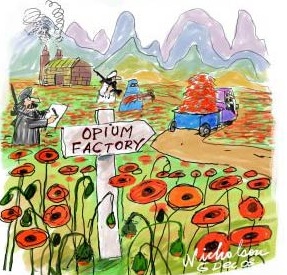
Opium traffic


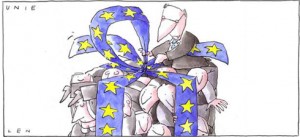
Common Problems Facing the EU

Andy Langenkamp writes: Troubles on the road ahead in Europe:

• Creditors are probably hoping that growth in Europe will pick up enough in the coming years to allow them to write off Greek debt without the public taking much notice. However, if European growth continues to underperform for a length of time, the moment may arrive when Europe and Athens can no longer pretend that Greece is solvent without having the political and economic cover to implement a huge haircut.

• Most experts doubt the sustainability of the current Greek coalition – the two parties are far apart on the left-right political continuum. A government collapse would usher in a new period of political and economic instability that may be too much for the Greek economy to handle, resulting in the much-feared Grexit.

• European politicians often have little political room for maneuver in negotiations as a result of the growing populist, nationalist electoral threat.

• Europeans have increasingly discovered that globalization, aside from being a force for prosperity and progress, can also cause political and economic havoc. Greece has experienced firsthand the ways globalization undermines democracy. It’s an illusion to think that economic policy can be decided on a national level. Nationalism and focus on sovereignty will impede Continental cooperation right at the time when economic risks and geopolitical dangers make it essential.

• In France, President Francois Hollande and his government are trying to circumvent democracy in order to push through economic reforms. This will probably please markets. It doesn’t help that Hollande and opposition leader Nicolas Sarkozy are both very unpopular.

• Inside and at the edges of the European Union, we are witnessing the maturation of authoritarian tendencies in Hungary, Ukraine, Turkey, and Russia, to name a few. This illiberal trend can only be countered by a united front, and that unity is nowhere to be found right now.

Dutch journalist Caroline de Gruyter recently wrote that the Greeks have been the first to discover that globalization and democracy make uneasy partners. They won’t be the last nation to discover this, and this will cause big troubles in the years ahead.

The events of recent weeks have done absolutely nothing to improve the personal ties between the Greek government and its European counterparts. Grandstanding, mutual accusations of bad faith, and needlessly confrontational politics have eroded much political goodwill. This is likely to make the coming talks even thornier than those that recently concluded.

In the end, a choice will be made between the amputated leg theory (the view that cutting off the gangrenous Greek limb will save the body of the euro) or the domino theory (the idea that a Grexit would cause other vulnerable economies to follow, destroying the monetary union). We subscribe to the latter, but some of our financial analysts are starting to doubt this. We all do agree with the analysis of Eurasia Group that “the politics of Europe” is the number one global risk this year, and it will remain so if Europe keeps playing these political and economic games.

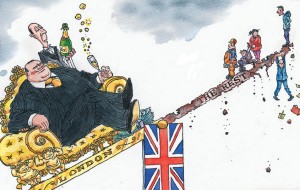
EU Problems

Germany and America versus Russia?

Stephen Szabo writes:  One of the most important stories in the ongoing confrontation between the West and Russia has been that of Western unity. Despite a wide array of different histories, interests and geography, the U.S. and the European Union have held together in a common response to Russian President Vladimir Putin’s violation of Ukrainian territorial integrity and the larger threat it poses to the European security order. At the heart of this unity has been the German-American partnership. Berlin and German Chancellor Angela Merkel have taken the lead in both shaping that response and negotiating with Putin. This solidarity has clearly surprised Putin, who has regarded the West as weak, decadent and divided.

One of Putin’s major goals is to divide Europeans from each other and Europe from the United States. He has attempted to do this in a number of ways, waging information warfare and disinformation campaigns on social media and through the purchase of major newspapers and the financing and cultivation of anti-European political parties, most notably the National Front in France, Jobbik in Hungary and Syriza in Greece. His recent visit to Hungary, where he was warmly received by Prime Minister Viktor Orban, is another indication of fault lines opening in Europe.

Putin has tried to capitalize on the Snowden effect in German public opinion, hoping to feed a sense among Germans that both the U.S. and Russia are equivalent in their behavior and that Washington is trying to drag Germany and Europe into a confrontation. He has used his extensive business and criminal network, including a number of former members of the East German secret police who worked for him when he was a KGB agent in East Germany, to foster corruption and to buy favor among German decision-makers. This effort has largely failed.

This also reflects the deeper social and geographic connections between Germany and Russia. The American business stake in Russia is significantly lower than that of Germany, and while Germany gets about 39 percent of its oil and gas from Russia, the U.S. has no real energy dependence on that country.

Americans may have to think of Russia as Germany’s Mexico, an unavoidable neighbor. Germans should understand that Americans have a concern for anything which smacks of appeasement of an aggressive dictatorship and that the polarization of American politics is producing outsized rhetoric more directed internally than to foreign audience.

Both sides have to understand that this is going to be a long game with Putin, which requires a long-term approach, similar to the containment strategy devised by George F. Kennan in the late 1940s. Sanctions may not be sexy and require the kind of patience that an immediate, results-oriented America lacks, but they are likely to have a significant long-term impact.

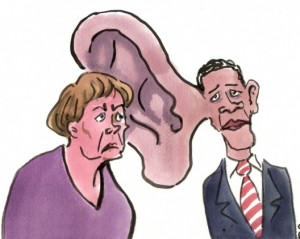
Germany and America

40 to Trial in Spain for Corruption

A six-year probe into Spain’s biggest graft scandal has resulted in a judge ordering trial for 40 people, including former Popular Party treasurers. It involved public works contracts in and around Madrid and Valencia.
Spanish High Court judge Pablo Ruz on Thursday imposed court bonds worth a total of 449 million euros ($500 million) on 36 of the 40 suspects, who also include former mayors and businessmen linked to the ruling Popular Party (PP).

No dates for the trials have yet been set for the 40 who face charges for the alleged bribes for contracts scene allegedly carried out between 1999 and 2005.

The Popular Party’s former Treasurer Luis Barcenas faces the highest court bond of 88 million euros, while the alleged scheme mastermind, businessman Francisco Correa, was told by the judge to lodge a 60-million-euro bond.

Prosecutors have demanded lengthy prison terms for both. Barcenas is alleged to have diverted donations from builders and other business leaders into the pockets of PP leaders.

The alleged kickbacks scheme has become an embarrassment for Prime Minister Mariano Rajoy whose conservative Popular Party faces a general election late this year.

Spain’s new anti-establishment party Podemos is poised to make big gains on a mandate to tackle corruption.

Former Health Mnister Ana Amato resigned last November saying at the time she had had no knowledge of the offending.

Her ex-husband, a former PP mayor in the upscale Madrid suburb of Pozuello de Alarcon, faces charges of receiving money and gifts for public works contracts.

The day after Amato resigned, Rajoy introduced two anti-corruption laws to parliament.

Beyond 2005, investigators are still looking into other crimes that allegedly took place between 2006 and 2009 as part of the case.

Meanwhile, Spain’s national statistics institute reported on Thursday that on average 95 families lost their homes per day because of excessive debt.

Spain’s real estate bubble burst in 2008, resulting in forced expulsions.

Nearly 35,000 homes were forcibly acquired by creditors last year, a rise of 7.4 percent on 2013, according to the statistics office. Forced seizures of holiday homes, bureaus and farms pushed that total up to 119,442, it added.

Rajoy’s government argued that Spain has overcome the crisis. Opposition parties point to persistently high unemployment.

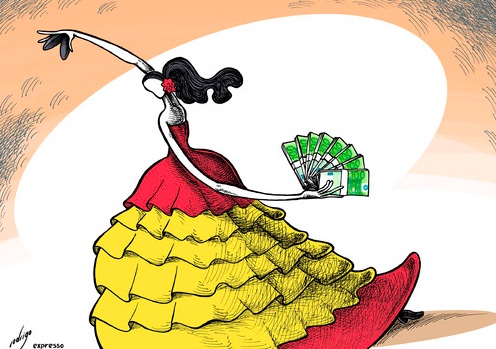
Corruption in Spain

Has the EU Experiment Failed?

Bruce Thornton writes:  The slow-motion crisis of the European Union is the big story that rarely gets the attention it deserves. On the economic front, the E.U.’s dismal economic performance over the last six years was summed up in a December headline in Business Insider: “Europe Stinks.” The 2008 Great Recession exposed the incoherence of the E.U.’s economic structure, particularly its single currency, which is held hostage by the diverse economic policies of sovereign nations. The data tell the tale. The E.U.’s GDP grew 1 percent in 2013, anemic compared to the U.S.’s 2.2 percent. In December 2014, unemployment in the E.U. averaged 11.4 percent, while in the U.S. it was 5.6 percent. We are troubled by our labor force participation rate of 62.7 percent, a 36-year low. But in the E.U., it was 57.5 percent in 2013. Our recovery from the recession may be slow by our historical standards, but it is blazing compared to the E.U.’s.

The E.U.’s economic woes have many causes, but intrusively regulated economies and outsized government spending on generous social welfare transfers are two of the most important. Despite the rebuke of such policies delivered by the recession, government spending as a percentage of GDP has actually increased in the E.U., from 45.5 percent in 2007 to 49 percent in 2013, even as many Europeans decry the harsh “austerity” measures called for by countries like Germany. Greece, the E.U member increasingly in danger of being forced to exit the monetary union and thus risk its unraveling, has nonetheless raised its government spending from 46.8 percent in 2007 to 59 percent in 2013.

Socially, the E.U. is troubled by two trends: demographic decline and the presence of concentrated populations of unassimilated and disaffected Muslim immigrants. Europe is an aging people; by 2030, one in four Europeans will be 65 years or older, reflecting the Europeans’ failure to reproduce. Not since the 1970s have European women averaged 2.1 children, the number necessary to replace a population. It means fewer workers, a factor in the influx of immigrants into the E.U. over the last several decades.

The result has been large concentrations of immigrants segregated in neighborhoods like the banlieues of Paris or the satellite “dish-cities” of Amsterdam. Shut out from labor markets, plied with generous social welfare payments, and allowed to cultivate beliefs and cultural practices inimical to liberal democracy, many of these immigrants despise their new homes and find the religious commitment and certainty of radical Islam an attractive alternative.

All these economic, social, and political problems are no secret. But the proposed solutions to them usually focus on policy changes or technical adjustments to the structure and functioning of the E.U. Yet this begs the fundamental question that has troubled European unification ever since it began with the Treaty of Rome in 1957: What comprises the collective beliefs and values that can form the foundations of a genuine European-wide community?

A shared commitment to leisure, a short workweek, and a generous social safety net is nothing worth killing or dying for. Neither is the vague idea of a transnational E.U. ruled by unaccountable Eurocrats in Brussels and Strasbourg..

We American should not indulge the schadenfreude aroused by watching our sometimes-condescending older cousins slip farther and farther behind us in global importance and power. Europe is still collectively the world’s largest economy, and its travails will impact the whole globe. More importantly, many of the trends weakening Europe today are active in the US too.

What Binds the EU?

Should Women Use Bitcoins?

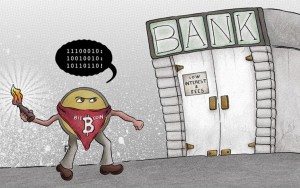
Roughly 2.5 billion adults in the world don’t have access to banks, which means somewhere in the order of 5 billion people belong to households that are cut off from a financial system that the rest of us take for granted. They can’t start savings accounts. They don’t have checking accounts. They can’t get credit cards. They live in places where banks don’t want to go, and because of this, they remain effectively walled off from the global economy. They are called the unbanked. But they are not unreachable, not by a long shot, and one of the biggest and most exciting prospects bitcoiners talk about is using their cryptocurrency to bring these billions of people roaring into the twenty-first century, Foreign Affairs points out.

The Caribbean is an area of the emerging-market world where a strong case can be made for locals to use bitcoin to get around a restric­tive financial system.

Should women in developing countries use bitcoins?

Bitcoin is digital money you can send person-to-person via the net and without a third party. This means fees are much lower, accounts cannot be frozen, and there are no pre-requisites or limits to having a bank account.

Developing countries desperately need locally informed, well-financed giving. Strong local organisations create local leadership, grassroots power sources and more successful, sustainable solutions.

Bitcoin allows donors to give directly to organisations abroad, without needing a headquarters to vet and meter out donations.  There are no chargebacks, and no fees go to PayPal or Visa. (PayPal charges 2.2%+$0.30 per transaction; credit card companies charge around 1.5-3% per transaction). The donation goes much further—directly to the local organisation and the good work they do, and 100% of the contribution is actually donated to the beneficiary. Plus, no-fee technology opens up charities to donors interested in giving smaller amounts of money.

Imagine life without a bank account. How would you start a business? What if you wanted to export products? What if you wanted to sell your paintings, handmade clothes, music or e-book online? How would you get paid? One-half of the world’s adult population does not have access to banking. If someone wants to create a digital product and sell it online, they can’t get paid. They’re effectively removed from the formal global economy, and they know it.

But what if they could get paid? Would it inspire them to create more and to tap into new markets? Could it bring them more wealth? It already is.

Further, without a bank account allowing for international wire transfers, most people use companies like Western Union to send money to their families abroad.

Some remittance corridors, such as from South Africa to Botswana, take average fees of around 23%, meaning the impact of BitPesa could be even higher.

Bitcoin is more than just a currency. Its underlying technology allows information to be recorded in secure, open and decentralised transactions. The blockchain and technologies built on top of it allow for the creation and registration of contract.  The contracts are irreversible and can be self-executing, without the need (or opportunity) for human intervention.

Transactions are unalterable and public on the blockchain. The ability to permanently secure property, transactions and identities online is significant in countries lacking the rule of law. It won’t always guarantee enforcement, but it has the potential to.

Bitcoins


US Banks Ready for Stress?

The nation’s 31 largest banks stand to shed close to half a trillion dollars if the economy slumped into a deep depression, the Federal Reserve said Thursday.

But the banks — which include Citigroup, JPMorgan Chase, Wells Fargo and Goldman Sachs — appear better positioned than ever to handle such loss, Fed data show.

Indeed, for the first time since the Fed began conducting its “stress tests” on banks with more than $50 billion in assets, not one fell below the Fed’s capital requirements, according to the first phase of the Fed’s stress test results released Thursday.

That places the nation’s biggest banks in a better position to pass the next phase of the Fed’s stress testing, which will determine which lenders may proceed with plans to return capital to investors. Final grades will be doled out Wednesday.

The Fed said the nation’s 31 largest banks would lose $490 billion in the 27 months ending October 2016 if the economy was rocked by what it called “severely adverse” conditions.

Those would include a 10% unemployment rate, a 25% drop in housing prices, a stock market plunge of nearly 60% and “a notable rise in market volatility.”

But banks have been steadily building their capital reserves to protect against losses due to stiffer requirements from the Fed, which is seeking to avoid further taxpayer funded bailouts like those made during the mortgage meltdown.

Under the Fed’s worst case scenario, the 31 firms tested would see their common capital ratios, which compare high-quality capital to risky assets, fall from 11.9% in the third quarter of 2014 to 8.2%.

That compares to aggregate capital ratios of 5.5% in the beginning of 2009, and 7.6% last year.

“It means our banking sector is pretty healthy right now from the perspective how how much money they are holding,” said Anna Krayn, head of stress testing for Moody’s Analytics. “Some would argue that there’s excess capital in the system,” she said.

Thursday’s results are just the first phase in the Fed’s stress testing process. On Wednesday, the Fed will announce whether any of the 31 banks still need to rein in capital spending plans.

Last year, Citigroup, Royal Bank of Scotland Group, HSBC Holdings and Banco Santander passed the Fed’s initial capital hurdle, but still fell short of complete success after the Fed determined that the quality of their processes, including their ability to assess risk, wasn’t good enough.

Another fail for Citigroup, the largest of the big banks to fail the test twice, will put pressure on CEO Michael Corbat whose success may be measured by Citi’s performance.

The real question is: are these stress tests and adequate measure of capacity to take a hit.

A New Asset Class for Infrastructure? Buy and Hold Equity

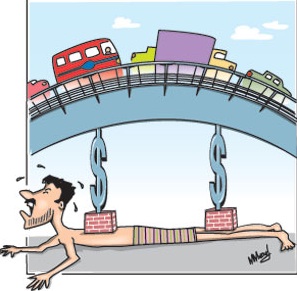
Justin Lin, Kevin Lu, and Clean Mandri-Perrott write: Infrastructure projects can be among the most productive investments a society can make, with clear links to a country’s economic growth.  Infrastructure projects can offer reliable – if lower-than-average – returns. But existing asset classes all too often fail to provide the structure needed for these projects to compete with traditional equity or debt.

Exactly, how can the world harness the potential of private money for infrastructure?

The size of the pie is huge, and so are the opportunities for private investors. The pipeline for infrastructure projects in emerging markets is estimated to have surpassed $1 trillion – $150 billion of which is expected to be raised from private sources. In mature markets, infrastructure investment is projected to reach $4 trillion by 2017.

Our analysis of investment deals over the past 18 months shows that public-private partnerships increasingly rely on capital markets to source funds, even as banks rein in lending in order to comply with the regulatory provisions of the Third Basel Accord. Liquidity remains limited in the wake of the 2008 financial crisis, the legacy of which includes a regulatory regime that is not conducive to long-term investment. Though financing for public infrastructure has returned to 2008 levels, little of it is being funneled into new projects. Most funds have targeted existing infrastructure – investments that are considered relatively safe, because they entail little or no construction risk and have demonstrated their potential to generate stable cash revenues.

In order to overcome the obstacles to investment, we propose the creation of an asset class that we call “buy-and-hold equity” (BHE). This asset class would sit between traditional equity and debt, with investors able to hold it for 15 years or longer. It would offer returns close to those yielded by equity investments, but with some of the risk offset by its long-term nature.

Risk would be further mitigated through the participation of large, influential investors, including sovereign wealth funds, pension funds, and possibly international financial institutions. Public contributions, likely backstopped by multilateral lenders, would provide projects with something close to sovereign risk profiles. Finally, the regulated nature of cash flows would allow for better pre-defined return structures than traditional private or public equity can offer.

The development of BHE would require a new private-sector investment platform, structured to provide bespoke returns for its different participants. The private sector would bring in infrastructure investment expertise, while sovereign funds and international financial institutions would provide the bulk of the capital and stability. Naturally, the platform would focus on projects with defined cash flows and contractual terms guaranteed for 20-30 years.

Not all infrastructure projects will be appropriate for this new asset class. Those best suited will be physical assets that are irreplaceable or core to a country’s economy.

Ideally, the investment platform would create a sustained project pipeline by establishing a private-sector-funded structure that does not solely rely on governments or international financial institutions to bring ventures to the market. The platform would act not only as an investment vehicle, but also as a project initiator, mining opportunities around the world and identifying and classifying them according to a systematic approach. Both greenfield and brownfield developments would be considered.

The platform would provide its own capital, as well as any technical, operational, and managerial expertise required to classify projects according to risk, thereby enabling the creation of indices that investors could monitor and study. For projects judged to be secure, the platform could act as a catalyst for long-term investments typical of institutional investors and pension funds.

Designed properly, a new BHE asset class for private and public infrastructure could unleash the power of the market in the interest of the public good. Given fiscal and other constraints on governments’ capacity, it is an asset well worth having.

Infrastructure Financing

Does Greece Need to Focus on Production?

Ricardo Hausmann writes:  US observers, influenced by their own country’s fiscal debate, look at Greece.  Joseph Stiglitz regards austerity in Greece as a matter of ideological choice or bad economics, just like in the US. According to this view, those who favor austerity must be obsessed with the theory, given the availability of a kinder, gentler alternative. Why would you ever vote for austerity when parties like Greece’s Syriza or Spain’s Podemos offer a pain-free path?

The question reflects a lamentable tendency to conflate two very different situations. In the US, the issue was whether a government that could borrow at record-low interest rates, in the middle of a recession, should do so. By contrast, Greece piled up an enormous fiscal and external debt in boom times, until markets said “enough” in 2009.

Greece was then given unprecedented amounts of highly subsidized finance to enable it to reduce gradually its excessive spending. But now, after so much European and global generosity, Stiglitz and other economists argue that some of Greece’s debt must be forgiven to make room for more spending.

But the truth is that the recession in Greece has little to do with an excessive debt burden. Until 2014, the country did not pay, in net terms, a single euro in interest: it borrowed enough from official sources at subsidized rates to pay 100% of its interest bill and then some. This situation supposedly changed a bit in 2014, the first year that the country made a small contribution to its interest bill, having run a primary surplus of barely 0.8% of GDP (or 0.5% of its debt of 170% of GDP).

Greece’s experience highlights a truth about macroeconomic policy that is too often overlooked: The world is not dominated by austerians; on the contrary, most countries have trouble balancing their books.

Recent advances in behavioral economics show that we all have enormous problems with self-control. And game theory explains why we act even more irresponsibly when making group decisions (owing to the so-called common pool problem). Fiscal deficits, like unwanted pregnancies, are the unintended consequence of actions taken by more than one person who had other objectives in mind. And lack of fiscal control is what got Greece into trouble in the first place.

So the problem is not that austerity was tried and failed in Greece. It is that, despite unprecedented international generosity, fiscal policy was completely out of control and needed major adjustments. Insufficient spending was never an issue. From 1998 to 2007, Greece’s annual per capita GDP growth averaged 3.8%, the second fastest in Western Europe, behind only Ireland.

But by 2007, Greece was spending more than 14% of GDP in excess of what it was producing, the largest such gap. The gap was mostly fiscal and used for consumption, not investment.

Unsustainable growth paths often end in a sudden stop of capital inflows, forcing countries to bring their spending back in line with production. In Greece, however, official lenders’ unprecedented munificence made the adjustment gradual. Even after the so-called Greek Depression, its economy has grown more in per capita terms since 1998 than Cyprus, Denmark, Italy, and Portugal.

Sudden stops are always painful. Unless Greece boosts exports, spending cuts will amplify the output loss in the same way that Keynesian multipliers amplified the output gain from borrowing.

The problem is that Greece produces very little of what the world wants to consume. Its exports of goods comprise mainly fruits, olive oil, raw cotton, tobacco, and some refined petroleum products. Germany, which many argue should spend more, imports just 0.2% of its goods from Greece. Tourism is a mature industry with plenty of regional competitors. The country produces no machines, electronics, or chemicals. Of every $10 of world trade in information technology, Greece accounts for $0.01.

In 2008 the gap between Greece’s income and the knowledge content of its exports was the largest among a sample of 128 countries.

Greece needs to develop its productive capabilities if it wants to grow. The unfocused set of structural reforms prescribed by its current financing agreement will not do that. Instead, Greece should concentrate on activist policies that attract globally competitive firms.
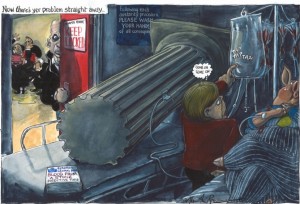
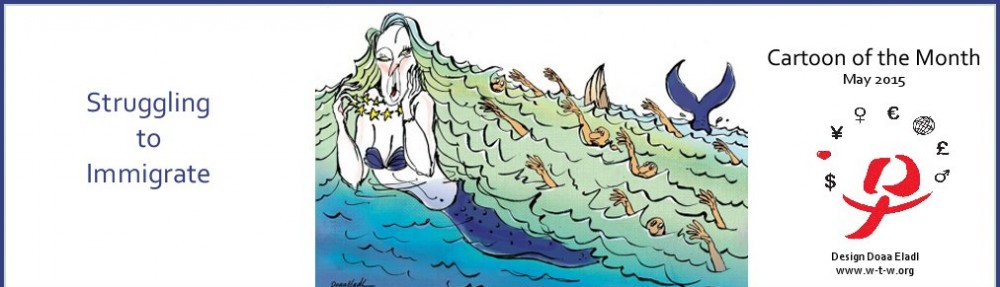
Greece Needs to Produce?


Should Central Banks Follow Global Policy?

The US Federal Reserve Bank will raise interest rates to 0.5% In the next six months.  (The median figure of 200 economists).   The UK is the country stat will probably follow the Fed in 3 months.  The EU is at least 2 years behind.  Even if the Fed thinks the US economy is bounding forward, there are very real consequences to a disconnect in interest rates around the world.   One important impact is on currency rates. Should central bankers work together more closely?