Lessons for Business from China’s Corruption Crackdown?

Vivvienne Bath writes: The scope of China’s campaign against corruption has been broad, and has swept up officials and businessmen, as well as their assets, both inside and outside China. Foreign owned companies operating in China have also found themselves under official and public scrutiny.

A conviction for bribery or for other white-collar crimes such as embezzlement can result in a substantial penalty, including a lengthy period of imprisonment or even the death penalty.

In September 2014, for example, GSK China, a subsidiary of GlaxoSmithKline. was fined almost US$500 million by the Changsha Intermediate Court in Hunan Province after a one day trial for paying bribes to non-government personnel, while four of its employees were also convicted (although given suspended sentences).

The commitment of the current government to prosecuting corruption has proved to be unexpectedly far-reaching. It has also had a number of economic effects, particularly by reducing gift-giving and hitting the luxury goods market.

Changes to the judicial system are  designed to reduce local protectionism by establishing divisional tribunals of the Supreme People’s Court and cross-jurisdictional tribunals; to improve judicial efficiency by establishing a civil service career structure and to discourage judges from avoiding potentially difficult issues by refusing to accept cases.

Does this mean the crackdown on corruption and the plans for judicial reform represent the commitment of Xi Jinping’s government to the implementation of the rule of law through a strong and independent legal and judicial system?

In relation to the reduction of corruption and the creation of a cleaner business environment, the answer to this is “probably not.” Although in January of this year, Xi Jinping ordered Party committees to enable judges and law enforcement departments to exercise their duties independently, he also emphasised the leadership of Party committees in judicial affairs and the importance of judges and procurators being loyal to the Party, the State and the people.

Despite the many improvements in the content of China’s laws and the quality of Chinese lawyers, judges and judicial system, the campaign against corruption, including decisions to investigate and prosecute corruption of officials and, in the case of officials, the entire investigation, is driven and run not by the police, the procuratorate and the courts, but by the leadership of the Communist Party.

In the case of foreign companies, there is a lack of transparency in the decision-making process relating to investigations which makes it easy to attribute political drivers to decisions to pursue foreign multinationals. This does not, however, reduce their potential legal liability.

Waiting until the trial to defend corruption charges would be a very risky strategy. After the verdict relating to GSK China was handed down, GlaxoSmithKline recognised its responsibility by taking steps to rectify the issues with its operations in China, by decoupling sales targets from compensation, reducing and changing engagement with doctors and expanding its control over invoices. Other foreign companies in China would do well to take the same precautions.
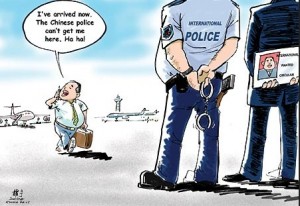
Corruption in China

Germans: The Best US Immigrants?

If you divide Hispanic immigrants to the US into their various countries of origins, the largest group of immigrants in America are Germans. Msny of these families first came to America after the revolutions of 1848.

Today politiciians John Boehner and Rand Paul are both of German heritgage.  Companies founded by Germans include Pfizer, Boeing, Steinway, Levi Strauss and Heinz.

American culture is flavored by Christmas trees, Easter bunnies, pretzels, hot dogs, bratwurst and sauerkraut.

It is said that the Italians stormed city hsl and the Germans stormed beer halls.

20,00o Germans were interned as enemy aliens in the Second World War.

Now Germans are quietly successful in this country.  Five years ago a small German-American Heritage Museum opened in Washington.

He plays a Steinway, just like you.

He plays a Steinway, just like you.

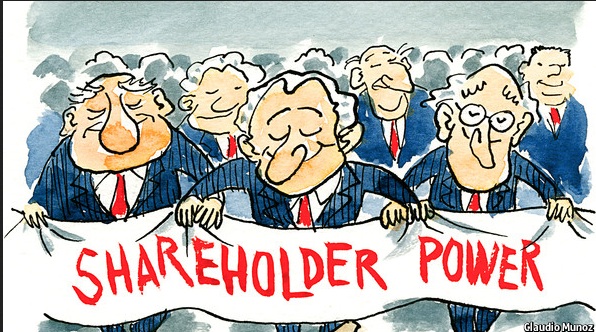
Activist Shareholders Corporate Angels?

Is the activist shareholder going to save the public company?  Msybe suggests the Economist,  Passive index funds sell at the first sign of trouble.

Acitivist hedge funds take small stakes  in firms and act like political campaigners.  They solicit other shareholder support for demands to be represented on company boards, cost-cutting spin-offs and returning cash to shareholders. Acitivists are often loathed by public -company bosses for their belligerence and opportunism,

Activists have funds which are worth $100 billion and in 2014 attracted a fifth of all flows into hedge funds,  In 2014, they launched 344 attacks against public companies.  One-half of all the companies of S&P’s list o fmost valuable firms had a big activist on its shareholder register.  At least one in seven of these firms has been attacked by an activist.

They seek to improve a firm’s board, and win the support of big money managers.  Activists don’t losd up on debt, just 5% or so.  There is no takeover premium and they extract fairly low fees.  Poor performance resulting from nderperforming companies, poor managers and lazy capital can be overcome by the activists.  When they lead a revolt, they may give a company a new lease on life.

by Claudio Munoz

by Claudio Munoz

Carless in New York?

Roads are the arteries of the nation, and the automobile has been the centerpiece of American culture for decades. Despite Americans’ love for their cars, however, the rush hours are no more pleasant, and not everyone wants or can afford a car. According to the U.S. Census Bureau, 9.1% of American households did not own a car in 2013. According to a review of carless households in American cities, residents in some urban areas are far less likely to own a vehicle. In New York City, 54.4% of households did not have a car, the highest percentage nationwide. Based on the percent of households who did not own a vehicle in 2013.

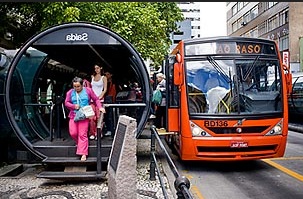
Curitiba in Brazil with a population of about 2 million instituted a bus system where buses ran every thirty seconds, you bought your pass in an attached shelter and exited from the other end of it.  Cited by ubran planners throoughout the world, Curitiba is one answer to getting rid of cars.

Curitiba, can buses replace cars?

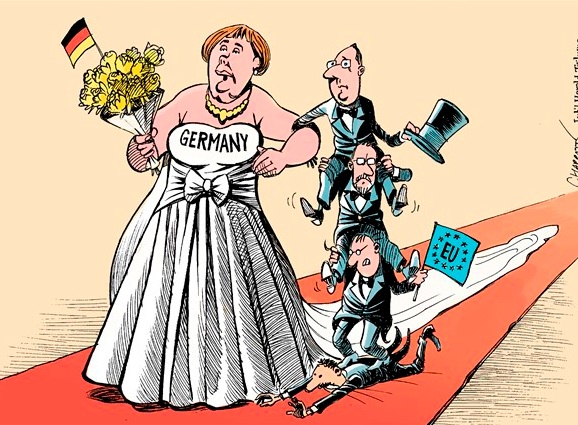
Mrs. Merkel Shows Her Stuff

Germany, France, Russia and Ukraine agreed a deal on Thursday that offers a “glimmer of hope” for an end to fighting in eastern Ukraine after marathon overnight talks.

But all four leaders said there was a long way to go and accusations from Kiev of a new, mass influx of Russian armour into rebel-held eastern Ukraine further undermined the prospects for peace.

The deal envisages a ceasefire between Ukrainian forces and Russian-backed.  Emerging separately from more than 16 hours of negotiations, German Chancellor Angela Merkel, one of the sponsors of the talks, differed with Russian President Vladimir Putin over the reasons they took so long.

Putin accused Kiev of prolonging the talks, the culmination of a dramatic diplomatic initiative by France and Germany following an upsurge in fighting in which the separatists tore through an earlier ceasefire line.

Merkel on the other hand, said Poroshenko “did everything to achieve the possibility of an end to the bloodshed.”

It is likely to ease pressure in the United States for Washington to send military aid to the stretched Ukrainian army, and from some in Europe for tighter sanctions against Moscow, due to be discussed at a European summit later on Thursday.

The agreement could also help protect Putin from any fallout from the deaths of Russians in the fighting, said by Ukraine to be soldiers. Moscow says they are volunteers.  As the deal was reached, Ukraine was offered a $40-billion lifeline by the International Monetary Fund to stave off financial collapse.

Russia’s economy has also suffered, from the sanctions imposed over its support for the separatists in eastern Ukraine and annexation of Crimea last year. Russian shares surged on Thursday after the deal was announced and the rouble gained, but then slipped back.

The agreement addressed a demarcation line between separatists and Ukrainian forces.

Ukraine will also get control of its border with Russia, but in consultation with the rebels and only after the regions gain more autonomy under constitutional reform by the end 2015.

The ceasefire and heavy weapons pullback would be overseen by Europe-wide security body, the Organization for Security and Cooperation in Europe.

French President Francois Hollande said there was still much work to be done on the Ukraine crisis, but the agreement was a real chance to improve the situation.

The talks in Minsk took place as an International Monetary Fund mission agreed a bailout to save Ukraine from bankruptcy.  The Fund provisionally agreed a $17.5 billion facility with Ukraine, part of a $40 billion funding package, IMF Managing Director Christine Lagarde said.

On the Russian side of the border, Moscow has begun military exercises in 12 regions involving more than 30 missile regiments, RIA news agency reported on Thursday, citing a Defence Ministry official.

Angela Merkel

How Strong is the US Economy?

Potential GDP is not the nation’s productive maximum, as would occur if all factors in the economy were employed to their fullest extent, but rather it is the maximum output that can be achieved over a prolonged period without straining productive capacity and thus increasing the risk that inflation will rise above the Federal Reserve’s goal.

GDP has never equaled potential output for a sustained period. Instead, there usually is a gap (expressed as a percentage of GDP) between the economy’s actual and potential output. Typically, that gap is negative during economic recessions and early in subsequent recoveries, when actual output is less than potential.  The gap has been positive, however—and in some cases substantially so—during later phases of economic expansions. CBO’s estimate of the output gap provides a measure of the slack or the overheating in the economy, and that assessment in turn can provide useful information to policymakers as they consider the economic consequences of various actions.

CBO’s projections of potential output guide its projections of actual output. For roughly the first half of its 10 year projection period (which currently runs through 2025), CBO projects the growth of actual output by estimating both the potential and the cyclical components of economic activity. For the latter part of the projection period, however, CBO does not estimate cyclical components. Instead, it projects that actual output will grow at the same rate as potential output but remain about one-half of one percent below potential, on average. According to CBO’s analysis, from 1961 to 2009, the nation’s actual output was below its potential by about that amount, on average, and below its potential, on average, during each of the past five complete business cycles (since 1975).  Congressional Budget Office GDP-Projections

Economic Strength?


Greece Making Its Case to EU-IMF

The Greek government wants to overhaul 30% of its bailout obligations, replacing them with a 10-point plan of reforms.

The EU-IMF bailout for the debt-laden country expires on 28 February and Greece does not want it extended.

Instead the new Athens government is asking for a “bridge agreement” that will enable it to stay afloat until it can agree a new four-year reform plan with its EU creditors.

Prime Minister Alexis Tsipras’s government won a confidence vote with the support of 162 deputies in the 300-seat parliament.

The Athens stock exchange then fell by 4% ahead of the emergency Eurogroup meeting, which will see Finance Minister Yanis Varoufakis unveil the controversial debt proposals.

The Syriza-led government says the conditions of the €240bn (£182bn; $272bn) bailout – sweeping spending cuts and public sector job losses – have impoverished Greece.

The government’s proposal for overhauling its bailout is:  1. Greece would co-operate on 70% of its bailout conditions but wants to scrap 30% – replacing it with 10 new reforms to be agreed with the Organisation for Economic Cooperation and Development (OECD). It is unclear what these would be. 2.Bond swaps 3. Reduce the primary budget surplus target for this year to 1.49% of GDP, rather than the 3%.

A swift deal with the EU is considered unlikely. Most finance ministers – including Germany’s Wolfgang Schaeuble – are insisting that Greece must not renege on its bailout conditions.

Speaking ahead of the Eurogroup meeting, its president, Jeroen Dijsselbloem, said he did not expect a deal with Greece on Wednesday but that the group would listen to Greece’s ideas.

Meanwhile the head of the IMF, Christine Lagarde, praised Greek officials as “competent”, but warned that reaching an agreement would take time.

On the eve of the meeting, Finance Minister Yanis Varoufakis did not rule out clashing with his eurozone counterparts, saying: “If you are not willing to even contemplate a rift, then you are not negotiating.”

The stakes of the talks are high because of fears that a Greek debt default could push it out of the euro, triggering turmoil in the EU.

Greece’s debt currently stands at more than €320bn (£237bn) – about 174% of its economic output (GDP).

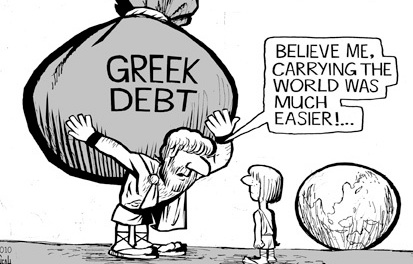
Greek Debt

Last month’s election win by radical left-wing party Syriza has led to suggestions that Greece could forge closer ties with Russia, although Greek officials have downplayed the idea.

After meeting his Greek counterpart Nikolaos Kotzias on Wednesday, Russia’s Foreign Minister Sergei Lavrov said Moscow would consider a request for financial aid from Athens if it came – despite Russia’s own financial difficulties caused by Western sanctions over the crisis in Ukraine.

The Greek Defence Minister, Panos Kammenos, previously said Greece might seek funding from Russia, China or the US if it failed to reach a new debt agreement with the eurozone.

Australians Use Islamic Bond to Fund Malaysian Solar Plant

SGI-Mitabu, a consortium of two Brisbane solar companies, will finance its entire Indonesian solar power project using sharia-compliant financing, starting in July with an offshore-domiciled sukuk, or Islamic bond, a senior executive said.

The deal is set to be Australia’s first issuance of sukuk, a market that expects global demand to reach $421 billion by 2016 from $240 billion in 2012.

SGI-Mitabu, a venture between The Solar Guys International and Mitabu Australia, is developing a 250 megawatt (MW) solar power project under an agreement with Indonesia’s Ministry of Energy.

The first 50 MW of the project will be financed through the issuance of a seven-year A$100 million ($104 million) sukuk.

The entire project would require up to A$550 million in financing, with all funding to be structured using Islamic principles, which follow religious principles such as a ban on interest and gambling.

“Investors like the idea of clean energy and its sustainability features, there is already huge interest from Malaysian investors,” he said.

This will be followed by two more tranches which will be structured as either sukuk or Islamic syndicated loans.

The initial sukuk will be domiciled in Labuan, Malaysia’s offshore financial centre, and is expected to be placed almost entirely with Malaysian investors, he added.

The offshore structure has drawn interest from Australia’s government officials and could appeal to other local companies with overseas assets, Mitabu said.

“We found the process to be straightforward and approached Labuan, as our consortium partner saw the appeal of the offshore centre”.

In the past, a major problem for Australian companies considering Islamic finance has been taxation. Certain Islamic contracts, particularly sukuk, can attract double or even triple tax duties because they require multiple transfers of title of the underlying asset.

Despite tax officials releasing a discussion paper in 2010, there has been no further progress on the issue.

The sukuk would seek to pay between 6.5 percent and 7.5 percent returns, part of a hybrid funding plan incorporating several Islamic contracts.

During the construction phase of the project, the sukuk would follow an istisna – a manufacturing contract where a price is paid for goods that are subsequently manufactured and delivered on a stipulated date.

This gives solar panel projects an advantage due to their quick installation phase, helping income streams start in just a few months, Mitabu said.

Once the plant is completed, a special purpose vehicle would be formed directing cashflow to sukukholders using an ijara structure, a type of sharia-compliant rental agreement.

After 20 years the project would then follow a musharaka structure, where returns are distributed between the issuer and investors according to a profit-sharing ratio.

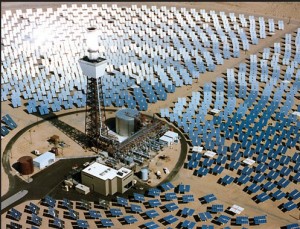
Solar Plant

Inadvertent Currency Wars?

Mohamed el a Erian writes:  Six and a half years after the global financial crisis, central banks in emerging and developed economies alike are continuing to pursue unprecedentedly activist – and unpredictable – monetary policy. How much road remains in this extraordinary journey?

In the last month alone, Australia, India, Mexico, and others have cut interest rates. China has reduced reserve requirements on banks. Denmark has taken its official deposit rate into negative territory.

Even the most stability-obsessed countries have made unexpected moves. Beyond cutting interest rates, Switzerland suddenly abandoned the policy  of partly pegging the franc’s value to that of the euro. A few days later, Singapore unexpectedly altered its exchange-rate regime, too.

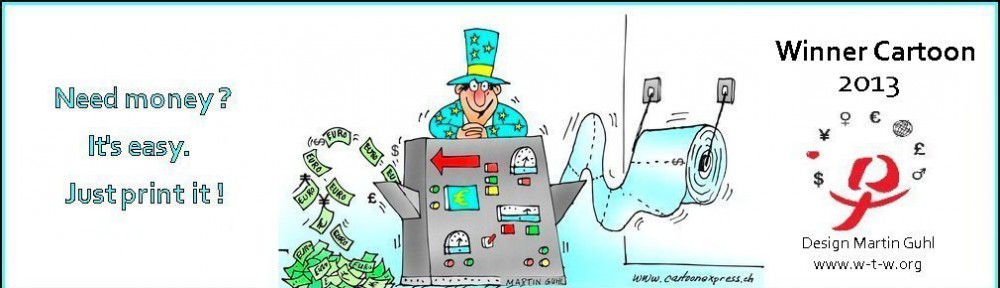
More consequential, the European Central Bank has committed to a large and relatively open-ended program of large-scale asset purchases.

Even the US Federal Reserve, which is presiding over an economy that is performing far better than its developed-world counterparts,  keeps interest rates low.

This new round of central-bank activism reflects persistent concerns about economic growth. Despite a once-unthinkable amount of monetary stimulus, global output remains well below potential, with the potential itself at risk of being suppressed.

Weak demand and debt overhangs are fueling concerns about deflation in the eurozone and Japan.

If weak demand and high debt were the only factors in play, the latest round of monetary stimulus would be analytically straightforward. But they are not. Key barriers to economic growth remain largely unaddressed – and central banks cannot tackle them alone.

Central banks cannot deliver the structural components – for example, infrastructure investments, better-functioning labor markets, and pro-growth budget reforms – needed to drive robust and sustained recovery. Nor can they resolve the aggregate-demand imbalance.

IMonetary-policy instruments have become increasingly unreliable in generating economic growth, steady inflation, and financial stability.

The divegene of economic and monetary poicy among three of the world’s most systemically important economies – the eurozone, Japan, and the United States – has added another layer of confusion for the rest of the world, with particularly significant implications for small, open economies.

Of course, not all currencies can depreciate against one another at the same time.

The first condition is America’s continued willingness to tolerate a sharp appreciation of the dollar’s exchange rate. Given warnings from US companies about the impact of a stronger dollar on their earnings – not to mention signs of declining inward tourism and a deteriorating trade balance – this is not guaranteed.

Still, as long as the US maintains its pace of overall growth and job creation – a feasible outcome, given the relatively small contribution of foreign economic activity to the country’s GDP – these developments are unlikely to trigger a political response for quite a while. The second condition for broad-based currency depreciation is financial markets’ willingness to assume and maintain risk postures that are not yet validated by the economy’s fundamentals.

In any case, central banks will have to back off eventually. The question is how hard the global economy’s addiction to partial monetary-policy fixes will be to break – and whether a slide into a currency war could accelerate the timetable.

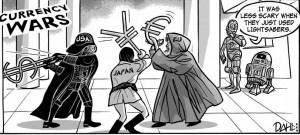
Currency Wars?

Women Wearing Their Voices

More than any other form of mass communication, the internet has drastically changed how we transmit information, ideas and opinions to one another. From the exile of leaders during the height of Arab Spring, to the organized marches against police brutality in major cities across the U.S, the role of social media has had profound impacts in societies around the globe.While the internet has revolutionized social movements in unprecedented ways, the negative impacts of social media are real, where a single tweet can leave damaging and lasting effects. Hiding behind a mask of anonymity, cyber bullies can be found lurking in forums, chat rooms, and popular social networking sites waiting to strike out their next victim.Emerging from the silence are those lending their voices to give power back to the unheard.

Wear Your Voice Magazine recognizes 30 of the most socially influential women on social media who are unapologetically reclaiming their space on the internet one tweet at a time. Learn more about the women in the infograph below, and follow them to be inspired and stay socially informed.  The Women:

Women Wearing Voices