Gender Equality in Australia

Elizabeth Broderick, sex discrimination commissioner, Australian Human Rights Commission

For a long time I was firmly of the view that increasing the number of women leaders was a matter of women’s activism, and women working together. Yet while women’s activism remains critical to making progress, if you look at the levers of power in nations and in organizations, they rest in the hands of men. And to continue to rely on women alone to disrupt the status quo is really an illogical approach. I realized that unless we worked with the men in power—and helped them move from being merely interested in this subject to taking action—we wouldn’t see the transformative change we need.

This is not about men speaking for women or “saving” them. This is about men standing up beside women and saying, “The promotion of gender equality in Australia, and the world, is everyone’s business.” It should not sit on the shoulders of women alone. It’s about men accepting responsibility to create change.

The first couple of meetings were a bit awkward, as the tendency—human nature, really—was for people to talk about all the good things they were doing. Relatively quickly, though, the tone of the discussion became much more authentic and honest. “This is hard,” several admitted. “In fact, it’s the hardest thing I do as a CEO. I don’t know what the answers are; I’m trying everything but nothing seems to be working.” They all recognized that no one had the answers, but at the same time everyone agreed these were leadership issues that started with them, and that collectively, we could change things.  Gender Equality in Australia

Gender Equality

HSBC Files, Lynch, USDOJ Connect?

Matt Taibbi writes:  Three years ago, then-U.S. Attorney of the Eastern District of New York Loretta Lynch crafted a soft-touch deferred proscution deal for Europe’s largest bank, HSBC, which had only been caught in the largest drug-money-laundering case in history.

Today, as Lynch awaits approval for the Attorney General job, HSBC is in the news again. This time, the global mega-bank is being exposed in a massive scheme to help wealthy clients avoid taxes.

This story traces back to a leak of files apparently stolen by a former HSBC IT employee named Herve Falciani in Switzerland in 2007.

Taken out of Switzerland, the files were then shared with authorities in France, Spain, the United States and Britain. The monster cache of info about wealthy tax avoiders came to be referred to as the “Lagarde List,” after Christine Lagarde, who was the French Finance minister at the time the information first began to be circulated.

What HSBC’s Swiss unit was doing went far beyond passive bank secrecy. The bank was actively helping its wealthiest clients avoid paying taxes in their home countries, sometimes using highly creative methods – a sort of criminal advice service, if you will.

Countless similar examples are appearing the in the press. The numbers being thrown out are incredible. The Swiss arm of the bank at its height apparently hid as much as $120 billion.

This HSBC story is an incredibly explosive one when one takes into account the recent regulatory history of this company.

Both cases involved historically enormous schemes to profit from illegal banking activities.

In the money-laundering case, HSBC paid a $1.9 billion fine – about five weeks of profit – for its role in an amazing scandal in which the bank admitted laundering up to $850 million for a pair of Central and South America drug cartels, including the infamous Sinaloa gang.

In neither case did the penalties do much to dent the bank’s bottom line.

Everything being reported in the last few days (including a 60 Minutes report and a “Panorama” documentary) indicates the United States knew about an apparent systematic tax evasion scheme as far back as 2010.

This raises a huge question about the deal Lynch’s office gave to HSBC back in 2012.

What does a bank have to do to get shut down by regulators in this day and age? Be small?

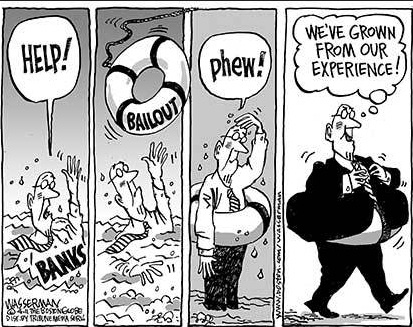
HSBC Too Big to Jail

Netflix: As the World Turns to Cuba…

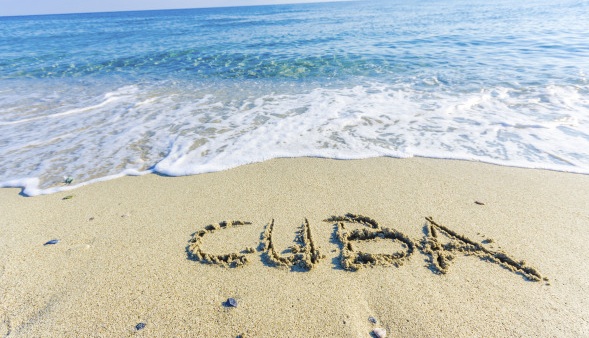
Matthew Zeitlin writes: Netflix announced today that it is expanding its streaming service to Cuba: a country where internet access is restricted to a tiny portion of the population and the company’s $7.99 subscription fee would claim a big chunk of the typical worker’s salary of about $20 a month.

High speed internet in Cuba, such as it is, largely comes through a single fiber optic cable from Venezuela.

The Obama administration announced an opening of relations with Cuba in December of last year, but connections between the island and American businesses are still slim.

Before the installation of the cable from Venezuela, only slower satellite internet was available in Cuba. The only service provider is the state telecom company ETECSA, and a small portion of Cubans who apply to get internet service actually receive it, Biddle said. They’re mostly academics, high-status foreigners, and state journalists.

About a quarter of the population has some internet access, but the majority of that is to a “tightly controlled government-filtered intranet” which has email, an encyclopedia, some educational materials and websites. About 5% of Cuba’s 11 million people has true access to the world wide web.

The White House described the cost of internet access in Cuba as “exorbitantly high”.

“What Netflix is doing it is making something completely legal and possible before it’s practically possible from a technical standpoint, which then puts the pressure on the Cuban government and the U.S. government to make this stuff happen technically,” Henken said.

But while few Cubans will be binge watching Orange Is The New Black via online streaming anytime soon, more are likely to access it the old-fashioned way – via downloaded copies.

And Netflix already has an old-school competitor in Havana: A bundle of the latest TV shows and movies is distributed through an informal network. USB drives are distributed and sold throughout the country packed with video for offline watching.

Netflix Cuba?

Debt Worldwide

The world’s economies may have improved since the financial crisis, but now more than ever, the world is drowning in higher and higher debt. A new report from the McKinsey Global Institute suggests that the world has added a whopping $57 trillion in debt since the financial crisis. The firm pointed out that all major economies currently have higher levels of borrowing relative to gross domestic product (GDP) versus the year 2007, right before the Great Recession and financial crisis. The net global debt added since then is now projected as a ratio of debt to GDP to be up 17 percentage points. The new total of global debt, as of the end of the second quarter of 2014, is a whopping $199 trillion. This massive number compares to $142 trillion at the end of 2007, and it compares to a mere $87 trillion at the end of 2000.  DebtDebt

USDOJ Focuses on Currency Trading

Regulators are beefing up investigations pertaining to foreign exchange (forex) misconduct committed by several global banks. Recently, two global banking giants – UBS Group AG (UBS) and Barclays PLC (BCS – Analyst Report) have come under further scrutiny of the US Department of Justice (DOJ).

The DOJ is investigating whether the Swiss banking giant UBS and UK-based Barclays sold forex structured products concealing the profit the banks were deriving from currency trades which were used to generate the products’ returns.

In the banks’ products in question, while trading, an investor sells in a low-yielding currency and purchases in a higher yielding currency. Notably, UBS’ product – UBS V10 Enhanced FX Carry Strategy – allows investors to shift their positions in a volatile currency market. The DOJ is scrutinizing whether UBS derived profits from switching positions, and whether the company revealed profits to its clients.

‘Optimised currency carry strategy’ is a similar product offered by Barclays that has been targeted by the DOJ.

DOJ’s enquiry includes several other banks that are suspected to have misrepresented pricing for the currency transactions and this substantially expands its investigation into the forex market manipulation.

Global authorities are investigating in the $5.3 trillion-a-day forex market as traders at several banks are believed to have conspired jointly and misused information about client orders, which led to the price manipulation. Also, the metal business of a number of banks has come under the regulatory scrutiny in recent times.

Notably in Nov 2014, UBS along with four other major global banks – Citigroup Inc.,  HSBC Holdings plc, Bank of America Corp.and JPMorgan Chase & Co. were slammed with a $3.4 billion fine by U.S., British and Swiss regulators related to forex market manipulation.

As per the findings of The Swiss Financial Market Supervisory Authority FINMA, UBS had inadequate risk management, controls and compliance in its forex trading.

While FINMA concluded its ‘enforcement proceedings’ against UBS with respect to the  forex trading, the regulator is investigating against the bank’s 11 ex and current employees in the related matter.

Apart from FINMA, the Swiss Banking giant had also reached settlements with the US Commodity Futures Trading Commission (CFTC) and UK Financial Conduct Authority (FCA) over the regulators’ industry-wide probe into inconsistencies foreign exchange market.

UBS has been striving to expedite its internal forex and precious metals business investigations. The company is believed to be in separate discussions over a forex settlement with the DOJ’s criminal division, which may not be reached before Apr 2015.

Barclays was not part of the huge settlement of November. However, an investigation by the FCA is continuing over the company. Notably, in May 2014, Barclays was fined £26 million by the FCA for fixing gold prices.

Regulatory authorities are investigating scandals further related to the heightening foreign exchange rate fixing and are determined to put forward a landmark judgment to terminate such practices in the future, bring justice to the sufferers and punish the wrongdoers.

Currency Trading

Women: Big Emerging Market

In many ways, Sallie Krawcheck said, women are a larger emerging market than China.

Krawcheck, chairwoman of the Ellevate network for professional women, spoke to the crowd gathered on Monday morning in New York for the IMCA 2015 New York Consultants Conference about the significant opportunity available for financial advisors in the largely untapped market that is women.

“What if I told you there’s a potential client base that holds a majority of wealth in this country, represents 45% of U.S. millionaires, will inherit 70% of the $41 trillion that enters generational wealth transfer over the next 40 years?” Krawcheck said. “Ninety percent of them control their money on their own at some point in their lives; they represent today 60% of college students and a greater percent of graduate students and still growing. They start more businesses at twice the rate of the rest of the population. They’re first-time homebuyers at a greater rate than the rest of the population. They’re breadwinners or co-breadwinners in 60% of households, and they live longer than the rest of the population by 6 to 8 years and they’re healthier while doing so. You’d say, ‘That’s one helluva market, Sallie.’”

This potential client base Krawcheck is talking about? It’s women.

“Women are huge and they’re underserved,” Krawcheck said. Adding, “When we step back and think about it, our business is a business by men, for men. I always say here, ‘I have nothing against middle-aged white guys. I’ve been married to a couple of them.’ But we’re going to have to think differently if we want to attract and approach and engage with this enormous market.”

The majority of woman-held wealth is unmanaged, Krawcheck said, pointing to data gathered by weekly polls of the nearly 34,000 professional women that are Ellevate members.

Just 14% of the women in the Ellevate network said the industry meets their needs well, and three-quarters of Ellevate’s members do not have a financial advisor.

“And these ladies, I’m telling you, are right in the spot of what’s attractive to our industry,” Krawcheck said.

Of the Ellevate members that do have a financial advisor, two-thirds of them said the advisor doesn’t understand them.

“Women report that they feel this industry talks down to them, patronizes them and doesn’t meet their needs,” she said. “It’s no wonder that women rank our industry 33 out of 33 — dead last — of the industries that serve them.”

“Women report back that our industry is way too complex, way too complicated. And the language we use, the jargon we use? Way too much,” Krawcheck said. Women don’t care what an “alpha” is, a “bip” is, a “standard deviation” or a “Monte Carlo simulation” is, she said. “And when we use jargon with them,” she added, “they pull back.”

“Women tell us they’re not interested in talking about IBM stock vs. HP stock, non-issue and large-cap value vs. small-cap value, or this money manager with this performance vs. that one, or this active ETF vs. that managed account,” Krawcheck said.

Most women, according to Krawcheck, aren’t interested in where the stock market is going. “They’re not particularly interested in whether their investments are outperforming because it doesn’t directly matter to reaching their goals,” she said.

Women also aren’t interested in the “whiz-bang products we have, the latest innovation in liquid alts, what an inverse ETF does,” Krawcheck said. What do women want? “They want to be served, not marketed to. Served, not marketed to,” Krawcheck repeated for emphasis, adding, “And they know the difference.”

Overall, Krawcheck said women look to advisors to provide them a safe place.
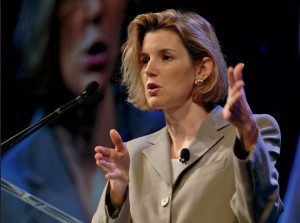
Krawcheck


Putin: If It’s Monday, It Must be Egypt

Russian President Vladimir Putin arrived in Cairo to meet his Egyptian counterpart, with both sides eager to strengthen ties and show both have options outside of the West to pursue their goals.

Egyptian President Abdel-Fattah el-Sissi greeted Putin.   Russian flags and posters of Putin’s face hung across the capital. The state-run Al Ahram newspaper ran a weekend profile of him, with photos showing Putin shirtless and holding various weapons, headlined “A hero of our times.” From the airport, the two leaders headed to the Cairo Opera House, where the symphony was to play excerpts of “Swan Lake” and the opera “Aida.”

The Egyptian economy is still struggling after several years of instability that began with its 2011 revolt, and the government is courting investors. The United States, which provides the country up to $1.3 billion in annual military aid, partially suspended that funding following el-Sissi’s overthrow of an Islamist president in 2013 and his subsequent crackdown on dissent.

Russia, under Western sanctions over its support for separatists in Ukraine, has economic problems of its own, compounded by plunging oil prices. The leaders of Germany, France, Russia and Ukraine aim to hold a summit Wednesday to renew a much-violated September peace plan for the conflict.

US President Barack Obama said Monday that without a resolution, “Russia’s isolation will only worsen, both politically and economically.”

Georgy Mirsky, a professor at Moscow’s Higher School of Economics, said the Egypt visit highlighted how Putin was seeking to show how Moscow still had friends around the world, even if it wasn’t in a position to support countries with aid as in Soviet times.

El-Sissi visited Russia last August to boost trade and military cooperation. Following those talks, Putin said Russia started supplying weapons to Egypt after signing a memorandum in March, but gave no details.

Egypt was Moscow’s closest Arab ally in the 1950s and `60s, when nationalist leader Gamal Abdel-Nasser turned away from US support to win Soviet backing for his drive to modernize the country and the military. Nasser’s successor, Anwar Sadat, broke with Moscow and evicted Soviet military advisers.

The Interfax news agency reported Monday that Russia currently has $3.5 billion worth of new arms contracts with Egypt, including fighter jets, helicopters, air defense missiles and other weapons. It said Egypt is one of the first foreign customers for Russia’s sophisticated Antei-2500 long-range air defense missile systems.

Russia said it would welcome more imports of Egyptian oranges, potatoes and other agricultural products as it sought to turn to other markets following its ban on the European and US food in retaliation to the Western sanctions. Russia also said it plans to expand grain exports to Egypt, which currently cover 40 percent of Egypt’s needs, according to the Kremlin.

Egypt and Russia


Cost/Benefit Analysis for Regulators?

Samuel Huntington, Harvard economist, wrote about a little corruption being good for greasing wheels.  Can the same measure be applied to regulation?  Can we suggest that regulation that does not count for much financially be ignored or put aside?  What do you do with Credit Suisse’s application for a waiver to continue handling pension funds in the US after they have pled guilty to aiding and abetting tax evasion in the US?  To Credit Suisse, this means billions of dollars.  To the US government, it means Zip.  But to a US firm wanting this business, it’s billions of dollars.  So…here are the ediors of Bloomberg:

U.S. lawmakers say they want regulators — notably, financial regulators — to weigh the economic impact of their actions more carefully. That’s actually not a bad idea, as long as it doesn’t end up neutering rules that the economy badly needs.

With the stated goal of reducing red tape and a modicum of Democratic support, Republicans in Congress have introduced several bills that would force regulators to justify themselves. If enacted, the legislation could make detailed cost-benefit analysis mandatory for the Federal Reserve and other agencies that have been struggling to implement the 2010 Dodd-Frank financial reforms.

Critics suspect a veiled attempt to defang measures aimed at making the financial system more resilient, rather than a respect for analytical rigor. Under existing law, Dodd-Frank has already been challenged on cost-benefit grounds.

Yet cost-benefit analysis is an excellent discipline, one that financial regulators have made too little use of. The SEC lost its case partly because its analysis was weak — a shortcoming that the commission has tried to remedy by involving economists in its rule making. Other financial regulators, such as the Fed and the Federal Deposit Insurance Corporation, typically don’t even try to assess the economic effects of their rules.

Their counterparts outside finance have done a better job of testing their own actions. The Environmental Protection Agency has done rigorous economic-impact assessments for more than 30 years.   Done right, by the way, such assessments might toughen, rather than weaken, financial regulation. Eric Posner of the University of Chicago argues that properly weighing the cost of rules on bank capital against the benefit of a more resilient financial system would call for a tightening of the current requirements.

The White House has an Office of Information and Regulatory Affairs which has long overseen the cost-benefit analyses conducted by the EPA and other federal agencies. Its authority doesn’t extend to financial regulators. This could be changed by executive order — or, preferably, by an act of Congress that provided funding and sheltered approved rules from judicial review. This would widen the appropriate application of cost-benefit methods to finance, help spur further research and, over time, improve the quality of assessments.

In any event, financial regulators shouldn’t be afraid of cost-benefit analysis. If it’s done well, it serves the cause of good policy. They should be leading the way.

Regulation?


Money Matters: Weekly Newsletter No. 3 Corruption

Corruption is a focus of w-t-w.org Women and Finance.   Recently Patrick Radden Keefe, a fellow at the Century Foundation, wrote an extended piece on the subject in the New Yorker, (January 19, 2015).

Keefe, in discussing historic opinions on the subject, describes how the term ‘corruption’ may be used so often today that it has become meaningless.  We agree.

There are many different kinds of corruption.  Our site focuses on financial corruption in the banking industry.  Evasion of taxes thorughout the world disproportionately impacts women and children.  Diverted tax money means less public money for schools and good health, two areas most countries are commited to.

Singapore, a very small country whose leader in the early seventies was committed to ending corruption, actually succeeded in doing so.  It was clear that the Prime Minister was behind the effort.  One minister who was invstigated for taking kickbacks killed himself. In his suicide note, which was written to the Prime Minister, he stated, “It is only right that I shold pay the highest price for my mistake.”

It is hard to imagine Jamie Dimon writing such a note to his board at JP Morgan Chase.

Again this week, the International Consortium of Investigative Journalists has released tens of thousnads of documents from HSBC showing how this bank defies the law.

While Harvard economist  Samuel Huntington wrote that a little corruption helps grease the wheels of government and buisness, it is hard to know where to draw the line if you are “a little guilty.”  Women and FInance looks at this problem all the time.  It is a particularly important subject for women to understand.

HSBC papers

Credit Suisse, criminally charged, applies for waiver from US Labor Department

Corruption


Cleaning Up Italy?

Italy has a new president, Segio Mattarella, a 73-year-old constitutional judge from Sicily.

The president of Italy has limited powers: he or she guarantees that politics complies with the Italian constitution, but real political responsibility remains with the government. However, the election of Mattarella is important for both the centre-left prime minister Matteo Renzi and his Democratic Party. Mattarella represents integrity, and has made no secret of his contempt for the kind of politics that has bolstered the interests of former prime minister Silvio Berlusconi over the years..

Italians were expecting Renzi to agree with Berlusconi on the nomination of a candidate who had the blessing of both leaders. However, Renzi opted for a candidate who would be viewed positively by all the members of his own Democratic Party, including those who disagreed with the Berlusconi pact.

Renzi has succeeded in severely weakening Berlusconi’s Forza Italia. In early January 2015, opinion polls put national support for the party at just 13%, and now around 40 out of 142 Forza Italia members of parliament voted for Mattarella as president, despite Berlusconi. Forza Italia members are clearly starting to realise that Berlusconi no longer has a future in Italian politics.

Sergio Mattarella is an incredibly bold choice for Italy. He is most commonly associated with his firm stance against organised crime and corruption. He fought the mafia and even resigned from his post as an education minister in the Democratic Christian government of Giulio Andreotti in 1990 when a law that would enable Berlusconi to further expand his media empire was passed.

Mattarella’s father Bernardo, an anti-fascist who opposed Benito Mussolini, was one of the founders of the Christian Democratic party. But Sergio only entered politics after the murder of his brother Piersanti Mattarella at the hands of the mafia in 1980, when he was president of the regional government of Sicily.

He went on to promote the “Palermo Spring”, which encouraged citizens to promote a culture of legality and rebellion against the mafia.

For these reasons and more, Mattarella represents the fight against corruption in Italy. His election follows that of Pietro Grasso, head of the National Anti-mafia Directorate, as president of the Senate in 2013.

According to the Corruption Perception Index of 2014 which measures the perceived levels of public sector corruption worldwide, Italy was the most corrupt state in the European Union – and it was ranked 69th worldwide. And in 2014, a corruption ring was exposed in Rome, involving dozens of administrators and civil servants who now stand accused of criminal activities such as vote rigging, usury, extortion and embezzlement.

On his first day in the Italian parliament, Mattarella received a standing ovation. He said: “In the fight against mafia, we have had many heros. I would like us to remember Giovanni Falcone and Paolo Borsellino”, both anti-mafia Sicilian magistrates killed by the mafia in 1992.

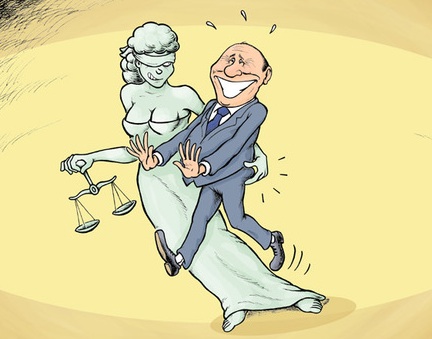
Berlosconi's Ways on Way Out?