Banking Award to Saudi Woman

Eman Ahmed, the head of the Tamooha Center of the Abu Dhabi Commerce Bank,  received the “Distinguished Women in Banking and Finance” award during the 17th National Career Exhibition for the UAE Banking, Financial and Government Sector being held annually at Expo Centre Sharjah.

Commenting on this momentous occasion, Ali Darwish; Executive Vice-President and Head of Group Human Resources at the Abu Dhabi Commericial Bank said: “This award that the Bank has won for the third consecutive time reflects the keenness of ADCB  to support its staff to achieve their dreams and to highlight their abilities and their considerable experience. This award, in particular, is further evidence that we are committed to investing in our employees and to make sure that UAE women working within the bank’s have an opportunity to advance in their career. I would like to take this opportunity to congratulate Eman on receiving such a prestigious award and I wish her every success in her future career with ADCB.”

Commenting on her win, Eman Ahmed said: “Receiving this award serves as further encouragement to continue to develop my career to demonstrate the capabilities of UAE women to excel in all areas of work. I would like to take this opportunity to thank the Abu Dhabi COmmerical Bank for its continuous support and encouragement and for all the opportunities offered to me that enable me to achieve my professional ambitions and aspirations. I would also like to thank all my colleagues and managers, as without their unwavering support and encouragement I would not have earned this award.”
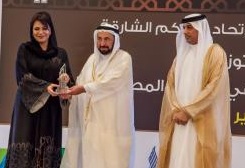
Abu Dhabi's Eman Ahmed, Wins Banking Award


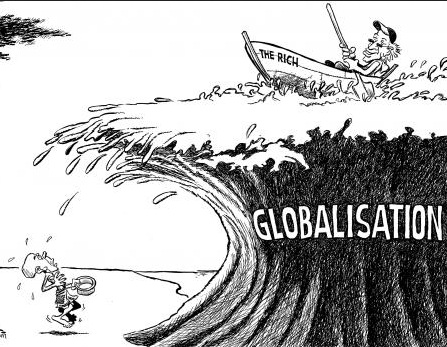
Globalization’s Impact on Monetary Policy

Dallas Fed report on Globalization.  Several decades of increasing global economic integration – or globalization – have left their mark. Whether this structural shift has altered the conduct of monetary policy or its ability to promote economic stability over the business cycle has long been debated.1 Woodford (2010), among others, convincingly argued on theoretical grounds that globalization does not necessarily imply a weakening of the ability of national central banks to influence domestic output and inflation. However, the question of monetary policy effectiveness is only part of the story.

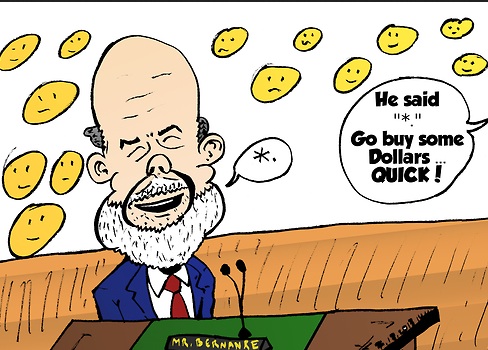
Bernanke said in 2007 that our current understanding is geared toward the view that globalization influences the conduct of monetary policy through its powerful effects on the economic and financial environment in which monetary policy must operate.  Much of the literature has in fact focused on how globalization may have changed the economic environment and, thus, altered the trade-off between output and inflation volatility for monetary policy. It is known that the business-cycle volatility of the largest economies, including the U.S., has shifted significantly during the post-World War II period. The question, then, is to what extent those changes reflect globalization?  Globalization and Monetary Policy

Globalization


More Revelations From HSBC Whistleblower?

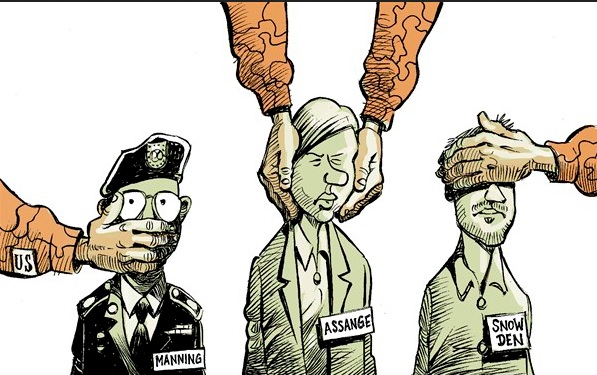
 Herve Falciani has revealed that far from this week being the end of the story, there is still plenty of information that is likely to come out about HSBC.  One million new bits of data, to be precise. He says work will start soon on analysing the information.

And that a major oil company could be next to feel the effects of a major data leak about how it operates.

Mr Falciani is the man behind the largest data leak in banking history – and after days of revelations about HSBC and tax evasion by its wealthy customers between 2005 and 2007, he now says he feels vindicated.

HSBC has said it has reformed how its private bank operates and that there are now far fewer clients and much stricter controls.

Anyone involved in the allegations of tax evasion have left the bank, sources tell me.

But Mr Falciani says that HSBC should still be prosecuted for past failings.  He called on European, Asian and American law enforcement agencies to work together to tackle bank corruption.

Whistleblowers should also be given more protection so they can reveal what they know.

Critics say he stole the HSBC data when he worked at the bank and originally hawked the information around for money.  “It is wrong,” he said. “They try to kill your reputation, like the mafia. It is already starting to be proved to be wrong.

“I never asked for payment and I will have time to prove that.”

Mr Falciani says that the last seven years have been endured at some considerable personal cost.

Whistleblowers have to be ready for a long fight. “It proves how difficult it is and how tricky you have to be,” he said. “It took many more years than I expected. It’s a huge journey.”

Whistleblowers

Lady Tagliavini of Minsk

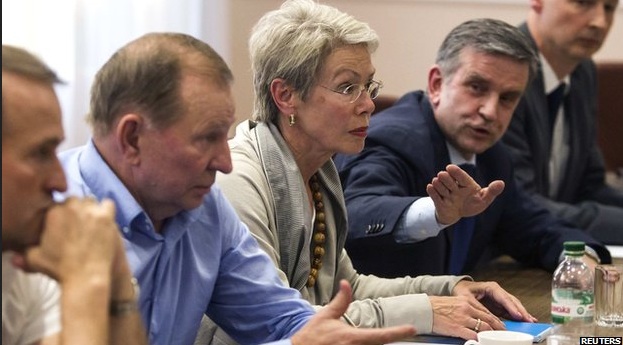
Helene Fouquet writes about another lady in Minsk.  Just two women were at the table as the cease-fire between Russian-backed rebels in Ukraine and the government in Kiev was hammered out. German Chancellor Angela Merkel was one. The other was Heidi Tagliavini.
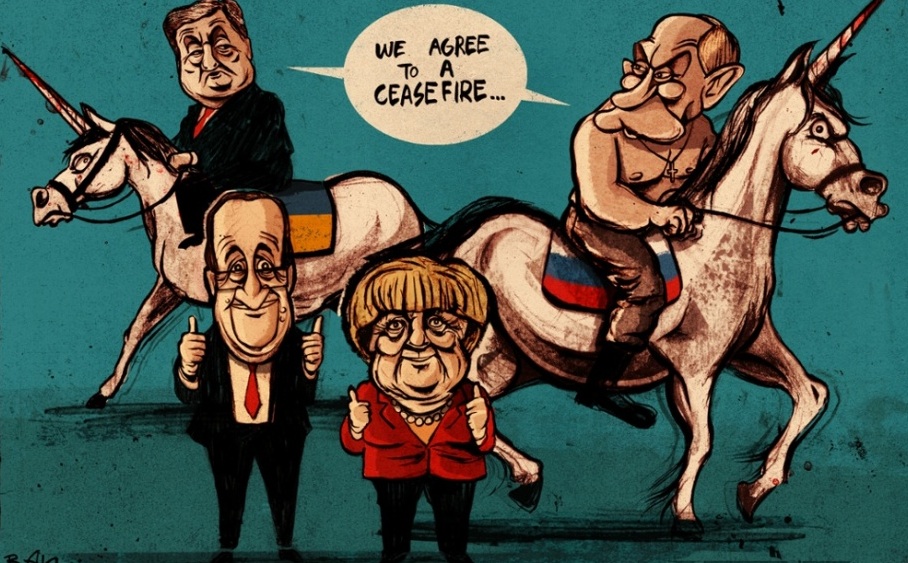
The discreet, 65-year-old Swiss diplomat worked alongside Merkel, Russia’s Vladimir Putin, France’s Francois Hollande and Ukraine’s Petro Poroshenko on the deal to stem the conflict that has devastated eastern Ukraine.

In the “Green Room” of the vast marble-and-glass Independence Palace in the Belarusian capital, Minsk, Tagliavini helped stave off a collapse late in the talks, according to officials who were there. As someone Putin has long felt he could trust, diplomats say, she was able to silence a contingent of separatists who wanted to see the whole deal reworked.

A special envoy for the Organization for Security and Cooperation in Europe, Tagliavini is known among other diplomats as “the facilitator.” She is the only woman in the six-member Trilateral Contact Group that has brought together the Ukrainians, Russians and separatists.

Tagliavini has spent much of the past three decades in postings across eastern Europe brokering peace and monitoring wars and elections for the OSCE, the European Union, and the United Nations. She has served at the Swiss embassy in Moscow and on missions in Chechnya, Ukraine and Georgia, always employing a quiet style and Helvetic neutrality that has helped her win the confidence of leaders from all sides

As the group reached possible common ground on each issue, the points of agreement were sent to leaders’ entourages gathering about three miles away in the Independence Palace. By Thursday morning, they had a structure for the cease-fire and rushed to the Palace to present it to the leaders. When the rebels balked at the last minute, Tagliavini shuttled between the various groups to prevent the talks from collapsing. At noon, Putin emerged from the conference room and confirmed the cease-fire to reporters.

Switzerland in January handed over the rotating presidency of the OSCE to Serbia, but Tagliavini kept her role at the head of the Contact Group — a sign of the confidence members of the group have in her, according to a senior European diplomat.

With close-cropped blond hair, rimless glasses, and always wearing a brightly-colored scarf around her neck, Tagliavini is known by politicians across eastern Europe as “the link,” for her ability to keep parties in talks when tensions start to rise, a Swiss diplomat said.

Taliavini has a PhD in philology, the study of language from historical sources. It’s her ability to understand languages and the cultural background of people in the region that has helped her navigate the tricky world of east European politics, a French diplomat said.
In a rare interview, with the Swiss Broadcasting Corporation, Tagliavini described her work as “offering warring parties a space to discuss a possible peace agreement, seeing to it that they talk to each other, trying to re-establish an element of trust, making proposals, monitoring human rights and rights of refuges and the state of law.”

Tagliavini Helping Control the Men

Can Ukraine Change on $40 billion?

Leonid Bershidsky writes: Ukraine now has a four-year bailout deal with the International Monetary Fund. It’s still too early to celebrate. Like the cease-fire, the aid package isn’t very generous to Ukraine. But if it helps convince Kiev it needs economic reforms, that won’t be a bad thing.

In January, financier and philanthropist George Soros suggested putting together a $50 billion rescue deal for Kiev. IMF Managing Director Christine Lagarde talks about  $40 billion, but that’s pretty meaningless.

About $17.5 billion of that is supposed to come from the IMF. But even if all that money were disbursed immediately, it would only just bring Ukraine’s $6/4 billion foreign reserves to the levels they had in January 2013. That month, the reserves amounted to $24.5 billion.. The package’s small size could spur the country to more efficiency.

Lagarde said Ukraine had shown commitment to reform, but the proof she cited was meager.

The program will require the authorities’ steadfast determination to reform the economy,” If the cease-fire holds, however, the government will no longer be able to use the war in the east as an excuse.

Yatsenyuk says his government isn’t looking for excuses.  So far, Ukrainian government bonds — the three-year one trades at a 37.89 percent yield — and the hryvnia’s exchange rate have shown no positive reaction to the deal, however. The markets don’t trust the current Ukrainian government to do a better job than its predecessors.

Ukraine’s best hope is that civil society, empowered by last year’s anti-corruption revolution again former president Viktor Yanukovych, will push the political leadership and bureaucracy toward positive change.  As Valeri Pekar, head of Ukraine’s main business lobby, the Union of Industrialists and Entrepreneurs, writes: “The political system is too slow in catching up to the growing demands of society. Our job is to help align it with the forces of reform.”

Experience tells me the fresh start, offered by the cease-fire and the IMF deal, will be one more in a long series of Ukraine’s missed opportunities. Yet I want to believe the country will finally seize this chance. If Ukraine shows that a large post-Soviet country can turn itself into an economically viable democracy, it will be a positive example for its neighbors, rather than a laughingstock or easy prey. That’s the only way for it to win a lasting victory over President Vladmir Putin’s Russia.

Ukraine Ceasefire?

Women Create A Force

Marvel Comics has a new group of Earth’s Mightiest Heroes taking over an all-new era with Marvel Comics’ A-FORCE co-written by G. Willow Wilson and Marguerite K. Bennett with artwork by Jorge Molina .

In hte Warzones of Secret Wars, a brand new team will lead the way. A-Force Assemble! Marvel Comics reimagines the Marvel Universe in one of the largest shake-ups to the Avengers mythos.

So who are the Marvel powerhouses taking center stage?

“She-Hulk, Dazzler, Medusa, Nico Minoru and other fan favorites, will take charge,” says series co-writer G. Willow Wilson. “We’ve purposefully assembled a team composed of different characters from disparate parts of the Marvel U, with very different power sets, identities and ideologies.”

And there came a day, a day unlike any other, when Earth’s mightiest heroines found themselves united against a common threat. On that day, A-Force was born—to fight the foes no single Super Hero could withstand!/  Their glory will never been denied!.  Heed the call, A-Force Assemble!.

 A Force

Women Bossy, Men Aggressive?

Claire Cain Miller writes:  Male professors are brilliant, awesome and knowledgeable. Women are bossy and annoying, and beautiful or ugly.

ANortheastern University history professor built the chart using data from 14 million student reviews on Rate my Professor site. It allows you to search for any word to see how often it appeared in reviews and how it broke down by gender and department.

The chart makes vivid unconscious biases. The implications go well beyond professors and college students, to anyone who gives or receives feedback or performance reviews.

It suggests that people tend to think more highly of men than women in professional settings, praise men for the same things they criticize women for, and are more likely to focus on a woman’s appearance or personality and on a man’s skills and intelligence.

“When we use these reviews and evaluations to assess people, we need to keep in mind that the way people write them is really culturally conditioned,” the author said.

Photo


We’ve heard about these stereotypes before. Sheryl Sandberg, the Facebook executive who wrote “Lean In,” said that women are called bossy when they show the same behaviors as men do, but men are called assertive.

A 248 tech company employee performance reviews found that women are much more likely to receive critical feedback than men, and women who are leaders are more likely to be described as abrasive, aggressive and emotional.

Students can be biased against female professors. In one, teachers graded and returned papers to students at the exact same time, but when asked to rate their promptness, students gave female professors lower scores than men. Biases cut both ways — teachers have also been found to believe girls are not as good in math and science, even when they perform similarly to boys.

Mr. Schmidt, who made the chart, said he was struck by “this spectrum from smart to brilliant to genius, where each one of those is more strongly gendered male than the previous one was.” He was also surprised that relatively few people commented on female professors’ clothing or looks, which he had expected to be the case.

Men are more likely to be described as a star, knowledgeable, awesome or the best professor. Women are more likely to be described as bossy, disorganized, helpful, annoying or as playing favorites. Nice or rude are also more often used to describe women than men.

Men and women seemed equally likely to be thought of as tough or easy, lazy, distracted or inspiring.

Interestingly, women were more likely to be described in reviews as role models. Mr. Schmidt notes that the reviews are anonymous, so he doesn’t know the gender of reviewers. It could be that more female students describe female professors as role models than men do when describing men or women.

Female Professors

Weaken Water Pollution Standards?

Follow up.  A year after a toxic leak contaminated drinking water for 300,000 residents, West Virginia lawmakers are considering a series of proposals that would weaken a new chemical tank safety law, remove stronger pollution protections for streams across the state, and protect the coal industry from enforcement actions over violations of water quality standards.

Acid Water Finds Acid Judge

Coal Problem Leaves US State Waterless

Members of a coalition of citizen groups called the West Virginia Safe Water Roundtable draws attention to their concerns and to urge lawmakers not to roll back the state’s clean water laws.

One broad bill backed by the West Virginia Coal Association is up for passage in the Senate, and efforts to attach industry-backed amendments to a Department of Environmental Protection rules bill are expected in a House committee.

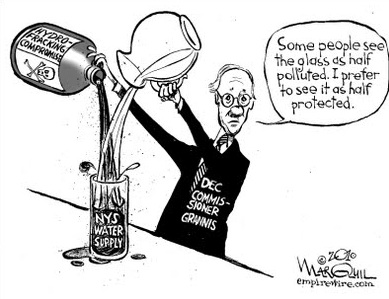
A committee began considering an amendment from the GOP-controlled majority that would not only remove the drinking water protections the DEP wants for the Kanwaha from the Senate version of the bill, but also end the DEP’s longstanding policy of enforcing the Category A drinking water standards ton all rivers and streams across the state.

DEP Secretary Randy Huffman provides for a possible location for a secondary intake for West Virginia American Water’s Kanawha Valley plant on the Elk River, and spoken strongly against the West Virginia Manufacturers Association’s effort to end the statewide application of drinking water rules.

Meanwhile, the Senate is considering the “Coal Jobs and Safety Act” being promoted by the coal association as a way to make West Virginia’s mine operators more competitive as cheap natural gas, competition from other coal regions, the mining out of quality reserves and tougher federal environmental standards chip away at the local industry.

Among other things, the bill is aimed at stopping successful citizen suits brought over mining company violations of Clean Water Act standards where those standards were not specifically written into state DEP permits and prohibiting the DEP from incorporating those standards into future coal permits. It also includes a long-sought change the coal industry wants to West Virginia’s water quality limit for aluminum.

Half-Protected?

Indian Anti-Corruption Candidate Wins

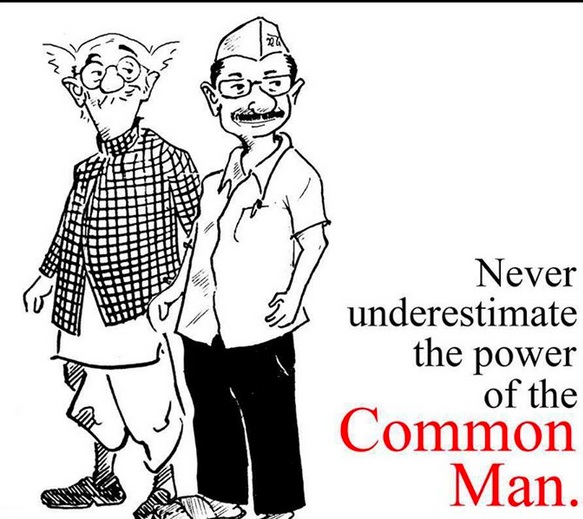
Syed Nazakat writes: He’s known as India’s corruption buster. And now Arvind Kejriwal, a youthful-looking former tax inspector and winner pf Asia’s equivalent of the Nobel Prize, has pulled off a stunning near-sweep In New Delihi’s local elections.

The Aam Aadmi, or “Common Man,” party won 67 of 70 seats in New Delhi, the largest single victory ever in India’s capital. The party’s victory also marks the first major loss for the Hindu nationalist BJP party since its own sweep of India last spring, which brought Prime Minister Narendra Modi to power.

The scale of victory for the young, idealistic party that champions local needs – including clean water, electricity, and security for women, as well as a “clean hands” anti-graft agenda – suggests the lure of Mr. Modi’s BJP is not necessarily a deep one. The loss is being called the end of Modi’s honeymoon less than two weeks after he hosted US President Obama.

The Common Man party’s popular majority of 54 percent shows that Kejriwal’s support appears to transcend class and religious categories, though whether he can transcend Delhi politics and exercise power outside the capital remains unclear.

This is the first time Congress, the venerable party associated with the liberation movement of Mohandas Gandhi, failed to win a single seat in Delhi.  AAP stunned India in 2013 by winning 28 seats in Delhi and defeating the ruling Congress party. Kejriwal then clashed with the federal government over an anti-corruption bill and walked out of office less than two months later. He has since apologized and vows not to leave again.

The success of the Common Man party stems from its sustained campaign against corruption combined with a dedicated army of volunteers.

Kejriwal existed for years under the political radar in India, surfacing from time to time to take up “transparency” issues like clarifying the Right to Information Act.

Kejriwal entered politics in 2012 and championed transparency and anti-corruption. He launched a party that brought together activists, youth, and poor people, and his anti-graft ideas caused a stir nationwide.

Those close to Kejriwal say the tipping point in his career came when he joined forces with Anna Hazare, an anti-corruption crusader. While Ms. Hazare did not join politics, Kejriwal launched the AAP as an alternative to mainstream national political parties.

 Common Man

Warren and Cummings Request Update on Investigation of Federal Reserve Leaks

Sen. Elizabeth Warren, D-Massachusetts, and Rep. Elijah Cummings, D-Maryland have asked the Federal Reserve Board for a briefing about its investigation into a leak of confidential Fed policy deliberations two years ago.
They sent their request to Scott G. Alvarez, the board’s general counsel, saying that neither Alvarez
“Nor any other Federal Reserve official has made public any information about the conduct of the investigation or its outcome.”

The two wrote:
“We are disturbed by this lack of transparency regarding such an important topic. This leak contained key market-moving information, violated Federal Reserve policy on disclosure, and may have represented a violation of federal law.”
Details from discussions of the Federal Open Market Committee found their way into a financial analyst’s private newsletter. The leak occurred in October 2012, the day before the scheduled public release of committee meeting minutes that promised to shed new light on a third round of bond buying to boost the economy.

The newsletter revealed what the minutes would say as well as fresh details about the Fed’s internal plans and deliberations – information that could have provided traders with an edge. Then-Fed Chairman Ben Bernanke asked Alvarez and the board’s secretary to look into the matter. The Fed never revealed the investigation and only publicly acknowledged the leak in a response to a freedom of information request by ProPublica.

The Fed confirmed receiving the letter but had no comment beyond saying it would respond.

Warren is the ranking minority member of the Senate Banking Subcommittee on Economic Policy and Cummings is the ranking minority member of the House Committee on Oversight and Government Reform.

The letter asks Alvarez to brief Warren and Cummings’ respective staffs by Feb. 15.

The letter lays out five questions the two would like answered, including whether the inspector general or the FBI was involved in looking into the matter; the status of the investigation; and what the Fed has done to prevent such leaks in the future.

Market Making Info from the Fed