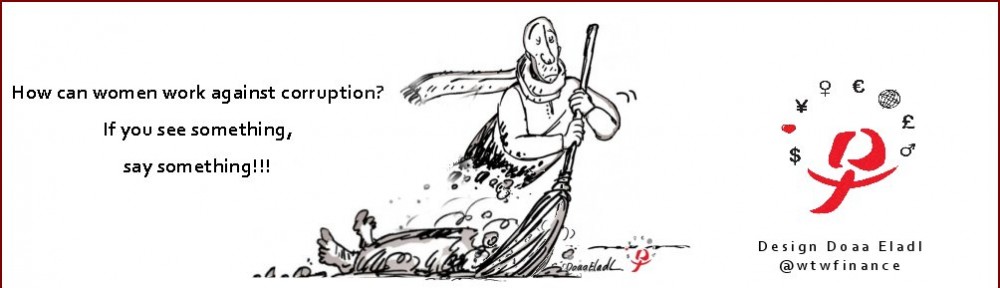
Tweet about Sexism!

Publically tweeting about sexism could improve a woman’s wellbeing as it has the potential to let them to express themselves in ways that feel like they can make a difference.

This is one of the findings of a study by Dr Mindi Foster, Wilfrid Laurier University, Canada that is published in the British Journal of Social Psychology. The study was supported by the Social Sciences and Humanities Research Council of Canada.

Dr Foster explained: “We know women can be badly affected by experiences of sexism and that responding publically can be stressful and risky. This study examined whether using Twitter to respond to sexism could be done in a public way without any negative effects to their wellbeing.”

A total of 93 female undergraduate students were randomly assigned to one of three conditions regarding tweeting over a three day period. All participants received information over the three days regarding topical issues around sexism in politics, the media and in universities for them to tweet about. One group was required to tweet publically, another privately and the third group did not tweet at all. They received no instructions regarding the number or the content of tweets they should undertake.

All participants completed mood questionnaires and wellbeing measures after they tweeted. Tweets were also analysed for linguistic and emotional content. Emotions identified were: anger, discontent, sarcastic, shocked, surprise and sadness. The most common combination was surprise and discontent.

“Never knew there was this much sexism in politics! It’s so disturbing! Shocked disgusted.”

Analysis showed that the group of women who tweeted publically displayed feelings of increased wellbeing by the third day. Neither of the other two groups showed any changes in wellbeing.

Dr Foster said: “We know that popular online campaigns such as EverydaySexism have empowered women to speak out and share their experiences. However, this study demonstrates how tweeting publically has the potential to improve women’s’ wellbeing.

“More research is required to understand whether this form of collective action has any further health benefits.”

Tweet!

Clinton, Goldman Sachs and Greece

Eaglevale Partners LP, which is run by Hillary Clinton’s son-in-law, Marc Mezvinsky,  bet big on a turnaround in the Greece economy — and lost.

“Eaglevale Partners LP, founded by Marc Mezvinsky and two former colleagues from Goldman Sachs Group Inc., told investors in a letter sent last week they had been ‘incorrect’ on Greece, helping produce losses for the firm’s main fund during two of the past three years. The main fund dropped 3.6% last year, far trailing the 5.7% rise for similar hedge funds tracked by HFR Inc. … A smaller Eaglevale fund focused only on Greece plunged 48% last year, said the person familiar with the situation, hurt by the belief Greece’s economy will see a quick rebound.”

But perhaps most revealing is this fact: The CEO of Goldman Sachs is a key investor in the fund:

Among investors in Eaglevale’s main fund is Goldman Sachs Chairman and Chief Executive Lloyd Blankfein , people familiar with the matter said.

Blankfein appears key to the enterprise because, well, Goldman Sachs has helped raise capital for the fund:.  From the start, Eaglevale’s moves have been closely followed, investors said, partly because of Mr. Mezvinsky’s family connection. Ahead of the firm’s launch, Goldman Sachs hosted group sessions for prospective investors that drew standing-room-only crowds. The investment bank is one of the firm’s prime brokers, which help hedge funds execute trades and introduce them to potential backers.

The founders’ pedigree helped raise them money, investors said. One of Mr. Mezvinsky’s partners, Bennett Grau, got his start at J. Aron & Co., the commodity-trading arm that produced many of Goldman Sachs’s current leaders, including Mr. Blankfein.

The EU has not forgotten Goldman’s role in Greece’s misrepresentations to the EU in 2002.  Greece’s debt managers agreed to a huge deal with the savvy bankers of Goldman Sachs at the start of 2002. The deal involved so-called cross-currency swaps in which government debt issued in dollars and yen was swapped for euro debt for a certain period — to be exchanged back into the original currencies at a later date.

Such transactions are part of normal government refinancing. Europe’s governments obtain funds from investors around the world by issuing bonds in yen, dollar or Swiss francs. But they need euros to pay their daily bills. Years later the bonds are repaid in the original foreign denominations.

But in the Greek case the US bankers devised a special kind of swap with fictional exchange rates. That enabled Greece to receive a far higher sum than the actual euro market value of 10 billion dollars or yen. In that way Goldman Sachs secretly arranged additional credit of up to $1 billion for the Greeks.

This credit disguised as a swap didn’t show up in the Greek debt statistics. Eurostat’s reporting rules don’t comprehensively record transactions involving financial derivatives. “The Maastricht rules can be circumvented quite legally through swaps,” says a German derivatives dealer.

Of course being related to a former president and perhaps future president has apparently been helpful to Mezvinsky’s enterprise as well.

Goldman, Clinton, Greece


Merkel, Hollande to Russia and Back?

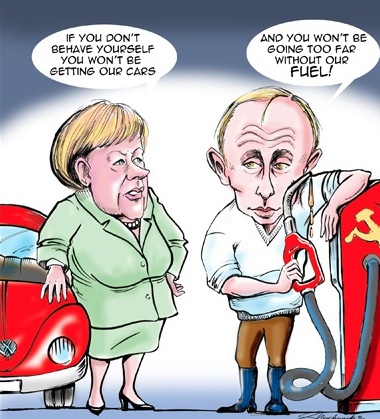
Russian President Vladimir Putin, France’s Francois Hollande and German Chancellor Angela Merkel met for more than four hours in Moscow.

Mr Hollande and Mrs Merkel had brought with them a peace proposal details on which have not been released.

Russia is accused of arming pro-Russian separatists – a claim it denies.

The Kremlin also rejects claims by Ukraine and the West that its regular troops are fighting alongside the rebels in the eastern Donetsk and Luhansk regions.

Clashes have left nearly 5,400 people dead since April, the UN says.

A September ceasefire, signed in Minsk in Belarus, has failed to stop the violence. Since then the rebels have seized more ground, raising alarm in Kiev and among Ukraine’s backers.

Comments from officials from all three countries had clearly been co-ordinated. In Moscow, Paris and Berlin they all described the talks as substantive and constructive. They all noted that the three leaders, plus the president of Ukraine, would confer again by phone on Sunday.

And they all said work would continue on a possible blueprint for a deal, based on the French and German initiative, with added proposals from President Poroshenko and President Putin.

The fact that few details have been made public is probably positive. It suggests this is an attempt to negotiate seriously, without rhetoric and out of the public eye. But it also means we do not really know what is on the table, how far apart the various parties are and how fragile this latest mission to bring peace to Ukraine might be.

Merkel and Putin

No Bridge Loans for Greece

Prime Minister Alexis Tsipras will chart a path forward for Greece in parliament on Sunday, two days after the head of the euro-area finance ministers’ group shot down his proposal to avoid being shut off from funding at the end of the month.

The new government’s request for a debt writedown has already been rejected, and Eurogroup chief Jeroen Dijsselbloem on Friday rejected a request for a short-term financing agreement to keep the country afloat while it renegotiates the terms of its bailout program.

“We don’t do” bridge loans, Dijsselbloem told reporters in The Hague, when asked about Greece’s request. “A simple extension is possible as long as they fully take over the program.”

 The European Union’s latest rebuff raises the stakes for Greece’s new government. The next showdown is scheduled for Feb. 11 in Brussels, when Greek Finance Minister Yanis Varoufakis faces his 18 euro-area counterparts in an emergency meeting after Tsipras delivers his major policy address to lawmakers.

Standard & Poor’s lowered Greece’s long-term credit rating one level to B- and kept the ratings on CreditWatch negative.

“Liquidity constraints have narrowed the timeframe during which Greece’s new government can reach an agreement with its official creditors on a financing program, in our view,” S&P said in a statement.

Greece’s goal remains to achieve a bridge program that would give it time to negotiate with its creditors and devise a three- to four-year fiscal plan.

Varoufakis has said his government won’t accept any more cash under the terms of Greece’s existing bailout, leaving 7 billion euros of potential aid on the table, rather than complying with demands for more austerity attached to the country’s international bailout agreement.

The standoff risks leaving Europe’s most-indebted state without any funding as of the end of this month, following the Jan. 25 election victory of Tsipras’s Syriza party.

While there’s little doubt Tsipras will win the confidence vote — his coalition has 162 seats in the 300-seat chamber — attempts to persuade the rest of the euro-region to endorse his plan to restructure the country’s debt and boost spending have so far drawn a blank. Tsipras and Varoufakis, have been recalibrating their rhetoric this week after markets plunged during their first days in office.

No Bridge Loans

Alibaba Does More Than Phone In India

Ant Financial Services Group, an affiliate of China’s Alibaba Group Holding Ltd, has agreed to buy 25 percent of Indian payment services provider One97 Communications, tapping into the country’s smartphone and online industry boom.

The companies did not provide the value of the deal, but a person with knowledge of the matter called the investment a precursor to One97 listing on the stock exchange, and said the stake was worth more than $500 million.

The deal values One97 at more than $2 billion, making it one of the most-valuable start ups in the country. One97 runs Paytm, an online platform through which users can shop or pay utility bills, whereas Ant runs Paytm’s Chinese peer Alipay.

Paytm has benefited from the spread of affordable handsets and internet connectivity which has turned India into the fastest-growing smartphone market in the Asia-Pacific region, according to researcher IDC.

“This partnership between Ant Financial Services Group and Paytm will foster the growth of India’s digital payment ecosystem,” the companies said in a joint statement.

Ant, investing in an Indian company for the first time, will provide Paytm “with strategic and technical support for its business”, the companies said.

One97 plans to use the proceeds to grow its mobile payment business and increase the scale of its services, they said.

“With over one billion people, India’s payments market has vast untapped potential,” Ant Vice President Cyril Han said in the statement.

Paytm has about 23 million users, the companies said. The $2 billion valuation of operator One97 compares with the $11 billion of Flipkart Online Services Pvt Ltd, India’s biggest e-commerce company.

Ant to India

Should Obama Mind his own Business?

Ashoka Mody writes: President Barack Obama’s recent call to ease the austerity imposed on Greece is remarkable – and not only for his endorsement of the newly elected Greek government’s negotiating position in the face of its official creditors. Obama’s comments represent a break with the long-standing tradition of official American silence on European monetary affairs. (Note: It is unfortunate that the American who speaks up knows so little of his own country’s finances).

German Chancellor Angela Merkel said that Greece should not expect more debt relief and must maintain austerity. Meanwhile, after days of not-so-veiled threats, the European Central Bank is on the verge of cutting funding to Greek banks. The guardians of financial stability are amplifying a destabilizing bank run.

The International Monetary Fund has acquiesced in German-imposed orthodoxy. As IMF Managing Director Christine Lagarde told the Irish Times: “A debt is a debt, and it is a contract. Defaulting, restructuring, changing the terms has consequences.”

Delays and errors in managing the Greek crisis started early. In July 2010, Lagarde, who was France’s finance minister at the time, recognized the damage incurred by those initial delays.  Even the IMF acknowledged that it had been a mistake not to impose losses on private creditors preemptively; it finally did so only in June 2013, when the damage had already been done.

There is plenty of blame to go around. Former US Treasury Secretary Timothy Geithner championed a hardline stance against debt restructuring during a crisis.

Lee Buchheit, a leading sovereign-debt attorney  was harshly critical of the authorities’ failure to face up to reality.

Obama may have arrived late to the right conclusion, but he expressed what should be an obvious truth: “You cannot keep on squeezing countries that are in the midst of depression.”

Recent analysis shows that forgiveness of Greece’s official debt is unambiguously desirable.. If European sensitivities must be assuaged, Greece’s debt repayment could be drawn out over 100 years.

At the end of the day, debt forgiveness benefits creditors as much as it helps debtors. Creditors have known this since Spain’s King Philip II became the world’s first known serial sovereign defaulter.

European authorities must come to understand that the next act of the Greek tragedy will not be confined to Greece. If relief fails to materialize, political discontent will spread, extremist forces will gain strength, and the survival of the European Union itself could be endangered.

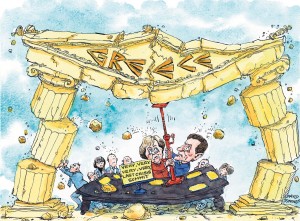
 End of Austerity in Greece

Win Win Gender Diversity in Silicon Valley?

Kristin V. Brown writes:  As criticisms of Silicon Valley’s largely white male ranks came to a boil last spring, Nicole Sanchez was in the midst of launching a company of her own — a consultancy to help companies’ diversity.

The timing couldn’t have been better. The month Vaya Consulting opened, Google released its lackluster employee diversity data to the public. At Vaya, the calls came pouring in. One company’s public relations nightmare, it turns out, is another woman’s startup.

Vaya is one of a host of upstarts seeking to turn Silicon Valley’s diversity problem into profit — helping tech companies find, recruit and retain a diverse workforce, usually for a hefty fee. Still other companies have recently added diversity services to those already offered.

In tech, diversity is now for sale.

Sanchez and her team helps clients like Pinterest with tasks such as restructuring recruitment and organizing bias training.

At Pinterest, a scrapbooking social network that has a majority of female users, the numbers are a bit better than elsewhere in tech. Overall, 92 percent of its staff is either white or Asian, but 40 percent of the more than 300 employees are women.

But Pinterest suspected that lurking in its hiring and recruiting strategies might be practices that made it harder for female, black, Latino and Native American candidates to make the cut. The company signed deals last week with Vaya, and another startup, Paradigm, to revamp the way it phrases job postings and interview questions.

Gap Jumpers, another diversity startup, sells software that helps tech companies evaluate job candidates based on talent alone.

Sound company Dolby Labs, one of Gap Jumpers’ clients, said it recently hired an engineering intern who probably would have otherwise been passed over due to a lack of experience and academic pedigree.

Gap Jumpers was started in June, and already has eight paying clients and six more testing its product. Its customers pay an annual fee of $2,000 for each hiring manager using the software.

Textio is a new company whose software detects patterns in job postings that might turn off candidates who aren’t white and male.

Entelo, a recruiting software company, added a feature in May that allows hiring managers to run searches for diverse job candidates with specific skills, such as a female software developer with expertise in JavaScript. Annual subscriptions start at $10,000.

Piazza, which makes software that college students use to communicate with professors, introduced a product last fall that lets technology companies find women taking computer science classes. The cost of that service starts at $100,000 a year.

Likewise, Sanchez, of Vaya Consulting, said she has been turning business away — too many companies seem to think hiring her will be a quick solution to a complicated problem.

Gender Diversity in Silicon Valley

Nigeria’s Bonds?

Nigeria having a tough time as oil prices plummet. Yet  Nigeria will probably remain in JPMorgan Chase & Co.’s local-currency emerging-market bond indexes tracked by over $200 billion of funds, according to the central bank governor.

“The main issue was liquidity and we are convinced that liquidity has come up to the level they desire,” Governor Godwin Emefiele said by phone from Abuja. “It’s gone to a range of about $250 million to $300 million a day.”

JPMorgan placed Africa’s largest economy and oil producer on “index watch negative’’ for its GBI-EM indexes on Jan. 16, saying central bank measures in December had reduced foreign exchange and bond trading and made it difficult for investors to replicate the gauge. The New-York based lender said it would make a decision within five months.
Nigeria, which derives 90 percent of export earnings and 70 percent of government revenue from oil, has been battered by crude prices that have fallen by half since June.
The central bank increased interest rates to a record 13 percent in November in a bid to stem outflows and stabilize the naira, which has weakened 17 percent against the dollar in the past six months,

Nigeria's Bonds

Whistleblowers of the World Unite?

In the original case against UBS there was one indispensible person:  Bradley Birkenfeld.  He had to do time, in jail and then at home with an electronic bracelet.  But he also received $104 million from the Internal Revenue Service for making possible the collection of billions of dollars in unpaid taxes.

Why haven’t more people become whistleblowers?  They are often the difference between prosecuting a case and not starting an action.  They are certainly instrumental in winning cases.  And people who blow the whistle can make huge sums of money.

It is a frightening action to take.  You are going up against big companies and often ending your chance of being employed in your business of choice.  The prospect of prison is also a deterrent.

Should governments consider amnesty for people who are willing to step up and expose the criminal cultures of the institutions in which they work?  Transparency International writes: Whistleblowers are invaluable in exposing corruption, fraud and mismanagement. Early disclosure of wrongdoing or the risk of wrongdoing can protect human rights, help to save lives and preserve the rule of law.

Safeguards also protect and encourage people willing to take the risk of speaking out about corruption. We must push countries to introduce comprehensive whistleblower legislation to protect those that speak out and ensure that their claims are properly investigated. Companies, public bodies and non-profit organisations should introduce mechanisms for internal reporting. And workplace reprisals against whistleblowers should be seen as another form of corruption.

Public education is also essential to de-stigmatise whistleblowing, so that citizens understand how disclosing wrongdoing benefits the public good. When witnesses of corruption are confident about their ability to report it, corrupt individuals cannot hide behind the wall of silence.

Jeff Koterba cartoon for June 18, 2013 "Whistle Blower"

Russia Update

Alexander Winning and Oksana Kobzeva write:  Russian banks’ capital could “quickly melt” if the economy significantly weakens, but banks won’t experience significant difficulties if the situation develops in line with official forecasts, a deputy central bank governor said.

Mikhail Sukhov said banks’ loan quality could deteriorate sharply if two of the following take place: gross domestic product (GDP) falls by over 6 percent in 2015, real wages fall by over 10 percent, or if unemployment goes over 10 percent.  “I’m categorically against calling it a banking crisis,” he said. “But difficulties could emerge if economic development is significantly different from the forecasts that we have.”

The Economy Ministry last week said it expects Russia’s GDP to contract by 3 percent this year, if oil prices average $50 a barrel. Many analysts are less optimistic, predicting the economy could shrink by 5 percent or more.

Russian banks’ cost of financing and loan-loss provisioning jumped last year, hurting their profits and eroding their capital as their access to Western markets was restricted due to sanctions linked to the Ukraine crisis.  Sukhov said on Thursday that he expected Russia’s top five banks to increase their share of total banking assets to around 60 percent next year. Most of them are state-controlled, including Sberbank (SBER.MM: Quote, Profile, Research) and VTB (VTBR.MM: Quote, Profile, Research).  “The process of consolidation is going very quickly,” he said. “The concentration of business in the banking sector will strengthen.”

Russian banks’ open foreign-currency position had fallen from $14 billion to $10 billion in December, meaning their exposure to potential forex losses had reduced, Sukhov said.

The Central Bank has relaxed accounting rules and credit ratings of lenders to pre-date Russias incursion into Crimea. This means they are pretending that the economy is better than it is.

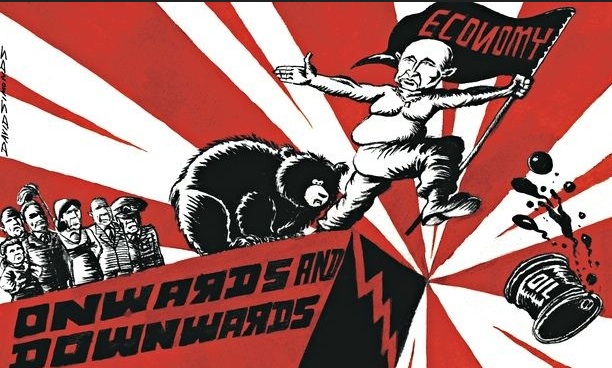
Russian Economy?