Oppenheimer, a Little Guilty?

What one hand takes away, the other hand gives.  The Securities and Exchange Commission (SEC) has voted to give Oppenheimer Holdings Inc. (NYSE:OPY) & Company a break from further enforcement action after a “bad actor” ban was triggered and then subsequently waived by an SEC commissioner’s vote.

Two of five SEC commissioners, however, are speaking out against the waiver for what they see as repeated offenses, placing law and order credentials of SEC Chairwoman Mary Jo White, a Democrat and former prosecutor, into question.   White cast the deciding vote with two Republican commissioners in favor of Oppenheimer.

Here’s the problem:  We have rules and when they are ignored, we wink and let the offending party continue doing buisness as was and is.  We are following the US Department of Labor’s decision on whether or not to waive the criminal charges levied against Credit Suisse so they can continue with their 2 billion dollar pension business in the US, despite admitting to aiding and abetting US tax evaders.

The Securities and Exchange Commission charged Oppenheimer & Co. with violating federal securities laws while improperly selling penny stocks in unregistered offerings on behalf of customers.  Oppenheimer agreed to admit wrongdoing and pay $10 million to settle the SEC’s charges. Oppenheimer will pay an additional $10 million to settle a parallel action by the Treasury Department’s Financial Crimes Enforcement Network (FinCEN).

According to the SEC’s order instituting a settled administrative proceeding, Oppenheimer engaged in two courses of misconduct. The first involved aiding and abetting illegal activity by a customer and ignoring red flags that business was being conducted without an applicable exemption from the broker-dealer registration requirements of the federal securities laws. The customer was Gibraltar Global Securities, a brokerage firm in the Bahamas that is not registered to do business in the U.S. Oppenheimer executed sales of billions of shares of penny stocks for a supposed proprietary account in Gibraltar’s name while knowing or being reckless in not knowing that Gibraltar was actually executing transactions and providing brokerage services for its underlying customers, including many in the U.S. The SEC separately charged Gibraltar in 2013 for its alleged misconduct.

The SEC’s order finds that Oppenheimer failed to file Suspicious Activity Reports (SARs) as required under the Bank Secrecy Act to report potential misconduct by Gibraltar and its customers, and the firm failed to properly report, withhold, and remit more than $3 million in backup withholding taxes from sales proceeds in Gibraltar’s account. Oppenheimer also failed to recognize the resulting liabilities and expenses in violation of the books-and-records requirements, and improperly recorded transactions for Gibraltar’s customers in Oppenheimer’s books and records.

SEC Press Release:  According to the SEC’s order, the second course of misconduct involved Oppenheimer again engaging on behalf of another customer in unregistered sales of billions of shares of penny stocks. The SEC’s investigation, which is continuing, found that the sales generated approximately $12 million in profits of which Oppenheimer was paid $588,400 in commissions. The firm’s liability stems from its failure to respond to red flags and conduct a searching inquiry into whether the sales were exempt from registration requirements of the federal securities laws, and its failure reasonably to supervise with a view toward detecting and preventing violations of the registration provisions.

The SEC’s order requires Oppenheimer to cease and desist from committing or causing any violations and any future violations of Section 15(a) and 17(a) of the Securities Exchange Act of 1934 and Rules 17a-3 and 17a-8, and of Section 5 of the Securities Act of 1933. In addition to the monetary remedies, Oppenheimer agreed to be censured and undertake such remedial measures as retaining an independent consultant to review its policies and procedures over a five-year period.  Oppenheimer Case

Design Rachel Gold
Design Rachel Gold


UBS Still Aids and Abets US Tax Evaders

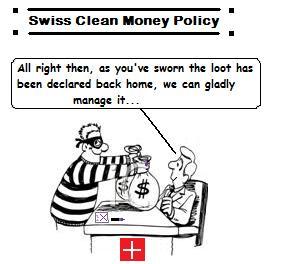
U.S. federal prosecutors have launched a new probe into whether Swiss bank UBS AG helped Americans evade taxes through investments banned in the United States.  UBS, which paid $780 million in 2009 to settle a separate Justice Department tax-evasion probe, is now under investigation for allegedly helping wealthy clients hide assets through so-called bearer securities.

Corruption in Indonesia?

Banyan writes:  In October Joko Widodo was inaugurated as Indonesia’s president, with parliament controlled by an opposition of bad losers threatening to thwart all his plans. Yet by this week, when Jokowi, as he is known, marked 100 days in office, his biggest headaches were caused by his own party, the PDI-P. It has stoked a confrontation between the notoriously corrupt police force and a popular anti-corruption body. The row risks blunting the great political weapon Jokowi has so far wielded to cow friend and foe alike: his personal popularity.

At the centre of it is Budi Gunawan. The policeman had been under a cloud since 2010 because his bank balance bulged suspiciously for a humble cop’s.  On January 23rd, the police arrested a KPK commissioner, Bambang Widjojanto, on flimsy-looking charges of encouraging perjury in 2010, when he was a campaigning private lawyer. He has resigned. To many, the arrest seemed like retaliation by the police. The three other KPK commissioners are also under investigation. The KPK needs a quorum of three to function, so it risks paralysis.

The affair undermines faith in his commitment to wiping out corruption. Like his predecessor, Susilo Bambang Yudhoyono, in other ways his polar opposite, Jokowi is respected as honest and a doughty fighter against graft. Many Indonesians know from personal experience that the police cannot be trusted.

Mr Budi’s appointment also mocked hopes that Jokowi would make promotions on merit. A businessman from a humble background, Jokowi worked his way to power through winning direct elections, first as mayor of his Javanese hometown, Solo, then as governor of the capital, Jakarta.

Perhaps Jokowi is not his own boss, and Ms Megawati still calls the important shots.

At home, these hardline policies are popular. Mr Jokowi appealed to voters not as a soft-centred liberal but as a no-nonsense small-town mayor who gets things done. And that is another reason why his deliberate, letter-of-the-law handling of the crisis over the KPK is so damaging.

It is also distracting attention from his rapid achievement of some economic-policy goals: starting the distribution of smartcards to poor Indonesians, entitling them to free health care and education, and removing fuel subsidies. Greatly helped by the plunge in the oil price, this last measure has freed billions of dollars for investment in infrastructure and social welfare. Environmentalists also give the president grudging credit for making a start on another crying need: affording better protection to Indonesia’s forests.

Transparency at the US Fed?

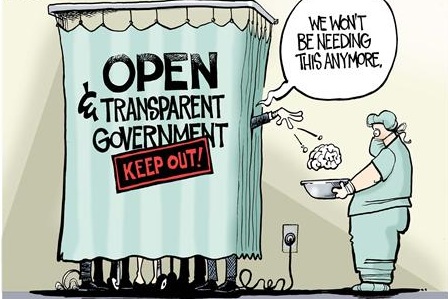
Why is the Federal Reserve so reluctant to become transparent.  Kevin CIrilli writesL The Federal Reserve is lashing out at Sen. Rand Paul’s plan to give Congress more oversight over the central bank, a proposal that could gain traction in the new Republican-led Congress.

The Kentucky Republican reintroduced his “Audit the Fed” legislation last month with 30 co-sponsors, including other potential 2016 GOP hopefuls, Sens. Ted Cruz (Texas) and Marco Rubio (Fla.).

The proposal — once championed by his father, former Rep. Ron Paul (R-Texas) —would subject the central bank to an audit by the Government Accountability Office (GAO).

Regional bank presidents from around the country are decrying the plan, which they argue could damage the economy.  “Who in their right mind would ask the Congress of the United States — who can’t cobble together a fiscal policy — to assume control of monetary policy?” Richard Fisher, retiring president of the Federal Reserve Bank of Dallas/

Fed Chairwoman Janet Yellen has already vowed to fight the legislation, and President Obama would likely veto it.

Still, Fed watchers note that Paul has become emboldened by the new Republican majority in Congress. And he possesses an ever louder national microphone, as he moves closer to a 2016 presidential run.

Together, those factors could elevate the issue in the coming months, a prospect that has spurred strong words from bank officials.

Retiring Philadelphia Fed President Charles Plosser told The Hill that financial auditing “already exists” for the Fed, and warned that Paul’s plan would empower Congress “to audit and question monetary policy decisions in real time.”

Paul pushed back against the criticism, saying Fed officials “will say and do anything to keep their business hidden from the American people.”

What the press has not made clear in reporting the Great Recession and quantitatie easing is the assets bought by the Fed and who they benetied.  An audit by the rerpresentatives of the Ameican people might provide insights into exactly what happened and why the ordinary American citicen is still having a tough time.

Fed Chair Janet Yellen, who met with Senate Democrats last week on Capitol Hill, is scheduled to testify before Congress later this month. The appearance will be her first since Republicans seized control of the Senate, and she will likely face questions on the legislation.

Senate Banking Committee Chairman Richard Shelby (R-Ala.), whose panel has jurisdiction on the bill, has also said he is interested in holding hearings on the issue.

Transparent Fed?

Boomerang Generation in the US

by Zachary Bleemer, Meta Brown, Donghoon Lee, and Wilbert van der Klaauw – Liberty Street Economics, Federal Reserve Bank of New York

Young Americans’ living arrangements have changed strikingly over the past fifteen years, with recent cohorts entering the housing market at much lower rates and lingering much longer in their parents’ households. The New York Times Magazine reported this past summer on the surge in college-educated young people who “boomerang” back to living with their parents after graduation. Joining that trend are the many other members of this cohort who have never left home, whether or not they attend college. Why might young people increasingly reside with their parents? They may be unable to find employment, they may be saving their income to pay down increasing levels of student debt, or they may be unable to afford the rent for an apartment in the face of lower income or higher housing prices.  Boomerang Generation

China: Online Shopping and Drone Delivery

The CHinese are shopping on line and leaving malls empty. The online revolution promises to boost productivity and could create 46 million new jobs in China by 2025, many of them higher-skilled, according to a report by New York-based McKinsey & Co. in July. The losers will be as many as 31 million traditional roles, the equivalent of the entire employed population in Britain.

Asia’s largest Internet company is partnering with Shanghai YTO Express Logistics Co. to deliver ginger tea packets to 450 Chinese customers who volunteered for the one-time drone tests, according to an e-mailed statement from Alibaba. Remote-controlled helicopters are expected to distribute 50 parcels from Alibaba’s Taobabo Marketplace in Beijing Wednesday, before moving to Shanghai and Guangzhou.

The flights, if successful and uncontested by authorities, would give the budding commercial drone industry a boost in China, where the military allots only a fifth of the airspace to civilian use. Amazon — the largest Internet retailer by sales – – has begun testing remote deliveries abroad after asking the U.S. Federal Aviation Administration to speed approvals for drones tests in Washington state.

Alibaba and YTO said they have notified Chinese aviation authorities about the flights as required by regulation and believed that the deliveries complied with all existing rules.

At least one of the drones was expected to fly from YTO’s warehouse in the eastern outskirts of Beijing and reach the 330 meter (1,100 feet) China World Trade Center in less than an hour. A deliveryman will await the parcel’s arrival on the ground floor and carry it to customer, Jia Yun, a Taobao spokeswoman, said by phone from Beijing.

The Civil Aviation Administration of China issued regulations to 2009, requiring operators of drones to be identified when applying to use such devices, according to a posting on the agency’s website. Chinese regulators are considering license requirements for drone operators, a step the FAA is also discussing for unmanned commercial flights.

U.S. moves to restrict commercial drones have frustrated Amazon’s plans to fly light packages to customers in 30 minutes or less. Drone use in the U.S. was dealt another setback last month after an operator lost control of a SZ DJI Technology Co.- built quadcopter and it crashed on White House grounds, according to the Secret Service.

Alibaba Drones

Poverty in Silicon Valley

Katie Benner writes: Silicon Valley’s economy is booming, but according to one economic report there’s not a bubble in sight.  Silicon Valley Index

According to the think tank Joint Venture Silicon Valley, Silicon Valley’s job growth rate, at 4.1 percent, is the highest it’s been since 2000, adding nearly 58,000 jobs. Average annual incomes in Silicon Valley and San Francisco were $116,033 and $104,881, respectively, compared to $61,489 in the United States, the study shows.

On the investment side, Silicon Valley and San Francisco lured $20.2 billion in venture capital in 2014, according to the Silicon Valley Index, a report tallying economic indicators since 1995.

More than half the VC investments were in software, a figure that has grown steadily for five years, the report says. The share of U.S. investments shot up nearly 7 percentage points to 43 percent. The report says there were were 275 U.S. Initial Public Offerings in 2014, 23 of which were Silicon Valley companies, and five of which were San Francisco companies.

The report defines Silicon Valley as Santa Clara and San Mateo counties and adjacent parts of San Mateo, Alameda and Santa Cruz counties. San Francisco was factored into some data because of the city’s quickly expanding tech sector.

But not all the news was good. Thanks to a growing wage gap, nearly 30 percent of the region’s population does not make enough money to meet their basic needs without public assistance, the report finds. The median income for high-skilled workers in the region is $118,651, while the median wages for low-skilled workers is $28,847.

And the income gap between the sexes is worse in the region than nationwide, the report shows. For workers with bachelor’s degrees, median income for men was 61% higher than for women in Silicon Valley – for a difference of $34,233. That gap is growing, and compares with 48 percent in the United States as a whole.

Not everyone agrees with Hancock’s sunny outlook. Skeptics point to public valuation of internet companies such as Twitter, and private valuations such as Facebook’s $19 billion purchase of WhatsApp as evidence of a possible bubble.

“There are enormous amounts of money sloshing around,” says Stanford University business professor Jeffrey Pfeffer. “The valuations are high, that’s for sure.” Pfeffer also cited the income gap as a concern. “I don’t believe it’s a healthy economy when service workers can’t afford to live here.”

Silicon Valley

Private Investors for Bank Risk?

Sheila Bair writes: As Chairman of the Federal Deposit Insurance Corporation from 2006 to 2011, I have front line experience with the problems and havoc that can ensue when large, interconnected financial institutions take excessive risks.  I am committed to protecting American taxpayers from any future bailout of these so-called “too big to fail” institutions.  The best way to do that is to ensure these institutions have adequate private investment to absorb the losses when they fail. That allows markets to work as they should – with private investors accepting the risks and taking the losses, rather than the “heads I win, tails the public loses” practices we saw during the financial crisis where some large banks and other “systemic” institutions were allowed to reap the profits of their risk taking, but turn to taxpayers for help when those risks turned sour.

Big financial institutions profit by relying primarily on borrowed money – instead of shareholder equity – to fund their loans and investments. Because the market views them as implicitly backed by the government, it is cheaper for them to fund themselves with debt instead of equity. Through high levels of leverage, executives are able to increase their returns on equity – and their bonuses which are frequently tied to shareholder returns. Prior to the financial crisis, some of our biggest Wall Street banks were borrowing an incredible $30 to $40 for every dollar of hard cash they had from shareholders.

Big financial organizations have strong financial incentives to increase leverage. This is why it is essential for global and U.S. regulators to take a firm line on the amount of borrowing they are allowed to do.  U.S. banking regulators have already moved to limit big bank borrowing to less than $20 for each dollar of shareholder capital, and just last month proposed further borrowing limits for the largest U.S. banks that exceed the minimums set by international regulators. But behind the scenes, they’re facing intense resistance from many Wall Street banks, who are lobbying them to roll back and weaken their rules.

In the long run, better capitalized banks are in the interests of shareholders, creditors, and the public at large.  Though tougher capital rules may impact returns on equity in the short-term, in the long-term, thick cushions of capital protect investors against unforeseen risks and position the bank to continue lending during downturns. Numerous studies have shown that well capitalized banks do a better job of lending through cycles. This helps guarantee sustainable profits for shareholders, and reduces the risk of default for creditors. Most importantly, well-capitalized banks are in a stronger position to lend during times of economic distress when the economy needs them the most.

roi-bankrisk

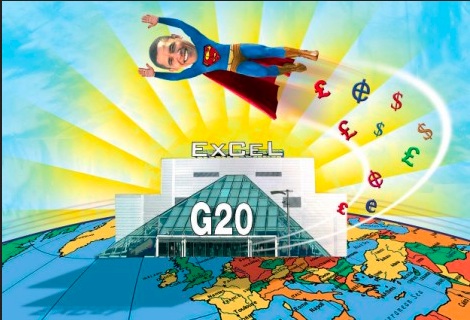
China Prepares for the G 20

Yu Yongding and Domenic Lombardi write:  The world caught a break in 2009. The G-20, an assembly of the world’s largest developed and major emerging economieswas meeting in Pittsburgh to formulate a response to the global financial crisis. US President Barack Obama, having gotten the message that the G-7 could no longer oversee the global economy on its own, led a summit that made the G-20 the primary body for coordinating global economic policy. It was a highpoint for American leadership.

Next year, the world’s other economic superpower will assume the presidency of the G-20 and host its annual summit.  President Xi Jinping will undoubtedly make an impression of his own.

Elements of the current G-20 agenda align well with China’s domestic economic concerns, especially with regard to infrastructure. Last year, G-20 members agreed to pursue a global infrastructure initiative aimed at facilitating investment and boosting financing for infrastructure projects and, crucially, for small and medium-size enterprises.

Given that SMEs will play a key role in China’s new growth strategy, and already account for some 85% of new jobs in the country, this initiative suits China well. With Turkey having zeroed in on SMEs as a key vehicle for fostering more inclusive growth, this year’s summit could already produce progress on this front.

China has long sought to place Asia on par with North America and Western Europe in terms of connectivity. . If China uses its G-20 leadership to push vigorously for change, it would not only improve its own chances of gaining more authority in the IMF; it would also gain favor with other emerging economies, which have been similarly frustrated by US (and European) leaders’ treatment of the issue.

China might be able to assume a leadership role the global financial system. China, where the US dollar’s predominant role is often criticized for having subjected global finance to unnecessary volatility, could use its G-20 presidency to gain a position the world’s only international currency: the IMF’s Special Drawing Rights.

In this effort, it would be in China’s interest to add the renminbi to the basket of currencies that determine the SDR’s value.  At the same time, China might pursue a shift in the dynamic of international financial regulation. The G-7 economies have rarely hesitated to name and shame emerging economies for their failure to comply with global norms.

Though China’s domestic regulatory regime remains subject to severe constraints,

China may not be able to achieve all of its goals next year. But, if it plays its cards right, it could do much to increase its international influence, while enhancing global economic and financial stability.

 China to Lead G-20 in 2016

Growth in US?

Federal Rserve Bank of San Francisco comments:   Since 2007, Federal Open Market Committee participants have been persistently too optimistic about future U.S. economic growth. Real GDP growth forecasts have typically started high, but then are revised down over time as the incoming data continue to disappoint. Possible explanations for this pattern include missed warning signals about the buildup of imbalances before the crisis, overestimation of the efficacy of monetary policy of following a balance-sheet recession, and the natural tendency of forecasters to extrapolate from recent data. .

Economic forecasting can be a humbling endeavor. In a cross-country study of private-sector forecasts from 1989 to 1998, Loungani (2001) finds that “the record of failure to predict recessions is virtually unblemished.” He also finds that forecast revisions in one direction tend to be followed by further revisions in the same direction and that one-year-ahead growth forecasts are typically too optimistic. An updated study by Ahir and Loungani (2014) finds that the private-sector’s record of failure to predict recessions remained intact through 2008 and 2009. A study by Alessi, et al. (2014) finds that one-year-ahead growth forecasts from the Federal Reserve Bank of New York and the European Central Bank from 2008 to 2012 exhibited substantial overoptimism, averaging 1.6 to 2.4 percentage points above actual growth. The SEP growth forecasts fit the pattern of these various studies.Research shows that people tend to use simple forecast rules that extrapolate from recent data (Williams 2013).

Research has identified numerous instances of persistent bias in the track records of professional forecasters. These findings apply not only to forecasts of growth, but also of inflation and unemployment (Coibion and Gorodnichencko 2012). Overall, the evidence raises doubts about the theory of “rational expectations.” This theory, which is the dominant paradigm in macroeconomics, assumes that peoples’ forecasts exhibit no systematic bias towards optimism or pessimism. Allowing for departures from rational expectations in economic models would be a way to more accurately capture features of real-world behavior.  Growth

Growth?