Showing Up Enough for Women?

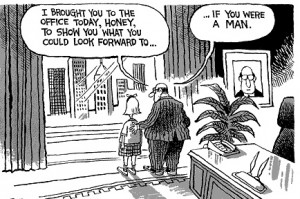
Jessica Valenti wriites:  Feminists insist that the more women, people of color and LGBT individuals are visible, the better off – and more egalitarian – the world will be. But is simple representation the best answer to sexism?

Women are still scarce in many places of power.

The push for eventual parity, however, often means that the first women in traditionally male spaces – be it politics, gaming or even firefighting – are saddled with the responsibility of taking abuse until a critical mass is reached and (hopefully) the culture shifts, and of making that space more woman-friendly.

Women still make up barely 24 per cent  off all legislators nationwide,.

It is unclear if women’s presence in Congress has had much impact on the behavior of their male colleangues (or the continually sexist culture in politics).

We simply don’t have enough women represented yet to know what a critical mass might do. The fact that we’re still counting women is because there’s not that many of them.

“You’re still looking at an institution that is overwhelmingly male; it’s still the most exclusive men’s club in the world”, she said.

Any person breaking in to a space where they’re not of the dominant culture – it’s hard.

Asking individual women to enter hostile spaces to make them better is really asking women to make men better – and to make men better at women’s own risk. But it shouldn’t be women’s responsibility to fix men or deal with their misogyny. Instead, men should be taking it upon themselves to treat women with respect, and demand their other male colleagues do the samen

We need to regularly ask underrepresented folks: what would support look like to you? And then develop concrete, ongoing systems to provide that support.

That means if a female politicians want more bathrooms, get them more bathrooms and lay off the potty jokes.  It also means developing support and training for non-traditional jobs for women and demanding that straight white men do as much to make spaces friendly for underrepresented groups as those groups themselves. Women – and women’s presence – aren’t the only things that can end sexism, and closing gender gaps is more than just a number’s game. So let’s look forward to the day we can stop counting.

The Future?


Tigers for Profit?

Tiger Trade:  In 1991, wildlife investigator J. A. Mills went to China to verify rumors about tiger farming.  “I mainly pretended I was a student of traditional Chinese medicine to try to figure out not only what was being traded, but why it was being traded,” Mills told National Public Radio.

She says she found China’s first tiger farm — complete with a hand-written ledgers filling up with orders for tiger bone.

Back then, when tiger trade was first flagged as an issue, the main demand for bone was for use in traditional Chinese medicine. Today, the trade has changed to more of a luxury goods market — and Mills says that although China banned the trade of tiger bone in 1993, demand for luxury items still thrives today. She estimates that there are 6,000 tigers on farms in the country.

A tiger farm is basically a feed lot for tigers where they’re bred like cattle for their parts to make luxury goods such as tiger bone wine and tigerskin rugs. This is about wealth, not health.  This is about a handful of investors poised to launch a multi-billion-dollar-a-year luxury goods market. This about products looking a market, rather than a market looking for products.

Tigers in the wild are solitary, of course, except when … they’re mothers with cubs. These [farmed] tigers are basically kept in cages. They are speed-bred. Cubs are taken from their mothers almost right after birth so the mothers can breed again. And the males run around in packs.

It’s something you would never, ever see in the wild.

The problem with tiger farming is that it stimulates demand for tiger products, which in turn stimulates poaching of wild tigers because tiger products from wild tigers are considered superior, more prestigious and exponentially more valuable. Some people are even buying tiger products as an investment — much as they would, say, rare art or antique jewelry. And if even a tiny fraction of China’s 1.4 billion people seek wild tiger products, we could lose the last 3,000 wild tigers before we know it.

The same forces are driving the slaughter of elephants for their ivory and rhinos for their horn. It all involves organized criminals supplying investors hoping to profit from extinction. Unfortunately what’s happened in the United Nations in the context of the treaty that governs … international trade and endangered species is that everyone’s gone silent.

 Tigers for Profit

Can You Do Business in Cuba?

Bradley Klapper writes:  The Obama administration is putting a large dent in the U.S. embargo against Cuba as of Friday, significantly loosening restrictions on American trade and investment.

The new rules also open up the islland to greater American travel and allow U.S. citizens to start bringing home small amounts of Cuban cigars after more than a half-century ban.

Thursday’s announcement of new Treasury and Commerce Department regulations are the next step in President Barack Obama’s plan to re-establish diplomatic relations with Cuba. They come three days after U.S. officials confirmed the release of 53 political prisoners Cuba had promised to free.

Only Congress can end the five-decade embargo. But the measures give permission for Americans to use credit cards in Cuba and U.S. companies to export telephone, computer and Internet technologies. Investments in some small business are permitted. General tourist travel is still prohibited, but Americans authorized to visit Cuba need no longer apply for special licenses.

With the new regulations public, the focus shifts to American businesses and the Cuban government. Some changes could take months as U.S. firms analyze the risks and benefits of moving into a complicated new market. And the Cuban government has said nothing publicly about how it will regulate new trade with the United States. Foreign companies currently deal almost entirely with state-owned firms that are notoriously slow, inefficient and short on cash.

Cuba will likely be more open to a surge in new travelers than to other potential effects of the loosened rules.

But Cuban hotels generally fall short of international standards and those with better food and service are almost always fully booked during the winter high season.

Casting a shadow on potential deals is the possibility of litigation by Cuban-Americans and U.S. firms whose property was confiscated in Fidel Castro’s 1959 revolution and may try to sue companies entering into business with the Cuban government. In Washington, Congress may also seek to erect barriers to new investment.

Thomas Donohue, the head of the U.S. Chamber of Commerce  said it was better for the U.S. to sell computers, smartphones and cars to Cuba than to cede such business to countries like Russia and China. Still, the embargo as a whole appears unlikely to fall anytime soon.

Starting Friday, U.S. companies will be able to export mobile phones, televisions, memory devices, recording devices, computers and software to a country with notoriously poor Internet and telecommunications infrastructure. Internet-based communications will fall under a general license. The new rules “immediately enable the American people to provide more resources to empower the Cuban population to become less dependent upon the state-driven economy,” White House spokesman Josh Earnest said Thursday.

The U.S. is now “one step closer to replacing out of date policies,” Treasury Secretary Jacob Lew said Thursday.

Other changes include:

—The elimination of limits on how much money Americans spend in Cuba each day or what they spend it on.

—Permissible use of U.S. credit and debit cards.

—Travel agents and airlines can fly to Cuba without a special license.

—Insurance companies can provide coverage for health, life and travel insurance policies for individuals residing in or visiting Cuba.

—Financial institutions may open accounts at Cuban banks to facilitate authorized transactions.

—Investments can be made in some small businesses and agricultural operations.

—Companies may ship building materials and equipment to private Cuban companies to renovate private buildings.

Further down the road, Washington envisions reopening the U.S. Embassy in Havana and carrying out high-level exchanges and visits between the governments. Secretary of State John Kerry could travel to the island later this year.

Doing Business in Cuba

Credit Suisse Gets Out of Jail Free?

Neil Weinberg writes: Credit Suisse Group AG (CSGN)’s bid to continue managing U.S. pensions after its conviction for helping American clients evade taxes should be rejected by the Labor Department unless the bank improves controls against wrongdoing, according to Representative Maxine Waters.

Waters, the top Democrat on the House Financial Services panel, sent a letter to Labor Secretary Thomas Perez today ahead of an agency hearing in Washington on Credit Suisse’s status as a pension manager, which Waters and two colleagues had pressed the department to hold.

“I believe that at this point, the waiver should be denied given the lack of important public facts and the insufficient proposed conditions,” Waters wrote. If regulators continue to routinely approve waivers, they will be “throwing away valuable enforcement tools and enshrining a policy of too-big-to-bar.”

Unless Labor grants a waiver, the Swiss bank will be disqualified from handling U.S. pension funds following its guilty plea last year to helping thousands of Americans evade U.S. taxes. Credit Suisse oversees billions of dollars of assets for more than 100 U.S. pension plans, according to a July court filing.

Credit Suisse has three asset management units seeking waivers to continue managing U.S. pension funds, Roger Machlis, head of Credit Suisse Asset Management’s legal and compliance unit, said at the hearing. John Popp, managing director of the asset management unit, who also spoke at the hearing, estimated more than 1 million individuals are in the pension plans it manages.

Credit Suisse Get out of Jail

Reform Iran’s Banks?

At the beginning of January, Tehran hosted the most significant economic conference held in Iran since 1979, with President Hassan Rouhani, his economic team and 1,500 economists focusing on economic hardships that have surfaced in recent years.

The need for restructuring the banking system was among major issues discussed in the two-day event, while top monetary officials on the second day of the conference called on the commercial banks to be selective when offering loans.

Akbar Komijan, the deputy governor of the central bank, implied that if the commercial banks do not provide enterprises with loans, the reason would be lack of eligibility of loan seekers, and not a lack of finances.

In the eight months ending Dec. 21, more than 60% of the granted loans were made to address cash flow issues.  The banks have been faced with a massive number of non-performing loans due to the combination of government’s lending directives to support failing enterprises and harsh depreciation of the rial in 2013 against major foreign currencies.

The commercial banks, troubled with a lack of cash, are now left with few options to meet their daily needs. The central bank is complaining that the banks have been borrowing to much from the treasury.   Komijani said at the conference that the banks’ overdraft from the central bank is “inconveniencing” and called on them to find other ways to meet their needs for cash.

A monetary expert in Tehran said the banks usually fail to pay off their debt, given the high interest rate of 32% for such loans. The banks have no choice but to borrow from either the central bank or one another.

Some struggling banks are even given one-day loans by other financial institutions. These loans would let the banks meet their immediate needs for cash. Monetary officials are fearful that they would soon face a desperate situation as the non performing loans cannot be recovered.

Another option the banks could consider to boost their lending ability is to use the money held by the public in the form of gold and foreign currency, which is estimated to be around $21.5 billion.  The amount is more than five times the estimated gold reserves of the central bank, which is nearly $3.9 billion.

Many believe that the lifting of sanctions is a shortcut to prosperity as they have so far blocked the Iranian government from tapping into the reduced oil income.

The lifting of sanctions would let Iran access $100 billion in foreign assets blocked in international banks in one go and resume economic relations with world nations, a move that would give a boost to the economy and the private sector in particular, which is heavily indebted to the banking system. But for now the negotiations are unlikely to result in a swift deal and the government can do little to shore up the stressed banks.

Among the few measures the regulator may take to help recover the sizable NPLs is create a specialized team or entity to address problems of bad debt. If a list of top defaultors connected t politicians were published, this might also improve matters.

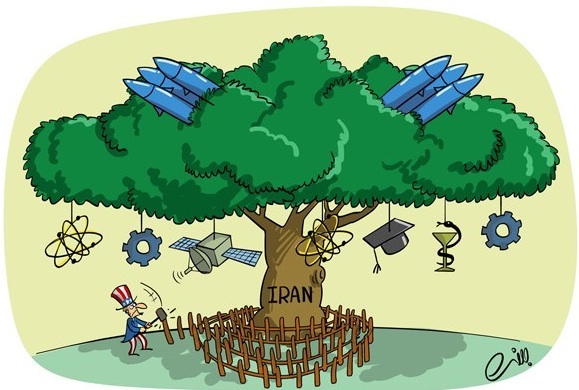
Iran

Colombia, for Entrepreneurs?

Columbia’s turnaround.   A quarter century ago, the Latin American nation was nearly a failed state, overrun by drug lords. Even today, after the drug cartels have been largely suppressed, a war with leftist guerrillas has become the longest armed conflict in the world – lasting more than a half century. More than 220,000 people have been killed and more than a tenth of the population remains displaced.

Such troubles, which include high corruption and a big gap between rich and poor, might have left an entire people feeling down. Not so in Colombia.

In 2012, the United Nations ranked it third on a “happiness” index. A Gallup poll last year put Colombia in the top 10 of countries in which people like what they do each day and have supportive relationships. And Forbes magazine cites it as one of “10 coolest places to visit in 2015.”

Yet coolness, love, and happiness might not be enough to explain Colombia’s recent successes and reform efforts. A 2014 survey by the Pew Research Center ranks it the highest country on a few key character traits. Colombians stand out in believing that “getting ahead” takes a combination of hard work and education.  Even more telling is that Colombians rank very high compared to other emerging economies in not believing that “success is determined by outside forces.”

These traits of resilience may help explain why Mark Schneider of the International Crisis Group predicted last week that “the only good news” on the world state in 2015 may be a peace agreement in Colombia’s long war.

Talks between President Juan Manuel Santos and the Colombian Revolutionary Armed Forces, known as FARC, began in 2012. The two sides have reached a couple key agreements. But the hardest parts – how to reintegrate militias and provide reparations to some 6 million victims – are not yet resolved. Even after an agreement, it might take years to reduce the poverty and injustices that first drove the rebellion.

Still, much of Colombia, especially the former drug-addled city of Medellín, is thriving despite the war. Instead of being home to drug barons like Pablo Escobar, Medellín now sports impressive infrastructure, such as a long escalator and cable cars up hillside slums to help connect the poor and rich. The city’s culture of entrepreneurship is creating a Silicon Valley of Latin America.

Colombia has long stood out in Latin America. It was the region’s first democracy. Bogotá was once the “Athens of South America.” Now it has the strongest and fastest-growing economy, ranking in size behind Brazil and Mexico. With aid from the United States, it has curbed much of its major drug trafficking.

It still needs land reform and a better human rights record to uplift its most marginalized people. During his reelection campaign last year, Santos promised to move his country from a “culture of fear” toward a “culture of fair play, of decency, of respect towards institutions.”

A nation that has been at war for 50 years, he says, has to start early to heal the wounds of war. The victims of the conflict have a seat at the peace talks, as Santos has insisted, because they are more willing to forgive and more willing to be generous.

Colombia


Jamie Dimon Whines

Hugh Son writes: Jamie Dimon, grappling with multibillion-dollar legal costs and rising capital requirements at JP Morgan Chase  said overlapping efforts by U.S. regulators place banks “under assault.”

“We have five or six regulators or people coming after us on every different issue,” Dimon, 58, said today on a call with reporters after New York-based JPMorgan reported fourth-quarter results. “It’s a hard thing to deal with.”

JPMorgan, the largest U.S. bank, posted a drop in fourth-quarter profit amid $990 million of legal expenses, about double what some analysts predicted. The legal costs, mostly tied to probes into currency rate-rigging, follow even bigger payments in 2013 related to mortgage bonds sold before the 2008 crisis by JPMorgan and firms it acquired.

Dimon, who previously blamed regulators for stifling economic growth, struck a more conciliatory tone last year. The bank had a “tin ear” when dealing with overseers before settling probes into mortgage lapses and trading losses, he said in an April letter to shareholders.

New Federal Reserve rules that exceed the global standard also could mean JPMorgan needs more than $20 billion in additional capital by 2019.

“The regulators clearly want even more capital,” Dimon said today. “We’ll meet those requirements. But those measures aren’t a measure of risk at all. It is simply a measure of size. This company is as sound as it gets.”

Dimon, who was lauded during the crisis for JPMorgan’s role in buying Bear Stearns Cos. and Washington Mutual Inc.’s banking operations, has criticized the government for penalizing JPMorgan for those firms’ actions.

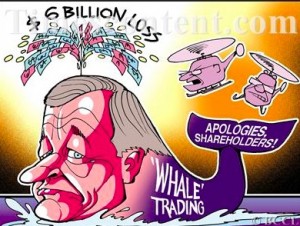
In 2013, Dimon settled a litany of disputes, including government probes of mortgage-bond sales, energy trading, oversight of a trader known as the London Whale, and scrutiny of services provided to Ponzi-scheme operator Bernard Madoff.

The bank settled foreign-exchange investigations with three regulators in November, paying about $1 billion, and still faces a Justice Department probe.

“In the old days, you dealt with one regulator when you had an issue, maybe two,” said Dimon, 58. “Now it’s five or six. It makes it very difficult and very complicated. You all should ask the question about how American that is. And how fair that is. And how complex that is for companies.”

Dimon’s bank, of course, does only 20% of its business as a conventional commercial bank.  It is in the derivatives market, the commodities market and has already gotten spanked for its involvement in LIBOR.  Maybe Dimon should listen to Goldman Sachs, who has suggested the company should be divided up.  Then each section could deal with its own regulators.

Jamie Dimon

Has Tsipras Lost Already?

Faced with a popular Greek opposition party, Syriza, which demands that Europe either reduce Greece’s debts or watch Greece walk out of the eurozone, German Chancellor Angela Merkel has not blinked and therefore has neutralized the bargaining position Syriza hoped for.

Greece’s creditors – in the main, the governments of northern European Union countries, the IMF and the World Bank – are unfazed by Greek threats.

There are still creditors tied to Greece, but they have changed. Greece’s creditors are governments and international organizations, and not banks and pension funds, nor companies whose downfall would immediately affect millions of citizens in predominantly northern European countries,

The original rescue operation was a huge bailout – but in the form of quick money that was used to pay off Greek debts to German, French, and Dutch financial institutions.

At the beginning of the crisis, a Greek default would have seen banks and pension funds in the tank, resulting in renewed panic on financial markets still reeling from the credit crisis. Now the risk of contagion – with banks in Italy, Spain, and Ireland crashing like dominoes stones as investors flee – has largely subsided.

Instead, Greece now owes billions of euros to EU countries, the IMF, and the World Bank, among others. These creditors do not easily default. The hit they would take would be one they could bear. Meanwhile, a default and an exit from the European Union wouldn’t help Greece at all..

The first thing Greece would have to do it it exited the euro and the EU is organize stringent capital controls to prevent Greeks from moving their euros to other countries, which would effectively end any economic activity still going on in the country.

Second, Athens would have to quickly introduce a new currency,  which would immediately crash against the other main currencies.

For  Greek bonds, a new level below junk status would have to be invented. Within 24 hours Greece would be a financial pariah, paying huge interest rates and risk premiums, while its existing loans would balloon, as most loans outstanding to its foreign creditors would still have to be paid in euros. Greece would be Europe’s Zimbabwe, with the local economy in tatters; rampant inflation; and mass unemployment.

So Syriza leader Alexis Tsipras stood on the ledge,  Merkel folded her arms, smiled told him to go ahead and jump.  And now Merkel wonders whether Tsipras understands that he may call himself Greece’s new prime minister after Jan. 25, but he still won’t be the one holding any power.

Merkel and Tsipras

China Needs New Math

William Pesek:  As goes the US go go China’s exports.

The improving U.S. economy has brought some welcome cheer to officials in Beijing, which reported an unexpectedly high 9.7 percent jump in December exports.  If those numbers continued in months ahead, they’d also be good news for a global economy that’s running short on viable growth engines.

China will probably have to loosen monetary policy soon in order to ensure that GDP growth stays above last year’s target of 7.5 percent (it’s currently around 7.3 percent).

Already worryingly high compared to where Japan was 25 years ago when its own bubble burst, China’s GDP ratio  will only rise further with additional stimulus. The more China gins up growth in 2015, the more irresponsible lending it will have to service in the decade ahead.

The math simply doesn’t work out. Even if China could somehow return to the heady days of 10 percent-plus GDP growth, its debt mountain would by then be nearly unmanageable.

From Japan to Argentina to Greece, recent decades offer many examples of governments thinking 1 + 1 = 3. It took Japan more than a decade after its bubble burst in 1990 to create the Resolution and Collection Corporation, modeled after America’s Resolution Trust Corporation, to dispose of bad loans. China can’t afford to wait that long to head off a full-blown crisis. It’s one thing for a $24 billion economy like Argentina to blow up; it would be quite another if the world’s second-biggest plunged into turmoil.

Yet for all the official talk about curbing borrowing and adjusting to a new normal of lower growth, Xi’s government still hasn’t shown the stomach necessary to bring China’s debt problems out into the open and deal with them. Even one of the first defaults on an offshore bond by a Chinese developer last week ended happily. Kaisa Group missed a $23 million interest payment, but quickly received a waiver from HSBC.

What should China be doing? First, clamp down more firmly on new borrowing, particularly to the state sector. While that would roil credit markets and crimp growth, it’s vital to gaining control of the financial system. Next, conduct a truly transparent audit of public debt and the shadow banking system.

Finally, China needs to create a mechanism to collect and write down bad assets. Only by doing so can Beijing prod wobbly banks to act openly and quickly to repair balance sheets. There are many ways China could go — a Japan or a Sweden-like purge and bank recapitalization. The point is to address its math problem frontally. However cheery, trade and GDP figures are the wrong numbers to focus on.

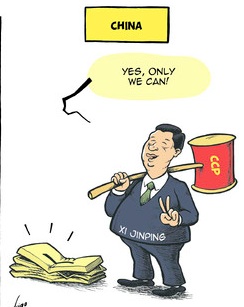
Xi's Purge?

Hun Sen’s Rule of Cambodia?

Sebastian Strangio writes:  In late November, Cambodia’s government offered the opposition Cambodia National Rescue Party (CNRP) some concessions. One was that the parliament would formally recognize the CNRP’s president, Sam Rainsy, as leader of the opposition, with a “rank equal to the prime minister.”

Most Cambodians know only Hun Sen who marks his 30th anniversary in power. In that time, the Cambodian leader has been one of the world’s great political Houdinis, passing unscathed through repeated cycles of his country’s turbulent history.

Hun Sen now faces perhaps the greatest challenge of his career: to win back Cambodian voters without undermining the tycoons who have bankrolled his long reign. Does an aging strongman have the energy for another rebranding before elections due in 2018? Whatever happens, Cambodia’s singular leader has made it clear he isn’t going anywhere. After the January 2014 garment protest crackdown, Hun Sen showed no remorse for those killed, warning that he would meet further protests with even bigger demonstrations of his own. “If Hun Sen comes out to do something,” he said, “it’s not going to be small.”

Hun Sen’s remarkable career has tracked the tumults of modern Cambodia. Throughout the 1970s Hun Sen fought for those “Khmers Rouges,” or Red Khmers, as Sihanouk dubbed them. After taking power in April 1975, the Khmer Rouge established a network of brutal labor camps in the Cambodian countryside, which led to the death of an estimated 1.7 million Cambodians — nearly a quarter of the population.

After 2013’s election, Hun Sen promised change. Ministries have been reshuffled; reforms have been launched in education and environmental policy. At the same time, the government has ruled out any possibility of a new administration. After opposition supporters and unions took to the streets in December 2013 calling for Hun Sen’s resignation, security forces fired at striking garment workers on Phnom Penh’s outskirts on Jan. 3, 2014, leaving five dead. Politicians and protesters have since been hauled into court on spurious charges.   Hun Sen of Cambodia

Hun Sen of Cambodia