Will Plummeting Oil Prices Cramp ISIS?

America will have a tough time defeating the brutal jihadists of Islamic State (IS).  IS is one of the best-financed terrorist organisations in the world, except for state-backed ones. There is no credible estimate of the group’s net worth,  It is known to pay its fighters around $400 a month, which is more than Syrian rebel groups or the Iraqi government offer. It appears to have no trouble purchasing weaponry, either on the black market or from corrupt officials or militias. And it runs services  across the areas it controls, paying schoolteachers and providing for the poor and widowed. So where does it get all its cash from?

Without this wealth, IS, the latest evolution of al-Qaeda in Iraq, could not have expanded so rapidly. It announced itself in its current form in March 2013 when it expanded into Syria from Iraq.  By June 2013 it had taken control of Raqqa, a city in Syria, and in June 2014 it took over Mosul, Iraq’s second city. By then in control of an area that is home to 6m-8m people, it declared a caliphate at the end of that month. Fighters have flocked to join the group. By September 2014 it was estimated to have 30,000 men (and some women, in a female police force), including 15,000 foreign fighters.

Unlike other terrorist groups, including al-Qaeda in Iraq, IS largely funds itself rather than relying on rich supporters.  Although IS receives donations, especially from Gulf-based financiers, they are a relatively insignificant contributor to its coffers. Instead the bulk of its money comes from oil revenues from fields under its control in western Iraq and eastern Syria. American officials estimated that it was making $2m a day from oil before air strikes started, but in December an official said the strikes, some of which have been against oil facilities in Syria, meant the group’s oil revenues had “significantly” dropped. Controlling so much land also helps IS make money from extortion and taxing people in the areas it controls. Like other jihadist groups, it has learned that kidnapping can be profitable. IS earned at least $20m last year from ransoms paid for hostages, including several French and Spanish journalists.

The group cannot be defeated without cutting off its funds. That is why the coalition says it aims to attack the sources of its revenue as well as stopping the group from advancing militarily. America and its allies have carried out air strikes on IS-controlled oil refineries in Syria. America and Britain, which have a strict policy against paying ransoms for hostages, are pressuring European countries to stop paying up.  Several countries have applied sanctions against IS leaders as well as those known to raise funds for the group. But officials are keen to emphasise it will be a long fight. For now, IS still seems to be able to pay for everything it needs.
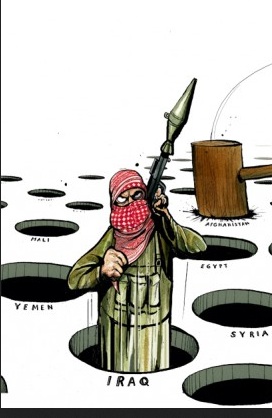
ISIS and Oil

The High Road in Scotland: Wind

According to new numbers published by WWF Scotland this week, wind turbines generated enough electricity in October to power 3,045,000 homes in the U.K. — more than enough for all the homes in Scotland.

Referring to it as a “bumper month” for renewable energy, WWF Scotland’s director Lang Banks said in a statement that “while nuclear power plants were being forced to shut because of cracks, Scotland’s wind and sunshine were quietly and cleanly helping to keep the lights on in homes across the country.”

Based on figures provided by WeatherEnergy, part of the European EnergizAIR project, the data also showed that for those homes fitted with solar panels, there was enough sunshine to meet around 40 percent of the electricity needs of an average home.

Wind energy has been thriving in the U.K. in recent months. In August the U.K set a new record for wind power generation, with wind accounting for seventeen percent of national demand. This came around the time that EDF Energy announced it was temporarily shutting down four of its U.K. reactors, or around a quarter of its total nuclear generating capacity, due to longevity issues. The four EDF reactors under investigation were commissioned in 1983 and are officially scheduled to be taken out of service in 2019.

Even for the U.K., Scotland is a green energy leader. As of September, the country got 29.8 percent of its electricity from renewables, 34.4 percent from nuclear, and only 34.4 percent from fossil fuels. Scotland hopes to generate the equivalent of 100 percent of its electricity from renewables by 2020 and to export non-renewable production from conventional power plants to countries like England.

In the first quarter of this year, Scotland generated a record 6,678 gigawatt-hours of renewable electricity, according to government figures, an increase of 55.9 percent from a year before. Wind generation in the first quarter of 2014 was also at a record high level of 4,214 GWh, up 4 percent year over year.

According to the government, as of March of this year Scotland had 6.8 gigawatts of installed renewable electricity generation capacity, with an additional 6.5 gigawatts of capacity either under construction or consented, the majority of which is expected to come from onshore wind generation. Including projects in the planning stages, this figure totals 20.5 gigawatts.

Scotland’s largest wind farm is also the U.K.’s largest. Whitelee Windfarm near Glasgow has a 539 megawatt capacity, and generates enough electricity to power just under 300,000 homes.

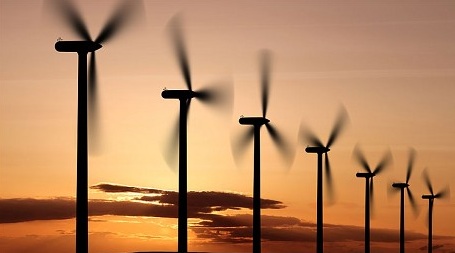
Wind Farms in Scotland

Xi and Li: Growth Slowing, Service Industries Growing, Urbanization

Kerry Brown writes:  China new ideology is Xiism. Xi’s power could be seen through his control over Party messaging.

Xi’s power could also be seen in a more brutally political way in the ongoing anti-corruption campaign, which finally reached former Politburo Standing Committee member, Zhou Yongkang, who was formally expelled from the Party and indicted for ‘corruption and fornication.’   This showed Xi was willing to take on powerful vested interests and deal with the consequences.Public approval of Xi’s corruption campaign was high, leading to a whole new mode of behaviour by officials. And the Fourth Plenum held in October 2014 produced a lengthy disquisition on strengthening ‘rule of law with socialist characteristics’ which also appealed to the all-important Chinese middle class whose interest is in stronger property rights, a more predictable legal environment and a sense that the government was listening.

Xi’s colleague, Premier Li Keqiang visited the UK, India and other countries during the year, but his profile was low. It seems that the real manager of China’s slowing economy was Liu He, who Xi regards as one of his most trusted advisors.

Both Xi and Li remained consistent on one issue: China’s growth rate is now set at below 7.5 per cent and the Chinese people have to live in a world where double-digit GDP growth is a thing of the past. The main focus now is on creating an economy that is service sector orientated, that consumes more, that is more urban, and that is less driven by investment than it has been in the past.

Xi spearheaded a diplomatic offensive, visiting countries in Latin America, Africa, South Asia and then, in November, attending the G20 summit in Brisbane, visiting Canberra and travelling to New Zealand and Fiji. In Brussels in late March he articulated the concept of the EU and China being ‘civilisational partners’. But he also managed to come up with the New Silk Road mantra, which covered a land and maritime link. And he embraced a Russia ostracised by Europe and America.

Even with the US, Xi was able to produce a major environment protocol with his American counterpart. He also announced with Australian Prime Minister Tony Abbott final details of a Free Trade Agreement, and supported an Asia-wide free trade zone concept, the FTAAP.  A tepid rapprochement was made with Japan in November.

After its initial support for the Hong Kong government’s proposals for how elections for the Chief Executive in 2017 might be run, it largely kept out of direct dealings with the protests in the city. On Taiwan, too, Xi continued to be a mixture of pushy and supportive of incumbent President Ma Jing-jeou.

Ironically, perhaps the one area where Xi seemed to be bereft of new ideas was North Korea, which he dealt with largely by ignoring it.

In one area XI remained consistent with its predecessors: human rights lawyers and dissidents were ruthlessly dealt with: IIlham Tohti, a Beijing-based Uighur academic received a life sentence. Academics, intellectuals and people from the artistic sphere were given strict instructions on what was proscribed.

.Xi and Li Team

EU: Change Rules on Debts and Deficits, Don’t Bend Them?

John Bruton writes:  Change the EU treaty rules on debts and deficits, but don’t bend them.

The European Union (EU) is a group of sovereign states, each entirely free to leave the EU. There is no coercive force to make Britain or any other country remain in the union. Britain enjoys a freedom, within the EU, that colonies did not enjoy within the British or other European empires. Britain is, therefore, entirely within its rights in considering the option of leaving the EU.

The EU does not exist on the basis of coercion. It exists on the basis of common rules or treaties that EU members have so far freely abided by, even when particular decisions were not to their liking. If countries started systematically ignoring EU decisions, the union would  soon disappear.

One particularly important set of EU rules are the ones that apply to budget deficits and debts of EU countries within the eurozone. These rules have been incorporated in EU treaties and in treaties between euro area states. One provision is that if a country has an excessive deficit, it must reduce that by an amount equivalent to 0.5% of gross domestic product (GDP) each year until it reaches a deficit below 3%.

France and Italy, big states that were founding members of the EU, have both produced budgets for 2015 that do not comply with the rules.  Some will argue it’s the rules that are at fault, not France and Italy. Inflation is negative, so debts increase in value while prices fall.

Countries are caught in a debt deflation trap of a kind that was not envisaged when the rules were drawn up. But that is an argument for changing the rules, not an argument for ignoring them or pretending they have been complied with, when they haven’t.

Changing the rules would require EU treaty change, and nobody wants to change the treaties, because such a move would have to be unanimously agreed upon by all 28 EU states. Other EU members fear that would be an opportunity for Britain to use the lever of blocking a treaty change to revise the fiscal rules as a means of getting a concession of British demands for: a restriction of free movement of people within the EU; vetoes for a minority of national parliaments on EU legislation; and the scrapping of the “ever closer union” within the EU.

If the EU is unable to change its treaties the union will eventually die. Daniel Gros, of the Centre for European Policy Studies, criticized the European Commission of Jean Claude Juncker for failing to either insist that France and Italy stick by the existing fiscal rules or, if not, call for a revision of the rules to take account of the exceptional deflationary conditions that exist.

Don’t bend the rules.  Change them.

The Price of European Union

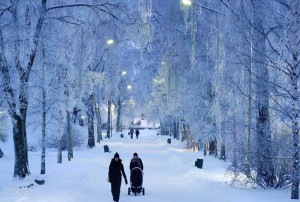
Finland Struggles

Russian sanctions have hit Finland hard, but this is not the country’s only problem.

Economically, the bigger problem is the longer-term slow-down that the global economy faces. This affects Finland, the eurozone and Russia. In addition, the Finnish economy is in the middle of a severe structural change, as employment is decreasing in the traditional wood-processing, paper and heavy industry sectors. Surprisingly, employment is also decreasing in certain service sector areas, such as banking. The situation has further deteriorated because of the ageing population of Finland. This poses a triple challenge to our economy and growth prospects. Russia and sanctions are not our main economic concern.

Finland is a country that ranks high on all indices of transparency, lack of corruption and press freedom.  Are its problems an indication of what is in store for other aging economies?

Here is a trenchant interview of Finland/’s former finance minister, Jutta Urpalainen by a prominent Iranian journalist, Kourosh Zibari.  Finland

Finland

Corruption as a Component of Piketty’s Formula?

Moises Naim writes:  The profound impact of Piketty’s book Capital is largely a result of the fact that it was published at a time when growing economic inequality has become an American preoccupation. Since the United States has proven so adept at globalizing its anxieties and exporting its policy debates, the Piketty phenomenon is extending to places where inequality has been pervasive for so long that the public seemed inured to it and resigned to passively accept it. Now, members of many of these societies are actively debating how to bring inequality down.

In order for this discussion to be valuable, however, the problem requires a more complete diagnosis. It is not accurate to assert that in countries like Russia, Nigeria, Brazil, and China, the main driver of economic inequality is a rate of return on capital that is larger than the rate of economic growth. A more holistic explanation would need to include the massive fortunes regularly created by corruption and all kinds of illicit activities. In many countries, wealth grows more as a result of thievery and malfeasance than as a consequence of the returns on capital invested by elites (a factor that is surely at work too).

Corruption-fueled inequality flourishes where there are no incentives to hinder it.
To channel Piketty, inequality will continue to rise in societies where “c > h.” Here, “c” stands for the degree to which corrupt politicians and public employees, along with their private-sector cronies, break laws for personal gain, and “h” represents the degree to which honest politicians and public employees uphold fair governing practices. Corruption-fueled inequality flourishes in societies where there are no incentives, rules, or institutions to hinder corruption. And having honest people in government is good, but not enough. The practices of pilfering public funds or selling government contracts to the highest bidder must be seen as risky, routinely detected, and systematically punished.

Most of the roughly 20 nations from which Piketty forms his analysis classify as high-income countries and rank among the least-corrupt in the world, according to Transparency International. Unfortunately, most of humanity lives in countries where “c > h” and dishonesty is the primary driver of inequality. This point has not attracted as much attention as Piketty’s thesis. But it should.

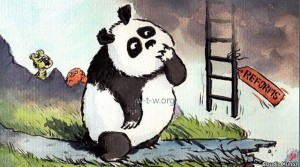
 The Prospect of Reform in China by Claudi Munoz

Can Japan Tackle Its Economic Problems Without a Crisis?

Was Japan’s economy waiting for a Crisis.  Wharton School of Business’s online journal thinks so. Most Japan watchers and economists, and even Abe himself, say that to restore sustainable growth, Japan needs sweeping deregulation and structural reforms to cope with its growing public debt and its declining and aging population. But pushing through such changes is proving daunting, despite Abe’s pledges to “drill deep into the bedrock” of Japan’s vested interests.

Allen says there is an issue of long-term fiscal sustainability for Japan and this is part of the risk. “At some point, there will be a significant problem in the form of capital flight from Japan. Whether postponing [the sales tax hike] two years will trigger that or not — I don’t know. There’s some chance of it, but probably it won’t make too much difference,” Allen notes. Eventually, though, Japan must tackle its debt situation. “The problem is they can’t keep on borrowing,” he points out. “It’s a question of what one thinks the short-term versus the long-term effects are. The long-term effects at some point will catch up with them — but it could take a long time. This is why it’s such a tricky issue.”

Given the slow pace at which Japan has been tackling reforms needed to catalyze new industries, promote innovation and increase productivity, Japan may end up facing a fiscal crisis before any drastic action is taken, says Allen. Abenomics is no panacea, he adds. “The issue with long-term fiscal sustainability is Japan is potentially heading for some massive crisis. Maybe that will solve everything for it, but it is also likely to be extremely disruptive and politically dangerous.”    Does the Japanese Economy Need a Crisis

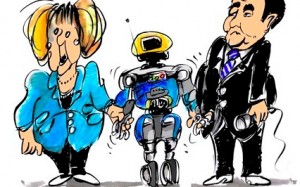
Merkel and Abe

What’s In Qaboos’ Caboose?

Giorgio Caifero writes: Tumbling oil prices are upsetting political equations all over the globe, especially for governments that depend heavily on oil revenue to provide services for their populations.  Governments in the oil-rich Middle East are also being forced to tighten their belts.

The slide in oil prices has hit the Sultanate of Oman. The sultanate’s vulnerability was underscored late last year when Standard & Poor’s cut its outlook for Oman’s sovereign rating from stable to negative.  Last month, the economic and financial committee for the lower house of the Majlis al-Shura (Oman’s legislative body) proposed a ‘fair tax’ on liquefied natural gas exports, estimated to generate $509 million. The Majlis al-Shura has also approved legislation to impose a 2 % tax on goods the Oman’s 1.9 million expatriates send overseas.  The Majlis al-Shura also proposed a 12% levy on telecommunications revenue, which Oman News Agency reports would bring in $80.5 million. Meanwhile Oman Cement and Raysut Cement announced that the Ministry of Oil and Gas would double the priceof natural gas for the two firms.. State spending in health, housing and training will remain the same.

Oman’s unique stability is largely attributed to the state’s high domestic spending, making budget cuts a politically risky solution to the shortfall in oil revenue.  Oman’s ability to increase government services in times of unrest has been a crucial lifeline for the monarchy in the recent past.

After the rulers of Tunisia and Egypt stepped down under public pressure, Omani youths held demonstrations idemanding political and economic reform.

Sultan Qaboos bin Said ordered the government to create 50,000 jobs and pay every job-seeker $386 each month.  Omani protesters demanding reform actually pledged allegiance to Qaboos, showing their support for the monarchical system while demanding changes within it.

Throughout the Arab Spring, Qaboos has maintained a degree of popularity enjoyed by no other Middle Eastern leader of the 21st century. Oman’s monarchical political system has not democratized, and power remains staunchly in Qaboos’ hands. Observers conclude that as a rentier state, the government has been successful in quelling the citizenry’s democratic aspirations in exchange for material benefits.

At this juncture, the Omani government’s challenge is to maintain this unwritten agreement with its citizens as sliding oil prices create new fiscal pressures.

Oman’s crude oil reserves are expected to deplete far sooner than those of neighboring Saudi Arabia and the United Arab Emirates, putting greater pressure on Oman to increase the role of non-oil sectors in its economy. The sultanate’s unique stability will be tested if future economic reform triggers unrest and the government lacks the lifeline it used before.

Qaboos of Oman

Inadequate Banking Facilities Hamper Business in Burma

Burma’s business development prospects in 2015 are forecast to be mixed as the country grapples with a variety of problems ranging from domestic political uncertainty to outside economic influences beyond its control.

National elections this year will make some foreign investors hesitant to enter Burma until a clear outcome emerges, say analysts, and the unexpected collapse of oil prices in 2014 is likely to put plans to develop 20 offshore oil and gas blocks into slow gear.

Some major infrastructure investment decisions, notably the special economic zone at Dawei on the southeast coast, are anticipated, but not soon.  Economic reform must be a continuing key issue for Burma’s leadership if the country is to follow its neighbors and integrate further with the international community.

Major obstacles to economic expansion in Burma in 2015 are the country’s inadequate banking and finance facilities plus rampant corruption at all levels.

This first quarter of 2015 should see the announcement of more final agreements in production sharing contracts (PSCs) between the state-owned Myanma Oil & Gas Enterprise and the foreign oil companies who won licenses to explore 20 sites in the Bay of Bengal and Andaman Sea for oil and gas.

Terms for investment and potential profit sharing have been complicated by the collapse of international crude oil prices over the last six months.

Major oil companies that won offshore licenses for Burma in March include Shell, Chevron, Total and ConocoPhillips.  The national oil companies (NOCs) of neighbors Malaysia and Thailand, which have projects in Burma, have already announced expenditure cuts.

The continued lack of a deep-water port for Rangoon threatens to undermine manufacturing growth in Burma’s biggest city which is also the main commercial sea gateway into the country.

The Dawei port is located approximately 700 kilometers from Rangoon.  Critics of the Dawei SEZ have said it would primarily benefit Thailand by giving it access to the Indian Ocean as an oil transhipment terminal, and to expand its petrochemical industries, which are stymied in the greater Bangkok region by environmental laws.

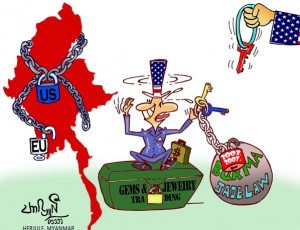
Business in Burma


Carbon Taxes?

The case for carbon taxes has long been compelling. With the recent steep fall in oil prices and associated declines in other energy prices, it has become overwhelming. There is room for debate about the size of the tax and about how the proceeds should be deployed. But there should be no doubt that, given the current zero tax rate on carbon, increased taxation would be desirable.

The core of the case for taxation is the recognition that those who use carbon-based fuels or products do not bear all the costs of their actions. Carbon emissions exacerbate global climate change. In many cases, they contribute to local pollution problems that harm human health. Getting fossil fuels out of the ground involves both accident risks and environmental challenges. And even with the substantial recent increases in U.S. oil production, we remain a net importer. Any increase in our consumption raises our dependence on Middle East producers.

All of us, when we drive our cars, heat our homes or use fossil fuels in more indirect ways, create these costs without paying for them. It follows that we overuse these fuels. Advocating a carbon tax is not some kind of argument for government planning; it is the logic of the market: That which is not paid for is overused. Even if the government had no need or use for revenue, it could make the economy function better by levying carbon taxes and rebating the money to taxpayers.

While the recent decline in energy prices is a good thing in that it has, on balance, raised the incomes of Americans, it has also exacerbated the problem of energy overuse.

Would a carbon tax place an unfair burden on some middle- and low-income consumers?  Those who drive long distances to work, say, or who have homes that are expensive to heat would be disproportionately burdened. Now that these consumers have received a windfall from the fall in energy prices, it would be possible to impose substantial carbon taxes without them being burdened relative to where things stood six months ago.

Could taxing fossil fuels will hurt the competitiveness of U.S. industry and encourage offshoring?   A well-designed tax would be levied on the carbon content of all imports coming from countries that did not impose their own carbon levies.

What size levy is appropriate? Here there is more danger of doing too little than too much. Once the principle of taxation is accepted, its level can be adjusted. A tax of $25 a ton would raise more than $100 billion each year and seems a reasonable starting point.

How should the proceeds be used? Perhaps the funds to be split between investments in infrastructure and pro-work tax credits. Progressives who are most concerned about climate change should rally to a carbon tax. Conservatives who believe in the power of markets should favor carbon taxes on market principles. And Americans who want to see their country lead on the energy and climate issues that are crucial to the world should want to be in the vanguard on carbon taxes.

Carbon Tax