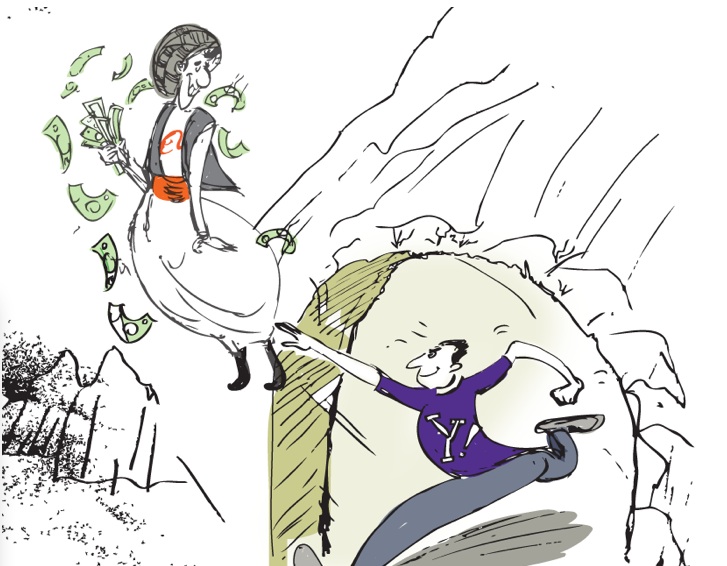
It is easy to blame Marissa Mayer for Yahoo’s problems, Katie Benner points out. But remember that in the seven years before she took over, six CEO’s tried to turn the company around. Yahoo has a stake in Alibaba that they will be able to sell in September. The tax consequences of this sale are difficult to to minimize. Perhaps structuring a deal in which Alibaba takes over Yahoo would be the best solution to the company’s problems. Alibaba’s Ma and Mayer get along. There would be no reason to for Mayer to step down. And Ma’s brilliance might be used on Yahoo’s behalf. It’s always easy to blame a woman, Maybe we should look at the upside here.
Turkey Chopped Off by Libya
An Unregulated, Unsupervised Bank Whose Credit Portfolio is 25% Larger than JP Morgan Chase’s
Tucked away in the US Office of Management and Budget is an office that ‘superivses’ over three trillion dollars in loans. These unregulated and virtually unsupervised federal credit programs are now the fastest-growing chunk of the United States government, ballooning over the past decade from about $1.3 trillion in outstanding loans to nearly $3.2 trillion today
Michael Grunwald writes: The biggest bank in America is not for Anprofit, although it is profitable on paper, and its loans are supposed to help its borrowers rather than its shareholders, better known as taxpayers. Its lending programs sprawl across 30 agencies at a dozen Cabinet departments, with no one responsible for managing its overall portfolio, evaluating its performance or worrying about its risks.
The closest it gets to coordination is an overwhelmed group of four midlevel Office of Management and Budget employees known as “the credit crew.” They’re literally “non-essential” employees—they were sent home during the 2013 government shutdown—and they’re now down to three, because their leader is on loan to the Department of Housing and Urban Development. When I suggested to OMB officials that the crew seemed understaffed to oversee a credit portfolio 25 percent larger than JPMorgan Chase’s, someone pointed out that it’s hiring an intern. USA as Banker
Modi the Margaret Thatcher of India?
Prime Minister Narendra Modi on Monday named right-leaning economist Arvind Panagariya to run his new Policy Commission, hammering a final nail into the coffin of socialist planning that defined the first 67 years of independent India.
Panagariya, a professor at Columbia University in New York, will head a bench of thinkers comprising fellow free-market ideologue Bibek Debroy and a former top government scientist who designed a nuclear-capable ballistic missile.
The Indian-born economist’s calls to roll back the state have influenced Modi’s outlook and drawn comparisons, which he rejects, with Margaret Thatcher’s attack on labour regulations and state industry in 1980s Britain.
India’s first prime minister, Jawaharlal Nehru, adopted socialism to industrialise India after independence in 1947, a route that was later partly abandoned as India fell behind giant neighbour China’s rapid economic growth.
But the legacy of central planning survived a round of liberalising reforms in the 1990s in the form of 5-year plans drawn up by a Soviet-influenced planning commission.
India’s growth has hit its longest trough since the 1980s over the past two years, a cycle blamed by private economists on a lack of structural reforms to revive investment and create jobs and infrastructure.
Panagariya said that he did not support a Thatcherite agenda, saying India should give markets a freer rein but that it still needed growth in social spending in a country that has about a third of the world’s extremely poor.
Panagariya has previously advocated a loosening of fiscal deficit targets that he said were stifling growth to allow for more capital spending.
That view is shared by Arvind Subramanian, another heavyweight economist brought in last year. In a December economic report Subramanian advocated higher infrastructure spending by the government to kick-start stagnant private investment.
Their views could be influential as Finance Minister Arun Jaitley prepares his first full budget, to be presented in parliament in February.
Panagariya, Subramanian and Debroy were vocal critics of Jaitley’s first budget. Their appointment suggests that Modi also wants a more radical finance bill this year.
Modi scrapped the 65-year-old Planning Commission in the New Year, replacing it with a body he said would do more to involve the regions.
Is Opposing Antonio Weiss a Worthy Battle?
Those nomination of Antonio Weiss to a treasury post has gotten ex tell burned democrats up in arms. Elizabeth Warren is protesting his nomination. While having the fox guard the chicken coop is a legitimate question for someone who has spent his career in investment banking,
Bloomberg View suggests suspicions are misplaced. “The undersecretary for domestic policy oversees capital markets, financial institutions, consumer protections and not-insignificant matters like the national debt. For the last couple of decades, as an investment banker at Lazard in the U.S. and France, Weiss has been in the middle of complex financial deals involving businesses, banks, hedge funds and foreign governments. This is exactly the kind of real-world decision-making experience that will come in handy when interest rates finally start going up again — as they’re expected to this year — and the markets get jittery.”
Senator Elizabeth Warren may legitimately be leery after Congress weakened the Dodd-Frank financial reform law. But this is probably case of oveerkill. Let’s focus on putting teeth in regulations that are on the books, empowering community banks, and splitting off high risk banking operations from tax payer backup.
Nobelist Stiglitz Blocked from SEC
Dave Michaels reports: The Nobel laureate economist Joseph Stiglitz who called for a tax on high-frequency trading, has been blocked from a government panel that will advise regulators on issues facing U.S. equity markets.
Democratic Commissioner Luis Aguilar had pushed for Stiglitz, who has said high-frequency trading isn’t good for financial markets and should be curbed, possibly through a tax.
“I think they may not have felt comfortable with somebody who was not in one way or another owned by the industry,” Stiglitz said in a phone interview.
White said Jan. 3 that she will announce the members of the advisory market-structure committee in the coming days — six months after she first proposed the idea together with a blueprint for renewed market oversight. Each of the five commissioners — two Democrats, two Republicans and White, an independent — was allowed to nominate one person to the panel. The commission then had to come to agreement on the final list, which is expected to have more than 15 members.
Stiglitz, 71, wasn’t the only nominee that sparked wrangling. Earlier in the process, SEC Commissioner Michael Piwowar, a Republican, opposed the involvement of TIAA-CREF Chief Executive Officer Roger Ferguson. Ferguson, whose firm manages hundreds of billions of dollars in retirement savings, is a former Federal Reserve vice chairman. He is married to former SEC Commissioner Annette Nazareth, who now advises some of Wall Street’s biggest banks on regulatory issues.
The panel is expected to include representatives of Wall Street brokerage firms and academic researchers. IEX Corp. Chief Executive Officer Brad Katsuyama and former Senator Ted Kaufman of Delaware are expected to be named to the panel, two people with knowledge of the matter said.
Katsuyama started the IEX trading platform with the aim of leveling the playing field for investors by curbing the pace of buying and selling — eliminating opportunities for the fastest firms to trade in front of slower ones. He has said the government should consider forcing greater transparency of trading venues’ operations.
High-frequency trading, which uses computer algorithms to buy and sell large numbers of shares in fractions of a second, accounts for more than 50 percent of U.S. trading volume.
The dust-up over Stiglitz is emblematic of the frequent conflict among commissioners that has slowed progress on regulatory policy and enforcement matters under White. A recent case against Bank of America Corp. was stalled for three months as commissioners, divided along political lines, fought over additional penalties that could have expelled the bank from the profitable business of raising money for private companies.
A former chief economist of the World Bank Stiglitz argued in an April speech that high-frequency trading can make markets less efficient while driving other investors to cloak their orders by placing them away from exchanges using dark pools, leading to less transparency.

US Budget Under Magnifying Glass of Macroeconomics?
The US House of Representatives on Tuesday adopted a controversial rule to require macroeconomic scoring on major legislation in the new Congress, which opponents say will politicize impartial budget analyses.
The provision, part of the rules package that the House considers at the start of every new Congress, passed largely along party lines by a vote of 234-172. Rep. Mick Mulvaney (R-S.C.) voted “present.” So-called “dynamic scoring” typically offers a more favorable view of cutting taxes, which is part of why Republicans support the method.
GOP lawmakers argued that emphasizing macroeconomic scoring, which factors in economy-wide impacts like the rates of inflation and employment, simply provided a more comprehensive assessment of a bill’s impact on the federal budget.
“It doesn’t game the system at all. All we’re trying to do is make certain that members of Congress have more information upon which to be able to make decisions,” said incoming House Budget Committee Chairman Tom Price (R-Ga.)
But Democrats suggested that the scoring method would exaggerate the impact of tax cuts and politicize the nonpartisan Congressional Budget Office.
“Republicans today are extending their embrace of voodoo economics by wrapping their arms around voodoo scorekeeping. Again, it’s not about more information, but it’s able to cook the books to implement their long-held discredited notion that tax cuts pay for themselves,” said Rep. Sandy Levin (D-Mich.), the top Democrat on the tax-writing House Ways and Means Committee.
Price dismissed Democrats’ claims that the macroeconomic analyses would be too speculative.
“This is craziness,” Price said. “All economic projections, all, static, dynamic, all of them, have a level of uncertainty.”
Democrats also objected to a provision in the rules package that doesn’t allow the chamber’s six non-voting delegates to cast floor votes in certain circumstances. Delegates have been allowed to cast votes on amendments when the House is in a state known as the Committee of the Whole under Democratic majorities.
US Community Banks Supported?
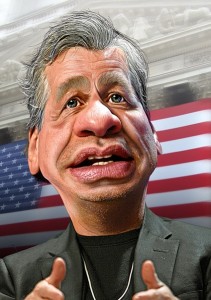
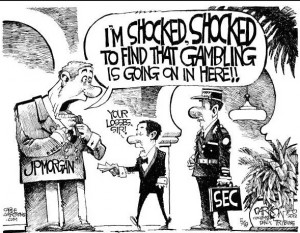
President Obama has nominated a community banker to the board of the Federal Reserve. This nomination met with favorable comments from Senator Sherrod Brown, Fed board chair Janet Yellen and Frank Keating. It maybe time to take community banking functions away from the big banks, or me at least give them a ,choice between community baking sand investment banking. Clearly a bank like JP Morgan Chase which only make 20 percent of its money on these functions would prefer to be an investment bank. Goldman Sachs’ Richard Ramsden today suggests that the JPMorgan Chase that Jamie Dimon has taken years building would be worth more in pieces. Can a break up be far behind?
The problem wirh break up of course is that the 80 percent of JP Morgan Chase’s acitivities that fall outside community banking might not be covered by tax payer dollars. At any rate, they should not be.
An interesting side note: Small banks benefit from regulation. Is the flip side of this statement also true?
Goldman Hints JPMorgan Chase Breakup
JP Morgan Chase’s parts are probably worth more to investors than the whole after regulators proposed tougher rules penalizing firms for size and complexity, according to Goldman Sachs Group Inc.
JPMorgan could unlock value by splitting its four main businesses or dividing into consumer and institutional companies, Goldman Sachs analysts led by Richard Ramsden wrote today in a research note. Units of New York-based JPMorgan trade at a discount of 20 percent or more to stand-alone peers, they wrote.
“Our analysis suggests that a breakup into two or four parts could unlock value in most scenarios, although the range of outcomes we assessed is wide, at 5 percent to 25 percent potential upside,” the analysts wrote.
The move would reverse much of Chief Executive Officer Jamie Dimon’s work since taking over JPMorgan in 2006. Under Dimon, 58, the firm grew to become the largest U.S. lender by assets and the world’s biggest investment bank after acquiring ailing firms during the 2008 financial crisis.
Dimon has said the firm’s size creates opportunities to cross-sell products and better serve clients.
“Each of our four major businesses operates at good economies of scale and gets significant additional advantages from the other businesses,” Dimon wrote in a letter to shareholders last year. “This is one of the key reasons we have maintained good financial performance.”
The logic of a breakup would rely on the consumer business, commercial bank, investment bank and asset management unit being valued closer to so-called pure-play financial companies, the Goldman Sachs analysts wrote. The parts probably could operate with lower capital levels as stand-alone firms, resulting in higher returns on equity, they wrote.
The maneuver would risk some of the $6 billion profit JPMorgan says it makes tied to synergies between businesses, though a split into halves would preserve much of those benefits, the analysts wrote.
The Federal Reserve laid out a plan last month that may require JPMorgan to add more than $20 billion to its capital by 2019. The rules could get even stricter, prompting banks to consider new business models, the Goldman Sachs analysts wrote.
Poppy Growing and Heroin Addiction up in Afghanistan
A fascinating interview with Kirk Meyer, former Director of the Afghan Threat Finance Cell, suggests why. Meyer reports: The Taliban were collecting taxes on opium in the south. They were going to mirabs, who were the local officials who managed the water supplies in the villages. The mirabs knew which farmers were growing opium, and could estimate the size of their operations by the amount of water they used. The Taliban would have the mirabs calculate the amount of tax owed to the Taliban by individual opium farmers, and then also use the mirabs to collect the tax, which was paid in opium.
I went to a lot of meetings about crop substitution and eradication, but the problem with that approach is in the way the opium system works in Afghanistan. The opium farmers are given credit by opium brokers at the beginning of the growing season. This debt can be repaid only with opium. These opium brokers act like the company stores in the old coal-mining towns in the United States, where miners always had debt so they could never get out. Until they got their wages, they were always being paid in goods, and they could never leave because they owed rent on the house and money for groceries. Well, that was what would happen with the opium farmers. The opium brokers would loan the farmers money at the beginning of the season, and the only way the farmers were permitted to pay it back was in opium. Let’s say a farmer won the lottery or had some other financial windfall; he couldn’t go and give the opium broker money for his debt. The debt had to be paid in opium. So when the Karzai government eradicated opium or tried to substitute crops, it often worked against the individual farmers who owed debt in opium, and possibly made them into Taliban supporters.
I remember one farmer I interviewed who told me that when the government came and eradicated his crop, he couldn’t pay the opium broker, and so his father gave the farmer’s four-year-old daughter to the opium broker, who was some 72-year-old man, to try and settle the claim. Anyway, these young ATFC analysts came up with the idea that the military should focus on the mirabs and their relationship with the Taliban. We should wait until the mirabs gathered the opium owed to the Taliban for taxes, and at that point, conduct military and/or law enforcement operations, because then the farmers would be out of the equation. I believe that was the innovative thinking we should have been using to deal with Taliban funding through the drug trade.
You would have to monitor, either through legal wiretaps or other means, the phones of the mirabs, or recruit the mirabs as informants. By doing that, you should also be able to identify the Taliban members involved in the tax collection. This way, you could intercept the Taliban when they came to pick up the stockpiled opium from the mirabs.
Here is the December report of the US Senate Committee. 2014-12-23 Afghanistan Report Final