Further Sadness in Paris
Reply
Nigeria’s film industy produces 50 titles a week. Most go stragiht to DVD and sell on the streets. What’s called Nollywood is a big business. It contributes about 1.2% to Nigeria’s GDP. It employs about a million people. Filmmakers complain that poor regulation of the street markets leaves films open to piracy, and unregulated sales means money for the films doesnt’t reach their pockets.
Most movies are filmed in ten days and seldom cost more than$40,000 to produce. To improve content and export the films, better quality is necessary. But that’s difficult with current budgets. If they can get more money for films, Nollywood will explode.
Jason Njoku founded the first online streaming firm IROKOTV and pays from $8000 to $25000 for limited rights. Some filmmakers now sell to several online platforms. Nigerian films are going international. Will this be Bollywood redux? Nigerian filmmakers are hoping Yes.
It was an interesting year in the world of food and drink. 3D-printed foods are gaining traction. Vermont became the first state to require GMO labels. Greens and gluten-free diets are going mainstream. Consumers are demanding more transparency on food labels.
Here are some novel entrepreneurs. While working in San Francisco’s financial district one day in 2012, Jason Wang and his colleagues found themselves craving Ikes Place sandwiches for lunch. Problem was, Ikes doesn’t deliver and the trip across town and back would have taken a couple of hours. “We asked ourselves, why can’t the good restaurants deliver?” Wang, recalls. “Why is it the mediocre and generic pizza, Thai, Indian restaurants on every single delivery website?” With this thought, Caviar was born: A premium food delivery service that brings a city’s best cuisine to your doorstep for a flat fee of $4.99. Wang’s site was acquired by Jack Dorsey’s Square for $90 million last August.
Apoorva Mehta is also disrupting the industry with his tech platform and business model, Instacart. Founded in 2012, it is fastest-growing grocery delivery service ever, beating out Webvan and Amazon Fresh. The app allows shoppers to order groceries — from supermarkets like Kroger’s KR -0.54%, Whole Foods and Costco (no membership required). Deliveries typically come in less than half an hour.
One advantage of Mehta’s business model is not having set aside funds for warehouse rentals, maintenance costs, delivery trucks, and full-time manual labor. Most of Instacart’s runners (a.k.a. “green men”) are locals. It’s a prime example of how efficient the sharing economy model can be.
If booze-delivery is more your type, look no further than the Drizly boys. Founders Nicholas Rellas and Justin Robinson, both 25, decided to focus on something as simple as an app that delivers alcohol. Since the company’s inception in 2012, Drizly has worked with over 150 retailers to deliver beer, wine and liquor to consumers and businesses.
Other standouts include Marianne Barnes, WoodFord Reserve’s Master Taster. Despite having no background in spirits of any kind, Barnes is bucking industry conventions and making her own path. She puts her chemical engineering degree to use every day on the job, relying on science to craft her bourbon, and is the chosen protégé to become WoodFord’s next Master Distiller.
Momofuku Ssäm Bar Executive Chef Matthew Rudofker has been running the kitchen since he was 25, when he held the title of Chef de Cuisine. After just one year of operations, the place has picked up clients like Grant Achatz, Jose Garces, Eataly N.Y.C. and Eataly Chicago and even Moet Hennessey.
At wearable tech maker Jawbone, 26-year-old Laura Borel is Head of Nutrition. The Stanford graduate led the food release, bringing simple and intuitive eating advice to millions Jawbone users. “In a world where most people say eating healthy is more complex than doing their taxes,” says Laura, “simplicity is the way forward.”
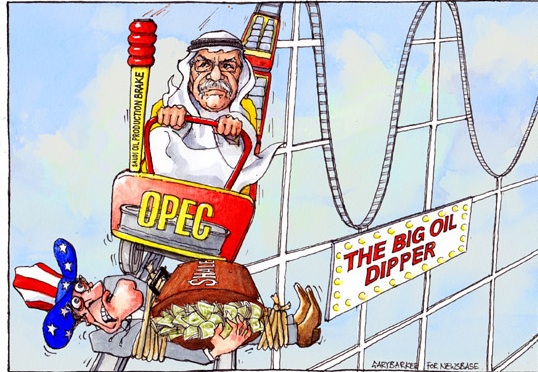
Justin Fox writes: Whenever anybody struck oil in the U.S. in the late 19th century, Standard Oil’s pipeline guys showed up within a few days and offered to hook the new well up to the network.
The Middle East emerged as the center of world oil production. Oil-rich countries joined forces in the Organization of Petroleum Exporting Countries (OPEC) and began nationalizing their resources. After the Arab oil embargo of 1973, they imposed their own sort of order on the oil market.
This is what OPEC’s members are still trying to do, with Ali Al-Naimi, Saudi Arabia’s longtime minister of petroleum and mineral resources, doing his best to play the part of Rockefeller. Al-Naimi and his counterparts from Kuwait and the United Arab Emirates have made clear they are out to thwart an unruly new band of competitors who have helped send oil prices plummeting over the past six months.
These competitors are the frackers, American wildcatters who have been pumping huge quantities of oil and natural gas from ground.
Al-Naimi doesn’t, however, have all the tools at his disposal that Rockefeller did. He can’t send a bunch of Saudi Aramco toughs to Pennsylvania or Texas or North Dakota to threaten the wildcatters. He can’t really buy out the frackers, either. So what he and his closest Arab allies are doing instead is pumping more oil in an attempt to drive prices even lower — so low that the American frackers start losing money and shutting their wells.
With fracking, the break-even oil price is above $50 a barrell for almost every U.S. shale-oil project.
If OPEC succeeds in shutting down a lot of frackers, the Saudis and friends would then presumably cut production and return global oil markets to a state of order and higher prices. Of course, if the prices go high enough, fracking will recommence. Big players might well buy in. Al-Naimi would like a market dominated by a few big players. It is just so much more civilized than a scrum of wildcatters.
It may even be that a more civilized, orderly oil market would be better for consumers of petroleum, too. When it comes to resource prices, predictability is good. Rockefeller’s OPEC successors have never really succeeded, though, in keeping prices steady enough to be predictable. Repeated discoveries outside of OPEC territory (the North Sea, the North Slope, and now the U.S. shale fields), and the inevitable ups and downs of the global economy have kept crude prices swinging from high to low and back since the early 1970s. Still, we can expect that Al-Naimi and his closest OPEC allies will keep striving for control. That’s just what oil magnates do.
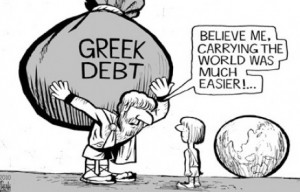
Philippe Legrain writes: Greek parliamentarians have rejected the government’s candidate for president, triggering early elections scheduled for Jan. 25. Syriza, a radical-left coalition that wants to renegotiate the terms of Greece’s 205 billion euros’ worth of loans from eurozone governments, is leading in the polls.
Many fear that a showdown between eurozone authorities and a Syriza-led government bent on debt relief and ending austerity could revive the panic that almost destroyed the euro in 2012 and could even force Greece out of the 19-country currency union. The Athens stock exchange has plunged. Yields on Greek government bonds have soared. The cost of insuring against a Greek default has skyrocketed. But a Syriza victory on Jan. 25 may not be a calamity for Europe in the end. It may be a necessary step toward resolving a crisis that has been festering since 2009.
It’s not surprising that voters are angry with Prime Minister Antonis Samaras’s coalition government, which has implemented the brutal austerity demanded by the European Union and the IMF since Athens received its first bailout in 2010. Greeks have suffered six years of severe slump. The economy has shurnk by more than a quarter. Incomes have collapsed by nearly a third; many workers go unpaid. One in four Greeks — and one in two young people — is unemployed. The social safety net has been shredded. Crowds jostle for handouts at food banks. Some children are reduced to scavenging through rubbish bins for scraps. Hospitals run short of medicines. Malaria has even made a return.
Eurozone policymakers insist that Greeks have only themselves to blame for their plight and that the harsh treatment the policymakers imposed is working. But Greece’s reckless borrowing was financed by equally reckless lenders. First in line were French and German banks that lent too much, too cheaply — foolishly treating the Greek government as if it were as creditworthy as Berlin and encouraged by Basel capital-adequacy rules and European Central Bank collateral-lending rules that treated sovereign bonds as risk-free.
By the time Greece was cut off from the markets in 2010, its soaring public debt of 130 percent of GDP was obviously unpayable in full. Breaching EU treaties “no-bailout” rule they lent European taxpayers’ money to the insolvent Greek government. Poor Greeks were, in effect, consigned to a debtor’s prison.
While foreign banks that held on to their Greek bonds eventually took some losses in 2012, Greece’s EU creditors have bled the country dry. Thus eurozone banks and policymakers share responsibility for Greece’s plight.
Debt relief isn’t just a matter of justice. It’s an economic necessity. .Greece’s public debt is still a crushing 175 percent of GDP. With the economy gripped by deflation, the real debt burden is rising.
Without debt relief, the economy looks set to remain depressed. While it has scope for a bounce from its depths, a sustained recovery strong enough to make up lost ground, put Greeks back to work, and bring down debt is not in the cards. Even at its current annual growth rate, the economy would recover to its 2008 level only in 2030. Domestic demand is depressed by the debt overhang, while exports remain weak. Even with imports suppressed by crunched incomes, the country is running a whopping (and widening) trade deficit. The banking system is bust. No wonder businesses aren’t investing.
Nor has Greece fixed its fundamental flaws. Despite all the talk of reform, the EU’s priority has been austerity and wage cuts. The corrupt, clientelist political system remains intact. Politically connected businesses continue to have a stranglehold over cartelized markets. The rich still don’t pay their taxes. Re-electing Samaras and his New Democracy party won’t change any of that.
Nobody knows how an untested Syriza would behave in government. While its roots are on the hard left, Alexis Tsipras, its telegenic 40-year-old leader, has been softening his rhetoric and policy stance.
Should Merkel offer Greece debt relief as a gesture of solidarity? If the euro ultimately collapses, Germany will be blamed for wrecking Europe. Should she throw in a Marshall (or Merkel) Plan of investment for Greece and other crisis-hit countries that would also boost German exports?
Unfortunately, that is highly unlikely. Because of Merkel’s mistaken bailout of Greece’s private creditors in 2010, German taxpayers would lose out if Greece’s debt were cut. Since Germans self-servingly believe that as creditors they are virtuous, they feel no obligation to be generous to Greeks whom they view as sinful profligates. And Berlin is loath to set a precedent that could encourage others, notably the Irish, to seek relief for the bank debt unjustly imposed on them by the EU.
So Greece needs to stand up for itself and demand a negotiated write-down, backed by the threat of unilateral default. It can credibly do so: Since Athens has a substantial primary surplus, it would not need to borrow if it stopped servicing its debts. Syriza says it won’t write down bonds held by private investors, so Argentina-style legal entanglements aren’t a concern. With the bonds held by Greek banks untouched, the European Central Bank could scarcely refuse to accept them as collateral for liquidity. Meanwhile, German threats to force Greece out of the euro are probably bluster: Merkel has no legal right to deprive Greeks of the use their own currency, and it is implausible that unelected central bankers would dare splinter the eurozone. So Tsipras just needs to control his spending urges and stand his ground.
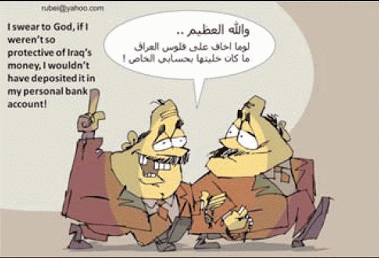
Amina al-Dahabi writes: A prominent economic official in the Iraqi government said that out of the 33 private Iraqi banks operating in the country, 29 were under investigation on charges of corruption and money laundering.
The economic adviser to the prime minister, Mazhar Mohammad Saleh,considers this phenomenon to be a major loss in the private financial sector, on which the recovery of Iraq’s economy was based. Saleh said the high number of banks under investigation was due to the government’s absence in private financial administration, and to the weakness of cash credit, pushing banks to look for profit-making operations that are often nonfinancial. He said the audit policy of the Central Bank changed after 2003 from compliance auditing to preventive auditing.
Saleh said the lack of credit ratings in banks led to the decrease of trust in the credit-worthiness of private banks. A third party, a specialized international company, usually conducts such operations, which would later be adopted by the Central Bank.
Former staff members of banks who were trained in both Rafidain and Rasheed banks and who were still working in the private banking sector until recently were laid off from private banks. The new CEOs that took over started meeting the demands of major shareholders leading illegal operations. Inexperiened CEOS contributed to the charges.
The Banking Act issued by the Central Bank in March 2004 prevents private banks from entering or participating in investment operations and even owning more property than they need.
Banks used capital from unknown sources and thus laundered money that was not subject to taxes. Funds from abroad and others from local unknown sources began entering private banks. The owners of that money even dominated certain departments in banks and controlled the auction sales of US dollars practiced by the Central Bank, while they exploited that money for personal benefits.
Banks also falsified the documents of the money’s destination, in cooperation with influential figures inside and outside Iraq.
Finding out about financial corruption and illegal trading comes too late, as the banks’ audits are received by the Central Bank a month after the initial operations are conducted, and starts auditing these previous operations for another month. This means that two months will have passed since the start of the audit operations and by then, the funds will have probably reached their final destination, which could be anywhere in the world.
To solve this major issue, Souri urges the Central Bank to adopt a comprehensive, technological banking system, which guarantees real-time control of funds and simultaneous access to information, in both the public and private banking sector.
Bijan Khajehpour writes: The Iranian economy has embarked on 2015 with a number of challenges that will directly influence the overall economic performance of the country. Low and falling oil prices as well as the wait-and-see mode in the nuclear negotations are inducing massive uncertainties into Iran’s economic outlook.
Since the extension of the nuclear talks in November, the Iranian rial has lost 7% of its value on the free currency market. Concern about the outcome of negotiations as well as worries about the negative impact of a low oil price on the government’s financial position are driving the market, despite reassurances by the Central Bank of Iran (CBI) that a collapse of the rial would not be on the horizon.
While the government projected a per barrel oil price of $72 in the submitted budget bill, the parliamentarians will have to revise the price in the final budget law for the next Iranian year that will start March 21.
As far as next year’s budget is concerned, the government has already tried to reduce the dependence on oil export revenues by increasing the planned proceeds from taxation and privatization. The government has two other main sources to ease the emerging financial tensions: First and foremost, it can privatize some large state-owned enterprises. For the next Iranian year, the administration has projected some $38 billion in privatization proceeds if some of the lucrative state companies are privatized.
Another potential for easing the financial pressure will be the policy on cash handouts within the continued subsidy reform process. It is now well established that the government wishes to remove higher income classes from the list of cash handout recipients.
Privatization proceeds and subsidy reforms, while significant in the short run, will not be a sustainable phenomenon in Iranian budgeting and all signs are that the government will have to focus its efforts on increasing its tax revenues.
Evidently, a full reliance of state budgets on tax revenues would require major legal, structural and political reforms that would pave the way for greater economic activity in the country.
It is projected that the non-oil export performance will continue to grow adding to the country’s trade surplus and helping to create jobs. The respected economic magazine Iran Economics projects Iran’s non-oil exports to grow by 12% next year. In addition, increased revenues from tourism are helping the economy compensate for some of the lost hard currency proceeds in the petroleum sector.
All in all, despite a major decline in oil export revenues and the government’s tense financial position, the country’s economy will continue its slow growth. .
What can be expected in the current oil price environment is a greater drive toward reforms that will reduce the government’s role in the economy and help release the country’s economic potential.
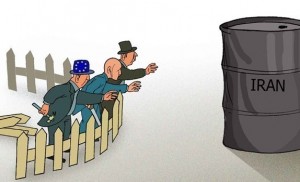
The EU has offered another 1.6 billion euros to cash-strapped Ukraine contingent upon the country’s compliance with economic and financial policies agreed to by the Ukraine and the EU. Compliance with the IMF is also required
The EU’s 28 members and the European Parliament must approve the loan.
Distribution of monies could ake until 2016 and reform activities will be measured all along the way.
The IMF is also negotiating terms of future loans.
Putin is in no position to offer at this time.
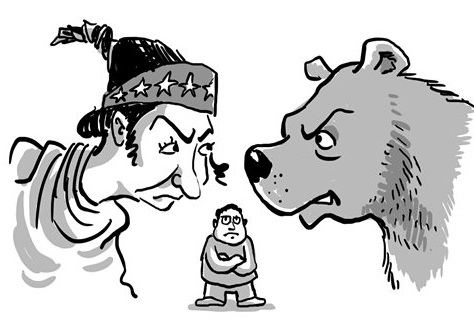
Olin Wethington writes: On December 21, Tunisia completed a remarkable democratic transfer of power, with the election of Beji Caid Essebsi, the leader of the secular political party Nidaa Tounes (Call of Tunisia).
Given concerns about security and the fate of the democratic transition, economic issues were essentially put on hold in both elections. Now it is time for Tunisia’s leaders to put the economy at the top of their agenda.
In the coming weeks, Nidaa Tounes, which won 86 of the parliament’s 217 seats, will face a difficult decision as it attempts to form a government. to share power or piece together several small parites.
The new government will have to act quickly. The country’s moribund economy has fueled public disillusionment. Unemployment is falling, but it remains high, at more than 15% – and higher still among the young. The fiscal and current-account deficits are widening, foreign investment is weak, inflation is rising, and corruption remains rampant. Tunisia’s political achievements could rapidly be reversed if the new government cannot quickly revive the economy and improve citizens’ daily lives.
Nidaa Tounes must take the lead in forging support from all major parties for a national-unity agenda on economic reforms. In its first 30 days, the new National Assembly should publicly announce a consensus vision for economic growth and job creation.
There is already broad agreement among the major political parties on the necessary priorities: bringing public spending under control, encouraging private-sector growth and employment, promoting regional development and social inclusion, and investing in essential infrastructure. In the previous assembly, work stalled on several significant pieces of legislation, including laws on public-private partnerships, foreign investment, and banking reform.
The program developed by acting Prime Minister Mehdi Jomaa in September 2014 deserves serious consideration. The International Monetary Fund Stand-By Arrangement of 2013 provides a similar starting point. To maintain support from the IMF when its current program ends in summer 2015, Tunisia will need to negotiate new commitments. A consensus reform package could serve as a credible point of departure.
In the meantime, Western democracies must do their part and sustain engagement with Tunisia. The 2011 Deauville Partnership with Arab Countries in Transition, in which G-8 members pledged to support Arab countries’ efforts to move toward “free, democratic, and tolerant societies,” has a role to play. This mechanism may be unlikely to mobilize significant new financing, but participating countries can provide valuable political and technical support on structural reform, regional integration, and private-sector development.
An early consensus within Tunisia on a credible economic agenda would open the taps of the largest potential source of capital: international financial markets. The incoming funds, and the subsequent growth and job creation, would undergird the consolidation of democracy – and thus help cement the impressive gains that Tunisia has made so far.
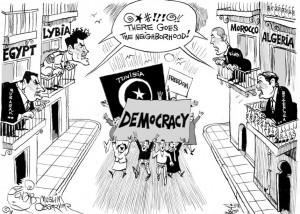
Carl Bildt and Javier Solana write: Europe must capitalize on its significant significant strengths. It is a hub of high-level thought and innovation; it is home to some of the world’s most competitive regions and industries; and, perhaps most impressive, it has built a community and market encompassing a half-billion people.
But the world is changing: the Asia-Pacific region is increasingly influencing global developments, economic and otherwise. The Trans-Pacific Partnership – by which the United States and 11 other countries would create a mega-regional free-trade zone – would most likely accelerate this shift (all the more so if China eventually joins. Though the TPP faces no shortage of hurdles to clear before an agreement is finalized, its potential to augment Asia’s economic power cannot be underestimated.
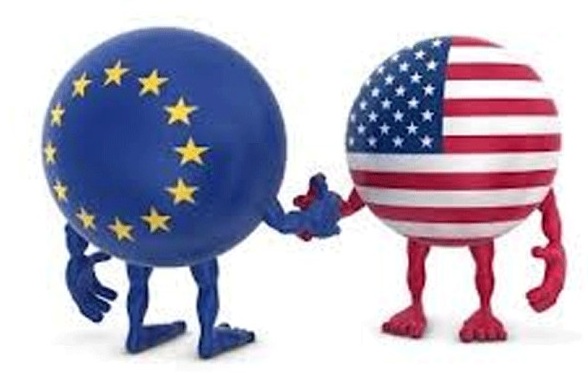
Europe must work to secure its position in the new world order – beginning by enhancing its own trade and investment ties with the US. Business leaders on both sides of the Atlantic are convinced that a successful Transatlantic Trade and Investment Partnership (TTIP) agreement would bring substantial economic benefits – a perception that many studies reinforce. Yet trivial issues continue to dominate the debate.
The TTIP’s goal is to unleash the power of the transatlantic economy, which remains by far the world’s largest and wealthiest market. If the TTIP was opened to other economies – such as Turkey, Mexico, and Canada – the benefits would be even greater.
There are the potentially catastrophic consequences of failure. For starters, a breakdown of TTIP talks would give considerable ammunition to those in the United Kingdom who advocate withdrawal from the EU.
Moreover, the perception that the EU’s internal squabbles had led it to squander a strategic opportunity would probably drive the US to accelerate its disengagement from the continent. And Russian President Vladimir Putin would invariably regard the EU’s failure as a major opportunity to exert more influence over parts of Europe.
All of this contributes to a starkly fundamental strategic risk: If the TTIP stalls or collapses, while the TPP moves forward and succeeds, the global balance will tip strongly in Asia’s favor – and Europe will have few options, if any, for regaining its economic and geopolitical influence.
When the TTIP was first proposed, Europe seemed to recognize its value and wanted to sign a deal quickly. But then EU leaders essentially abandoned the project, seemingly confirming American fears.
EU leaders must revive their commitment to conclude the talks successfully in 2015. This is not to say that resolving the remaining issues will be simple. When the TTIP negotiations resume next month, EU leaders must push for genuine progress, with the goal of completing a deal by the end of the year.