Can Hacking Be Controlled?
Reply
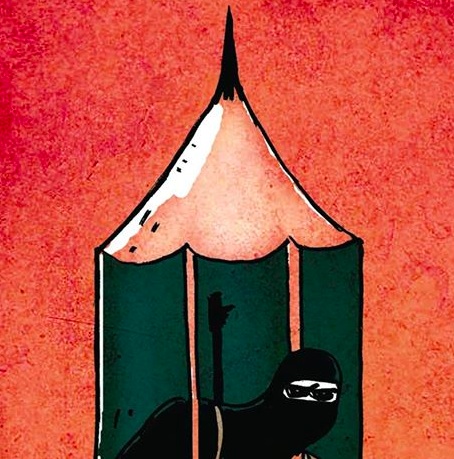
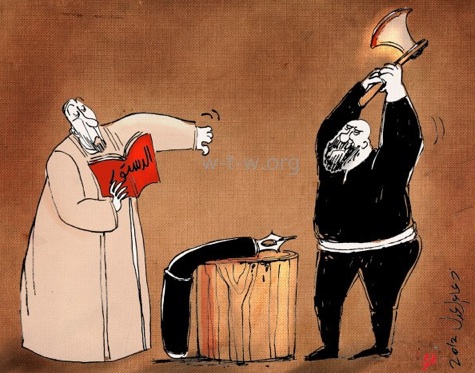
Matt Taibbi writes: Older, legacy outlets like the New York Times, the Washington Post, CNN, and the Associated Press almost all turtled when faced with the decision of whether or not to print the offending cartoons which precipitated terrorist murder in Paris.
In a world dominated by image journalism, we suddenly became lovers of letters again, satisfied that verbal descriptions are enough to convey the gist of the story. Here’s how the New York Times explained its decision (emphasis mine):
Under Times standards, we do not normally publish images or other material deliberately intended to offend religious sensibilities. After careful consideration, Times editors decided that describing the cartoons in question would give readers sufficient information to understand today’s story.
Right, because who needs pictures when you can just describe the thing? Imagine if news outlets collectively decided to only verbally describe the events of 9/11? (Ironically, the attack would have had significantly less impact, been less of a boon for terrorist recruiting worldwide, had they done that).
These complaints immediately thrust us way back in time, to the late Eighties, back to the pre-Internet days when large numbers of Americans were capable of being shocked by artists like Robert Mapplethorpe and Andres Serrano. The latter’s Piss Christ, a set piece of a crucifix submerged in the artist’s own urine, caused Serrano to receive death threats back in the day. The piece was ultimately vandalized by angry Catholic activists.
Now a secondary result of the Hebdo bombings has been a move by our society to censor itself in ways it wasn’t willing to before the attacks.
Beyond all of that, the publish-or-not issue is a controversy only an intellectual could talk himself into. There’s been talk, both before the Hebdo attacks and since, that the cartoons were “silly provocations” (this was Le Figaro’s pre-attack judgment) and that other similar satires were just so much “oil on the fire” (this was what French foreign minister Laurent Fabius said, also prior to the attack).
The implication is that, yes, we have a right to be offensive, but let’s not be offensive this time, maybe just this once, because — and this is the part that’s usually not said out loud — this particular group of satire targets is more than unusually violent and nuts and struggles more even than the average fundamentalist on the sense of humor front.
That point of view is a gross and shameful capitulation. I’m against easing back on the offensive cartoons “just this once” for the same reason I don’t believe in fighting al-Qaeda by “temporarily” tossing out habeas corpus and committing acts of torture: you lose in advance when you give up your culture.
Free speech is a crucial part of who we are. If we give it up because a vocal minority in a different culture disagrees — a minority, incidentally that believes we had things figured better in the seventh century — then we don’t deserve free speech at all. And yes, it sucks that we have to risk bloodshed and destruction over a cartoon, but that’s what’s on the line here, our way of life.
The answer here isn’t more self-censorship, but standing on the principle of everyone learning to calm down, get a life, and tolerate the occasional weird idea. This is particularly true when the only places these ideas are “displayed” are on Internet servers, where you have to go looking for them to find them. We’re really going to run even from that? Since when do we give in to bullies so easily?
Note: W-T-W.org is committed to using the work of cartoonists around the world to make pithy, trenchant commments on the articles we run. Here is contributor Doaa Eladl:
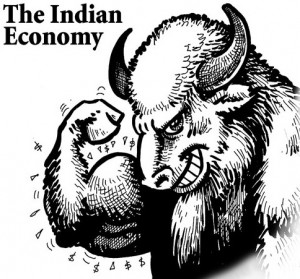
Steven Hansen thinks the Indian economy looks strong. The election of Narendra Modi as Prime Minister in May 2014 has been what many believe a water shed election sweeping in a majority government for the first time since 1984. Narrow cast and religion voting patterns were set aside and the electorate opted to vote for promise of clean and effective governance. Modi is known for achieving results in his past elected positions – but not known as a great master planner.
The appointment of Indian-American economist Arvind Panagariya to the key post in economic planning for India. Panagariya is a heavyweight on the stage of international economists.
Modi administration’s performance since May 2014 has been mixed one. Politically reigning in what is called the “Saffron Family” has been tough who have at times worked at odds with Modi administration. Economically the country has stabilized. Inflation is down and India’s manufacturing PMI rose to 54.5 in December, 2014, while in the corresponding period a year ago it stood at 50.7, just above the crucial 50 mark which separates growth from contraction. Many in industry blame the super Hawkish Raghuram Rajan for throttling industrial growth. Modi has put together a heavy weight team which believes free market economy tempered by social spending to create inclusive growth for the third of the world’s most extremely poor who live in India.
From May 2014 when Modi got elected , the Super Hawk Raghuram Rajan has been running circles round Modi’s administration by keeping tight leash on money. Many believe that the Central Bank single handedly has almost frozen industry by crying wolf on inflation, completely ignoring the generally deflationary trend worldwide. In an ironic twist he has been now circled by the heavyweight Pangariya and his crack team who may have better handle on what needs to be done for the Indian Economy. Hopefully we should see the Indian Economy being unfrozen.
Here are the positives:
Downside scenarios are sabotaging Modi’s administration good work by The Saffron (Hindu zealots) and the continuous tension on Indo-Pakistan border. We do not make much about the Indo-China rivalry and have on the contrary argued that both will work together.
The viewer does not need to know anything about Russia to follow the drama of the little man fighting the System. Viewers will be able to catch references to recent political events. Graffiti that appears to be part of a newscast says PUSSY RIOT. And at the very end, another reference to the protest-art group comes in an on-screen sermon: “When blasphemy is called a prayer,” says the priest, referring to Pussy Riot’s “Punk Prayer,” a protest in a Moscow cathedral for which three members were sentenced to two years in jail, “that constitutes the destruction of truth.” The film continues the conversation Pussy Riot started in 2012. The group screamed in protest against the symbiosis of church and state, and landed in jail. Now Dmitri, the lawyer, is trying to fight the church-court-state machine with facts. Dmitri does not believe in God, revelations, or confessions of any sort. He places his faith in facts only.
With Kolya in jail, Dmtri goes to see the mayor. He has the facts about the mayor’s own past crimes—and he is certain he can blackmail him into obeying the law. Such is the power of facts. The mayor is indeed scared for a second.
“What do you want?” he asks.
“I want Nikolay to keep what’s his,” says the lawyer.
“Oh, but that is impossible,” responds the bureaucrat, and the clarity of this statement appears to set him at ease.
This scene occurs early on in the movie, and from this moment we know how it will all end. Facts are helpless before Truth—and the Russian Leviathan has a monopoly on the truth.
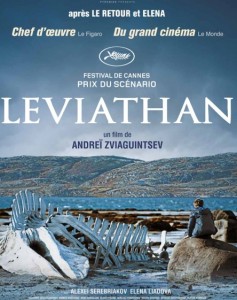
Note. After this article was published, Leviathan won the G olden Globe award for
Best foreign film of the year.
Anders Aslund writes: The current oil price will force Russia to cut its imports by half – a move that, together with the continuing rise in inflation, will diminish Russians’ living standards considerably. Add to that ever-worsening corruption and a severe liquidity freeze, and a financial meltdown, accompanied by an 8-10% decline in output, appears likely.
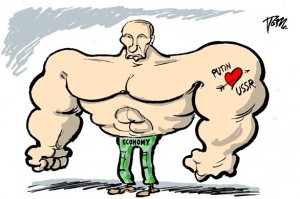
Russia’s ability to negotiate its current predicament hinges on its powerful president, Vladimir Putin. But Putin remains unprepared to act. When he finally does acknowledge reality, he will have little room for maneuver.
Putin could withdraw his troops from eastern Ukraine, thereby spurring the United States and Europe to lift economic sanctions against Russia. But this would amount to admitting defeat.
Short of initiating a major war, Putin has few options for driving up oil prices. Even before the oil-price collapse, crony capitalism had brought growth to a halt – and any serious effort to change the system would destabilize his power base.
In fact, Putin’s leadership approach seems fundamentally incompatible with any solution to Russia’s current economic woes. There is economic expertise among Russian policymakers. Russia’s key economic institutions boast competent managers. The problem is that policymaking is concentrated in the Kremlin, where economic expertise is lacking.
Putin has usurped authority not just from his more knowledgeable colleagues, but also from the prime minister, who has traditionally served as Russia’s chief economic policymaker. Indeed, since Putin returned to the presidency in 2012, Prime Minister Dmitri Medvedev has been all but irrelevant.
In short, Putin – who is no economic expert – makes all major economic policy decisions in Russia.
In the sensitive currency market, unlike in most other countries, the central bank does not retain the exclusive right to intervene. When the ruble tumbled in December, the finance ministry – which holds almost half of Russia’s foreign reserves, $169 billion, in two sovereign-wealth funds – deemed the central bank’s intervention to be insufficient. So it announced that it would sell $7 billion from its reserves to boost the ruble.
When the exchange rate plummeted again, the Kremlin urged the five largest state-owned exporting companies to exchange a portion of their assets into rubles.
Russia’s fiscal situation, determined by Putin’s arbitrary budget management, is hardly better. Putin’s priorities are clear: first come the military, the security apparatus, and the state administration; second are the major infrastructure projects from which he and his cronies make their fortunes; social expenditures (primarily pensions), needed to maintain popular support, come last. Suddenly, oil revenues are no longer sufficient to cover all three.
If Putin wants to save Russia’s economy from disaster, he must shift his priorities. For starters, he must shelve some of the large, long-term infrastructure projects. Though the decision in December to abandon the South Stream gas pipeline is a step in the right direction, it is far from adequate.
Likewise, Putin should follow Finance Minister Anton Siluanov’s sensible recommendation to cut public expenditure, including on social programs and the military, by 10%.
Russia faces serious – and intensifying – financial problems. But its biggest problem remains its leader, who continues to deny reality while pursuing policies and projects that will only make the situation worse.
Joseph E. Stiglitz writes: At long last, the United States is showing signs of recovery from the crisis that erupted at the end of President George W. Bush’s administration, when the near-implosion of its financial system sent shock waves around the world. But it is not a strong recovery; at best, the gap between where the economy would have been and where it is today is not widening. If it is closing, it is doing so very slowly; the damage wrought by the crisis appears to be long term.
Then again, it could be worse. Across the Atlantic, there are few signs of even a modest US-style recovery: The gap between where Europe is and where it would have been in the absence of the crisis continues to grow. In most European Union countries, per capita GDP is less than it was before the crisis. A lost half-decade is quickly turning into a whole one. Behind the cold statistics, lives are being ruined, dreams are being dashed, and families are falling apart (or not being formed) as stagnation – depression in some places – runs on year after year.
The EU has highly talented, highly educated people. Its member countries have strong legal frameworks and well-functioning societies. Before the crisis, most even had well-functioning economies. In some places, productivity per hour – or the rate of its growth – was among the highest in the world.
The EU’s malaise is self-inflicted, owing to an unprecedented succession of bad economic decisions, beginning with the creation of the euro. Though intended to unite Europe, in the end the euro has divided it; and, in the absence of the political will to create the institutions that would enable a single currency to work, the damage is not being undone.
The current mess stems partly from adherence to a long-discredited belief in well-functioning markets without imperfections of information and competition. Hubris has also played a role. How else to explain the fact that, year after year, European officials’ forecasts of their policies’ consequences have been consistently wrong?
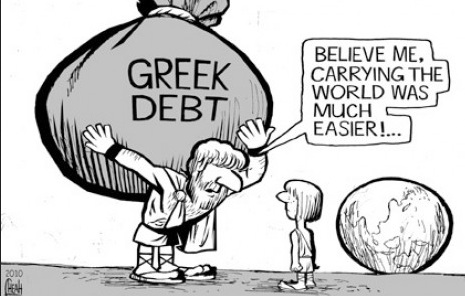
The models upon which those policies relied were badly flawed. In Greece, for example, measures intended to lower the debt burden have in fact left the country more burdened than it was in 2010: the debt-to-GDP ratio has increased, owing to the bruising impact of fiscal austerity on output. At least the International Monetary Fund has owned up to these intellectual and policy failures.
Europe’s leaders remain convinced that structural reform must be their top priority. But the problems they point to were apparent in the years before the crisis, and they were not stopping growth then. What Europe needs more than structural reform within member countries is reform of the structure of the eurozone itself, and a reversal of austerity policies, which have failed time and again to reignite economic growth.
Those who thought that the euro could not survive have been repeatedly proven wrong.
But the critics have been right about one thing: unless the structure of the eurozone is reformed, and austerity reversed, Europe will not recover.
Greece is posing yet another test for Europe. The decline in Greek GDP since 2010 is far worse than that which confronted America during the Great Depression of the 1930s. Youth unemployment is over 50%. Prime Minister Antonis Samaras’s government has failed, and now, owing to the parliament’s inability to choose a new Greek president, an early general election will be held on January 25.
The left opposition Syriza party, which is committed to renegotiating the terms of Greece’s EU bailout, is ahead in opinion polls. If Syriza wins but does not take power, a principal reason will be fear of how the EU will respond.
If Europe does not change its ways – if it does not reform the eurozone and repeal austerity – a popular backlash will become inevitable. Greece may stay the course this time. But this economic madness cannot continue forever. Democracy will not permit it. But how much more pain will Europe have to endure before reason is restored?

Claudio Munoz
W-T-W Women and Finance celebrates the work of cartoonists across the globe. We are appalled by the shooting and deaths in Paris. Cartoonists offer an easily understood, packed punch portraying the important issues of our time. It is beyond tragic when their work is so effective that it endangers their lives.
The proposed Port Ambrose deepwater LNG terminal near New York City has been denounced by environmentalists as a dirty and dangerous export terminal in disguise. The reality is that LNG is the safest and cleanest fuel available and natural gas is critical in efforts to eliminate air pollution and save lives in New York City.

Protesters showed up at a public hearing to encourage Governor Cuomo to veto the proposal for the terminal.
The Port Ambrose LNG terminal should be appreciated by environmentalists as a technological marvel that helps provide much needed seasonal supplies of clean natural gas to the New York City region, saving lives today through improved air quality, keeping utility costs down for rich and poor alike, and all in an engineering package that has the barest of ecological impacts.
The background on this project is expanding demand for natural gas in the region and constraints in the gas pipeline infrastructure that causes daily spot prices to spike with increases in demand.
New York City is currently undergoing an ambitious program to improve air quality and save lives in the region by switching out thousands of highly polluting fuel oil furnaces for natural gas furnaces. PlaNYC was begun under Mayor Bloomberg and continues under Mayor DeBlasio.
New York City and Long Island are major natural gas demand centers that have historically suffered from pipeline constraints that cause daily spot prices to spike as demand fluctuates. The chart below from the US EIA clearly shows the price volatility.
The Port Ambrose LNG import terminal is intended to complement other pipeline improvements by providing alternative gas supply that can flexibly come and go to meet seasonal demand. .

The technology that is intended for Port Ambrose is truly innovative. Unlike previous proposals for the region that involved constructing artificial islands as ports for large LNG vessels, the current proposal is an exercise in minimalism. The buried gas pipeline is connected to a buoy system that rests on the ocean floor when not in use, with only a small marker buoy visible on the surface. A specially designed SRV that carries both the cargo and the regasification equipment, connects to the submerged buoy and injects gas into the pipeline. The regasification process takes around 24 hours and in case of bad weather or emergency the SRV can disconnect and sail out to sea in 15 minutes. There are no water discharges or any kind of effluent deposited in the water at any time…
Port Ambrose in not a bait and switch. LNG is the safest and cleanest of all fuels. LNG can easily co-exist with wind farms. During the actual Superstorm Sandy, the natural gas infrastructure in Manhattan remained functional when the electric power grid went down.
LNG is clean energy,
America is the largest biofuels producer in the world — accounting for 48 percent of global output. To remain the global industry leader, the US Energy Department is investing in projects that address critical barriers to continued growth. This includes a key focus on improving feedstock logistics — the processes we use to collect grasses, plants and other organic material prior to converting them into clean, renewable fuel.
Collecting feedstock to convert into biofuels — from harvesting and packaging, to loading and transporting — can be complex and costly. To better streamline the process, the Energy Department has given contracts to five companies aimed at overhauling the feedstock logistics process. Among the grant recipients selected to improve processes to sustainably grow and harvest feedstock was Ohio-based FDC Enterprises.
For its project, FDC enlisted a number of industry partners to design, build and test innovative harvesting equipment that integrates many different components of the feedstock collection process into one system. To test the new system, FDC harvested large acre crops of homegrown feedstocks — including switchgrass, prairie grass and corn stover. After significant testing, FDC’s innovative approach enabled a faster, more streamlined solution to the feedstock logistics process — all while cutting operating costs. This new equipment will reduce the cost of harvesting and delivering large square bales of homegrown feedstocks by more than $13 per delivered ton.
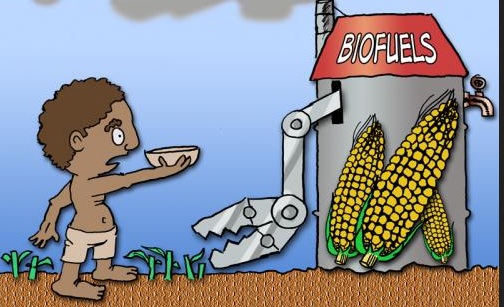
FDC’s efforts — along with their collaborating partners — support the Energy Department’s sustained commitment to making biofuels an affordable, reliable, domestic alternative to fossil fuels.
To learn more about biomass feedstocks and how a domestic biofuels industry can help create jobs in rural America, generate clean, renewable fuels and reduce our dependence on imported oil, watch the Energy Department’s