Can Venezuela Run on Cheap Oil?

Bloomberg editorializes: Venezuela had a banner year in 2014: the world’s highest misery index (inflation plus unemployment), a fresh recession, and a currency whose black-market value fell even faster than the Russian ruble.  Venezuela’s homicide rate has risen to the second highest in the world.

Unfortunately, President Nicolas Maduro doesn’t seem to have any good ideas for improving things. In his year-end review he used the phrase “economic war” more than 60 times but offered no concrete plans for waging it.

Maduro said he plans “to perfect the currency system,” but he should instead junk the controls already in place that, along with a multi-tiered exchange system, have raised black-market currency rates to 27 times higher than official ones. In a nation that imports three-fourths of its goods, this would greatly reduce the shortages of everything from medicines to milk and toilet paper.

Despite having the world’s largest oil reserves, Venezuela can no longer afford to provide its citizens with the world’s cheapest gasoline, a subsidy that costs the government more than $12 billion a year and benefits Venezuela’s rich more than its poor. Better to phase the subsidy out, with cash payments to blunt the impact on the poorest.

Maduro said he would also trim unnecessary spending, hinting at cuts to Venezuela’s diplomatic presence. Why not cut military spending instead? From 2009 to 2013, Venezuela was the largest arms importer in South America and the 17th largest in the world. Venezuelans need less guns, more butter.

To achieve these and other reforms, Maduro will have to work with his political opponents — and he might start by, say, letting them out of jail. Opposition leader Leopoldo Lopez, in particular, needs to be released from prison, and Maduro should drop his far-fetched allegations against other opposition members.  He also needs to stop tampering with Venezuela’s election processes.

This won’t happen without some quiet but firm pressure from Maduro’s fellow Latin American leaders, whose economies have also been hurt by Venezuela’s economic dysfunction, beginning with its failure to pay for imports.

Happily, President Barack Obama’s gambit to normalize relations with Cuba has given these leaders more ideological room to apply such pressure.

Venezuela

Piketty R-G and Inequality?

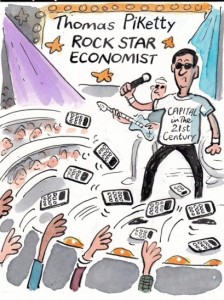
Clive Crook writes:   Piketty’s Capital was certainly the book of the year in its timeliness.  It sold over 500,000 copies.  The subject of inequality has come to the fore worldwide.  In the US, it is sure to be a central topic in the 2016 presidential campaign.

Whether or not Piketty’s analysis is correct is a subject of hot debate among economists.  The basic formula, which argues that the rate of return on capital is greater than the rate of economic growth, The fact that r is greater than g, he says, tends to give owners of capital an increasing share of national income; unless this is offset, by global warfare or other interruptions, it serves to widen inequality.

This formula has been contested and recently Daron Acemoglu (MIT) and James Robinson (Harvard) took the book to task.  One problem with this, as Acemoglu and Robinson explain, is that g and r aren’t independent, as Piketty’s reasoning requires. Piketty’s view about the future gap between r and g is a conjecture not a deduction, and one that’s at odds with most of the empirical evidence. Even if r did perpetually exceed g, many other factors — including a relatively modest amount of social mobility — would be capable of offsetting the effect on income inequality.

The point is, what Piketty calls laws of economics aren’t, in fact, laws. They aren’t even well-established empirical regularities. Acemoglu and Robinson:

The reader may come away from these data presented at length in Piketty’s book with the impression that the evidence supporting his proposed laws of capitalism is overwhelming. However, Piketty does not present even basic correlations between r-g and changes in inequality, much less any explicit evidence of a causal effect. Therefore, as a first step we show that the data provide little support for the general laws of capitalism he advances.

The obsession with inequality demanded, so to speak, an academic testament, and that’s what “Capital” provided. Piketty’s economics leaves a lot to be desired, but his timing was fantastic.

Piketty

Do Economic Sanctions Work?

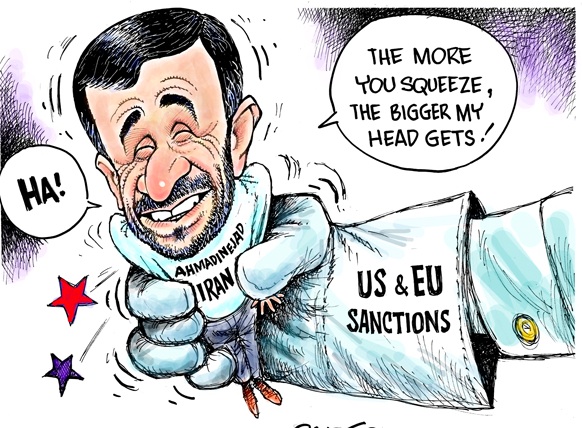
Kenneth Rogoff writes: With Western economic sanctions against Russia, Iran, and Cuba in the news, it is a good time to take stock of the debate on just how well such measures work.

As Gary Hufbauer and Jeffrey Schott note in their classic book on the topic, the history of economic sanctions goes back at least to 432 BC, when the Greek statesman and general Pericles issued the so-called “Megarian decree” in response to the abduction of three Aspasian women. In modern times, the United States has employed economic sanctions in pursuit of diverse goals, from the Carter administration’s efforts in the 1970s to promote human rights, to attempts to impede nuclear proliferation in the 1980s.

During the Cold War, the US also employed economic sanctions to destabilize unfriendly governments, especially in Latin America.  Economic sanctions on Serbia in the early 1990s did not deter the invasion of Bosnia.

The old Soviet Union played the sanctions game as well – for example, against China, Albania, and Yugoslavia. It, too, did not have much success, except perhaps in the case of Finland..

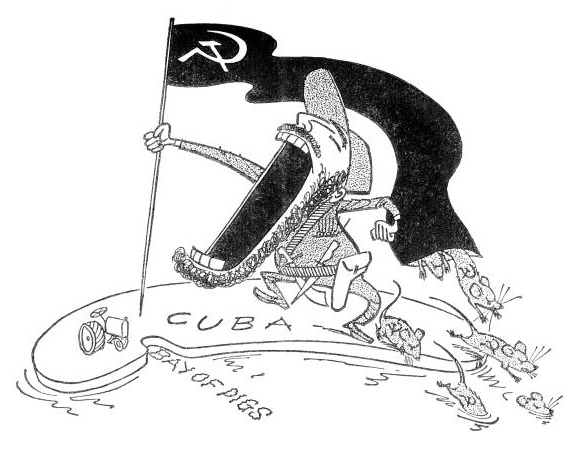
Severe US sanctions on Cuba failed to bring the Castro regime to heel; indeed, President Barack Obama’s move to reestablish full diplomatic relations may have more effect.

But sometimes sanctions do work. The strong international consensus to impose sanctions on South Africa in the 1980s eventually helped bring an end to apartheid. Sanctions have helped bring Iran to the bargaining table. And the Russian economy today is in big trouble, though this might be described as a lucky punch, with the real damage being done by an epic collapse in global oil prices.

Some in Russia, where the price collapse has hit government revenues hard, claim that the US and Saudi Arabia are conspiring to bring Russia to its knees. But that gives US strategists far too much credit. A more likely culprit for the steep price decline is a combination of the shale-energy revolution in the US and the sharp slowdown in Chinese growth. China’s slowdown has helped precipitate a broad-based fall in commodity prices that is having a devastating effect on countries like Argentina and Brazil, with which the US authorities presumably have little quarrel.

One of the major reasons economic sanctions have fallen short in the past is that not all countries have complied.  The Kim regime in Noth Korea has clung to power despite being subject to severe economic sanctions, perhaps because China, fearing a united Korea on its border, has not yet been willing to withdraw its support.

North Korea’s alleged attack on Sony Pictures’ computers has been rightly condemned, Sony Pictures had produced a satire poking fun at North Korea’s leader, the “Young General” Kim Jong-un. This was an intolerable affront, to which the elite responded with economic sabotage rather than military action.

Russia, too, has deployed cyber attacks in the service of foreign-policy goals. Indeed, Russia has far more formidable hackers than North Korea.

In a world where nuclear proliferation has rendered global conventional war unthinkable, economic sanctions and sabotage are likely to play a large role in twenty-first-century geopolitics. Rather than preventing conflict, Pericles’s sanctions in ancient Greece ultimately helped to trigger the Peloponnesian War. One can only hope that in this century, wiser heads will prevail, and that economic sanctions lead to bargaining, not violence.

Sanctions

Handouts Slip Through Yemen

Peter Salisbury writes: Yemen was already a poor country when a 2011 popular uprising descended into inter-elite violence, bringing the economy to a standstill and tipping millions of people into poverty. Today, more than half of Yemenis live on $2 a day or less. 

In November 2011, Ali Abdullah Saleh, Yemen’s president of 33 years, agreed to step down. He ceded power to his longtime deputy Abd Rabbu Mansour Hadi, who was tasked with guiding Yemen through a political transition that is meant to end with a referendum on a new constitution, followed by general elections.

This October,  a new premier, Kahled Bahah, declared the economy to be a top priority for the supposedly technocratic cabinet he put together a month after being appointed. But that doesn’t mean that things are about to get better. There’s simply no money left.

The government is on course to spend $14 billion in 2014, almost three times its expenditures of a decade earlier. Meanwhile it’s been bringing very little in. Repeated attacks on a major oil export pipeline have cut off an important source of state revenues, while collection of taxes and payments to state utilities has been minimal.

The government’s response to the mounting fiscal crisis: Ask the neighbor for more money and keep on spending. The backers of the transition — the United Nations, the United States, the United Kingdom, and the states of the Gulf Cooperation Council — have imposed practically no accountability on the president, offering him seemingly limitless political support and refraining from criticism even as he has foundered.

Take the $435 million the Saudis gave to underwrite the cost of welfare payments. Although the money was transferred to the government in July, the fund has struggled to get the finance ministry to cough up the cash it needs to make quarterly payments.

Similarly, in December 2013, Qatar pledged $350 million towards reparations to military officers, civil servants, and landowners who were forcibly retired or had property stolen after 1994 north-south civil war.

A punishing debt repayment regime now accounts for around a fifth of all state spending. Yet Sanaa has spent practically nothing on investment and infrastructure improvements —  the kind of spending that produces growth and jobs.

Keeping track of the money being spent hasn’t been a priority.  International interventions in countries like Yemen come with their own moral hazards. The West feels the need to back transitional administrations and presidents because they see them as the best option for stability — and because that often serves western interests in other realms, such as security. Hadi, for example, has given firm support to U.S. counterterrorism efforts in Yemen.

That helps to explain the muted response to the missing money for welfare payments to Yemen’s large population of poor people. Members of the diplomatic community in Sanaa acknowledge that there’s an issue and talk about “pressuring” Hadi to resolve the problem, but say that they can’t push too hard because of the need to keep the president onside.

Yemen

Saudi Arabia Plays Oil Politics

Andrew Scott Cooper writes, On January 2, 1977, the Shah of Iran made a painful admission about his country’s economy. “We’re broke.”    Court minister Asadollah Alam predicted still more dangers to come: “We have squandered every cent we had only to find ourselves checkmated by a single move from Saudi Arabia,” he later wrote in a letter to the shah. “[W]e are now in dire financial peril and must tighten our belts if we are to survive.”

The two men were reacting to recent turmoil in the oil markets. A few weeks prior, at an OPEC meeting in Doha, the Saudis had announced they would resist an Iran-led majority vote to increase petroleum prices by 15 percent.

Over the summer of 1977, industrial manufacturing in Iran fell by 50 percent. Inflation ran between 30 and 40 percent. The government made deep cuts to domestic spending to balance the books, but austerity only made matters worse when thousands of young, unskilled men lost their jobs.  Economic distress eroded middle-class support for the shah’s monarchy — which collapsed two years later.

Today, oil prices have again plummeted, from a high of $115 per barrel in August 2013 to under $60 per barrel in mid December 2014. There’s no doubt that shale has eroded Saudi Arabia’s “swing power” as the world’s largest oil producer. But thanks to their pumping capacity, reserves, and stockpiles, the Saudis are still more than capable of crashing the oil markets — and willing to do so.

As in 1977, the Saudis instigated this flood for political reasons. Oil markets remain important venues in the Saudi-Iranian struggle for supremacy over the Persian Gulf. This isn’t the first time since the late 1970s that Saudi Arabia has used oil as a political weapon against its rival.

The Saudis understood that the best time to crash the markets would be when prices were already soft and consumer demand low. In early December, just a few months after Saudi Arabia unleashed its latest oil flood, the Saudis were no doubt pleased to see the price of breaad (the staple of the Iranian diet) shoot up by 30 percent in Tehran.

Riyadh’s real hope is that escalated production will force Rouhani’s government to implement an austerity budget that will ultimately stoke underlying social unrest and once again push people into the streets. If this happens, it would reinforce the Saudis’ faith in oil as a potent weapon in the battle to dominate the Middle East. And oil floods, in turn, would likely continue their periodic, dangerous rattling of both the markets and the region.

Bread  prices in Teheran

Normalization with Cuba

For Cubans who think of themselves as economic immigrants, the changes in US policy will lead to a welcome normalization of their lives: it will be easier for them to visit and be visited by their families, to send cash and goods, to maintain an effective connection to their homeland. The Florida Straits where so many have perished will no longer be a cemetery but a bridge. It is even conceivable that in the not-too-distant future some may chose to commute between Cuba and South Florida, which are no more distant from each other than New York and Philadelphia.

For an older generation of emigrants,  normalization would mean, in the first and most fundamental instance, the disappearance of the regime that forced us to abandon our homeland.  One Cuban describes his arrival in the US in th 1960s.

“I left Cuba with my parents and siblings in the 1960s, when I was too young to understand the meaning of exile. I thought that we were going on vacation. But in the half-century since, I have not stopped thinking of myself as an exile. And so to the question, what will normalization mean for long-term exiles like me? – the answer is: nothing.”

These Cubans count on a Cuba which is  an open, pluralistic society.  But it will never be that. Some may always consider themselves exiles. The normalization of relations has done is to bring home, more powerfully than ever before, that the Cuban exile is a vanishing breed.

Whatever happens in Cuba in the future will have happened too late. Too many lives have been lost, too many families have been torn apart. One of the bitter facts of Cuban history is that those who were alive at the beginning of the Castro dictatorship will not be alive to celebrate its end.

Cuban Exiles

Draghi Calls for Deeper Political Union in EU

Mario Draghi writes:  There is a common misconception that the euro area is a monetary union without a political union. But this reflects a deep misunderstanding of what monetary union means. Monetary union is possible only because of the substantial integration already achieved among European Union countries – and sharing a single currency deepens that integration.

If European monetary union has proved more resilient than many thought, it is only because those who doubted it misjudged this political dimension. They underestimated the ties among its members, how much they had collectively invested, and their willingness to come together to solve common problems when it mattered most.

Yet it is also clear that our monetary union is still incomplete. This was the diagnosis offered two years ago by the so-called “Four Presidents” (the European council president in close collaboration with the presidents of the European Commission, the European Central Bank, and the Eurogroup). And, though important progress has been made in some areas, unfinished business remains in others.

But what does it mean to “complete” a monetary union? Most important, it means having conditions in place that make countries more stable and prosperous than they would be if they were not members. They have to be better off inside than they would be outside.

In other political unions, cohesion is maintained through a strong common identity, but often also through permanent fiscal transfers between richer and poorer regions that even out incomes ex post. In the euro area, such one-way transfers between countries are not foreseen (transfers do exist as part of the EU’s cohesion policy, but are limited in size and are primarily designed to support the “catching-up” process in lower income countries or regions). This means that we need a different approach to ensure that each country is permanently better off inside the euro area.

This implies two main things. First, we have to create the conditions for all countries to thrive independently. All members need to be able to exploit comparative advantages within the Single Market, attract capital, and generate jobs. And they need to have enough flexibility to respond quickly to short-term shocks. This comes down to structural reforms that spur competition, reduce unnecessary red tape, and make labor markets more adaptable.

Until now, whether or not to carry out such reforms has largely been a national prerogative. But in a union such as ours they are a clear common interest. Euro area countries depend on one another for growth. And, more fundamentally, if a lack of structural reforms leads to permanent divergence within the monetary union, this raises the specter of exit – from which all members ultimately suffer.

In the euro area, stability and prosperity anywhere depend on countries thriving everywhere. So there is a strong case for sharing more sovereignty in this area – for building a genuine economic union. This means more than beefing up existing procedures. It means governing together: shifting from coordination to common decision-making, and from rules to institutions.

The second implication of the absence of fiscal transfers is that countries need to invest more in other mechanisms to share the cost of shocks. Even with more flexible economies, internal adjustment will always be slower than it would be if countries had their own exchange rate. Risk-sharing is thus essential to prevent recessions from leaving permanent scars and reinforcing economic divergence.

A key part of the solution is to improve private risk-sharing by deepening financial integration. Indeed, the less public risk-sharing we want, the more private risk-sharing we need. A banking union for the euro area should be catalytic in encouraging deeper integration of the banking sector. But risk-sharing is also about deepening capital markets, especially for equity, which is why we also need to advance quickly with a capital markets union.

Still, we have to acknowledge the vital role of fiscal policies in a monetary union. A single monetary policy focused on price stability in the euro area cannot react to shocks that affect only one country or region. So, to avoid prolonged local slumps, it is critical that national fiscal policies can perform their stabilization role.

To allow national fiscal stabilizers to work, governments must be able to borrow at an affordable cost in times of economic stress. A strong fiscal framework is indispensable to achieve this, and protects countries from contagion. But the crisis experience suggests that, in times of extreme market tensions, even a sound initial fiscal position may not offer absolute protection from spillovers.

This is a further reason why we need economic union: markets would be less likely to react negatively to temporarily higher deficits if they were more confident in future growth prospects. By committing governments to structural reforms, economic union provides the credibility that countries can indeed grow out of debt.

Ultimately, economic convergence among countries cannot be only an entry criterion for monetary union, or a condition that is met some of the time. It has to be a condition that is fulfilled all of the time. And for this reason, to complete monetary union we will ultimately have to deepen our political union further: to lay down its rights and obligations in a renewed institutional order.
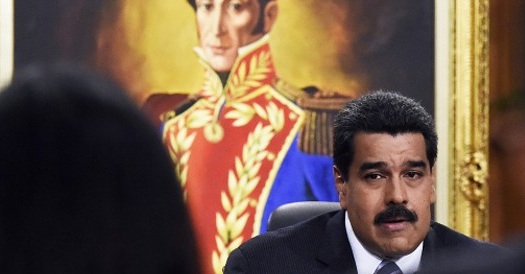
 

Karimova’s Corrupt Tentacles into Norway?

David Crouch reports: Norwegian businesses who partner with businesses from other countries can become involved in corrupt acctivities unwittingly.  Transparency Internationa suggests that three reent investigations in Norway should be a wakeup call to caution.

In Norway. Jon Fredrik Baksaas, chief executive of Norwegian telecoms group Telenor, turned a blind eye to the payment of bribes by VimpelCom in Uzbekistan. Telenor holds 33 per cent of the shares in VimpelCom and 43 per cent of the voting rights.

US and Dutch authorities are investigating allegations that VimpelCom acquired telecom licences by paying bribes through a Gibraltar-based shell company controlled by the Uzbek president’s daughter Gulnara Karimova, who herself is under investigation in Switzerland for money laundering.

The VimpelCom investigation widens a probe into corruption at Scandinavian telco TeliaSonera, which led to a clear out of senior management in 2013 at the company, part owned by the Swedish and Finnish governments.
Telenor said in a statement that by stepping down from VimpelCom’s board, Mr Baksaas would “eliminate any potential conflict of interest under the circumstances” while the allegations are investigated. The company denies that it could have done more to ensure transparency at VimpelCom. A hearing will be held  in Norway’s parliament on the case on January 14.

Telenor is 54 per cent owned by Norway’s government.

The recent focus on Telenor follows a scandal in which Yara International, a Norwegian fertiliser company, received the largest fine in Norwegian corporate history for paying bribes in Libya. Four former senior managers, including the former chief executive, were charged with serious corruption, which they all deny. A spokesman for Yara said it is a different company today than when the issues in question took place.

A Norwegian defence group Kongsberg was charged with “gross corruption” relating to its activities in Romania. As part of an ongoing investigation, Romanian and Norwegian authorities raided assets in Romania in September. Norway’s prosecutor declined to comment on progress in the case. The company said it has zero tolerance for corruption and is co-operating with the investigation.

All three scandals this year concern overseas business practices in countries that are struggling with corruption. The Norwegian state has significant stakes in each of the three companies.

Trade Andersen, a business adviser at government agency Innovation Norway, said, “It is often easy to engage [Norwegian] management in anti-corruption efforts at management meetings, but all too often good intentions and ambitions are not translated into practice in the organisation.”

Gulnara Karimova, Corrupt Tentacles into Norway?

No Room in the Middle

The Middle Class is disappearing in America.  As study after study has shown, the US economic recovery has been a top-heavy affair, with the bulk of the wealth regained from the Great Recession benefitting the wealthiest Americans.

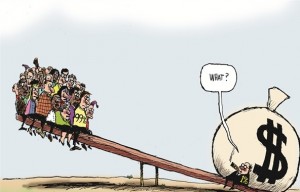
A report by the Pew Research Center found that the wealth gap between high income Americans and middle income Americans is now the biggest on record. “In 2013, the median wealth of the nation’s upper-income families ($639,400) was nearly seven times the median wealth of middle-income families ($96,500), the widest wealth gap seen in 30 years.

Additionally, the net worth of America’s high-income families is nearly 70 times that of lower income families.

Wealth, which Pew defines as “the difference between the value of a family’s assets (such as financial assets as well as home, car and businesses) and debts,” is different from income (the amount of money a family brings in in a given year), another measure of widening inequality that has come under scrutiny in recent years. The two are related, and wages and income have certainly stalled as the rest of the economy picks up steam.

Wealth, however, is a deeper measure of financial well-being, taking into account reserves that a family might be able to fall back on in the event emergencies, like layoffs, and live off during retirement. In the wake of the Recession, higher income families have managed to regain some or all of the wealth they’ve lost, while middle and lower income families remain behind.

That growing disparity has  a lot to do with the nature of the recovery over the past six years or so. The stock market has long erased all of the losses it suffered after the 2008 crash, and the wealthiest Americans tend to have a larger proportion of their money tied up in such investments.

Middle class Americans, on the other hand, have more wealth tied up in their homes – compared to the investment sector, and the housing collapse decimated such wealth for many. In comparison to the stock market rally, the housing recovery has been relatively weak.

“Upper-income families have begun to regain some of the wealth they lost during the Great Recession, while middle-income families haven’t seen any gains,” Pew concluded.

The wealth gap may have been exacerbated by the recovery, but it was growing long before.  In the 30 years since the Federal Reserve started keeping track, the richest Americans have nearly doubled their nest eggs. Middle income Americans have grown theirs by just 2.3 percent.

No Place in the Middle?

French Fries Crisis in Japan?

McDonald’s Holdings Co (Japan) Ltd has embarked on the emergency measure of only offering small-sized french fries to customers as a protracted labor dispute at U.S. West Coast ports has contributed to long delays in imports.

The fast-food chain said it was importing more than 1,000 tonnes of frozen fries by air, which began arriving last Monday and had begun routing another 1,600 tonnes through ports on the U.S. East Coast which should begin arriving in late January.  Those steps alone, however, are not sufficient to prevent a shortage.

rToyama said the company, which has 3,100 stores in Japan, was not placing any limit on the number of small-sized fries a customer may buy but the resumption of medium-sized and large-sized fries remains unclear. She declined to comment on the impact on earnings.

The cargo backups at U.S. West Coast ports dragged on into a third month amid industry reports of prolonged shipment delays for goods ranging from yoga apparel and rice to NBA bobblehead collectibles and frozen french fries.

Cargo that normally takes two to three days to flow through the affected ports, accounting for nearly half of U.S. maritime trade and over 70 percent of imports from Asia, now faces lag times of up to two weeks, the National Retail Federation said.  The congestion has been most pronounced at the twin ports of Los Angeles and Long Beach, the nation’s two busiest cargo hubs, where marine officials reported 11 ships anchored on Thursday waiting for berths to open.

The number of freighters kept waiting outside the two ports has fluctuated from about eight to 18 on any given day since the slowdown began there around mid-October, said port of Los Angeles spokesman Phillip Sanfield.  Smaller backups have hit other West Coast ports, including Seattle and Tacoma in Washington state.

The slowdowns have coincided with prolonged labor talks between 20,000 dockworkers and the Pacific Maritime Association, representing terminal operators and shipping lines at 29 West Coast ports. Their latest contract expired June 30.

Management has accused the International Longshore and Warehouse Union of orchestrating some slowdowns on the docks to bolster its leverage at the bargaining table.  Union officials deny organizing protest delays but acknowledge individual dockworkers may have acted out of frustration over the pace of contract talks.

Other factors cited are a shortage of tractor-trailer chassis used for hauling cargo containers from the ports, a situation created when shippers decided to sell off their chassis to equipment-leasing companies.

Union and port officials also cite record import levels at the peak cargo season, rail service delays and the advent of super-sized container vessels delivering greater cargo volumes.

Smiles Are Free, Fries are in Short Supply